Zhong Guo Qing Nian Bao

Search documents
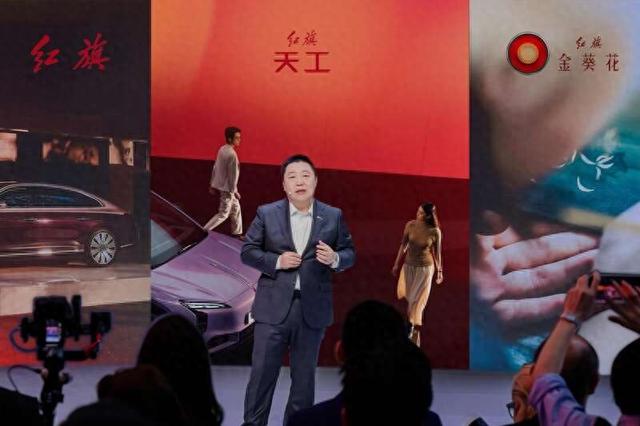
三大子品牌广州车展首次集结亮相,红旗品牌焕新迈入新阶段
Zhong Guo Qing Nian Bao· 2025-11-24 07:32
Core Insights - The Hongqi brand has undergone a comprehensive upgrade, showcasing its three sub-brands at the Guangzhou International Auto Show, reflecting its commitment to refined market operations and user-centric strategies [2][3]. Brand Structure - Hongqi has established a clear three-sub-brand structure: the main Hongqi brand focuses on mainstream luxury with diverse powertrains, Hongqi Tiangong targets young consumers with innovative designs, and Hongqi Jinkuihua is positioned in the ultra-luxury market [2][3]. Product Launch - The new generation Hongqi HS6 PHEV was prominently featured, alongside the refreshed visual identity and logos of the three sub-brands, aiming to provide a richer user experience [3]. Market Strategy - The brand aims to address the diverse needs of different consumer groups through precise product positioning and a clear brand architecture, enhancing its market vitality [3].


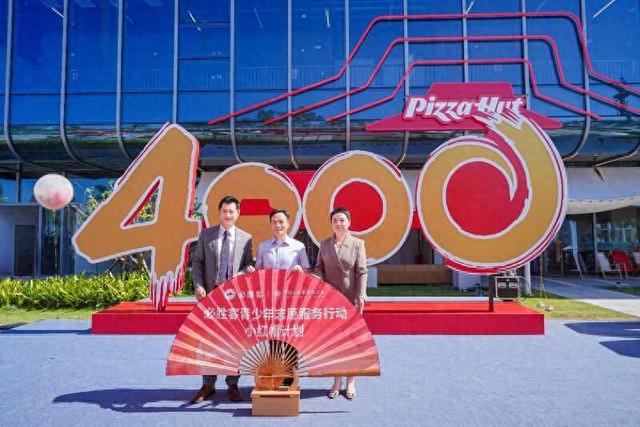
必胜客青少年志愿服务行动“小红帽计划”启动
Zhong Guo Qing Nian Bao· 2025-11-24 06:18
Core Insights - Pizza Hut China has opened its 4000th store in Sanya, Hainan, marking 35 years of operation in the Chinese market and demonstrating its commitment to growth in the region [1][3] - The company has launched the "Little Red Hat Program," a youth volunteer service initiative in collaboration with the China Volunteer Service Foundation, aimed at providing a platform for youth engagement in public welfare [1] - Pizza Hut plans to accelerate its store expansion, targeting the addition of over 600 new stores annually for the next three years, with a goal of exceeding 6000 stores by 2028 [1] Company Expansion - As of September 30, 2023, Pizza Hut has surpassed 4000 stores in China [1] - The company aims to open more than 600 new stores each year for the next three years, indicating a strong growth strategy [1] Community Engagement - The "Little Red Hat Program" will initially pilot in cities like Beijing and Shanghai, with plans for nationwide rollout [1] - The program will create volunteer service stations linked to community resources, focusing on environmental actions and community services tailored to youth [1]

“杭电-联通数智人工智能与大数据联合实验室”成立
Zhong Guo Qing Nian Bao· 2025-11-24 06:02
Core Viewpoint - The establishment of the "Hangzhou Dianzi University - Unicom Data Intelligence Joint Laboratory" marks a significant collaboration between academia and industry, focusing on artificial intelligence and big data to support China's digital economy development strategy [1][2]. Group 1: Collaboration Details - The joint laboratory will facilitate cooperation between Hangzhou Dianzi University and Unicom Data Intelligence, aiming to enhance innovation through industry-academia collaboration [1][2]. - The partnership is expected to leverage resources and tackle challenges together, contributing to regional digital economy growth and industrial intelligence upgrades [2]. Group 2: Strategic Importance - The collaboration aligns with the national innovation-driven development strategy, emphasizing the need for universities to integrate into the forefront of industrial development and promote efficient transformation of research outcomes [1][2]. - The focus on deep integration of technological and industrial innovation is highlighted as a core strategy for high-quality development in Zhejiang province [1].
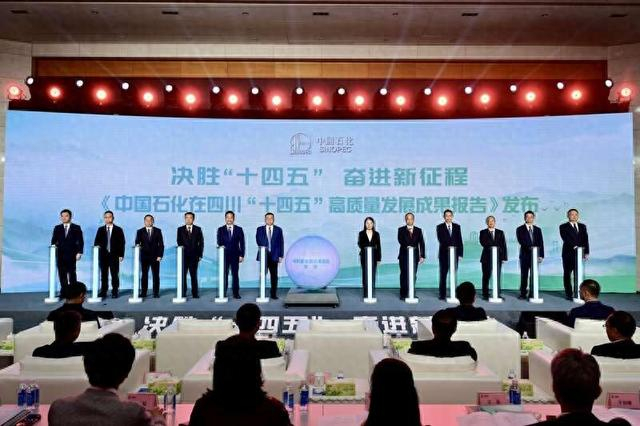
“十四五”期间,中国石化在四川发现8个大中型油气田
Zhong Guo Qing Nian Bao· 2025-11-24 04:56
Core Insights - China Petroleum & Chemical Corporation (Sinopec) has made significant advancements in Sichuan during the 14th Five-Year Plan, discovering 8 medium to large oil and gas fields and confirming natural gas reserves of 707.7 billion cubic meters [3] - The company produced 80 billion cubic meters of natural gas and supplied 22.88 million tons of refined oil in the same period [3] - Sinopec is focusing on transforming energy development and utilization methods, establishing a modern oil and gas industry system with 593 energy supply stations, 13 oil depots, and 6 hydrogen refueling stations [3] Development Achievements - During the 14th Five-Year Plan, Sinopec's Sichuan enterprises have implemented green development technologies, creating the province's first "waste-free oil depot" and "waste-free port" [3] - The company has successfully converted "wastewater and waste gas" into by-products, establishing China's first low-temperature distillation station for produced water from sulfur-containing gas fields, achieving water resource recycling and zero emissions [3] Company Overview - Sinopec has multiple enterprises in Sichuan, including Southwest Petroleum Bureau, Exploration Branch, Sichuan Petroleum Branch, Southwest Petroleum Engineering Company, and Central Plains Oilfield Puguang Branch, covering exploration, extraction, transportation, oil engineering, natural gas sales, refined oil sales, and financial services [3]

【中国青年报】在地球上寻找宇宙线的源头
Zhong Guo Qing Nian Bao· 2025-11-24 03:07
Core Insights - The recent findings from the LHAASO (High Altitude Cosmic Ray Observatory) reveal that black holes, particularly microquasars, are significant sources of high-energy cosmic rays, challenging traditional views of black holes as mere absorbers of matter [6][9][10] - The research indicates that microquasars can accelerate protons to the PeV energy range, contributing to the understanding of cosmic ray origins and the mechanisms behind high-energy particle acceleration [10][12] Group 1: Discoveries Related to Black Holes - The LHAASO has identified microquasars as powerful particle accelerators within the Milky Way, capable of accelerating protons to energies exceeding 1 PeV [9][10] - The study highlights that the cosmic ray proton energy spectrum shows unexpected high-energy components, suggesting black holes as potential sources [10][11] - The findings provide a new perspective on black holes, revealing their role in producing high-energy particles rather than solely consuming surrounding matter [9][10] Group 2: Methodology and Observations - LHAASO utilized advanced ground-based observational techniques to measure cosmic ray spectra, achieving precision comparable to satellite experiments [12][14] - The observatory's design allows for the detection of both cosmic ray sources and the precise measurement of cosmic ray particles, linking the observed high-energy emissions to specific astrophysical phenomena [14][15] - The research successfully correlates the knee structure in cosmic ray energy distribution with specific types of celestial bodies, particularly black hole jet systems [15][16] Group 3: Implications for Future Research - The discoveries pave the way for further exploration of cosmic ray origins, with expectations of identifying additional black holes contributing to high-energy cosmic rays [15][16] - The findings may inspire new approaches in high-energy physics, potentially leading to experimental simulations of cosmic processes in laboratory settings [16][17] - The research emphasizes the importance of continued observation and theoretical development to understand the universe's high-energy phenomena [16][17]

令人心动的社团
Zhong Guo Qing Nian Bao· 2025-11-24 00:17
四川大学机器人足球协会 四川大学机器人足球协会成立于2006年,协会以"丰富校园生活、提高动手能力、培养创新思想、增长 科技视野"为宗旨,以"创新、互助、进步、奉献"为精神理念,致力于机器人知识的普及、学习及交 流,为同学们在该领域的学习和研究提供平台和支持,并积极参与科普研学志愿活动。协会选拔专业知 识扎实、创新意识突出、动手能力强、善于团队协作的学生团队代表学校参加多项学科、双创竞赛,取 得突出成果,自2006年起获省部级以上奖励80余项。 海南大学ZERO CREW霹雳舞协会 海南大学ZERO CREW霹雳舞协会以热情为燃料,用舞步诠释青春态度。这里汇聚Breaking、Popping等 多元舞种爱好者,热爱各个舞种的同学都能在这里找到属于自己的舞台。社团开展定期授课、校内外展 演等活动,助力霹雳舞爱好者书写街舞传奇。 【责任编辑:曹竞,毕若旭,王国强】 青岛大学"维C"志愿者协会 青岛大学"维C"志愿者协会于2022年由计算机科学技术学院发起成立。协会面向校园与社会免费提供电 脑义诊、上门维修及科普讲座等服务。协会始终秉持"维C同心、志愿同梦、服务同行"的理念,用专业 点亮科技之光,用爱心温暖校园与社 ...

共青团援藏援疆工作会议召开
Zhong Guo Qing Nian Bao· 2025-11-24 00:02
Group 1 - The meeting emphasized the importance of understanding Xi Jinping's significant discussions on Tibet and Xinjiang, enhancing the sense of responsibility and mission for aid work in these regions [2] - The implementation of the Western Plan and mobilization of youth to contribute to Tibet and Xinjiang was highlighted, focusing on instilling ideals and national sentiments among the youth [2] - The meeting called for effective education on the awareness of the Chinese national community and deepening practical actions for youth in Tibet and Xinjiang [2] Group 2 - The meeting stressed the need for coordinated efforts between aid and recipient organizations, improving the working mechanism for collaboration [2] - It was noted that resources should be focused on foundational and long-term work that ensures stability in Tibet and Xinjiang [2] - The meeting included reports from various regional committees on the status of aid efforts and practices in supporting Tibet and Xinjiang [3]
中意高校共议:如何培育更多新时代的“马可·波罗”
Zhong Guo Qing Nian Bao· 2025-11-23 22:39
Core Viewpoint - The dialogue between Chinese and Italian universities aims to cultivate a new generation of "Marco Polos" to enhance global governance and cross-cultural cooperation through educational collaboration [1][5]. Group 1: Educational Collaboration - The 2025 Sino-Italian University Presidents Dialogue held in Beijing focused on themes such as interdisciplinary integration, collaborative innovation, and global governance talent cultivation [1]. - Chinese universities, such as Renmin University, are exploring diverse educational pathways, including a tri-degree management program with Italy and the establishment of platforms for youth engagement in global governance [2]. - The collaboration has led to the establishment of 11 new cooperative educational institutions and projects, nearly 200 student exchange programs, and five joint research laboratories over the past year [5]. Group 2: Interdisciplinary Integration - Beijing University collaborates with Italian institutions on projects like the International Thermonuclear Experimental Reactor and digital humanities research, emphasizing the importance of interdisciplinary integration in higher education [3]. - South China University of Technology is deepening cooperation with Italian universities in urban design and business management, focusing on green manufacturing and digital transformation [3]. - The need for universities to adapt to the demands of the knowledge-based society is highlighted, with a focus on creating innovative research and educational models that cater to the new generation [3]. Group 3: Global Governance and Skills Development - Italian universities are emphasizing the importance of soft skills such as cross-cultural communication and leadership in their curricula to prepare students for global governance challenges [2]. - The establishment of Confucius Classrooms and global governance training programs aims to enhance students' capabilities in soft skills and global awareness [2]. - The integration of humanities into engineering education is seen as a way to equip students with a comprehensive understanding of global issues [3]. Group 4: Industry and Academia Integration - The need to break down barriers between academia and industry is emphasized, with initiatives like the Sino-Italian Engineering Innovation Academy focusing on sustainable development and interdisciplinary knowledge [4]. - Shanghai International Studies University is leveraging language as a strategic resource to support the development of language intelligence applications, directly addressing industry needs [4]. - The collaboration between universities and industries aims to create a fusion ecosystem that connects innovation chains with industrial chains [5].
高校管理边界在哪里
Zhong Guo Qing Nian Bao· 2025-11-23 22:29
Core Viewpoint - The management regulation at Guangxi University of Technology, which prohibits students from staying in dormitories without classes, has sparked significant public debate due to its perceived lack of empathy and practicality [1][2]. Group 1: Regulation and Student Response - The regulation aimed to encourage students to study and exercise, but many students reported that they simply moved to other locations to use their phones instead of engaging in productive activities [2]. - The university's initial strict enforcement of the rule was met with resistance, leading to a revised policy that allows first-year students to return to their dorms after a brief morning study session, while upperclassmen are no longer required to leave their dorms [2][3]. Group 2: Perspectives on Student Autonomy - Students expressed varying opinions on the balance between self-management and institutional oversight, with some arguing that students need guidance to avoid losing focus after transitioning from high school to university [3]. - Others contended that excessive restrictions do not foster true self-discipline and that universities should provide opportunities for students to learn time management rather than impose strict rules [3][4]. Group 3: Future of University Management - Experts suggest that universities should find a balance between over-management and neglect, emphasizing the importance of communication and student feedback in policy formulation [6][7]. - The future of university management may lean towards a "supportive management" model, utilizing technology to enhance student autonomy while avoiding invasive monitoring practices [8].
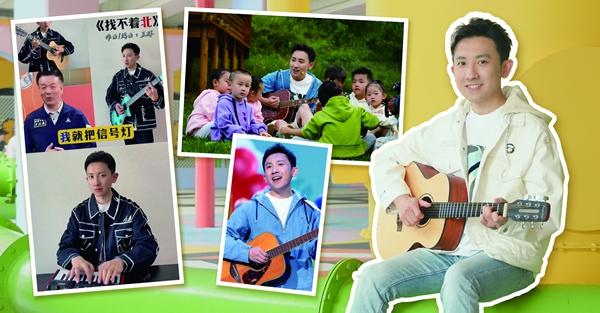
“从从容容”做音乐的王搏:点团圆之灯
Zhong Guo Qing Nian Bao· 2025-11-23 22:29
Core Insights - The article highlights the rise of Wang Bo, a self-media musician, who gained popularity with his songs "No Future" and "Can't Find North," which resonated across the Taiwan Strait [2][9]. Background and Career Transition - Wang Bo, originally a technician at the State Grid, pursued his music dream after resigning from a stable job, which was met with skepticism from family and friends [3][4]. - He initially struggled to establish himself in the music industry, relying on writing songs for celebrities and TV shows, leading to financial instability [4][5]. Breakthrough and Viral Success - His breakthrough came with the viral hit "No Future," which garnered 20 million views shortly after its release, significantly increasing his online following [6][7]. - The song's success was amplified by its relatable themes, which resonated with audiences on both sides of the Taiwan Strait, creating a cultural dialogue [9][10]. Cultural Impact and Emotional Resonance - The song "No Future" has been adapted into over 20 versions in various languages and dialects, highlighting its widespread appeal and emotional connection among listeners [9]. - Wang Bo emphasizes the shared cultural roots between people across the Taiwan Strait, suggesting that the song serves as a bridge for emotional expression and connection [9][10]. Creative Process and Future Aspirations - Wang Bo's creative process involves drawing inspiration from personal experiences and cultural elements, aiming to maintain a balance between straightforwardness and depth in his lyrics [10]. - He expresses a commitment to continue creating music that reflects the shared sentiments of the Chinese people, reinforcing the idea of unity and familial ties [10].