
Quan Jing Wang

Search documents
宜安科技:液态金属赋能折叠屏,技术铸就核心价值
Quan Jing Wang· 2025-12-24 07:59
Group 1 - The core viewpoint of the articles highlights the growth potential of the foldable screen market, with liquid metal technology being a key material for high-end devices, positioning the company as a rare core supplier in this sector [1][2] - The company has established itself as a leader in the liquid metal industry, achieving large-scale production of zirconium-based amorphous alloys with exceptional properties, including a strength of ≥1200MPa and the ability to withstand over 300,000 folding cycles [1] - The company has a comprehensive production capability from material formulation to precision molding, holding over 200 core patents and maintaining a stable yield rate of over 95%, creating a significant technological moat [1] Group 2 - The foldable screen market is expected to see rapid growth due to technological maturity and price reductions, with liquid metal being favored for its lightweight and precision advantages, reducing weight by 40% compared to traditional magnesium alloys [2] - The company's liquid metal technology has applications beyond consumer electronics, extending into fields such as smart robotics and new energy vehicle components, forming a growth matrix that supports long-term development [2] - Despite facing operational challenges, including pressure on profit margins from traditional magnesium products and a decline in R&D investment, the company is expected to optimize its revenue structure and improve profitability with the launch of a new production base [2]

新晨科技连中两家全国性股份制银行亿级订单 AI算力&数据中心级网络信创建设获金融客户认可
Quan Jing Wang· 2025-12-24 07:56
2025年第四季度, 新晨科技 凭借深厚的技术积累及多年金融行业服务经验,突破激烈竞争,连续中标 两家全国性股份制商业银行的亿元级订单。此次中标项目涉及AI算力、数据中心网络信创建设、信息 技术支持服务等多个业务,进一步巩固了其作为金融领域数字化解决方案与服务提供商的领先地位。 01 某全国性股份制银行 AI算力基础设施 赋能金融智能化转型 02 某全国性股份制银行 数据中心信创网络建设 引领高效稳定的金融基础设施升级 在AI技术浪潮中,新晨科技中标某全国性股份制商业银行的鲲鹏CPU AI算力 服务器 及配件选型入围项 目。该项目聚焦于构建高性能计算平台,支持银行在智能风控、客户服务等场景的AI应用落地。凭借 与 华为鲲鹏 生态的深度适配能力,提供兼容性强、成熟度高的算力解决方案,助力银行加速数据分析 和模型训练,驱动业务智能化升级。此次合作不仅强化了新晨科技在AI基础设施领域的优势,也体现 了金融机构对技术创新投入的持续加码。 (运行维护方向) 新晨科技成功中标另一家全国性股份制商业银行的数据中心级路由交换(通用场景)网络设备入围采购 项目。该项目聚焦于构建高可靠性、低延迟的数据中心网络架构,旨在满足银行核 ...

科技攻“尖”产业向“新”,盈康一生打造医工创新策源地
Quan Jing Wang· 2025-12-24 07:49
近日,"AI for Health助力健康中国2030——第二届海医汇医疗科技创新生态大会"在北京隆重举行。作为海尔集团旗下大健康生态品牌,盈康一生携医工转 化核心成果亮相,与产、学、研、医、资领域顶尖力量共探AI时代医疗创新路径,为破解"实验室到病床"转化难题输出"中国范式",彰显了领军企业在大健 康产业升级中的核心担当。 战略承接者,打造融合创新的生态系统 当前,"健康中国2030"纵深推进,国家卫健委等多部门明确2030年基层诊疗智能辅助应用基本全覆盖,"十五五"规划更为医疗科技注入发展动能。但政策红 利下,行业痛点凸显:我国医学成果转化率不足8%,远低于欧美70%的水平,大量科研成果困于"实验室到病床"的"达尔文之海"…… 国家战略的落地需要企业作为"产业转换器"。盈康一生主动承接这一国家战略需求,牵头打造了全国首个医工科技产业化平台"海医汇"。海尔集团董事局副 主席、执行副总裁,盈康一生董事长,海医汇理事长谭丽霞表示,海医汇致力于做这个时代能够把一切组织起来的链接者和加速者,希望面向中国医疗创新 的未来,打造一种融合创新的生态系统。 经过一年实践,海医汇已构建起"临床需求-技术研发-成果转化-产业应 ...


瞩目!这个智慧低碳公共机构虚拟电厂建设启动,引领数字化节能降碳创新模式先河!
Quan Jing Wang· 2025-12-24 06:29
Core Viewpoint - The construction of the Smart Low-Carbon Public Institution Virtual Power Plant in Zhancheng District, Foshan, marks a significant step in integrating public institution energy resources and exploring new market-oriented mechanisms for energy conservation and carbon reduction, aiming to provide a practical model for optimizing energy structure and promoting green low-carbon development in urban centers [1][2]. Group 1: Project Overview - The virtual power plant utilizes advanced digital, communication, and intelligent control technologies to aggregate and optimize controllable electric loads across different spaces, participating in power system operations and market transactions [1][2]. - A strategic cooperation agreement was signed between the Zhancheng District People's Government and Southern Power Grid Comprehensive Energy Co., Ltd., indicating collaboration among various industry chain enterprises to implement this innovative project [1][2]. Group 2: Development Strategy - Zhancheng District aims to leverage its unique resource endowment by integrating public institution management with large-scale virtual power plant operations, driving participation from commercial resources and optimizing energy supply and conservation through market mechanisms [3][4]. - The district plans to accelerate the construction of the virtual power plant by conducting resource surveys of public institutions and establishing a dynamic digital resource database [4][5]. Group 3: Implementation Measures - The district will promote the "virtual power plant + energy management" model, allocating at least 50% of the virtual power plant's profits towards energy-saving renovations, particularly in distribution and air conditioning sectors [4][5]. - A comprehensive smart low-carbon virtual power plant demonstration platform will be established to integrate data collection, AI optimization, and remote control, enhancing urban energy management's intelligence [4][5]. Group 4: Ecosystem Development - The project encourages participation from state-owned and private enterprises, establishing a whitelist system for companies and promoting business innovation within the virtual power plant framework [5]. - The implementation of this project represents an innovative exploration of energy conservation and carbon reduction management mechanisms, providing a "Zhancheng experience" for urban energy efficiency and cost reduction [5].
PX、PTA创10个月新高 炼化巨头荣盛石化盈利弹性加速释放
Quan Jing Wang· 2025-12-24 05:25
PX与PTA期货价格近期强势上涨。12月23日,PX主力合约突破7300元/吨,PTA主力合约站上5000元/ 吨,均创近10个月新高。市场分析认为,本轮上涨主要受全球能源格局调整、供给增长受限及下游补库 预期等多重因素驱动。 2025年第三季度,公司归母净利润为2.86亿元,同比增长1427.94%,环比增长1992.91%,展现了极强的 业绩弹性。受益于行业景气度回升,荣盛石化股价亦同步走强。12月22日,荣盛石化单日大涨6.42%, 恒逸石化与恒力石化分别上涨6.03%、4.54%。 在此轮行业上行周期中,具备全产业链布局的巨头企业尤为值得关注。荣盛石化作为全球最大的PX、 PTA生产商之一,其产能优势与行业地位突出。据中证鹏元研报,荣盛石化以1040万吨的PX产能位居 全国首位,约占全国总产能的24%,中国石化与中国石油则分别约占16%、14%。PTA产能分布同样高 度集中,据化纤信息网(CCF)数据,截至2025年11月底,国内PTA总产能突破9470万吨,前三名企业产 能合计约占全国总产能的52%。其中,逸盛石化(由荣盛石化与恒逸石化合资建立)以2150万吨总产能 位居首位,占全国总产能的23%, ...

市场化下的新蓝海,集中汇流正在扛起户用光伏的大旗
Quan Jing Wang· 2025-12-24 04:40
Core Viewpoint - The implementation of the new market-oriented pricing for renewable energy projects marks a significant shift from a subsidy-driven growth model to a market-driven approach, posing challenges for the household photovoltaic (PV) sector [1] Group 1: Challenges Facing Household PV - The household PV sector is facing dual structural constraints under the new market-oriented trading environment, which limits its value realization [1] - The grid's capacity is reaching its limits, hindering large-scale development, as many rural distribution networks are overwhelmed by the surge in installed capacity, leading to significant project integration challenges [2] - The decentralized nature of household PV assets makes it difficult to meet market trading requirements, resulting in a revenue dilemma where generated electricity cannot be effectively sold [2] Group 2: Solutions and Innovations - The traditional decentralized development model is inadequate for the new phase, necessitating an innovative approach that balances scale efficiency and grid compatibility, leading to the emergence of the centralized aggregation model [3] - The centralized aggregation model allows for large-scale development of rooftop PV systems at the village level, effectively addressing integration issues and opening new market opportunities [3][4] - This model enhances the bargaining power and market responsiveness of household PV projects by developing them at a megawatt scale, aligning with the technical requirements of market-oriented trading [4] Group 3: Policy Support and Market Trends - National and local policies are strongly supporting the centralized aggregation model, encouraging the development of distributed PV systems through collective village-level integration [4][5] - The centralized aggregation model is seen as a necessary direction for industry development, driven by grid capacity constraints, market demands, and policy support [5] Group 4: Future Prospects - The centralized aggregation model is rapidly gaining traction nationwide, indicating its potential to become a leading force in the market-oriented household PV sector [8] - Companies like Zhengtai Aneng are strategically positioned to leverage this model, potentially expanding into the distributed commercial energy sector and transforming from a household PV leader to a comprehensive energy service provider [8]

共筑全球精密传动新生态 宁波东力成为尼得科全球唯一机器人减速器零部件代工伙伴
Quan Jing Wang· 2025-12-24 04:39
Group 1 - The core point of the article is the strategic partnership agreement signed between Ningbo Dongli and Nidec Corporation, marking a significant step towards long-term, systematic, and global collaboration in the precision transmission field [1][3] - Ningbo Dongli will become the exclusive partner for Nidec in manufacturing robot reducer components, integrating deeply into Nidec's global industrial system [1] - Nidec is a leading player in the small precision reducer sector, while Ningbo Dongli has a solid foundation in transmission systems and core component manufacturing, being the first A-share listed company in China's gear industry [1][2] Group 2 - The reducer industry is expected to evolve towards high precision, lightweight, and integrated solutions, particularly driven by strong demand in robotics and high-end equipment sectors [2] - The humanoid robot market is projected to create significant growth opportunities for the reducer industry, with an estimated market increment of approximately 90.8 billion yuan by 2030 and a CAGR of 173% from 2025 to 2030 [2] - Ningbo Dongli is advancing its innovation-driven development strategy, focusing on core technology breakthroughs and accelerating product R&D iterations to expand application scenarios and markets [2] Group 3 - The strategic partnership will establish regular meetings and specialized working groups to enhance team building and talent development, sharing management experience and expertise [3] - Ningbo Dongli will adhere to a globally unified high-standard manufacturing and quality control system, ensuring products meet international advanced levels in key performance indicators [3] - This collaboration is expected to enhance the application depth and market coverage of Ningbo Dongli's products in sectors such as robotics, semiconductor equipment, new energy equipment, and high-end medical devices [3]

鸿合科技完成董事会换届 新老结合构建治理新格局
Quan Jing Wang· 2025-12-24 03:10
Core Viewpoint - The recent shareholder meeting of Honghe Technology (002955.SZ) marked a significant transition in control from the original shareholders to the Chery Group's CVC, establishing a balanced governance structure that is expected to benefit the company's future development [1][2]. Group 1: Board Restructuring - The new board of directors reflects a substantial change in the company's shareholder structure, with the controlling shareholder, Ruicheng Hongtu, adopting a "GP+LP" joint appointment model for board positions [1]. - The new chairman, Yao Ruibo, has a strong background in finance and industry investment, having held key positions in various financial institutions and previously served as the executive vice president of Anhui Xin'an Financial Group [1]. - Other board members include Wang Chenchen, representing Anhui Jiaokong Capital Fund, and Peng Ji, representing Wuhu Guozhi, both of whom are linked to significant local government investments [1]. Group 2: Governance and Management Stability - The arrangement of having both new board members and the original management team is seen as a strategic move to ensure stability while implementing reforms [2]. - The original chairman, Sun Xiaoqiang, remains as vice chairman and CEO, along with other long-serving executives, ensuring continuity in core operations [2]. - The combination of new strategic direction from the board and the operational stability from the existing management team is viewed as a robust strategy for the company's future growth and development [2].

从“内卷”到“印钞”:储能价格战终结背后 一场关乎万亿电力的价值重估
Quan Jing Wang· 2025-12-24 02:20
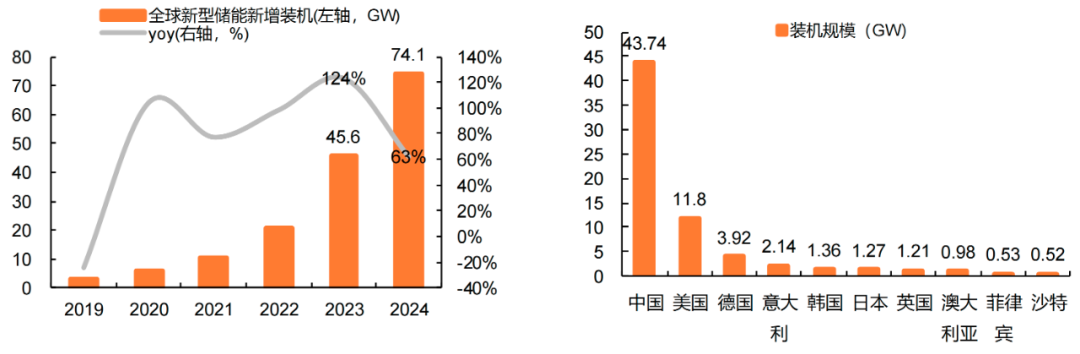
Core Viewpoint - The energy storage industry is experiencing a robust growth phase driven by strong demand both domestically and internationally, with leading battery companies operating at full capacity and battery prices continuing to rise, indicating a shift towards a more profitable and sustainable business model [1] Group 1: Demand Explosion - Global energy storage installations are on the rise, with China being the largest market. In 2024, global new energy storage installations are expected to reach 74 GW, a 62.5% increase year-on-year. China, the US, and Europe will account for 90% of this growth [2] - In 2024, China's new energy storage installations are projected to reach 43.7 GW, a 103% increase year-on-year, marking the first time installations exceed 100 GWh [2] Group 2: Policy Changes - The release of the "136 Document" in February 2025 marks a significant policy shift, ending the controversial "mandatory storage" era and allowing energy storage to operate independently in the electricity market [4] - The "New Energy Storage Scale Construction Action Plan (2025-2027)" aims for a national energy storage capacity of over 180 million kilowatts by 2027, promoting diverse revenue channels for energy storage [4] Group 3: Market Dynamics - In the first half of 2025, new energy storage projects in China added 23.0 GW, with a year-on-year increase of 68% in both power and energy capacity [6] - Local governments are introducing capacity price subsidies, leading to an internal rate of return (IRR) of 6-12% for energy storage projects, significantly boosting bidding and registration volumes [7] Group 4: International Market Trends - In the US, the rapid growth of AI data centers is reshaping energy demand, with projections indicating that by 2030, AI data centers could account for over 20% of electricity demand. This is expected to drive a significant increase in energy storage installations [9] - The European market is also expanding, with expected installations of 20 GWh in 2025, a 131% increase year-on-year, driven by supportive capacity pricing policies [9] Group 5: Price Recovery - The energy storage market is witnessing a price recovery, with the average price of 2-hour storage systems rising by 31% in September 2025. This marks a departure from the previous low-price competition [13][14] - The introduction of capacity pricing and spot markets is expected to enhance the profitability of independent energy storage, leading to sustained demand and price increases [14] Group 6: Conclusion - The growth of the energy storage sector is closely linked to the transition towards renewable energy and the evolving electricity system, positioning it as a critical infrastructure in the AI era [16] - Major players in the industry, including leading battery manufacturers and specialized companies, are being propelled to the forefront of this transformative wave [16][18]


天溯计量成功登陆创业板:创新驱动计量检测,多元布局释放成长潜力
Quan Jing Wang· 2025-12-24 01:55
Core Viewpoint - Shenzhen Tiansu Measurement and Testing Co., Ltd. officially listed on the Shenzhen Stock Exchange's ChiNext board, marking a new phase of capital empowerment for the company [1][2] Group 1: Company Overview - Tiansu Measurement is a national, comprehensive independent third-party measurement and testing service provider, with services including calibration, testing, and certification [1] - The company serves a wide range of clients across key sectors of the national economy, including biomedicine, automotive, new energy, rail transportation, energy and power, light industry, and equipment manufacturing [1] Group 2: Financial Performance - On its first day of trading, Tiansu Measurement's stock opened with a remarkable increase of 113.32%, with an issuance price of 36.80 yuan per share and a total issuance of approximately 16.30 million shares [1] - The revenue from the new energy battery testing business is projected to grow from 52.54 million yuan in 2022 to 113.14 million yuan in 2024, reflecting a compound annual growth rate of 46.75% [3] Group 3: Strategic Initiatives - The funds raised from the IPO will be used to enhance measurement and testing capabilities, build regional laboratories, establish a digital center, and supplement working capital [1] - The company has proactively developed battery testing services since 2018, investing significantly in capabilities covering 84 major testing items [2] - Tiansu Measurement aims to leverage new technologies such as the Internet, big data, and automation to enhance its core competitiveness in smart measurement and new energy testing [3] Group 4: Industry Context - The measurement and testing industry is experiencing increased attention from the government, with a notable rise in industry concentration benefiting leading companies like Tiansu Measurement [2] - The company is well-positioned to benefit from the ongoing industry upgrades driven by policy support and market demand [3]