
Zhong Guo Qi Che Bao Wang

Search documents
2025(首届)京津冀新能源汽车挑战赛崇礼收官
Zhong Guo Qi Che Bao Wang· 2025-10-06 07:07
Core Insights - The successful conclusion of the 2025 (1st) Beijing-Tianjin-Hebei New Energy Vehicle Challenge and "Smart Wilderness Unlimited" Chongli Auto Carnival highlights the potential of regional collaboration in advancing the new energy vehicle industry [3][11] - The event showcased a diverse integration of technology, industry, consumption, and cultural exchange, enhancing public engagement and credibility in the new energy vehicle sector [3][5] Group 1: Event Overview - The event featured seven specialized challenges aimed at testing the comprehensive performance and technological maturity of new energy vehicles, serving as a benchmark for industry development [5] - The challenges included various competitions such as the full-scene NOA challenge, intelligent off-road challenge, and charging efficiency challenge, which provided valuable insights for manufacturers and consumers [5] Group 2: Carnival Activities - The carnival attracted over ten thousand participants through various activities, including off-road experiences, photography contests, and music festivals, transforming the professional event into a community celebration [6][7] - The high participation rate led to significant economic benefits for local accommodations, with hotels and guesthouses operating at near full capacity during the holiday period [6] Group 3: Consumer Festival - The "J3 SHOW Beijing-Tianjin-Hebei New Energy Vehicle Consumer Festival" effectively connected the excitement of the competition with direct sales, exceeding expectations in consumer engagement [9] - The festival featured over 30 models from 12 brands, utilizing substantial subsidies and hands-on experiences to stimulate consumer interest and promote green consumption [9] Group 4: Future Implications - The event not only revitalized the new energy vehicle industry in the Beijing-Tianjin-Hebei region but also provided an innovative model for post-Olympic economic transformation [11] - Chongli aims to continue embracing green technology and collaborate with industry partners to drive technological innovation and industry upgrades in the new energy vehicle sector [11]


澄清声明
Zhong Guo Qi Che Bao Wang· 2025-10-06 05:54
Core Viewpoint - A recent rollover incident involving a vehicle marked as "212" has raised concerns about off-road safety and product quality, leading to confusion regarding the vehicle's brand and manufacturer [1] Group 1: Incident Details - The vehicle involved in the rollover was misidentified by some media and netizens as being associated with BAIC Group, specifically models like Beijing Automotive 212 and Beijing Off-road 212 [1] - The rollover occurred while the vehicle was climbing a slope, resulting in significant deformation of the A-pillar [1] Group 2: Company Clarification - BAIC Group clarified that the involved "212" model is produced by Beijing Automotive Manufacturing Plant Co., Ltd., which is set to launch the vehicle in 2024 and is not related to BAIC Group or its brand Beijing Off-road [1] - The manufacturer of the vehicle is part of Shandong Weiqiao New Energy Technology Group Co., Ltd., with no ownership or property relationship with BAIC Group [1] Group 3: Safety Emphasis - BAIC Group emphasizes that safety is the utmost luxury in off-road vehicles, asserting its position as the inventor of Chinese off-road vehicles [1] - The company calls on off-road enthusiasts to enjoy their activities while prioritizing safety [1]

中通客车出征2025比利时世界客车展:从“中国制造”到“中国方案”的价值跃迁
Zhong Guo Qi Che Bao Wang· 2025-10-05 02:45
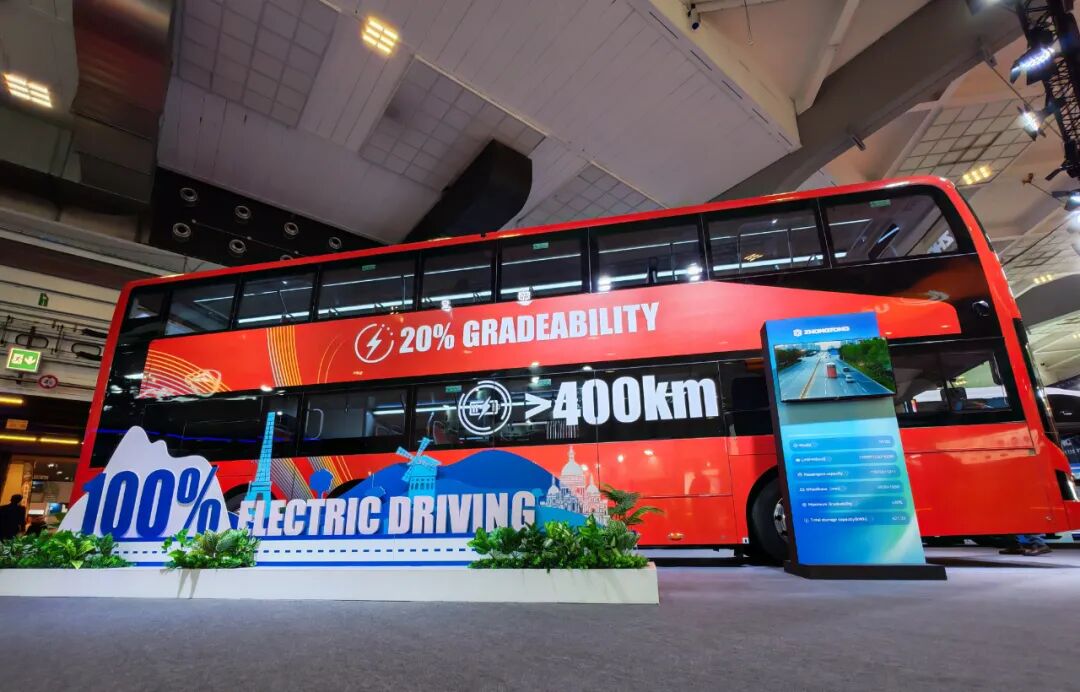
Core Insights - The article highlights the participation of Zhongtong Bus at the Belgium Bus Expo, showcasing its electric bus models and emphasizing the company's commitment to innovation and customization in the global market [2][6][10] Group 1: Company Overview - Zhongtong Bus has established itself as a leader in the Chinese bus industry, with a significant focus on electric and intelligent transportation solutions [2][5] - The company has transformed its strategy from merely exporting vehicles to providing customized solutions for global transportation challenges [5][10] Group 2: Market Performance - Since 2003, Zhongtong Bus has seen its overseas market share grow significantly, with exports increasing by over 65% in 2024 and an 11-fold increase in the first half of 2025 [5] - The company captured 90% of Shandong Province's bus export market, indicating strong regional dominance [5] Group 3: Product Highlights - Zhongtong Bus showcased five electric bus models at the expo, including the N12D double-decker city bus, which features a range of over 400 km on a single charge and rapid charging capabilities [6][10] - The H12E PLUS luxury coach integrates advanced technologies for energy efficiency and passenger comfort, including a 5-star health cabin certification and various driver assistance features [6][7] - The N18 electric bus is noted for its practical design and user-friendly features, catering to diverse passenger needs [7] Group 4: Technological Advancements - Zhongtong Bus has invested in R&D since 2004, becoming one of the earliest companies to focus on new energy technologies in the bus sector [10] - The company has achieved significant certifications, including the EU WVTA certification, which facilitates entry into high-end European markets [10] Group 5: Global Reach - Zhongtong Bus products are now exported to over 100 countries, including Singapore, Portugal, and Germany, demonstrating its extensive international footprint [10] - The company's approach combines advanced technology, intelligent ecosystems, and sustainable development principles, marking its evolution into a comprehensive solution provider [10]

十一来崇礼,共赴一场“汽车+赛事+文旅+消费”盛宴
Zhong Guo Qi Che Bao Wang· 2025-10-03 07:55
10月3日,2025(首届)京津冀新能源汽车挑战赛暨"智野无限"崇礼汽车嘉年华开幕式在张家口崇礼举行。 张家口市崇礼区文化广电旅游和体育局党组书记、局长赵利东在致辞中指出:本次盛会,是崇礼发展历程中的一个重要节点。它为我们带来了前所未有 的曝光度、人流量和合作机遇。我们将以此为契机,持续优化营商环境,大力发展赛事经济、会展经济、夜间经济,推动体育、文化、旅游与先进制造业的 耦合发展,让"冬奥之城"的品牌内涵更加丰富,让高质量发展的成色更足、底色更亮。 2025(首届)京津冀新能源汽车挑战赛暨"智野无限"崇礼汽车嘉年华高级顾问秦玉学对活动总体情况进行介绍并表示:本次盛会,是一次对智能网联新能 源汽车技术发展的集中检阅,是一个促进京津冀产业协同与消费增长的重要平台,更是一张向世界展示中国新能源汽车创新实力与绿色发展的闪亮名片。 中国国际贸易促进委员会机械行业分会会长周卫东表示:本次活动是我们对《新能源汽车产业发展规划(2021-2035年)》等国家蓝图的生动实践。它 通过"赛、游、购"融合的模式,搭建了一个技术比拼、产品展示与市场检验的公共平台。选择在"雪如意"下举办新能源汽车赛,是对冬奥场馆最富创意的活 化利用 ...

岚图汽车递交港股上市申请:央企新能源转型提速,为投资者打开价值新空间
Zhong Guo Qi Che Bao Wang· 2025-10-02 11:36
2025年10月2日,岚图汽车科技股份有限公司(以下简称"岚图汽车")正式向香港联交所递交上市申请,标志着岚图汽车赴港上市进入实质阶段。 增速领跑行业,销量三年翻三倍,经营韧性显著 在生产提速的同时,岚图汽车销量与收入保持高速增长。从2022年至2024年,岚图汽车销量从1.94万辆猛增至8.01万辆,复合年增长率高达103.2%,增 速在中国高端新能源汽车品牌中排名前三。进入2025年,岚图汽车继续保持高增长,前7个月销量6.67万辆。 随着销量快速攀升,岚图汽车营业收入规模在三年来也实现跨越式增长,从2022年的60.5亿元一路跃升至2024年的193.6亿元,复合增速为78.9%。进入 2025年,岚图汽车延续增长势头,1至7月实现收入157.8亿元,同比大幅提升90.2%。 从8月22日发布上市公告到递交上市申请,岚图汽车用不到40天的时间,再次对外展示了自身快速发展的效率。通过岚图汽车递交的招股说明书,也让 市场更加聚焦于岚图作为央国企高端新能源品牌的核心竞争力——高端新能源产品矩阵完善、技术壁垒坚实、从国内领先到全球拓展的体系能力。在推进产 品布局、技术积累与市场开拓的同时,岚图汽车也将迎来资本赋 ...

销量突破1.6万辆!极狐交出史上“成色最足”金九成绩单
Zhong Guo Qi Che Bao Wang· 2025-10-02 06:39
Core Insights - In September 2025, Zeekr Automotive reported a strong monthly sales performance, surpassing 16,000 units with a total of 16,074 vehicles sold, marking a year-on-year increase of 47.74%, positioning it among the top in the new energy vehicle sales rankings [1][3] - The newly launched Zeekr T1 achieved 35,000 pre-orders in its first month, indicating a successful market entry [1] Sales Performance - Zeekr's success contributed to BAIC New Energy's total sales of 20,539 units in September, highlighting the competitive landscape of the Chinese automotive market [3] - The industry consensus suggests that a monthly sales figure of 10,000 units is the survival threshold for automakers, while 20,000 units is necessary to gain market influence [3] Product Strategy - Zeekr's approach focuses on user-centric design, emphasizing the importance of integrating user needs into every product detail [5] - The Zeekr T1, targeting the sub-100,000 yuan market, is designed for daily commuting and shopping, prioritizing comfort, range, and economy over performance [7] - The vehicle features a 70 kW power motor and a CLTC range of at least 320 km, addressing common consumer concerns such as range anxiety with a fast-charging capability [7] Design and Usability - The Zeekr T1 includes 32 storage spaces and a flexible rear seat design, maximizing practicality and convenience for users [9] - The vehicle's design reflects a deep understanding of user scenarios, avoiding unnecessary technical complexity [11] Marketing Strategy - Zeekr employs a long-term marketing strategy, fostering emotional connections with consumers through initiatives like partnerships with sports teams [12] - The launch event for the Zeekr T1 was innovative, moving away from traditional formats to engage younger audiences through entertainment [14][16] Service and Infrastructure - Zeekr is expanding its after-sales service network, with 316 service points established and 143 more under construction, covering 267 cities across all tiers [17] - The company has built 140 brand charging stations and partnered with numerous public charging operators, ensuring convenient charging access for users [17] Industry Implications - Zeekr's achievements reflect a broader trend in the automotive industry, where understanding user needs and building emotional connections can drive growth in a competitive market [19] - The company's focus on efficiency and value-driven growth offers valuable insights for the industry's high-quality development [19]

北汽新能源月销2万+,极狐月销超1.6万辆,成功跻身主流阵营
Zhong Guo Qi Che Bao Wang· 2025-10-01 08:54
Core Insights - In September, BAIC New Energy achieved sales of over 20,000 vehicles, marking a year-on-year growth of 30.15% [2][4] - Zeekr, another brand under BAIC, sold 16,074 vehicles in September, reflecting a significant year-on-year increase of 47.74% [2][4] - The launch of the new model Zeekr T1 has contributed positively, with over 35,000 pre-orders in its first month [4] Sales Performance - BAIC New Energy's sales reached 20,539 units in September, indicating a strong performance in the electric vehicle market [2][4] - Zeekr's sales of 16,074 units demonstrate its successful entry into the mainstream market, surpassing the critical sales threshold [4] Market Positioning - Zeekr is transitioning from being a "follower" to a "peer" in the competitive electric vehicle segment, positioning itself alongside leading brands like NIO, Xpeng, and Li Auto [7] - The brand is establishing a sustainable competitive edge in the mainstream market through improved capabilities and product offerings [7]

盐湖股份:4万吨/年基础锂盐一体化项目进入投料试车阶段产出合格电池级碳酸锂
Zhong Guo Qi Che Bao Wang· 2025-09-30 09:40
Core Insights - Qinghai Salt Lake Industry Co., Ltd. has announced significant progress in its core lithium battery project, achieving a key milestone with the completion of the 40,000 tons/year integrated lithium salt project, which has entered the trial production phase and successfully produced qualified battery-grade lithium carbonate [1][2] Project Progress - The project has achieved technical validation across all key stages, from lithium resource extraction to product purification [2] - The lithium adsorption device, a core technology for lithium extraction from salt lakes, has completed trial runs and produced qualified lithium liquid, indicating the project's capability for efficient lithium extraction [2] - The nanofiltration and reverse osmosis system, crucial for lithium liquid purification, has completed membrane installation and water linkage testing, ensuring the removal of impurities and the stability of the process [2] - The lithium precipitation device, essential for producing battery-grade lithium carbonate, has completed individual equipment testing, ensuring the project can operate continuously and stably [2] Strategic Significance - The project will significantly enhance the company's lithium salt production capacity, increasing total capacity from approximately 80,000 tons/year to over 120,000 tons/year, thereby strengthening its competitive position in the domestic lithium extraction market [3] - The successful implementation of the project validates the maturity of the company's lithium extraction technology, which has been optimized over years of production, providing a foundation for future large-scale projects [3] - With the growing demand for lithium resources driven by the global electric vehicle and energy storage industries, the project will bolster the domestic lithium supply chain and support the company's expansion into lithium material business, enhancing profitability [3]

观车 · 论势 || 理性看待动力电池弹射技术
Zhong Guo Qi Che Bao Wang· 2025-09-30 09:25
从技术逻辑上看,动力电池弹射方案借鉴了安全气囊快速响应机制与换电模式模块化设计思路,具备一定的集成创新性。在事故中,电池包与车身快 速分离,有助于避免电池热失控直接侵袭乘员舱,为人员疏散创造关键窗口。此外,相关专利资料显示,该技术通过多传感器融合判断,力求在必要时才 触发弹射,体现出对误触发风险的防范意识。这说明,技术本身并非盲目冒进,而是建立在一定的工程实践和安全考量基础之上。 然而,任何一项新技术从实验室走向公共道路,都必须经过严格的实践检验。动力电池包重量可达数百公斤,弹射过程中产生的动能不容忽视,其落 点控制、轨迹预测、周边环境识别等问题,均涉及复杂的技术难点。更重要的是,在开放道路环境中,弹射行为是否会对其他交通参与者造成二次伤害? 系统的决策逻辑能否在毫秒之间做出符合伦理的判断?这些都是技术推广前亟待解决的现实问题。正如部分公众所担忧,若将弹射触发权交予驾乘人员, 在紧急情况下,个人出于本能可能优先考虑自身避险,而忽视对公共安全的影响。如果这种"死道友不死贫道"的心理,成为技术设计的逻辑起点,无疑将 引发严重的伦理困境。因此,技术方案设计必须充分考虑社会伦理责任,确保技术应用的公平性与正义性,不能 ...

多元化动力背景下 浩思动力正好站在浪尖
Zhong Guo Qi Che Bao Wang· 2025-09-30 09:17
Core Viewpoint - The diversification of power systems in the automotive industry is becoming a significant trend, with companies like Haosi Power showcasing a wide range of solutions from traditional to hybrid power systems, impressing industry experts at events like the World New Energy Vehicle Conference [2][3]. Group 1: Market Trends - The global market for electrified powertrains (xEV) is experiencing continuous growth, with significant regional differences. In China, the PHEV market share is expected to surge in 2024, stabilizing in early 2025, while the xEV market share has surpassed 50% [5]. - In contrast, the HEV market share is growing rapidly in the US and Europe, where BEV and PHEV markets are still largely driven by policy [5][6]. Group 2: Technological Innovations - Haosi Power has introduced a new multi-dimensional strategy termed "New Power Diversification," focusing on power efficiency, electric drive, intelligent control, and energy diversity to achieve carbon neutrality goals [9]. - The company has made significant advancements in hybrid engine technology, achieving a thermal efficiency of 47.26%, with future potential to exceed 50% through innovative combustion and NOx treatment technologies [9][19]. Group 3: Product Development - Haosi Power has launched several world-class products, including the industry's first dual planetary 3-speed hybrid transmission and a 900V hybrid system, which have received multiple prestigious awards [10]. - The company is also focusing on methanol engines, which are gaining traction in international markets, particularly in regions where methanol-blended fuels are being adopted [15][17]. Group 4: Future Outlook - The company is strategically positioning itself in the carbon neutrality landscape by focusing on methanol as a viable energy carrier, while also researching hydrogen engine technologies [17][19]. - The DHE20TDM methanol turbo direct injection hybrid engine has achieved a thermal efficiency of 48.15%, showcasing its potential to contribute to global carbon neutrality goals [19].
