
Zhong Guo Qi Che Bao Wang

Search documents
燃料电池汽车示范城市群概览
Zhong Guo Qi Che Bao Wang· 2025-10-09 02:16
Core Insights - The development of hydrogen energy and fuel cell vehicles is being actively promoted across various city clusters in China, with significant investments and infrastructure being established to support this growth [1][2][3][4][5] Beijing-Tianjin-Hebei Demonstration City Cluster - The cluster has formed an industrial development chain focusing on key components like fuel cell stacks and membrane electrodes, aiming for a scale exceeding 100 billion yuan [1] - As of February 2025, the cluster has already promoted 5,327 fuel cell vehicles, achieving a progress rate of 100.51% [1] Shanghai Demonstration City Cluster - Led by Shanghai, the cluster includes Suzhou and Nantong, focusing on fuel cell system integration and stack technology [2] - Plans include the construction of 73 hydrogen refueling stations by 2025, with a unique emphasis on both commercial and passenger fuel cell vehicles [2] - By the end of 2024, over 5,500 fuel cell vehicles will be connected to the public data platform, involving 24 car manufacturers and 66 models [2] Guangdong Demonstration City Cluster - The cluster, centered in Foshan, includes several cities and focuses on developing key components like fuel cell stacks and bipolar plates [3] - Foshan has promoted over 1,600 hydrogen vehicles, with fuel cell buses having traveled over 90 million kilometers, making it one of the largest application areas in China [3] - The city has established 36 hydrogen refueling stations and attracted around 170 related enterprises with an expected total investment exceeding 65 billion yuan [3] Zhengzhou Demonstration City Cluster - The cluster, led by Zhengzhou, integrates resources from surrounding cities to promote the localization of fuel cell systems and hydrogen storage equipment [4] - By the end of 2024, 2,588 fuel cell vehicles have been promoted, with a total hydrogen refueling capacity exceeding 4,564 tons [4] - The cluster has built 42 hydrogen refueling stations and has developed a competitive industrial chain with leading enterprises in the field [4] Hebei Demonstration City Cluster - The cluster, led by Zhangjiakou, focuses on renewable energy hydrogen production, particularly from wind and solar sources [5] - Zhangjiakou has expanded its hydrogen fuel cell bus operations to 16 major routes, with over 440 buses in operation and a total operational mileage exceeding 60 million kilometers [5] - The region has established seven hydrogen production projects with a daily capacity of 22 tons, contributing to a growing green hydrogen production base [5]
行业热盼氢燃料汽车接续政策
Zhong Guo Qi Che Bao Wang· 2025-10-09 02:08
Core Insights - The hydrogen fuel cell vehicle industry in China is facing significant challenges, with production numbers remaining low compared to electric vehicles, prompting questions about the future of fuel cell development [2][4][6] - Recent policy support has weakened, leading to a reduction in the promotion of hydrogen fuel vehicles, with the number of vehicles promoted halving compared to the previous year [3][5][7] - The industry has made substantial technological advancements, achieving a domestic production rate of over 90% for key components, and reducing system costs significantly [4][8] Policy and Support - The initial round of subsidies for fuel cell vehicle demonstration cities is set to expire, raising concerns about the sustainability of the industry without continued support [7][9] - There is a strong call from industry leaders for the government to introduce new policies to support the hydrogen fuel cell vehicle sector, emphasizing the need for a coordinated national approach [6][10] - The current market dynamics show a stark contrast between the growth of lithium battery vehicles and the stagnation of fuel cell vehicles, highlighting the need for targeted policy interventions [6][9] Industry Challenges - The hydrogen fuel cell vehicle market is still in its infancy, with economic viability and market competitiveness being major concerns [5][8] - Key technical challenges remain, including the performance of fuel cell hardware and the high costs associated with hydrogen production and storage [5][10] - The lack of infrastructure, such as hydrogen refueling stations, is a significant barrier to widespread adoption [6][10] Future Outlook - The market for hydrogen fuel cell vehicles is expected to grow, with projections indicating sales could exceed 10,000 units by 2025 and reach a million by 2035 [9][11] - Industry experts advocate for the establishment of a second phase of demonstration projects to further develop the market and address existing challenges [11] - There is a consensus on the importance of integrating hydrogen fuel cell technology with existing energy systems to enhance overall efficiency and sustainability [10][11]


观车 · 论势 || 车企重组“最强大脑”背后的生存考题
Zhong Guo Qi Che Bao Wang· 2025-10-09 02:08
3周内48名高管岗位调整,平均每两天就换一人的速度,宣告了近期车圈人事变动已开启高频"震 荡"模式。除却诸如日前梅赛德斯-奔驰首席技术官薛夫铭(Markus Sch※fer)退休的正常变动外,这场 波及多家央国企、民营车企、造车新势力、合资车企乃至供应链企业的人事大变局,更多是企业出于战 略层面考虑的主动求变。 刚刚升级为独立央企的长安汽车,即刻开启了一轮人事大调整。在长安汽车层面,叶沛升任常务执行副 总裁,米梦冬为副总裁;各大业务板块中,王孝飞成为长安福特中方一把手,杨大勇分管引力与启源品 牌,王辉出任阿维塔科技董事长;此外,各大子品牌的领导团队也发生变化,其中,邓承浩升任深蓝汽 车董事长,曾为荣耀中国区首席营销官的姜海荣跨界成为深蓝汽车首席执行官。 纵览此轮车企高管调整"浪潮",笔者发现,专业化趋势愈发显著,技术与专业背景人才占比明显提升, 不少车企通过挖掘外部顶尖人才或提拔内部优秀干部的方式,增强自身技术竞争力。例如,比亚迪招揽 斑马智行原副总裁、首席技术官王军进入其智能座舱团队,负责座舱架构和地图研发。原华为智能汽车 解决方案业务部(车BU)首任总裁王军(编者注:与前述王军恰好同名)被吉利汽车收入麾下 ...

百万新能源“烂尾车”找谁要质保?
Zhong Guo Qi Che Bao Wang· 2025-10-09 01:32
Core Insights - The article highlights the significant challenges faced by electric vehicle (EV) owners in China, particularly those who purchased vehicles from companies that have since gone bankrupt or ceased operations, leading to a lack of after-sales service and support [2][12][13] Group 1: Company Issues - Neta Auto, the parent company of Neta vehicles, has informed nearly 500,000 car owners that due to a service agreement dispute with Lenovo, car connectivity services will be discontinued, severely impacting user experience [2] - Other brands like WM Motor, HiPhi, and Zeekr have also faced similar issues, resulting in millions of car owners experiencing problems with warranty services and repairs [2] - The article notes that the collapse of several EV companies has left many vehicles without proper maintenance and support, leading to them being labeled as "unfinished cars" [2] Group 2: Customer Experiences - Customers who purchased vehicles from WM Motor report significant delays in receiving repairs and parts, with some waiting months for service, rendering their extended warranties useless [3][6] - The lack of a reliable after-sales service has forced some owners to resort to third-party repair shops, which often lack the necessary parts and support [6][9] - Despite the challenges, some customers still appreciate the practicality of electric vehicles, indicating a shift in purchasing criteria towards brands with strong reputations and support systems [4][7] Group 3: Industry Implications - The article discusses the broader implications of the recent failures in the EV sector, suggesting that the industry is undergoing a necessary phase of "survival of the fittest," which could lead to more regulated and higher-quality development in the future [7][12] - Experts argue that the lack of accountability for after-sales service in the event of a company's bankruptcy poses a significant risk to consumer trust and the overall image of the Chinese EV market [12][13] - Recommendations include the establishment of clear regulations regarding after-sales responsibilities and the creation of independent service markets to ensure consumer protection [12][13]

2025(首届)京津冀新能源汽车挑战赛崇礼收官
Zhong Guo Qi Che Bao Wang· 2025-10-06 07:07
Core Insights - The successful conclusion of the 2025 (1st) Beijing-Tianjin-Hebei New Energy Vehicle Challenge and "Smart Wilderness Unlimited" Chongli Auto Carnival highlights the potential of regional collaboration in advancing the new energy vehicle industry [3][11] - The event showcased a diverse integration of technology, industry, consumption, and cultural exchange, enhancing public engagement and credibility in the new energy vehicle sector [3][5] Group 1: Event Overview - The event featured seven specialized challenges aimed at testing the comprehensive performance and technological maturity of new energy vehicles, serving as a benchmark for industry development [5] - The challenges included various competitions such as the full-scene NOA challenge, intelligent off-road challenge, and charging efficiency challenge, which provided valuable insights for manufacturers and consumers [5] Group 2: Carnival Activities - The carnival attracted over ten thousand participants through various activities, including off-road experiences, photography contests, and music festivals, transforming the professional event into a community celebration [6][7] - The high participation rate led to significant economic benefits for local accommodations, with hotels and guesthouses operating at near full capacity during the holiday period [6] Group 3: Consumer Festival - The "J3 SHOW Beijing-Tianjin-Hebei New Energy Vehicle Consumer Festival" effectively connected the excitement of the competition with direct sales, exceeding expectations in consumer engagement [9] - The festival featured over 30 models from 12 brands, utilizing substantial subsidies and hands-on experiences to stimulate consumer interest and promote green consumption [9] Group 4: Future Implications - The event not only revitalized the new energy vehicle industry in the Beijing-Tianjin-Hebei region but also provided an innovative model for post-Olympic economic transformation [11] - Chongli aims to continue embracing green technology and collaborate with industry partners to drive technological innovation and industry upgrades in the new energy vehicle sector [11]

澄清声明
Zhong Guo Qi Che Bao Wang· 2025-10-06 05:54
Core Viewpoint - A recent rollover incident involving a vehicle marked as "212" has raised concerns about off-road safety and product quality, leading to confusion regarding the vehicle's brand and manufacturer [1] Group 1: Incident Details - The vehicle involved in the rollover was misidentified by some media and netizens as being associated with BAIC Group, specifically models like Beijing Automotive 212 and Beijing Off-road 212 [1] - The rollover occurred while the vehicle was climbing a slope, resulting in significant deformation of the A-pillar [1] Group 2: Company Clarification - BAIC Group clarified that the involved "212" model is produced by Beijing Automotive Manufacturing Plant Co., Ltd., which is set to launch the vehicle in 2024 and is not related to BAIC Group or its brand Beijing Off-road [1] - The manufacturer of the vehicle is part of Shandong Weiqiao New Energy Technology Group Co., Ltd., with no ownership or property relationship with BAIC Group [1] Group 3: Safety Emphasis - BAIC Group emphasizes that safety is the utmost luxury in off-road vehicles, asserting its position as the inventor of Chinese off-road vehicles [1] - The company calls on off-road enthusiasts to enjoy their activities while prioritizing safety [1]

中通客车出征2025比利时世界客车展:从“中国制造”到“中国方案”的价值跃迁
Zhong Guo Qi Che Bao Wang· 2025-10-05 02:45
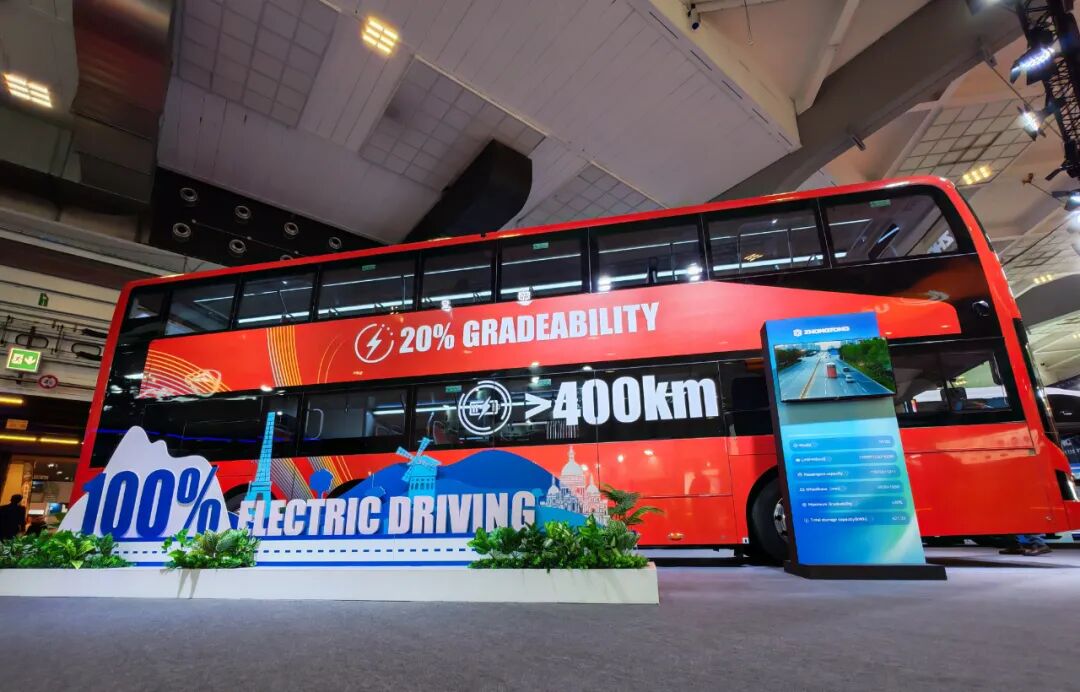
Core Insights - The article highlights the participation of Zhongtong Bus at the Belgium Bus Expo, showcasing its electric bus models and emphasizing the company's commitment to innovation and customization in the global market [2][6][10] Group 1: Company Overview - Zhongtong Bus has established itself as a leader in the Chinese bus industry, with a significant focus on electric and intelligent transportation solutions [2][5] - The company has transformed its strategy from merely exporting vehicles to providing customized solutions for global transportation challenges [5][10] Group 2: Market Performance - Since 2003, Zhongtong Bus has seen its overseas market share grow significantly, with exports increasing by over 65% in 2024 and an 11-fold increase in the first half of 2025 [5] - The company captured 90% of Shandong Province's bus export market, indicating strong regional dominance [5] Group 3: Product Highlights - Zhongtong Bus showcased five electric bus models at the expo, including the N12D double-decker city bus, which features a range of over 400 km on a single charge and rapid charging capabilities [6][10] - The H12E PLUS luxury coach integrates advanced technologies for energy efficiency and passenger comfort, including a 5-star health cabin certification and various driver assistance features [6][7] - The N18 electric bus is noted for its practical design and user-friendly features, catering to diverse passenger needs [7] Group 4: Technological Advancements - Zhongtong Bus has invested in R&D since 2004, becoming one of the earliest companies to focus on new energy technologies in the bus sector [10] - The company has achieved significant certifications, including the EU WVTA certification, which facilitates entry into high-end European markets [10] Group 5: Global Reach - Zhongtong Bus products are now exported to over 100 countries, including Singapore, Portugal, and Germany, demonstrating its extensive international footprint [10] - The company's approach combines advanced technology, intelligent ecosystems, and sustainable development principles, marking its evolution into a comprehensive solution provider [10]

十一来崇礼,共赴一场“汽车+赛事+文旅+消费”盛宴
Zhong Guo Qi Che Bao Wang· 2025-10-03 07:55
10月3日,2025(首届)京津冀新能源汽车挑战赛暨"智野无限"崇礼汽车嘉年华开幕式在张家口崇礼举行。 张家口市崇礼区文化广电旅游和体育局党组书记、局长赵利东在致辞中指出:本次盛会,是崇礼发展历程中的一个重要节点。它为我们带来了前所未有 的曝光度、人流量和合作机遇。我们将以此为契机,持续优化营商环境,大力发展赛事经济、会展经济、夜间经济,推动体育、文化、旅游与先进制造业的 耦合发展,让"冬奥之城"的品牌内涵更加丰富,让高质量发展的成色更足、底色更亮。 2025(首届)京津冀新能源汽车挑战赛暨"智野无限"崇礼汽车嘉年华高级顾问秦玉学对活动总体情况进行介绍并表示:本次盛会,是一次对智能网联新能 源汽车技术发展的集中检阅,是一个促进京津冀产业协同与消费增长的重要平台,更是一张向世界展示中国新能源汽车创新实力与绿色发展的闪亮名片。 中国国际贸易促进委员会机械行业分会会长周卫东表示:本次活动是我们对《新能源汽车产业发展规划(2021-2035年)》等国家蓝图的生动实践。它 通过"赛、游、购"融合的模式,搭建了一个技术比拼、产品展示与市场检验的公共平台。选择在"雪如意"下举办新能源汽车赛,是对冬奥场馆最富创意的活 化利用 ...

岚图汽车递交港股上市申请:央企新能源转型提速,为投资者打开价值新空间
Zhong Guo Qi Che Bao Wang· 2025-10-02 11:36
2025年10月2日,岚图汽车科技股份有限公司(以下简称"岚图汽车")正式向香港联交所递交上市申请,标志着岚图汽车赴港上市进入实质阶段。 增速领跑行业,销量三年翻三倍,经营韧性显著 在生产提速的同时,岚图汽车销量与收入保持高速增长。从2022年至2024年,岚图汽车销量从1.94万辆猛增至8.01万辆,复合年增长率高达103.2%,增 速在中国高端新能源汽车品牌中排名前三。进入2025年,岚图汽车继续保持高增长,前7个月销量6.67万辆。 随着销量快速攀升,岚图汽车营业收入规模在三年来也实现跨越式增长,从2022年的60.5亿元一路跃升至2024年的193.6亿元,复合增速为78.9%。进入 2025年,岚图汽车延续增长势头,1至7月实现收入157.8亿元,同比大幅提升90.2%。 从8月22日发布上市公告到递交上市申请,岚图汽车用不到40天的时间,再次对外展示了自身快速发展的效率。通过岚图汽车递交的招股说明书,也让 市场更加聚焦于岚图作为央国企高端新能源品牌的核心竞争力——高端新能源产品矩阵完善、技术壁垒坚实、从国内领先到全球拓展的体系能力。在推进产 品布局、技术积累与市场开拓的同时,岚图汽车也将迎来资本赋 ...

销量突破1.6万辆!极狐交出史上“成色最足”金九成绩单
Zhong Guo Qi Che Bao Wang· 2025-10-02 06:39
Core Insights - In September 2025, Zeekr Automotive reported a strong monthly sales performance, surpassing 16,000 units with a total of 16,074 vehicles sold, marking a year-on-year increase of 47.74%, positioning it among the top in the new energy vehicle sales rankings [1][3] - The newly launched Zeekr T1 achieved 35,000 pre-orders in its first month, indicating a successful market entry [1] Sales Performance - Zeekr's success contributed to BAIC New Energy's total sales of 20,539 units in September, highlighting the competitive landscape of the Chinese automotive market [3] - The industry consensus suggests that a monthly sales figure of 10,000 units is the survival threshold for automakers, while 20,000 units is necessary to gain market influence [3] Product Strategy - Zeekr's approach focuses on user-centric design, emphasizing the importance of integrating user needs into every product detail [5] - The Zeekr T1, targeting the sub-100,000 yuan market, is designed for daily commuting and shopping, prioritizing comfort, range, and economy over performance [7] - The vehicle features a 70 kW power motor and a CLTC range of at least 320 km, addressing common consumer concerns such as range anxiety with a fast-charging capability [7] Design and Usability - The Zeekr T1 includes 32 storage spaces and a flexible rear seat design, maximizing practicality and convenience for users [9] - The vehicle's design reflects a deep understanding of user scenarios, avoiding unnecessary technical complexity [11] Marketing Strategy - Zeekr employs a long-term marketing strategy, fostering emotional connections with consumers through initiatives like partnerships with sports teams [12] - The launch event for the Zeekr T1 was innovative, moving away from traditional formats to engage younger audiences through entertainment [14][16] Service and Infrastructure - Zeekr is expanding its after-sales service network, with 316 service points established and 143 more under construction, covering 267 cities across all tiers [17] - The company has built 140 brand charging stations and partnered with numerous public charging operators, ensuring convenient charging access for users [17] Industry Implications - Zeekr's achievements reflect a broader trend in the automotive industry, where understanding user needs and building emotional connections can drive growth in a competitive market [19] - The company's focus on efficiency and value-driven growth offers valuable insights for the industry's high-quality development [19]
