
Qian Zhan Wang

Search documents
【最全】2025年量子通信行业上市公司全方位对比(附业务布局汇总、业绩对比、区域布局、业务规划等)
Qian Zhan Wang· 2025-12-06 06:09
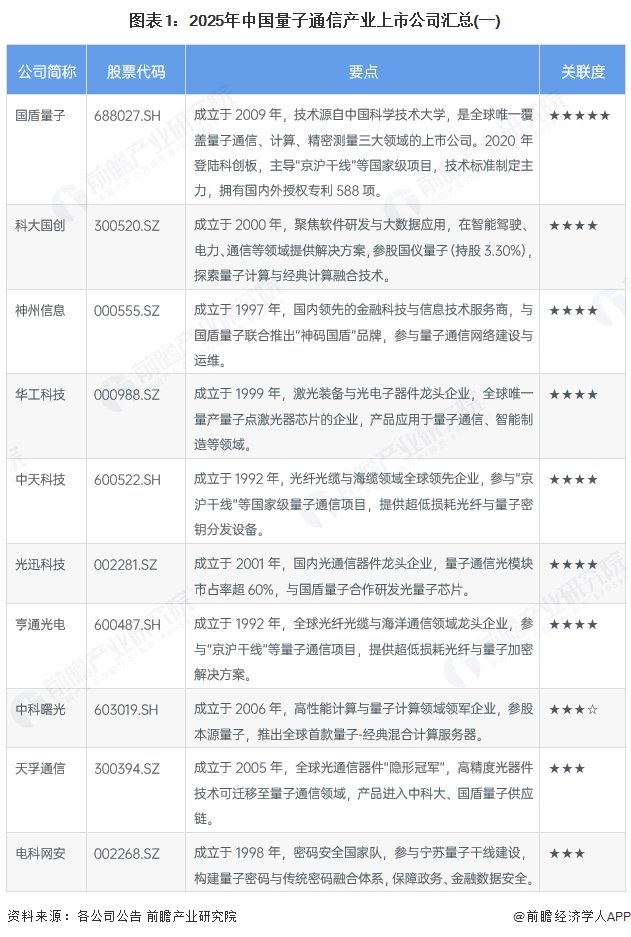
Core Insights - The quantum communication industry is characterized by a focus on integrating various technologies to enhance competitiveness, with Guodun Quantum as the core player leading in multiple sectors including quantum communication, computing, and precision measurement [1][2]. Company Overview - Guodun Quantum (688027.SH) is the only listed company covering the entire quantum communication, computing, and precision measurement sectors, with 588 patents and involvement in national projects like the "Beijing-Shanghai Backbone" [3]. - Other notable companies include Keda Guokuan (300520.SZ), Shenzhou Information (000555.SZ), and Huagong Technology (000988.SZ), which have high relevance in quantum technology due to their specialized developments and applications [2][3]. Financial Performance - In H1 2025, Hengtong Optics (600487.SH) and Zhongtian Technology (600522.SH) led the revenue with 32.05 billion and 23.6 billion respectively, while Guodun Quantum and Electric Science Cyber Security (002268.SZ) reported lower revenues as they focus on niche markets [4][6]. - The gross profit margins varied significantly, with Dipu Technology (300768.SZ) achieving the highest at 62.4%, followed by Tianfu Communication (300394.SZ) at 50.8% and Guodun Quantum at 48.4% [5][6]. Regional Layout - The quantum communication industry shows a clear clustering in the Yangtze River Delta, with major cities like Shanghai and Hefei being key locations for many companies, while the Beijing-Tianjin-Hebei region focuses on governmental and financial applications [7][9]. Business Planning - Guodun Quantum aims to commercialize low-cost quantum technology and expand into consumer markets, while other companies like Hengtong and Zhongtian are accelerating the industrialization of quantum optical cables and exploring 5G integration [15][17].



前瞻全球产业早报:我国信息通信领域首个国家重大科技基础设施正式投入运行
Qian Zhan Wang· 2025-12-05 14:52
Group 1 - The upcoming Central Economic Work Conference is expected to focus on sustaining consumer spending and supporting the private sector, with a continuation of loose fiscal and monetary policies likely to stabilize economic recovery momentum [2] - China's first major national technology infrastructure in the information and communication sector, the Future Network Experimental Facility, has officially commenced operations, marking a significant advancement in network technology innovation and application capabilities [2] - As of the end of Q3, China has built over 500PB of high-quality datasets, which are crucial for enhancing AI model performance and accelerating innovation across various industries [3] Group 2 - Seven satellite internet innovation entities in Shanghai have been awarded recognition, including institutions like the Chinese Academy of Sciences and Shanghai Aerospace Space Technology Co., Ltd [4] - The Hubei Provincial State-owned Assets Supervision and Administration Commission plans to optimize the layout of state-owned enterprises and enhance the efficiency of state capital operations by revitalizing idle assets and promoting specialized integration among different levels of enterprises [5] - ByteDance's mobile phone, the Doubao, has sold out its initial batch of 30,000 units, with the second-generation product expected to be released by the end of 2026 [5] Group 3 - Samsung has established an AI research institute, appointing Lee Kang-soo as its first head, indicating a strategic focus on AI development [11] - OpenAI has reached an agreement to acquire Neptune, a startup that provides monitoring and debugging tools for AI model training, enhancing its capabilities in AI research [8] - South Korea's exports are projected to exceed $700 billion for the first time, driven by strong performance in key sectors such as semiconductors, automobiles, and shipbuilding [7]
清空一座垃圾山,崛起一座未来城
Qian Zhan Wang· 2025-12-05 07:00
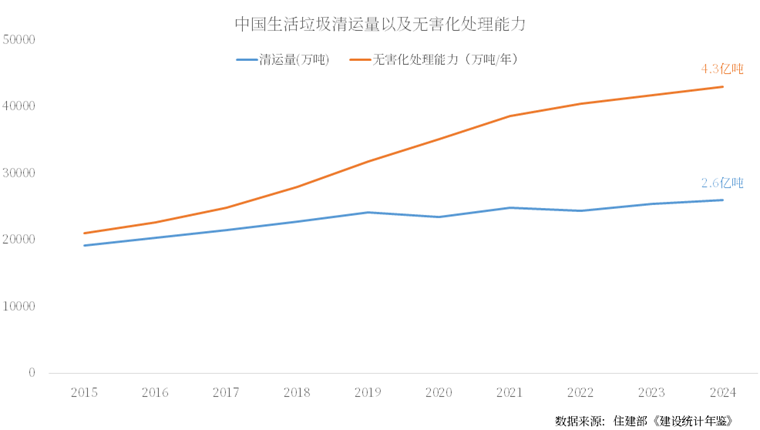
Core Viewpoint - The transformation of the Yulong landfill in Shenzhen from a waste site into a resource-rich industrial area represents a strategic shift in China's waste management approach, addressing the dual challenges of insufficient waste for incineration and the need for urban land resource optimization [1][2][4]. Group 1: Challenges in Waste Management - Shenzhen's waste incineration facilities are facing a decline in the volume of combustible waste due to effective waste classification and reduction policies, leading to a situation where the total amount of waste is decreasing while its quality is changing [2][4]. - There are over 100,000 informal waste dumping sites across China, with more than 8 billion tons of legacy waste posing environmental risks and potential resource opportunities [4]. Group 2: Strategic Initiatives - The Yulong landfill project is part of Shenzhen's "14th Five-Year Plan" aimed at promoting a "waste-free city," with plans to excavate and utilize 2.55 million cubic meters of aged waste [5]. - The project employs a large-scale green canopy system to facilitate a clean excavation process, minimizing environmental impact and maintaining high cleanliness standards [5][6]. Group 3: Resource Recovery and Economic Impact - The excavation process at Yulong landfill is expected to recover approximately 330,000 tons of combustible materials, generating enough energy to power around 26,000 households for a year [8]. - The project aims to release about 30 hectares of prime industrial land, potentially accommodating over 1 million square meters of buildings, thus creating significant economic opportunities and attracting over 15 billion yuan in fixed asset investment [9]. Group 4: Policy Evolution and Implementation - Shenzhen has been at the forefront of waste management policy evolution, becoming a pilot city for "waste-free" initiatives and implementing mandatory waste classification to enhance waste reduction and quality [11][12]. Group 5: Global Implications - The Yulong landfill project is gaining international attention as a replicable model for urban waste management, showcasing a comprehensive approach that integrates environmental remediation, space reclamation, and industrial development [12].
【行业深度】洞察2025:中国传媒行业竞争格局及市场份额(附市场集中度、企业竞争力等)
Qian Zhan Wang· 2025-12-05 03:55
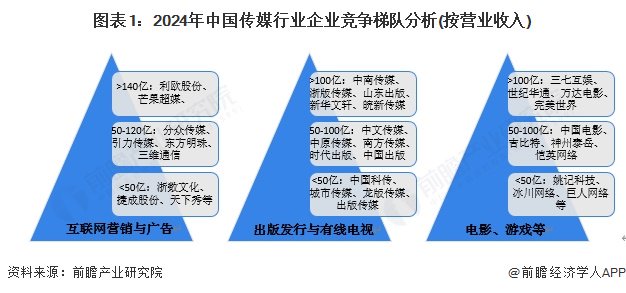
Group 1 - The core viewpoint of the article highlights the competitive landscape and market concentration of the Chinese media industry, indicating that the industry is characterized by a large number of listed companies and varying levels of competition among them [1][5]. Group 2 - In terms of revenue rankings, the top three media companies in China are BlueFocus, Leo Group, and 37 Interactive Entertainment, each projected to exceed 17 billion yuan in revenue by 2024 [2]. Group 3 - The overall revenue of China's media industry is expected to reach 507.1 billion yuan in 2024, with a CR3 of 20.62%, CR5 of 28.14%, and CR10 of 41.10%, indicating a relatively low market concentration and intense competition [5]. Group 4 - Among the listed media companies, 37 Interactive Entertainment has the highest gross profit margin for its products, reaching 78.63% in 2024 [6]. Group 5 - An analysis using the Five Forces model reveals that the media industry is primarily dominated by large enterprises, with intense competition from smaller firms. The bargaining power of suppliers is strong, while the bargaining power of consumers is weak due to the low substitutability of media products. The threat of new entrants is significant due to low entry barriers, and the risk of market substitution is low [8].





投资杭州 | 一文看懂杭州市生命健康发展现状与投资机会前瞻(附生命健康产业现状、空间布局、投资机会分析等)
Qian Zhan Wang· 2025-12-05 03:12
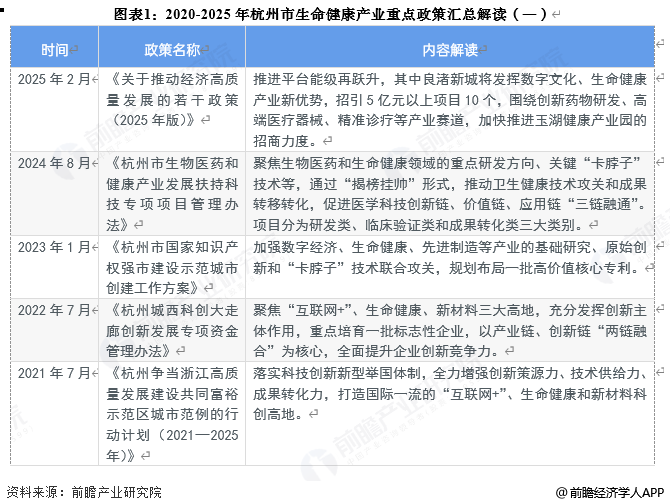
Group 1 - Hangzhou is transforming from "policy dividends" to "industry dividends" with a focus on technological innovation, making it a strategic hub for global investors in the life and health industry [1][4] - The city has introduced multiple supportive policies for the life and health industry, including the "Management Measures for Supporting Technology Special Projects in the Development of Biomedicine and Health Industry" [1][2] - Hangzhou's life and health industry has a comprehensive industrial chain covering upstream raw materials and equipment, midstream manufacturing, and downstream applications [5][6] Group 2 - As of 2023, the added value of Hangzhou's life and health industry reached 156.8 billion yuan, with a projected increase of 2.8% to 161.2 billion yuan in 2024 [11][13] - Key districts such as Gongshu, Qiantang, and Lin'an are showing significant growth in the life and health industry, with Gongshu's added value reaching 30.3 billion yuan in 2024 [13] - The number of registered enterprises in Hangzhou's life and health industry has been fluctuating, with 121 new enterprises in 2024 and 128 by November 2025 [15][18] Group 3 - The distribution of life and health enterprises is concentrated in districts like Shangcheng, Gongshu, and Xiaoshan, with Gongshu housing major companies such as East China Pharmaceutical and AstraZeneca [20] - Hangzhou has established several industrial parks and clusters, such as Liangzhu Life Science Technology Town and Zijin Port Technology City, to support the life and health industry [23] - The financing landscape for the life and health industry in Hangzhou is active, with a significant number of investments occurring in Qiantang District [26][32] Group 4 - The life and health industry in Hangzhou is seen as a key area for high-quality economic development, with substantial market potential and investment value [32] - Districts are formulating development strategies for the life and health industry, with Qiantang aiming for a total output value of 50 billion yuan by 2026 [34] - The industry benefits from strong policy support, a concentration of leading enterprises, and the establishment of multiple industrial clusters [34]
套现超400亿离场!日本首富孙正义:我是哭着卖出英伟达股票,不是因为缺钱一股都不想卖【附人工智能行业市场分析】
Qian Zhan Wang· 2025-12-04 07:05
Group 1 - SoftBank's founder Masayoshi Son expressed regret over selling Nvidia shares, stating he needed funds for investments in OpenAI and other projects, emphasizing he sold "crying" [2] - SoftBank initially invested approximately $4 billion in Nvidia in 2017 but sold its entire stake in early 2019, missing out on significant gains as Nvidia's stock soared [2] - In November 2023, SoftBank sold 32.1 million shares of Nvidia for $5.83 billion, coinciding with Nvidia's stock at an all-time high, to raise capital for a $22.5 billion investment in OpenAI [2] Group 2 - OpenAI, known for its groundbreaking AI model ChatGPT, has sparked a global AI revolution, leading to the emergence of numerous large pre-trained models across various sectors [3] - SoftBank's strategy extends beyond OpenAI, involving participation in the Stargate data center project, acquisition of chip company Arm, and investment in robotics, all requiring substantial funding [4] - Son dismissed concerns about an "AI bubble," arguing that if AI can contribute 10% to global GDP, it would offset trillions in cumulative spending, highlighting AI's potential as a core driver of economic transformation [4] Group 3 - China's AI core industry is nearing a scale of 600 billion yuan, with projections indicating the market could reach 1 trillion yuan by 2030 [5] - The Chinese AI sector has contributed to 48% of global internet traffic growth from 2021 to 2024, indicating its significant impact on network architecture and internet interaction paradigms [8] - The next decade is critical for AI development, with intelligent systems evolving from mere tools to engines of productivity, reshaping the internet interaction model [8]



全球第三个!宁波舟山港年集装箱吞吐量首破4000万大关,成近十年前五大港口吞吐量增速最快港口【附国际集装箱海运市场分析】
Qian Zhan Wang· 2025-12-04 06:45
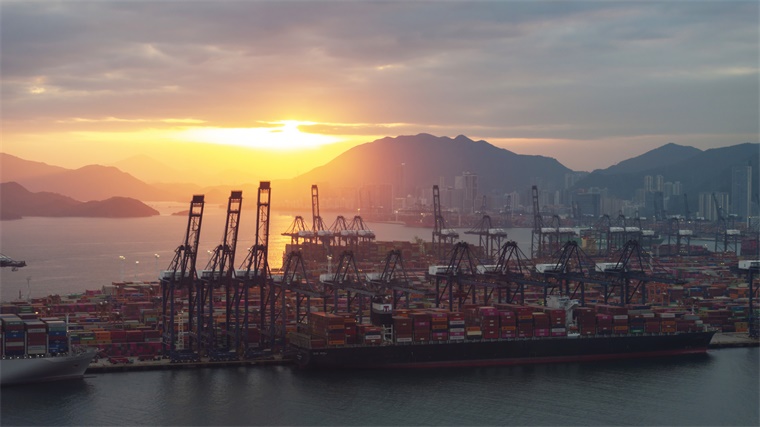
Core Insights - Ningbo-Zhoushan Port has achieved a historic milestone by surpassing an annual container throughput of 40 million TEUs, becoming the first port in mainland China and the third globally to reach this level [2] - The port's rapid growth is evident, with the time taken to increase from 30 million to 40 million TEUs reduced to just four years, showcasing its significant expansion compared to other major ports [2] - The 40 million TEUs represent a trade value exceeding $2 trillion, highlighting the resilience of China's foreign trade amidst a complex international environment [2] Group 1: Port Performance - Ningbo-Zhoushan Port is the only port globally with two container terminals each handling over 10 million TEUs, namely Meishan and Chuanshan [7] - The port's connectivity index ranks second globally, with a network covering over 200 countries and regions and more than 600 ports [7] - The port facilitates nearly 300 vessel movements daily, enhancing its role in the global supply chain [7] Group 2: Global Market Context - As of May 2024, the global container shipping market is highly concentrated, with the top three companies (Mediterranean Shipping Company, Maersk, and CMA CGM) controlling 47% of the total capacity [3] - The top ten shipping companies account for 84% of the global container capacity, indicating a significant challenge for market stability and fair competition [3] - In 2023, seven out of the top ten container ports globally are located in China, with Shanghai Port leading at 49.16 million TEUs [8][9]
太抢手了!3499元“豆包助手”手机一天就卖光,闲鱼最高溢价超过6500元【附智能手机行业市场分析】
Qian Zhan Wang· 2025-12-04 06:40
Core Insights - The "Doubao Assistant" engineering prototype, developed by ByteDance and ZTE, sold out within a day of its release, indicating strong market demand for AI-integrated smartphones [1][6] - The device is not a mass-market product but an engineering sample aimed at developers and tech enthusiasts, featuring high-end specifications and a unique AI assistant [1][2] - The smartphone market in China is highly concentrated, with major players like Vivo and Huawei holding significant market shares [3][5] Group 1: Product Overview - The "Doubao Assistant" is priced at 3499 yuan and features flagship specifications, including a 6.78-inch screen and Qualcomm Snapdragon 8 Gen 2 platform, making it attractive to developers [1][2] - The AI assistant can perform tasks across applications, breaking down data barriers and enhancing user experience [2][6] Group 2: Market Dynamics - The Chinese smartphone market is dominated by a few key players, with Vivo holding a 17.2% market share and Huawei over 16% in 2024 [3] - The top five manufacturers (Vivo, Huawei, Honor, OPPO, Xiaomi) account for approximately 80.8% of the market share, indicating high market concentration [5] Group 3: Industry Implications - The success of the "Doubao Assistant" prototype highlights the potential for system-level AI integration in smartphones, which could reshape the industry [6][7] - Traditional smartphone manufacturers may need to adapt to this new model of AI-defined hardware, which could disrupt existing brand-user relationships [6][7]

前瞻全球产业早报:首款“豆包AI手机”售罄
Qian Zhan Wang· 2025-12-03 01:26
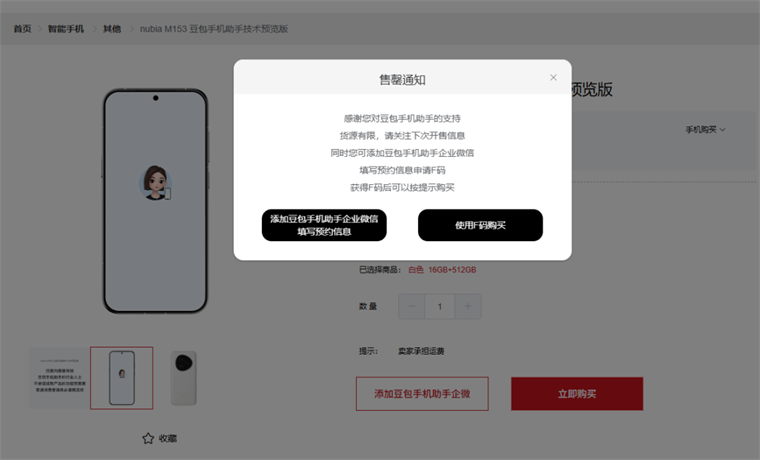
Group 1 - The first "Doubao AI phone," Nubia M153, has sold out, with resale prices ranging from 300 to 3500 yuan [2] - Sunyu Optical Technology exclusively supplies key components, including the camera lens and main telephoto module for the Doubao AI phone [2] - The launch of the Doubao AI phone has led to a surge in AI phone concept stocks and a rise in the entire mobile industry chain [2] Group 2 - Ideal Auto announced a strategic partnership with Zeiss, with the launch of the Ideal AI glasses "Livis" scheduled for December 3, 2025 [3] - Samsung introduced its first tri-fold smartphone, Galaxy Z TriFold, set to launch in South Korea on December 12, with a starting price of approximately $2500 [4] Group 3 - In October, China added 5358 new registered renewable energy projects, primarily in solar power, with 5336 projects being solar [4] - The total import and export value of automotive goods in October was $25.31 billion, showing a month-on-month increase of 1.7% and a year-on-year increase of 9.5% [5] Group 4 - CATL announced that 1000 battery swap stations will be operational before the Spring Festival [6] - Xiaomi has delivered over 500,000 vehicles since April 3, 2024, exceeding its annual target of 350,000 vehicles for 2025 [6] Group 5 - Canon announced the closure of its office equipment manufacturing facility in Zhongshan, Guangdong, due to market challenges and declining demand for laser printers [7] - The Russian tourism industry anticipates a significant increase in Chinese tourists following a new visa exemption policy for visits to Russia [7] Group 6 - Panasonic is considering using part of its U.S. battery factory for data center construction [8] - Samsung's semiconductor division has refused to sign long-term contracts for memory chips with its mobile division, opting for quarterly agreements instead [9] Group 7 - LG Energy is expanding its energy storage system battery production capacity in North America, aiming for a total capacity of 50 GWh, significantly above its initial target of 30 GWh [10] Group 8 - AI chip company Qingwei Intelligent has completed over 2 billion yuan in Series C financing [11] - The embodied robotics company "Daimeng Robotics" has completed a strategic round of financing worth hundreds of millions, marking its second round in three months [12] - AR display technology company "ReaVis" has completed tens of millions in Series B financing [13]
前瞻全球产业早报:我国快递年业务量首次突破1800亿件
Qian Zhan Wang· 2025-12-02 11:51
Group 1: Green Energy and Technology - The Ministry of Industry and Information Technology encourages Chinese companies in photovoltaic, wind power, lithium batteries, and new energy vehicles to expand internationally and invest in green energy projects along the Belt and Road [2] - A 200,000 kW, 800,000 kWh semi-solid battery energy storage project in Inner Mongolia has successfully connected to the grid, marking a significant milestone in China's semi-solid storage technology [3] Group 2: Economic Indicators - China's express delivery business volume has surpassed 180 billion pieces for the first time, reflecting strong economic momentum [4] Group 3: Regional Development Plans - Liaoning Province aims to develop core artificial intelligence industries and accelerate breakthroughs in industrial software innovation as part of its 14th Five-Year Plan [5] - Guizhou Province plans to boost consumer spending and stabilize key product consumption, including automobiles and liquor, in its 14th Five-Year Plan [6][7] Group 4: Corporate Developments - The establishment of a Commercial Space Administration by the National Space Administration is expected to benefit the entire commercial space industry chain [8] - Ningde Times plans to increase the base salary of its employees by 150 yuan starting January 1, 2026, to attract and retain talent [9] - Xiaomi is set to launch a "current vehicle selection" program for its cars, offering quick delivery and warranty services [10] - ByteDance's Doubao team has released a technical preview of its mobile assistant, collaborating with phone manufacturers to enhance user experience [11] - Dongfang Zhenxuan has added food delivery services to its business scope [12] Group 5: Market Movements - SoftBank's Masayoshi Son expressed regret over selling Nvidia shares to fund AI projects, indicating a strategic shift in investment focus [13] - Elon Musk predicts that AI will resolve the U.S. debt crisis within three years, suggesting a transformative impact on productivity [14] - Apple is accelerating the development of its first foldable iPhone, expected to launch in Fall 2026, with a projected price of around $2,400 [15] Group 6: Industry Trends - Amazon and Google are launching a multi-cloud network service to meet the growing demand for reliable connectivity [16] - AI-driven traffic on U.S. retail websites surged by 805% during Black Friday, indicating a significant shift in consumer behavior towards AI tools [16]