Qian Zhan Wang

Search documents
2025年中国丝绸行业技术环境分析:绿色生产技术、智能化技术赋能行业发展
Qian Zhan Wang· 2025-05-22 09:12
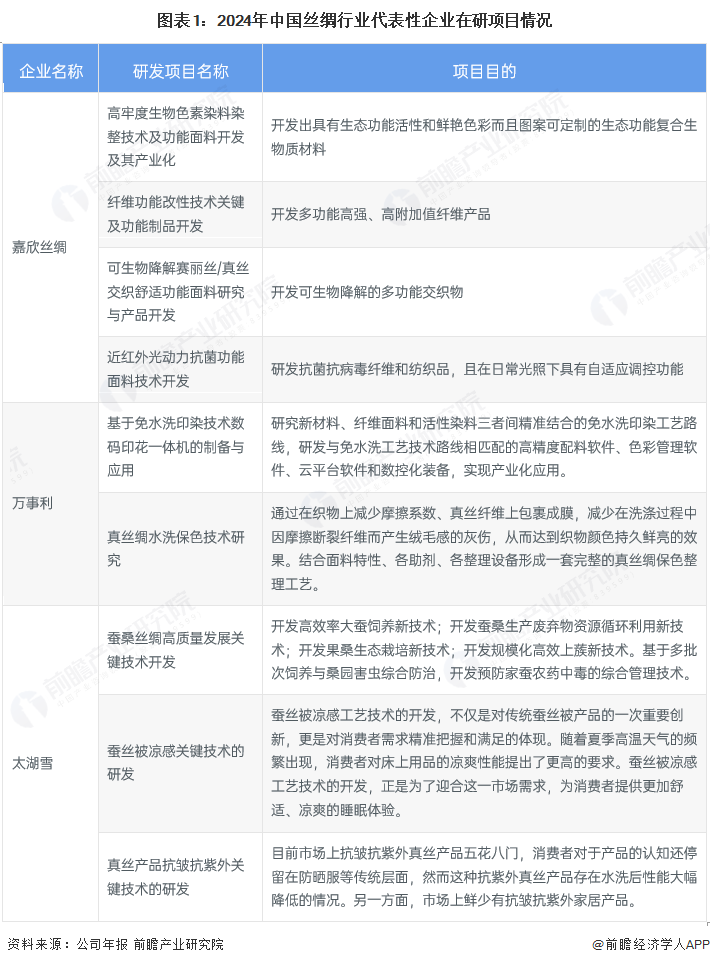
Core Viewpoint - The Chinese silk industry is focusing on green production and enhancing product performance to meet diverse consumer demands in 2024, with significant investments in research and development by leading companies [1][3][11]. Group 1: R&D Focus Areas - Leading companies are concentrating on developing eco-friendly materials, antibacterial fibers, multifunctional high-strength fibers, and biodegradable materials [1][3]. - Innovations in dyeing processes, such as waterless dyeing technology and silk fabric color retention techniques, are being prioritized to achieve environmentally friendly production [1][3]. - New technologies are being developed to enhance consumer comfort, including cooling techniques for silk quilts and wrinkle-resistant, UV-protective silk products [1][3]. Group 2: R&D Investments - Aimer Co., Ltd. has a research and development investment exceeding 100 million yuan, reaching 122.85 million yuan in 2024, while other listed companies have investments below 100 million yuan [3]. - Taihu Snow and Wanshili have relatively low R&D investments of 22.69 million yuan and 36.80 million yuan, respectively, but maintain leading R&D intensities of 4.4% and 5.1% [3]. Group 3: Patent Application Trends - Recent trends show a decline in patent applications in the silk industry, with a significant drop in 2022, indicating a shift in focus towards experimental applications [6][8]. - As of May 11, 2025, there are 126 silk-related patent applications and 1,129 valid patents in China, with the majority concentrated in medical and cosmetic formulations [6][8][10]. Group 4: AI Integration in the Industry - The silk industry is undergoing a transformation with the integration of digital and intelligent technologies, aiming for high-quality development [11]. - Companies like Dali Silk and Wanshili are leveraging AI for digital upgrades in design and production, significantly reducing production cycles and enhancing efficiency [11][13]. - Taihu Snow is utilizing AI to accelerate new product promotion and improve marketing efficiency through intelligent design elements [11][13].


2025年中国多模态大模型行业主要模型 主要多模态大模型处理能力表现出色【组图】
Qian Zhan Wang· 2025-05-22 08:58
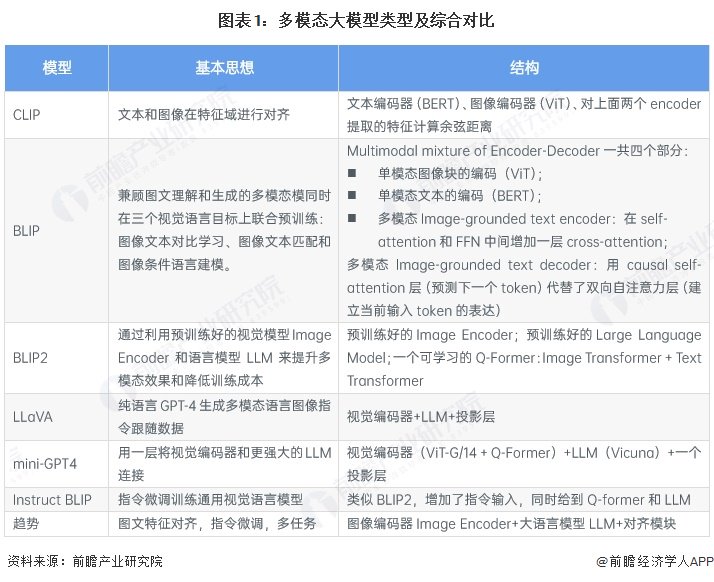
Core Insights - The article discusses the development and comparison of multimodal large models, emphasizing the integration of visual and language components to enhance understanding and generation capabilities in AI systems [1][7]. Multimodal Model Types - The mainstream approach for visual and language multimodal models involves using pre-trained large language models and image encoders, connected through a feature alignment module to enable deeper question-answer reasoning [1]. - CLIP, developed by OpenAI, utilizes a contrastive learning method to connect image and text feature representations, allowing for zero-shot classification by calculating cosine similarity between text and image embeddings [2]. - Flamingo, introduced in 2022, combines visual and language components, enabling text generation based on visual and textual inputs, and includes various datasets for training [5]. - BLIP, proposed by Salesforce in 2022, aims to unify understanding and generation capabilities for visual language tasks, enhancing model performance through self-supervised learning and addressing complex tasks like image generation and visual question answering [7]. - LLaMA integrates a visual encoder (CLIP ViT-L/14) with a language decoder, utilizing generated data for instruction fine-tuning, ensuring that visual and language tokens exist in the same feature space [8].



重磅!2025年中国及31省市稀土行业政策汇总及解读(全)“加强保护、提高创新应用能力是政策主旋律”
Qian Zhan Wang· 2025-05-22 02:02
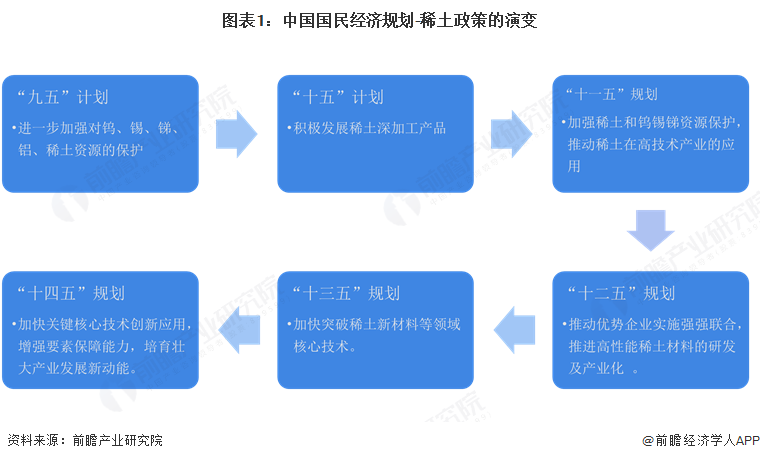
Core Insights - China is a major player in the rare earth industry, holding significant global market share, with a production of 270,000 tons in 2024, accounting for 69.2% of the total global output of 390,000 tons [1] - The government has implemented various policies at both national and local levels to support the development of the rare earth industry, focusing on resource protection and technological innovation [2][4] National Policy Summary - The Chinese government has issued multiple policies to guide the rare earth industry, emphasizing the importance of sustainable development and technological advancement [2] - Key policies include the "Rare Earth Management Regulations," which will take effect on October 1, 2024, aimed at enhancing resource protection and establishing a comprehensive management system for the entire industry chain [14] - The "14th Five-Year Plan" outlines goals for the rare earth industry, including promoting high-quality development and ensuring resource security [10][12] Local Policy Summary - Various provinces have introduced specific policies to enhance their rare earth industries, such as Sichuan's goal to establish itself as a major rare earth production base by 2027, targeting an industry scale exceeding 100 billion yuan [17] - Inner Mongolia aims to become a leading base for rare earth new materials and applications, focusing on technological innovation and sustainable practices [17] - Zhejiang's plan emphasizes the development of high-performance rare earth materials and their applications in various industries [19] Development Goals - The rare earth industry aims to achieve a self-sufficiency rate of over 80% by 2025, transitioning from a follower to a leader in the field of rare earth functional materials [10] - By 2035, the goal is to establish China as a global leader in rare earth materials, with significant advancements in innovation and competitiveness [10][12]


2025年中国润滑油细分市场分析:交通用润滑油是我国润滑油主要消费领域
Qian Zhan Wang· 2025-05-21 08:16
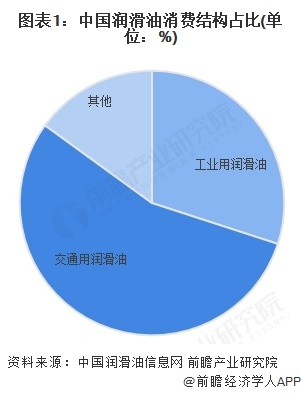
Group 1 - The core viewpoint of the article highlights the structure of lubricant oil consumption in China, which is divided into transportation and industrial oils, with transportation oil accounting for approximately 55% and industrial oil for about 30% of total consumption [1] - In the transportation lubricant oil segment, gasoline and diesel engine oils dominate, with their consumption proportions projected to be 36% and 39% respectively in 2024, while gear oil accounts for 9% [2] - The internal combustion engine oil, which includes gasoline and diesel engine oils, plays a crucial role in lubricating engine components and is expected to maintain a high consumption share [5] Group 2 - The strategic position analysis of the transportation lubricant oil market indicates that the automotive sector has a high market attractiveness and competitive position, while the engineering machinery sector shows a relatively lower strategic position due to slower growth [10] - The total consumption of turbine oil is expected to account for 16% and diesel engine oil for 24% in 2024, indicating a significant share of internal combustion engine oil in the lubricant market [8] - Major brands in the lubricant oil industry include Kunlun, Great Wall, Compton, and Longpan, offering a variety of products such as synthetic high-performance gasoline engine oils and specialized diesel engine oils [6]




2025年中国纺织行业经营效益分析:行业盈利能力减弱,毛利率周期性波动显著
Qian Zhan Wang· 2025-05-21 07:12
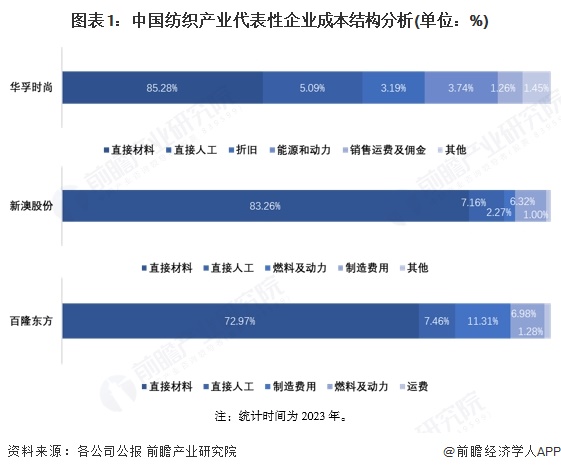
Group 1: Cost Structure Analysis - In the textile industry, direct material costs constitute the primary component of production costs, accounting for approximately 70%-85% of total costs, which significantly impacts pricing and profitability [1][4] - Fluctuations in raw material prices have a notable effect on cost control and profitability, leading companies to adopt strategies such as centralized purchasing, hedging, and advance stocking to mitigate risks [1] Group 2: Price Transmission Mechanism - The textile industry operates through a supply, manufacturing, and sales chain, where costs from the supply side, including raw materials and labor, are transmitted to the manufacturing side as production costs, which then influence consumer pricing through demand elasticity [4] Group 3: Value Distribution in the Textile Industry - Sales represent the most critical segment of the textile value chain, with downstream apparel and home textile brands holding significant bargaining power, while upstream suppliers have limited negotiation capabilities, resulting in intense price competition and low profitability for textile manufacturers [6] Group 4: Industry Operating Efficiency - From 2015 to 2023, the total profit of China's textile industry has shown a downward trend, indicating weakened profitability; however, in 2024, the total profit for textile enterprises (excluding apparel and chemical fiber) is projected to reach 86.87 billion yuan, reflecting a year-on-year increase of 3.5% after two consecutive years of decline [10] Group 5: Profitability of Textile Enterprises - The gross profit margin in the textile industry exhibits significant quarterly cyclicality, typically fluctuating between 10% and 12%, with November generally showing higher margins above 11%, while May and August tend to have lower margins due to seasonal production and sales factors [11]


前瞻全球产业早报:鸿蒙电脑正式发布
Qian Zhan Wang· 2025-05-21 01:55
Group 1 - The National Development and Reform Commission announced a reduction in domestic gasoline and diesel prices by 230 yuan and 220 yuan per ton, respectively, effective from May 19, 2025 [2] - Huawei launched its first HarmonyOS foldable laptop, the MateBook Fold, starting at 23,999 yuan, alongside the MateBook Pro starting at 7,999 yuan [2] Group 2 - The 2025 Global Investor Conference was held in Shenzhen, with nearly 400 representatives from financial regulatory bodies and institutions attending, focusing on investment opportunities in China's market [3] - In April, the national industrial added value for large-scale enterprises grew by 6.1% year-on-year, exceeding market expectations by 0.9 percentage points [3] Group 3 - The "Panda Special Train" from Chengdu to Xinjiang sold out all 10 trips scheduled from May to October, with ticket prices starting at 50,000 yuan, and 70% of the passengers being inbound tourists [4][5] - The Hangzhou Artificial Intelligence Industry Innovation Center was established with a registered capital of 100 million yuan, focusing on big data services and information system integration [5] Group 4 - Tencent QQ has completed adaptation for HarmonyOS computers, with WeChat and WeChat Work also in the process of adaptation [6] - Huawei, UBTECH, Zhiyuan Robotics, and Zhongjian Technology are collaborating on health and wellness humanoid robots, with a launch event scheduled for May 21 [7] Group 5 - Xiaomi's self-developed chip, "Xuanjie," has seen cumulative R&D investment exceed 13.5 billion yuan, with a team of over 2,500 people and an expected investment of over 6 billion yuan this year [8] Group 6 - Nissan is considering closing several factories in Japan and overseas to cut costs, potentially leaving only three assembly plants in Japan [13][14] - Analyst Ming-Chi Kuo predicts that significant updates to Apple's AirPods may not occur until 2026, with a lightweight version of AirPods Max expected in 2027 [15] Group 7 - Google CEO Sundar Pichai stated that AI will enhance search capabilities rather than eliminate them, emphasizing the potential for progress in the search field [16] Group 8 - EHang, an eVTOL manufacturer listed on NASDAQ, is considering a secondary listing [18] - The high-end maternal and infant care brand Saint Bella has been approved to initiate its IPO process in Hong Kong, aiming to issue up to 192 million shares [18] Group 9 - A-shares closed mixed, with the Shanghai Composite Index flat, the Shenzhen Component down 0.08%, and the ChiNext Index down 0.33% [19]


前瞻全球产业早报:民营经济促进法5月20日起实施
Qian Zhan Wang· 2025-05-20 23:17
Group 1: Private Economy Promotion Law - The "Private Economy Promotion Law" of China officially takes effect on May 20, marking the first foundational law specifically for the development of the private economy [2] - The law enshrines the principle of "two unwavering" and establishes the legal status of the private economy as a vital component of the socialist market economy [2] - It consists of 9 chapters and 78 articles, aiming to promote the sustainable, healthy, and high-quality development of the private economy [2] Group 2: Artificial Intelligence in Zhejiang - Zhejiang Province aims to achieve over 1 trillion yuan in revenue from its core artificial intelligence industry by 2027 [2] - The government has introduced measures to support AI innovation, with a goal of creating globally competitive AI enterprises [2] - By 2030, the revenue target for the AI core industry is set to exceed 1.2 trillion yuan [2] Group 3: Xiaomi's New Chip Production - Xiaomi's founder Lei Jun announced that the company's self-developed 3nm flagship chip, Xiaomi Xuanjie O1, has begun mass production [3] - The chip will be featured in two flagship products: the Xiaomi 15s Pro smartphone and the Xiaomi Pad 7 Ultra tablet [3] Group 4: New Energy Vehicle Market - In April, the retail penetration rate of new energy vehicles reached 51.5%, an increase of 7 percentage points year-on-year [4] - The retail sales volume of new energy passenger vehicles was 905,000 units, reflecting a growth of 33.9% [4] Group 5: Hydrogen Energy Industry in Beijing - Beijing's State-owned Assets Supervision and Administration Commission is prioritizing the hydrogen energy industry in its 14th Five-Year Plan [5] - The focus will be on key areas of the hydrogen industry chain, including production, storage, transportation, and refueling [5] Group 6: Measurement Development in Guangdong-Hong Kong-Macao Greater Bay Area - The Guangdong-Hong Kong-Macao Greater Bay Area Measurement Development Cooperation Platform has been officially launched to enhance measurement collaboration [6] - The platform aims to achieve mutual recognition of measurement results and promote a unified market in the region [6] Group 7: Urban Renewal Support - The Ministry of Natural Resources is implementing measures to support urban renewal through a unified resource management and spatial planning system [7] - The initiative includes a comprehensive survey of existing resources to facilitate effective urban development [7] Group 8: Waymo's Expansion of Autonomous Taxi Service - Waymo has received approval to expand its autonomous taxi service in California, including more areas in San Francisco and southward to San Jose [17] - The company operates the only paid autonomous taxi service in the U.S., with over 1,500 vehicles and more than 250,000 rides per week [17] Group 9: AMD's Sale of Data Center Business - AMD has reached an agreement to sell ZT Systems' data center infrastructure manufacturing business to Sanmina for $3 billion [15] - The transaction is expected to be completed by the end of this year [15] Group 10: Regeneron's Acquisition of 23andMe - Regeneron Pharmaceuticals announced plans to acquire 23andMe for approximately $260 million, gaining control over its genomic services and biobank [18] - The acquisition is expected to be completed in the third quarter of this year [18]






2025年中国多模态大模型行业文娱媒体应用场景 多模态大模型提升文娱媒体创作效率【组图】
Qian Zhan Wang· 2025-05-20 07:27
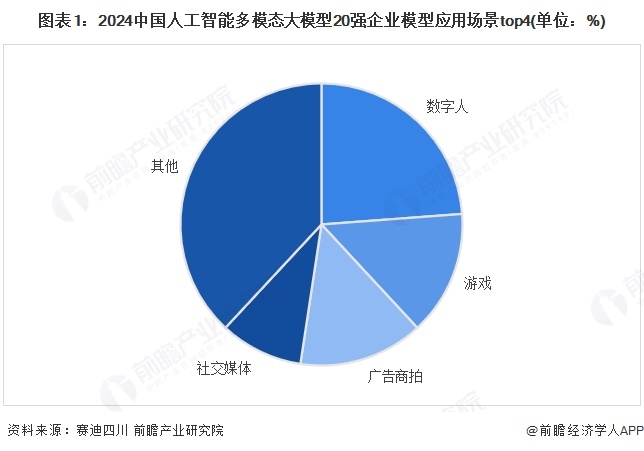
Core Insights - The article emphasizes the growing importance and application of multimodal large models in various industries, highlighting their clearer commercial monetization paths compared to language-only models [1] Multimodal Large Models Applications - Multimodal large models are categorized into 11 application scenarios, with the top five being digital humans, gaming, advertising, social media, and intelligent marketing, indicating a high maturity level and significant attention in these areas [1] - Digital humans leverage multimodal technology to enhance human-computer interaction through natural language processing, voice synthesis, and realistic visual presentation, improving user experience [2][5] - In gaming, multimodal large models enhance interaction by allowing characters to understand player commands and respond contextually, creating a more immersive experience [5] - The advertising industry benefits from multimodal technology by automating content creation, personalizing ad delivery, and enhancing user engagement, leading to a more efficient and intelligent advertising ecosystem [8][10] - Social media platforms are being transformed by multimodal large models, improving content creation, user recommendations, interaction experiences, community governance, and commercialization [11][12]

【投资视角】启示2025:中国预制菜行业投融资及兼并重组分析(附投融资事件和兼并重组等)
Qian Zhan Wang· 2025-05-20 06:39
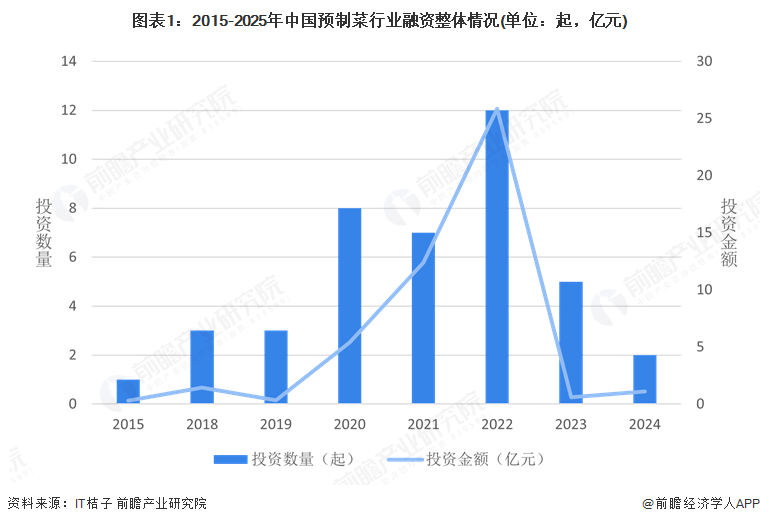
转自:前瞻产业研究院 行业主要上市公司:双汇发展(000895.SZ)、安井食品(603345.SH)、广州酒家(603043.SH)、三全食品 (002216.SZ)、千味央厨(001215.SZ)、金字火腿(002515.SZ)、海欣食品(002702.SZ)、味知香(605089.SH)、海 底捞(6862.HK)等 本文核心数据:预制菜行业投融资规模;代表性企业融资事件;兼并重组 1、近期国内预制菜行业投融资热度有所下滑 根据IT桔子数据库统计,2015年来,我国预制菜行业融资规模呈现先增长后降低的趋势,尤其在2022年,中 国预制菜行业融资事件大幅上涨,许多预制菜新品牌获得融资;2023-2024年预制菜行业在资本融资市场遇 冷,2025年截至4月21日,我国预制菜行业尚未发生融资。就融资事件数量情况来看,近期我国预制菜行业 投融资热度有所下滑。 2、预制菜领域单笔融资规模在五千万水平,投资轮次开始集中在早期天使轮 从单笔融资金额来看,2015-2024年除2016年和2021-2022年的单笔融资金额上升到1.5亿元以上外,其他年份 的单笔融资金额基本在5000万元左右。2024年的两次融资单笔融 ...
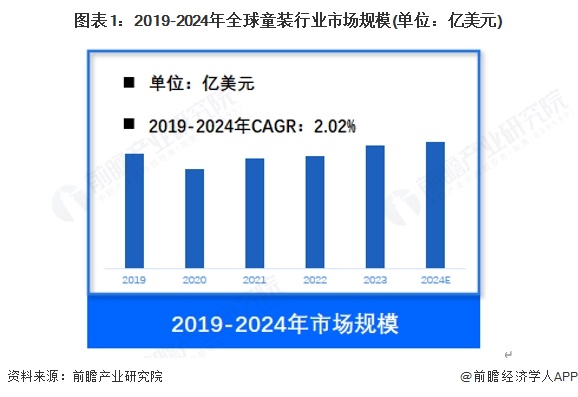
【童装】行业市场规模:2024年全球童装行业市场规模约2800亿美元 儿童睡衣、内衣市场占比约21%
Qian Zhan Wang· 2025-05-20 04:07
转自:前瞻产业研究院 细分产品市场 行业主要上市公司:安奈儿(002875)、森马服饰(002563)、朗姿股份(002612)、泰慕士(001234)等; 本文核心数据:全球童装行业市场规模 2024年全球童装行业市场规模约2800亿美元 儿童服装简称童装,指适合儿童穿着的服装。按照年龄段分包括婴儿服装、幼儿服装、小童服装、中童 服装、大童服装等。还包括中小学的校园服装等。Statista数据显示,2024年全球童装行业市场规模约 2800亿美元,近五年行业复合增速2.02%。 产业竞争 全球童装领先企业主要有Gymboree、OKAIDI、OSHKOSH等,企业具体布局情况如下: | 企业名称 | 所属国家 | 布局情况 | | --- | --- | --- | | Gymboree4 | 美国行 | Gymboree 是美国知名的童装品牌,成立于1976年,主要为 0-7 岁的 « | | | | 婴幼儿设计制造及零售服装。产品涵盖经典、自然、和谐、活泼的设计 | | | | 理念,色彩亮丽,款式多样,深受家长和儿童喜爱。 | | OKAIDI+ | 法国行 | OKAIDI·是法国的时尚董装品牌,专 ...