
Zhong Guo Zheng Quan Bao

Search documents
千亿龙头,涨停!历史新高
Zhong Guo Zheng Quan Bao· 2026-01-16 04:31
Group 1: Market Performance - North American computing power chain strengthened, with stocks like Tianfu Communication, Huadian Co., Industrial Fulian, and Robot Co. rising [1] - Baiwei Storage surged by 10.48%, reaching a historical high, with a cumulative increase of over 28% in the last three trading days after announcing a performance forecast for 2025 [1] - Siyuan Electric hit the daily limit, also reaching a historical high, with a latest market value of 145.4 billion yuan after exceeding performance expectations in its 2025 annual report [1] Group 2: Semiconductor Industry - The semiconductor industry chain strengthened, driven by two categories of stocks: storage chip stocks like Jiangbolong and Baiwei Storage, and semiconductor equipment stocks like Zhongwei Company and Beifang Huachuang [3] - Storage chip prices have been rising since Q3 2025, which is reflected in the performance of listed companies. Baiwei Storage expects revenue of 10 billion to 12 billion yuan in 2025, a year-on-year increase of 49.36% to 79.23% [5] - TSMC's financial report for Q4 2025 exceeded expectations, with capital expenditure guidance surpassing market forecasts, indicating a strong expansion cycle in the semiconductor industry [6] Group 3: Power Infrastructure Sector - The power infrastructure sector saw a comprehensive rise, with significant gains in grid equipment, ultra-high voltage, and smart grid sectors [7] - Three main catalysts for the rise include favorable policies, overseas demand for data centers, and strong performance from leading stocks like Siyuan Electric, which reported a total revenue of 21.205 billion yuan for 2025, a year-on-year increase of 37.18% [10][11]




企业年金有啥用、怎么用?一文说清
Zhong Guo Zheng Quan Bao· 2026-01-16 04:28
人力资源社会保障部、财政部对外发布进一步做好企业年金工作的意见,提出扩大企业年金制度覆盖范 围、简化建立程序等举措。 那么,什么是企业年金呢?企业年金是指企业及其职工在依法参加基本养老保险的基础上,自主建立的 补充养老保险制度。截至2025年三季度,全国建立企业年金的用人单位17.5万户,参加职工3332.05万 人,积累基金4.09万亿元。参加企业年金,对企业和个人有什么作用呢?来看专家的解读。 对个人和用人单位 企业年金有什么用 专家表示,职工个人参加企业年金,可以平滑当期和未来收入,还可以享受个人所得税优惠政策,职工 流动就业时,企业年金权益可以随同转移,不会受损失。用人单位建立企业年金,有利于吸引和留住人 才。 北京大学经济学院风险管理与保险学系主任郑伟:企业年金是咱们国家多层次多支柱养老保险体系的一 个重要组成部分,它是在参加企业职工基本养老保险基础之上构建的补充性的养老保险制度。对于职工 来说,相当于增加了退休之后的养老金来源,对于企业来说也是一个提高企业竞争力的重要手段。 企业年金怎么缴 参保企业如何降成本 这次《意见》明确,不仅各类企业可以建立企业年金,社会团体、基金会、民办非企业单位以及其他 ...
金融监管总局召开2026年监管工作会议提出:优化科技金融服务 积极培育耐心资本
Zhong Guo Zheng Quan Bao· 2026-01-15 23:58
金融监管总局1月15日消息,金融监管总局当日召开的2026年监管工作会议提出,不断提升金融服务经 济社会质效。强化促消费、扩投资的金融供给,高效服务扩大内需战略。优化科技金融服务,积极培育 耐心资本,助力新质生产力发展。 二是严密防范化解相关领域风险。推动城市房地产融资协调机制常态化运行,助力构建房地产发展新模 式。依法合规支持融资平台债务风险化解。严防严打严处非法金融活动。 三是切实提高行业高质量发展能力。做好统筹规划,稳妥推进中小金融机构减量提质,合理优化机构布 局。深入整治无序竞争,持续规范行业秩序。督促银行保险机构专注主业、错位发展。推进金融高水平 对外开放。 四是全面加强和完善金融监管。聚焦实质风险、解决实际问题,不断强化"五大监管",提高依法监管能 力,做实分类分级监管。加快推进"金监工程"设计和建设。扎实履行统筹金融消费者保护职责。有效发 挥"四级垂管"整体效能。积极参与国际金融治理改革。 五是不断提升金融服务经济社会质效。做好金融"五篇大文章",坚持投资于物和投资于人紧密结合,持 续加大对重大战略、重点领域和薄弱环节的支持力度。强化促消费、扩投资的金融供给,高效服务扩大 内需战略。优化科技金融 ...
两部门发文扩大企业年金覆盖面 加快建设全国企业年金信息平台和数据库
Zhong Guo Zheng Quan Bao· 2026-01-15 23:58
意见明确,鼓励引导各类企业、社会团体、基金会、民办非企业单位以及其他符合条件的用人单位及其 职工,按照《企业年金办法》建立企业年金。用人单位已建立职工代表大会制度的,企业年金方案提交 职工代表大会讨论通过;未建立职工代表大会制度的,企业年金方案可以经全体职工讨论、公示等其他 民主程序通过。 意见规定,用人单位及其职工可以在缴费限额内灵活选择缴费比例或额度。鼓励经济负担能力较强的用 人单位和职工按照较高比例或额度缴纳企业年金。经济负担能力有限的,可以先从低缴费比例或额度起 步,再逐步提高。用人单位结合自身情况,可以建立企业年金单一计划,也可以选择参加法人受托机构 发起的企业年金集合计划。积极推进企业年金集合计划管理模式创新,丰富集合计划供给类型。推动探 索依托集合计划推行简易程序,为中小微企业建立企业年金提供便利。 人力资源社会保障部1月15日消息,人力资源社会保障部、财政部近日印发的关于进一步做好企业年金 工作的意见,提出扩大企业年金制度覆盖范围、简化建立程序等举措。 中国社会科学院中国式现代化研究院副研究员张盈华表示,建立企业年金的用人单位从企业扩大到社会 团体、基金会、民非单位等各类组织,拓宽了自主建立补 ...
白银剧震,国际原油价格大跌
Zhong Guo Zheng Quan Bao· 2026-01-15 23:49
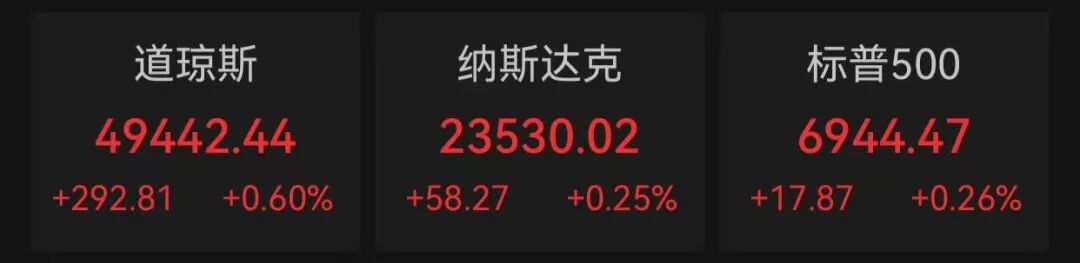
Market Overview - On January 15, US stock indices rose collectively, with the Dow Jones Industrial Average, Nasdaq, and S&P 500 increasing by 0.60%, 0.25%, and 0.26% respectively [2] - Major technology stocks showed mixed performance, with Nvidia up by 2.10%, META up by 0.86%, and Amazon up by 0.65%, while Tesla, Microsoft, Apple, and Alphabet saw declines [3][6] Earnings Reports - Morgan Stanley reported Q4 revenue growth of 10% year-over-year to $17.89 billion, exceeding market expectations of $17.75 billion, with net profit rising 18% to $4.40 billion [7] - Goldman Sachs posted a Q4 net profit of $4.617 billion, a 12% increase year-over-year, with stock trading revenue reaching a record $4.31 billion [7] Semiconductor Sector - The Philadelphia Semiconductor Index rose by 1.76%, reaching a historical high, with notable gains from companies like Kioxia and Applied Materials [7] Chinese Stocks - The Nasdaq Golden Dragon China Index fell by 0.60%, with significant gains from companies like Su Xuan Tang Pharmaceutical up over 10% and Hesai Technology up over 7% [8][9] Commodity Market - International crude oil prices dropped over 4%, while precious metals experienced significant volatility, with silver prices briefly hitting a historical high before a sharp decline [13]
金融监管总局召开2026年监管工作会议提出 优化科技金融服务 积极培育耐心资本
Zhong Guo Zheng Quan Bao· 2026-01-15 23:39
金融监管总局1月15日消息,金融监管总局当日召开的2026年监管工作会议提出,不断提升金融服务经 济社会质效。强化促消费、扩投资的金融供给,高效服务扩大内需战略。优化科技金融服务,积极培育 耐心资本,助力新质生产力发展。 会议深入贯彻党中央、国务院决策部署,系统总结2025年工作,统筹安排2026年重点任务。会议提出, 2025年,金融监管总局系统上下紧紧围绕防风险、强监管、促高质量发展工作主线,迎难而上、真抓实 干,牢牢守住不发生系统性金融风险的底线,各项工作取得积极进展。 具体而言,坚定不移推进全面从严治党。有力有序防范化解重点风险,中小金融机构改革化险取得重大 进展,城市房地产融资协调机制扩围增效,积极支持融资平台经营性金融债务接续置换重组。强监管严 监管氛围逐步形成,金融监管法制加快健全,严厉惩治违法违规行为,会同公安等部门坚决打击金融领 域"黑灰产"。综合施策引领行业改革转型,持续推进保险业"报行合一"和预定利率调整,加力推动银行 业提质增效。精准有效支持经济稳中向好,出台超长期贷款相关政策服务"两重"建设,支持小微企业融 资协调工作机制走深走实,科技金融"四项试点"稳步推进,保险经济减震器和社会稳 ...
翻倍“牛股”嘉美包装:拟提前赎回可转债 请投资者注意风险
Zhong Guo Zheng Quan Bao· 2026-01-15 23:38
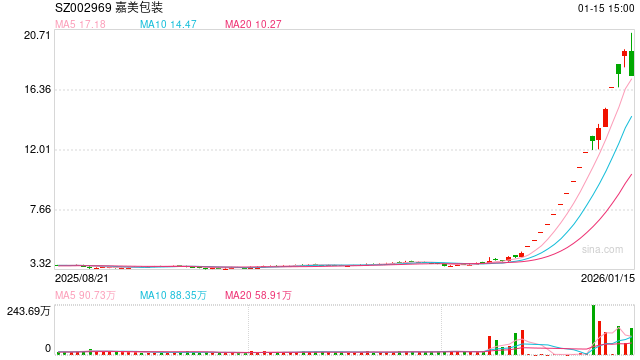
Group 1 - The company announced the early redemption of its convertible bonds, "嘉美转债," due to the stock price exceeding 130% of the conversion price for 15 out of 30 trading days [2][10] - The board of directors authorized the management to handle all matters related to the redemption of the bonds [2][10] - As of January 15, the closing price of "嘉美转债" was 369.355 CNY per bond, with a forced redemption price of 100.893 CNY per bond for unconverted bonds after February 5, 2026 [2][11] Group 2 - The company issued 7.5 billion CNY worth of convertible bonds in August 2021, with a conversion period from February 14, 2022, to August 8, 2027 [3][10] - The latest conversion price for "嘉美转债" is 4.55 CNY per share, while the stock price was reported at 17.38 CNY per share, reflecting a decline of 9.99% [11] - The stock price increased by 323.46% from December 17, 2025, to January 14, 2026, indicating significant market volatility [4][11] Group 3 - The company expects a decline in net profit for 2025, projecting a range of 85.4371 million to 104.4231 million CNY, representing a year-on-year decrease of 43.02% to 53.38% [5][12] - The company's main business involves the research, design, production, and sales of food and beverage packaging containers, serving notable clients in the industry [5][12]

大力发展商业航天!中国航天科技集团明确2026年任务
Zhong Guo Zheng Quan Bao· 2026-01-15 23:33
Core Viewpoint - The China Aerospace Science and Technology Corporation (CASC) aims to advance major projects such as manned lunar landings and deep space exploration by 2026, while also focusing on the development of commercial aerospace and low-altitude economy industries, and laying out future industries like space intelligence [1][2]. Group 1: 2026 Key Tasks - The company will integrate the mission of building a strong aerospace nation, technological transformation trends, opportunities for industry and research integration, and major deployment for transformation and upgrading throughout its work in 2026 [2]. - Eight key tasks for 2026 include promoting strict governance within the party, enhancing combat readiness of equipment, advancing major aerospace projects, optimizing industrial layout, reshaping the innovation ecosystem, improving quality risk management, and strengthening strategic management and reform [2][3]. Group 2: Commercial Aerospace Development - The company emphasizes the importance of enhancing national strategic capabilities and aims to fully support the military's centennial goals while seizing opportunities in the space economy era by promoting commercial aerospace development [4]. - The company is committed to strict regulatory measures and integrating compliance management throughout the model work process [4]. Group 3: Company Overview - CASC consists of one system institute, eight research institutes, twelve specialized companies, and six directly affiliated units, focusing on various aerospace products including launch vehicles, satellites, manned spacecraft, cargo spacecraft, deep space probes, and space stations [5]. - The company actively cultivates new productive forces in commercial aerospace and low-altitude economy, while also developing hydrogen energy, high-end equipment, energy conservation and environmental protection, advanced materials, and next-generation information technology applications and services [5].

10派10元!A股龙头,大手笔分红
Zhong Guo Zheng Quan Bao· 2026-01-15 23:06
Monetary Policy - The People's Bank of China announced a reduction of 0.25 percentage points in various structural monetary policy tool rates to enhance credit support in key areas [1] - The central bank indicated that there is still room for further cuts in reserve requirement ratios and interest rates this year [1] Corporate News - Liou Co. announced a temporary suspension of its stock trading due to significant price fluctuations, with a 102.73% increase since December 31, 2025 [12] - Gree Electric Appliances declared a cash dividend of 10 yuan per 10 shares, totaling 5.585 billion yuan, with the ex-dividend date set for January 23, 2026 [13] - SAIC Motor Corporation expects a net profit of 9 billion to 11 billion yuan for 2025, representing a year-on-year increase of 438% to 558% [4] - Zhenghai Magnetic Materials anticipates a net profit of 310 million to 380 million yuan for 2025, reflecting a growth of 235.72% to 311.52% [5] - Tianji Co. expects a net profit of 70 million to 105 million yuan for 2025, recovering from a loss of 1.361 billion yuan in the previous year [7] - Luxshare Precision announced a share buyback plan with a total amount between 1 billion to 2 billion yuan, aiming to repurchase 11.5 million to 22.99 million shares [14] Industry Developments - The State Grid Corporation of China plans to invest 4 trillion yuan during the 14th Five-Year Plan period, a 40% increase from the previous plan, focusing on building a smarter and greener power grid [3] - The Ministry of Human Resources and Social Security and the Ministry of Finance released guidelines to enhance the inclusivity and flexibility of enterprise annuities, aiming to expand coverage [2]
大力发展商业航天!这家央企明确2026年任务
Zhong Guo Zheng Quan Bao· 2026-01-15 23:05
Core Viewpoint - In 2026, China Aerospace Science and Technology Corporation (CASC) aims to advance major projects such as manned lunar landings and deep space exploration, while focusing on the development of commercial aerospace and low-altitude economy industries, and strategically positioning for future industries like space intelligence [1][2]. Group 1: 2026 Key Tasks - The company will integrate the mission of building a strong aerospace nation, technological transformation trends, opportunities for industry and research integration, and major deployment for transformation and upgrading throughout its work in 2026 [2]. - Eight key tasks for 2026 include promoting strict governance within the party, enhancing combat readiness of equipment, advancing manned lunar landings and deep space exploration, optimizing industrial layout, reshaping the innovation ecosystem, improving quality risk management, and strengthening strategic management and reform [2][3]. Group 2: Commercial Aerospace Development - CASC emphasizes the importance of enhancing national strategic capabilities and aims to support the military's centennial goals by advancing commercial aerospace development while ensuring compliance and regulatory oversight [4]. - The company is recognized as a major state-owned enterprise with strong innovation capabilities and core competitiveness in China's strategic high-tech sectors, serving as a cornerstone for national security and a leader in aerospace industry development [4][5]. Group 3: Organizational Structure - CASC consists of one system institute, eight research institutes, twelve specialized companies, and six directly affiliated units, focusing on various aerospace products including launch vehicles, satellites, manned spacecraft, cargo spacecraft, deep space probes, and space stations [5]. - The company is actively cultivating new productive forces in commercial aerospace and low-altitude economy, while also developing applications and services in hydrogen energy, high-end equipment, energy conservation, advanced materials, and next-generation information technologies [5].