Zhong Guo Dian Li Bao

Search documents
哈密—重庆±800千伏特高压直流输电工程14项配套新能源送出工程全部投运
Zhong Guo Dian Li Bao· 2025-11-28 06:13
此次投运的14项配套工程总投资4.7亿元,线路总长362.6千米,配套风电、光伏、光热等新能源1020万 千瓦。工程投运后,将深度开发哈密北部能源资源并高效外送,推动清洁能源全国优化配置与全额消 纳,提升重庆电力供应保障能力、匹配用电高峰负荷需求。 11月23日20时16分,哈密玛瑙滩升压汇集站220千伏送出工程(220千伏广吟线)第三次充电成功,标志 着哈密—重庆±800千伏特高压直流输电工程(以下简称"哈重直流")14项配套新能源送出工程全部竣工 投运。这是国网新疆电力有限公司锚定"双碳"目标,为新疆能源资源优势转化、清洁能源大范围优化配 置筑牢支撑。 为保障工程按期投运,新疆电力建立"公司统筹、地市主战、多方联动"机制,构建与新能源企业、设计 施工单位的协同体系,定期召开协调会跟踪进度、破解堵点;细化任务至关键节点明确责任,攻坚阶段 组建专家团队驻场指导方案优化、把控工艺标准,实现质量安全"双达标",同时灵活调配资源保障施工 连续稳定。 面对工程所在地风沙大、昼夜温差大的自然条件,新疆电力优化技术方案,选用耐候抗风沙新型材料保 障工程长期稳定运行;在施工中统筹全疆资源,指导国网新疆哈密供电公司实施"单元 ...
构建电力可靠性管理新格局 推动电力可靠性工作高质量发展
Zhong Guo Dian Li Bao· 2025-11-28 06:01
Core Insights - The article highlights the significant achievements in power reliability management in China over the past 40 years, emphasizing its role in ensuring the safe and stable operation of the power system and supporting economic and social development [2][3]. Group 1: Historical Achievements - The establishment of the Power Reliability Management Center in 1985 marked the beginning of specialized management in China's power reliability, leading to a comprehensive management system that includes government leadership and industry service [1][2]. - Over 3,000 power companies are now included in reliability statistics, with more than 6,000 professionals dedicated to reliability management and information statistics [2]. Group 2: Improvements in Reliability Metrics - The reliability level of China's power system has significantly improved, with unplanned outages for coal and hydro power units decreasing by over 93% compared to 40 years ago [3]. - Key equipment such as transformers and circuit breakers now have an equivalent availability factor exceeding 99% [3]. Group 3: Enhancements in User Experience - The average outage time for urban users has decreased by 94.55 hours since 1991, with major cities achieving average outage times of less than one hour [4]. - Rural users have seen an 83.67-hour reduction in average outage time since 2004, addressing issues like frequent outages and low voltage [4]. Group 4: Future Challenges and Requirements - The transition to a new energy system requires innovative reliability management methods to address the complexities introduced by renewable energy sources and electric vehicles [5][6]. - There is a need for improved reliability statistics that encompass low-voltage users and renewable energy sources, as current data only covers a fraction of installed capacity [7]. Group 5: Strategic Directions for Development - The focus is on enhancing the reliability management framework to support high-quality economic development and meet the increasing expectations of the public regarding power reliability [8][10]. - The establishment of a professional education system for reliability management is essential to improve the overall competency in the sector [11].
中石油联合多方在辽宁成立百亿级储气库公司
Zhong Guo Dian Li Bao· 2025-11-27 01:13
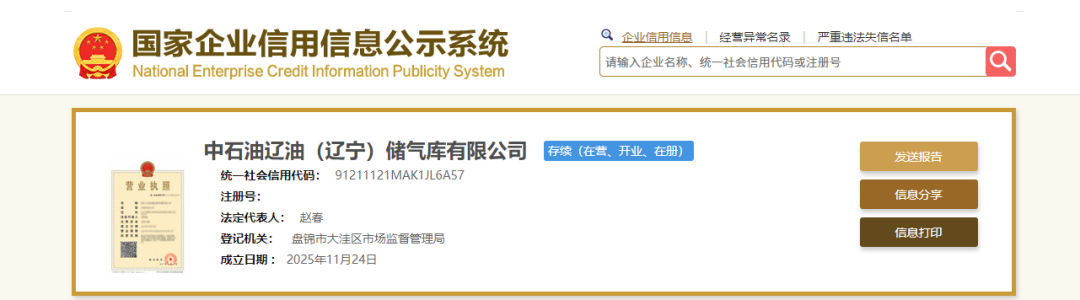
Group 1 - The establishment of PetroChina Liaoyou (Liaoning) Gas Storage Co., Ltd. was officially registered on November 24, with a registered capital of 12.96 billion yuan [1] - The legal representative of the new company is Zhao Chun [1] - The company's business scope includes construction engineering, storage equipment leasing, engineering management services, and various technical services [3] Group 2 - The shareholders of the company include PetroChina Taihu (Beijing) Investment Co., Ltd., National Pipeline Network Group Energy Storage Technology Co., Ltd., and Panjin State-owned Capital Investment Operation Group Co., Ltd. [3]

怎样理解推动煤炭和石油消费达峰?
Zhong Guo Dian Li Bao· 2025-11-26 15:00
Group 1 - The core viewpoint of the articles emphasizes the importance of achieving peak carbon emissions and transitioning to a greener economy, particularly focusing on coal and oil consumption reaching their peak during the 14th Five-Year Plan period [1][2] - The articles highlight that coal and oil consumption is expected to peak around 2027 and 2026 respectively, with fossil energy consumption's share projected to drop below 75% by 2030 [2] - The need for a structured approach to energy supply, storage, and sales is stressed, aiming for a smooth transition from fossil to non-fossil energy sources while ensuring energy security [3] Group 2 - The development of non-fossil energy sources is prioritized, with plans to enhance clean energy bases such as wind, solar, and nuclear power, aiming for non-fossil energy consumption to reach about 25% by 2030 [4] - Capacity regulation is crucial as the peak in coal and oil consumption may lead to structural issues in the coal and refining industries, necessitating optimization of production capacity and investment adjustments [5]
构建全方位合作新格局 擘画能源治理新图景 ——习近平主席贺信为全球能源市场注入更多确定性
Zhong Guo Dian Li Bao· 2025-11-26 06:02
Core Points - Xi Jinping's congratulatory letter emphasizes the positive role of China-Russia energy cooperation in promoting economic and social development, enhancing the well-being of both nations, and providing important guidance for practical cooperation between enterprises [1][2] - The letter aims to establish a new comprehensive energy cooperation framework between China and Russia, injecting more certainty into the global energy market [1][2] Group 1: Energy Cooperation - The China-Russia Energy Business Forum, initiated by the two heads of state, has received significant attention and guidance from both leaders [2] - The deepening of energy cooperation between China and Russia not only benefits both countries but also provides critical stability and certainty to the global energy market [2][3] - A multi-level communication mechanism has been established to facilitate discussions on various energy cooperation topics, laying a solid foundation for collaboration in oil, gas, nuclear energy, and renewable energy [2][3] Group 2: Global Energy Governance - Xi Jinping's letter points to the need for a fair, just, and balanced global energy governance system, with China as an active advocate and practitioner [3] - The letter reinforces the commitment of the electricity sector to green development, highlighting China's role in providing clean energy products and services to over 200 countries and regions [3] - The establishment of a self-controlled trading and pricing platform is suggested to enhance the credibility of energy trade between China and Russia, offering diverse and inclusive pathways for global energy cooperation [3][4]
中国华电,天然气发电装机全国第一、水电装机第二,清洁能源装机占比接近60%
Zhong Guo Dian Li Bao· 2025-11-26 05:57
站在"十四五"规划即将圆满收官的时间点回望,这五年,对中国华电集团有限公司(以下简称"中国华电")来说,既有砥砺前行、爬坡过坎的坚韧和勇 毅,也有千帆竞渡、百舸争流的浩荡和豪迈。 牵头开发近6000万千瓦的"沙戈荒"新能源基地,在运在建及核准拟建海上风电超1000万千瓦;加快建设金沙江上游国家水风光一体化示范基地,在运在建 总装机规模超1400万千瓦;全国首台全国产化F级50兆瓦重型燃气轮机在中国华电投入商业运行;华电国际重组配融、公募REITs发行圆满成功,华电新 能IPO上市,成为A股市值规模和装机规模最大的新能源发电上市公司……中国华电坚持以习近平新时代中国特色社会主义思想为指导,绿色转型加力提 速,提质增效成果显著,改革创新活力迸发,形成了员工动起来、作风转起来、机制活起来、信心强起来的生动局面。 这五年—— 总量跃升 跨越赶超底气足 在上海,华远星海运新建6.5万吨散货船的交付,进一步增强了对沿海、沿江电厂的能源保障能力,释放中国华电全产业链协同优势活力;在北京,"华智· 智新"新能源智慧生产管理平台的应用,实现了对新能源业务的全容量覆盖、全要素感知、全业务联动……从租船到造船,从分散运维到"最强大 ...
国电电力、四川铁能电力、宁德时代共同出资成立新公司
Zhong Guo Dian Li Bao· 2025-11-26 05:57
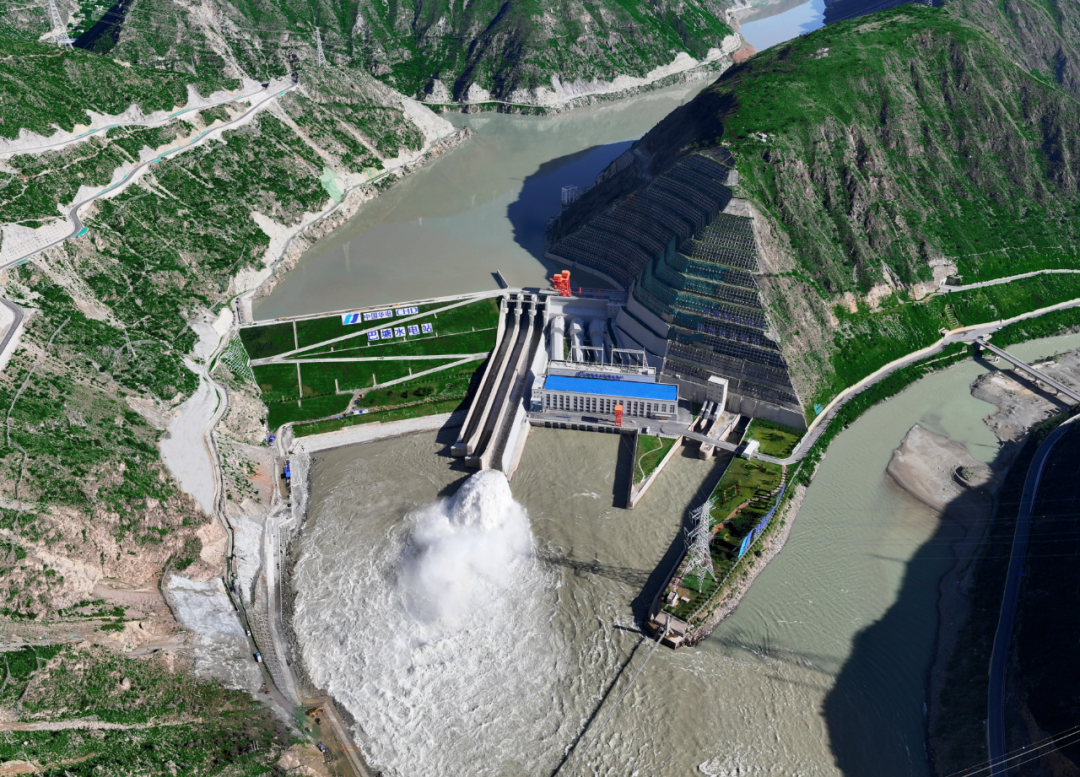
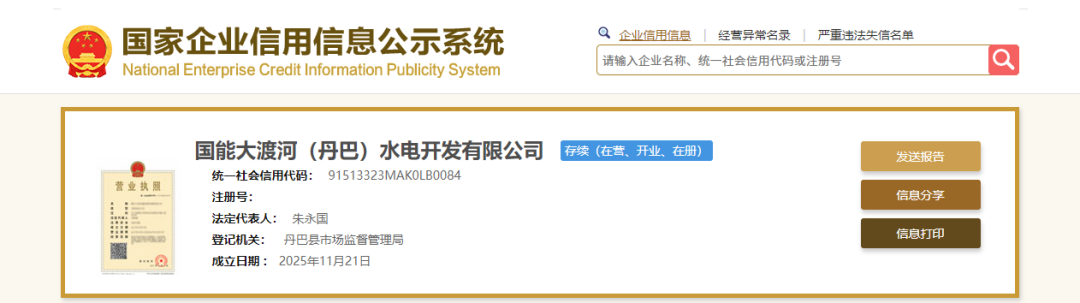
国家企业信用信息公示系统显示,11月21日,国能大渡河(丹巴)水电开发有限公司成立,注册资本36亿元,法定代表人朱永国。 该公司经营范围包含许可项目:水力发电;发电业务、输电业务、供(配)电业务;建设工程施工;输电、供电、受电电力设施的安装、维修和试验。一 般项目:太阳能发电技术服务;风力发电技术服务;工程管理服务;工程技术服务(规划管理、勘察、设计、监理除外);通用设备修理;电气设备修 理;以自有资金从事投资活动。 股东及出资信息显示,该公司由国电电力旗下国能大渡河流域水电开发有限公司、四川铁能电力开发有限公司、宁德时代新能源科技股份有限公司共同持 股。 来源:国家企业信用信息公示系统 索比光伏网 https://news.solarbe.com/202511/26/50013464.html ...


从机制电价看新能源发展区域差异
Zhong Guo Dian Li Bao· 2025-11-26 05:39
截至11月中旬,山东、甘肃、云南、江西、广东、新疆6省(区)已完成首轮新能源机制电价竞价工 作。从开展新能源项目成本调研,到搭建竞价实施方案,再到陆续启动竞价工作、相继公布竞价结果, 136号文落地后新能源增量项目的首轮市场化竞价,对于我国深化新能源市场化改革、推动能源高质量 发展具有重要意义。 机制电价价差最高近0.18元/千瓦时 从六地公布的新能源机制电价竞价出清结果看,在电价方面,机制电价受消纳能力影响较大。例如,新 疆、甘肃资源富足,但自身消纳能力较低,机制电价水平在已公布的电价中位于中游,甘肃甚至是价 格"谷底"。而广东自身用电量大、云南有更大规模的水电充当新能源"充电宝",为新能源电量的随发随 用留下了更大空间,也得以在首轮竞价中为企业提供更多收益保障。 云南风光电价基本持平,中标率高达96.22%。云南首次机制电价竞价结果显示,529个新能源项目进行 了申报,最终中标项目509个,中标比例达96.22%。数据显示,截至2025年7月底,云南发电装机容量 除甘肃外,各地风电项目电价均比光伏项目高,更贴近公布的竞价区间上限。这主要受能源出力特性影 响。相对来说,风电项目的出力高峰期与社会用电负荷匹配 ...
构建透明共享的电力零售市场新生态
Zhong Guo Dian Li Bao· 2025-11-26 05:39
Core Insights - The current retail electricity market in China is facing challenges due to the high proportion of renewable energy and the need for a more sophisticated market structure, moving away from the traditional "price difference" model to a "value creation" model [1][2][6] Current State of the Electricity Retail Market - As of August this year, there are over 4,200 electricity sales companies in China, providing purchasing options for 970,000 users, indicating a diverse competitive landscape [3] - State-owned and private companies dominate the market, with those having a generation background leveraging cost advantages [3] Market Innovations and Developments - Various trading centers are innovating retail packages, introducing "menu-style" options and establishing retail trading platforms to simplify user transactions and promote standardization [4] - Regulatory frameworks such as the "Basic Rules for Electricity Market Operation" and "Management Measures for Electricity Sales Companies" have been implemented to ensure market stability and protect user interests [5] Challenges Facing the Retail Market - The traditional "price difference" model is inadequate for the current energy landscape, which requires effective aggregation and participation of distributed resources [6][9] - Information transparency and efficiency in the retail market need improvement to enhance user decision-making and reduce reliance on intermediaries [8][7] Need for Reform - The retail market requires a shift from a "price difference" focus to a "value sharing" approach, necessitating reforms in business models, pricing mechanisms, and service boundaries [12][13] - A new information transmission system is essential to activate the retail market, ensuring that both wholesale and retail market data are accessible and actionable for stakeholders [14][15] Proposed New Paradigm - The establishment of a new commercial ecosystem centered on "value sharing" is crucial, transforming the relationship between electricity sales companies and users into a collaborative partnership [16][17] - This model aims to create a win-win situation, where both parties benefit from shared risks and rewards, ultimately enhancing market vitality and supporting the transition to a new energy system [17][18]
30.27亿!财政部提前下达2026年清洁能源发展专项资金预算
Zhong Guo Dian Li Bao· 2025-11-25 08:56
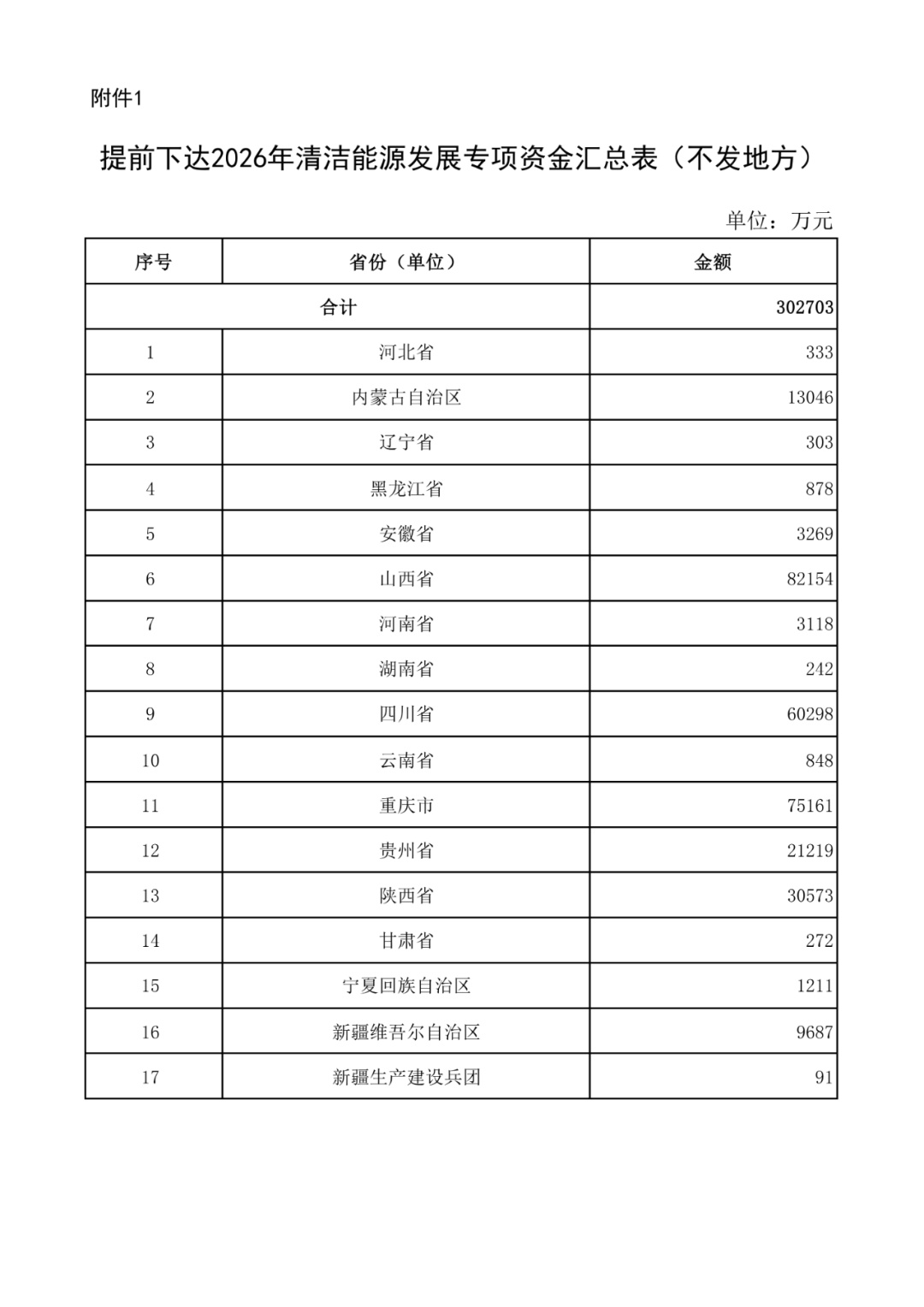
Core Points - The Ministry of Finance has announced the early allocation of the 2026 budget for the Clean Energy Development Special Fund, aimed at supporting unconventional natural gas extraction and utilization, including coalbed methane, shale gas, and tight gas [1][2] - The total budget for the Clean Energy Development Special Fund for 2026 is set at 302,703 million yuan, which will be allocated to various provinces and regions for specific projects [5][7] - The fund will be monitored under a standardized budget management system to ensure effective and safe usage, with performance management and evaluation requirements in place [2][3] Budget Allocation - The total amount allocated for the Clean Energy Development Special Fund is 302,703 million yuan [5][7] - Specific allocations include: - Shanxi Province: 82,154 million yuan - Sichuan Province: 60,298 million yuan - Chongqing City: 75,161 million yuan - Other provinces also receive varying amounts, contributing to the overall total [5] Performance Goals - The performance targets for the fund include: - Coalbed gas extraction utilization of at least 9.3 billion cubic meters - Shale gas extraction utilization of at least 17 billion cubic meters - Tight gas extraction utilization of at least 14.5 billion cubic meters - Ensuring that the quality of unconventional natural gas meets national standards [7][8] - Additional goals include increasing energy supply, enhancing energy security, and promoting a green and low-carbon energy structure [7]