
Zhong Guo Dian Li Bao

Search documents
工信部部长李乐成:将推动大型企业集团实施绿色低碳供应链提升行动
Zhong Guo Dian Li Bao· 2025-12-02 08:45
在全球气候治理深化和能源革命加速的背景下,制造业绿色低碳转型已成为国际社会的普遍共识。习近 平主席提出"绿水青山就是金山银山"的理念,指引中国经济发展范式发生了根本转变。中国作为负责任 的制造业大国,以实现新型工业化为关键任务,把绿色低碳作为新型工业化的生态底色,协同推进降 碳、减污、扩绿、增长,为全球可持续发展贡献了中国智慧和解决方案。 2025年12月1日,《中国日报》刊发工业和信息化部党组书记、部长李乐成署名文章,题为《加快中国 制造绿色低碳转型 促进全球可持续发展》。 加快中国制造绿色低碳转型 促进全球可持续发展 工业和信息化部党组书记、部长 李乐成 强化绿色理念引领。理念是行动的先导,中国制造绿色转型的深层动力正是源于习近平生态文明思 想,"绿水青山就是金山银山"理念的提出,是对传统工业发展范式的超越,引领中国走上了高质量发展 与高水平保护并举之路。在科学理念指引下,中国构建了碳达峰碳中和"1+N"政策体系,将碳达峰碳中 和这一宏伟目标转化为可落地、可衡量的具体行动,通过绿色标准、绿色金融、碳交易市场等政策工 具,为绿色低碳转型创造稳定且可预期的市场环境。近年来,中国的经济发展对能源的依赖度逐步降 ...
全国首套9F级燃气机组柔性励磁系统出厂
Zhong Guo Dian Li Bao· 2025-12-02 08:11
Core Insights - The first nationwide 9F heavy-duty gas turbine flexible excitation system based on insulated gate bipolar transistor devices has passed factory testing, marking a significant breakthrough in flexible excitation technology from medium and small units to large units [1] Group 1: Technology and Innovation - The excitation system acts as a "voltage stabilizer" for generators, maintaining grid voltage stability during sudden increases or decreases in electricity load [1] - The system utilizes fully controlled insulated gate bipolar transistors, upgrading traditional current source excitation control characteristics to voltage source, enhancing generator voltage support capability by over 200% and dynamic reactive response capability by over 60% [1] - The cost of the new system is only 20% of traditional methods for adding reactive power compensation, achieving significant improvements in grid stability with a "small investment" [1] Group 2: Market Context - The push for "dual carbon" goals has led to a continuous increase in installed capacity of renewable energy sources such as wind and solar power, alongside the expansion of cross-regional DC transmission and the integration of power electronic devices like charging piles and smart grid equipment into daily life [1] - The intermittent and volatile nature of renewable energy generation has increased the frequency and magnitude of grid voltage fluctuations, highlighting the inadequacies of traditional excitation systems that use thyristors, which have slow response times and insufficient voltage support capabilities [1]
电厂会“思考” 设备能“自理”
Zhong Guo Dian Li Bao· 2025-12-02 08:08
Core Insights - The article highlights the significant transformation of the Zhundong Power Plant through the implementation of intelligent systems, which have redefined traditional electricity production paradigms [1][2][3] Group 1: Intelligent Transformation - The Zhundong Power Plant has established a comprehensive smart system covering equipment, production, and personnel, aimed at enhancing safety, efficiency, and environmental sustainability [2][3] - The plant's intelligent station model, referred to as the "Zhundong Model," integrates technology with core production principles, moving away from traditional reliance on human experience to data-driven decision-making [2][3] Group 2: Operational Efficiency - The introduction of robots and AI has significantly reduced the need for manual inspections, allowing for more precise monitoring and maintenance of equipment [2][3][4] - The plant has achieved full automation in coal handling processes, enhancing operational efficiency while eliminating hazardous manual labor [4] Group 3: Advanced Monitoring Systems - The plant employs advanced monitoring systems that utilize various technologies, such as infrared and acoustic sensors, to detect anomalies and provide real-time alerts [3][6] - Drones are used for inspections, drastically reducing the time and risk associated with traditional methods, allowing for quick and accurate data collection [3][4] Group 4: Smart Decision-Making - The "smart brain" of the plant autonomously adjusts operations based on real-time environmental data, optimizing energy consumption and preventing operational issues [6][7] - The intelligent monitoring system continuously learns from operational data, improving its predictive capabilities and recommendations over time, thus enhancing overall safety and efficiency [6][7] Group 5: Contribution to Energy Revolution - The Zhundong Power Plant is positioned at the forefront of the energy revolution, contributing to the development of a safe, efficient, and clean modern energy system through ongoing technological innovation [7]
中核、中石油、华能、华电、国能、三峡,先后与这一省高层会谈
Zhong Guo Dian Li Bao· 2025-12-01 10:50
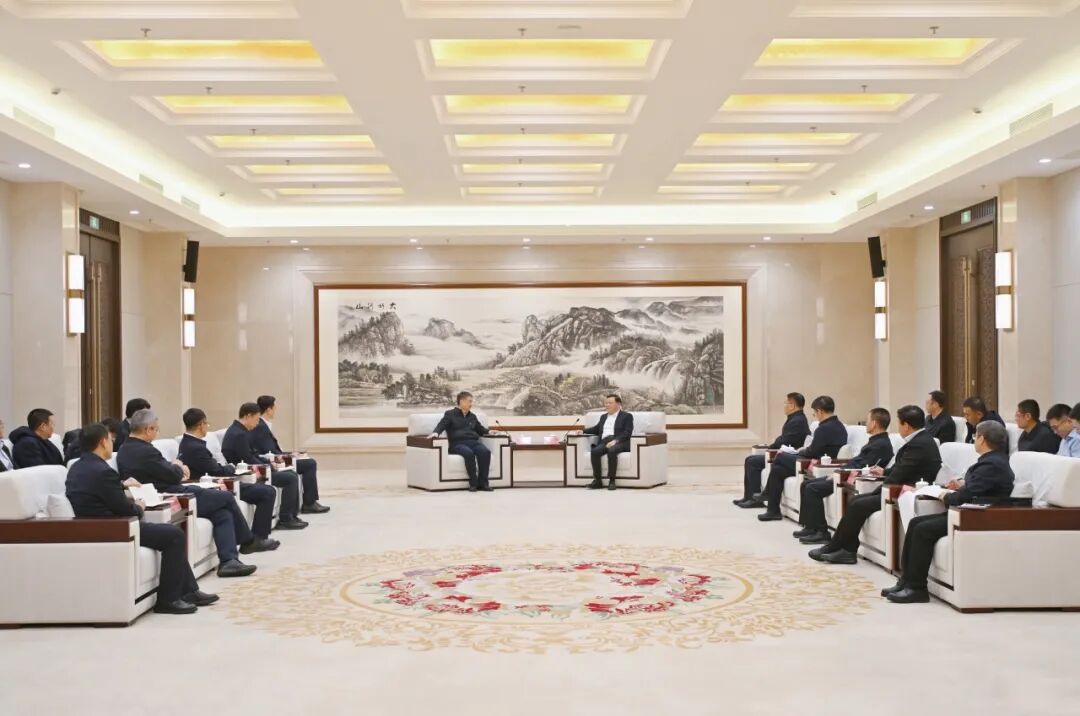
Core Insights - Multiple state-owned energy enterprises, including China National Nuclear Corporation, China National Petroleum Corporation, and China Huaneng Group, are intensifying cooperation with Inner Mongolia Autonomous Region and Baotou City in areas such as renewable energy development, intelligent coal mining, green electricity conversion, clean energy base construction, and nuclear industry [1][3][5][6][10] Group 1: Cooperation and Strategic Development - The leadership of China Huaneng Group met with Inner Mongolia's top officials to discuss collaboration in modern energy economy and the development of a clean, low-carbon energy system during the 14th Five-Year Plan [3][5] - Inner Mongolia aims to enhance traditional energy security and increase renewable energy utilization, indicating significant cooperation potential with China Huaneng [3][5] - China Huaneng Group plans to increase investment in Inner Mongolia, focusing on energy supply security and the construction of large clean energy bases [5] Group 2: China National Petroleum Corporation's Engagement - China National Petroleum Corporation's chairman met with Inner Mongolia's government officials to discuss practical cooperation and the integration of oil and gas with renewable energy [6] - The company aims to advance its refining transformation and digitalization efforts while contributing to the energy sector's modernization in Inner Mongolia [6] Group 3: China National Nuclear Corporation's Focus - China National Nuclear Corporation's leadership engaged with Baotou City officials to strengthen strategic cooperation in the nuclear industry [8][10] - The corporation emphasized the importance of aligning its development strategy with Baotou's industrial advantages, particularly in steel, rare earths, and equipment manufacturing [10] - There is a mutual interest in establishing a nuclear fuel industry cluster and promoting technological innovation in Baotou [10]

重庆开展县域电网全停应急演练
Zhong Guo Dian Li Bao· 2025-12-01 03:54
本次演练模拟近年来我国气候区划"零度线"南移,在极端降雪降温灾害事件增多的背景下,11月,重庆 市渝东北片区经历大范围低温雨雪冰冻灾害天气。此次演练在传统示范性演练模式中,创新插入了发电 车保电、应急通信保障和直升机转运应急物资3个无脚本演练科目。指挥部及时启动川陕渝应急联动机 制,从陕西的紫阳和四川的巴中、南充等地调派6支保电队伍50余人携带7台中低压发电车、1台卫星指 挥车、3台照明灯塔,从四川和陕西出发,前往城口支援保电。 经过19小时紧张有序处置,模拟故障线路成功恢复供电,县域用电逐步恢复正常,演练顺利进入应急终 止、善后处理及评估总结阶段。各参演单位围绕"响应速度、协同效率、处置效果"开展复盘,梳理出10 余项优化建议,为后续完善应急预案提供实践依据。 此次演练正值重庆电网迎峰度冬关键节点,填补了重庆高山重冰区县域全停应急处置的实践空白;提升 了政企单位协同作战和川陕渝毗邻城市应急支援能力,各单位在预警、处置、善后等环节职责边界进一 步明确,有效减少"响应空档"。同时,通过演练强化了31家重要用户的应急自救意识,助力推动形 成"政企联动、用户参与"的全域供电保障体系。 11月25~27日,重庆市20 ...
海南电网自主研发装置在越南试点应用
Zhong Guo Dian Li Bao· 2025-12-01 03:52
此次在越南兴安省投入使用的分布式故障定位装置,是海南电网产业发展公司自主研发的产品,曾获得 国家科学技术进步奖,达到国际先进水平,凭借先进技术、优异性能和广泛适配性等优势走出国门推广 应用。该装置采用分布式行波监测技术,实现故障区间定位、故障精确定位、故障原因辨识等功能,投 运后能够帮助运维人员快速判断线路故障位置及故障类型,故障定位误差控制在1基杆塔范围内,定位 成功率在90%以上,线路故障的雷击/非雷击判断准确率大于98%的实用效果,充分提升当地电网输电线 路运维效率。 11月27日,海南电网产业发展公司在越南兴安省试点应用4套输电线路故障定位装置,实现设备运行数 据、传感器采集数据等正常召唤测试,定位成功率超九成,这是该公司自主知识产权科技产品首次在越 南落地的成功实践。 近年来,海南电网深耕热带海岛电网关键核心技术攻关,取得多项保障电网安全稳定运行的技术突破, 相关科技产品及系统应用场景丰富。此次科技产品在越南推广应用落地,为后续推广至泰国、马来西亚 等海外国家奠定基础。 据了解,越南的气候环境与海南高度相似,雷击等自然灾害频繁。针对当地电网生产运行痛点难点问 题,南方电网海南电网有限责任公司借助南网 ...
专家解读丨擘画新能源高质量发展新路径
Zhong Guo Dian Li Bao· 2025-12-01 03:52
Core Viewpoint - The "Guiding Opinions on Promoting the Integrated Development of New Energy" aims to transition new energy from isolated development to integrated and collaborative growth, enhancing the quality and efficiency of new energy development [1][8]. Group 1: Implementation Pathways - The guiding opinions emphasize multi-dimensional integrated development as fundamental for large-scale new energy development and high-level consumption, focusing on multi-energy complementary development, spatial resource optimization, and system-level operational integration [2][3]. Group 2: Multi-Energy Complementarity - To achieve carbon neutrality goals, a higher proportion of reliable green power supply is necessary. The opinions propose strengthening the integrated configuration of new energy with other energy types, including the development of large-scale bases that reduce reliance on coal and water resources while increasing the share of green electricity [3][4]. Group 3: Spatial Resource Optimization - The opinions suggest various composite development methods and spatial resource optimization paths to enhance efficiency and effectiveness in new energy development. This includes concentrated site selection, shared infrastructure, and upgrading existing energy facilities to improve land use efficiency [4][5]. Group 4: Integrated Operational Synergy - The guiding opinions propose practical measures to enhance the reliability and market competitiveness of new energy through comprehensive collaboration in technology, regulation, and operations. This includes improving power prediction accuracy and integrating different energy sources for better market participation [5][6]. Group 5: Organizational Support - Successful implementation of integrated new energy projects requires collaboration among various levels and departments. The opinions outline specific measures to support project construction, management, and market mechanisms, emphasizing the importance of clear responsibilities and streamlined approval processes [7][8].
专家解读丨推动新能源供给与消费侧深度集成融合
Zhong Guo Dian Li Bao· 2025-12-01 03:52
Core Viewpoint - The "Guiding Opinions on Promoting the Integrated Development of New Energy" outlines a systematic approach to the development of new energy, emphasizing the integration of supply and consumption sides to enhance high-quality development and support a green transition in the economy and society [1] Group 1: Current Challenges in New Energy Development - The development mode of new energy needs urgent transformation due to increasing issues with grid integration and consumption autonomy [2] - As of September 2025, total installed capacity of wind and solar power exceeded 1.7 billion kilowatts, surpassing thermal power as the largest energy source [2] - New energy utilization rate fell below 95% in the first three quarters of the year, a decrease of 2 percentage points year-on-year, with curtailment issues spreading beyond the "Three North" regions [2] Group 2: Marketization and Revenue Models - The national unified electricity market is accelerating, marking a new phase of marketization for new energy [3] - Negative electricity prices have emerged in regions like Shandong and Inner Mongolia during peak generation periods, with the average clearing price in the Mengxi region dropping over 40% compared to the same period last year [3] - New energy must move beyond the traditional "grid-connected power generation + guaranteed pricing" model to develop a composite revenue system that includes green environmental value and value-added services [3] Group 3: Green Low-Carbon Transition on the Consumption Side - The internal and external environment demands a higher level of green low-carbon transition in consumption, with industrial, construction, and transportation sectors accounting for over half of carbon emissions [4] - The government has imposed strict constraints on energy-intensive industries, mandating minimum green electricity consumption ratios in sectors like data centers and electrolytic aluminum [4] - Technological advancements in multi-energy conversion are creating new opportunities for green energy substitution on the consumption side [4] Group 4: Integrated Development Blueprint - The "Guiding Opinions" signal a shift in focus from scale expansion to quality improvement and supply-demand coordination in new energy development [5] - It proposes multiple tasks for the integrated development of distributed new energy, collaboration with traditional industries, and non-electric utilization of new energy [5] - Close coordination between new energy supply and consumption is essential for improving resource allocation efficiency [5] Group 5: Regulation and Technical Innovations - The release of regulatory capabilities, particularly through load-side participation, is crucial for the integrated development of new energy [6][7] - The "Guiding Opinions" encourage traditional industries to optimize production processes and upgrade self-supplied power plants to enhance their flexibility and participation in energy systems [7] - Non-electric utilization, particularly in sectors like transportation and chemicals, is identified as a key breakthrough area for deep decarbonization [8] Group 6: Policy Implementation and Local Adaptation - The integrated development of new energy and consumption sides is still in its early stages, requiring exploration in key technologies and business models [9] - The "Guiding Opinions" propose measures for project investment management, electricity dispatch mechanisms, and market transaction frameworks to support integration [9] - Localized strategies should be developed based on regional resources and industrial foundations to promote project construction effectively [9]
立体多维打造新能源发展升级版
Zhong Guo Dian Li Bao· 2025-12-01 03:45
Core Viewpoint - The "Guiding Opinions on Promoting the Integrated Development of New Energy" aims to create a more resilient, efficient, and sustainable upgrade of new energy development, addressing key issues such as high proportion consumption, high-quality development, and the transition from a "supporting role" to a "main force" in China's energy landscape [1][2] Summary by Sections Strategic Shift - The introduction of the guiding opinions marks a milestone in the strategic transformation of China's new energy development, shifting from scale expansion to system integration, reflecting a profound change in development philosophy [2][3] Development Paradigm Upgrade - The transition from a "single combat" approach to integrated development represents a fundamental upgrade in the new energy development paradigm, addressing challenges such as insufficient coordination between energy sources and load centers, and the need for a more systematic and collaborative development model [3][4] Core Objectives - The core objective of the guiding opinions is to enhance the autonomy of new energy development, enabling it to evolve from a supplementary power source to a reliable main power source that can actively support system stability [4][5] Action Framework - The guiding opinions provide a structured action framework for promoting integrated development across multiple energy types, industries, and utilization forms, emphasizing the need for differentiated paths based on different energy base types [5][6] Multi-Dimensional Development - The opinions advocate for multi-dimensional integrated development of new energy, including optimizing energy source structures, enhancing spatial utilization, and promoting distributed energy development in various sectors [6][7] Integration with Emerging Industries - The guiding opinions propose integrating new energy with emerging industries, such as the "East Data West Computing" project, to create new growth poles and promote a collaborative industrial ecosystem [7]
总规模240万千瓦,全面投产!
Zhong Guo Dian Li Bao· 2025-11-28 14:12
Core Viewpoint - The second phase of the Meizhou Pumped Storage Power Station, a key project in the Guangdong-Hong Kong-Macao Greater Bay Area, has been fully commissioned, enhancing China's capacity for clean energy consumption and contributing to the construction of a unified national electricity market [1] Group 1: Project Overview - The total capacity of the Meizhou Pumped Storage Power Station has reached 2.4 million kilowatts, making it the strongest pumped storage station in China for clean energy consumption capacity at this scale [1] - The second phase includes four 300,000-kilowatt units, complementing the first phase's four units, allowing the station to consume up to 7.2 billion kilowatt-hours of clean energy annually, equivalent to the annual electricity needs of 3.28 million residents [1] - The project utilizes a shared upper and lower reservoir, optimizing the use of over 92 million cubic meters of natural resource capacity, and significantly shortening the construction period [1] Group 2: Technological Advancements - The project has achieved full domestic control of the control system and has implemented the first large-scale application of domestically produced pumped storage switchgear [2] - The eighth unit of the power station has installed 115 types of domestically produced key technology components and over 500 domestic control chips, achieving 100% chip-level localization for the entire pumped storage unit [2][3] - The introduction of a "medium-pressure oil-free" domestic air compressor has improved transmission efficiency to 100% and significantly reduced maintenance costs [3] Group 3: Market Participation - The Meizhou Pumped Storage Power Station operates in the Southern regional electricity spot market, serving as a model for market-oriented reform in pumped storage operations [4] - The first phase of the project transitioned to market electricity trading in October 2024, allowing it to actively participate in competition rather than passively responding to demand [4] - The second phase adopted a "production immediately enters the market" model, facilitating immediate participation in electricity trading upon commissioning, and has already traded nearly 2 billion kilowatt-hours of market electricity this year [4] Group 4: Industry Growth - Since the 14th Five-Year Plan, China's pumped storage industry has rapidly expanded, exceeding the planned target of 62 million kilowatts, maintaining the world's largest installed capacity for nine consecutive years [5] - The 15th Five-Year Plan aims to optimize and upgrade traditional industries, with expectations for the pumped storage capacity to reach approximately 120 million kilowatts by the end of the plan period, nearly double the current scale [5]

