
Zhong Guo Huan Jing Bao

Search documents
潍柴双轮战略开启全球化新征程
Zhong Guo Huan Jing Bao· 2025-10-22 08:59
Core Viewpoint - The recent launch of the LHY hydraulic brand by Weichai Power at the Global Partner Conference signifies a new phase in technological breakthroughs and global industrial chain collaboration, showcasing Weichai's dual-driven strategy of "technology leadership + global integration" [1][3]. Group 1: Brand and Technology Development - The LHY hydraulic brand represents a key step in Weichai Power's global technological layout, evolving from the legacy of Linde Hydraulics, which was established in 1904, and has transformed from a single hydraulic component supplier to a system solution provider [3]. - The brand logo incorporates elements that symbolize historical continuity and strategic transformation towards powertrain system solutions, utilizing a "German R&D + Chinese manufacturing + global service" model applicable across various sectors [3][5]. Group 2: Product and R&D Investment - Weichai has invested over 30 billion yuan in R&D over the past decade, maintaining a research intensity exceeding 6%, and has developed over 60 products ranging from 2L to 340L in displacement and 18kW to 10,000kW in power [6][10]. - The LHY hydraulic system boasts 593 patents, including 106 invention patents, establishing a strong technological barrier [5]. Group 3: Market Applications and Global Strategy - Weichai's power systems have become a critical link in the industrial chain, with successful applications in commercial vehicles, agricultural equipment, and mining machinery, supporting various enterprises in their technological advancements [10][12]. - The company's global strategy emphasizes deep collaboration in technology, manufacturing, and service, with a 30% year-on-year increase in engine export revenue in the first three quarters [12]. Group 4: Future Vision and Industry Impact - Weichai aims to become a high-end hydraulic powertrain system solution provider, leveraging Sino-German cooperation to drive high-quality development in the hydraulic industry [14][16]. - The company is actively participating in the construction of a global high-end equipment industrial chain, providing efficient and green solutions to its customers [16].

“生态绿”已成为金岭煤业高质量发展的底色
Zhong Guo Huan Jing Bao· 2025-10-22 08:59
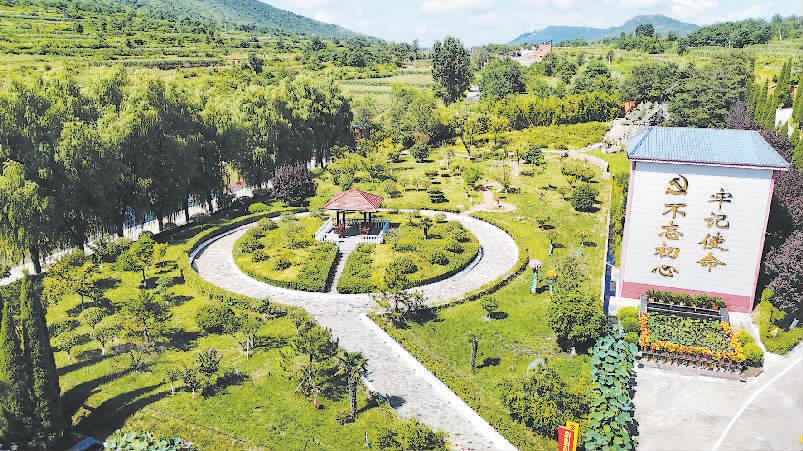
Core Viewpoint - Jinling Coal Industry Co., Ltd. has successfully transformed from a traditional coal mining operation into a modern, eco-friendly mining enterprise, emphasizing sustainable development and ecological restoration since its establishment in 2004 [1][3]. Group 1: Green Development Philosophy - The company established an ecological priority and sustainable development philosophy from the beginning, integrating resource, environmental, economic, and social benefits throughout the lifecycle of the mining operation [3][5]. - Jinling Coal Industry views green mining as not only about greening the mining area but also about optimizing the integration of various benefits [3]. Group 2: Technological Empowerment - The company has invested 250 million yuan in equipment upgrades since 2017, introducing advanced technologies such as intelligent sorting robots and achieving full coverage of commercial 5G-A networks in key underground areas [5]. - The implementation of smart mining solutions has led to significant improvements in production efficiency and working conditions, generating annual benefits exceeding 10 million yuan [5]. Group 3: Resource Recycling - Jinling Coal Industry has invested over 7 million yuan in wastewater treatment facilities, achieving zero external discharge of wastewater by reusing treated water for irrigation and bathing [7]. - The company has constructed a gas extraction pump station and power plant with an annual electricity generation of 8 million to 10 million kilowatt-hours, utilizing gas for cooking and heating, thus achieving 100% comprehensive utilization and reducing carbon dioxide emissions by approximately 53,000 tons annually [7]. - An additional investment of over 13 million yuan in photovoltaic power generation projects has expanded the application of clean energy, generating 4 million to 6 million kilowatt-hours annually [7]. Group 4: Ecological Restoration - Jinling Coal Industry has achieved 100% greening coverage in a 455-acre mining area, restoring over 300 acres of farmland and transforming barren hills into recreational parks for employees [8]. - The company has invested over 30 million yuan in community support initiatives, including subsidies for employees, social insurance, and contributions to local infrastructure and education [8]. Group 5: Contribution to Sustainable Development - Jinling Coal Industry's green development path exemplifies the deep integration of ecological and economic progress, contributing to the "dual carbon" goals and enhancing high-quality development [8].
“小案快办”折射出改革从“大写意”转向“工笔画”丨法治快评
Zhong Guo Huan Jing Bao· 2025-10-22 07:00
Core Viewpoint - The recent issuance of the "Chongqing Ecological Environment Damage Simplified Identification and Assessment Procedure Regulations" by nine departments in Chongqing aims to expedite the handling of small and simple ecological damage cases, reflecting a broader trend across multiple regions towards efficient processing of minor environmental damage cases [1][2][3] Group 1: Policy Implementation - The "small case fast track" approach addresses the frequent occurrence of minor ecological damages, which, despite their smaller scale, significantly impact public perception and trust in environmental law enforcement [1] - The ecological environment damage compensation system reform has evolved over ten years, shifting from a focus on major cases to a more detailed and nuanced approach for minor cases [1][3] Group 2: Specific Regulations - The ecological environment department's 2022 regulations allow for simplified procedures in cases with clear damage facts and undisputed responsibility, enabling expert assessments and reliance on relevant legal documents [2] - Chongqing defines "minor damage" as having a negative ecological impact with estimated damages not exceeding 300,000 yuan, while also implementing a dynamic management system for expert evaluations [2] - In September, Zhejiang province introduced a classification system for cases, establishing a threshold of 3,000 yuan for "significantly minor cases" and emphasizing strict management of such cases [3] Group 3: Broader Implications - The "small case fast track" initiative not only enhances the efficiency of environmental law enforcement but also preserves resources for addressing larger cases, thereby maximizing overall enforcement effectiveness [3] - The ongoing reforms reflect a commitment to fair and quality assessments while adapting to local conditions, showcasing a sophisticated governance approach in ecological damage compensation [3]
“土办法”助力防范农村露天焚烧
Zhong Guo Huan Jing Bao· 2025-10-22 06:40
不过可喜的是,近年来,笔者在日常大气污染防治巡查工作中发现了几个新转变。部分乡镇的水泥垃圾 池或铁皮垃圾桶更换为塑料垃圾桶,一定程度上倒逼垃圾焚烧行为的消失。有的镇尝试农村垃圾每天由 专业转运公司计量回收,对垃圾转运量按照人口及产生量进行量化考核,有效杜绝了垃圾收集清运人员 在收垃圾时焚烧。在芦苇种植面积较大的区域,部分乡镇将河边芦苇机械化收割打包成捆,用来加工工 艺品,边角料送至生物质发电厂进行再利用。 从这些变化中可以看到,在农村地区防范露天焚烧行为,一些"土办法"也能发挥出很大作用。政府部门 可以收集本地区好的"土办法",分享有效防范露天焚烧的经验,互相借鉴学习。充分发动群众和基层组 织,让群众参与其中,真正消除基层治理痛点、堵点和难点。 秋冬季来临,防范露天焚烧成为一个热门话题,也是农村地区基层工作的一项重点。农村地区露天焚烧 现象主要分为以下几种情况。在冬季、春季,有大量干枯芦苇、杂草、树叶的河边、池塘是露天焚烧的 重灾区。农村的垃圾池也常常"冒烟",因为农村原来没有成熟的垃圾清运系统,农村居民长期形成了就 地焚烧垃圾的习惯,虽然近年来各乡、镇、村均建立了"村收集、镇转运、县处理"的垃圾收集和转运体 ...
用好“一企一档”提升监管精准化水平
Zhong Guo Huan Jing Bao· 2025-10-22 05:47
Group 1 - The core viewpoint emphasizes the transition of ecological environment regulation from a "manpower-based" approach to a "data-driven" model, with "one enterprise, one file" as a foundational tool for managing fixed pollution sources [1] - In practice, there are challenges such as lagging infrastructure and slow digitalization, which hinder the precision and intelligence of ecological environment regulation [1] - In Fengqing County, Yunnan Province, only over 200 out of nearly 3000 enterprises that conducted environmental assessments since 2016 have established proper archives, indicating a significant regulatory blind spot [1] Group 2 - To address these challenges, a "three-in-one" reform is proposed, focusing on building standardized archive infrastructure with independent storage facilities and smart environmental control systems [2] - The development of a digital management platform is essential, integrating IoT, big data, and AI technologies to create a comprehensive management system with features like automatic archiving and risk dynamic warning [2] - The implementation of an archive lifecycle traceability mechanism is recommended to ensure the integrity and traceability of regulatory clues [2] Group 3 - A robust institutional guarantee system is necessary, including quantifiable assessment standards for archive completeness, accuracy, and timeliness, with a strict 48-hour deadline for archiving environmental administrative documents [3] - The establishment of a verification team composed of professionals from various fields is crucial for cross-checking the authenticity of archives and creating a blacklist for false materials [3] - Upgrading archive images to high definition and utilizing advanced scanning technology will support structured data for environmental risk assessment models, facilitating a shift from experience-based to data-driven regulatory decision-making [3]
南京“静音操场”改造项目可供借鉴
Zhong Guo Huan Jing Bao· 2025-10-22 03:09
长期以来,校园操场噪声与周边社区宁静需求的矛盾,似乎总是难以调和。针对这一难点和痛点,江苏 省南京市近日在多所学校试点"静音操场"改造项目,通过技术创新与精细化设计,取得显著降噪效果, 赢得了当地群众的普遍称赞。 南京市经过深入调研,针对包括鼓楼区第一中心小学、洪武北路小学在内的7所广播噪声扰民问题尤为 突出的学校,打出了一套"核心技术+量化设计"的组合拳。引入"相控阵波束成形技术",通过智能算法 协同多组扬声器,声波被精准聚焦投射到操场区域,使得音箱能播放教学所需的清晰音量,而传到周边 居民家中的声音则可低至日常交谈大小。 南京市的探索创新可供借鉴。相关学校应认真开展调研工作,弄清楚操场噪声来源、声源强度、传播路 径、影响范围,结合周边市民静音需求,制定学校"静音操场"改造方案。比如除了广播噪声外,一些学 校也存在球类撞击振动噪声,对此可选择具有减震功能和吸音性能优异的材料铺设操场,降低球类撞击 地面引发的冲击性振动噪声。同步加强校园绿化带和声屏障系统建设,进一步减轻振动噪声污染影响, 实现学生需求与居民安静环境的和谐共存。 ...
让宁静成为城市的新底色——云南构建噪声污染防治新格局
Zhong Guo Huan Jing Bao· 2025-10-22 01:33
Core Viewpoint - Yunnan Province has made significant progress in noise pollution prevention, achieving a daytime compliance rate of 95.1% and a nighttime compliance rate of 91.0% in urban areas as of September 2025 [2] Group 1: Planning and Prevention - Noise pollution prevention requirements are integrated into land use planning, transportation planning, and pollution discharge management to effectively mitigate noise pollution from the source [3] - The provincial government has conducted discussions with various departments to focus on noise source prevention and control, ensuring that noise pollution prevention is included in the "14th Five-Year" ecological environment protection planning [3][4] - A technical guideline for urban noise environment functional area division has been established, with 129 counties completing assessments for noise environment functional areas by August 2025 [4] Group 2: Source Control and Management - Yunnan has strengthened environmental impact assessments for construction projects, mandating the use of low-noise equipment and noise control measures [5] - Industrial noise has been incorporated into pollution discharge management, with 4,692 industrial enterprises included in the noise discharge permit management by August 2025 [5] Group 3: Mechanism and Systematization - A systematic noise pollution prevention mechanism has been established, including planning, local regulations, and pilot projects for quiet community construction [6] - The province has developed action plans and guidelines to provide clear standards for noise pollution prevention, ensuring systematic and effective management [6] Group 4: Monitoring and Complaint Management - A noise monitoring network has been established with 18,327 monitoring points and 129 automatic monitoring stations, facilitating real-time data sharing across departments [7] - The province received 2,836 noise complaints by September 2025, with a notable decrease in industrial noise complaints compared to the same period in 2024 [7] Group 5: Community Engagement and Quality Control - Yunnan is promoting the construction of quiet communities through a collaborative model involving various stakeholders, with strict quality control measures in place [8] - By the end of 2027, the province aims to establish at least 1,935 quiet communities, enhancing residents' living experiences [8] Group 6: Smart Regulation and Enforcement - The province has implemented technology-driven noise regulation measures, enhancing monitoring capabilities and establishing a clear division of responsibilities among government departments [9][10] - A smart noise monitoring network is being developed, with pilot projects underway to create noise maps and improve proactive noise management [11] Group 7: Future Directions - Yunnan's government has prioritized noise control as part of its public health initiatives, focusing on addressing noise pollution issues that directly affect residents' lives [12] - Future efforts will include revising noise functional area plans and enhancing noise-sensitive building designations to further improve sound environment quality [12]
昆明环评审批再提速
Zhong Guo Huan Jing Bao· 2025-10-22 01:33
深入开展减环节、减材料、减时限、减费用、优服务"四减一优"工作。环评报告书审批时限由60个工作 日压缩至14个工作日、报告表由30个工作日压缩至7个工作日。将24项行政审批和服务事项纳入窗口办 理,实现了"一网通办",昆明市排污许可率先在全省实现"无纸化"办理,排污许可企业从申请到办结, 无需提交纸质资料,也无需到现场办理,大大节约企业办事成本。 昆明市聚焦环评要素保障,助力经济高质量发展。近年来,陆续出台《服务经济社会发展助推项目建设 的十二条措施》《优化环评审批 促进经济发展九条保障措施》等一系列政策,通过强化项目环评台账 管理制度、开展"一对一"精准服务、提升环评服务信息化水平、试行环评"打捆审批"、简化部分项目评 估流程、优化污染物总量管理、开辟重大项目绿色通道、强化环评编制单位监督管理等措施,进一步完 善环评审批服务经济社会高质量发展的工作机制。 同时,创新开展环评审批新模式,对16类项目试点开展环评与排污许可"两证联办",针对新增涉及入河 排污口的建设项目开展环评与入河排污口"合一审批";对政府专债、市政基础设施等51类行业,采用告 知承诺制方式进行容缺审批;简化部分项目评估流程,针对部分编制报告 ...
云南纵深推进“生态为民”行动
Zhong Guo Huan Jing Bao· 2025-10-22 01:33
Core Insights - Yunnan Province's ecological environment department has been actively implementing the "Ecology for the People" initiative since 2025, building on the successes of the previous year to address public concerns through effective remediation efforts [1] Group 1: Actions and Achievements - The department organized the "Ecology for the People" initiative across the province following the third round of central ecological environment protection inspections, focusing on 100 urgent issues identified from public complaints [1] - As of now, 85 out of 100 issues on the provincial list have been resolved, achieving an 85% completion rate, while 184 out of 220 issues on the municipal list have been addressed, resulting in an 83.6% completion rate [2] - The public's satisfaction with ecological environment conditions in Yunnan reached a historic high in 2025, indicating the effectiveness of the initiative [2] Group 2: Future Plans - The ecological environment department plans to continue advancing the "Ecology for the People" initiative by completing the remaining issues and ensuring that all resolutions meet public satisfaction standards [2] - A long-term governance mechanism will be established to transition from addressing specific environmental issues to creating a comprehensive ecological benefit system for the public [2] - The department aims to conduct regular follow-up checks on resolved complaints to prevent issues from re-emerging, ensuring that the improvements are sustainable and meet the expectations of the community [2]
如何保证排污许可证执行报告填报质量?
Zhong Guo Huan Jing Bao· 2025-10-22 01:26
Core Viewpoint - The article emphasizes the importance of submitting the "2025 Pollutant Discharge Permit Execution Report" by polluting entities, highlighting the legal obligations and potential penalties for non-compliance [1] Group 1: Importance of Reporting - The execution report is a crucial legal document that summarizes the pollution status, operational conditions of pollution control facilities, and compliance with ecological protection measures [1] - Failure to submit the report on time may result in fines ranging from 5,000 to 20,000 yuan [1] Group 2: Quality of Reporting - There are concerns regarding the quality of submitted reports, with instances of discrepancies between self-monitoring data and reported figures, such as a discrepancy in pollutant concentration values [2] - A significant analysis revealed that many reports contained erroneous data, including incorrect pollutant names and negative emission values [2] Group 3: Regulatory Recommendations - Recommendations include stricter review processes for execution reports, ensuring compliance with reporting standards, and identifying industries with poor reporting quality for focused inspections [3] - Specific guidelines have been issued for the review of reports from key industries, including black metal smelting and wastewater treatment [3] Group 4: Utilization of Data - There is a noted underutilization of historical data from execution reports in environmental enforcement and policy adjustments, with only about 10% of reports being used for subsequent actions [4] - The execution report data should be integrated into regular inspections alongside other pollution factors [4] Group 5: Technological Integration - The use of artificial intelligence and big data analytics is recommended to enhance the quality of report submissions and identify anomalies in data [5] - Recent cases have shown that AI can effectively detect similarities in submitted data, leading to penalties for non-compliance [5]