Jing Ji Wang

Search documents
让地方政府在经济发展中更积极主动
Jing Ji Wang· 2025-05-29 08:14
Group 1 - The target of achieving a GDP growth of around 5% by 2025 is considered challenging yet attainable, with recent government measures aimed at stabilizing expectations and promoting consumption [1] - Local governments have historically played a proactive role in economic development, driven by a strong motivation to increase GDP, which is a key indicator of local progress [3] - The traditional model of relying on local government economic functions for growth faces challenges, necessitating a transformation in the approach to local government economic development [4] Group 2 - There is a need to reshape the motivation mechanism for local governments in economic development, addressing past issues through measures such as anti-corruption and accountability [4] - A balanced approach to the incentives and constraints for local government officials is essential, as an asymmetrical system may distort their behavior [5] - Local governments have been crucial in the modernization of industries over the past 40 years, and their role remains vital in the current context of industrial transformation and modernization [5]


美元“平衡”与“强势”难以持续
Jing Ji Wang· 2025-05-29 08:14
Core Viewpoint - The article discusses the persistent trade deficit of the United States since the early 1970s, highlighting its implications for the U.S. economy, the sustainability of the dollar, and potential strategies for China to mitigate external economic pressures [1][3]. Group 1: U.S. Trade Deficit and Debt - The U.S. has maintained a significant trade deficit, which has led to a current account deficit and a rise in net foreign debt relative to GDP, indicating a declining ability to service this debt [1][4]. - As of 2024, the U.S. overseas net debt reached $26 trillion, exceeding 90% of its GDP, which raises concerns about the sustainability of U.S. debt obligations [7][8]. - The U.S. has experienced a historical average current account deficit to GDP ratio of around 2% since 2008, despite a rising overseas net debt to GDP ratio [4][8]. Group 2: Foreign Investment and Dollar Demand - Foreign investors' willingness to hold U.S. assets, particularly government bonds, is expected to decline due to rising overseas net debt, which undermines confidence in the U.S. ability to meet its debt obligations [7][9]. - The demand for U.S. dollar assets is influenced by the dollar's status as a reserve currency, with approximately 57%-59% of global official foreign exchange reserves held in dollars as of 2024 [5][6]. - The U.S. government's tariff policies and potential dollar depreciation are likely to further diminish foreign investors' interest in U.S. assets, leading to increased inflation and reduced purchasing power of the dollar [9][10]. Group 3: China's Economic Strategy - China is advised to gradually reduce its holdings of U.S. Treasury bonds while expanding domestic demand to offset negative impacts from external economic factors [1][12]. - The country should aim for a balance in its current account, potentially allowing for a trade deficit in certain periods to convert excess dollar reserves into tangible resources [13][14]. - Structural adjustments in China's economy are necessary to reduce reliance on exports and enhance domestic consumption, which may be accelerated by external pressures such as U.S. tariffs [15][16].

徐冠巨:民营经济将迎来更稳定发展期
Jing Ji Wang· 2025-05-29 08:14
Core Viewpoint - The implementation of the Private Economy Promotion Law starting from May 20 aims to provide systematic legal support for the development of private enterprises, stimulating new momentum for the growth of the private economy [1][3]. Group 1: Legal Framework and Support - The Private Economy Promotion Law addresses critical issues faced by the private economy, enhancing regulations on market access, technological innovation, investment and financing support, operational norms, and service guarantees [3][4]. - This law establishes a comprehensive legal foundation to protect the rights of private enterprises, reinforcing legal responsibilities for violations and enhancing the authority of the system, which is expected to stabilize the development expectations of private entrepreneurs [4]. Group 2: Economic Impact and Development - The law encourages private economic organizations to invest and innovate in strategic emerging industries and traditional industry upgrades, which is anticipated to boost R&D investments and enhance product competitiveness [4]. - The law also supports private enterprises in expanding international cooperation and conducting overseas investments legally and compliantly, which will further encourage global market expansion [4]. Group 3: Case Study - Transfar Group - Transfar Group emphasizes the integration of technological and industrial innovation to enhance core competitiveness, focusing on sectors like chemical engineering and intelligent logistics while advancing new materials and AI [5]. - The company aims to transition from "market expansion" to "strategic expansion," integrating domestic and international supply chains and management systems based on industry trends [5]. - Additionally, Transfar Group is committed to high-quality and healthy development, fostering employee relations, and contributing to rural revitalization as part of its social responsibility [5].

中国经济增长完全可以持续
Jing Ji Wang· 2025-05-29 08:00
Group 1 - China's economic growth has been remarkable, achieving an average of 9.7% from 1978 to 1995 and projected to maintain an average of 8.3% until 2024, making it the fastest-growing country during these periods [1][3] - By 2024, China's GDP per capita is expected to reach $13,445, nearing the high-income threshold of $14,005, indicating significant economic progress [1] - China's growth has positively impacted not only East Asian economies but also contributed to global economic recovery [1] Group 2 - The sustained high growth in China post-reform is attributed to continuous improvements in productivity and the emergence of new high-value industries, leveraging the advantages of latecomers [3] - The shift towards labor-intensive industries after 1978 allowed China to effectively utilize its comparative advantages, which is a key reason for its rapid economic development [3] Group 3 - The recurring "China collapse theory" stems from historical failures of many developing countries that adopted capital-intensive import substitution strategies, leading to resource misallocation and corruption [4][5] - Contrary to mainstream economic theories that advocate for marketization and privatization, China's gradual dual-track reform has resulted in stable and rapid growth, avoiding the stagnation seen in other countries [5] Group 4 - Future economic prospects for China remain optimistic, with potential for over 8% growth until 2035 and 6% growth until 2049, despite challenges like aging population and trade tensions [6] - If growth expectations are met, by 2049, China's GDP per capita could reach half of that of the U.S., and its economic size could be double that of the U.S., enhancing its global economic position [6]

“高端服务”不能伤害社会公平
Jing Ji Wang· 2025-05-29 01:54
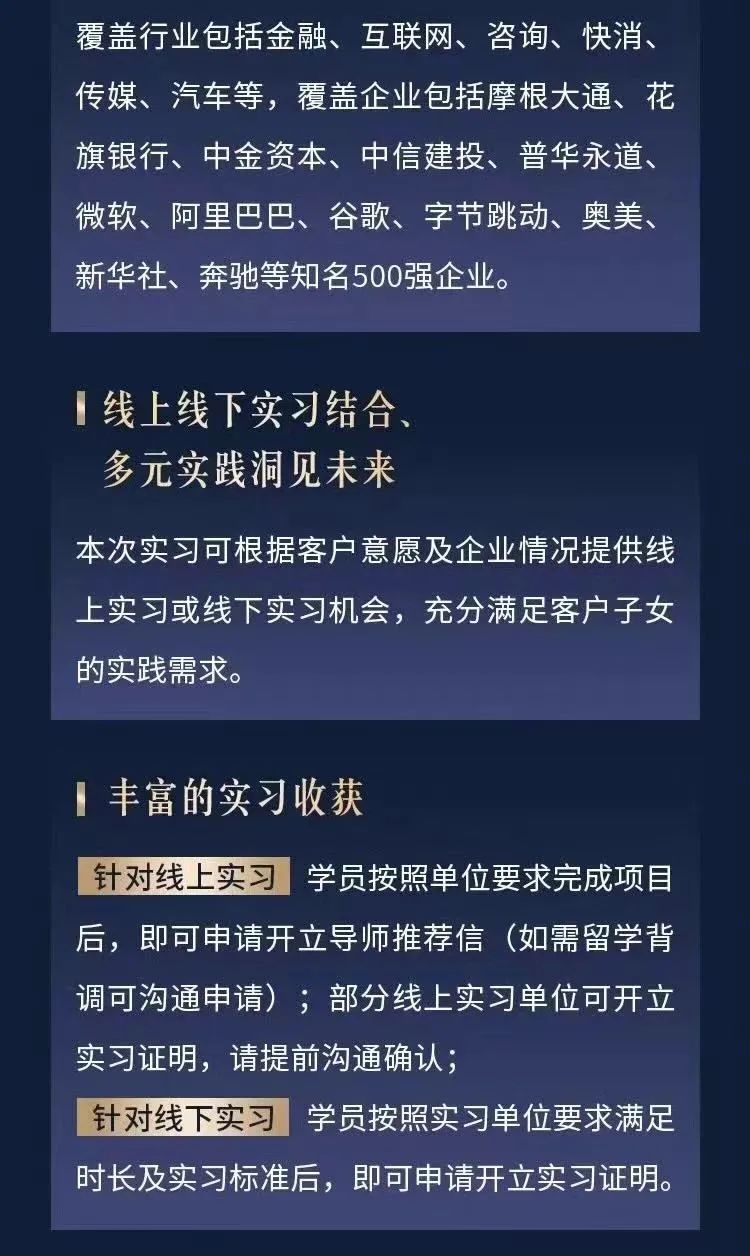
Core Viewpoint - The recent controversy surrounding the "value-added services" of Industrial Bank's private banking division highlights the ethical implications of linking financial assets to employment opportunities, raising concerns about social equity in education and job markets [1][3][6]. Group 1: Controversy and Response - Industrial Bank's private banking service offers internship opportunities at major companies like Google and Alibaba for clients with a minimum deposit of 10 million yuan, which has sparked widespread criticism [1][3]. - The bank acknowledged that the promotion of this "elite enterprise" internship program was not clearly communicated, leading to misunderstandings and expressed regret for the confusion caused [1][3]. Group 2: Industry Practices - The practice of linking financial status to educational and employment opportunities is not unique to Industrial Bank; other banks like Ping An, Citic, and China Merchants have implemented similar programs that commodify access to social resources [4][6]. - Such initiatives are seen as transforming education and employment, which should be based on merit, into "VIP exclusive benefits" accessible only to those with substantial financial means [4][6]. Group 3: Ethical Implications - The controversy underscores a distorted value system where financial capability allows individuals to bypass traditional pathways in competitive job markets, raising questions about fairness and equity [6][7]. - Financial institutions play a crucial role in the distribution of social resources, and when they prioritize capital over fairness, it poses a significant risk to societal values [6][7]. Group 4: Recommendations - It is suggested that regulatory bodies establish clear guidelines to prevent the linking of educational and employment opportunities to financial contributions, ensuring transparency and fairness [6][7]. - Companies should maintain ethical standards and refuse to participate in practices that equate capital with opportunity, while society should enhance mechanisms for equitable employment [6][7].

72小时,点燃火电智能化的星火
Jing Ji Wang· 2025-05-29 01:54
5月8日晚8时许,北京航星园8号楼7层会议室内,时钟的指针悄然划过刻度。三十余双布满血丝的 眼睛紧盯着系统后台,屏幕的冷光映照着每一张疲惫而专注的面庞。当"运行成功"的绿色提示框跃然屏 上时,技术负责人杨硕布满键盘压痕的右手重重拍在桌面:"火电人的首场大考,我们交卷了!"刹那 间,雷鸣般的掌声响彻整个会议室。 在场景开发规则创建过程中,高级产品经理高静毫不保留地传授经验,手把手指导新人。 键盘敲击声此起彼伏,应用研发专班的张迪手边的咖啡罐已堆成小山。他的指尖在机械键盘上飞 舞,手指因过度敲击微微颤抖,最后索性用空咖啡罐压住手腕保持稳定。这时,刚下高铁的专班成员马 国亮拖着行李箱直奔会议室,立即投入工作讨论,夜色在代码行间悄然流转。 这场与时间的赛跑中,一个个感人的故事正在上演。 数据工程师常笑瑀接到家人突发住院的消息,他攥着震动的手机冲进医院时,走廊挂钟的时针正指 向凌晨三点。他蜷缩在医院陪护椅上,膝盖上的笔记本电脑倔强地亮着——在心电监护仪的滴答声中, 一串串代码正艰难破茧。当家人把贴着"平安"字样的充电宝塞他手中时,这个北方小伙的喉结微微颤 动,屏幕上跳动的光标仿佛被赋予了温度,那是照亮千家万户智慧用电的 ...
国家能源集团数智科技公司:“智”算优惠 量结秒清
Jing Ji Wang· 2025-05-28 08:47
Core Insights - The implementation of the "Large Discount Policy Fine Management Platform" has significantly improved the efficiency of discount calculations in the coal business of the National Energy Group, reducing processing time from 24 hours to just 2 seconds [1][2][3] Group 1: Challenges and Innovations - The traditional manual accounting process faced challenges such as data fragmentation and inefficiency, leading to significant time consumption and potential errors in discount allocation [2][3] - The new platform integrates data across departments, allowing for real-time monitoring and automated calculations, which enhances decision-making efficiency [3][4] Group 2: Technological Advancements - The platform utilizes dynamic weight algorithms and real-time data extraction to automate discount calculations and allocations, transforming a multi-day process into one that takes mere seconds [3][5] - It features visual tools like "Discount Overview" and "Execution Reports" that provide a comprehensive view of the entire discount management process, ensuring transparency and accountability [4][5] Group 3: Operational Efficiency - The platform has led to an overall operational efficiency increase of over 80%, allowing for precise matching of fund allocation with business development needs [5] - The introduction of real-time monitoring and intelligent alert mechanisms enables dynamic tracking of discount balances, enhancing risk management capabilities [4][5] Group 4: Market Adaptation - The sales group has adopted a multi-dimensional strategy to address market fluctuations, including a customer grading discount policy that dynamically optimizes execution based on sales performance [6][7] - The platform has demonstrated its strategic value by simplifying complex inter-departmental processes and improving resource allocation efficiency during market volatility [7]
中金科技:创新驱动打造世界一流新材料制造商
Jing Ji Wang· 2025-05-28 08:47
Core Viewpoint - The new materials industry in Shenzhen is emerging as a significant player in the technological revolution and industrial transformation, with Shenzhen Zhongjin Lingnan Nonfemet Company Limited's subsidiary, Zhongjin Technology, leading the way through innovation and industry expertise [1][2]. Group 1: Company Overview - Zhongjin Technology is a key member of the Guangsheng Holding Group, focusing on advanced materials in the non-ferrous metal sector and addressing critical technological challenges [2]. - The company has established itself as a leader in high-performance powder materials, battery storage materials, and composite metal materials, achieving significant market share in various segments [2][3]. Group 2: Product Development - Zhongjin Technology's star product, the mercury-free zinc alloy for alkaline zinc-manganese batteries, has captured over 50% of the domestic market, ranking first in China and among the top three globally [2]. - The company also maintains strong production and sales volumes in other key products such as thermal bimetals and punched nickel-plated steel strips, solidifying its leadership position in the industry [2]. Group 3: Quality and Management - The company emphasizes quality as its lifeline, implementing a "three precision management" model focused on organizational efficiency, detailed management, and lean operations [4]. - Zhongjin Technology has achieved multiple certifications, including ISO quality management and environmental management, reinforcing its commitment to high standards and innovation [4]. Group 4: Future Development - The company plans to continue its commitment to the FAITH management philosophy, focusing on innovation, quality, and a collaborative development model to enhance its core competitiveness [7]. - Zhongjin Technology aims to evolve into a world-class new materials manufacturer characterized by outstanding products, exceptional brands, leading innovation, and modern governance [7].

国务院发布新政,鼓励现代企业制度融入中华优秀传统文化
Jing Ji Wang· 2025-05-28 04:37
Core Viewpoint - The integration of traditional Chinese culture into modern enterprise systems is emphasized as a means to enhance corporate governance and management practices, marking a significant shift in China's approach to modern enterprise management [1][2][3]. Group 1: Policy and Cultural Integration - The recent document from the Central Committee and State Council encourages enterprises to incorporate traditional cultural values such as honesty and innovation into their management practices [1]. - This is the first time that traditional culture has been explicitly required to be institutionalized within the framework of modern enterprise systems [2]. - Previous initiatives have highlighted the importance of integrating traditional culture into production and daily life, indicating a growing recognition of its relevance to economic development [2]. Group 2: Examples and Case Studies - The proposal to integrate traditional culture into modern enterprise management has been supported by various experts and representatives, with specific examples like the FOTILE Group being cited as a successful case [3][4]. - FOTILE has developed a unique management system that combines traditional values with modern practices, leading to significant business growth and innovation [4]. - The company has seen its scale grow from a billion-level to a hundred-billion-level, with a reported revenue of 17.629 billion yuan in 2023, reflecting an 8.53% year-on-year increase [5]. Group 3: Innovation and Social Responsibility - FOTILE has emphasized long-term technological innovation, holding over 15,000 domestic patents, including more than 4,000 invention patents, and has contributed to the formulation of over 130 domestic and international standards [6]. - The company’s commitment to social responsibility is evident in its product development aimed at reducing health risks and environmental impact, such as creating smoke-free range hoods [4][6]. - The integration of traditional culture into modern management practices is seen as a valuable reference for the growth of specialized and innovative enterprises in China [6].
第三届中国科大国际金融研究院·中国私募证券基金排名发布活动举行
Jing Ji Wang· 2025-05-27 11:57
Group 1 - The third China University of Science and Technology International Financial Research Institute and China Private Securities Fund Ranking Release event was held, focusing on the integration of technology and finance [1][2] - The event highlighted the increasing investment in artificial intelligence by private securities fund companies, particularly those represented by Huanfang Quantitative [1][2] - A report was released that established a multi-dimensional quantitative model for analyzing private fund strategies, management scale, and risk-return metrics [3] Group 2 - The event featured discussions on global trends in green finance and the importance of integrating sustainable development into asset allocation [6] - Two roundtable forums were conducted, focusing on investment opportunities arising from new productivity and the challenges in quantitative finance [7] - The event attracted nearly 100 private fund institutions and over 400 attendees, indicating strong industry interest [8]