
Bei Jing Wan Bao

Search documents
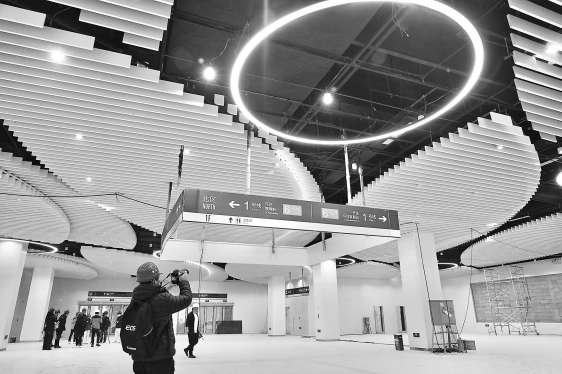
苹果园综合交通枢纽年底完工
Bei Jing Wan Bao· 2025-10-30 08:53
Core Viewpoint - The Apple Garden Comprehensive Transportation Hub, a key project in Beijing, is nearing completion and aims to enhance urban transportation efficiency and connectivity in the western part of the city [1] Group 1: Project Overview - The Apple Garden Comprehensive Transportation Hub is a major infrastructure project that integrates transportation and urban development, serving as a dual "transportation nucleus" and "urban nucleus" [1] - The project is being constructed by the Shoufa Group and is expected to be completed by the end of this year [1] - The total building area of the hub is 298,000 square meters, with the hub area itself covering 94,000 square meters, focusing on transportation transfer functions [1] Group 2: Transportation Features - The hub will connect three subway lines: Line 1, Line 6, and S1, facilitating seamless transfers for passengers [1] - The design includes separate bus platforms for boarding and alighting, enhancing passenger flow and safety [1] - The hub is strategically located near major roads and commercial areas, including the Daxing City and Apple Garden, creating a multi-faceted transportation network [1] Group 3: Connectivity and Accessibility - The hub features both aerial and underground transportation systems that link to surrounding commercial and park areas, improving accessibility for residents [1] - Future plans include pedestrian bridges and underground passages to facilitate easy movement between the southern and northern sections of the hub [1] - The project aims to support local businesses and enhance the overall urban environment by integrating transportation with commercial and recreational spaces [1]
“十四五”时期 北京全国文化中心建设硕果累累
Bei Jing Wan Bao· 2025-10-30 08:25
Core Insights - The "14th Five-Year Plan" period in Beijing focuses on enhancing cultural development, emphasizing ancient, revolutionary, and innovative cultures, and has achieved significant progress in establishing a national cultural center [1] Group 1: Ideological Foundation - The ideological foundation for the capital's development has been strengthened, with a focus on promoting Xi Jinping's thought and enhancing theoretical learning across various levels [2] - Major events such as the centenary of the Communist Party and the Beijing Winter Olympics have been supported through high-quality services and promotional activities [2] Group 2: Urban Civilization - The city has made notable progress in promoting social ethics and moral standards, with over 31 million visitors to major red cultural sites since the beginning of the "14th Five-Year Plan" [3] - Initiatives like the "'Jing' Color Culture, Youth Bloom" plan have engaged around 400,000 university students through numerous cultural activities [3] Group 3: Cultural Heritage - Beijing's historical and cultural heritage has been further enhanced, with the city set to have the most world heritage sites after the inclusion of the central axis in 2024 [4] - Significant cultural preservation projects have been implemented, including over 200 projects along the Grand Canal cultural belt [4] Group 4: Cultural Engagement - The city has hosted a record 57,000 commercial performances in 2024, attracting over 12.8 million attendees and generating ticket sales exceeding 3.9 billion yuan [5] - The number of registered museums has reached 246, and initiatives to promote reading and literature have gained popularity [5] Group 5: Cultural and Technological Integration - The cultural industry now accounts for 11.4% of the city's GDP, with strong support for cultural parks and new business models [6] - The integration of culture and technology is advancing, with over 70% of revenue from new cultural enterprises, positioning Beijing as a leader in this sector [6]
打造新兴产业和未来产业创新高地
Bei Jing Wan Bao· 2025-10-30 08:08
Group 1 - The core message emphasizes the importance of implementing the spirit of the 20th National Congress, focusing on high-quality development and building a modern industrial system [1] - The Beijing Economic-Technological Development Area is encouraged to leverage its resources to create a hub for emerging and future industries [1][2] - The city aims to strengthen its 6G industry, with a focus on accelerating the construction of 6G laboratories and fostering original innovations [2][3] Group 2 - There is a strong emphasis on enhancing industrial development momentum through technological innovation, addressing key technological bottlenecks, and improving supply chain resilience [3][4] - The city plans to consolidate its advantages in the digital economy and promote the transformation of traditional industries using smart technologies [3][4] - A call for strengthening the support for industrial development by improving financial services and creating a favorable business environment is highlighted [4]
苹果园综合交通枢纽年底亮相
Bei Jing Wan Bao· 2025-10-30 07:01
Core Insights - The Apple Garden Comprehensive Transportation Hub is nearing completion and is a key project in Beijing, integrating transportation and urban development [2][3] - The hub will serve as a large urban complex, combining transportation transfer, commercial services, and industrial collaboration [2] - The project covers a total construction area of 298,000 square meters, with 94,000 square meters dedicated to the transportation hub and 147,000 square meters for commercial and office services [2] Transportation Integration - The hub features a design that allows for seamless transfers between subway lines 1, 6, and S1, enhancing connectivity in the region [2] - It includes separate bus platforms for pick-up and drop-off, facilitating efficient passenger flow [2] - The hub is strategically located near major roads and commercial centers, creating a multi-faceted transportation network [2] Urban Development and Design - The project emphasizes a "station-city integration" concept, aiming to transform a traditional transportation node into a vibrant urban center [3] - It incorporates innovative features such as sky bridges and underground passages to connect the hub with surrounding commercial areas and parks [3] - The design promotes a "consume upon arrival, work upon transfer" environment, enhancing the user experience [3] Resource Optimization - The hub aims to alleviate urban land resource constraints by integrating various transportation modes, including BRT, regular buses, taxis, and parking facilities [3] - The project represents a shift from single-function transportation hubs to multifunctional urban spaces, promoting resource consolidation and high-density development [3]

公共收益给业主!北京一小区给业主发钱共32万
Bei Jing Wan Bao· 2025-10-30 04:14
Core Viewpoint - The distribution of public revenue to homeowners in the Jindi Green Green community in Tongzhou, Beijing, represents a new trend in property management, where residents receive financial returns from communal earnings [1][2]. Group 1: Public Revenue Distribution - The total amount distributed to homeowners from public revenue is over 320,000 yuan, derived from income sources such as elevator advertisements, parking lots, water dispensers, and new energy charging stations [2][3]. - The distribution standard was set at 2 yuan per square meter, with larger homeowners receiving over 3,000 yuan and smaller units receiving around 100 yuan [2]. Group 2: Community Engagement and Transparency - This is the first time the Jindi Green Green community has distributed public revenue, marking a significant milestone for the first-term homeowners' committee [3]. - The homeowners' committee emphasizes that all residents are "shareholders" of the community, and the public revenue belongs to them, thus it should be returned to the residents [3]. - To ensure transparency, the public revenue undergoes annual third-party audits, and detailed financial records of community expenditures are publicly displayed [3].
金庸海外七十年
Bei Jing Wan Bao· 2025-10-29 12:13
Core Insights - The global influence of Jin Yong's novels is significant, with translations available in over twenty countries and regions, starting from 1958 [1] Translation and Dissemination - Jin Yong's novels began to be translated in Southeast Asia, with Thailand being the first country to publish a translation of "The Legend of the Condor Heroes" in 1958 [15] - Following Thailand, Indonesia and Vietnam also produced multiple translations of Jin Yong's works, indicating a growing popularity in these regions [15] - The translation of Jin Yong's novels in Cambodia and Myanmar is less clear, with no confirmed Cambodian translations and a focus on adaptations in Myanmar through film rather than direct translations [16][17] Academic Research - Academic research on Jin Yong's works in Southeast Asia began relatively late, with Thailand starting serious studies around 2000, while Vietnam has produced a wealth of scholarly work on the subject [21][22] - In East Asia, Japan and South Korea have also developed significant academic interest in Jin Yong's novels, focusing on various aspects such as literary analysis and cultural comparisons [22] Western Reception - Jin Yong's novels began to gain attention in the West in the 1990s, with early English translations appearing but not achieving the same level of popularity as in Asia [18][19] - The first complete English translations emerged in the 1990s, with subsequent translations into multiple European languages, indicating a growing interest in Jin Yong's works outside of Asia [19] Ongoing Influence - The influence of Jin Yong's novels continues to grow, with new translations and academic studies being published, suggesting that his works are on the path to becoming "world literature" [24][25]

WTA年终总决赛分组抽签揭晓 萨巴伦卡斯瓦泰克领衔出战
Bei Jing Wan Bao· 2025-10-29 10:15
Group 1 - The WTA Year-End Finals singles draw has been announced, featuring two groups: one with Sabalenka, Gauff, Pegula, and Paulini, and the other with Swiatek, Anisimova, Rybakina, and Keys [1] - World No. 1 Sabalenka secured her spot for the Year-End Finals early in July, marking her fifth consecutive appearance in the event. She has won four singles titles this season, including one Grand Slam (US Open), two WTA 1000 titles, and one WTA 500 title [1] - Swiatek has claimed three titles this season, including a Grand Slam at Wimbledon, and achieved her best result at the Year-End Finals in 2023 by winning the championship [1] Group 2 - Defending champion Gauff qualified for the finals again this year, having won the French Open and a WTA 1000 title in Wuhan [1] - Anisimova, who won the China Open this year, will make her debut at the Year-End Finals. Other qualifiers include Australian Open champion Keys, Pegula, Paulini, and Rybakina [1] - The Year-End Finals will take place from November 1 to 8 in Riyadh, featuring a round-robin format where the top two from each group advance to the semifinals, with a total prize pool exceeding $15 million [1]
莫道桑榆晚 为霞正满天
Bei Jing Wan Bao· 2025-10-29 09:46
Core Insights - The 11th Beijing International Aging Industry Expo (referred to as "Aging Expo") has commenced, emphasizing the importance of elderly care as a universal concern and a personal life stage that everyone will face [1] - The theme of this year's expo is "Smart Enjoyment of Silver Age, Nourishing All Directions," focusing on integrating humanistic care with technological innovation in the lives of the elderly [1] Group 1: Aging Services - The expo showcases a comprehensive panorama of aging services, featuring various well-known aging institutions, including state-owned enterprises and innovative private brands, allowing attendees to compare diverse service options from affordable to high-end [1] - A special "Travel and Health Care" section has been created, offering tailored travel routes for seniors, emphasizing that the joy of exploration is not exclusive to the young [2] Group 2: Financial Services - The "Aging Finance" section brings together quality banks, insurance, and fund institutions to offer financial products tailored to the needs of the elderly, focusing on financial planning to ensure a worry-free retirement [2] Group 3: Technological Innovations - The Smart Aging section allows attendees to experience how technology enhances elderly living, featuring smart wearables, exoskeleton robots, and remote medical consultation systems [2] - The Aging-Friendly section highlights innovations in creating accessible environments and smart communities, contributing to a more elder-friendly society [2] Group 4: Health and Wellness - The Health and Wellness section promotes the deep integration of medical and elderly care services, showcasing a full industry chain from rehabilitation care to chronic disease management [3] - The expo has introduced an official publication to extend the event's impact beyond the exhibition, fostering continuous communication in the aging industry [3]
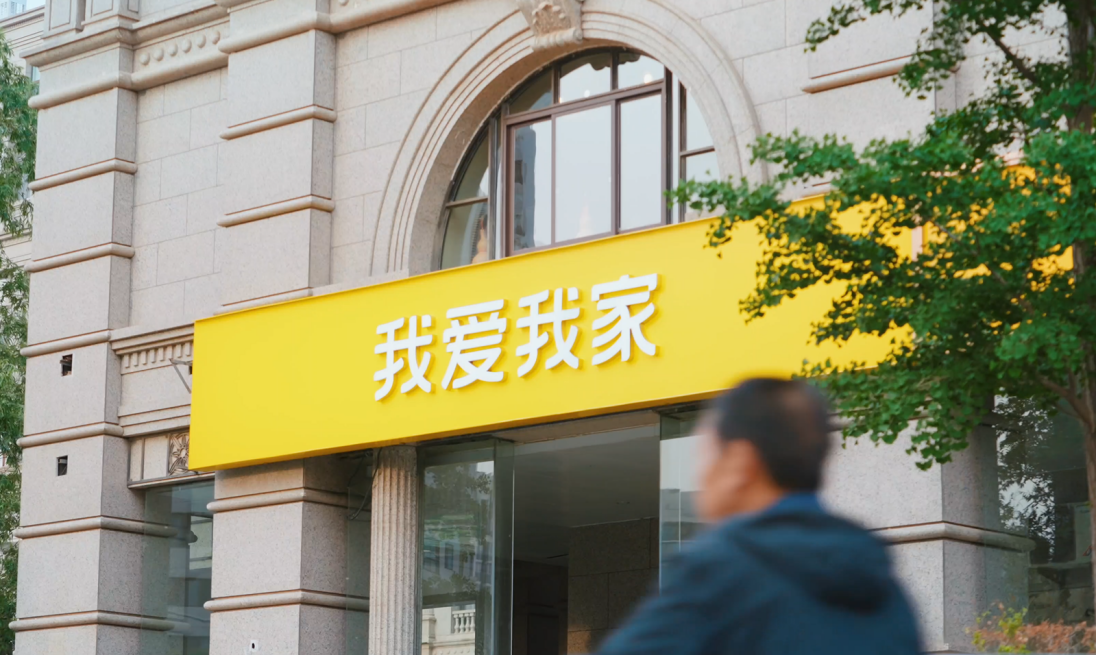
运营提质增效!我爱我家前三季度扣非归母净利润同比增长174%
Bei Jing Wan Bao· 2025-10-29 09:00
Core Insights - I Love My Home Group reported a total housing transaction value (GTV) of approximately 196.2 billion yuan for Q3 2025, representing a year-on-year increase of 5.2% [1] - The company achieved a net profit attributable to shareholders of approximately 42.3 million yuan, a significant year-on-year growth of 398.75% [1] - The company’s net profit excluding non-recurring items reached approximately 54.2 million yuan, up 173.96% year-on-year [1] Brokerage Business Growth - The brokerage business continued to show steady growth, with a GTV of 156.6 billion yuan for the first three quarters, reflecting a year-on-year increase of 5.1% [3] - Market share in key cities like Beijing and Shanghai has been steadily improving, with the second-hand housing transaction business showing resilience [3] - The company’s success is attributed to over 20 years of refined operational systems in core cities, including a dense community service network and precise customer demand insights [3] New Housing Business Performance - Despite a challenging new housing market, the company’s new housing business achieved a GTV of 25.9 billion yuan, marking a year-on-year growth of 9.3% [4] - This growth is supported by effective risk management, increased marketing efforts, and digital investments, including promotional activities like the "Summer New Housing Festival" [4] - The company has optimized its internal operations to enhance the synergy between new and second-hand housing, launching cross-regional VIP services to better serve clients [4] Future Opportunities and Market Outlook - The company anticipates continued supportive policies aimed at revitalizing the real estate market, aligning with the government's focus on high-quality development [5] - The shift from scale expansion to quality enhancement presents significant opportunities for professional residential service providers [5] - The company’s competitive edge is reinforced by its extensive network of professional agents and offline stores, combined with digital capabilities for precise matching [5]

不断塑造面向未来的发展新优势
Bei Jing Wan Bao· 2025-10-29 07:59
Core Points - The meeting emphasized the importance of deeply understanding and implementing the spirit of the 20th Central Committee's Fourth Plenary Session, highlighting the significance of the "two establishments" and the need for greater responsibility in achieving socialist modernization [1][2][4] Group 1: Historical Context and Strategic Planning - The 20th Central Committee's Fourth Plenary Session introduced new viewpoints and judgments regarding the historical process of socialist modernization and the strategic considerations for the "14th Five-Year Plan" and "15th Five-Year Plan" [2] - The "15th Five-Year Plan" period is identified as a critical historical intersection, requiring proactive adaptation to complex changes and a focus on self-driven development strategies [2][3] Group 2: Economic Development and Quality Improvement - There is a strong emphasis on promoting high-quality development, ensuring stable economic growth, and enhancing the overall development quality across social, ecological, and cultural sectors [3] - The need to improve development efficiency and foster new productive forces is highlighted, along with the importance of maintaining safety and stability in the capital [3] Group 3: Addressing Public Needs and Enhancing Living Standards - The meeting stressed the importance of prioritizing public welfare, addressing urgent issues faced by the populace, and innovating solutions for challenges such as air pollution and traffic congestion [3] - A forward-looking approach is encouraged to improve urban planning and public service mechanisms to enhance the quality of life [3] Group 4: Party Self-Reform and Governance - The meeting called for unwavering commitment to strict party governance and strengthening party organizations to ensure effective implementation of central decisions [4] - Continuous theoretical education and practical problem-solving are emphasized, alongside the need to combat formalism and bureaucratism [4] Group 5: Implementation and Training - The meeting outlined the necessity for comprehensive training and effective communication to promote the learning of the 20th Central Committee's spirit across all levels of government [4] - It is crucial to develop a solid foundation for the "15th Five-Year Plan" while ensuring the successful completion of the "14th Five-Year Plan" [4]