投资界

Search documents
腾讯,投了刘晓丹
投资界· 2025-07-07 14:36
欢迎加入投资界读者群 出资晨壹基金。 作者 I 周佳丽 报道 I 投资界-解码LP 腾讯又做LP了。 投资界-解码LP获悉,晨壹基金旗下的上海晨峦企业管理合伙企业(有限合伙)近日发生 工商变更,新增合伙人出现了腾讯的身影。 以下文章来源于解码LP ,作者周佳丽 解码LP . 投资界(PEdaily.cn)旗下,专注募资动态 晨壹基金的掌门人——刘晓丹,早年前曾是华泰联合的灵魂人物,操刀不少经典案例, 被称为"并购女王"。2019年,刘晓丹率队晨壹基金亮相,聚焦并购投资,首期基金一举 募资68亿元,去年阿里巴巴老将张勇、胡晓相继加盟,操刀并购。 这一次腾讯出手,投了刘晓丹的基金,也是并购火热的一缕写照。 腾讯出资 刘晓丹的基金 具体来看,上海晨峦企业管理合伙企业(有限合伙)成立于2022年2月,执行事务合伙人 为晨壹红启(北京)咨询有限公司,经营范围含企业管理、企业管理咨询、信息咨询服 务。合伙人信息显示,该合伙企业由晨壹红启(北京)咨询有限公司、北京晨壹并购基 金(有限合伙)等共同出资成立。 来到今年7月,上海晨峦企业管理合伙企业(有限合伙)发生工商变更,新增广西腾讯创 业投资有限公司、无锡晨壹成长股权投资基 ...



五星酒店,爆发摆摊潮
投资界· 2025-07-06 07:25
Core Viewpoint - The trend of high-end hotels setting up street stalls is a response to declining business due to changes in consumer behavior and economic conditions, indicating a shift in the hospitality industry's operational strategies [3][19][30]. Group 1: Emergence of Street Stalls - High-end hotels across various cities in China, including Henan and Zhejiang, have started setting up street stalls to sell affordable food items, attracting both regular customers and new patrons [4][12][16]. - The trend has gained momentum, with hotels like the Ritz-Carlton and Hilton also participating, suggesting a widespread adaptation among luxury hotels to meet changing consumer demands [15][19]. Group 2: Reasons for the Shift - The hospitality industry has faced significant challenges this year, particularly in business-related dining due to stricter regulations and a decline in corporate travel budgets, leading hotels to seek alternative revenue streams [19][20][21]. - A notable decrease in corporate dining and external business events has forced hotels to pivot their focus towards more casual dining options, as traditional revenue sources have diminished [22][28]. Group 3: Long-term Implications - The shift to street stalls is not merely a temporary measure; it reflects a broader transformation in the hotel dining model, where high-end establishments are now exploring more casual and accessible dining experiences [32][35]. - The future of high-end hotels may involve a dual approach, combining luxury offerings with more affordable options to attract a wider customer base, thus redefining their business strategies [38][39].

2025,一级市场生存现状
投资界· 2025-07-06 07:25
Core Viewpoint - The investment landscape in China is undergoing significant changes, with a focus on innovation and adapting to new market conditions, particularly in the context of venture capital and private equity [2][5][12]. Group 1: Industry Trends - The 19th China Fund Partners Conference highlighted the evolution of the venture capital industry, emphasizing the importance of adapting to new cycles and market dynamics [2][5]. - The dialogue among industry leaders indicated a consensus that while the market is showing signs of recovery, a definitive turning point for venture capital has not yet been reached [9][10][11]. - Historical patterns suggest that the venture capital industry operates in ten-year cycles, with the current period being viewed as a potential turning point for future growth [12][11]. Group 2: Investment Strategies - Various firms are focusing on sectors such as hard technology, AI, and new materials, with a strong emphasis on long-term investment strategies and patience from limited partners (LPs) [12][30][31]. - The need for innovation in funding mechanisms, such as the introduction of technology innovation bonds (科创债), is being recognized as essential for sustaining investment flows [12][16]. - The importance of aligning fund durations with the growth cycles of enterprises is highlighted as a critical factor for success in the current investment environment [13][14]. Group 3: Market Challenges - The venture capital industry faces challenges in fundraising, investment, and exit strategies, with many participants agreeing that fundraising remains particularly difficult [19][20]. - The oversaturation of funds in the market is identified as a significant barrier to successful exits, impacting overall investor confidence [20][21]. - The need for a more patient capital approach is emphasized, particularly in light of the current economic climate and the necessity for long-term investment horizons [16][19]. Group 4: Future Outlook - Industry leaders express optimism for the second half of the year, anticipating improved market conditions and investment opportunities [31][32][33][36]. - The focus on emerging technologies, particularly in AI and new materials, is expected to drive future growth and investment returns [30][31][24]. - The consensus among industry experts is that the venture capital landscape will continue to evolve, with a strong emphasis on adapting to technological advancements and market demands [28][29][30].

绕不开的中国稀土
投资界· 2025-07-06 07:25
Core Viewpoint - The article discusses the critical role of rare earth elements in the automotive industry, particularly in electric vehicles, highlighting the supply chain vulnerabilities and the geopolitical implications of rare earth dependency, especially for countries like the United States and Japan [4][6][30]. Group 1: Supply Chain Vulnerabilities - Suzuki Motors announced a production halt for its Swift model due to delays in parts procurement caused by rare earth export controls [4]. - European and American automotive suppliers are also facing production challenges, with Ford pausing production of its Explorer model [5]. - Rare earth elements are essential for various components in electric vehicles, including motors, sensors, and other electronic parts, with China controlling a significant portion of the global supply [6][30]. Group 2: Historical Context and Current Trends - The article references a past crisis in 2010 when China reduced rare earth exports to Japan, leading to a dramatic price increase for rare earth oxides [7]. - Despite efforts by the U.S. and Japan to reduce dependency on Chinese rare earths over the past decade, the current situation mirrors past crises, with estimates suggesting it could take another 10 years to rebuild a complete supply chain [8]. - The demand for rare earths has surged with the rise of electric vehicles, with each vehicle typically using 1.5 to 3 kg of rare earth materials [21]. Group 3: Industry Dynamics - The U.S. once dominated rare earth production but has since lost its competitive edge, with China now accounting for 92% of global rare earth refining capacity [30]. - The processing of rare earths is more complex than extraction, with significant barriers in refining and purifying these materials, which are crucial for high-performance applications [27][28]. - Recent consolidations in China's rare earth industry have enhanced its scale and bargaining power, making it challenging for foreign companies to compete [34]. Group 4: Technological Developments and Alternatives - Tesla has been actively working to reduce its reliance on rare earths in its electric motors, aiming to develop a motor that does not use rare earth materials [39]. - The company has successfully reduced the amount of rare earth used in its Model 3 by 25% from 2017 to 2022 [40]. - Alternatives to rare earth magnets, such as ferrite magnets, exist but do not match the performance of neodymium-iron-boron magnets [45]. Group 5: Global Production Landscape - China produces over 300,000 tons of neodymium-iron-boron magnets annually, with most of this production consumed by the domestic electric vehicle market [50]. - Japan's domestic production of neodymium-iron-boron magnets is around 4,500 tons, with a self-sufficiency rate of 60%, but it still relies on Chinese raw materials [50]. - The article emphasizes the importance of the triangular relationship between rare earth mining, refining, and the electric vehicle industry, which has solidified China's position as both a producer and consumer of rare earths [49].


2500亿,潮汕女王要去IPO了
投资界· 2025-07-05 08:00
Core Viewpoint - The article highlights the upcoming IPO of Luxshare Precision Industry Co., Ltd. on the Hong Kong Stock Exchange, marking a significant milestone for the company and its founder, Wang Laichun, who has transformed the company from a small factory to a major player in the electronics industry [1][4][7]. Company Overview - Luxshare Precision, with a market capitalization exceeding 250 billion yuan, is preparing for a dual listing in A-shares and H-shares, indicating its ambition for broader market reach [1][7]. - Wang Laichun, the founder, started her career as a factory worker and later established Luxshare Precision in 2004, focusing on independent product development and high-end manufacturing [4][5]. Business Expansion - The company has diversified its operations across three main sectors: consumer electronics, communications and data centers, and automotive, creating a multi-faceted product line [9]. - For the fiscal year 2024, Luxshare Precision reported revenues of 268.8 billion yuan, a year-on-year increase of 15.91%, with net profits reaching 13.37 billion yuan, up 22.03% [9]. Globalization Strategy - Luxshare Precision's international sales accounted for 87.60% of total revenue in 2024, reflecting its expanding global footprint with manufacturing bases in multiple countries [9]. - The recent acquisition of German automotive parts supplier Leoni AG for approximately 4 billion yuan is a strategic move to enhance its automotive business and global capacity [10][12]. Market Context - The Hong Kong IPO market has seen a resurgence, with over 40 companies successfully listing in the first half of the year, a 43% increase from the previous year [14]. - The article notes that the upcoming IPOs, including Luxshare Precision, are part of a broader trend of companies seeking to capitalize on the revitalized Hong Kong market, which is experiencing a significant influx of capital and investor interest [15][16].

MPV,中产男人的归宿
投资界· 2025-07-05 08:00
Core Viewpoint - The article discusses the evolving preferences of middle-aged men regarding vehicle choices, emphasizing that business vehicles (MPVs) represent a final destination in their automotive journey, symbolizing practicality and comfort over status and luxury [3][7][29]. Group 1: Vehicle Preferences - Middle-aged men transition from luxury sedans to business vehicles as they prioritize space and comfort for family and personal use [5][17]. - Business vehicles are seen as practical choices that accommodate family needs, contrasting with the earlier desire for flashy cars [15][24]. - The article highlights that owning a business vehicle allows men to feel more relaxed and less constrained compared to traditional sedans [9][27]. Group 2: Social Perception and Identity - Driving a business vehicle conveys a sense of maturity and stability, moving away from the need for social comparison [10][20]. - The choice of vehicle reflects a man's life stage, with business vehicles symbolizing a settled lifestyle rather than a pursuit of status [21][24]. - Men who own business vehicles often modify them to reflect personal style, indicating a blend of practicality and individuality [21][24]. Group 3: Practicality and Comfort - Business vehicles provide superior comfort, with spacious interiors that allow for relaxation during long drives, which is particularly appealing to middle-aged men [17][27]. - The article notes that some men even repurpose business vehicle seats for office use, highlighting their multifunctionality [18]. - The comfort of business vehicles is compared favorably to ergonomic office chairs, making them suitable for both leisure and work [17].

LP圈发生了什么
投资界· 2025-07-05 08:00
Group 1 - Hubei Province has established a humanoid robot industry mother fund with a total scale of 10 billion yuan, focusing on core areas of humanoid robots and AI [2] - Shanghai Morning Fund has welcomed new partners including Tencent Venture Capital, with a focus on enhancing its management team [3] - Guangzhou's human resources industry fund aims to reach a scale of 10 billion yuan, integrating AI and big data analysis [5][6] Group 2 - Shanghai Yuanhe Puhua private equity fund has been established to support the development of the integrated circuit industry [7] - Shenzhen's Deep Investment Control has launched two innovation funds with a total scale of 40 billion yuan, aimed at supporting technology innovation [8] - Zhejiang Province has registered its first provincial-level low-altitude industry fund with a scale of 1 billion yuan [9] Group 3 - Henan Province has launched its first low-altitude development equity investment fund with a total scale of 2 billion yuan [10] - Guangxi has established an advanced materials fund with a total scale of 1.8 billion yuan, focusing on the new materials sector [12] - Qingdao has registered its largest AIC fund with a total scale of 3 billion yuan, targeting big data and AI industries [13] Group 4 - Nanjing has set up two new funds with a combined scale of 1.9 billion yuan, focusing on various modern industry sectors [14][15] - Wenzhou has completed the registration of its first fund with a scale of 3 billion yuan [17] - Yancheng has established its first industrial merger mother fund with a total scale of 3 billion yuan [18] Group 5 - Anhui has launched a future materials fund with a total scale of 1 billion yuan, focusing on advanced and strategic materials [20][21] - The "Hangzhou Conference City" fund has been initiated with a first phase scale of 100 million yuan to support the local economy [22] - Zao Yang has completed the establishment of its first technology innovation fund with a total scale of 20 million yuan [23][24] Group 6 - Hefei has established a technology innovation investment fund with a scale of 2 billion yuan, focusing on high-end manufacturing and new materials [25] - Hunan Province is planning to invest in a new energy industry sub-fund under the Jin Furong Industrial Guidance Fund [26] - Chengdu is preparing to invest in an angel fund with a target scale of 200 million yuan [27] Group 7 - The industrial doubling guidance fund in Xi'an is being set up to support key industries and promote high-quality economic development [31] - Shanghai has announced a second phase fund for industrial transformation with a total scale of 500 billion yuan [32] - Heilongjiang Province has introduced policies to support the aerospace industry, including financial incentives for companies achieving certification [35]

一级市场最期待什么政策
投资界· 2025-07-04 12:05
Core Viewpoint - The article emphasizes the importance of staying updated with the latest trends and developments in the investment sector, particularly in the context of venture capital and startup ecosystems [1] Summary by Relevant Sections - The article highlights the dynamic nature of the investment landscape, noting that new opportunities and challenges continuously arise in the venture capital space [1] - It discusses the significance of networking and building relationships within the investment community to identify potential investment opportunities [1] - The article also points out the role of technology and innovation in shaping investment strategies and decision-making processes [1]

李飞飞最新对话
投资界· 2025-07-04 12:05
Core Viewpoint - The article emphasizes the importance of spatial intelligence in achieving Artificial General Intelligence (AGI), as articulated by AI pioneer Fei-Fei Li, who believes that understanding and interacting with the 3D world is fundamental to AI development [2][29]. Group 1: Spatial Intelligence and AGI - Fei-Fei Li asserts that without spatial intelligence, AGI is incomplete, highlighting the necessity of creating world models that capture the structure and dynamics of the 3D world [29][33]. - The understanding of 3D world modeling is deemed crucial for AI, involving tasks such as reasoning, generating, and acting within a three-dimensional context [8][33]. Group 2: ImageNet and Its Impact - The creation of ImageNet was a pivotal moment in AI, providing a large dataset that enabled significant advancements in computer vision and machine learning [12][18]. - ImageNet's challenge established benchmarks for object recognition, leading to breakthroughs in algorithms, particularly with the introduction of convolutional neural networks like AlexNet [19][24]. Group 3: Evolution of AI and Future Directions - The conversation reflects on the evolution of AI from object recognition to scene understanding and now to generative models, indicating a rapid progression in capabilities [31][27]. - Fei-Fei Li expresses excitement about the potential of generative AI and its applications in various fields, including design, gaming, and robotics, emphasizing the need for robust world models [41][42]. Group 4: Challenges in Spatial Intelligence - A significant challenge in developing spatial intelligence is the lack of accessible spatial data compared to the abundance of language data available online [36][73]. - The complexity of understanding and modeling the 3D world is highlighted, as it involves intricate interactions and adherence to physical laws, making it a more challenging domain than language processing [35][39]. Group 5: Personal Insights and Experiences - Fei-Fei Li shares her journey from academia to entrepreneurship, emphasizing the importance of curiosity and a fearless mindset in tackling difficult problems [46][55]. - The article concludes with encouragement for young researchers to pursue their passions and embrace challenges, reflecting on the transformative nature of AI and its potential to benefit humanity [77].

一个超级LP诞生了
投资界· 2025-07-04 12:05
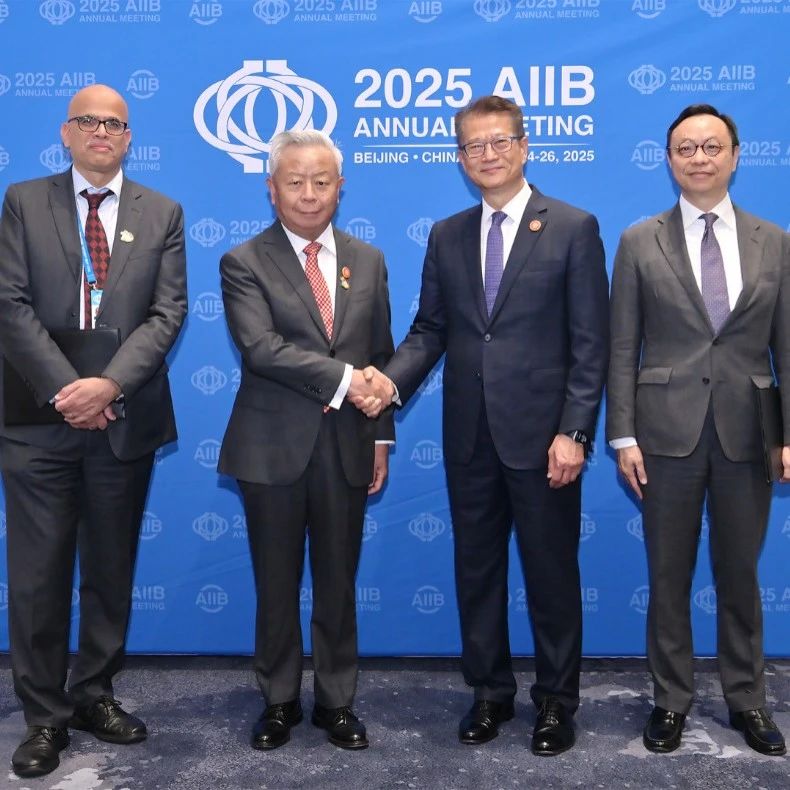
Core Viewpoint - The collaboration between the Asian Infrastructure Investment Bank (AIIB) and the Hong Kong Monetary Authority (HKMA) aims to support venture capital funds focused on emerging markets in Asia, marking a significant shift as both institutions transition into roles as limited partners (LPs) in the venture capital space [1][3][6]. Group 1: Strategic Collaboration - AIIB and HKMA have signed a strategic cooperation agreement to jointly invest in venture capital funds targeting Asian emerging markets [1][3]. - This partnership is expected to leverage AIIB's extensive experience and network in emerging markets to identify investment opportunities with appropriate risk management frameworks [6]. - The collaboration aims to enhance the development of green and technology-driven infrastructure in Asia, while also fostering Hong Kong's venture capital ecosystem [3][6]. Group 2: Market Context - The partnership signifies the emergence of a major LP in the venture capital landscape, which has been facing a shortage of market-driven LPs in recent years [8][12]. - Recent data indicates a significant decline in fundraising for foreign currency funds, with only four foreign currency funds raising approximately 4.468 billion RMB, a 77.9% year-on-year decrease [9]. - The lack of market-driven LPs has been a critical issue for VC/PE firms, compounded by stringent requirements from state-owned LPs and declining market conditions [12][13]. Group 3: Future Prospects - The collaboration is expected to lead to further financial innovations, including the issuance of multi-currency bonds to attract market funds for green and sustainable development projects in the region [6]. - The establishment of a national venture capital guiding fund has been proposed, which could mobilize nearly 1 trillion RMB in local and social capital over a 20-year period, seen as a potential turning point for the venture capital market [13]. - Positive signals from recent initiatives, such as the approval of technology innovation bonds, are viewed as crucial for revitalizing the investment landscape [14][15].