投中网

Search documents
两位上海80后,正在批量拿下IPO
投中网· 2026-01-12 07:05
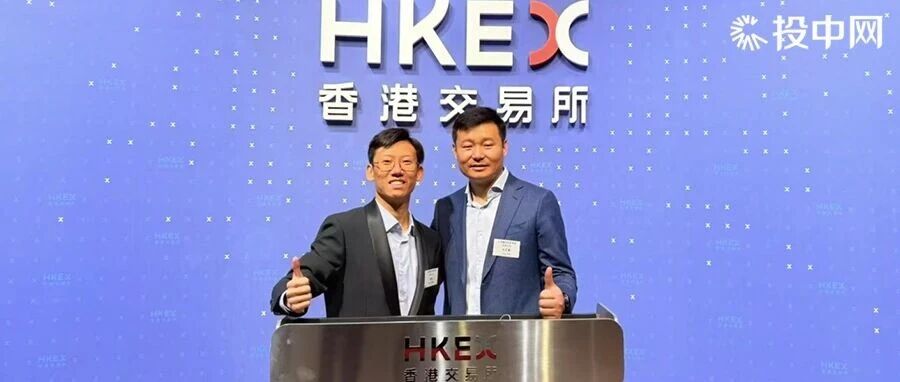
Core Viewpoint - The article highlights the impressive performance of YaoTu Capital in the AI semiconductor investment space, showcasing its early investments in leading companies and the potential for significant returns as these companies approach IPOs [4][5][6]. Investment Performance - YaoTu Capital has invested in several notable companies in the AI semiconductor sector, including Wallen Technology, Hanbo Semiconductor, and Cloud Leopard Intelligence, which are all on the verge of or have completed IPOs [4][6]. - The firm has a strong track record, with its early investments in these companies leading to substantial returns, particularly as the market for AI chips continues to grow [5][12]. Market Trends - The article discusses the current peak in AI chip IPOs, with YaoTu Capital being a key player in this trend, having invested in companies that are now achieving significant market valuations [4][8]. - The emergence of the National Entrepreneurship Guidance Fund is noted as a significant development in the venture capital landscape, with YaoTu Capital being included among the early-stage institutions that are performing well [7]. Investment Strategy - YaoTu Capital's strategy focuses on identifying high-potential projects early, particularly in the AI semiconductor space, and supporting them through various funding rounds [18][21]. - The firm emphasizes a deep understanding of the industry and a commitment to building a comprehensive AI ecosystem, investing across hardware, software, and application layers [18][21]. Notable Investments - Specific companies highlighted include Hanbo Semiconductor, which specializes in AI inference and rendering GPUs, and Cloud Leopard Intelligence, a leader in the DPU chip market [19][20]. - YaoTu Capital's early investments in these companies have positioned it well for future returns as they continue to grow and potentially go public [12][20]. Organizational Characteristics - YaoTu Capital is characterized by its pragmatic approach, focusing on project quality over office prestige, and fostering a culture of in-depth technical discussions among its investment team [25][30]. - The firm prioritizes independence and a low reliance on external resources, allowing for a more agile investment strategy [29][31].


“全球大模型第一股”,为何诞生在海淀?
投中网· 2026-01-12 05:55
Core Viewpoint - The successful listing of Zhipu marks a significant milestone for China's AGI industry, indicating a key transition from laboratory research to commercialization, and highlights the symbiotic relationship between Zhipu and its nurturing environment in Haidian District [3][6]. Group 1: Company Overview - Zhipu officially listed on the Hong Kong Stock Exchange on January 8, becoming the "first stock of global large models," with its stock price increasing nearly 77% and a market capitalization reaching 100 billion HKD [3]. - The company was founded in 2019 by Tsinghua University alumni, focusing on AGI and has achieved several milestones, including the launch of China's first hundred-billion model and the first open-source trillion model [5][6]. - Zhipu's revenue is projected to grow from 57.4 million RMB in 2022 to 312.4 million RMB in 2024, reflecting a compound annual growth rate of 130% [6]. Group 2: Ecosystem and Support - Haidian District provides a rich ecosystem for AI talent, housing approximately 43% of China's top AI talent, with over 80% located in Haidian [8]. - The district has established a diverse incubation system with 193 incubators, offering comprehensive support through mentorship, resources, and capital [9]. - Haidian has set up a technology growth fund totaling 20 billion RMB to accelerate the development of key industries and projects [9]. Group 3: Policy and Infrastructure - In June 2023, Haidian issued measures to support AI model innovation, including subsidies of up to 2 million RMB for innovative models [10]. - The district launched a public computing power platform in 2024, enhancing its AI infrastructure and supporting the development of AI applications across various sectors [10]. - Haidian's AI ecosystem is characterized by a high density of research institutions and companies, facilitating collaboration and innovation [14][15]. Group 4: Feedback Loop and Future Prospects - Zhipu has initiated the "Z Plan" to support entrepreneurs in the large model field, providing funding, technology, and resources [19]. - The company has invested in numerous startups, with over half of them establishing their headquarters or core R&D in Haidian [19]. - Haidian aims to continue nurturing future industries such as embodied intelligence and quantum information, suggesting that more leading companies will emerge from this innovative environment [20].
独家丨10亿,开年第一笔机器人融资,字节红杉都出手了
投中网· 2026-01-12 00:00
Core Viewpoint - The article discusses the recent 1 billion yuan A++ round financing of Zibianli Robot, highlighting the collective investment from major internet companies, top venture capitalists, and local governments, indicating a strong consensus on the importance of embodied intelligence models in the capital market [3][4]. Investment Landscape - Zibianli Robot has secured investments from ByteDance, Sequoia China, Shenzhen Capital Group, and various local government funds, making it the only embodied intelligence company backed by major players like Alibaba and Meituan [3][4]. - The investment from Sequoia China marks its second involvement with Zibianli, reflecting confidence in the company's potential in the embodied and robotics sector [3][4]. - Shenzhen Capital Group's investment is part of a dedicated AI and embodied robotics fund, while local government funds like the Beijing Information Industry Development Fund also contribute, showcasing regional support for the company [4]. Company Background - Founded in December 2013, Zibianli Robot is among the earliest companies focusing on self-developed embodied models, led by CEO Wang Qian, who has a strong academic background in robotics and AI [6][7]. - The company emphasizes the independence of its embodied intelligence model from traditional language and multimodal models, focusing on physical world interactions [7]. Technological Development - The core goal of Zibianli's embodied intelligence model is to overcome generalization and universality bottlenecks, enabling robots to handle complex, unstructured tasks in real-world environments [7][8]. - The WALL-A architecture integrates multimodal input and output, enhancing the robot's ability to adapt to various scenarios through real-time processing of sensory information [8]. Data and Model Evolution - The evolution of the model relies heavily on data, with Zibianli employing various data collection methods, including real machine data acquisition and simulation generation [8]. - The company has developed a data pipeline to continuously produce high-quality data, facilitating a closed-loop iteration between hardware, data, and models [8]. Market Position and Future Outlook - Zibianli has demonstrated adaptability in real-world scenarios, showcasing its robots' capabilities in logistics and delivery tasks [9]. - The company has launched high-performance robots and is exploring commercialization in various sectors, including industrial manufacturing and elder care [9][10]. - The investment landscape for embodied and humanoid robots is expected to continue growing, with Zibianli leading in financing among its peers [10].

时代正在呼唤中国的“黑石”丨CV荐书
投中网· 2026-01-11 07:12
Core Viewpoint - The article discusses the potential for China to develop its own version of Blackstone in the VC/PE market, highlighting the shift from a focus on growth-stage investments to an increasing interest in merger and acquisition (M&A) funds [3][4]. Group 1: Changes in the VC/PE Landscape - The traditional VC/PE landscape in China has been dominated by growth-stage investments, with a prevailing belief that China could not produce a firm like Blackstone due to limitations in leveraging equity investments [3][4]. - Recently, there has been a notable shift, with more domestic leading institutions beginning to explore M&A funds, indicating a growing interest in this area [3][4]. Group 2: Blackstone's Investment Philosophy - Blackstone's success over the past 40 years is attributed not to financial engineering but to bold counter-cyclical investments and deep operational capabilities [4][5]. - The book illustrates that Blackstone has achieved impressive returns with low or no leverage in many successful projects, challenging the notion that leverage is essential for private equity success [4][5]. Group 3: The Role of PE in Economic Transformation - The role of PE firms has become increasingly essential in modern capital markets, especially for companies facing growth bottlenecks or operational challenges [5][6]. - The current economic restructuring in China presents opportunities for PE firms to assist traditional industries in upgrading and transforming, similar to the role PE played in the U.S. during the 1980s [5][6]. Group 4: Future of Chinese PE Firms - The reputation of M&A funds in China has been mixed, often associated with capital operation strategies that neglect corporate governance [6]. - There is a need for investment firms in China to develop industry insights and operational expertise, akin to Blackstone, to effectively support companies in achieving turnaround or growth [6].


700亿,一笔巨额投资被取消
投中网· 2026-01-11 07:12
Core Viewpoint - The article discusses Blue Owl Capital's decision to withdraw a $10 billion investment plan in Oracle due to concerns over Oracle's excessive debt related to its artificial intelligence business, highlighting the risks associated with investing in companies heavily leveraged in the AI sector [4][16][18]. Group 1: Investment Landscape - Harry Stebbings, a prominent figure in venture capital, suggested that only companies associated with "artificial intelligence" will create attractive returns, indicating a shift in investment focus within the industry [2][3]. - The rapid growth of companies like OpenAI and Anthropic has set a high bar for investment, leading to a consensus among investors that not investing in these firms could be seen as shortsighted [2][3]. Group 2: Blue Owl Capital's Background - Blue Owl Capital, established in May 2021, emerged from a combination of three entities, focusing on merger and acquisition strategies during a time of market volatility [8][10]. - The firm has successfully expanded its asset management to over $192 billion, positioning itself as a significant player in the investment landscape [11]. Group 3: Oracle's Financial Health - Oracle's stock price has been highly volatile, influenced by its AI business performance, with a notable 40% increase in September due to significant contracts with major clients, followed by a 50% drop in December due to disappointing growth [6][16]. - As of November, Oracle's net debt reached approximately $105 billion, a significant increase from the previous year, raising concerns about its financial stability [16][18]. Group 4: Withdrawal of Investment - Blue Owl Capital's decision to cancel the $10 billion investment was driven by concerns over Oracle's mounting debt and the potential for default, leading to a breakdown in negotiations over lease and debt terms [17][18]. - The withdrawal has sparked anxiety about the sustainability of the AI investment bubble, especially as Blue Owl, a well-capitalized firm, expressed hesitation [18][19].


黄仁勋一句话,又掀起了一个热潮
投中网· 2026-01-11 07:12
Core Viewpoint - The article highlights the emergence of a new phase in the robotics industry, driven by the integration of physical AI and high-quality interactive data, marking a shift from single-task programming to a more generalized approach in embodied intelligence [4][9]. Group 1: Industry Developments - NVIDIA's CEO Jensen Huang announced the launch of the new embodied intelligence model, NVIDIA Isaac GR00T, and the NVIDIA Cosmos platform at CES, aimed at supporting the development of physical AI [7]. - Huang's demonstration with the "WALL-E robot" showcased the ability of robots to learn and adapt through simulation, bridging the gap between digital and physical environments [8]. - The collaboration between NVIDIA and several U.S. robotics companies, including Boston Dynamics and Sanctuary AI, aims to advance the development of general-purpose humanoid robots [9]. Group 2: Chinese Market Response - Chinese players in the embodied intelligence sector are focusing on a pragmatic approach, emphasizing real-world scenario-driven solutions and vertical integration [12]. - The Ministry of Industry and Information Technology in China is promoting data standardization for physical interaction data, indicating a strategic national focus on this area [12]. - Companies like Zhiyuan Robotics and Galaxy General are developing platforms and models that leverage both synthetic and real-world data for training and validation [12][14]. Group 3: Investment Trends - The investment landscape for embodied intelligence is heating up, with 298 financing events recorded in the past year, a 144% increase, and total financing reaching 32.9 billion yuan, a 291% increase [17]. - Major players like JD.com and Meituan are actively investing in multiple robotics companies to build a comprehensive ecosystem for embodied intelligence applications [17][18]. - The investment strategy is shifting towards early-stage funding while also supporting established companies, with a focus on data acquisition capabilities and real-world application validation [19]. Group 4: Market Projections - The global market for humanoid robots is expected to reach 6.339 billion yuan by 2025, with China accounting for over 50% of this market [19]. - By 2030, the sales volume of humanoid robots is projected to approach 340,000 units, with the market size potentially exceeding 64 billion yuan [19]. - High-quality interactive data is identified as a critical factor for the successful scaling of humanoid robots in the market [20].


LP周报丨20+20,北京朝阳一口气发了两只基金
投中网· 2026-01-10 07:07
Core Insights - The article highlights the significant investment activities and developments in the LP market, particularly focusing on the growth of funds in the Chaoyang District of Beijing and other regions, emphasizing the importance of capital in fostering innovation and technology-driven industries [5][6][13]. Investment Activities - Chaoyang District has established a robust ecosystem for high-tech enterprises, with 3,649 national high-tech companies and 25 unicorns projected by mid-2025 [5]. - Two new RMB funds, each with a scale of 2 billion yuan, have been launched to invest in AI, advanced manufacturing, and biopharmaceuticals [6][13]. - Huaye Tiancheng's fifth fund raised 1.76 billion yuan, exceeding its initial target of 1.5 billion yuan, with a high market-oriented capital ratio of 80% [8]. - Lakesun Capital's new fund focused on AI and semiconductor industries raised 400 million yuan [9]. - Dongfang Jiafu's sub-fund for small and medium enterprises successfully completed a first close of 1.6 billion yuan, targeting advanced manufacturing and life sciences [10]. - Warburg Pincus raised 3 billion USD for its financial sector fund, exceeding its initial target by 20% [11]. Fund Establishments - The establishment of the Xi'an Semiconductor Industry Development Fund with a capital of 1 billion yuan aims to leverage Xi'an's technological advantages in the semiconductor sector [15]. - The AIC equity investment fund in Xi'an, with a scale of 1 billion yuan, focuses on high-end equipment manufacturing [17]. - The Huazhong Medical Industry Fund, with a scale of 1 billion yuan, targets chemical innovation drugs and high-end medical devices [23]. - The establishment of the "Laoshan Science and Technology Innovation Mother Fund" with a total scale of 3 billion yuan aims to support emerging industries in Qingdao [20]. GP Recruitment - Zhejiang's special merger and acquisition fund is seeking GP partners to enhance its investment ecosystem, focusing on new-generation information technology and advanced manufacturing [27]. - The Shanxi Jinchuang Technology Innovation Fund is recruiting GP partners to support strategic emerging industries in the province [28].

磐霖资本迎来收获季:连投6轮的明星企业上市了
投中网· 2026-01-10 07:07
Core Viewpoint - The article highlights the successful IPO of Reebio, a leading small nucleic acid drug company in China, marking a significant milestone in the country's innovative drug sector and the "third wave of drug revolution" [2][3]. Group 1: Company Overview - Reebio officially listed on the capital market at a price of HKD 57.97 per share, closing at HKD 82.1, a 41.6% increase, with a market capitalization of approximately HKD 136.1 billion [2]. - The company is recognized for its unique capabilities, being the only one in Asia with the GalNAc delivery platform, the only Chinese firm to partner with global leader IONIS, and the only local innovator to sign a USD 2 billion collaboration agreement with Boehringer Ingelheim [5]. - Reebio's success is attributed to strong technical barriers and international capabilities, supported by significant investments from notable institutions including Panlin Capital, which has invested across six rounds over ten years [5][11]. Group 2: Industry Context - The small nucleic acid technology was first proposed in 1995, with the first drug entering clinical trials in 2004. The industry faced a downturn after a major drug failure in 2009, but began to recover around 2013-2015 with advancements in delivery technology [7]. - Reebio emerged during the industry's low point, evolving from a pioneer to a leader in the small nucleic acid drug sector over nearly two decades [7][10]. Group 3: Investment Strategy - Panlin Capital's investment journey with Reebio began in 2015, during a challenging fundraising environment for small nucleic acid projects. The firm made its first investment after thorough due diligence, recognizing the potential of small nucleic acid drugs [13][15]. - Over the years, Panlin Capital has consistently supported Reebio through multiple funding rounds, including a critical USD 60 million investment during a downturn in 2019, which was pivotal for the company's growth [16][17]. - The investment philosophy of Panlin Capital emphasizes long-term commitment and value investment, with a focus on supporting projects through various stages of development [23][24].

二线电池厂,活在巨头阴影下
投中网· 2026-01-10 07:07
Core Viewpoint - A significant lawsuit involving a claim of 2.314 billion yuan against Aoxin Wanda by Geely's subsidiary has exposed the financial struggles of second-tier battery manufacturers in the competitive electric vehicle market [6][7]. Group 1: Lawsuit and Financial Impact - Aoxin Wanda's subsidiary, Aoxin Wanda Power, is being sued for 2.314 billion yuan due to alleged quality issues with battery cells supplied to Geely's Zeekr models, leading to a large-scale battery replacement [6][7]. - This lawsuit represents the total net profit of Aoxin Wanda over the past two years, causing its stock price to drop over 10% and erasing more than 6 billion yuan in market value [7]. - The lawsuit highlights the ongoing quality complaints from customers since the second half of 2022, and Aoxin Wanda's previous legal action against Geely for unpaid debts [7][10]. Group 2: Industry Challenges - The financial difficulties faced by Aoxin Wanda are indicative of broader issues within the second-tier battery manufacturing sector, where companies like Aoxin Wanda and EVE Energy are struggling to maintain profitability amid fierce competition from industry leaders like CATL and BYD [8][9]. - Despite Aoxin Wanda's annual revenue exceeding 50 billion yuan, its power battery division has accumulated losses of over 3.4 billion yuan in the past two years, indicating a reliance on consumer battery profits to sustain its operations [10][11]. Group 3: Financial Performance of Competitors - In the first three quarters of 2025, EVE Energy reported revenue of 45 billion yuan with a net profit of 2.82 billion yuan, while Aoxin Wanda's revenue was 43.53 billion yuan with a net profit of 1.41 billion yuan [11]. - Other second-tier players like Guoxuan High-Tech and Zhongxin Innovation also show similar trends of revenue growth without corresponding profit increases, indicating a systemic issue in the industry [12]. Group 4: Cost Pressures and Market Dynamics - The cost pressures faced by second-tier manufacturers stem from their inability to secure stable pricing for raw materials, leading to reduced profit margins [14][15]. - The production capacity utilization rates for second-tier manufacturers are significantly lower than those of leading firms, resulting in higher unit costs and further financial strain [15][16]. Group 5: Customer Relationships and Market Position - Second-tier battery manufacturers often rely heavily on a few major clients, which can lead to a loss of bargaining power and increased vulnerability to market fluctuations [22][24]. - The trend of automakers adopting a dual-supplier strategy, favoring leading manufacturers like CATL while using second-tier suppliers as backup, further complicates the market position of these companies [24][25]. Group 6: Future Outlook and Survival Strategies - The future of second-tier battery manufacturers may hinge on their ability to innovate and differentiate themselves in niche markets or technologies, as the competitive landscape continues to favor larger players [37][38]. - Strategies such as international expansion and forming strategic partnerships may provide pathways for survival, but these approaches come with their own risks and challenges [37][38].





首发丨这只规模超5亿元新基金,打开了一片万亿蓝海
投中网· 2026-01-09 03:00
Core Viewpoint - A new investment opportunity is emerging in the form of a special acquisition fund focused on distributed commercial solar and storage assets, marking a significant development in the renewable energy sector [3][4]. Group 1: Fund Overview - The Xiamen Luoqi M&A Fund has been established with a scale exceeding 500 million yuan, attracting various institutional investors including insurance funds and state-owned enterprises [3]. - This fund is unique as it targets distributed commercial solar and storage assets rather than traditional equity stakes, positioning itself as a "quasi-infrastructure acquisition fund" in the renewable energy sector [3][4]. Group 2: Market Context - Infrastructure investment funds are not yet mainstream in China's primary market, lacking a mature "fundraising-investment-management-exit" model, particularly in terms of clear exit strategies [4]. - The fund's design incorporates exit points from the outset, aligning asset selection with REITs issuance requirements, which is a relatively rare and mature approach in the current domestic renewable energy infrastructure investment landscape [4]. Group 3: Strategic Importance - The fund is seen as pioneering, with the potential to unlock significant new opportunities in China's alternative investment market, especially in light of trends such as AI data centers, carbon reduction, and energy security [5]. - The demand for specialized and scalable asset integration tools is increasing, particularly in the distributed commercial solar and storage sector, which has seen cumulative grid-connected capacity exceed 200 GW since 2022 [5][14]. Group 4: Collaborative Model - The fund successfully creates a complete closed loop from "project-asset-financial product" through resource complementarity, with clear functional roles among the founding partners: Bicheng Energy, Touzhong Asset, and Luoneng Capital [6][7]. - Bicheng Energy acts as the operational hub, focusing on investment management and operational services for solar power stations, while Touzhong Asset connects various market investors and manages the fund's structure and asset selection [8][9]. Group 5: Future Prospects - The initial 500 million yuan fund is just a starting point, with plans for subsequent funds already underway, indicating a strong interest from institutional investors, particularly insurance funds seeking stable, long-term assets [13]. - The establishment of the fund is expected to facilitate the scaling and securitization of distributed clean energy assets, creating a comprehensive capital allocation system that caters to diverse investor risk preferences [14].