投中网

Search documents
“黄云刚是会往回看的人”
投中网· 2026-03-30 01:48
Core Viewpoint - The article discusses the establishment of Huang Yungang's new fund, which has successfully raised over $150 million, focusing on AI infrastructure, applications, robotics, and globalization, marking a significant shift in investment strategy towards early-stage ventures in the AI sector [4][5]. Fund Overview - Huang Yungang's new fund, named "Source Rhythm," has completed its first round of fundraising with a total scale exceeding $150 million, attracting a diverse range of limited partners (LPs) including sovereign funds, well-known family offices, and global enterprises [4]. - The fund is characterized as an AI-focused fund, emphasizing the importance of deep cognitive iteration over mere resource accumulation in the AI era [4][5]. Investment Strategy - The fund aims to invest in three main areas: AI infrastructure and applications, robotics and hardware, and globalization [4]. - Huang Yungang's approach is to prioritize disruptive investment logic, focusing on the inherent qualities of projects rather than superficial packaging [7]. Organizational Structure - Source Rhythm operates independently from Source Capital, with a distinct team and decision-making process, reflecting a strategic shift towards early-stage investments [5][6]. - The fund's team is described as small and agile, with a focus on efficiency and effectiveness in addressing new challenges in the investment landscape [6][7]. Historical Context - Huang Yungang has a significant background in venture capital, having previously worked at Source Capital and invested in successful projects such as Yueli and Xingyuan Zhe [9]. - The establishment of Source Rhythm follows a period of internal restructuring at Source Capital, where Huang Yungang was tasked with leading the new early-stage fund while the growth fund remains under the leadership of Cao Yi [6][8].


红杉、Monolith都投了一家AI健康硬件公司丨投融周报
投中网· 2026-03-30 01:32
Group 1: Robotics and Hard Technology - Faou Robotics successfully completed nearly $100 million in Series C financing, led by the Guoshou Capital under China Life Investment, with continued support from existing shareholders [27] - Ailit Robotics announced the completion of 600 million RMB in D+ round financing, with participation from multiple AIDC industry chain CVC funds and other significant investors [28] - Hangxing Transmission announced over 100 million RMB in Pre-B round financing, with investments from CRRC Guochuang and other entities [12] Group 2: Health and Biotechnology - Shanghai Zhuanma Biotechnology completed several million RMB in Pre-A round financing, with investors including Zeyue Venture Capital and Yifeng Zhuohua Fund [35] - Guangzhou Saiyun Biotechnology announced over 100 million RMB in Pre-C round financing, led by Taiping Medical Health Fund and other investors [37] - Mai Bo Zhi Xing completed nearly 100 million RMB in angel round financing, led by Longpan Investment [33] Group 3: Internet and AI Applications - AI4Materials company Kaiwu Ji announced the completion of several hundred million RMB in angel+ round financing, led by Monolith and supported by several prominent investors [46] - Dingxi Zhichuang completed angel+ round financing, with investments from Jingtai Technology and Shanghai Future Industry Fund [49] - GIM announced the completion of several million RMB in angel round financing, with participation from Wuyuan Capital and Monolith [48]
打造“最具投资价值之城”:顶级资本齐聚海淀,共话AI产业跃迁与共生
投中网· 2026-03-30 01:32
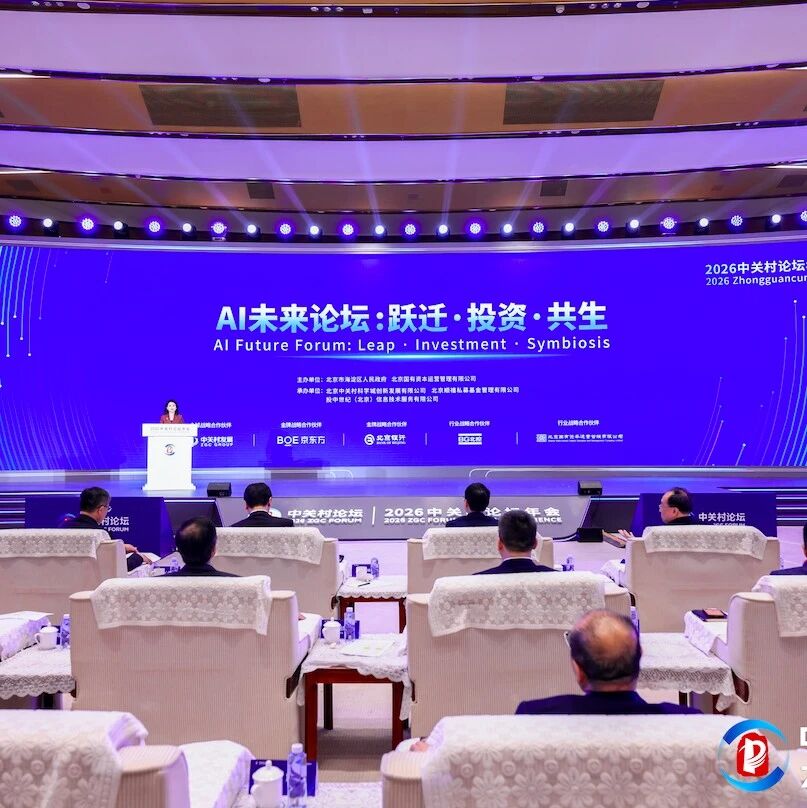
Core Viewpoint - Haidian District is actively positioning itself as the "most investment-worthy city," focusing on systematic layouts and open approaches to attract capital and innovation in the AI sector [3][6]. Group 1: Forum Overview - The "AI Future Forum: Leap, Investment, Coexistence" was successfully held on March 29, 2026, at the Zhongguancun International Innovation Center, featuring over 600 attendees, including government officials and representatives from leading investment firms [4][6]. - The forum included strategic releases, capital aggregation, cutting-edge dialogues, and result showcases, emphasizing the deep resonance between capital, technology, and industry [4][6]. Group 2: Investment Ecosystem - Six leading investment institutions, including Sequoia China and Hillhouse Capital, signed agreements as investment ecosystem partners to enhance the innovation ecosystem in Haidian [9]. - The Haidian District aims to create a collaborative ecosystem that integrates talent, technology, scenarios, and capital, maximizing innovation acceleration [9][11]. Group 3: Mechanisms for Innovation - Haidian has established a "Five Parties and Six Forces" collaborative mechanism to facilitate the transformation of scientific achievements into market applications, involving key stakeholders such as universities and investment funds [11]. - The district has signed agreements with seven investment institutions focused on university-origin innovations, aiming to support the commercialization of scientific research [11]. Group 4: Recognition and Rankings - Haidian District was recognized as the "most investment-worthy city" for the second consecutive year, based on its performance across eleven core dimensions, including economic development and innovation levels [13]. Group 5: AI Industry Development - The Beijing Municipal Government is promoting a comprehensive capital matrix to support high-quality development in the AI industry, integrating core elements such as industry, technology, and talent [16]. - New measures for cross-border talent exchange and cybersecurity have been introduced to support the AI industry's growth and ensure a secure environment for innovation [18]. Group 6: Insights from Key Speakers - Keynote speakers discussed the opportunities and challenges presented by AI, emphasizing the importance of collaboration between China and the UK in building channels for technology, capital, and market flow [21]. - Roundtable discussions featured top investors and industry leaders analyzing how AI innovations are reshaping productivity and investment landscapes [23]. Group 7: Showcasing Innovations - The forum highlighted breakthrough technologies in AI, showcasing the rapid transition from laboratory innovations to market applications, demonstrating Haidian's commitment to fostering a vibrant innovation ecosystem [25]. Group 8: Conclusion - The forum represented a convergence of capital, technology, and industry, with leading investment firms committing to Haidian as a hub for innovation, emphasizing the human-centric approach to future investments in AI [28].
华沿机器人上市:国科投资15个月收获一个明星IPO
投中网· 2026-03-30 01:32
Core Viewpoint - The article highlights the successful IPO of Huayan Robotics, emphasizing the significant investment returns for Guoke Investment and the potential of the collaborative robotics sector in China [3][4][10]. Investment Highlights - Guoke Investment's exclusive investment of 100 million yuan in Huayan Robotics led to a return exceeding three times the initial investment within 15 months, following the company's IPO with a market valuation of 9 billion HKD [4][10]. - The investment was strategically timed, as Guoke Investment anticipated explosive growth in the collaborative robotics market [10]. Company Background - Huayan Robotics was founded in 2017 by experienced professionals from Dazhu Laser, focusing on high-precision collaborative robots and core motion components [7]. - The company has established itself as a leading player in the collaborative robotics field, recognized for its innovative products and strong technical foundation [10][11]. Market Position - According to Frost & Sullivan, Huayan Robotics is the second-largest collaborative robotics company in China and among the top five globally [10]. - The company's products are widely used across various industries, including electronics, automotive, healthcare, and logistics, with sales in over 50 countries [11]. Investment Strategy - Guoke Investment has a long history of supporting technology commercialization, having invested in over 150 tech companies and focusing on sectors like smart manufacturing, new energy, and AI [19][20]. - The firm aims to capitalize on emerging trends in technology, particularly in AI and embodied intelligence, with a goal of achieving significant returns on investment [18][24]. Future Outlook - Guoke Investment's chairman, Sun Hua, believes that China will become a global technology powerhouse in the next decade, with a focus on sectors like tokenization, innovative pharmaceuticals, and humanoid robots [21][22]. - The firm is preparing for a new wave of technological revolution, aiming to invest heavily in AI and embodied intelligence, with plans to allocate over 50% of its investment portfolio to these areas [25][26].

存储周期“变形记”
投中网· 2026-03-30 01:32
Core Viewpoint - The article discusses the rapid appreciation of storage assets, particularly DRAM and NAND chips, which are expected to see price increases of 130% to 150% in the first half of the year, following a significant rise in the previous quarter [6][8]. Group 1: Current Market Dynamics - Storage has emerged as the most promising asset in the past six months, outperforming gold and oil [5]. - Major investment banks, including Wedbush and Nomura, have raised their price forecasts for storage chips, indicating a sustained upward trend [6]. - The prices of SD cards, memory sticks, and solid-state drives are experiencing daily fluctuations, with some products doubling in price over six months [7]. Group 2: Industry Sentiment and Future Outlook - There is a consensus that 2026 will be a significant year for storage, but concerns about the sustainability of the current market rally are growing [8][10]. - The market is divided between those who believe AI will fundamentally change the storage landscape and those who caution against cyclical downturns [9][10]. - The anticipated shortage of storage capacity is projected to end in 2028, raising questions about whether the industry will repeat past cycles of boom and bust [10][11]. Group 3: Historical Context and Lessons Learned - The article reflects on the challenges faced by storage manufacturers in 2023, including significant losses and the need for aggressive production cuts to stabilize prices [20][21]. - The three major players in the storage market—Samsung, SK Hynix, and Micron—have drastically reduced production capacity and capital expenditures to manage supply and demand [20][22]. - The previous cycle's overproduction led to severe price declines, prompting manufacturers to adopt a more cautious approach moving forward [20][28]. Group 4: Competitive Landscape and Strategic Shifts - The competitive dynamics in the storage industry are shifting, with major players focusing on high-end products that cater to AI applications, such as DDR5 and HBM [22][39]. - Chinese manufacturers like Changxin Storage are gaining traction, with expectations of significant growth and potential profitability by 2026 [46][47]. - The article highlights the strategic decisions of major firms, balancing the need for expansion against the risks of overextending in a volatile market [36][38]. Group 5: Future Projections and Market Reactions - The article anticipates that the expansion of storage capacity will be moderate, influenced by cautious investment strategies and changing market conditions [44][45]. - The ongoing debate about the sustainability of the current storage boom reflects broader concerns about AI's impact on demand and the potential for a return to oversupply [55][56]. - Recent technological advancements, such as Google's TurboQuant, have sparked renewed discussions about the future of storage demand, with differing opinions on their long-term implications [57][59].
大赚80多倍,千亿光芯片巨头背后的低调VC
投中网· 2026-03-29 08:33
Core Viewpoint - The article discusses the investment journey of Guyu Capital in Yuanjie Technology, highlighting the significant returns achieved and the strategic approach of the investment firm in the semiconductor industry [5][21]. Group 1: Investment Overview - Yuanjie Technology, founded in 2013, went public at the end of 2022 and has grown from a valuation of 7 billion to nearly 100 billion in just three years [5][12]. - Guyu Capital invested 41.25 million in Yuanjie Technology, which has resulted in a return of approximately 84 times the initial investment, valuing their stake at around 34.47 billion based on a current market cap of 900 billion [12][21]. - The investment process began in October 2018, when Guyu Capital acquired a 9.8125% stake through a combination of purchasing existing shares and subscribing to new capital [8][9]. Group 2: Key Players and Strategy - Guyu Capital is led by Lin Zheying, who is also the Vice Chairman of SF Express, and has a background in foreign trade investment policy [17][18]. - The firm has a history of strategic investments, including a significant stake in SF Express, and has established funds that are closely tied to industry resources, such as the Ningbo Chuangze Cloud fund focused on optical communication [20][21]. - Guyu Capital's investment strategy involves deep integration with the companies it invests in, often co-establishing funds to support upstream and downstream businesses, which reflects a long-term commitment to its investments [20][21].

贝索斯募了一只“捡尸基金”
投中网· 2026-03-29 08:33
Core Viewpoint - The article discusses the controversial implications of artificial intelligence (AI) on the manufacturing industry, particularly focusing on Jeff Bezos's new $100 billion fund aimed at acquiring and automating companies affected by AI disruption [4][10][15]. Group 1: Bezos's New Fund and Its Purpose - Jeff Bezos is reportedly raising a $100 billion fund to acquire manufacturing companies severely impacted by AI, intending to transform them into fully automated and intelligent factories [4][10]. - The fund is part of the "Project Prometheus," which aims to apply AI to the physical economy, focusing on sectors like aerospace and automotive [6][10]. - The initial financing round for Project Prometheus raised $6.2 billion, with a team of over 100 employees, primarily from leading AI firms [6][7]. Group 2: Historical Context and Criticism - The article draws parallels between the current AI revolution and the Industrial Revolution, highlighting the potential for significant societal changes and disruptions [12][21]. - Critics, including political figures like Bernie Sanders, argue that Bezos's fund represents a threat to workers, as it aims to replace human labor with robots in manufacturing [15][17]. - Concerns are raised about the concentration of power in the hands of a few capitalists who could dictate production and labor organization across multiple industries, potentially leading to a "shadow government" scenario [19][21]. Group 3: The Luddites and Modern Implications - The historical Luddites, who protested against the Industrial Revolution's impact on their livelihoods, are referenced to illustrate the potential for similar movements in response to AI advancements [13][22]. - The article suggests that while technology progresses, the societal implications and the fate of workers remain unresolved questions that need addressing [21][22]. - It emphasizes the need for transparency and accountability from companies like Project Prometheus, which could reshape industrial systems without sufficient public oversight [19][21].

投中榜·2025年度中国最具创投价值城区榜单发布
投中网· 2026-03-29 08:33
Group 1 - The article discusses the "2025 Annual List of China's Most Valuable Venture Capital Districts," released at the "2026 Zhongguancun Forum Annual Meeting," focusing on which districts have strong venture capital value and certainty of realization [2] - The evaluation uses the EPIC framework (Ecosystem, People, Industry, Capital) to assess the venture capital potential of various districts, emphasizing the importance of these four dimensions [2][9] Group 2 - Ecosystem is identified as the foundation of value, with the list focusing on districts with a GDP exceeding 100 billion, analyzing their venture capital atmosphere and development quality [3] - The average GDP growth rate of the listed districts is highlighted, indicating a focus on high-quality districts with rapid economic growth [3] Group 3 - People are considered the source of value, with districts attracting nearly four times the population compared to administrative regions, showing a mean resident population growth rate of 1.49% [5] - The article notes that educational and health expenditures in the listed districts average 35.4% of general public budget spending, positively influencing population growth [5] Group 4 - Industry serves as a key link connecting ecosystem, population, and capital, with the average number of new enterprises in the listed districts reaching 25,577, reflecting a growth rate of 26% [7] - The contribution of value-added tax and corporate income tax to the general public budget revenue averages 48.5% in these districts [7] Group 5 - Capital is described as an amplifier of regional value, with a positive trend in capital flow, as the number of newly financed enterprises in the top 20 districts increased from 2,632 in 2024 to 2,945 in 2025 [9] - The districts listed capture nearly 50% of the national IPOs, despite representing only 15% of the total number of districts, indicating a healthy value cycle [9] Group 6 - The districts recognized in the list are seen as both current high grounds for venture capital value and future benchmarks, emphasizing that true competitiveness stems from nurturing quality ecological resources, attracting talent, connecting through robust industrial chains, and leveraging capital to accelerate the realization of potential [10]

海淀“吸金”体质背后:构造自我强化的创新飞轮
投中网· 2026-03-28 11:45
Core Insights - Haidian District is emerging as a leading hub for AI unicorns, contributing nearly one-third of the country's AI unicorns [9][11] - The district's GDP is projected to reach 1.37 trillion yuan by 2025, indicating strong economic growth [3] - A comprehensive system focusing on "technology-industry-capital" is being developed to enhance investment value and attract talent [3][15] Policy Initiatives - In February, Haidian launched seven new policies, including an 8 billion yuan fund for technology growth and a 2 billion yuan fund for technology transformation [2][16] - The "Five Forces and Six Powers" mechanism was introduced to facilitate the transformation of scientific achievements, aiming to support over 1,200 companies in three years [2][8] Talent and Innovation - Haidian is home to over 80% of Beijing's AI talent, with 43% of the nation's top AI talent located in the district [6][12] - Notable AI companies like Yuezhi Anmian and Galaxy General are emerging from Haidian, showcasing the area's talent pool and innovation capabilities [6][10] Investment Landscape - Recent financing activities in March saw three companies raise over 10 billion yuan, highlighting capital's confidence in Haidian's AI sector [10][11] - The establishment of a 8 billion yuan fund and a 2 billion yuan transformation fund aims to support early-stage and high-growth projects [16] Industrial Ecosystem - Haidian has developed a complete ecosystem covering foundational, technical, and application layers in AI, facilitating local commercialization of technology [12][13] - The district hosts over 28,000 market entities, including 265 listed companies and 54 unicorns, creating a robust environment for AI applications [12][13] Strategic Focus - The "1+X+1" industrial layout emphasizes AI as the core engine driving various industries, with a focus on strategic emerging industries and future sectors [17] - The district's competitive advantage lies in its continuous evolution of institutional design and industrial layout, fostering a self-reinforcing innovation cycle [15][17]
瞄准未来产业,四川天府新区“牵手”成都产投集团
投中网· 2026-03-28 11:45
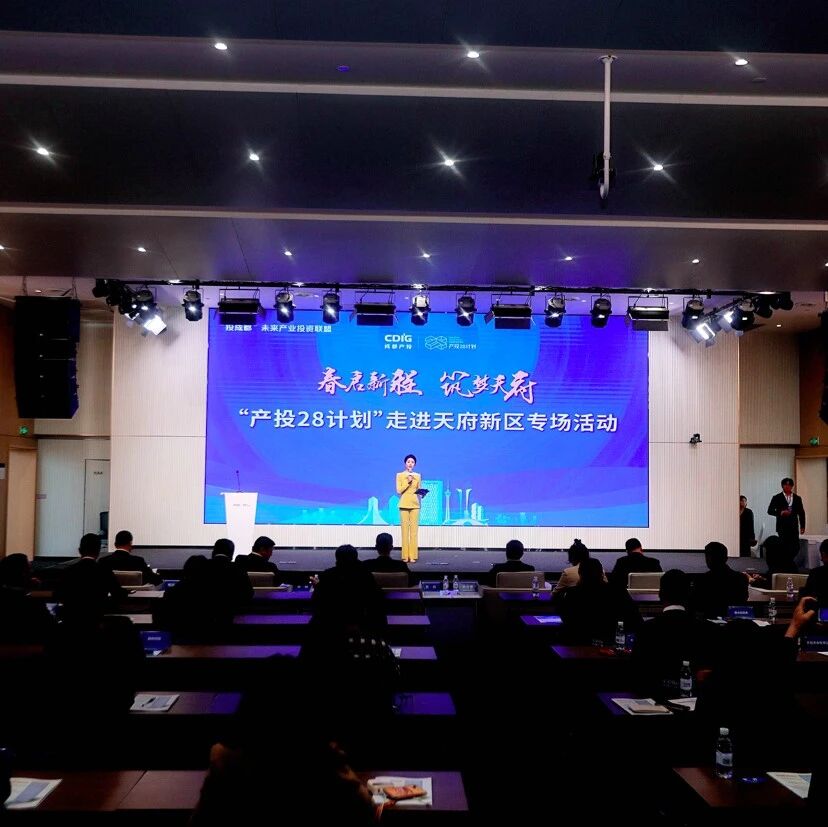
Core Insights - The article emphasizes the strategic importance of the "28 Production Investment Plan" initiated in Chengdu, which aligns with national goals for future industries and aims to enhance urban industrial development [3][5]. Group 1: Strategic Collaborations - A strategic cooperation agreement titled "1+N" was signed between the Sichuan Tianfu New Area Management Committee and Chengdu Production Investment Group, focusing on industrial investment and technology transfer [5]. - This collaboration is seen as a proactive response to Chengdu's 14th Five-Year Plan, particularly in fostering emerging and future industries [5]. Group 2: Capital Empowerment - The establishment of the Chengdu Future Industry Tianfu New Area Angel Investment Fund is a key initiative to support early-stage technology ventures [7]. - Three specific partnerships were formed to create a "triangular support" system for the strategic plan, focusing on early incubation, major project funding, and talent development [9]. Group 3: Project Implementation - Five investment projects were signed during the event, marking a significant step towards actualizing the strategic plans [11]. - The projects cover critical sectors such as semiconductors, high-end equipment, and energy technology, indicating a clear path from planning to investment [11]. Group 4: Future Industry Focus - The article highlights a consensus on the need to invest early and in small amounts in future industries, as outlined in the 2026 government work report [11]. - The participating companies in the event were primarily from cutting-edge fields like AI chips, commercial aerospace, and drones, showcasing a diverse range of innovative ventures [15]. Group 5: Integrity and Sustainable Development - A joint commitment to integrity in cooperation was established to ensure that capital empowerment and industrial development occur in a transparent and regulated manner [17]. - The collaboration between Sichuan Tianfu New Area and Chengdu Production Investment Group is viewed as a solid foundation for nurturing a new growth cycle in the industry [19].