投中网

Search documents
AI重写空调行业,MOVA移动空调的新叙事
投中网· 2026-03-13 10:16
将投中网设为"星标⭐",第一时间收获最新推送 来源丨 投中网 当行业还在纠结MOVA的移动空调"不过是给空调装了轮子",MOVA已经用AI重构了空调行业的叙事逻辑。 从"为空间制冷"到"为人服务"。空调不再是固定在墙上的工具,而是能感知用户需求的智能伙伴。 从"卖硬件"到"卖体感"。空调的核心价值不再是制冷效率,而是AI算法带来的个性化体验。 精准击中了年轻人的"甜点"(Sweet Spot)。 从"单一产品"到"生态入口"。空调不再是孤立的电器,而是家庭智能生态的核心节点。 MOVA将AI环境感知科技、机器人移动能力与空调系统深度融合,率先打破了固定位置限制,率先实现"人到哪,舒适空气跟到哪"的移动体验。用主动 智能推动行业向智能化赛道跨越。 MOVA融合了超越语音控制的表层智能,构建能主动学习、预测需求的空气生态系统。当用户在室内移动或环境条件变化时,Airbot能够自动调整空气 输出策略,使室内空气随人而动,这种主动智能服务令用户体感舒适却又无需频繁操控,精准击中了年轻人的"甜点"(Sweet Spot)。 MOVA白电负责人杨相稳指出:"传统空调的痛点在于场景适配能力缺失,固定安装模式限定了服务空间, ...


陈昱晋升管理合伙人那天,我跟他聊了3小时
投中网· 2026-03-13 09:22
Core Viewpoint - The article discusses the investment strategies and personal experiences of Chen Yu, a managing partner at Yunqi Capital, emphasizing the importance of understanding technology and market trends in venture capital investment [4][6][34]. Group 1: Investment Strategy - Chen Yu maintains a consistent track record of investing in one unicorn or publicly listed company each year, with notable investments including MiniMax, Yuanrong Qixing, and PingCAP [6][34]. - The investment approach is defined by the ability to understand and identify opportunities in technology-driven sectors, adapting to market changes while focusing on software-driven innovations [32][34]. - The firm has shifted its focus towards AI and hardware, particularly in the context of the recent AI boom, with a strategic emphasis on combining physical AI and digital AI [51][52]. Group 2: Personal Background and Philosophy - Chen Yu's background as a programmer and his experiences at Google shaped his understanding of technology and venture capital, leading him to pursue a career in investment [10][12][13]. - He believes that a person's sense of security, often derived from financial stability, is crucial for achieving personal freedom and success [22][27]. - The article highlights Chen's unique ability to switch between different personal and professional states, allowing him to build long-term relationships with entrepreneurs [23][24]. Group 3: Market Trends and Challenges - The current investment landscape is characterized by a narrow focus on AI, overseas expansion, and hardware, making it challenging to find diverse investment opportunities [48][49]. - The competition for projects in the AI sector is intense, driven by a limited number of viable options and the need for funds to be deployed effectively [49][50]. - Chen Yu notes that the investment community is increasingly recognizing the potential of younger entrepreneurs, leading to a strategic initiative at Yunqi Capital to invest in founders born after 1998 [53][56].

“龙虾”,能撑起千万人的「老板梦」吗?
投中网· 2026-03-13 09:22
Core Viewpoint - The rise of the "One-Person Company" (OPC) model is significantly influenced by advancements in AI technology, enabling individuals to operate businesses efficiently without the need for large teams [6][11][29]. Group 1: Emergence of One-Person Companies - The concept of One-Person Companies (OPC) is gaining traction, with over 12 million individual entrepreneurs in China adopting this model [7]. - AI tools like OpenClaw are catalyzing the growth of OPCs by allowing individuals to automate tasks that previously required a team, thus redefining the entrepreneurial landscape [6][12]. - The market size for One-Person Companies is projected to exceed 800 billion by 2026-2030, with AI technology enhancing individual efficiency by 8-10 times [14]. Group 2: AI's Role in Business Transformation - AI is driving a third organizational paradigm shift, where the collaboration between humans and AI will become the core of future business models [7]. - OpenClaw, an AI tool, has gained significant popularity, achieving 254,000 stars on GitHub and over 300,000 active users in just three months, showcasing the rapid adoption of AI in business [9]. - The evolution of AI capabilities, such as reduced hallucination rates and improved task execution, has made the One-Person Company model feasible [11]. Group 3: Operational Efficiency and Challenges - One-Person Companies can operate with high efficiency, allowing entrepreneurs to respond quickly to market changes without the delays of team decision-making [16]. - However, these companies face challenges such as "decision islands," where the lack of team collaboration can lead to difficulties in verifying AI-generated outputs [18]. - The absence of a support network means that entrepreneurs bear all risks, making them more vulnerable to market fluctuations [19]. Group 4: Future of One-Person Companies - The future of One-Person Companies may involve a "federated model," where multiple individual entrepreneurs collaborate while maintaining their independence, thus enhancing resource sharing and risk management [24]. - AI technology is expected to create a dual structure in the business ecosystem, with large enterprises focusing on core operations while outsourcing non-core functions to agile One-Person Companies [25]. - Government policies are increasingly supporting the development of One-Person Companies, providing resources and incentives to lower operational barriers [27][28].

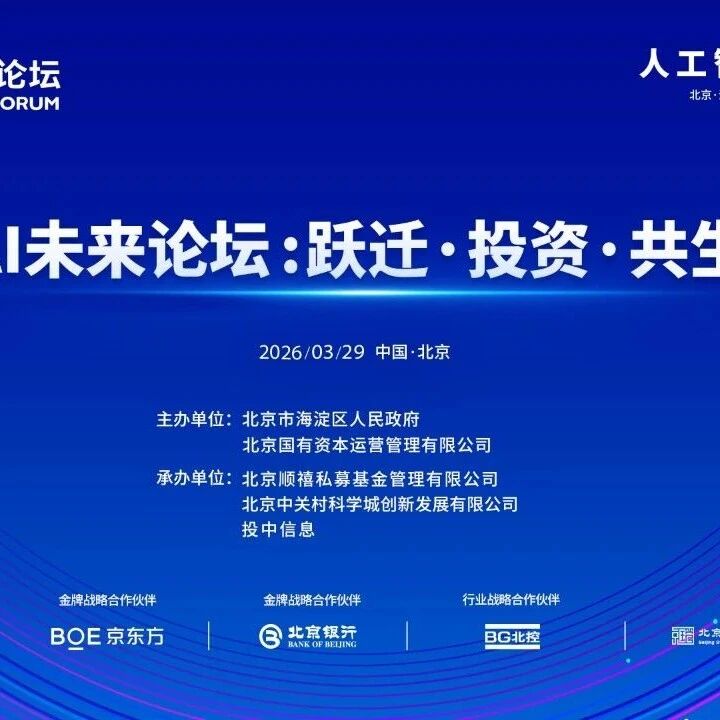
锚定未来AI价值高地!2026中关村论坛“AI未来论坛:跃迁·投资·共生” 火热报名中
投中网· 2026-03-13 09:22
经国务院批准, 2026 中关村论坛年会将于 3 月 25 日至 29 日在京举办。本 届中关村论坛年会延续设立 " 人工智能主题日 " 系列活动,为全球 AI 发展贡献前瞻性洞察与资源链接机会。 「 AI 未来论坛:跃迁 · 投资 · 共生」是 2026 中关村论坛年会 " 人工智能主题日 " 特色论坛,将于 3 月 29 日下午 2 点在中关村国际创新中心海 慧厅举办。 本次论坛由北京市海淀区人民政府、北京国有资本运营管理有限公司主办,北京顺禧私募基金管理有限公司、北京中关村科学城创新发展有 限公司、投中信息联合承办。 海淀是中国人工智能创新的策源地,汇聚着众多的 AI 科研机构、头部企业与顶尖人才,始终是全球观察中国 AI 走向的核心风向标。本届论坛正是立足 于这一创新高地,围绕 全球共生、范式驱动、智能跃迁、产业重构 四大核心板块展开深度对话,从技术演进、投资逻辑、产业变革到全球协作层层递 进,深度解析万亿级产业机遇与资产定价逻辑,探讨产业链重构中的投资策略与协同共生路径。 将投中网设为"星标⭐",第一时间收获最新推送 本届论坛正是立足于这一创新高地,围绕全球共生、范式驱动、智能跃迁、产业重构四大核心 ...
独家|徐新又投了个机器人
投中网· 2026-03-13 02:00
Core Viewpoint - The article discusses the recent funding round of Litian Intelligent Technology Co., Ltd., a company specializing in photovoltaic installation robots, highlighting the strategic investment by prominent venture capitalists and the potential for significant growth in the solar energy sector [3][5][6]. Group 1: Company Overview - Litian Intelligent was established in 2022 and focuses on providing cleaning, installation, and inspection solutions for photovoltaic power stations [5]. - The company has achieved significant commercial validation, securing orders across major global photovoltaic markets, including Australia, the Middle East, Europe, South America, and South Africa [5][11]. - Litian Intelligent aims to transition from "0 to 1" in 2025 and then scale to "1 to 100" in 2026, indicating a strong growth trajectory [5][23]. Group 2: Investment Insights - The recent Pre-B round financing exceeded 100 million yuan, with investors including Today Capital, YaoTu Capital, and Changshi Capital, indicating strong confidence in the company's business model [3][4]. - Today Capital is the only strategic investor in Litian Intelligent, suggesting a deeper involvement beyond financial support, which may include strategic guidance and market access [6][24]. - The rapid investment process, completed in less than two months, reflects the urgency and potential seen by investors in the company's business model [4]. Group 3: Market Dynamics - The photovoltaic industry is described as a trillion-yuan market, with Litian Intelligent positioned to capture a larger share by addressing labor shortages and high costs in harsh environments [11][14]. - The article emphasizes the importance of energy, particularly solar power, in the context of the growing demand for AI and data centers, suggesting that Litian Intelligent's focus aligns well with future market needs [10][15][16]. - The company has identified a significant pain point in the labor-intensive installation of solar panels in extreme conditions, which it aims to address through automation [9][21]. Group 4: Founder and Vision - The founder, Wang Shitao, has nearly two decades of experience in the photovoltaic industry, which contributes to the company's deep understanding of market needs and operational challenges [10][11]. - Wang emphasizes the goal of reducing installation costs through robotic solutions, which could expand market demand and help the photovoltaic industry overcome cyclical challenges [13][19]. - The vision includes achieving fully autonomous installation capabilities, potentially extending to solar power generation on other planets in the future [29].

离开Meta,杨立昆两个月融了70亿
投中网· 2026-03-12 06:57
Group 1 - The article highlights the significant investment in AI startups, particularly focusing on Yann LeCun's AMI Labs, which raised $1.03 billion (approximately 70.87 billion RMB) from notable investors including KKR and Bezos Expeditions [2] - AMI Labs aims to develop "World Models" rather than large language models (LLMs), focusing on creating systems that can learn abstract representations from real-world sensor data [7][9] - The company has a strong founding team, including former Meta AI researchers and professors from prestigious universities, indicating a robust technical foundation [5][7] Group 2 - The rise of "World Models" is seen as a new wave of technological disruption in AI, with other prominent figures like Fei-Fei Li also entering the space, as evidenced by the $1 billion funding for her company, World Labs [3][10] - The article discusses the increasing trend of tech talent leaving large companies to start their own ventures, which is driving innovation in the AI sector [14][15] - The potential market for "physical AI" is projected to reach $90 trillion, indicating a massive opportunity for companies focusing on this technology [12]

年赚722亿之后,宁德时代还有多少“隐藏利润”可以挖?
投中网· 2026-03-12 02:00
Core Viewpoint - The article highlights the impressive performance of CATL in the lithium battery industry amidst a challenging market environment, showcasing its ability to maintain high profitability and operational efficiency while competitors struggle with overcapacity and price wars [4][5][6]. Financial Performance - In 2025, CATL reported revenue of 423.7 billion yuan, a year-on-year increase of 17%, and a net profit of 72.2 billion yuan, up 42% year-on-year [7][8]. - The company's net profit is equivalent to the total profit of 13 A-share listed automotive companies, indicating a strong position in the industry [8]. Profitability and Cost Control - CATL's profit growth outpaced revenue growth, suggesting significant scale effects and cost control improvements [8]. - The average selling price of its lithium batteries was approximately 0.64 yuan per watt-hour, maintained despite industry-wide price declines, indicating strong pricing power [8]. - Sales expenses increased only 4.84% to 3.735 billion yuan, while management expenses rose 20.4% to 11.667 billion yuan, reflecting controlled growth in costs [9][10]. - R&D expenses reached 22.147 billion yuan, a 19.02% increase, underscoring the company's commitment to innovation and maintaining a technological edge [11]. Capacity Utilization - CATL achieved a capacity utilization rate of 96.9%, significantly higher than the industry average of below 60%, indicating efficient operations [14][15]. - The company produced 748 GWh of batteries, with a capacity of 772 GWh, demonstrating full utilization of its production lines [15]. Asset Management - CATL proactively recognized asset impairments totaling 9.079 billion yuan, indicating a strategic approach to phase out outdated capacities and focus on sustainable production [16]. - The company is optimistic about future demand, with 32.1 GWh of capacity under construction [16]. Recycling Business - The volume of recycled batteries reached 210,000 tons, a 63.2% increase year-on-year, indicating a growing focus on sustainability and resource recovery [19][21]. - Despite a 23.83% decline in revenue from battery materials and recycling, the gross margin improved significantly, reflecting a shift in business model and cost structure [20][21]. - The revenue from mineral resources reached 5.978 billion yuan, with an 8.83% increase, supporting CATL's strategy to secure raw materials and reduce cost risks [21]. Market Outlook - Analysts predict that lithium battery demand will exceed 2,700 GWh in 2026, with a growth rate of over 30%, indicating a robust market environment for CATL [17].


新加坡金融科技企业MetaComp完成Pre-A+轮融资
投中网· 2026-03-12 02:00
Core Viewpoint - MetaComp, a Singapore fintech company, has successfully completed a multi-million dollar Pre-A+ funding round, aimed at expanding its cross-border payment and wealth management services in emerging markets, while also developing an AI-driven financial service platform [3][4]. Group 1: Funding and Financial Position - MetaComp raised over tens of millions of dollars in its Pre-A+ funding round, led by a well-known internet giant and Spark Venture, with existing shareholders also participating [3]. - Following the funding, MetaComp's liquidity has exceeded $100 million, bolstering its ability to create a hybrid payment system and a wealth management platform [3]. - The company achieved profitability in 2025, validating its business model and operational capabilities [7]. Group 2: Regulatory and Licensing Framework - MetaComp holds a large payment institution license from the Monetary Authority of Singapore (MAS), allowing it to conduct cross-border and digital payment services [4]. - The company and its affiliates possess a comprehensive suite of financial licenses, including securities, trust, futures, custody, fund management, and RWA TOKEN licenses, establishing a robust compliance ecosystem [4]. Group 3: Technological Innovation - MetaComp focuses on self-developed core technologies, creating a Web2.5 hybrid architecture that integrates traditional finance and digital assets [5]. - The company has developed key products such as the StableX engine for seamless currency and stablecoin transactions, and the VisionX engine for real-time transaction monitoring and risk assessment [5]. - The wealth management engine, WealthX, encompasses traditional securities, bonds, trusts, derivatives, and tokenized financial products from major financial institutions [5]. Group 4: Market Reach and Growth Potential - MetaComp's services currently span over 30 countries, with monthly transaction volumes exceeding $1 billion and asset management exceeding $500 million, positioning it as Singapore's largest licensed digital payment and wealth service platform [6]. - The company aims to address the pain points of traditional payment systems and wealth products, focusing on the integration of Web2 and Web3 technologies to enhance cross-border payment solutions [7]. - Spark Venture highlights the potential of MetaComp's next-generation global payment infrastructure, which could rival major players like Visa and PayPal, driven by the convergence of AI and blockchain technologies [8].

几乎所有“明星项目”背后,都有这只“国家队”基金
投中网· 2026-03-12 02:00
Core Viewpoint - The article highlights the significant role of the National SME Development Fund in supporting and financing innovative small and medium-sized enterprises (SMEs) in China, particularly in the robotics and hard technology sectors, demonstrating a successful integration of policy goals and financial returns [3][4][10]. Group 1: National SME Development Fund Overview - Established in September 2015 with an initial seed capital of 15 billion yuan, the National SME Development Fund aims to alleviate the financing difficulties faced by SMEs, which contribute over half of the country's innovation [6][7]. - The fund has grown to manage 46 sub-funds with a total scale exceeding 120 billion yuan, having invested in over 2,000 companies, effectively mobilizing more than 100 billion yuan in social capital [7][8]. Group 2: Investment Strategy and Achievements - The fund focuses on supporting industries aligned with national strategic goals, particularly in emerging sectors such as integrated circuits, aerospace, and biotechnology, achieving extensive coverage in these areas [8][10]. - As of now, the fund has facilitated 92 IPOs and has exited over 200 projects, with an overall return rate of approximately 15%, showcasing its effectiveness in achieving both strategic and financial objectives [9][10]. Group 3: Case Study - Huada Jiutian - Huada Jiutian, a developer of EDA software, received early investment from the National SME Development Fund during a critical period, leading to significant technological advancements and a successful IPO in July 2022, with a market capitalization of 40.72 billion yuan [11][12]. - The investment yielded a return multiple of 43 times, illustrating the fund's ability to generate substantial financial returns while supporting strategic industry development [12][13]. Group 4: Selection and Operational Mechanisms - The fund employs a rigorous and transparent selection process for its general partners (GPs), ensuring that only capable and industry-focused venture capital firms are chosen, which enhances the quality of investments [15][16]. - The operational model emphasizes market mechanisms to achieve policy goals, allowing GPs autonomy in decision-making while ensuring compliance with regulatory requirements [18][19]. Group 5: Future Prospects - The approval of the second phase of the National SME Development Fund indicates a forthcoming influx of capital into the venture capital market, providing clearer investment guidelines for market-oriented LPs [22].

东莞出现了15年未见的塑胶抢货潮
投中网· 2026-03-12 02:00
Core Viewpoint - The ongoing conflict in the Middle East, particularly between the U.S. and Iran, has led to significant fluctuations in oil prices, which in turn is impacting the supply chain and causing panic buying in the plastic market in China [4][5][6]. Group 1: Market Dynamics - The price of WTI crude oil reached a peak of $119.48 per barrel, representing a 78% increase compared to pre-conflict levels [5][12]. - In the chemical market, polypropylene (PP) and polyethylene (PE) futures saw significant price increases, with PP rising to 8034 yuan/ton and PE to 7944 yuan/ton, marking daily increases of 454 yuan/ton and 449 yuan/ton respectively [5][14]. - The Dongguan market, a major hub for plastic trading, has experienced severe congestion due to panic buying, with trucks waiting for hours to unload [6][9][21]. Group 2: Supply Chain Implications - The conflict has created a ripple effect throughout the supply chain, with rising oil prices affecting the entire petrochemical industry, leading to increased costs for downstream products [13][26]. - Local suppliers in Dongguan have reported frequent price adjustments and speculative buying behavior, indicating a market driven by fear rather than actual demand [24][26]. - The local plastic industry is facing a dual challenge of rising prices from upstream suppliers and stagnant demand from downstream manufacturers, leading to a precarious market situation [26][27]. Group 3: Future Outlook - The Dongguan Plastic Industry Association has indicated that while short-term price fluctuations are expected, the core supply channels remain stable, and the overall supply-demand balance is manageable [25]. - However, there are concerns about the accumulation of risks in the market, particularly with high-priced inventory and potential cash flow issues for traders [27]. - The ongoing geopolitical tensions may keep oil prices elevated, which could have long-term implications for the manufacturing sector reliant on plastic as a key raw material [27].