投中网

Search documents
“药茅”片仔癀,又做LP了
投中网· 2025-09-30 02:00
Core Viewpoint - The article discusses the active participation of pharmaceutical companies, particularly Pianzaihuang, in the primary market as limited partners (LPs) in various investment funds, highlighting their strategies to seek new growth opportunities amid fluctuating performance [4][10][12]. Group 1: Pianzaihuang's Investment Activities - Pianzaihuang has committed to invest RMB 200 million as a limited partner in the CICC (Zhangzhou) Medical Industry Investment Partnership, representing 20% of the fund's target size of RMB 1 billion [4][6]. - This marks Pianzaihuang's third investment as an LP since 2025, following previous investments in the "Zhaoying Huikang Fund" and the "Gaoxin Runxin Fund," both with a scale of RMB 1 billion [4][11]. - The company has a strong cash reserve of nearly RMB 5 billion as of June 2025, allowing it to actively engage in investment activities despite recent declines in revenue and profit [12]. Group 2: Fund Details and Partners - The CICC Medical Fund aims to invest in sectors such as traditional Chinese medicine, biomedicine, medical devices, and health services, with a focus on projects related to Pianzaihuang's industry chain [6][8]. - The fund has seven limited partners, with several having connections to Pianzaihuang, indicating a strategic alignment within the investment ecosystem [8]. Group 3: Broader Industry Trends - Other pharmaceutical companies, such as Taige Pharmaceutical and Jiuzhoutong, are also becoming active LPs in the primary market, reflecting a trend among biopharmaceutical firms to diversify their investment portfolios [4][13]. - Companies like Hengrui Medicine and Kanglong Huacheng are also establishing significant investment funds, indicating a robust interest in the primary market driven by strong financial performance [14][16]. - The trend of pharmaceutical companies acting as LPs is seen as a positive signal for the venture capital and private equity landscape, providing much-needed capital to startups and investment firms [17].



“一天没凑够1000万,我错失摩尔线程老股”
投中网· 2025-09-29 06:59
Core Viewpoint - The article discusses the contrasting performances of different sectors in the capital market, highlighting the significant gains in technology and consumer sectors compared to traditional industries like real estate and banking [4][5]. Group 1: Market Performance - The article categorizes stocks into three groups: "Small Rising Stocks," "Medium Rising Stocks," and "Large Falling Stocks," with notable performance metrics for each category [5]. - "Small Rising Stocks" such as robotics and communication sectors have shown remarkable growth, with specific stocks like卧龙电驱 and 新易啓 experiencing increases of 237.01% and 357.28% respectively [5]. - In contrast, "Large Falling Stocks" like real estate and coal have seen declines, with companies like 招商蛇口 and 中国神华 reporting decreases of -4.36% and -5.92% respectively [5]. Group 2: Investment Trends - The article emphasizes the rising interest in companies like 摩尔线程, which is seen as a key player in the domestic technology sector, particularly in the context of AI and semiconductor advancements [7][8]. - The Pre-IPO valuation of 摩尔线程 was reported at 246.2 billion, which is considered reasonable compared to its peers, especially given the anticipated growth in revenue [10]. - The article notes that the market sentiment around domestic semiconductor companies has been revitalized, with significant stock price increases observed in companies like 寒武纪 and 中芯国际 [12][13]. Group 3: Investment Strategies - The article highlights the importance of timing in investments, suggesting that being too early or too late can impact returns significantly [15]. - It references successful investors like 章盟主 and 雷军, who have strategically positioned themselves in the semiconductor and AI sectors, demonstrating the potential for substantial gains [14][15]. - The narrative suggests that understanding market cycles and the broader economic context is crucial for making informed investment decisions [15].


亿万老人的孤独,被会说话的洋娃娃填补?
投中网· 2025-09-29 06:59
Core Viewpoint - The article discusses the potential of AI companionship in elderly care, highlighting the emotional needs of seniors and the current market landscape for AI companionship products [4][10][20]. Market Potential - The global smart companionship market is projected to reach $28.19 billion in 2024, with a compound annual growth rate (CAGR) of 30.8%, potentially reaching $140.75 billion by 2030 [6]. - In China, the potential market demand for companionship robots among the elderly is estimated at approximately 420 billion RMB [6]. Demographic Trends - The global population aged 60 and above surpassed the number of children under 5 in 2020, with China expected to have over 400 million seniors by 2035 [7]. - The proportion of elderly individuals living alone in China has reached 14.2%, indicating a growing need for companionship solutions [8]. Emotional Needs - Beyond physical safety, the emotional needs of the elderly are critical, with a significant portion of seniors experiencing social isolation and loneliness [8][9]. - Data shows that 42% of Chinese women and 29% of men are at high risk of depression, emphasizing the importance of addressing emotional well-being [9]. Current Product Landscape - Existing AI companionship products primarily focus on safety features rather than emotional engagement, often failing to provide meaningful interaction [9][12]. - Many current products are not designed for genuine emotional companionship, limiting their effectiveness in alleviating loneliness among seniors [9][12]. Technological Challenges - Advanced AI technologies, such as large language models, are necessary for creating effective companionship solutions that can understand and respond to emotional cues [12][18]. - The complexity of elderly emotional needs and communication styles poses challenges for AI developers, as many existing models lack the necessary training data to engage effectively with seniors [19]. Ethical Considerations - The use of AI in elderly care raises ethical and legal concerns, particularly regarding privacy and the potential for over-reliance on technology [19][20]. - Incidents involving AI companions leading to risky behaviors highlight the need for careful consideration of safety and ethical implications in product design [19]. Industry Outlook - Despite current challenges, there is ongoing investment in AI companionship technologies, with companies exploring innovative solutions that may eventually benefit the elderly [20]. - The industry is still in an exploratory phase regarding dedicated products for the elderly, with many companies hesitant to fully commit to this market segment [15][18].

回头看:年初抢摩尔线程老股的投资人
投中网· 2025-09-29 06:59
Core Viewpoint - The article discusses the rising interest and investment in Moer Thread, a Chinese GPU company, as it approaches its IPO, drawing parallels with Nvidia and highlighting the dynamics of the investment landscape surrounding it [2][8]. Group 1: Investment Dynamics - A character referred to as A represents an investment professional who discusses Moer Thread at a high-profile dinner, indicating the company's growing prominence in the investment community [2][3]. - Moer Thread is compared to Nvidia, being labeled as "China's Nvidia," and has generated significant buzz in the market, leading to increased stock prices for related companies [7][8]. - The article notes that Moer Thread's stock has attracted interest from both institutional investors and high-net-worth individuals, indicating a diverse investor base [5][6]. Group 2: Financial Performance and Projections - Moer Thread has achieved a revenue compound annual growth rate (CAGR) exceeding 200% over the past few years, with projections of over 10 billion RMB in revenue for 2024 and over 50 billion RMB for 2025, reflecting a growth rate of over 500% [12]. - The company has completed multiple rounds of financing, with significant investments from notable firms, and has established itself as a unicorn within a short period after its founding [8][9]. - The article highlights that Moer Thread's valuation is currently around 255 billion RMB, positioning it favorably compared to other companies in the sector, such as Cambrian, which has seen its market cap soar [9][12]. Group 3: Market Position and Product Development - Moer Thread is positioned as a key player in the domestic GPU market, focusing on developing full-function GPUs and AI computing solutions, which are critical in the current AI wave [11]. - The company has made significant advancements in product development, having completed the R&D of its first domestic full-function GPU within 300 days and has built a comprehensive product line from chips to software [11]. - Moer Thread has also secured 425 authorized patents, placing it among the top GPU companies in terms of patent ownership in China [11].

5A景区,正在被抛弃
投中网· 2025-09-29 06:59
Core Insights - The tourism market has shifted from a focus on traditional scenic spots to a diverse range of destinations, with a significant increase in interest for lesser-known locations [9][30] - The popularity of 5A scenic spots has declined, with their brand index halving over the past four years, while interest in smaller towns has surged [9][19] - The changing preferences of tourists reflect a desire for unique experiences over conventional tourist traps, leading to a rise in alternative travel options [30][37] Group 1: Market Trends - The tourism landscape has evolved, with destinations like Zibo and Harbin gaining popularity, indicating a move away from traditional attractions [8][9] - Data shows a 200% increase in searches for less crowded travel options ahead of the National Day holiday, highlighting a shift in consumer behavior [9][30] - The average daily visitor count for the top 50 5A scenic spots has seen minimal growth, while searches for "cold cities" have surged by 300% [29][30] Group 2: Visitor Experience - Tourists are increasingly frustrated with the commercialization and overcrowding at 5A scenic spots, leading to a decline in their appeal [20][27] - Many visitors report feeling like they are being exploited by high ticket prices and additional fees for activities within these attractions [12][14] - The experience at 5A scenic spots is often marred by long wait times and overcrowding, diminishing the overall enjoyment of the visit [27][30] Group 3: Competitive Landscape - The rise of alternative travel experiences, such as music festivals, has created competition for traditional scenic spots, appealing to younger audiences [35][36] - The music festival industry has seen a significant increase in events, with 560 festivals held in 2023, reflecting a shift in consumer preferences [36][37] - The traditional 5A scenic spots are struggling to adapt to the changing demands of a new generation of travelers who seek more personalized and unique experiences [37]

邦勤达睿基金启动暨2025医疗器械核心技术论坛圆满召开
投中网· 2025-09-28 09:16
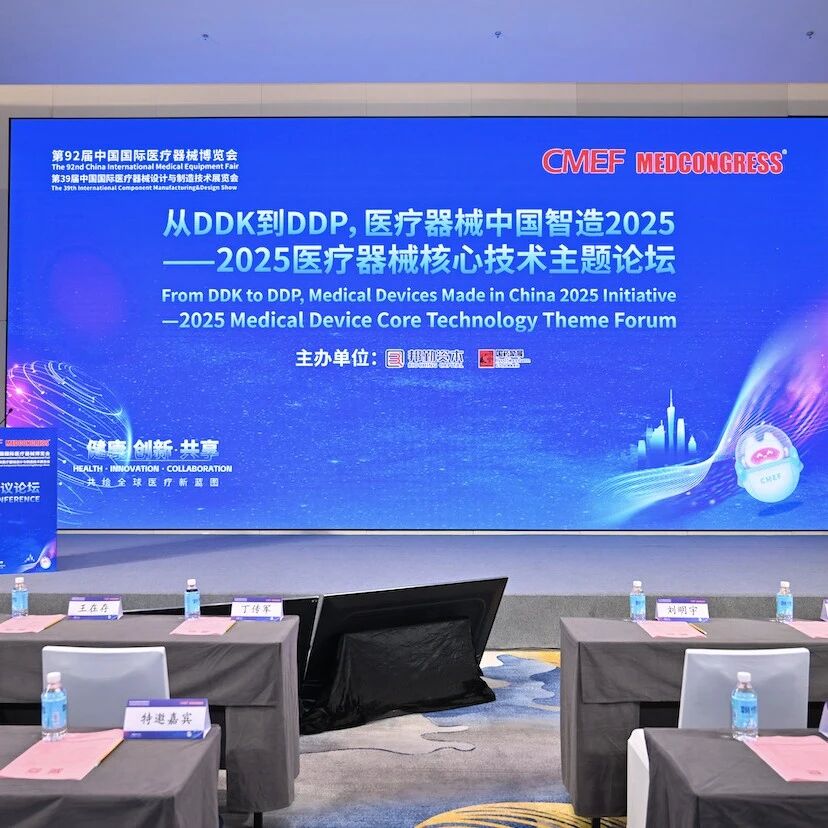
Core Insights - The forum "From DDK to DDP: Medical Device China Intelligent Manufacturing 2025" highlighted the transition of China's medical device industry from product introduction and technology following to independent innovation and intelligent manufacturing, aligning with the national strategy of "Made in China 2025" [4][6][7] - The industry is currently experiencing a transformation phase, with a shift from a focus on manufacturing to creating innovative solutions, driven by both domestic health demand and global technological advancements [6][7][27] Group 1: Forum Overview - The forum was co-hosted by Bangqin Capital and China National Pharmaceutical Group, gathering industry leaders, academic authorities, and financial experts to discuss key topics such as biomedicine technology strategy and global market positioning [4][6] - The launch of the Bangqin Darui Fund, the first market-oriented angel sub-fund in Henan Province, aims to invest in early-stage projects in the biomedicine and health sectors, promoting technology transfer through a "capital + industry" model [10] Group 2: Strategic Insights - Professor Wang Hongguang emphasized the importance of focusing on core technology breakthroughs, high-end product development, and nurturing leading enterprises to transition from a "big country" in medical devices to a "strong country" [13] - The medical device industry is projected to reach a scale of 3 trillion yuan, with a strategic focus on life sciences as the core of the next technological revolution [13] Group 3: Industry Report - The report by Wang Zai Sun from CITIC Securities analyzed financial data from 120 listed medical device companies and highlighted the industry's growth trajectory, warning of the "valley of death" for innovation moving into commercialization [16] - The report proposed a "spiral ascent trilogy" model, emphasizing the need for a multi-faceted approach to industry growth [16] Group 4: CEO Dialogue - CEOs from leading medical device companies shared insights on innovation practices, global market expansion, and the integration of drug-device-technology [19] - Companies like Kuer Medical and Weimai Medical are actively pursuing new business strategies to adapt to market changes and enhance their product offerings [20] Group 5: Summary and Future Outlook - The current state of the medical device industry is characterized by a period of pain, reshuffling, and recovery, with a projected "H" distribution of large mainstream enterprises and innovative new companies [23] - The industry is encouraged to seek new markets, maintain technological innovation, and embrace global resource allocation to navigate through cycles and witness the growth of world-class enterprises [23][27]
多晶硅连涨三个月后,去产能的“大杀招”终于出现
投中网· 2025-09-28 09:16
Core Viewpoint - The continuous rise in polysilicon prices signals a positive trend in the photovoltaic industry, driven by government "anti-involution" policies and industry consolidation efforts [6][9][10]. Group 1: Polysilicon Price Trends - As of September 24, polysilicon prices have surpassed 50,000 yuan per ton, with n-type re-investment material averaging 53,200 yuan per ton and n-type granular silicon at 50,500 yuan per ton [6][7]. - Polysilicon prices have increased for three consecutive months, with n-type re-investment material, n-type dense material, and n-type granular silicon seeing cumulative increases of 54.65%, 55.80%, and 50.75% respectively since June 25 [7][8]. Group 2: Government Policies and Industry Response - The government has consistently emphasized "anti-involution" since last year, with the Central Committee's meetings highlighting the need for industry self-discipline and the exit of inefficient production capacities [10][11]. - In 2025, the Ministry of Industry and Information Technology (MIIT) organized discussions with key enterprises to address low-price competition and promote the exit of outdated capacities [11][12]. Group 3: Industry Consolidation Efforts - Major polysilicon companies are reportedly planning to establish joint ventures for capacity consolidation, with rumors of a consortium involving traditional giants and new entrants to integrate approximately 700,000 tons of capacity [13]. - GCL-Poly Energy announced a strategic financing agreement to raise 5.446 billion Hong Kong dollars, part of which will be allocated for supply-side reforms and structural adjustments in polysilicon capacity [13][14]. Group 4: Energy Consumption Standards - New energy consumption standards for polysilicon production are expected to significantly impact capacity reduction, with the proposed limits set to be much stricter than current standards [15][16]. - The new standards aim to lower energy consumption levels, which could lead to a reduction in effective polysilicon capacity to approximately 2.4 million tons per year, a decrease of 16.4% from 2024 [19]. Group 5: Challenges Ahead - The successful implementation of "anti-involution" measures requires strong government action, as current policies lack enforceability and may not effectively curb overproduction [22]. - Industry consolidation efforts need governmental support to navigate the complexities of financing and stakeholder interests, as relying solely on market forces may prove insufficient [23]. - Addressing demand issues is crucial for the success of capacity reduction initiatives, as current demand remains weak, hindering price transmission to downstream sectors [27][28].



丹麦巨头巨变,国产药千亿商机来了
投中网· 2025-09-28 09:16
Core Viewpoint - The global weight loss drug market is undergoing significant restructuring, with Novo Nordisk's layoffs and strategic shifts indicating the end of its dominance and the rise of competition from other pharmaceutical companies, particularly in China [4][10][14]. Group 1: Novo Nordisk's Strategic Changes - Novo Nordisk plans to cut approximately 9,000 jobs globally, with around 5,000 in Denmark, as part of a resource reallocation strategy focusing on diabetes and obesity treatments [4][7]. - The company’s revenue from semaglutide exceeded $16 billion in the first half of the year, with annual sales expected to approach $40 billion, indicating a lucrative market despite internal challenges [7][8]. - Marketing missteps have led to market chaos in China, where semaglutide was initially marketed without a comprehensive strategy, resulting in misuse and regulatory scrutiny [8][9]. Group 2: Market Dynamics and Competition - The GLP-1 drug market is projected to exceed $70 billion, with significant growth anticipated in the Chinese market, where the obesity rate is rising [7][15]. - By 2030, the Chinese weight loss drug market is expected to reach nearly $25 billion, driven by increasing obesity rates and healthcare spending [15][16]. - Domestic players are entering the market, with over 20 semaglutide generics in clinical trials, indicating a shift towards a more competitive landscape [15][16]. Group 3: Challenges and Opportunities - The competitive landscape is characterized by the need for speed, patience, and differentiation among players, as the market becomes increasingly crowded [5][20]. - Novo Nordisk's challenges highlight the importance of effective marketing and understanding consumer needs, as well as the risks associated with drug development and safety [19][20]. - The potential for GLP-1 drugs extends beyond weight loss to other therapeutic areas, with a projected global market size of over $150 billion by 2031 [21][22].


应届生,年薪都160万了
投中网· 2025-09-28 09:16
Core Insights - The demand for AI talent has surged significantly since the rise of ChatGPT, with major companies actively increasing their recruitment efforts and salary budgets to attract top talent [3][6][7] - Xiaopeng Motors plans to recruit over 3,000 fresh graduates in AI for 2026, reflecting the intense competition for AI professionals in the automotive sector [6][9] - The average salary for AI professionals in China has reached unprecedented levels, with top candidates earning up to 1.65 million yuan annually, and some companies offering packages exceeding 2 million yuan [7][15][18] Recruitment Trends - Major tech companies, including Baidu, Alibaba, Tencent, and ByteDance, are ramping up their AI business, leading to a high demand for talent in various AI subfields [3][6] - Xiaopeng Motors has increased its overall recruitment target for 2025 from 6,000 to 8,000, indicating a strong focus on AI talent acquisition [6][9] - The recruitment wave has extended to campus hiring, with prominent figures like Xiaopeng Motors' CEO actively participating in recruitment events [4][6] Salary Insights - Xiaopeng Motors has announced that there is no upper limit on salaries for exceptionally talented candidates, with recent offers reaching 1.6 million yuan per year [7] - A report indicates that the average salary for AI engineers in top Chinese universities can reach 1.65 million yuan per year, with additional bonuses and stock options [7][18] - The AI job market is experiencing a 33.4% year-on-year increase in job seekers, the highest among all industries [7] Investment in AI - Xiaopeng Motors plans to invest nearly 5 billion yuan in AI research and development by 2025, highlighting the automotive industry's commitment to AI innovation [9] - The overall annual R&D investment in the automotive sector is projected to reach 50 billion yuan, with 30 billion yuan specifically allocated for AI [9] Global Context - The competition for AI talent is not limited to China; companies like Meta are offering exorbitant salaries, with one package reportedly exceeding 200 million USD for a top AI talent [15][16] - NVIDIA and OpenAI are also aggressively recruiting AI professionals, with NVIDIA acquiring a small startup for 3 billion yuan to secure top talent [17]

“易中天”被高估了?
投中网· 2025-09-27 07:04
Core Viewpoint - The article discusses the current state of the A-share market, particularly focusing on AI computing power concept stocks, referred to as "Yi Zhongtian" and "Ji Lianhai," and raises the question of whether these stocks are overvalued or undervalued amidst their significant price increases [3][5]. Group 1: Market Trends - The rapid development of AI is expected to increase the demand for optical modules and drive upgrades towards higher transmission rates [9][10]. - The competition in AI computing power not only relies on GPU capabilities but also on data transmission efficiency, where optical modules play a crucial role [11][12]. - The market demand for optical modules continues to grow, and the speed of their iteration is accelerating [14][22]. Group 2: Performance Metrics - The main optical module companies, represented by "Yi Zhongtian," have shown significant revenue growth, with New Yisheng, Zhongji Xuchuang, and Tianfu Communication reporting increases of 282.64%, 36.95%, and 57.84% in revenue respectively for the first half of 2025 [20]. - The sales volume of optical modules for Zhongji Xuchuang and New Yisheng increased by 45.96% and 112.53% year-on-year in the first half of 2025 [28]. - Major cloud service providers are significantly increasing their capital expenditures, with a projected 50% growth in combined capital spending expected for 2025 [30][31]. Group 3: Valuation Insights - Analysts have incorporated the anticipated growth from 1.6T optical modules and increased capital expenditures into their 2026 performance forecasts, predicting net profits for Zhongji Xuchuang, New Yisheng, and Tianfu Communication to grow by 45.98%, 47.17%, and 37.05% respectively [38]. - The dynamic price-to-earnings ratios for these companies are projected to be 34.71, 30.66, and 48.04, suggesting a reasonable valuation range of 30-40 times earnings in the current market environment [39][40]. - The article suggests that the valuation of "Yi Zhongtian" stocks may not fully reflect the potential liquidity premium from the current market conditions [45]. Group 4: Investment Strategies - For investors already holding "Yi Zhongtian" stocks, a strategy of locking in profits through gradual selling is recommended, with specific profit-taking thresholds set [51][52]. - New investors are advised to wait for a significant price correction before entering the market, as chasing high-flying stocks can lead to losses [58][60]. - The article emphasizes the importance of having a clear understanding of the industry and company fundamentals before making investment decisions, particularly in a volatile market [57][62].