芯世相

Search documents
安世芯片短缺,日产再次减产
芯世相· 2025-11-19 06:00
Group 1 - Nissan is set to reduce production by 1,400 vehicles at its Kyushu plant due to ongoing chip supply disruptions related to Nexperia [3][4] - Previously, Nissan had anticipated a reduction of approximately 900 vehicles for its popular Rogue SUV model due to the same semiconductor shortage [3][4] - The production adjustments are a response to a 16.5% decline in retail sales in Japan during the first half of the fiscal year, attributed to consumer concerns over the company's financial health [4] Group 2 - Other automakers are also responding to the Nexperia chip shortage, with Volkswagen stating it has secured enough chips for production, while Honda aims to resume normal operations in North America by November 24 [6] - Aumovio, a subsidiary of Continental AG, has received its first batch of Nexperia chips from China [6] - The Dutch government is seeking solutions to the issues surrounding Nexperia, with a delegation expected to visit China for discussions [7][9] Group 3 - The Chinese Ministry of Commerce has expressed a willingness to cooperate with the Netherlands to stabilize the global semiconductor supply chain and hopes for constructive proposals to resolve the Nexperia issue [9]


砸下1.44 亿,普冉控股一家存储芯片公司
芯世相· 2025-11-18 07:56
Core Viewpoint - The article discusses the acquisition of a 31% stake in Zhuhai Noah Changtian Storage Technology Co., Ltd. by Purun Co., which will result in Purun gaining a controlling interest in the company and indirectly controlling SkyHigh Memory Limited (SHM) [3][5][8]. Summary by Sections Acquisition Details - Purun announced on November 17 that it plans to acquire a 31% stake in Noah Changtian for a total of 144 million RMB (approximately 21 million USD) [3][6]. - After the acquisition, Purun's ownership in Noah Changtian will increase to 51%, allowing it to control the company and indirectly control SHM, which is fully owned by Noah Changtian [6][8]. Company Background - Purun, established in 2016 and headquartered in Zhangjiang Hi-Tech Park, Shanghai, specializes in non-volatile memory chips such as NOR Flash and EEPROM, as well as MCU microcontroller chips [7]. - SHM, a semiconductor company registered in Hong Kong, focuses on high-performance 2D NAND and derivative memory products, with a strong presence in various global markets [8]. Rationale for Acquisition - The acquisition aims to achieve three main objectives: 1. **Product Complementarity**: Purun's main products (NOR Flash, EEPROM) complement Noah Changtian's offerings (SLC NAND, eMMC, MCP), creating a comprehensive non-volatile memory product lineup [9][14]. 2. **Market Complementarity**: Purun primarily serves the domestic market, while Noah Changtian has a strong presence in overseas markets, allowing for a global sales network [9][14]. 3. **Technical Complementarity**: Purun has strong IC design capabilities, while Noah Changtian excels in product performance optimization and manufacturing processes, enhancing overall capabilities [9][14]. Financial Performance - In 2024, Purun's revenue is projected to reach 1.804 billion RMB (approximately 260 million USD), with storage series chips accounting for 78.6% of total revenue [9][10]. - Recent financial performance shows a revenue increase in 2023, with a total of 1.127 billion RMB (approximately 162 million USD) and a year-on-year growth of 21.87% [11][12]. - SHM reported a revenue of 687 million RMB (approximately 100 million USD) and a net profit of 47.49 million RMB (approximately 6.9 million USD) for the first eight months of 2025 [12]. Competitive Landscape - The markets for NOR Flash and EEPROM have established players with significant advantages, making it challenging for new entrants like Purun to compete effectively [13][14]. - The acquisition is seen as a strategic move for Purun to enhance its market position and capabilities in the semiconductor industry [14].

12份料单更新!出售安世、威世、英飞凌等芯片
芯世相· 2025-11-18 07:56
Core Insights - The article discusses the challenges of managing excess inventory in the semiconductor industry, highlighting the financial burden of storage and capital costs associated with unsold materials [1] - It promotes a service called "Chip Superman," which has served 21,000 users and offers rapid inventory clearance solutions [9] Group 1: Inventory Management - Excess inventory of 100,000 units incurs monthly storage and capital costs of at least 5,000, leading to a potential loss of 30,000 after six months [1] - The article emphasizes the difficulty in promoting and selling excess materials, suggesting that companies can seek assistance from Chip Superman for better pricing and faster transactions [1][10] Group 2: Inventory Offerings - Chip Superman has a substantial inventory, including over 5,000 million chips across 1,000+ models and 100 brands, with a total inventory value exceeding 100 million [8] - Specific excess materials available for sale include various semiconductor components from brands like 安世 (Nexperia), 英特尔 (Intel), and others, with quantities ranging from thousands to hundreds of thousands [4][5] Group 3: Purchase Requests - The article lists specific semiconductor components that are in demand, indicating a market for certain models, such as the MICROCHIP ATMEGA2561-16AU and ADI LTC2174IUKG-14, with quantities requested in the thousands [6] Group 4: Service Features - Chip Superman claims to complete transactions in as little as half a day, providing a quick solution for companies looking to clear their inventory [9] - The company operates a 1,600 square meter smart storage facility, ensuring quality control for each component through an independent laboratory [8]


存储又双叒暴涨,到底咋回事儿?
芯世相· 2025-11-17 05:46
Core Viewpoint - The storage chip market is experiencing unprecedented price surges, with significant increases in both DRAM and NAND Flash products, driven by various market dynamics and demand factors [3][4][18]. Group 1: Current Market Situation - The storage chip market is described as "crazy," with prices fluctuating rapidly and often changing within a day [4][3]. - DRAM prices have seen substantial increases, with a report indicating that the price of 32GB DDR5 memory modules rose from $149 in September to $239 in November, marking a 60% increase [16][3]. - Data from Donghai Securities shows that the price of 16Gb DDR4 increased by 75.93% in October, while 8Gb DDR4 rose by approximately 30% [7][3]. Group 2: Price Trends and Historical Context - The price of DDR4 chips has been on a continuous upward trend since early 2023, with some models experiencing price increases of 150%-400% following production halts announced by major manufacturers [14][18]. - Recent reports indicate that DDR5 prices have also surged, with a 25% increase in a single week, reflecting a broader trend of rising prices across various memory types [9][22]. - The current price fluctuations are attributed to a combination of supply constraints and heightened demand, particularly from AI-related applications [22][18]. Group 3: Factors Driving Price Increases - Key factors contributing to the recent price surges include the suspension of contract pricing by major manufacturers, increased demand from AI sectors, and a shift in market dynamics towards a seller's market [21][22]. - Major manufacturers are prioritizing supply to leading tech companies, which has led to reduced availability for smaller clients and increased competition in the spot market [21][22]. - The overall sentiment in the market is optimistic, with many institutions predicting a "super cycle" for storage prices driven by AI demand and supply constraints [22][23]. Group 4: Demand Analysis - Despite the significant price increases, actual demand from end customers has not shown a marked improvement, with many distributors reporting stable demand levels compared to previous years [24][18]. - The current market dynamics suggest that the price increases are more a result of supply shortages rather than a genuine surge in consumer demand [24][18].


10份料单更新!出售瑞萨、安世、三星等芯片
芯世相· 2025-11-17 05:46
Core Insights - The article discusses the challenges of managing excess inventory in the semiconductor industry, highlighting the financial burden of storage and capital costs associated with unsold materials [1] - It emphasizes the services provided by Chip Superman, which has served 21,000 users and offers rapid inventory clearance solutions [10][11] Inventory Management - The company faces significant costs, with a monthly storage and capital cost of at least 5,000, leading to a potential loss of 30,000 if materials remain unsold for six months [1] - There is a call for assistance in promoting and selling excess inventory, indicating a need for better marketing strategies [1] Product Offerings - A detailed list of available surplus materials from Renesas and other brands is provided, with quantities of 2,000 units for each item, indicating a substantial inventory available for sale [4][5][6][7] - The inventory includes a variety of semiconductor components, showcasing the breadth of products that Chip Superman can offer to potential buyers [4][5][6][7] Market Position - Chip Superman operates a 1,600 square meter smart storage facility with over 1,000 models and 50 million chips in stock, valued at over 100 million [9] - The company also has an independent laboratory in Shenzhen for quality control, ensuring that all materials meet industry standards [9] Customer Engagement - The article mentions the ability to complete transactions within half a day, highlighting the efficiency of Chip Superman's operations [11] - It encourages potential customers to explore their offerings through a mini-program or website, indicating a focus on digital engagement [12][13]

雷军都喊贵,AI害你买不到便宜的手机了
芯世相· 2025-11-15 04:11
Core Viewpoint - The article discusses the recent surge in memory prices, particularly for NAND flash and DRAM, and attributes this trend to a combination of factors including supply-demand dynamics, technological advancements, and the growing influence of AI companies on the memory market [10][11][24]. Summary by Sections Memory Price Trends - The price of 1TB solid-state drives (SSDs) has increased from around 300 yuan to over 600 yuan, while the price of 32GB DDR5 memory modules has also risen significantly, costing several hundred to over a thousand yuan more than before [11][12]. - The memory price increase is expected to affect nearly all consumer electronic devices, as noted by industry leaders like Lei Jun, who cited rising memory costs as a reason for higher product prices [14][15]. Causes of Price Increase - The memory market has experienced cycles of price fluctuations, often influenced by supply-demand imbalances and production adjustments by manufacturers [19][22]. - The current price surge is partly due to the memory industry's traditional cycles but is also driven by the increasing demand from AI companies, which are willing to pay premium prices for high-bandwidth memory (HBM) [25][26][28]. AI Influence on Memory Market - AI companies are shifting the focus of memory manufacturers from consumer products to high-margin AI applications, leading to a significant reallocation of production capacity towards HBM and enterprise SSDs [28][39]. - The demand from AI firms has resulted in longer delivery times for traditional HDDs, pushing manufacturers to prioritize SSD production, which offers better performance and profitability [41][44]. Consumer Impact - Ordinary consumers are facing a decline in their purchasing power for memory products as they compete with AI giants for limited production capacity [45]. - Despite the rising prices, there are indications that manufacturers like Samsung and SK Hynix are reconsidering their production strategies in response to the changing market dynamics [47].

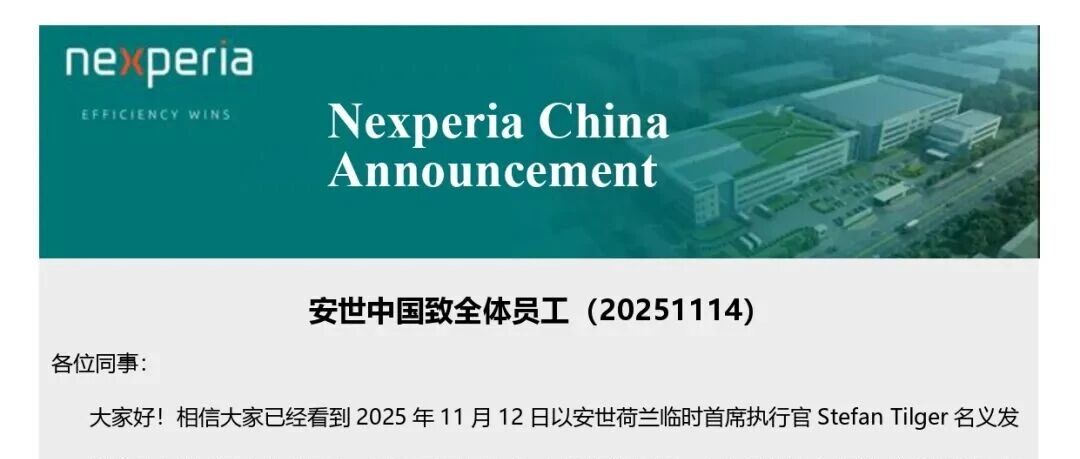
刚刚,安世中国发布致全体员工信
芯世相· 2025-11-14 10:01
Core Viewpoint - The letter from Nexperia Netherlands to its Chinese employees reflects a lack of responsibility from certain management members, causing confusion and undermining the interests of Nexperia China employees [4][5]. Group 1: Government Intervention - The root cause of the issues faced by Nexperia Semiconductor is attributed to improper intervention by the Dutch government, which has not taken any substantial actions to restore the stability of the global semiconductor supply chain [4]. - The Chinese government has emphasized its commitment to maintaining global semiconductor supply chain stability and has announced exemptions for relevant exports [4]. Group 2: Company Response - Nexperia China is actively engaging in "self-rescue" measures to maintain orderly production and operations in response to the Dutch government's interference [4]. - Despite facing challenges from the Dutch management, Nexperia China is confident in its ability to pay full salaries and benefits to all employees, ensuring that employee compensation remains normal [5]. Group 3: Employee Assurance - The company recognizes that employees are its most valuable asset and expresses gratitude for their contributions, committing to protect their legal rights [5].
13份料单更新!出售TE、TI、南亚等芯片
芯世相· 2025-11-14 09:11
Core Viewpoint - The article discusses the challenges of managing excess inventory in the semiconductor industry, highlighting the financial burden of storage and capital costs associated with unsold materials, and promoting a platform for quick sales of surplus stock [1][7]. Group 1: Inventory Management - A significant amount of excess inventory, specifically 100,000 units, incurs monthly storage and capital costs of at least 5,000, leading to a potential loss of 30,000 if held for six months [1]. - The company offers a platform, "Chip Superman," which has served 21,000 users and can facilitate transactions in as little as half a day, aiming to alleviate the burden of unsold inventory [7]. Group 2: Inventory Listings - The article lists various electronic components available for sale, including: - NXP LPC5504JHI48 (40,000 units, 2022-2023) - TE components totaling 90,000 units across different models (2021-2022) - MOLEX 5031750400 (260,000 units, 2022-2023) - Analog Devices AD8628ARTZ (242,520 units, within two years) [4]. Group 3: Purchase Requests - The company is actively seeking specific components, including: - Renesas ISL99227FRZ-T (20,000 units) - ADI AD9755ASTZ (1,000 units) - SKYWORKS SE5004L-R (6,000 units) [5]. Group 4: Warehouse and Quality Control - The company operates a 1,600 square meter smart warehouse with over 1,000 models and 50 million chips in stock, valued at over 100 million [6]. - Each component undergoes quality control checks in an independent laboratory located in Shenzhen [6].

【仪测高下】PCB插损和阻抗测试方案
芯世相· 2025-11-14 09:11
Core Viewpoint - The rapid rise of AI technology has led to an exponential increase in the demand for data bus throughput in servers and computing devices, necessitating upgrades in PCIe standards to meet these requirements [1][2]. Group 1: PCIe Standards and Challenges - PCIe standards have evolved to PCIe 6.0 and 7.0, achieving signal frequencies of up to 128 GT/s and expanding channel configurations from x1 to x16 to facilitate high bandwidth transmission [1][2]. - Higher signal frequencies result in exponential increases in insertion loss, leading to reduced signal amplitude and distortion, while impedance discontinuities in PCB traces can cause signal reflection and timing jitter, impacting signal integrity [1][2]. Group 2: Insertion Loss and Impedance - Insertion loss refers to the power loss due to conductor and dielectric losses as signals pass through PCB transmission lines, typically measured in decibels (dB), with PCIe 5.0 requiring insertion loss not to exceed 0.6 dB at 16 GHz [3]. - Characteristic impedance, determined by the geometric structure and material properties of transmission lines, is typically recommended at 50Ω or 100Ω (differential), with impedance mismatches leading to signal reflection and return loss degradation [5]. Group 3: Testing Methods - Vector Network Analyzers (VNAs) are the preferred instruments for measuring insertion loss, allowing direct comparison of output and input signals to reflect losses [9][11]. - The Delta-L method, developed by Intel, enhances measurement accuracy by compensating for fixture effects and impedance mismatches, making it a mainstream method for PCB production testing [12][18]. Group 4: Rohde & Schwarz Testing Solutions - Rohde & Schwarz offers a comprehensive range of vector network analyzers, including models like R&S®ZNA, R&S®ZNB, and R&S®ZNBT, covering frequency ranges from 9 kHz to 110 GHz, catering to diverse testing needs [20]. - The integrated Delta-L functionality in Rohde & Schwarz VNAs allows for efficient insertion loss testing without external computers, streamlining the testing process [21][22]. - The TDR functionality in Rohde & Schwarz VNAs supports various window functions and time-domain enhancement algorithms, displaying both impedance and frequency domain S-parameter information for effective diagnostics [27][29]. Group 5: Future Outlook - Rohde & Schwarz's ZNA/ZNB/ZNL series, equipped with electronic calibration components and built-in impedance testing capabilities, redefine PCB insertion loss and impedance testing standards, addressing the higher demands of future 6G communications and AI server applications [35].

安世芯片为啥变安静了?现在啥情况
芯世相· 2025-11-14 09:11
Core Viewpoint - The article discusses the ongoing situation regarding Nexperia Semiconductor, highlighting the complexities of the supply chain, recent developments, and market reactions to the semiconductor crisis [3][12]. Group 1: Current Situation of Nexperia - Nexperia's Dutch subsidiary has not been supplying silicon wafers to its Chinese subsidiary for assembly, causing significant concern in the industry [3][4]. - The Chinese Ministry of Commerce has expressed a willingness to engage in discussions with the Dutch government to resolve the issues surrounding Nexperia [4][12]. - Nexperia's Chinese operations have reported a full order book but are facing material shortages and workforce adjustments, leading to reduced working hours [5][6]. Group 2: Market Reactions and Changes - The semiconductor market has entered a quieter phase since November, with a notable decrease in trading activity and price adjustments following rumors of supply chain recovery [13][14]. - The initial spike in demand for Nexperia chips led to significant price increases, with reports of up to tenfold price hikes in some cases [14][15]. - Major Tier 1 suppliers are actively seeking alternative materials to replace Nexperia products, indicating a shift in the supply chain dynamics [15][16]. Group 3: Future Outlook - Despite some recovery in finished product shipments, the underlying wafer supply issues remain unresolved, necessitating ongoing monitoring of official communications [16].