彭博Bloomberg

Search documents
另类投资简报 | “一票难求”的桥水基金产品究竟有多火?
彭博Bloomberg· 2025-09-28 06:04
Private Equity Market Review - The private equity market is experiencing significant activity, with notable acquisitions such as Blackstone's purchase of a majority stake in South Korean hair care brand Juno and the acquisition of Australian FinTech software company Iress [10]. - TPG is shifting its focus towards mid-sized investment projects, emulating larger institutions in the industry [8]. Hedge Fund Market Overview - Bloomberg's preliminary data indicates that hedge funds rose by 1.6% last month, with the Bloomberg Equity Hedge Fund Index leading the gains [6]. - Year-to-date, hedge funds have increased by 7.1%, with equity funds showing the highest growth at 11% [6]. - As of August 29, 2025, the performance of various hedge fund strategies includes: - Equity Hedge: 11.46% YTD return - Credit Hedge: 5.20% YTD return - Event Driven Hedge: 6.65% YTD return - Macro Hedge: 2.24% YTD return [7]. Market Trends and Investor Behavior - In response to weak employment data in the U.S., hedge funds are increasing their bets on bullish options for the Chinese yuan against the U.S. dollar, with the premium for offshore yuan appreciation options nearing its highest level since August 2024 [6]. - A newly established hedge fund by former Goldman Sachs executive Qin Xiao has received investment from Millennium Management, with plans to launch trading later this year with initial capital of approximately $1 billion [6].


聚焦ETF市场 | 日本央行清仓ETF:能解燃眉之急,但长期压力仍存?
彭博Bloomberg· 2025-09-26 06:08
本期主题: 日本央行清仓ETF:短期或可控 但长期压力难解 (彭博行业研究)——如果日本央行能够择时卖出其5 , 0 0 0亿美元ETF资产,将有助于缓解 对市场的短期冲击,但长期来看,股价下行压力与市场流动性减弱等问题可能更难应对。为 在合理时间内完成减持,日本央行或需加快减持步伐,这可能削弱日本在ETF市场中的地 位。 扫描二维码 立即订阅 更多ETF精彩内容 择机减持有助于缓解冲击 但长期挑战仍存 日本央行可以通过在市场反弹后择机减持ETF来限制该计划对市场造成的短期扰动,但长期 风险更难控制。日本央行可能会采用与2 0 1 0年至2 0 2 4年期间购买ETF时类似的策略--当时日 本央行通常在下午交易时段买入ETF,以应对隔夜及早盘的下跌。尽管此举有助于降低市场 波动,但也可能导致投资者参与度下降、市场流动性减弱。鉴于日本央行持有东京证券交易 所上市公司逾7%的市值,若ETF减持节奏加快,可能对股价形成持续下行压力。 日本央行购买ETF和JREIT的历史(10亿日元) 数据来源:彭博终端 ETF 流量追踪与分析功能 ETF 、彭博行业研究 本文来自彭博终端,终端用户可运行NSN T30GMGGPW ...
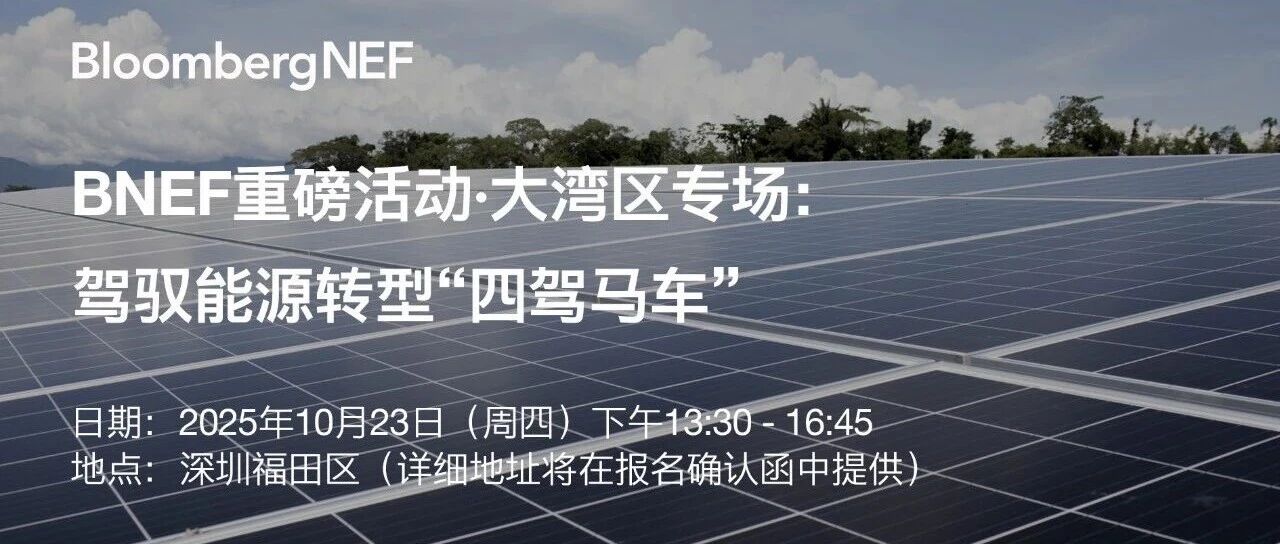
BNEF重磅活动·大湾区专场:驾驭能源转型“四驾马车”
彭博Bloomberg· 2025-09-25 06:14
Core Insights - The global energy landscape is undergoing profound changes, driven by multiple factors, with battery storage, photovoltaics, electric mobility, and natural gas as the four key drivers of this transformation [2] - The BNEF event aims to discuss these critical issues with industry experts, focusing on the opportunities and challenges presented by the energy transition [2] Group 1: Global Energy Market Trends - The global energy storage market is rapidly expanding, with an expected annual growth rate of 14.7% by the end of 2035, and China is anticipated to maintain its leading position [4] - China is transitioning towards a market-oriented approach as mandatory storage requirements are phased out, raising questions about the future of large-scale and commercial storage [4] - The photovoltaic market is experiencing a policy-driven recovery in spot prices, yet the fundamental issue of oversupply remains unresolved, affecting pricing dynamics [4] Group 2: Electric Vehicles and Charging Infrastructure - New energy vehicle sales are reaching new highs, but regional markets are developing differently due to technological advancements, policy changes, and geopolitical factors [4] - The differentiated development of the new energy vehicle market will impact the demand and layout of charging infrastructure, highlighting the need for innovative technologies and business models [4] Group 3: Natural Gas Market Outlook - In the context of geopolitical instability and energy transition, energy planners are tasked with developing innovative procurement and utilization strategies to balance energy security and economic efficiency [4] - The evolution of the natural gas market in China and globally is anticipated during the 14th Five-Year Plan, with significant implications for LNG markets [4] Group 4: Event Agenda - The event features a series of presentations from BNEF analysts covering topics such as global energy storage, photovoltaic market outlook, charging infrastructure, and the natural gas market [5][6]
2025大湾区金融科技人才发展计划启动
彭博Bloomberg· 2025-09-24 06:05
Core Viewpoint - The Greater Bay Area Financial Technology Talent Development Program aims to cultivate the next generation of fintech leaders in the Greater Bay Area, with a focus on AI applications in finance and technology services [2][3][5]. Group 1: Program Overview - The program will return in 2025 and expand to Shenzhen for the first time, responding to strong demand from students and the industry [2]. - This year's theme is "Empowering the Greater Bay Area: Moving Towards an AI-Driven Future," focusing on equipping participants with AI skills and insights relevant to the finance and technology sectors [2][3]. - A total of 20 leading financial and technology institutions will participate as corporate partners, including four new additions: Bank of East Asia, Fubon Bank (Hong Kong), Industrial and Commercial Bank of China (Asia), and Infinity Capital Management [2][3]. Group 2: Participation and Impact - The program will include 50 undergraduate students from top universities in Shenzhen, who will join Hong Kong students for cross-border training and activities [2]. - Over the past two years, the program has provided professional training, employment guidance, and practical opportunities in the fintech industry to more than 600 university students in Hong Kong [4]. - The total number of participants this year will reach 350, marking the program's third year [3]. Group 3: Institutional Support - The Hong Kong Monetary Authority emphasizes the program's role in establishing a sustainable fintech ecosystem in the region and enhancing digital connectivity [3]. - The Hong Kong Youth Association highlights the program's importance in helping youth acquire cutting-edge skills and expand their networks in the rapidly evolving fintech sector [3]. - Bloomberg's Asia-Pacific President underscores the significance of collaborative ecosystems and strong talent pools for the future development of the Greater Bay Area [3].

全球制药业洞察 | 差额达8亿美元!中国药企授权平均交易额比国外市场高在哪?
彭博Bloomberg· 2025-09-24 06:05
Core Insights - Chinese biopharmaceutical companies are becoming significant players in both global and domestic M&A markets, accounting for 14% of all agreements in the first half of 2025 [3][4]. - The trend of "China-to-China" mergers is emerging, exemplified by the acquisition of Lixin Pharmaceutical by a Chinese biopharmaceutical company [3][8]. M&A Activity - In the first half of 2025, the number of licensing agreements from Chinese companies increased to 14%, up from 8% in 2024, with a notable rise in clinical-stage asset transactions [4]. - Clinical-stage drugs accounted for 42% of all licensing transactions, second only to preclinical assets [4]. - The average upfront payment for licensing agreements from Chinese companies exceeded $100 million, reaching a historical high of 40% in such transactions [5]. Licensing Trends - Chinese biopharmaceutical companies are increasingly favored for licensing agreements, with 87% of disclosed drug types in agreements involving Chinese licensors being biopharmaceuticals, compared to 51% outside China [4][5]. - The average total deal size for licensing agreements from Chinese companies reached $180 million, significantly higher than the $100 million average for other regions [5]. Notable Transactions - A significant transaction involved Merck and Kelun Pharmaceutical, valued at $9.3 billion for seven antibody-drug conjugates, marking a trend of increasing high-value licensing agreements with Chinese firms [5]. - The acquisition of Lixin Pharmaceutical for up to $951 million is a landmark deal in the "China-to-China" M&A landscape, allowing the acquirer to control Lixin's innovative pipeline [8].


债券南向通扩容 彭博强化跨境债券投资支持
彭博Bloomberg· 2025-09-23 02:05
Core Viewpoint - The article discusses the expansion of the "Southbound Bond Connect" and the introduction of a suite of tools by Bloomberg to assist domestic investors in navigating the offshore bond market and making informed investment decisions [2][11]. Group 1: Expansion of "Southbound Bond Connect" - The "Southbound Bond Connect" is set to expand its participant scope to include four types of non-bank institutions: brokerages, funds, insurance companies, and wealth management firms [2]. - The expansion is expected to enhance the international appeal of RMB assets and provide new offshore investment channels for domestic investors [2]. Group 2: Tools and Support Offered by Bloomberg - Bloomberg has launched a comprehensive suite of tools to support investment in the "Southbound Bond Connect," which includes market research, target search, price discovery, and pricing analysis [2][5]. - The Bloomberg terminal allows users to access the "Southbound" indicator for targeted bond searches and provides macroeconomic analysis, market data, and collaboration tools [5][8]. - Users can create worksheets based on the "Southbound" bond database to analyze bond performance, relative value, and liquidity, facilitating collaborative decision-making [13].
彭博率先支持“互换通” LPR1Y挂钩利率互换合约的首日交易
彭博Bloomberg· 2025-09-22 06:05
Core Viewpoint - The article discusses the launch of interest rate swap contracts linked to the one-year Loan Prime Rate (LPR1Y) under the "Northbound Swap Connect," aimed at meeting the diverse risk management needs of overseas institutions [2][3]. Group 1: Introduction of LPR1Y Interest Rate Swaps - The People's Bank of China has approved the trading and centralized clearing of interest rate swap contracts linked to LPR1Y, effective immediately [2]. - Bloomberg has initiated support for the first day of trading for these LPR1Y-linked swap contracts [2]. Group 2: Bloomberg's Role and Enhancements - Bloomberg's IRS trading portal now supports various financial instruments in the onshore derivatives market, including the newly added LPR1Y interest rate swaps [2]. - Bloomberg has previously upgraded its "Swap Connect" solution to support IRS contracts with settlement dates aligned with the International Monetary Market (IMM) and to allow early exit from contracts through compression services [3]. - The integration of LPR1Y interest rate swaps into Bloomberg's existing "Swap Connect" solution provides investors with precise long-term investment matching tools without altering current workflows [3]. Group 3: RFQ Workflow - Authorized Bloomberg terminal users can initiate requests for quotes (RFQ) from a list of approved onshore dealers by the People's Bank of China, allowing them to receive pricing and necessary transaction execution information [6].

彭博中国内地30周年:建连接之桥梁,铸信任之基石,展创新之羽翼
彭博Bloomberg· 2025-09-20 02:07
Core Viewpoint - Bloomberg has evolved from an explorer in the Chinese market to a comprehensive partner for clients and institutions over the past 30 years, focusing on innovation and technology to enhance financial services [2][12][19] Group 1: Market Development - The Chinese market has seen a continuous increase in openness, with foreign investors showing significant interest in Chinese bond markets, particularly government and policy bank bonds [3] - Bloomberg launched the Bloomberg China Policy Bank Bond 1-5 Year Index Fund in 2022, which has grown to a scale of 25.9 billion RMB by the end of 2024, outperforming similar funds [3] Group 2: Partnerships and Collaborations - Huatai Securities has established a global service network through international expansion, supported by Bloomberg's high-quality data and trading platforms, enhancing their international development and business innovation [11] - Huitianfu Fund has maintained a long-term partnership with Bloomberg, leveraging Bloomberg's terminal and AIM platform for integrated investment research and trading support [6][8] Group 3: Technological Innovation - Bloomberg has prioritized innovation since its inception, utilizing AI technologies such as machine learning and natural language processing to enhance information retrieval and transaction execution [12][14] - The financial industry is undergoing revolutionary changes due to the AI wave, particularly in investment research, quantitative strategies, and risk management [14] Group 4: Future Outlook - The company aims to continue its collaboration with partners in areas such as intelligent investment research and cross-border investment, seizing new opportunities in digital transformation [14][19]

固收指数月报 | 美联储如期采取行动,如何影响收益率曲线走势?
彭博Bloomberg· 2025-09-19 08:06
Core Insights - Bloomberg is the first global index provider to include Chinese bonds in mainstream global indices, offering a unique perspective on the Chinese bond market through its flagship Bloomberg China Fixed Income Index series [3][5]. Group 1: August Performance Overview - In August, the Bloomberg China Aggregate Index recorded a return of -0.31%, with a year-to-date return of 0.42%. The 30-day volatility increased during this period [5][7]. - The China Treasury and Policy Banks Index also saw a return of -0.34% in August [5][7]. - The China USD Credit (Kungfu) Index, which measures Chinese credit bonds denominated in USD, achieved a return of 1.15% in August, bringing its year-to-date return to 5.76% [5][7]. Group 2: Key Indices Performance - The China Treasury Index recorded a return of -0.41% in August, with a year-to-date return of 0.28% [7]. - The Corporate Index had a return of 0.07% in August, with a year-to-date return of 1.17% [7]. - The 10+ Year Maturity Index experienced a significant decline, with a return of -1.55% in August and -0.06% year-to-date [7]. Group 3: Economic and Market Outlook - The yield on China's 10-year government bonds has rebounded from a historical low of 1.59% earlier this year, currently supported above 1.7%. Factors contributing to this upward trend include an extended "truce" in US-China trade until early November and the resumption of VAT on interest income from newly issued government and financial institution bonds [13]. - The US Treasury yields continue to dominate the total return of the China USD bond market indices, with market sentiment shifting towards concerns over potential economic deterioration in the US, outweighing inflation risks from tariffs [13]. - The option-adjusted spread (OAS) of Chinese high-yield bonds relative to investment-grade bonds is nearing historical lows, indicating a potential market shift [13].
彭博数据洞察 | 化情绪为价值:NLP如何解读新闻标题情绪,捕捉交易信号?
彭博Bloomberg· 2025-09-18 06:05
Core Insights - The article emphasizes the importance of utilizing data to focus on key investment opportunities and risks, particularly in the context of geopolitical tensions and trade dynamics [3][5]. Group 1: Fund Risk Exposure - The article discusses a new method for quantifying fund risk exposure by combining industry classification data with fund holding data, allowing for a more precise assessment of actual risk exposure across various sectors [3][5]. - A comparison is made between traditional methods and the new business classification method, highlighting that the latter provides a more balanced view of a fund's industry exposure [3][5]. - The analysis identifies the top 10 exchange-traded products (ETPs) with the highest tariff risk exposure in North America, with the Simplify Volt TSLA Revolution ETF showing a sensitivity of 22.1 [5]. Group 2: News Sentiment Analysis - The article introduces a natural language processing (NLP) approach to quantify news sentiment and its correlation with asset performance, particularly focusing on crude oil futures [7][9]. - The methodology involves generating sentiment scores from news headlines and using z-scores to identify significant deviations from historical norms, which can indicate potential price movements [7][9]. - The analysis reveals that negative sentiment often correlates with supply disruptions, which historically lead to price increases in the crude oil market [9]. Group 3: Enhanced OHLC Data - The article presents enhanced OHLC (Open, High, Low, Close) data that includes precise timestamps for price movements, allowing for improved trading strategies [12][15]. - It categorizes OHLC bars into "trend bars" and "range bars" based on the sequence of high and low points, which can provide insights into market behavior [12][15]. - The article suggests that the type of OHLC bar may influence the likelihood of price continuation, which can be critical for traders [18].