虎嗅APP

Search documents
内存涨价潮要结束了?“最痛苦的时刻还没来”
虎嗅APP· 2026-03-31 00:31
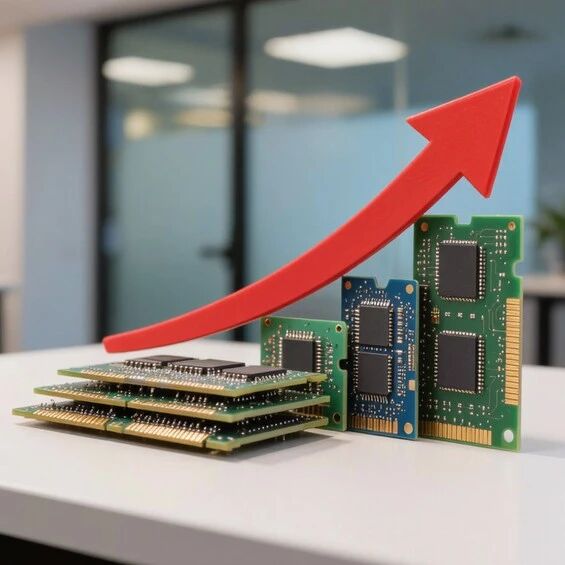
Core Viewpoint - The article discusses the recent price fluctuations in memory chips, particularly DDR5 and DDR4, highlighting a significant price drop in DDR5 but a mixed market response, indicating that the decline is not widespread and may not reflect a true supply-demand shift [5][6]. Group 1: Price Trends and Market Dynamics - Recent reports indicate that DDR5 memory prices have dropped by hundreds to over a thousand yuan, but this is not a universal trend across the market [5]. - The average transaction price for DDR5 on the second-hand market is around 1000 yuan, reflecting a decrease of 80 yuan from the previous week, while DDR4 prices have increased by 30 yuan to 415 yuan [5]. - Analysts suggest that the slight price decrease is influenced by market supply-demand dynamics and inventory holding behavior rather than a fundamental shift in supply-demand balance [6]. Group 2: Future Outlook and Industry Insights - Silicon Motion's CEO predicts that 2026 will be a challenging year for shortages and price increases, with 2027 expected to be even worse [6][16]. - The price of DRAM and NAND Flash has reached the highest levels since 2016, with some models experiencing cumulative increases of up to 369% [8]. - The rising costs of memory chips are significantly impacting the BOM (Bill of Materials) for smartphones, with memory now accounting for over 20% of costs, and in some mid-range models, this figure approaches 30-40% [9]. Group 3: Impact on Major Companies - Major smartphone manufacturers like Xiaomi are feeling the pressure from rising memory prices, with forecasts indicating that global memory chip prices in Q1 are approximately four times higher than the same period last year [9]. - Price adjustments have been observed across various smartphone brands, with Samsung, OPPO, and vivo all announcing price increases for their models [9]. - The ongoing memory price surge has led to strategic shifts, with some companies like Meizu halting new product development due to unsustainable costs [9]. Group 4: AI's Role in Market Changes - The rapid growth of AI infrastructure is driving unprecedented demand for storage solutions, leading to severe shortages in DRAM and NAND [12][13]. - North American cloud service providers are significantly impacting the supply chain by purchasing large quantities of memory resources, exacerbating shortages for other sectors [13]. - The shift in demand towards high-bandwidth memory (HBM) is causing traditional consumer electronics to face resource allocation challenges, as major manufacturers prioritize HBM production over standard memory chips [13][14]. Group 5: Long-term Industry Challenges - The cyclical nature of the memory market is being disrupted, with traditional analysis frameworks failing to predict the current crisis [16]. - Supply chain constraints and cautious capital expenditure from NAND manufacturers are expected to prolong the current shortage and price increases [16][17]. - The article emphasizes that the ongoing crisis is fundamentally a resource "crowding out" effect caused by AI infrastructure demands, leading to significant challenges for traditional consumer electronics [17][21].




猪肉价格暴跌让羽毛球涨价?
虎嗅APP· 2026-03-30 13:54
Core Viewpoint - The article discusses the relationship between the fluctuation of pork prices and the rising prices of badminton shuttlecocks, exploring the underlying factors affecting these price changes in the context of supply and demand dynamics [3][4]. Group 1: Pork Price Dynamics - Pork prices have been declining since the second half of 2024, with recent prices dropping below 5 yuan per kilogram [3][4]. - The wholesale price of pork has experienced a fluctuation of approximately 100% over the past decade, while beef and chicken prices have been more stable, with fluctuations of around 40% and 20% respectively [25][24]. - The supply cycle for pork is about 10 months, which allows producers to quickly respond to price increases by increasing production, leading to subsequent price drops [27]. Group 2: Badminton Shuttlecock Price Increase - The price of badminton shuttlecocks has surged, reportedly increasing more than the price of gold, with specific examples showing a rise from 210 yuan per dozen to 275 yuan per dozen within a few months [6][7]. - The increase in shuttlecock prices is attributed to rising demand for badminton as a popular sport and a decrease in the supply of raw materials, particularly duck and goose feathers, which are essential for manufacturing shuttlecocks [18][20]. - From 2020 to 2023, the number of market ducks decreased from 4.683 billion to 4.218 billion, and geese from 639 million to 515 million, leading to increased prices for shuttlecock materials [22][23]. Group 3: Supply Chain Stability - The article emphasizes the importance of stable supply chains for food products in the restaurant industry, suggesting that businesses should focus on ingredients with consistent supply and price stability [30]. - The volatility of supply chains, as seen with crayfish, has historically hindered the establishment of large-scale restaurant chains focused on this product [31].

“电子垃圾”iPhone4,成了打脸AI 审美的回旋镖
虎嗅APP· 2026-03-30 13:54
Core Viewpoint - The resurgence of interest in the iPhone 4 is attributed to its unique photographic qualities and nostalgic appeal, despite its outdated technology and limited functionality [4][7][30]. Group 1: Market Trends - Recent data shows a tenfold increase in search interest for the iPhone 4, with TechRadar reporting a staggering 979% rise in purchase searches [6]. - The iPhone 4's recycling price has surged, with reports indicating it can be sold for 400 yuan, representing an 80-fold increase from previous values [4][28]. Group 2: Technological Analysis - The iPhone 4 features a 5-megapixel camera with significant limitations, such as poor low-light performance and basic white balance, which contribute to its distinctive image quality [15][16]. - The evolution of smartphone photography has led to overly processed images, making the "imperfections" of the iPhone 4 appealing to a younger audience seeking authenticity [9][23]. Group 3: Consumer Behavior - Young consumers are drawn to the iPhone 4 for its "imperfect" aesthetic, which contrasts sharply with the polished images produced by modern smartphones [20][24]. - Merchants are capitalizing on this nostalgia by refurbishing and reselling iPhone 4 units at inflated prices, often enhancing them with retro games to enhance the emotional appeal [28][30]. Group 4: Practical Considerations - Despite its nostalgic value, the iPhone 4's practical use is severely limited, as it only supports 3G networks and is stuck on an outdated iOS version, making it vulnerable to security risks [30][32]. - The device's battery life and overall performance have deteriorated over time, further diminishing its usability in contemporary settings [32][33].

街头New Money整出了自己的拉夫劳伦
虎嗅APP· 2026-03-30 13:54
Core Viewpoint - The article discusses the evolution of streetwear brands, particularly focusing on Kith as a case study of adaptation and success in a changing market landscape, contrasting it with the decline of other streetwear brands like Supreme and Palace [4][5][30]. Group 1: Evolution of Streetwear - The article notes that concepts like shared economy and street style have become outdated, with brands like Supreme losing their former prestige and becoming more mainstream [4][5]. - The decline of streetwear values is exemplified by Palace's controversial use of AI-generated images, indicating a broader collapse of the streetwear value system [5]. - Kith, founded by Ronnie Fieg, stands out as a brand that has successfully navigated these changes by redefining its consumer order and brand identity [6][8][9]. Group 2: Ronnie Fieg's Journey - Ronnie Fieg's early experiences in the streetwear scene began at his cousin's shoe store, where he learned the business and culture of street fashion [12][15][17]. - His rise through the ranks in the retail industry culminated in the founding of Kith in 2010, which has since grown into a globally recognized lifestyle brand [28][30]. - Kith's revenue reached approximately $133.47 million in a 45-week trading period, with total sales exceeding $200 million, marking it as a significant player in the streetwear market [30]. Group 3: Kith's Brand Strategy - Kith has shifted its design focus from bold streetwear aesthetics to more refined, high-quality materials and tailored cuts, reflecting a maturation of its brand identity [42][46]. - The brand's basic items, such as tops and outerwear, have generated significant revenue, indicating a successful pivot towards essential, versatile pieces [48]. - Kith has strategically limited collaborations to maintain brand integrity, partnering with high-end brands like Giorgio Armani to elevate its status [49][51]. Group 4: Market Position and Future Outlook - The article highlights a broader trend in fashion where streetwear is transitioning towards luxury, with Kith embodying this shift as it appeals to a more affluent consumer base [58][59]. - Kith's new venture, Kith Ivy, represents its ambition to create a high-end lifestyle brand, further solidifying its position in the luxury market [53][58]. - The brand's ability to adapt and redefine itself amidst changing consumer preferences positions it as a leader in the evolving landscape of streetwear and luxury fashion [66][67].

烧钱换增长的电商模式,该出局了
虎嗅APP· 2026-03-30 13:54
Core Viewpoint - The current e-commerce landscape is characterized by a shift from a "burning money for growth" model to a more sustainable approach focused on "value co-creation" and partnership between platforms and merchants [6][26]. Group 1: Merchant Challenges - Many small and medium-sized merchants are facing severe financial pressure, with over 30% projected to be in a loss-making state by 2025, and another 30% having minimal profits of only 0-5% [2][5]. - The rising cost of traffic acquisition has become a significant burden, with nearly half (48.7%) of merchants spending 20-100% of their revenue on traffic [21]. Group 2: Platform Support Initiatives - Platforms are increasingly taking on the role of partners, helping merchants reduce costs and providing support through initiatives like JD's "Spring Dawn Plan," which offers free traffic support and promotional funds [20][30]. - The "Spring Dawn Plan" has attracted millions of new merchants, with a projected near doubling of order volume for small and medium-sized merchants by 2025 [20]. Group 3: Success Stories - The case of the "Shanling Audio" flagship store illustrates how targeted support from platforms can lead to rapid profitability, achieving a 45% month-on-month sales increase after receiving tailored advice and promotional funds [12][14]. - The innerwear brand "Beast Comes" has seen a 20% increase in ROI after shifting focus to platforms like JD, emphasizing the importance of brand building over mere traffic acquisition [25]. Group 4: Future Trends - The e-commerce competition is evolving from a focus on "traffic and low prices" to "efficiency, brand, and certainty," with platforms expected to act as service providers rather than mere traffic sellers [26][31]. - JD plans to further enhance support for merchants in 2026, with an investment of 35 billion in resources and a new advertising support policy that guarantees a 100% return on investment [22].


99%做硬件的老方法注定是死局
虎嗅APP· 2026-03-30 10:30
Core Viewpoint - The article discusses the evolution of AI-native hardware, emphasizing that hardware should be designed around intelligent agents rather than merely adding AI capabilities to existing products [5][11][25]. Group 1: AI-native Hardware Concept - A good AI-native hardware must be designed as an intelligent agent's body, where the hardware and AI capabilities are inseparable [5][11]. - The traditional approach of developing hardware first and then adding AI is deemed ineffective; instead, the intelligent agent should be defined first [5][11]. - The article highlights the shift from viewing hardware as a container for content to seeing it as the embodiment of the intelligent agent itself [24][25]. Group 2: Market Trends and Opportunities - The AI hardware market is experiencing rapid growth, with companies quickly bringing products to market, often within three months [10]. - The article notes that many current AI hardware products simply add conversational capabilities to existing devices, which is seen as outdated logic [10][11]. - There is a belief that a "deconstruction of smartphones" will occur, where specialized hardware will outperform smartphones in specific scenarios [14][49]. Group 3: Product Development Strategy - The company, Qido, has expanded its knowledge base from 100,000 to over 1 million entries to cover 99% of encyclopedia questions for children aged 6 to 12 [12]. - The product line is designed to cater to different age groups, with specific products for each developmental stage [29]. - The strategy includes simplifying the product by removing unnecessary features that do not align with children's needs [13][36]. Group 4: Funding and Growth - Qido has successfully completed two rounds of financing within its first year, attributed to a mature team and a global compliance strategy [15][42]. - The company emphasizes the importance of understanding local regulations and cultural nuances in product design for international markets [42][53]. Group 5: Challenges and Solutions - The article discusses the challenges of integrating AI with hardware, particularly the need for a cohesive approach that combines content, AI, and hardware design [52]. - The strategy of "strong cloud, weak end" is employed to manage costs and enhance product performance by relying on cloud computing rather than extensive on-device processing [37][48]. - The company aims to address potential network issues through engineering solutions that minimize sensitivity to latency and connectivity fluctuations [39].

国人正在抛弃高价墓地
虎嗅APP· 2026-03-30 10:26
Core Viewpoint - The article discusses the significant decline in the performance of the funeral industry in China, particularly highlighting the struggles of leading companies like Fushouyuan, which is facing its first-ever loss since its listing, indicating a broader trend of consumers rejecting overpriced burial plots [4][6][10]. Group 1: Company Performance - Fushouyuan's net profit for 2024 dropped to 373 million yuan, a 52.8% decrease year-on-year, marking the largest decline since 2010 [6]. - In the first half of 2025, Fushouyuan reported revenue of approximately 611 million yuan, a 44.5% decline, and a net loss of 261 million yuan [6]. - Fucheng Co. saw its revenue from burial-related services fall from 227 million yuan in 2017 to 98 million yuan in 2024, with a decrease in gross margin from 86.78% to 78.51% [7]. - Other companies like Anxianyuan and China Wanto Garden are also experiencing significant declines, with Anxianyuan facing losses and Wanto Garden reporting a net loss of 9.39 million yuan in the first half of 2025 [8][12]. Group 2: Market Demand and Trends - Despite the aging population in China, the demand for traditional burial plots is decreasing, as evidenced by a rise in the number of registered funeral-related businesses, indicating a growing market [10][11]. - The core issue for traditional burial companies is the high prices of burial plots, which have led to a shift in consumer behavior [12][22]. - Fushouyuan's average price for burial plots exceeded 120,000 yuan in 2024, with a significant price per square meter surpassing 60,000 yuan, comparable to housing prices in major cities [18][19]. Group 3: Changing Consumer Attitudes - There is a cultural shift in how people view funerals, with many rejecting the notion that expensive burial plots are necessary to honor the deceased [21][24]. - In 2024, Fushouyuan sold 12,569 burial plots, a decrease of over 23% from the previous year, indicating a significant drop in demand [22]. - The average selling price of burial plots fell by 47.5% in the first half of 2025 compared to the same period in 2024, reflecting a market response to high prices [22]. Group 4: Industry Response and Future Outlook - The industry is witnessing a transition towards digitalization and technology integration, with companies like Fushouyuan and Anxianyuan adopting digital services to adapt to changing consumer preferences [26][27]. - Despite these efforts, the technology adoption in the industry remains basic and may not provide a competitive edge [28]. - The overall trend suggests that the market for high-priced burial plots is shrinking, driven by changing consumer values and supportive government policies promoting eco-friendly burial options [24][30].

Token要成新货币了,但你真的知道它是什么吗?
虎嗅APP· 2026-03-30 10:26
Core Viewpoint - The article discusses the concept of Token, its significance in the AI industry, and how it is becoming a foundational element of a trillion-dollar market, as stated by NVIDIA's CEO Jensen Huang [13]. Group 1: Definition and Evolution of Token - Token has three common meanings: a credential for identity verification, a cryptocurrency representation, and a language substitute in AI models [15]. - The concept of Token can be traced back to the Type-Token distinction proposed by philosopher Charles Sanders Peirce, which differentiates between abstract forms (Type) and their specific instances (Token) [16][18]. - The evolution of Token in the digital age began in the 1960s with its role in programming languages, where it became a substitute for syntax [24]. Group 2: Challenges in Natural Language Processing - Natural language presents unique challenges for Tokenization, including vocabulary explosion, out-of-vocabulary words, and languages without spaces [26][27][29]. - Traditional methods of Tokenization struggle with these challenges, leading to inefficiencies in processing languages like Chinese and other non-Latin scripts [30]. Group 3: Byte Pair Encoding (BPE) and Its Impact - The introduction of Byte Pair Encoding (BPE) revolutionized Tokenization by allowing the model to determine how to segment language based on frequency rather than predefined rules [34][43]. - BPE effectively addresses issues of vocabulary size and out-of-vocabulary words by breaking down language into smaller units, allowing for more efficient processing [39][43]. - The BPE method has been adapted to a byte-level approach, enabling models to handle any language without needing prior knowledge of character sets [46][47]. Group 4: Economic Implications of Token Usage - The cost of using AI models is directly tied to Token consumption, with different languages requiring varying amounts of Tokens for the same semantic content [51][56]. - English typically consumes the least Tokens, while languages like Chinese and smaller languages can require significantly more, leading to economic disparities in AI usage [57][60]. - This disparity reflects a broader trend where languages with less representation in training data face higher costs and reduced efficiency in AI applications [65]. Group 5: Implications for AI Performance - The Tokenization process can lead to performance discrepancies in AI models, where high-frequency terms are processed efficiently while low-frequency terms may be fragmented and less reliable [76]. - The article highlights that the AI's ability to accurately process information is often inversely related to the rarity of the terms involved, which can affect critical applications in law, medicine, and education [78].

比亚迪,狼真的来了
虎嗅APP· 2026-03-30 00:16
Core Viewpoint - BYD's 2025 annual report indicates a revenue of 804 billion, a year-on-year growth of 3.5%, and a net profit of 32.62 billion, a decline of 19% [5]. The company continues to invest heavily in R&D, with expenditures reaching 63.4 billion in 2025, and has introduced several advanced technologies [5][24]. Group 1: Sales and Market Strategy - BYD maintains a dual strategy of pure electric and plug-in hybrid vehicles, which has allowed it to become the global sales leader in new energy vehicles [7][8]. - Sales data shows a fluctuating trend between pure electric and plug-in hybrid vehicles from 2021 to 2025, with significant shifts in market share [10][12]. - In 2025, BYD's sales of pure electric and plug-in hybrid vehicles were nearly equal, with 2.256 million and 2.289 million units sold, respectively [10]. Group 2: Profitability and Competitive Position - Since 2023, BYD's gross profit from vehicle sales has surpassed that of Tesla, with a gross profit of 101.6 billion and a margin of 21% in 2023, compared to Tesla's 943 billion and 17.1% [16]. - BYD's gross profit margin is consistently higher than Tesla's, with a notable increase in the "BYD to Tesla" ratio, reaching 195% by 2025 [16][18]. Group 3: Export Business - BYD's export business saw significant growth in 2025, with 1.046 million units exported, a year-on-year increase of 140% [19]. - The average selling price of BYD vehicles is significantly higher in international markets compared to domestic sales, with an average of 183,000 yuan per vehicle overseas versus 128,000 yuan domestically [19][21]. - The company has entered 119 countries and regions, with a focus on establishing a sales and service network to support its international expansion [22]. Group 4: R&D and Technological Advancements - BYD's R&D investment has been substantial, reaching 634 billion in 2025, which is 192% of Tesla's R&D spending [24]. - The company has filed over 71,000 patents, with 42,000 granted, indicating a strong focus on innovation [27]. - Recent technological advancements, such as the second-generation blade battery and fast-charging technology, are expected to enhance consumer perception and sales [31][32]. Group 5: Charging Infrastructure and Market Dynamics - The introduction of fast-charging technology is set to change the economics of charging infrastructure, potentially reducing the need for a large number of charging stations [34][36]. - BYD's fast-charging stations could serve significantly more vehicles than traditional charging stations, improving efficiency and profitability [34][36]. - The company aims to build 20,000 fast-charging stations by the end of 2026, with a total storage capacity of approximately 10 GWh [37].


一场特朗普无法TACO的战争,加速美国金融危机?
虎嗅APP· 2026-03-30 00:16
Core Viewpoint - The ongoing conflict between the US, Israel, and Iran is evolving into a prolonged war, contrary to initial expectations of a quick resolution, leading to increased market volatility and economic scars [2][4]. Group 1: War Dynamics - The initial market reaction to the conflict was a modest decline of 3%-4%, driven by hopes for a swift resolution, but the situation has become more complex [4]. - The interests of the US, Israel, and Iran are misaligned, making a ceasefire unlikely in the short term [5]. - The US aims for a quick victory to avoid inflation impacts and midterm election repercussions, while Israel seeks to leverage US support to eliminate Iranian threats [6]. Group 2: Economic Implications - The conflict could lead to a significant increase in global inflation, with the potential for oil prices to rise dramatically, impacting the US economy [8][11]. - The volume of oil passing through the Strait of Hormuz has plummeted by 97%, with estimated losses reaching 17.6 million barrels per day, exacerbating supply issues [11]. - Historical data suggests that large-scale oil supply shocks typically result in a 42% average decline in production four years later due to infrastructure damage [11]. Group 3: Financial Market Risks - The conflict is amplifying existing financial risks, particularly in the private credit market, which is facing significant redemption pressures [15][16]. - Major asset management firms are experiencing record redemption requests, indicating a potential liquidity crisis reminiscent of the 2008 financial crisis [15][16]. - The interconnectedness of macroeconomic cycles, geopolitical tensions, and financial leverage could lead to severe market volatility and systemic risks [17].