GLP1减重宝典

Search documents
司美格鲁肽停药后体重反弹?因为你没有这样做
GLP1减重宝典· 2025-12-30 14:46
Core Viewpoint - The article discusses the rising obesity rates in China and the global implications of obesity, highlighting the transformative role of GLP-1 medications like semaglutide in the weight loss market, while also addressing the challenges of medication adherence and the reasons for discontinuation of use [4][6][20]. Group 1: Obesity Statistics and Economic Impact - China has the highest number of overweight and obese individuals globally, with over 530 million adults affected, including approximately 100 million classified as obese [4] - By 2030, it is projected that the number of overweight adults in China will reach 540 million, and the number of obese individuals will increase to 150 million, representing a 2.8-fold and 7.5-fold increase from 2000, respectively [4] - The global obesity rate is expected to rise to 25% by 2035, up from 14% in 2020, with obesity impacting global economic productivity equivalent to 3.6% of the US GDP, leading to indirect costs as high as $1.24 trillion [4] Group 2: Medication Adherence and Discontinuation - A study published in the journal "Obesity" found that semaglutide has the highest adherence rate among weight loss medications, with 63% of users still on the medication after three months, 56% after six months, and 40% after one year [6] - Common side effects of GLP-1 medications include nausea, diarrhea, and vomiting, which may lead to discontinuation; 17% of patients reported nausea even at low doses of semaglutide [9] - Supply issues have plagued semaglutide since 2022, contributing to challenges in patient adherence [10] Group 3: Effects of Discontinuation - A clinical trial indicated that participants who stopped semaglutide after an initial 20-week treatment regained an average of 6.9% of their body weight, while those who continued the medication lost an additional 7.9% [7] - Participants who maintained semaglutide use and lifestyle changes lost an average of 17.3% of their body weight over 68 weeks, while those who stopped regained about two-thirds of their weight [7] Group 4: Reasons for Stopping Medication - Patients may stop using semaglutide after reaching their target weight or due to a plateau in weight loss, mistakenly believing the medication is no longer effective [12][15] - Gradual dose reduction is recommended to mitigate increased hunger sensations that may occur after stopping the medication [15] Group 5: Importance of Lifestyle Changes - Effective weight loss requires a combination of medication and lifestyle changes; reliance solely on medication is insufficient [16] - Regular exercise is crucial for preventing weight regain and improving overall health [19] Group 6: Long-term Use of Semaglutide - Studies show that continuous use of semaglutide over two years can lead to a weight reduction of 15.2% compared to placebo, with 77.1% of patients losing at least 5% of their body weight [20] - Obesity is a chronic condition requiring ongoing management, similar to other chronic diseases, emphasizing the need for long-term medication use [21]

告别体重拉锯战!Nature权威解读:拆穿减肥“反弹”真相,四大实用策略出击
GLP1减重宝典· 2025-12-30 14:46
Core Viewpoint - The article focuses on individuals who successfully lose weight through lifestyle changes but experience weight regain, highlighting the challenges of long-term obesity management and effective strategies to prevent weight rebound [7][9]. Summary by Sections Weight Regain Challenges - A systematic review and meta-analysis indicate that approximately 75% of individuals who lose an average of 14 kg through lifestyle interventions will regain weight within about five years [7]. - Weight rebound is not limited to those who undergo lifestyle changes; individuals who have weight loss surgery or stop medication also face similar challenges [7]. Mechanisms Behind Weight Regain - Research shows that macrophages in adipose tissue produce elevated levels of lipopolysaccharides and inflammatory cytokines, contributing to a "fat memory" that increases the risk of weight regain [9]. - A 2023 study from Yale University found that obese individuals have a diminished brain response to nutritional stimuli, which may be a key factor in weight rebound after successful weight loss [9]. Strategies to Reduce Weight Rebound Risk 1. **Dietary Adjustments** - High-protein, low glycemic index (GI), or low glycemic load diets can help reduce the risk of weight rebound. Anti-inflammatory dietary patterns are also recommended [11]. 2. **Increased Physical Activity** - Regular exercise improves leptin sensitivity, enhances sympathetic nervous activity, reduces hunger, and promotes fat oxidation, which aids in maintaining weight loss [12]. 3. **Pharmacological and Biomedical Interventions** - In addition to diet and exercise, pharmacological treatments and other biomedical methods are suggested to prevent weight regain by reducing fat tissue mass [13]. 4. **Individualized Management and Ongoing Research** - Weight rebound is influenced by multiple factors, necessitating further scientific research to explore more effective long-term management strategies tailored to different populations [14].
速递|GLP-1药物,正在重塑美国人的食物账单
GLP1减重宝典· 2025-12-29 08:46
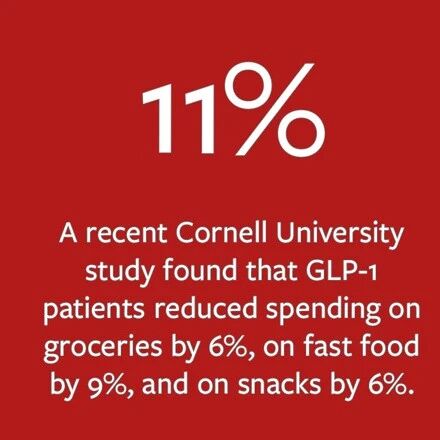
Core Insights - GLP-1 drugs like Ozempic and Wegovy are reshaping not only individual health management but also macro consumption trends in the U.S. economy, impacting various sectors including consumer, retail, and food industries [4][10] Group 1: Impact on Food Spending - A study from Cornell University indicates that households using GLP-1 drugs experienced an average food spending decrease of approximately 5.3% within nine months of starting the medication, with high-income households (annual income over $100,000) seeing a decline exceeding 8% [6] - Spending on limited-service dining, such as fast food and coffee shops, also dropped by nearly 8%, indicating a simultaneous reduction in dining out frequency and impulse purchases [6] Group 2: Structural Changes in Food Consumption - The impact of GLP-1 on food consumption is not uniform; highly processed and calorie-dense foods saw the most significant declines, with spending on salty snacks, sweets, cookies, and baked goods dropping close to 10% [7] - Basic food items like bread, meat, and eggs also experienced spending reductions, but the declines were much smaller compared to processed foods [7] - Some categories, such as yogurt, fresh fruits, nutrition bars, and meat snacks, showed growth, but the scale of this growth was insufficient to offset the overall decline in food consumption [7] Group 3: Long-term Effects of GLP-1 Usage - Continuous use of GLP-1 drugs can maintain lower food spending levels for an extended period, and even after discontinuation, food consumption remains below pre-medication baseline levels for some time, although this effect diminishes over time [9] - This suggests that while GLP-1 drugs can significantly alter consumption decisions in the short to medium term, they do not permanently reshape all dietary habits [10] Group 4: Implications for the Food and Beverage Industry - The findings signal potential long-term changes in the demand curve for the U.S. food market, indicating that businesses relying on high-calorie, ready-to-eat, snack-type products may face ongoing pressure [10] - Brands, retailers, and food service companies may need to rethink their product offerings, portion sizes, and marketing strategies in response to a market where appetite is systematically suppressed by medication [10] Group 5: Public Policy Considerations - The research highlights that GLP-1 drugs have a more direct and rapid impact on consumer behavior compared to traditional interventions like taxes or nutritional education, linking public health with market demand [10] - This marks a significant shift in how medical technology influences consumption structures and industry evolution [10]
所谓的天然GLP-1补充剂,真的能当自然版司美格鲁肽吗?
GLP1减重宝典· 2025-12-29 08:46
Core Viewpoint - GLP-1 class weight loss drugs are reshaping global perceptions of weight management, demonstrating weight loss of 10% or more in clinical and real-world studies, while natural GLP-1 supplements are gaining popularity as milder alternatives [4][10] Mechanism of Action - GLP-1 is a hormone secreted by the intestines after eating, which stimulates insulin release, delays gastric emptying, and acts on the brain's appetite center to reduce hunger [4][10] - True GLP-1 receptor agonists are structurally modified to provide sustained, stable, and high-intensity activation of GLP-1 receptors, which is crucial for their significant weight loss effects [4][10] Natural GLP-1 Supplements - Natural GLP-1 supplements are not true GLP-1 or receptor agonists; they attempt to influence metabolic environments through indirect pathways, such as stimulating small amounts of GLP-1 release and improving gut microbiota [6][9] - Common ingredients in these supplements include psyllium husk, green tea extract, saffron extract, polyphenols from lemon or blood orange, various probiotics or prebiotics, and amino acids [7][9] Efficacy and Evidence - There is currently no convincing evidence that natural GLP-1 supplements can achieve weight loss effects comparable to pharmaceutical-grade GLP-1 receptor agonists; their impact is often limited to mild appetite reduction or improved eating control [9][10] - Increasing protein intake is emphasized as a more reliable strategy for stimulating endogenous GLP-1, with recommendations of 1.2 to 1.5 grams of protein per kilogram of body weight per day [9][10] Safety and Regulation - The supplement industry is loosely regulated, leading to issues such as inconsistent ingredient labeling, potential liver function abnormalities from plant extracts, and interactions with existing medications [9][10] - Some products may contain stimulants like caffeine, which could increase cardiovascular or neurological burdens, especially for individuals with chronic diseases or metabolic disorders [9][10] Conclusion - Natural GLP-1 supplements are not entirely ineffective but are better positioned as auxiliary tools in health management rather than core weight loss treatments; the most effective and evidence-backed option remains the regulated use of GLP-1 class drugs [10]

重磅:Cell刊发哥大科研新突破,锁定代谢障碍治疗核心靶点
GLP1减重宝典· 2025-12-29 08:46
Core Insights - The article emphasizes the role of the bed nucleus of the stria terminalis (BNST) as a central hub in the brain that regulates feeding behavior by integrating sensory inputs and internal states, providing a unified command for eating actions [17]. Summary by Sections Taste System and Feeding Behavior - The taste system acts as the primary sensory gateway for regulating eating behavior, with specialized taste receptor cells (TRC) identifying taste signals and transmitting information to the taste cortex [7]. - The brain's mechanism for converting sweet taste signals into actual eating behavior remains incompletely understood, despite advancements in sensory biology [7]. Brain Circuitry and Hunger Regulation - Research has identified complex neural networks, including AGRP and POMC neurons, that regulate hunger and feeding, suggesting a universal "feeding control center" in the brain [8]. - The BNST has been identified as a key brain region that integrates internal states and sensory signals, playing a crucial role in the unified regulation of feeding behavior [8]. Neuronal Response to Sweetness - Neurons in the central amygdala (CEA) that respond to sweetness have been characterized, with over 90% of sweet-responsive neurons co-expressing preproenkephalin (Pdyn) [9]. - Activation of Pdyn neurons in the CEA can make mice perceive regular water as an attractive stimulus, while inhibiting these neurons eliminates their preference for sweet substances [9]. BNST's Role in Feeding Response - The CEA-Pdyn neuron pathway projects densely to the BNST, which is critical for mediating sweet-induced feeding responses [10]. - Hunger increases sweet consumption by 2.5 times in mice, with BNST activity enhancing the response to sweetness during hunger [10]. Integration of Signals in BNST - The BNST receives projections from both sweet-responsive neurons in the CEA and hunger-signaling AGRP neurons, allowing it to enhance responses to sweetness and regulate feeding behavior [11]. - In sodium deficiency, BNST's response to salty stimuli increases by 300%, demonstrating its role in integrating various signals for precise feeding regulation [11]. Neuronal Activity and Internal States - BNST neurons can distinguish between different "stimulus-internal state" combinations, with a prediction accuracy of 80% for these combinations [12]. - The number of sweet-responsive neurons in the BNST increases by 40% during hunger, indicating a dynamic response to internal states [12]. Comprehensive Control of Feeding Behavior - Activation of the BNST leads to increased feeding impulses, even for normally avoided substances, while inhibition reduces food intake regardless of hunger or sodium deficiency [14]. - The BNST's ability to control various feeding behaviors suggests it is not limited to specific food types but serves as a general feeding control center [14]. Bidirectional Weight Regulation - The BNST has been shown to regulate body weight in both cachexia and obesity models, with selective activation delaying weight loss by 30% and inhibition leading to an 8% weight reduction comparable to GLP-1 receptor agonists [15][16]. - These findings indicate that the BNST is a potential target for interventions in weight management, particularly in addressing both obesity and cachexia [16]. Conclusion - The BNST is confirmed as the central command center for feeding behavior, integrating sensory inputs and internal states to flexibly adjust feeding preferences and intake [17]. - This discovery provides new insights into the mechanisms of appetite regulation and potential therapeutic targets for obesity and related disorders [17].

速递|司美格鲁肽等GLP-1减重药,或许正在悄悄降低一种“最凶险癌症”的风险
GLP1减重宝典· 2025-12-29 08:46
Core Viewpoint - GLP-1 class drugs are evolving from merely diabetes and weight loss medications to potential long-term solutions for reducing the risk of liver cancer in type 2 diabetes patients [6][8]. Group 1: Impact on Liver Cancer Risk - A recent systematic review indicates that GLP-1 receptor agonists significantly lower the incidence of liver cancer in type 2 diabetes patients compared to traditional treatments like insulin and sulfonylureas [8]. - In several studies, the risk of liver cancer in GLP-1 users was found to decrease by over 50% compared to insulin users, with some studies reporting reductions close to 80% [8]. - The review included data from over 5.4 million patients across 17 countries, highlighting the global relevance of these findings [8]. Group 2: Mechanisms of Action - GLP-1 drugs improve metabolic conditions by promoting weight loss, reducing visceral fat, and enhancing insulin sensitivity, which collectively decrease the likelihood of fat accumulation in the liver [9]. - These medications have been shown to lower systemic chronic inflammation, a key factor in the development of liver cancer [9]. - Unlike long-term insulin therapy, GLP-1 does not stimulate liver cell proliferation through insulin-like growth factors, potentially reducing the risk of abnormal liver cell growth [9]. Group 3: Clinical Implications - The findings suggest that GLP-1 drugs may serve as important tools for reducing the risk of severe liver complications in type 2 diabetes patients with obesity and fatty liver disease [9]. - Future diabetes treatment guidelines may begin to incorporate considerations for liver cancer and other severe complications, moving beyond just blood sugar and cardiovascular events [9][10]. - While current conclusions are based on retrospective studies indicating correlation rather than causation, the direction of research suggests a shift towards altering disease outcomes rather than merely managing symptoms [10].

突破性瘦身科技:外泌体局部给药,定点分解腹部脂肪显著减腰围
GLP1减重宝典· 2025-12-28 15:17
以下文章来源于肥胖世界ObesityWorld ,作者肥胖世界 肥胖世界ObesityWorld . 《肥胖世界》Obesity World - 同步传真肥胖及代谢国际新学术进展,为医学减重临床、教研人员搭建一座与国际接轨的桥梁,「每医健」旗下内容平台。 近年来,随着GLP-1药物掀起的减重热潮,全球制药行业对减肥管线的投入热情空前高涨。面对GLP-1类药物存在的潜在副作用挑战,各大药 企纷纷布局差异化赛道,开发多元机制的减重方案。在注射剂、口服药等传统剂型之外,亦诺微基于其独创OVPENS平台推出了一款突破性外 用减肥产品MVR-EX105(简称EX105)——首个实现局部涂抹的非侵入性外泌体减肥疗法。近期公布的健康人试验数据显示,36名受试者通 过腹部局部使用EX105成功实现精准塑形——腹部体积平均缩减183.9cm³,腰围平均减少3.4cm,初步验证了该技术的有效性。该研究成果已 入选2025年国际肥胖与代谢病外科联合会(IFSO)年会壁报展示。 临床数据报告显示,参与研究的36名受试者每三天在腹部局部涂抹EX105,28天后腹部体积平均减少183.9cm³,腰围平均缩小3.4cm。 @OW小助理 扫 ...

速递|中国首款周制生长激素落地!诺和诺德生长激素获批上市
GLP1减重宝典· 2025-12-28 15:17
Core Viewpoint - The article discusses the approval and clinical efficacy of the long-acting growth hormone injection, Pasi Growth Hormone, developed by Novo Nordisk, which is now available in China for treating growth hormone deficiency in children aged 2.5 years and older [4][6]. Group 1: Product Approval and Details - Pasi Growth Hormone injection received approval from the National Medical Products Administration in China on December 22, 2025, with the approval number SJ20250030 [6]. - The product is a long-acting growth hormone analog that has been optimized to extend its half-life, allowing for weekly administration [4][6]. - It was first approved by the FDA in the United States in August 2020 for adult growth hormone deficiency and expanded its indications in April 2023 to include both children and adults [4]. Group 2: Clinical Efficacy - The efficacy of Pasi Growth Hormone has been validated in multiple global Phase III clinical studies, including the REAL4 study, which confirmed its safety and efficacy in an international population [8]. - In the REAL6 study conducted in China, 110 previously untreated children were randomized to receive either Pasi Growth Hormone or a daily regimen of recombinant human growth hormone. The results showed that the average height growth rate in the Pasi group was 11.0 cm/year, comparable to the daily regimen group [8]. - The overall safety profile of Pasi Growth Hormone was consistent with previous growth hormone formulations, with an injection site reaction rate of only 2.7% and no reported injection site pain during the 52-week treatment period, indicating a lower treatment burden and good drug tolerance [8].

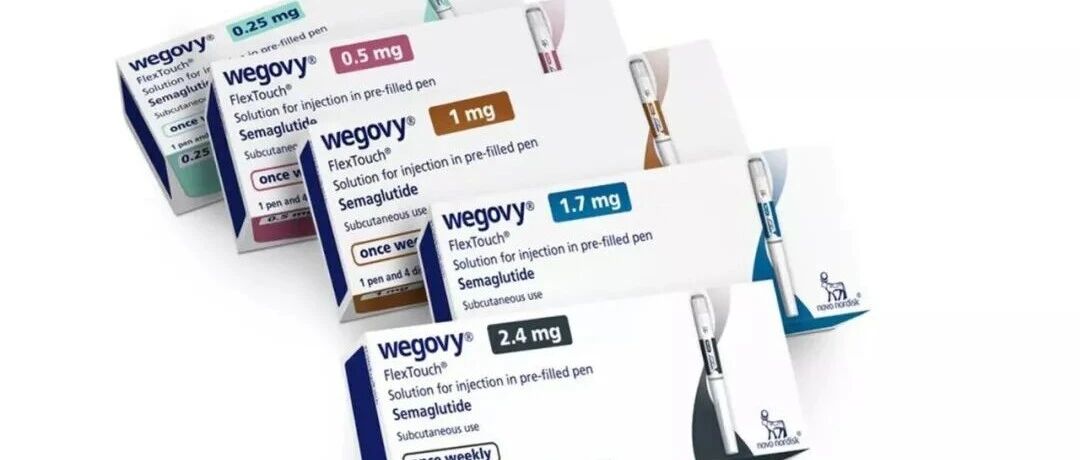
平均减重25斤、改善“三高”,司美格鲁肽对亚洲人群疗效再获验证!
GLP1减重宝典· 2025-12-28 15:17
Core Viewpoint - The article discusses the efficacy of semaglutide in weight loss and metabolic improvement among the Asian population, highlighting significant results from clinical trials that support its use in obesity treatment [2][8]. Group 1: Obesity Definition and Health Risks - The World Health Organization (WHO) defines obesity in the Asian population as BMI≥25 kg/m², which is lower than the global standard of ≥30 kg/m² due to higher body fat percentages and associated health risks in Asians [2][3]. Group 2: Clinical Trial Overview - The STEP 11 trial is a 44-week, randomized, double-blind, placebo-controlled study conducted in South Korea and Thailand, focusing on adults with obesity (BMI≥25 kg/m²) without diabetes [4]. - Participants received either a weekly 2.4 mg subcutaneous injection of semaglutide or a placebo, alongside lifestyle interventions [4]. Group 3: Study Results - A total of 150 participants were randomized, with 101 receiving semaglutide and 49 receiving placebo. The average weight change in the semaglutide group was -16.0% (approximately -12.8 kg), while the placebo group saw a change of -3.1% [5]. - In terms of significant weight loss, 96% of the semaglutide group achieved a weight reduction of ≥5%, compared to 25% in the placebo group [5]. - Waist circumference also decreased significantly in the semaglutide group by -11.9 cm, compared to -3.0 cm in the placebo group [5]. Group 4: Safety and Tolerability - Adverse events were reported by 89% of participants in the semaglutide group and 78% in the placebo group, with gastrointestinal discomfort being the most common side effect [7]. - Serious adverse events occurred in 13% of the semaglutide group and 8% of the placebo group [7]. Group 5: Conclusion and Implications - The study concludes that semaglutide 2.4 mg significantly reduces weight in the Asian obese population and is well-tolerated, suggesting its inclusion in local treatment guidelines [8][9]. - The findings may influence healthcare policies and obesity prevention strategies in Asian countries, emphasizing the importance of population-specific treatment approaches [9].

速递|最大、最长CVOT出炉,替尔泊肽改写糖尿病心血管证据链
GLP1减重宝典· 2025-12-28 15:17
Core Viewpoint - The article discusses the significant findings from the SURPASS-CVOT study, which demonstrates that Tirzepatide is non-inferior to Dulaglutide in cardiovascular outcomes for patients with type 2 diabetes and atherosclerotic cardiovascular disease (ASCVD), while also showing potential advantages in various clinical indicators [4][8][12]. Study Design and Population - SURPASS-CVOT is a rigorously designed cardiovascular outcomes trial (CVOT) that included 13,299 patients from 30 countries, with an average age of 64.1 years and a high cardiovascular risk profile [7][12]. - The study involved a 1:1 randomization to receive either Tirzepatide or Dulaglutide, with a median follow-up of approximately 4 years [7]. Primary and Secondary Outcomes - Tirzepatide achieved its non-inferiority goal with 12.2% of patients experiencing primary cardiovascular events compared to 13.1% in the Dulaglutide group, indicating an 8% reduction in risk (HR 0.92; 95.3% CI 0.83–1.01) [8][10]. - In secondary outcomes, Tirzepatide showed a significant 16% reduction in all-cause mortality risk (HR 0.84; 95% CI 0.75–0.94) and a reduction in major adverse cardiovascular events (MACE) (HR 0.88; 95% CI 0.88–0.96) [10][11]. Metabolic Improvements - Patients treated with Tirzepatide experienced an average weight loss of 11.6%, significantly higher than the 4.8% in the Dulaglutide group. Additionally, HbA1c levels decreased by 1.66% for Tirzepatide compared to 0.88% for Dulaglutide, and triglyceride levels dropped by 24.2% versus 10.2% [10][12]. Safety Profile - The overall incidence of adverse events was similar between the two groups, although Tirzepatide had a slightly higher discontinuation rate due to adverse events (13.2% vs 10.1%), primarily related to gastrointestinal issues [10][11]. Significance of the Study - The choice of Dulaglutide as an active comparator is significant, as it has previously been shown to improve cardiovascular outcomes in high-risk patients, reinforcing the cardiovascular protective evidence for Tirzepatide [11][12]. - The study's findings position Tirzepatide as a potential first-line treatment option for patients with type 2 diabetes and cardiovascular disease, moving beyond its initial role as a glucose-lowering and weight-loss medication [12].