CATHAY PAC AIR(00293)

Search documents
探访广交会香港机场柜台:国泰升级行李服务 助客商轻松赴会
Nan Fang Du Shi Bao· 2025-10-18 00:22
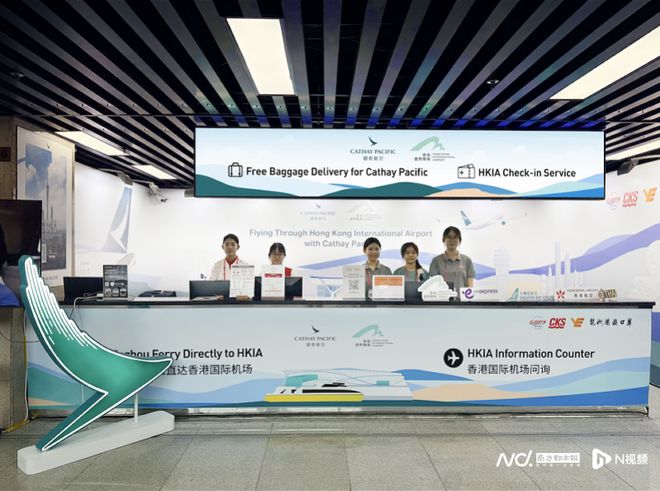
Group 1 - The 138th Canton Fair is currently taking place, attracting numerous overseas buyers, with innovative products being a focal point [1] - Cathay Pacific has set up a dedicated service counter at the Canton Fair, offering a one-stop service that includes check-in, free luggage delivery, and multi-modal transport [2] - The service allows exhibitors to check in and send their luggage directly to either Pazhou Port or Guangzhou Baiyun Airport, facilitating a "burden-free exhibition" experience [2] Group 2 - Cathay Pacific aims to enhance service efficiency by collaborating with JD Logistics to optimize luggage delivery processes, integrating technology into customer travel experiences [2] - The demand for business and tourism travel is expected to rise due to upcoming major events, injecting new vitality and opportunities into the market, particularly in the Guangdong-Hong Kong-Macao Greater Bay Area [2] - Cathay Pacific plans to expand its mainland route network and increase flight frequencies, with over 330 round-trip flights between Hong Kong and mainland China during the winter peak travel season [3] Group 3 - The airline has developed a 10-year fleet plan from 2026 to 2035, which includes the acquisition of 14 Boeing 777-9 aircraft to strengthen its long-haul route advantages [3] - Cathay Pacific will also optimize its short-haul route network and increase flight frequencies to key cities such as Beijing, Shanghai, Guangzhou, and Chengdu [3]

探访广交会香港机场柜台:国泰升级行李服务,助客商轻松赴会
Nan Fang Du Shi Bao· 2025-10-17 11:03
Core Viewpoint - The 138th Canton Fair is currently taking place, attracting numerous overseas buyers, with innovative products being a focal point of interest [1] Group 1: Event Overview - The Canton Fair is seeing a significant turnout of international buyers, with Hong Kong serving as a convenient transit hub for many [1] - The "Hong Kong Fly" and multimodal transport services are popular among overseas visitors attending the fair [1] Group 2: Services Offered - Cathay Pacific has set up a dedicated service counter at the Canton Fair, providing a one-stop service that includes check-in, free luggage delivery, and multimodal transport [6] - Buyers can check in and send their luggage directly to either Pazhou Port or Guangzhou Baiyun Airport, facilitating a hassle-free exhibition experience [6] - Returning travelers have the option to fly from Guangzhou Baiyun Airport or take a fast boat to Hong Kong International Airport, enjoying seamless luggage transfer and bypassing Hong Kong customs [6] Group 3: Customer Experience - An Indian buyer, Pramod, expressed satisfaction with the convenience of the luggage delivery service, which he was recommended by colleagues who had previously used the service [3][6] - Cathay Pacific's service aims to enhance the travel experience for exhibitors and buyers, allowing them to focus on business opportunities [9] Group 4: Market Outlook - The domestic civil aviation market in mainland China is experiencing rapid growth, which is encouraging Hong Kong airlines to explore new business opportunities [9] - Cathay Pacific plans to expand its mainland route network and increase flight frequencies, particularly in response to upcoming major events like the Canton Fair and the China International Import Expo [9] - The airline is set to operate over 330 round-trip flights weekly between Hong Kong and mainland China during the winter travel peak [9] Group 5: Fleet Development - Cathay Pacific has outlined a 10-year fleet development plan from 2026 to 2035, which includes the acquisition of new aircraft to enhance both long-haul and short-haul services [9] - The plan involves purchasing 14 Boeing 777-9 aircraft to strengthen long-haul routes while optimizing short-haul networks and increasing flight frequencies to key cities [9]

美国联合航空敦促将禁经俄罗斯领空出入境美国扩至国泰航空等香港航企
Ge Long Hui· 2025-10-15 04:51
上周,美国运输部提议禁止中国航空公司飞越俄罗斯往返美国的航线,并表示飞行时间的减少使美国航 空公司处于不利地位。 (责任编辑:宋政 HN002) 【免责声明】本文仅代表作者本人观点,与和讯网无关。和讯网站对文中陈述、观点判断保持中立,不对所包含内容 的准确性、可靠性或完整性提供任何明示或暗示的保证。请读者仅作参考,并请自行承担全部责任。邮箱: news_center@staff.hexun.com 格隆汇10月15日|美国特朗普政府此前提议禁止中国航空公司使用途经俄罗斯领空的路线往返美国。美 国联合航空敦促将禁令扩大至国泰航空,以及其他以香港为基地的航空公司。 内地主要航空公司促请放弃禁止飞越俄罗斯的计划,称将增加飞行时间、提高机票价格,并可能扰乱一 些航线。东航表示,此举可能会使其部分最重要航线的飞行时间延长2至3个小时,大大增加错过转机的 风险,并增加燃油消耗。国航及南航表示,这项决定将对美国和中国的大量乘客产生不利影响。南航预 计,至少有2800名原定于11月至12月假期高峰期间出行的乘客需要重新订票,这将危及他们的旅行计 划。 ...




港股航空股集体走高 东方航空涨5.43%
Mei Ri Jing Ji Xin Wen· 2025-10-15 03:16
每经AI快讯,10月15日,港股航空股集体走高,截至发稿,东方航空(00670.HK)涨5.43%,报3.3港元; 中国国航(00753.HK)涨4.24%,报5.65港元;南方航空(01055.HK)涨3.24%,报4.14港元;国泰航空 (00293.HK)涨1.23%,报10.66港元。 ...
航空股集体走高 高基数下国庆假期民航出行客流仍增长 航司利润向上空间可期
Zhi Tong Cai Jing· 2025-10-15 03:09
国信证券发布研报称,四季度进入出行淡季,去年同期公商务出行需求相对较弱,今年同比或有一定修 复。未来运力供给增速放缓确定性增强,若出行需求能保持稳增,带动航司座收持续修复,有望带来航 司业绩高弹性;叠加油价中枢下行、汇率稳定等,航司利润向上空间可期。 航空股集体走高,截至发稿,东方航空(00670)涨5.43%,报3.3港元;中国国航(601111)(00753)涨 4.24%,报5.65港元;南方航空(600029)(01055)涨3.24%,报4.14港元;国泰航空(00293)涨1.23%,报 10.66港元。 消息面上,国庆及中秋假期八天,全社会跨区域人员流动量累计达到24.33亿人次,日均同比+6.3%,较 2019年同期+30.8%。去年同期国庆假期(七天)民航出行基数较高,日均客流量同比+11.1%;今年同 期假期八天,民航日均客流同比仍实现+3.3%增长。航班管家数据显示,假期国内线经济舱平均票价 849元,同比+0.3%,基本持平,对比2019年同期微降1.4%,假期票价表现较为平稳。 ...

港股异动 | 航空股集体走高 高基数下国庆假期民航出行客流仍增长 航司利润向上空间可期
智通财经网· 2025-10-15 03:05
国信证券发布研报称,四季度进入出行淡季,去年同期公商务出行需求相对较弱,今年同比或有一定修 复。未来运力供给增速放缓确定性增强,若出行需求能保持稳增,带动航司座收持续修复,有望带来航 司业绩高弹性;叠加油价中枢下行、汇率稳定等,航司利润向上空间可期。 智通财经APP获悉,航空股集体走高,截至发稿,东方航空(00670)涨5.43%,报3.3港元;中国国航 (00753)涨4.24%,报5.65港元;南方航空(01055)涨3.24%,报4.14港元;国泰航空(00293)涨1.23%,报 10.66港元。 消息面上,国庆及中秋假期八天,全社会跨区域人员流动量累计达到24.33亿人次,日均同比+6.3%,较 2019年同期+30.8%。去年同期国庆假期(七天)民航出行基数较高,日均客流量同比+11.1%;今年同 期假期八天,民航日均客流同比仍实现+3.3%增长。航班管家数据显示,假期国内线经济舱平均票价 849元,同比+0.3%,基本持平,对比2019年同期微降1.4%,假期票价表现较为平稳。 ...
大行评级丨瑞银:对香港发展商持“增持”立场,看好恒基地产、新鸿基地产等
Ge Long Hui· 2025-10-10 03:48
Core Viewpoint - UBS upgraded the investment rating of Cheung Kong Property from "Neutral" to "Buy," identifying it as the most undervalued stock among the real estate companies covered by the bank [1] Group 1: Potential Catalysts for Value Release - Potential catalysts for value release include acquisitions of distressed commercial real estate (CRE) assets in Hong Kong, continuous improvement in hotel profitability, and opportunities to convert hotels into student accommodations due to a structural increase in non-local student enrollment [1] - Additional catalysts mentioned are the disposal of UK railway assets and higher foreign exchange conversion gains following potential interest rate cuts by the Federal Reserve [1] Group 2: Stance on Hong Kong Banks and Developers - UBS maintains a "Neutral" stance on Hong Kong banks due to increased provisioning expenses related to commercial real estate exposure and risks of net interest margin contraction from a potential rate cut cycle [1] - The bank holds a "Positive" stance on Hong Kong developers, with top picks including Henderson Land, Sun Hung Kai Properties, Link REIT, Wynn Macau, Galaxy Entertainment, and Cathay Pacific, all rated as "Buy" [1] - Conversely, UBS is bearish on MTR Corporation, rating it as "Sell" [1]





航空股拉升 东方航空大涨10.6%领衔 机构称关注Q4低基数下供需修复
Ge Long Hui· 2025-10-09 04:06
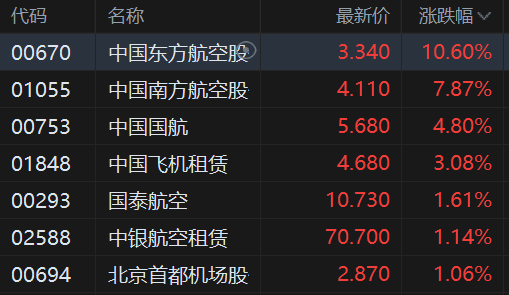
港股航空股大幅拉升,其中,中国东方航空大涨10.6领衔,中国南方航空涨约8%,中国国航涨4.8%, 国泰航空涨1.6%。 消息上,中金指出,航司数据方面,根据Wind,10.1-10.7日国内航司日均客流量同比增长3%,平均单 价同比减少4%,对比五一假期(客运量同比增长13%,平均单价下滑9%)客运量同比增速收窄。 招商证券日前研报指出,今年以来板块总体走势较弱,关注Q4低基数下供需修复、"反内卷"政策及原 油增产等对股价的催化作用。 | 代码 | 名称 | 最新价 | 涨跌幅 ▽ | | --- | --- | --- | --- | | 00670 | 中国东方航空股> | 3.340 | 10.60% | | 01055 | 中国南方航空股 | 4.110 | 7.87% | | 00753 | 中国国航 | 5.680 | 4.80% | | 01848 | 中国飞机租赁 | 4.680 | 3.08% | | 00293 | 国泰航空 | 10.730 | 1.61% | | 02588 | 中银航空租赁 | 70.700 | 1.14% | | 00694 | 北京首都机场股 | 2.870 | ...
港股异动丨航空股拉升 东方航空大涨10.6%领衔 机构称关注Q4低基数下供需修复
Ge Long Hui· 2025-10-09 03:20
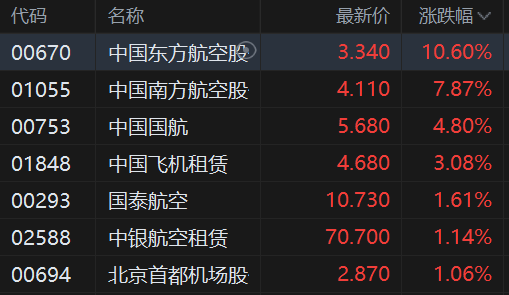
| 代码 | 名称 | 最新价 | 涨跌幅 ▽ | | --- | --- | --- | --- | | 00670 | 中国东方航空股2 | 3.340 | 10.60% | | 01055 | 中国南方航空股 | 4.110 | 7.87% | | 00753 | 中国国航 | 5.680 | 4.80% | | 01848 | 中国飞机租赁 | 4.680 | 3.08% | | 00293 | 国泰航空 | 10.730 | 1.61% | | 02588 | 中银航空租赁 | 70.700 | 1.14% | | 00694 | 北京首都机场股 | 2.870 | 1.06% | 港股航空股大幅拉升,其中,中国东方航空大涨10.6领衔,中国南方航空涨约8%,中国国航涨4.8%, 国泰航空涨1.6%。 消息上,中金指出,航司数据方面,根据Wind,10.1-10.7日国内航司日均客流量同比增长3%,平均单 价同比减少4%,对比五一假期(客运量同比增长13%,平均单价下滑9%)客运量同比增速收窄。 招商证券日前研报指出,今年以来板块总体走势较弱,关注Q4低基数下供需修复、"反内卷"政策及原 油增产等对 ...
小摩:料内地航空业定价持平 看好中国东方航空(00670)等
智通财经网· 2025-10-03 09:09
Core Viewpoint - The aviation sector in Hong Kong and mainland China has underperformed the market this year due to cost pressures, intensified competition, and weak pricing power, leading to profit constraints. Recent stock price rebounds are attributed to strong travel demand expectations for the October Golden Week and price stabilization, but the sustainability of this momentum remains uncertain as the industry approaches the off-peak season [1] Industry Summary - The aviation sector is facing challenges from cost pressures and competition, which have negatively impacted profitability [1] - Regulatory measures aimed at reducing competition have had limited effects on improving pricing levels [1] - The forecast for ticket prices remains flat from 2025 to 2027, reflecting weak economic conditions and the continued impact of high-speed rail on demand [1] Company Summary - Morgan Stanley favors Spring Airlines (601021.SH) and China Eastern Airlines (00670)(600115.SH) as the top picks, followed by Cathay Pacific (00293) and Air China (00753)(601111.SH), while China Southern Airlines (01055)(600029.SH) is viewed less favorably [1] - Cathay Pacific's rating has been upgraded to "Neutral," with a target price increase from HKD 8.2 to HKD 9.1 due to an attractive dividend yield exceeding 6% [1] - China Eastern Airlines has seen its A-share rating upgraded to "Buy," with a target price raised from RMB 4.1 to RMB 5, as the company focuses on passenger services after divesting its cargo business [1] - Spring Airlines maintains a "Buy" rating, with a target price increase from RMB 63 to RMB 65, benefiting from the strong recovery in domestic tourism [1]