
Sinopec Corp.(00386)

Search documents
石化化工行业下行周期迎来拐点,机构普遍看好行业趋势走高(附概念股)
Sou Hu Cai Jing· 2026-01-19 00:54
Group 1 - Since 2022, the chemical industry has faced price declines due to new capacity coming online and falling crude oil prices, leading to a decrease in overall profitability as companies adopt a price-for-volume strategy to capture market share [1] - In 2024, most chemical prices are stabilizing at the bottom, with profitability still under pressure; however, the introduction of growth stabilization measures may lead to the elimination of some outdated capacities, improving the overall supply-demand balance and potentially enhancing product profitability [1] - According to Huatai Securities, by the second half of 2025, the profitability of bulk chemicals is expected to hit a ten-year low due to weak demand and the end of supply-side increments, similar to the industry losses seen at the end of 2015 [1] Group 2 - The chemical industry is characterized as a typical cyclical industry, usually experiencing a five-year cycle through stages of "profit upturn - capacity expansion - profit bottoming - capacity clearance/demand expectation improvement" [2] - With negative growth in capital expenditure, anti-involution trends, global interest rate cuts, and domestic demand expansion, the chemical sector is anticipated to enter a "dawn" phase at the beginning of the 14th Five-Year Plan [2] - Related Hong Kong stocks in the chemical industry include Sinopec (00386), Sinopec Oilfield Service (01033), Sinopec Engineering (02386), Shanghai Petrochemical (00338), Sinopec Kantons (00934), China Sanjiang Chemical (02198), and Wuhan Organic Chemicals (02881) [3]
石油化工行业周报第 436 期(20260112—20260118):地缘局势动荡驱动油价上行,原油供给过剩预期有望改善-20260118
EBSCN· 2026-01-18 11:48
Investment Rating - The report maintains an "Overweight" rating for the oil and petrochemical industry [5] Core Views - Geopolitical tensions, particularly regarding Iran, have driven significant fluctuations in oil prices, providing a favorable backdrop for oil price recovery [1] - OPEC+ is expected to cautiously increase production in 2026, which may help alleviate the oversupply situation in the oil market [2] - Global oil demand is projected to improve, with the chemical raw material demand expected to dominate the growth in 2026 [3] - The report expresses a positive long-term outlook for major Chinese oil companies and the oil service sector, emphasizing their resilience during price fluctuations [4] Summary by Sections Oil Supply and Demand - OPEC forecasts a demand increase of 1.38 million barrels per day in 2026, with a cautious production increase expected to improve the supply-demand balance [2] - The IEA has raised its 2026 global oil demand growth forecast to 860,000 barrels per day, attributing this to improved macroeconomic conditions [3] Price Trends - As of January 16, 2026, Brent and WTI crude oil futures closed at $64.20 and $59.22 per barrel, reflecting increases of 1.9% and 0.7% respectively from the previous week [1] Investment Recommendations - The report recommends focusing on major Chinese oil companies, including China National Petroleum Corporation, Sinopec, and CNOOC, as well as their associated oil service engineering firms [4]



当2.8万亿能源巨无霸降临
Jing Ji Guan Cha Bao· 2026-01-18 06:11
Core Viewpoint - The merger between China Petroleum & Chemical Corporation (Sinopec) and China Aviation Oil Holding Company (China Aviation Oil) aims to create a powerful entity in the aviation fuel industry, enhancing supply chain control and competitiveness in line with China's dual carbon goals [3][24]. Industry Overview - The aviation fuel supply chain, valued at several hundred billion yuan, is undergoing significant restructuring, impacting upstream suppliers, midstream refining companies, independent traders, and downstream airlines [2][4]. - The merger is not merely a scale expansion but focuses on "professional integration," shifting competition from channel-based to efficiency and cost across the entire supply chain [4][5]. Merger Implementation - Following the merger announcement, both companies initiated the integration of production and procurement systems, aiming to optimize the supply chain from refineries to airports [3][6]. - A joint working group has been established to assess logistics, customer contracts, and supplier lists, with a focus on ensuring stable market supply during the transition [6][7]. Market Reactions - The merger has raised concerns among midstream small and medium-sized refining companies and independent traders, who fear losing business as Sinopec's capacity may cover most of China Aviation Oil's needs [13][14]. - Some companies are exploring alliances with other large refiners or considering direct supply to airports to maintain market presence [13][14]. User Perspective - Airlines, as the end users of aviation fuel, are closely monitoring the merger's impact on fuel costs, which constitute over 30% of their operational expenses [18][19]. - While the integration may enhance supply stability and reduce costs, airlines are concerned about diminished bargaining power against a unified supplier [18][19]. Future Considerations - The merger is expected to accelerate the green transition in the aviation sector, with both companies collaborating on sustainable aviation fuel (SAF) initiatives [24][25]. - Regulatory scrutiny is anticipated to ensure fair competition and prevent monopolistic practices, with the National Market Supervision Administration likely to review the merger [23][25].


当2.8万亿能源巨无霸降临
经济观察报· 2026-01-18 05:54
Core Viewpoint - The restructuring of China Petroleum & Chemical Corporation (Sinopec) and China Aviation Oil (China National Aviation Fuel Group) aims to create a powerful national entity capable of competing with international energy giants, driven by the dual goals of carbon neutrality and supply chain autonomy [2][4][6]. Group 1: Restructuring Overview - The merger combines Sinopec's extensive refining capabilities with China Aviation Oil's nationwide airport network, creating a comprehensive supply chain from refinery to fuel pump [2][3]. - The restructuring is not merely a scale expansion but focuses on "professional integration" to enhance efficiency and cost competitiveness across the entire aviation fuel industry [4][5]. - A clear timeline and task requirements have been set by the State-owned Assets Supervision and Administration Commission (SASAC) to ensure effective integration and realization of synergies [6]. Group 2: Operational Changes - Following the announcement, both companies initiated immediate actions, including establishing daily information sharing mechanisms and forming joint teams to identify overlapping and complementary resources [8][9]. - The integration aims to streamline logistics and production planning, potentially optimizing supply chain efficiency by reducing intermediary steps [10][12]. - In regions with existing infrastructure, such as the Guangdong-Hong Kong-Macao Greater Bay Area, teams are conducting on-site assessments to create direct supply networks from refineries to airports [14]. Group 3: Market Impact on Midstream Players - The merger has raised concerns among midstream players, including small refining companies and independent traders, who fear losing market share as China Aviation Oil may prioritize Sinopec's supply [17][18]. - Some companies are exploring alliances with other large refiners to enhance their bargaining power and are reassessing direct supply options to airports [19][21]. - The restructuring is expected to lead to a market reshuffle, pushing smaller firms towards specialization and service-oriented business models [24]. Group 4: User Perspective - Major airlines are closely monitoring the restructuring, as aviation fuel costs represent over 30% of their total operating expenses [27]. - While the integration may enhance supply stability and reduce costs, airlines are concerned about diminished bargaining power against a unified supplier [28][29]. - Airlines are exploring alternative supply channels and considering sustainable aviation fuel (SAF) as a strategic component in future negotiations [32][33]. Group 5: Regulatory and Environmental Considerations - The new entity's dominance in the aviation fuel market raises concerns about potential anti-competitive practices, prompting expectations of regulatory scrutiny [35][36]. - The merger is anticipated to accelerate the aviation industry's transition to greener fuels, with both companies leveraging their respective strengths in SAF development and distribution [37][38]. - SASAC views this restructuring as a model for deeper state-owned enterprise reform, emphasizing the need for effective regulatory oversight to ensure fair competition and environmental responsibility [38].

中石化申请二甲苯液相异构化方法专利,提高对二甲苯选择性和收率
Sou Hu Cai Jing· 2026-01-17 04:39
Group 1 - The State Intellectual Property Office of China shows that Sinopec has applied for a patent titled "A Method for Liquid Phase Isomerization of Xylene," with publication number CN121318652A, and the application date is July 2024 [1] - The patent describes a method for liquid phase isomerization of xylene, which involves contacting carbon eight aromatic materials with a catalyst under hydrogen gas conditions, using a catalyst that includes ZSM-5 molecular sieve and transition metals [1] - The method can be conducted under relatively mild conditions, reducing the occurrence of side reactions, thereby improving the selectivity and yield of xylene [1] Group 2 - Sinopec, established in 2000 and located in Beijing, primarily engages in oil and gas extraction, with a registered capital of 12,173,968.9893 million RMB [1] - The company has invested in 269 enterprises, participated in 5,000 bidding projects, and holds 45 trademark records and 5,000 patent records, along with 41 administrative licenses [1] - Sinopec Shanghai Petrochemical Research Institute, established in 2022 in Shanghai, focuses on research and experimental development, with a registered capital of 49,800 million RMB [2] - The research institute has invested in 2 enterprises, participated in 2,710 bidding projects, and holds 861 patent records, along with 133 administrative licenses [2]
能源“巨无霸”启航
Jing Ji Guan Cha Wang· 2026-01-16 23:51
Core Viewpoint - The restructuring of China Petroleum & Chemical Corporation (Sinopec) and China Aviation Oil Holding Company (China Aviation Oil) aims to create a powerful entity in the energy sector, enhancing competitiveness on a global scale while aligning with China's dual carbon goals and ensuring supply chain autonomy [2][4]. Group 1: Restructuring Details - The restructuring announcement marks the beginning of a significant integration process, combining Sinopec's refining capabilities with China Aviation Oil's extensive airport network [2][3]. - A core principle of the restructuring is "professional integration," focusing on optimizing supply chain efficiency rather than merely expanding scale [3][4]. - Both companies have initiated the integration of production and procurement systems, forming working groups to streamline operations and enhance supply chain efficiency [2][5][6]. Group 2: Industry Impact - The restructuring is expected to shift competition in the aviation fuel market from channel-based competition to a comprehensive competition based on efficiency and cost across the entire supply chain [4][21]. - Smaller refining companies and independent traders are feeling pressure as the new entity may prioritize Sinopec's production capabilities, potentially reducing orders from these smaller players [13][19]. - Some companies are exploring partnerships or alliances to enhance their bargaining power in the evolving market landscape [13][19]. Group 3: User Perspective - Airlines are closely monitoring the restructuring, as aviation fuel costs represent over 30% of their total operating costs, and any changes in the supply chain could significantly impact their profitability [21][22]. - While the integration may enhance supply stability and reduce costs, airlines are concerned about their bargaining power being diminished due to the consolidation of suppliers [21][22]. - Airlines are also exploring alternative supply channels and considering sustainable aviation fuel (SAF) as a key variable in future negotiations [25][26]. Group 4: Regulatory Considerations - The new entity is expected to face scrutiny regarding market competition, with potential antitrust reviews to ensure fair practices and prevent monopolistic behaviors [27][28]. - The restructuring is seen as a critical step in China's broader state-owned enterprise reform, with success measured not just by financial metrics but by the optimization of the entire value chain [30][31].

中国石化申请高熔体强度聚丙烯制备方法专利,实现提质增效的目标
Sou Hu Cai Jing· 2026-01-16 11:22
Group 1 - The core point of the article is that China Petroleum & Chemical Corporation (Sinopec) and Sinopec Yangzi Petrochemical Company have applied for a patent for a method to produce high melt strength polypropylene, which aims to enhance production efficiency without increasing energy consumption or material costs [1][2] Group 2 - The patent application, published as CN121319282A, was filed on July 2024 and describes a multi-reactor polymerization process that incorporates a crosslinking agent in the final reactor, which is a gas-phase polymerization reactor [1] - The production method allows for the simultaneous achievement of high melt strength polypropylene, eliminating the need for secondary processing that was previously required for crosslinking modification [1] Group 3 - Sinopec, established in 2000 and headquartered in Beijing, primarily engages in oil and gas extraction, with a registered capital of approximately 121.74 billion RMB [1] - Sinopec has invested in 269 companies, participated in 5000 bidding projects, and holds 5000 patent records along with 45 trademark registrations [1] Group 4 - Sinopec Yangzi Petrochemical Company, founded in 2006 and located in Nanjing, focuses on oil, coal, and other fuel processing, with a registered capital of approximately 156.51 billion RMB [2] - The company has invested in 13 enterprises, participated in 5000 bidding projects, and holds 1030 patent records along with 20 trademark registrations [2]
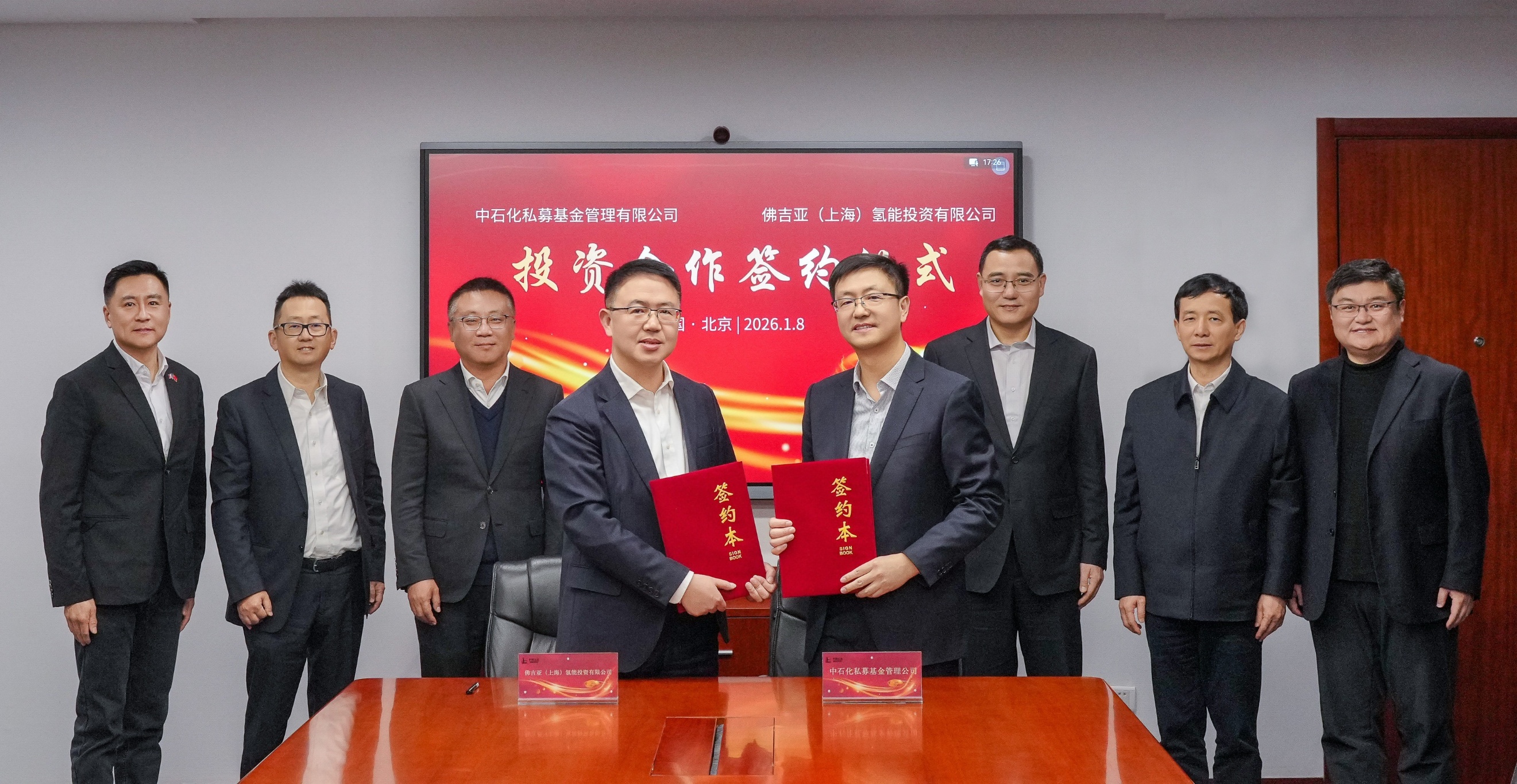
中国石化与佛瑞亚集团资本携手驱动中国氢能产业发展
Zhong Guo Qi Che Bao Wang· 2026-01-16 03:52
Group 1 - The strategic investment of 300 million RMB (approximately 40 million Euros) by Sinopec Capital through its private equity fund into Forvia's hydrogen investment arm in China highlights the commitment to optimizing the hydrogen market in China, which is experiencing rapid growth supported by government initiatives [1][3] - The partnership with Sinopec Capital is expected to enhance Forvia Hydrogen's market positioning and improve its capabilities in securing key government projects and industry collaboration [3][4] - Forvia aims to leverage this collaboration to create a clear roadmap for accelerated growth and value creation by optimizing its supply chain, including materials like carbon fiber and resin [3] Group 2 - Forvia's executives emphasized that this collaboration will help expand their market presence in China, improve cost competitiveness, and position them among global leaders in hydrogen solutions [4] - Sinopec Capital's leadership expressed a commitment to becoming the leading hydrogen company in China and aims to foster extensive equity investment collaborations with top global hydrogen enterprises [4] - The strategic investment is seen as a step towards promoting high-quality development in the global hydrogen industry through deep business cooperation between the two companies [4]
我国刷新多项亚洲页岩气井施工纪录
Zhong Guo Chan Ye Jing Ji Xin Xi Wang· 2026-01-16 00:40
Core Viewpoint - China Petroleum & Chemical Corporation (Sinopec) has successfully completed the drilling of the Jiao Ye 44-Z5HF well in the Fuling shale gas field, setting multiple records in Asia for shale gas wells and providing a new model for efficient shale gas development [1] Group 1: Drilling Achievements - The Jiao Ye 44-Z5HF well reached a total depth of 8,517 meters and a horizontal section length of 5,442 meters, with a drilling cycle of 53.88 days [1] - This well has set records for the deepest shale gas well in Asia, the longest horizontal section for onshore wells in Asia, and the shortest drilling cycle for Sinopec wells exceeding 8,000 meters [1] Group 2: Technological Innovations - The project team developed a high-performance equipment system suitable for ultra-deep and ultra-long horizontal section operations [1] - An integrated geological engineering efficient construction system was established, utilizing optimized rotary steering tools and high-efficiency wear-resistant drill bits to track geological and engineering parameters in real-time [1] Group 3: Fracturing Techniques - The team introduced a "differentiated precision design" strategy during the fracturing process, tailoring technical solutions based on well depth and geological conditions [1] - A "segmented strategy and precise control" fracturing technology system was formed, successfully addressing sand blockage prevention and resolution challenges in ultra-long horizontal wells, significantly enhancing fracturing strength and transformation effects [1]
股票行情快报:中国石化(600028)1月15日主力资金净买入7592.32万元
Sou Hu Cai Jing· 2026-01-15 11:36
Group 1 - The core viewpoint of the news is that Sinopec's stock price has experienced a slight decline, with significant net outflows from retail investors, while institutional investors remain optimistic with a buy rating [1][2][3] Group 2 - As of January 15, 2026, Sinopec's stock closed at 5.95 yuan, down 0.34%, with a turnover rate of 0.2% and a trading volume of 1.8682 million hands, resulting in a transaction amount of 1.114 billion yuan [1] - On January 15, the net inflow of main funds was 75.9232 million yuan, accounting for 6.82% of the total transaction amount, while retail investors had a net outflow of 1.01 billion yuan, representing 9.07% of the total transaction amount [1] Group 3 - For the first three quarters of 2025, Sinopec reported a main operating revenue of 2.113441 trillion yuan, a year-on-year decrease of 10.69%, and a net profit attributable to shareholders of 29.984 billion yuan, down 32.23% year-on-year [2] - In Q3 2025, Sinopec's single-quarter main operating revenue was 704.389 billion yuan, a year-on-year decrease of 10.88%, while the net profit attributable to shareholders was 8.501 billion yuan, down 0.5% year-on-year [2] - The company's debt ratio stands at 54.69%, with investment income of 7.342 billion yuan and financial expenses of 11.25 billion yuan, resulting in a gross profit margin of 15.68% [2] Group 4 - Over the past 90 days, 10 institutions have given ratings for Sinopec, all of which are buy ratings, with an average target price of 7.53 yuan [3]
