BANKOFJINZHOU(00416)

Search documents
锦州银行被工行收购承接!存款人合法权益不受影响
Zheng Quan Shi Bao Wang· 2025-10-28 09:19
Core Viewpoint - Jinzhou Bank has announced the approval of its assets, liabilities, business, branches, and personnel to be acquired by Industrial and Commercial Bank of China (ICBC), ensuring that the rights of depositors remain unaffected [1] Group 1: Acquisition Details - The acquisition involves a formal agreement between Jinzhou Bank and ICBC, with the transfer of various banking operations and assets [1] - The business migration will include unit customer accounts, online banking, payroll services, and various personal banking services, with adjustments to account numbers for affected customers [2] - The migration process will take place 15 working days after the notification date, with a temporary suspension of certain payment services during the transition [3] Group 2: Background and Historical Context - Jinzhou Bank was established in 1997 and was listed on the Hong Kong Stock Exchange in 2015, becoming the third city commercial bank from Northeast China to do so [4][5] - The bank faced a severe liquidity crisis in 2019, leading to a significant restructuring involving the acquisition of 150 billion yuan in non-performing assets and a capital injection from various institutions [5][6] - Following the restructuring, Jinzhou Bank's capital adequacy ratios improved, but its operational performance has not shown significant recovery, with a reported net profit decline of 23.5% year-on-year as of mid-2022 [6] Group 3: Regulatory Environment - The Financial Regulatory Bureau has emphasized the importance of stabilizing the financial system and has made the reform of small and medium-sized financial institutions a priority in recent years [8][10] - As of mid-2023, the number of small and medium-sized banks has decreased significantly, indicating ongoing consolidation in the sector [8]


工商银行收购承接锦州银行相关资产、负债、业务、网点和人员
Bei Jing Shang Bao· 2025-10-28 03:27
Core Points - Jincheng Bank announced on October 26 that Industrial and Commercial Bank of China (ICBC) will acquire its related assets, liabilities, businesses, branches, and personnel [1] - The acquisition agreement has been signed, and ICBC will continue to provide banking services to Jincheng Bank's customers, ensuring that the rights of depositors remain unaffected [1] - The transfer will require IT system preparations, and customers can continue to conduct business through Jincheng Bank's channels during this period [1][2] Group 1 - The acquisition involves the transfer of Jincheng Bank's commercial banking operations and related assets to ICBC [1] - ICBC will adhere to relevant laws and regulations during the acquisition process [1] - A formal announcement will be made prior to the implementation of the transfer and business migration [1] Group 2 - The migration of Jincheng Bank's business to ICBC is expected to occur 15 working days after the notification, with the exact date to be confirmed later [2] - Customers are advised to remain vigilant against potential telecom fraud during the migration period, as no messages with links will be sent by either bank [2]
中欧协会智能网联汽车分会联合清博指数发布2025年三季度中国汽车品牌影响力指数报告
Xin Hua Wang· 2025-10-27 02:21
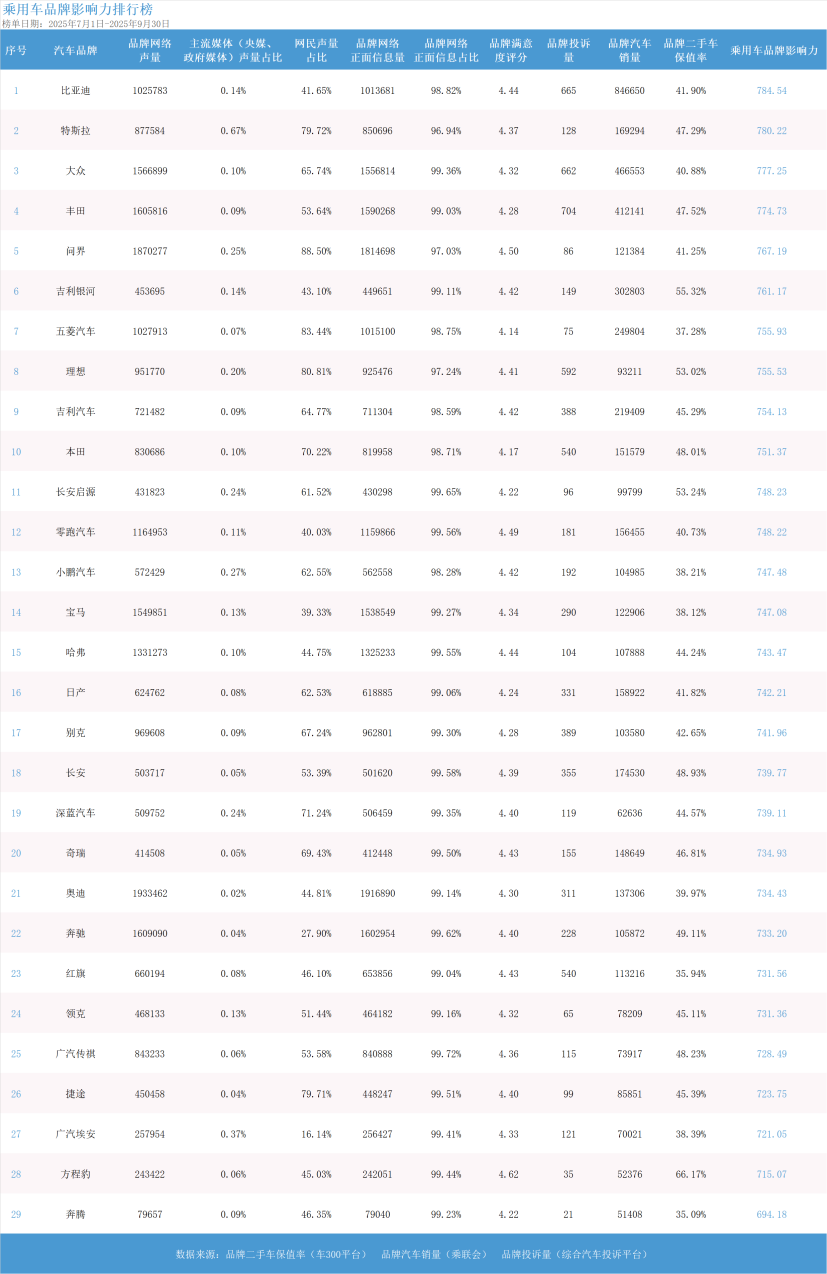
Core Insights - The report indicates a significant evolution in the automotive brand landscape in China, characterized by intense competition in the passenger car market and a stable consolidation in the commercial vehicle market [1][9]. Passenger Car Market - Domestic brands dominate the top ten influential brands, with BYD leading at 784.54 points, followed by Tesla at 780.22 points, showcasing strong sales and positive user reputation [2][3]. - The rise of new entrants is notable, with the AITO brand (问界) achieving fifth place with 767.19 points, driven by the successful launch of the new M7 model [3][9]. - The second tier includes Geely Galaxy at sixth with 761.17 points and Wuling at seventh with 755.93 points, both demonstrating strong market positioning and user engagement [3][9]. Commercial Vehicle Market - The commercial vehicle sector shows a clearer competitive structure, with China FAW leading the heavy truck market at 728.99 points, followed closely by China National Heavy Duty Truck Group and Dongfeng [4][9]. - The light truck market is led by Changan with 718.38 points, followed by JAC and Beiqi Foton, indicating a diversified competitive landscape [7][9]. Brand Influence Metrics - The assessment integrates authoritative production and sales data from the China Association of Automobile Manufacturers and the China Passenger Car Association, along with social media sentiment analysis and vehicle depreciation data [1][9]. - The report emphasizes the importance of brand influence being increasingly reliant on communication volume and user reputation, highlighting a shift from scale competition to lifecycle value competition in the automotive industry [9].



第三季度汽车品牌影响力指数发布:乘用车格局生变 商用车头部稳固
Zheng Quan Ri Bao Wang· 2025-10-26 10:56
Core Insights - The report indicates a significant shift in the automotive brand landscape, highlighting intense evolution in the passenger car market and stable consolidation in the commercial vehicle market [1][5] Passenger Car Market - Domestic brands occupy seven out of the top ten positions in brand influence, with BYD leading at 784.54 points, followed by Tesla at 780.22 points, showcasing strong local brand performance [2][5] - The new player, AITO, made a remarkable entry into the top five with a score of 767.19, reflecting explosive growth in online presence [2] - Traditional joint venture brands are facing challenges as they maintain sales but experience high complaint volumes, indicating a decline in user satisfaction compared to local brands [2][5] Commercial Vehicle Market - The commercial vehicle sector shows a clearer competitive landscape, with China FAW leading the heavy truck market at 728.99 points, followed closely by China National Heavy Duty Truck and Dongfeng [3] - In the pickup segment, Great Wall maintains a strong lead with 699.74 points, while Changan and SAIC Maxus follow [3] - The light truck market is highly competitive, with Changan leading at 718.38 points, and JAC and Beiqi Foton closely trailing [3] Brand Influence and User Engagement - The report emphasizes the importance of synergy between media presence and user reputation in enhancing brand influence, particularly in the passenger car sector [4] - AITO's rise exemplifies the effective combination of technology, ecosystem, and user satisfaction, supported by a low complaint volume [4] - In the commercial vehicle sector, brand influence is built on reliability and long-term professional credibility, with China FAW showcasing a unique advantage in policy-driven markets [4] Industry Evolution - The third-quarter index indicates a transition in the Chinese automotive industry from scale competition to lifecycle value competition, driven by electrification and intelligence [5] - The focus on brand building has shifted from mere volume growth to a comprehensive competitive strength that includes communication breadth, user reputation, technical capability, and market performance [5]
江铃域虎:从生产工具到生活载体的功能进化 | 头条
第一商用车网· 2025-09-30 01:06
Core Viewpoint - The evolution of the pickup truck, particularly the Jiangling Yuhu, reflects a shift in user demand from a purely commercial vehicle to a versatile model that accommodates both work and lifestyle needs [3][13]. Market Demand Iteration: From Single Function to Multi-Adaptation - The structural changes in the pickup market are driven by upgraded user demands, with private consumption expected to exceed 65% in 2024 due to relaxed policies on urban entry [3]. - Users now expect pickup trucks to serve dual purposes: practical utility for work and comfort for family outings, necessitating strong cargo capacity, stable power output, and fuel efficiency alongside comfort and smart features [3]. Product Evolution Logic: From "Can Meet" to "Well Adapted" - The first-generation Yuhu launched in 2012 began to integrate passenger car comfort into its design, moving beyond just cargo capacity [5]. - The latest Yuhu model features optimized design details for user scenarios, such as improved cargo box opening angles and spacious rear seating for adult passengers [5]. Core Advantages Analysis: Practical Adaptation Based on Scenarios 1. **Power and Economy: Balancing Efficiency and Cost** - The new Yuhu is equipped with a Blue Flame engine, delivering a maximum power of 123 kW and a peak torque of 430 N·m, outperforming competitors [8]. - It achieves a minimum fuel consumption of 7.1L per 100 km, saving approximately 1200 yuan annually for users driving 20,000 km, highlighting its economic significance for commercial users [8]. 2. **Space Design: Balancing Cargo and Passenger Needs** - The long cargo box of the Yuhu has a volume of 1.6 m³, providing superior loading capacity compared to similar models [9]. - The design includes ample legroom and a seat folding feature for flexible storage, enhancing usability for both cargo and passengers [9]. 3. **Smart Configuration: Practicality-Oriented** - The vehicle features a 12.8-inch central control screen and a 7-inch LCD instrument panel, designed for simplicity and ease of use [10]. - It includes a voice interaction system and supports online upgrades, improving user convenience and reducing the risk of unexpected vehicle issues [10]. 4. **Through Performance: Adapting to Complex Road Conditions** - The Yuhu boasts superior approach and departure angles (29° and 25° respectively) and a minimum ground clearance of 235 mm, enhancing its capability on rough terrains [11]. Conclusion - The design of the new Jiangling Yuhu aligns closely with current user demands, serving as an efficient production tool in commercial settings and a practical vehicle for personal use, effectively bridging the gap between work and lifestyle [13].

8月新能源轻客销量收获“4连增”!远程/五菱争冠 江铃/福田翻倍涨 | 头条
第一商用车网· 2025-09-27 13:21
Core Viewpoint - The new energy light commercial vehicle (LCV) market in 2025 is experiencing fluctuations, with a total sales increase of 15% after July, despite two months of year-on-year decline in the first seven months. The penetration rate of new energy vehicles in this segment has exceeded 60%, indicating a strong market presence [1][3][7]. Sales Performance - In August 2025, the domestic new energy LCV market sold 23,500 units, representing a 7% decrease month-on-month but a 2% increase year-on-year. The growth rate compared to the previous month has narrowed by 20 percentage points [3][31]. - From January to August 2025, the cumulative sales of new energy LCVs reached 169,600 units, showing a year-on-year growth of 13%. This cumulative growth rate has decreased by 2 percentage points compared to the post-July figure [9][25]. Market Penetration - The penetration rate of new energy vehicles in the light commercial vehicle market reached 63.48% in August, marking the highest level for 2025. This rate has consistently exceeded 60% for four consecutive months [7][19]. - The overall penetration rate for the first eight months of 2025 was 60.01%, an increase of over 3 percentage points compared to the previous year [7][12]. Regional Insights - In the first eight months of 2025, all 31 provincial-level administrative regions in mainland China registered new energy LCVs, with 26 regions exceeding 1,000 registrations. Guangdong province alone accounted for nearly 30,000 registrations, representing 17.65% of the national total [12][14]. Company Performance - In August 2025, the top-selling companies in the new energy LCV market included Yuan Cheng, which sold 5,626 units, and Wuling, with sales exceeding 5,500 units. The threshold for entering the top ten sales list was 340 units [19][23]. - The market share of major companies showed varied performance, with Wuling leading at 22.60%, followed by Yuan Cheng at 18.71%, and Changan at 12.53%. Notably, companies like Foton and Jiangling saw significant year-on-year growth [29][21]. Future Outlook - The new energy LCV market has experienced a wave of four consecutive months of year-on-year growth, with the potential for continued momentum in the coming months. The industry is closely monitoring whether this growth trend can be sustained [31].


陈晓波挂帅,福特中国整合销售渠道,能否实现品牌突围?
3 6 Ke· 2025-09-25 10:28
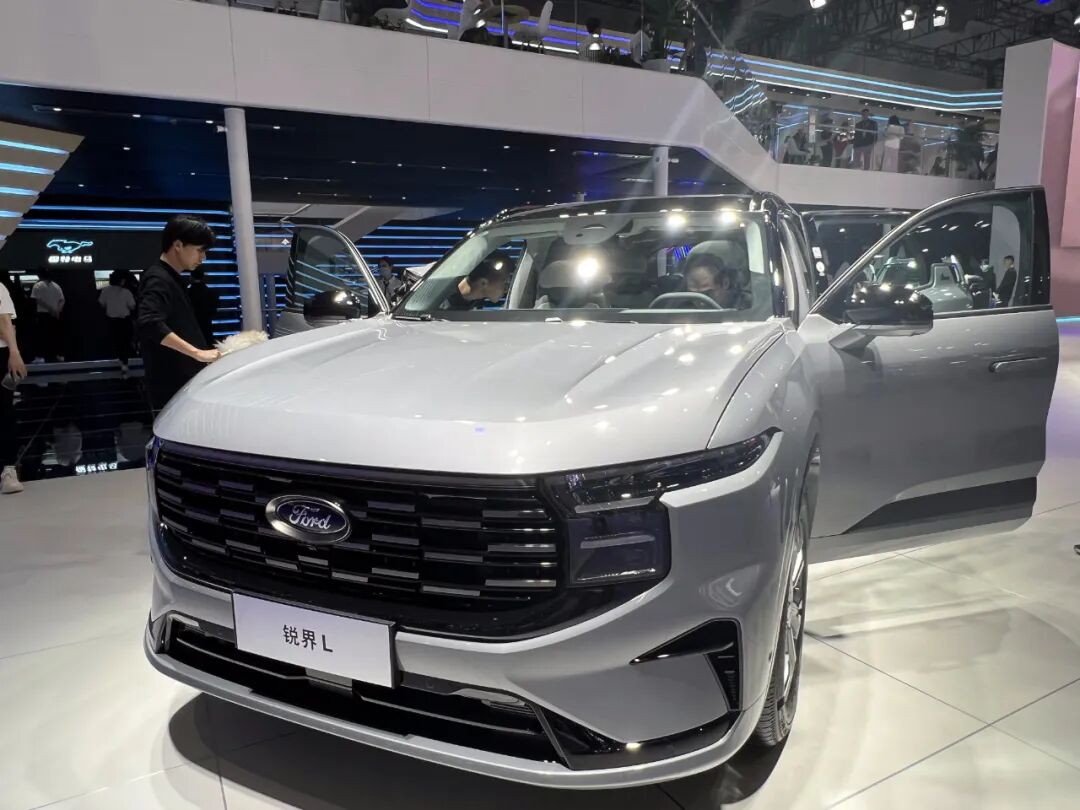
Core Points - Ford China has established a new subsidiary, Ford Automotive Sales and Service (Shanghai) Co., Ltd., to oversee marketing, sales, and after-sales service for Ford passenger cars and pickups in China [2] - Chen Xiaobo has been appointed as the president of the new subsidiary, bringing extensive experience from his previous roles in Ford's joint ventures in China [2] - Jiangling Motors has signed a distribution service contract with Ford Sales Service Company for the distribution of Ford-branded vehicles produced by Jiangling [2] Summary by Sections Ford's Strategy in China - The establishment of a unified sales channel aims to enhance Ford's business performance in China, where the company has faced challenges [2] - Ford's sales in China have been significantly impacted by the performance of its joint ventures, particularly Jiangling Ford, which has seen declining sales figures from 48,000 units in 2022 to 39,000 in 2023 and projected 35,000 in 2024 [4] Joint Ventures and Performance - Jiangling Motors has a long-standing partnership with Ford, initially focusing on commercial vehicles and later expanding into passenger cars [3] - Jiangling Ford's revenue has fluctuated, with reported figures of 124 million yuan in 2022, 643 million yuan in 2023, and 5.323 billion yuan in 2024, while net profits have been negative during the same period [4] Long-term Partnerships - Changan Ford, established in 2001, has been a key player in Ford's passenger vehicle segment in China, contributing nearly half of Ford's total sales in the region [6] - Changan Ford achieved profitability in 2024, reporting revenue of 48.33 billion yuan and a net profit of 2.09 billion yuan, a significant turnaround from a loss of 2.06 billion yuan in 2023 [7] Market Position and Future Outlook - Ford's recent restructuring efforts include the formation of a fully-owned subsidiary to streamline sales and service operations, aiming to improve brand image and customer satisfaction [11] - The new strategy includes a focus on core business areas, localizing electric vehicle development, and expanding export operations, with a reported profit of approximately 600 million USD (about 4.27 billion yuan) in 2024 [10][8] - The integration of sales channels is expected to create a more cohesive brand experience for consumers, with plans to establish a unique "Ford Horizon" lifestyle system [12]

个代vs银保!头部险企银保新单增速超70%:合作网点大增,价值率上升,其他公司怎么办?
13个精算师· 2025-09-18 15:19
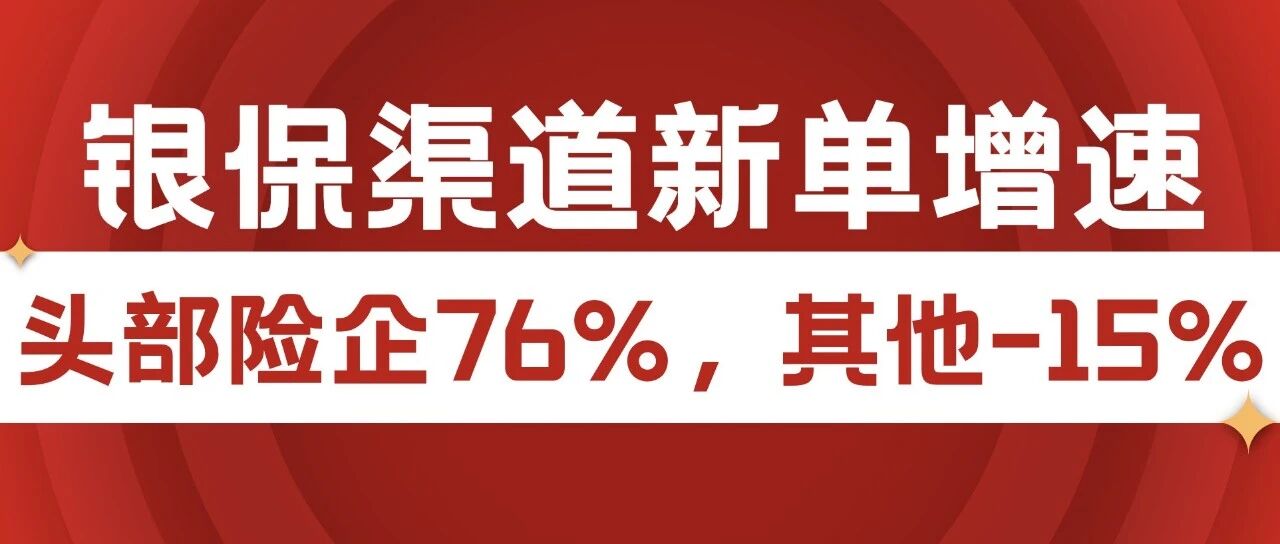
Core Viewpoint - The insurance industry is experiencing a significant recovery in premium growth, primarily driven by the rapid development of the bancassurance channel, which has outpaced other distribution channels like individual agents and brokers [3][4][5]. Group 1: Bancassurance Channel Performance - In the first half of 2025, the bancassurance channel's premium income reached approximately 1 trillion, with a year-on-year growth of about 9%, significantly surpassing the overall industry growth and other channels [7][8]. - The new premium growth rate for the bancassurance channel among leading insurers exceeded 70%, while other channels experienced negative growth [28][31]. - The bancassurance channel has become the largest contributor to premium growth for major insurers, with companies like China Life and New China Insurance reporting new premium growth rates exceeding 100% [18][14]. Group 2: Competitive Landscape - The removal of the "one-to-three" restriction has allowed leading insurers to accelerate strategic partnerships with banks, enhancing their market presence [15][27]. - The competitive environment for smaller insurers has become increasingly challenging, as they must compete not only on product pricing but also on brand influence and reputation against larger firms [30][31]. - The disparity in new premium growth rates is stark, with leading insurers achieving a 76% growth in the bancassurance channel compared to a 15% decline for smaller firms [28][31]. Group 3: Product Strategy and Market Trends - The shift towards participating insurance products is evident, with major insurers like China Life and Taikang reporting that over 50% of their premium income from individual agent channels comes from floating income products [35]. - The focus on high-quality growth is reflected in the increasing new business value rates for leading insurers in the bancassurance channel, indicating a strategic pivot towards more profitable product offerings [33][35]. - The overall trend in the insurance industry is moving towards a higher quality of development, with an emphasis on transforming product offerings to include more dividend-based insurance products [36].



60天账期承诺是否达成?追踪18家上市车企应付账款状况:总额降,账期拉长
Mei Ri Jing Ji Xin Wen· 2025-09-10 10:17
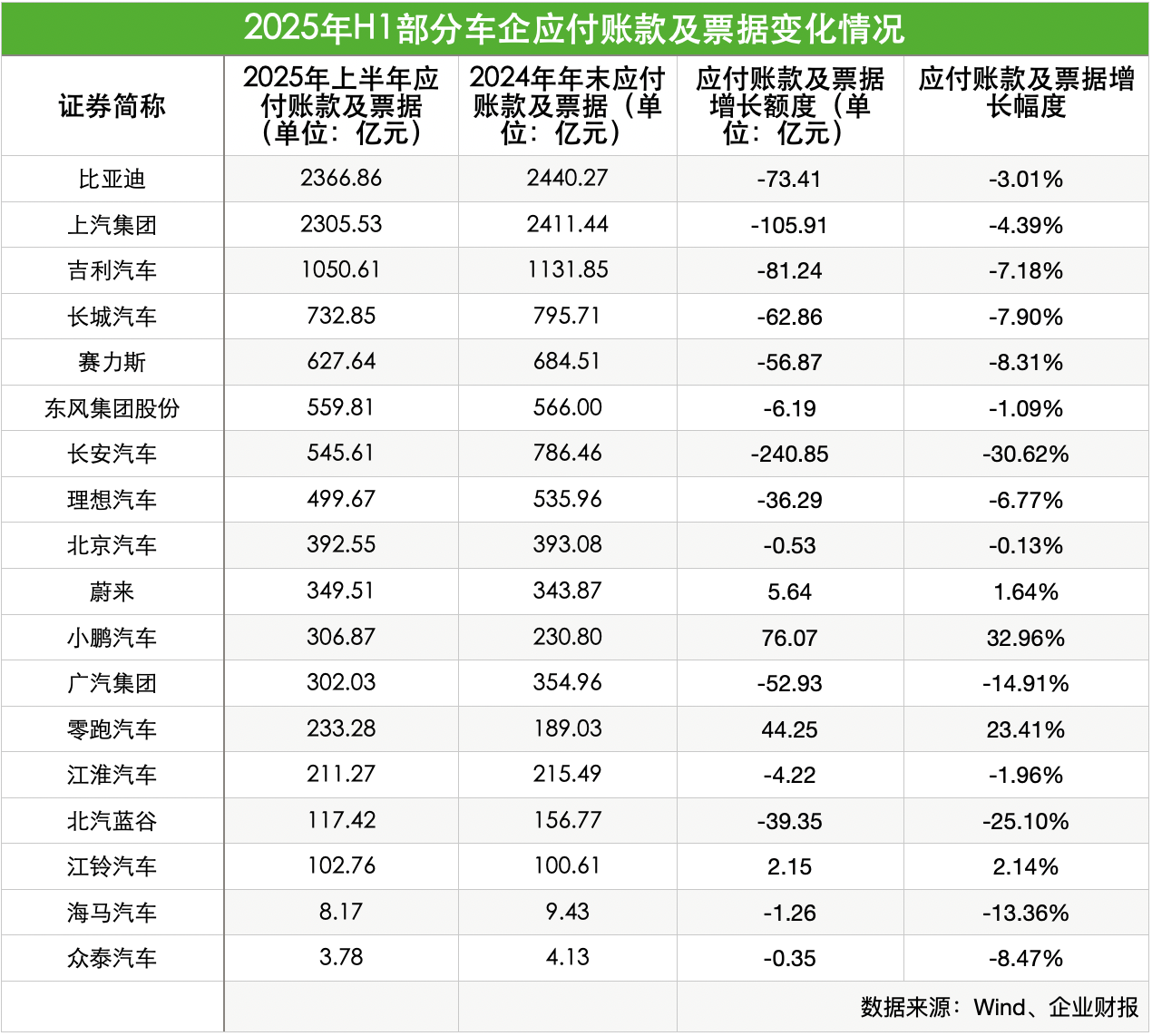
Core Insights - The automotive industry in China is experiencing a trend of "anti-involution," with 17 companies committing to reduce supplier payment terms to within 60 days, aimed at alleviating financial pressure on parts manufacturers [1] - Despite a reduction in total accounts payable and notes to 10,209.03 billion yuan, the average turnover days increased to 192.46 days, indicating a divergence between total amount reduction and extended payment terms [1][2] - BYD, SAIC Motor, and Geely are the top three companies in terms of accounts payable, each exceeding 100 billion yuan [1] Accounts Payable Changes - 14 companies reported a decrease in accounts payable compared to the end of last year, with Changan Automobile, SAIC Motor, and Geely showing the largest reductions of 240.85 billion yuan, 105.91 billion yuan, and 81.24 billion yuan respectively [2] - NIO, Xpeng Motors, and Leap Motor saw increases in accounts payable, with Xpeng Motors rising by 76.07 billion yuan, a 32.96% increase [4] Turnover Days Analysis - Only six companies improved their accounts payable turnover days, with Xpeng Motors achieving the most significant reduction of approximately 63 days, bringing it down to 170 days [5][6] - Companies like SAIC Motor and Changan Automobile also saw improvements, while others like BYD and Ideal Auto experienced increases in turnover days [8] Cash Flow and Payment Terms - Ideal Auto reported a significant increase in cash used in operating activities but a worsening free cash flow, attributed to the adjustment of supplier payment terms to 60 days [9] - The adjustment of payment terms is complex and requires coordination across various departments within companies, posing challenges for timely payments [10][11] Cash Reserves and Coverage - Among 18 companies, only Jiangling Motors and Haima Automobile have cash reserves sufficient to cover their accounts payable [13] - Companies like BYD, Geely, and NIO have cash reserves that fall short of their accounts payable, indicating pressure on short-term liquidity [13]



车企账期观察:18家企业半年延长12天、蔚来和理想超200天,长城资金缺口232亿
Sou Hu Cai Jing· 2025-09-03 05:25
Core Insights - The automotive industry in China is experiencing intensified price wars and a collective commitment from 17 companies to reduce supplier payment terms to no more than 60 days to alleviate cash flow pressures on component manufacturers [2][4][8] Group 1: Industry Overview - The first half of 2025 saw a significant increase in accounts payable turnover days among major automotive companies, with an average of 187.97 days, up from 175.75 days at the end of 2024, indicating a trend of extended payment periods [4][6] - Out of 18 major passenger car manufacturers, 12 experienced an increase in payment terms, while only 6 managed to shorten them, highlighting a broader industry trend towards longer payment cycles [4][5] Group 2: Company-Specific Changes - Among the companies, Xpeng Motors had the most significant reduction in accounts payable turnover days, decreasing by 63 days to 170 days, while Seres saw the largest increase, with a rise of 101 days to 266 days [5][6] - BYD's accounts payable turnover days increased by 15 days to 142 days, while NIO's increased by 23 days to 220 days, reflecting a common trend of extended payment terms across the industry [6][12] Group 3: Cash Flow and Financial Health - The cash reserves of many companies are insufficient to cover their accounts payable, with only Jiangling Motors and Haima Automotive having cash reserves that exceed their payables [10][11] - Companies like BYD and Geely are facing significant cash shortfalls, with BYD having a deficit of 805.86 million and Geely 462.61 million, indicating a critical cash flow challenge in meeting supplier payments [11][12] - The shift to a 60-day payment term has led to increased cash flow pressures, as companies like Li Auto reported a negative free cash flow of 38 million, exacerbating their financial strain [9][10]