
CCB(00939)

Search documents
消费有“贷”动力、外贸有“金”动能,深圳建行多维发力助深圳稳增长
2 1 Shi Ji Jing Ji Bao Dao· 2025-12-08 09:53
Core Viewpoint - China is accelerating the construction of a new development pattern that focuses on domestic circulation while promoting international circulation, with a strong emphasis on boosting consumption and stabilizing foreign trade by 2025 [1] Group 1: Foreign Trade Support - Shenzhen has led the nation in foreign trade exports for 32 consecutive years, with "Shenzhen Manufacturing" gaining popularity in international markets [1] - In the first ten months of 2025, Shenzhen's banks issued new loans to foreign trade enterprises amounting to 763.57 billion yuan, a year-on-year increase of 9.83% [1] - The China Construction Bank Shenzhen Branch has implemented a comprehensive service plan combining domestic and foreign trade insurance to support local enterprises, facilitating 1.5 billion yuan in financing for a key renewable energy company [2] - The bank provided international settlement services worth 106 billion USD, a 16% increase year-on-year, and trade financing support of 34.3 billion yuan, up 44% [2] Group 2: Financial Technology and Innovation - The bank has expanded its policy pilot programs, providing trade foreign exchange settlement services to 128 quality enterprises, with service numbers increasing by over 12% [3] - The application of financial technology has improved cross-border payment experiences, reducing the average remittance time for cross-border RMB payments to real-time [3] - The bank has promoted cross-border supply chain financing, with over 5.7 billion yuan disbursed in the first ten months of 2025, a 171% increase year-on-year [4] Group 3: Consumer Promotion Measures - Shenzhen's retail sales of consumer goods have exceeded one trillion yuan for two consecutive years, with loans in the service sectors reaching 207.996 billion yuan, a 2.04% increase [5] - The bank has implemented five measures to promote consumer spending, including targeted installment services for home decoration and vehicle purchases, with over 5 billion yuan in credit card installment services provided [5] - The bank has optimized personal consumption loan policies, reducing average loan interest rates by over 30 basis points and serving over 400,000 consumer loan clients with support exceeding 30 billion yuan, a 21% increase [6]
消费有“贷”动力、外贸有“金”动能,深圳建行多维发力助深圳稳增长
21世纪经济报道· 2025-12-08 09:50
Core Viewpoint - The article emphasizes the importance of enhancing domestic consumption and stabilizing foreign trade as key priorities for Shenzhen's economic strategy, with a focus on financial support to achieve these goals [1][2]. Group 1: Foreign Trade Support - Shenzhen has maintained its position as a leading city in foreign trade for 32 consecutive years, with significant growth in "Shenzhen Intelligent Manufacturing" in international markets [1]. - In the first ten months of 2025, Shenzhen's banks issued new loans to foreign trade enterprises amounting to 76.36 billion yuan, a year-on-year increase of 9.83% [1]. - Shenzhen Construction Bank (Shenzhen CCB) has implemented a comprehensive service plan combining domestic and foreign trade insurance to support local enterprises, facilitating 1.5 billion yuan in financing for a key renewable energy company [3]. Group 2: Financial Services and Innovations - Shenzhen CCB has provided international settlement services worth 106 billion USD, a 16% increase year-on-year, and trade financing support of 34.3 billion yuan, up 44% [3]. - The bank has expanded its policy pilot programs, serving 128 quality enterprises with nearly 30,000 transactions in trade foreign exchange services, reflecting a growth of over 12% in the number of served enterprises [4]. - The application of financial technology has improved cross-border payment experiences, reducing transaction times significantly for businesses [4]. Group 3: Consumer Support Initiatives - Shenzhen's retail sales have exceeded one trillion yuan for two consecutive years, with a loan balance in the service sector reaching 207.99 billion yuan, a year-on-year increase of 2.04% [7]. - Shenzhen CCB has launched five measures to promote consumer spending, including targeted credit card installment services that have provided over 5 billion yuan in financing, particularly in the green automotive sector [9]. - The bank has also optimized personal consumption loan policies, reducing average interest rates by over 30 basis points and serving over 400,000 customers with loan support exceeding 30 billion yuan, a 21% increase [10].


中国建设银行、东方汇理银行、荷兰安智银行等境内外机构协同助力外币三方回购业务发展
Xin Lang Cai Jing· 2025-12-08 09:49
来源:CFETSFX 2025年9月以来,中国建设银行作为市场重要参与机构,与东方汇理银行、荷兰安智银行等境外机构积 极开展以境外主权债券篮子为抵押品的外币三方回购交易,截至目前累计成交6.1亿美元,为业务常态 化开展与市场稳健发展提供了有力支撑。外汇交易中心全面接轨国际市场惯例,连接明讯银行等托管机 构,为跨境外币融资业务高质量发展提供了新的实践路径。 自外币回购业务上线以来,外汇交易中心与境内外基础设施、参与机构积极合作探索,持续拓展业务模 式、优化交易机制并完善配套服务。目前,外币三方回购业务已全面接轨国际惯例,采用买断式过户模 式,在简化交易流程、提升交易效率的同时,通过抵押品所有权的转移切实保障交易安全,并获得专业 便捷的自动选券和存续期管理服务。外币三方回购业务的平稳运行与持续深化,不仅有效盘活了境内机 构的境外资产、拓宽外币流动性管理渠道,更通过畅通跨境资金流动进一步吸引与汇聚全球金融资源, 为服务金融市场高水平对外开放与上海国际金融中心建设注入新动力。 2025年9月以来,中国建设银行作为市场重要参与机构,与东方汇理银行、荷兰安智银行等境外机构积 极开展以境外主权债券篮子为抵押品的外币三方回购 ...

港股8日跌1.23% 收报25765.36点
Xin Hua Wang· 2025-12-08 09:23
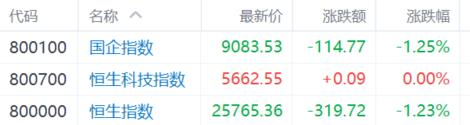
Core Points - The Hang Seng Index fell by 319.72 points, a decrease of 1.23%, closing at 25,765.36 points [1] - The total turnover on the main board was HKD 206.23 billion [1] - The Hang Seng China Enterprises Index dropped by 114.77 points, closing at 9,083.53 points, a decline of 1.25% [1] - The Hang Seng Tech Index saw a slight increase of 0.09 points, closing at 5,662.55 points, with a change of 0.0% [1] Blue Chip Stocks - Tencent Holdings decreased by 0.82%, closing at HKD 605 [1] - Hong Kong Exchanges and Clearing fell by 0.69%, closing at HKD 404.6 [1] - China Mobile dropped by 1.15%, closing at HKD 86.15 [1] - HSBC Holdings declined by 1.71%, closing at HKD 109.1 [1] Local Hong Kong Stocks - Cheung Kong Holdings fell by 2.16%, closing at HKD 39.92 [1] - Sun Hung Kai Properties decreased by 1.52%, closing at HKD 97.1 [1] - Henderson Land Development dropped by 1.71%, closing at HKD 28.8 [1] Chinese Financial Stocks - Bank of China fell by 2.64%, closing at HKD 4.43 [1] - China Construction Bank decreased by 4.01%, closing at HKD 7.66 [1] - Industrial and Commercial Bank of China dropped by 3.48%, closing at HKD 6.11 [1] - Ping An Insurance increased by 2.15%, closing at HKD 61.75 [1] - China Life Insurance fell by 0.57%, closing at HKD 28.06 [1] Oil and Petrochemical Stocks - China Petroleum & Chemical Corporation decreased by 0.22%, closing at HKD 4.52 [1] - PetroChina fell by 1.7%, closing at HKD 8.68 [1] - CNOOC dropped by 2.26%, closing at HKD 21.58 [1]






港股收盘 | 恒指收跌1.23% 券商、芯片股等逆市上涨 百度集团-SW领升蓝筹
Zhi Tong Cai Jing· 2025-12-08 08:51
Market Overview - The Hong Kong stock market faced pressure, with the Hang Seng Index dropping over 1%, closing at 25,965.36 points, down 1.23% or 319.72 points, with a total turnover of HKD 2,062.3 million [1] - The Hang Seng China Enterprises Index fell by 1.25% to 9,083.53 points, while the Hang Seng Tech Index remained flat at 5,662.55 points [1] Blue Chip Performance - Baidu Group-SW (09888) led blue-chip stocks, rising 3.45% to HKD 125.8, contributing 8.38 points to the Hang Seng Index [2] - Other notable performers included SMIC (00981) up 2.94%, China Ping An (02318) up 2.15%, while China Construction Bank (00939) fell 4.01%, dragging the index down by 54.39 points [2] Sector Highlights - Large tech stocks generally declined, with Alibaba down over 1% and Tencent down 0.82% [3] - Chinese brokerage stocks rose against the trend, with Huatai Securities (06886) up 5.17% and GF Securities (01776) up 3.1% [3] - The light communication sector saw significant gains, with Huiju Technology rising over 7% [4] - Lithium stocks mostly increased, with Ganfeng Lithium (01772) up 6.95% and CATL (03750) up 3.28% [5] Regulatory Developments - The Chairman of the China Securities Regulatory Commission (CSRC) emphasized the need to accelerate the development of top-tier investment banks and institutions, indicating a potential easing of regulations for quality institutions [4] - The CSRC plans to optimize risk control indicators and moderately open up capital space and leverage limits, which could benefit leading brokerages [4] New Listings and Stock Movements - Two new stocks were listed, with Zhuoyue Ruixin (02687) surging 87.26% and Naxinwei (02676) declining 4.31% [7] - Restructured Energy (02570) faced a significant drop of 27.33% on its first trading day after the lock-up period ended [8] - Silver Pharma-B (02591) saw a decline of 14.32% following its inclusion in the Hong Kong Stock Connect [9] - Sutech (02498) performed well, rising 5.23% after securing a major order from FAW Toyota [10] Pharmaceutical Sector Updates - The National Healthcare Security Administration announced the addition of 114 new drugs to the 2025 National Medical Insurance Drug List, with a success rate of 88%, up from 76% in 2024 [6]


港股收盘(12.08) | 恒指收跌1.23% 券商、芯片股等逆市上涨 百度集团-SW(09888)领升蓝筹
智通财经网· 2025-12-08 08:40
Market Overview - The Hong Kong stock market faced pressure, with the Hang Seng Index dropping over 1%, closing at 25,965.36 points, down 1.23% or 319.72 points, with a total turnover of HKD 206.23 billion [1] - The Hang Seng China Enterprises Index fell by 1.25% to 9,083.53 points, while the Hang Seng Tech Index remained flat at 5,662.55 points [1] Blue Chip Performance - Baidu Group-SW (09888) led blue-chip stocks, rising 3.45% to HKD 125.8, contributing 8.38 points to the Hang Seng Index [2] - Other notable performers included SMIC (00981) up 2.94% and China Ping An (02318) up 2.15%, while China Construction Bank (00939) fell 4.01%, dragging the index down by 54.39 points [2] Sector Highlights - Major technology stocks generally declined, with Alibaba down over 1% and Tencent down 0.82% [3] - Chinese brokerage stocks rose against the trend, with Huatai Securities (06886) up 5.17% and GF Securities (01776) up 3.1% [3][4] - The light communication sector saw significant gains, with Huiju Technology (01729) rising 7.65% [4] - Lithium stocks mostly increased, with Ganfeng Lithium (01772) up 6.95% and CATL (03750) up 3.28% [5] Regulatory Developments - The Chairman of the China Securities Regulatory Commission (CSRC) emphasized the need to accelerate the development of top-tier investment banks and institutions, indicating a potential easing of regulations for quality institutions [4] - The CSRC plans to optimize risk control indicators and open up capital space and leverage limits [4] New Drug Listings - The National Healthcare Security Administration announced the addition of 114 new drugs to the 2025 National Medical Insurance Drug List, with a success rate of 88%, significantly higher than the previous year's 76% [6] New Listings and Stock Movements - New listings included Zhuoyue Ruixin (02687), which surged 87.26% to HKD 126.4, while Naxin Micro (02676) fell 4.31% [7] - Restructured Energy (02570) saw a significant drop of 27.33% on its first trading day after the lock-up period ended [8] - Silver Pharma-B (02591) experienced a decline of 14.32% as it was adjusted into the Hong Kong Stock Connect [9] - Sutech (02498) performed well, rising 5.23% after securing a major contract with FAW Toyota [10]
港股收评:恒指收跌1.23%,再失26000点,中资券商股逆势走高
Ge Long Hui· 2025-12-08 08:37
具体来看: 大型科技股多数呈现下跌行情但总体跌幅较小,腾讯、京东、网易、小米、京东跌幅在1%以内,阿里巴巴、快手、携程控股跌超 1%,百度逆市大涨3.45%。 | 代码 | 名称 | 最新价 | 涨跌额 | 涨跌幅 √ | | --- | --- | --- | --- | --- | | 09888 | 百度集团-SW.) | 125.800 | +4.200 | 3.45% | | 03690 | 美团-W | 99.500 | +0.450 | 0.45% | | 09626 | 時陣時陣-W | 203.600 | -0.200 | -0.10% | | 02015 | 理想汽车-W | 69.650 | -0.250 | -0.36% | | 01810 | 小米集团-W | 42.580 | -0.200 | -0.47% | | 099999 | 网易-5 | 216.800 | -1.200 | -0.55% | | 09618 | 京东集团-SW | 116.200 | -0.800 | -0.68% | | 00700 | 腾讯控股 | 605.000 | -5.000 | -0.82% ...




内银股全线走低 建设银行跌超3% 工商银行跌近3%
Zhi Tong Cai Jing· 2025-12-08 06:27
Group 1 - The banking sector in China is experiencing a decline, with major banks such as China Construction Bank, Industrial and Commercial Bank of China, Bank of China, and China Merchants Bank seeing significant drops in their stock prices, ranging from 1.96% to 3.38% [1] - A report from Zhongyou Securities indicates that a large amount of fixed-term deposits will mature between December and the end of March, leading to a further decline in the risk-free interest rate for residents' savings, which may result in a shift of deposits towards insurance assets [1] - Galaxy Securities notes that the adjustment of risk factors for insurance capital stock investments is expected to attract more long-term funds into the market, potentially benefiting the banking sector with increased capital inflow [1] Group 2 - The report highlights that the fixed asset investment growth in key provinces and cities is likely to improve significantly due to support from new policy financial tools [1] - The upcoming mid-term dividend payouts from the four major banks are anticipated to maintain their strength and timing, with a concentrated dividend window expected in December, enhancing the value of dividends [1] - The impact of Vanke's bond extension is considered an individual event, and the exposure of banks to real estate-related risks is low, suggesting that the quality of assets remains largely controllable, although real estate credit risks still require attention [1]


内银股全线走低 建设银行(00939.HK)跌超3%
Mei Ri Jing Ji Xin Wen· 2025-12-08 06:17
每经AI快讯,内银股全线走低。截至发稿,建设银行(00939.HK)跌3.38%,报7.71港元;工商银行 (01398.HK)跌2.69%,报6.16港元;中国银行(03988.HK)跌2.2%,报4.45港元;招商银行(03968.HK)跌 1.96%,报52.65港元。 ...

港股异动 | 内银股全线走低 建设银行(00939)跌超3% 工商银行(01398)跌近3%
智通财经网· 2025-12-08 06:15
Core Viewpoint - The banking sector in China is experiencing a decline, with major banks' stock prices falling due to upcoming maturity of a large number of fixed-term deposits and a potential shift of residents' savings towards insurance assets [1][1]. Group 1: Stock Performance - All major Chinese banks' stocks are down, with China Construction Bank (00939) falling by 3.38% to HKD 7.71, Industrial and Commercial Bank of China (01398) down 2.69% to HKD 6.16, Bank of China (03988) down 2.2% to HKD 4.45, and China Merchants Bank (03968) down 1.96% to HKD 52.65 [1][1][1]. Group 2: Economic Outlook - A report from Zhongyou Securities indicates that from December to the end of March, a significant amount of fixed-term deposits will mature, leading to a further decline in the risk-free interest rate for residents' savings [1][1]. - The report suggests that fixed asset investment growth in key provinces and cities is expected to improve significantly, supported by new policy financial tools [1][1]. Group 3: Investment Trends - Galaxy Securities notes that the risk factors for insurance capital's stock investments have been lowered, which is expected to attract more medium- to long-term funds into the market, benefiting the banking sector [1][1]. - The upcoming mid-term dividend payouts from the four major banks are anticipated to be substantial, with a concentrated dividend window expected in December, highlighting the value of dividends [1][1].