LENOVO GROUP(00992)

Search documents
IDC前瞻2026中国智能终端市场:联想等AI终端企业将迎来爆发
Zhi Tong Cai Jing· 2025-11-12 11:45
Core Insights - The article emphasizes that the Chinese smart terminal market is entering an AI-native era, where AI will reshape core values and interaction methods of terminals, driving deep innovation in ecosystems, scenarios, and categories, thus becoming a core engine for economic transformation and industrial upgrading [1] Industry Overview - IDC predicts that by 2026, the shipment volume of smart terminals in China will exceed 900 million units, with traditional AI terminal penetration rate expected to surpass 93% by 2027, reflecting a 4% year-on-year growth [2][3] - The transition from demographic dividends to "AI dividends" positions smart terminals as crucial carriers of new productive forces, supported by policies enhancing AI, computing power, and data element layouts [2] Company Positioning - Lenovo has established a strong competitive barrier in the AI terminal sector, leading the global PC market with a shipment of 19.4 million units and a market share of 25.5% in Q3 2025 [3] - Lenovo's AI PC business continues to lead globally, supported by its unique AI-native technology system and strong competitiveness in both consumer and commercial sectors [3] Product Innovations - Lenovo's enterprise-level super intelligent agent, launched in May 2025, has generated revenue of 1.89 billion yuan, supporting over 1 million interactions daily and significantly improving user engagement and order conversion rates [4] - The Tianxi personal super intelligent agent enhances user experience by providing proactive services and seamless collaboration across multiple devices, aligning with the trend of emotional support in human-computer interaction [5] Market Trends - The demand for AI terminals is expected to drive significant growth in the Chinese smart service robot market, projected to grow at a rate of 54% by 2026 [6] - Lenovo's global and localized production strategies are effectively addressing market demands, with significant revenue growth in the Asia-Pacific and Europe-Middle East-Africa regions [6] Future Outlook - IDC highlights that the core competitiveness of AI-native terminals will be defined by natural interaction, diverse forms, and scenario-based solutions, which Lenovo is well-positioned to leverage through its hybrid AI strategy [9] - As the AI-native era accelerates, Lenovo's AI terminal business is expected to continue leading the market, serving as a benchmark for Chinese smart terminal companies expanding globally [9]

IDC发布2026年中国智能终端市场十大洞察,谁将成为最大赢家?
Ge Long Hui· 2025-11-12 11:14
Core Insights - The article emphasizes that the Chinese smart terminal market is entering an AI-native era, where AI will reshape core values and interaction methods, driving deep innovation across ecosystems, scenarios, and categories, becoming a key engine for economic transformation and industrial upgrading [1][3]. Industry Trends - IDC predicts that by 2026, the shipment volume of smart terminals in China will exceed 900 million units, with traditional AI terminal penetration expected to surpass 93% by 2027, reflecting a 4% year-on-year growth [3]. - The transition from demographic dividends to "AI dividends" positions smart terminals as crucial carriers of new productive forces [3]. - The integration of AI with cutting-edge technologies like embodied intelligence, quantum technology, and 6G will drive the emergence of new economic models and innovations [3]. Company Performance - Lenovo has established a strong foothold in the AI terminal market, leading the global PC market with a shipment of 19.4 million units in Q3 2025, capturing a market share of 25.5% [4]. - Lenovo's AI PC business continues to lead globally, supported by its unique AI-native technology system and strong competitiveness in both consumer and commercial sectors [4]. Product Innovations - Lenovo's enterprise-level super intelligent agent, launched in May 2025, has generated revenue of 1.89 billion yuan, supporting over 1 million interactions daily and significantly improving user engagement and order conversion rates [5]. - The company is also focusing on emotional interaction, with over 40% of users expecting smart terminals to provide emotional support, shifting from function-oriented to understanding-oriented interactions [7]. Global and Local Strategies - Lenovo's global strategy includes a distributed manufacturing network across 11 countries, enhancing local delivery and reducing trade barriers, which has led to significant revenue growth in overseas markets [9]. - The company is exploring new terminal forms and vertical scenarios, such as AI notebooks and personalized learning agents, to capture growth in the education sector [10]. Supply Chain and Efficiency - Lenovo's AI-driven supply chain management has improved initial failure rates by 45% over five years, showcasing the effectiveness of its innovative quality management practices [12]. - The integration of AI across the entire value chain has led to enhanced marketing, sales, and service efficiencies, with significant improvements in customer engagement and service response times [12]. Competitive Landscape - IDC highlights that the core competitiveness of AI-native terminals will be defined by natural interaction, diverse forms, and scenario-based solutions, which Lenovo is addressing through its hybrid AI strategy [13]. - As the AI-native era accelerates, Lenovo's AI terminal business is expected to continue leading the market, setting a benchmark for Chinese smart terminal companies on a global scale [13].
IDC前瞻2026中国智能终端市场:联想(00992)等AI终端企业将迎来爆发
智通财经网· 2025-11-12 11:13
Core Insights - The article emphasizes that the Chinese smart terminal market is entering an AI-native era, where AI will reshape core values and interaction methods, driving deep innovation across ecosystems, scenarios, and categories, becoming a core engine for economic transformation and industrial upgrading [1][2] Industry Overview - IDC predicts that by 2026, the shipment volume of smart terminals in China will exceed 900 million units, with traditional AI terminal penetration expected to surpass 93% by 2027, reflecting a 4% year-on-year growth [2][3] - The transition from demographic dividends to "AI dividends" positions smart terminals as crucial carriers of new productive forces [2] - The integration of AI, computing power, and data elements, supported by policy, will drive new economic models and innovations, making AI a key tool for enterprises to enhance productivity [2][3] Company Positioning - Lenovo has established a strong competitive barrier in the smart terminal sector, leading the global PC market with a shipment of 19.4 million units and a market share of 25.5% in Q3 2025 [3] - Lenovo's AI PC business continues to lead globally, supported by its unique AI-native technology system and strong competitiveness in both consumer and commercial sectors [3] Product Innovations - Lenovo's enterprise-level super intelligent agent, launched in May 2025, has generated revenue of 1.89 billion yuan, supporting over 1 million interactions daily and significantly improving user engagement and order conversion rates [4] - The Tianxi personal super intelligent agent enhances user experience by providing proactive services and seamless collaboration across multiple devices [5] Market Trends - The demand for AI terminals is expected to drive significant growth in the smart service robot market, with a projected growth rate of 54% by 2026 [6] - Lenovo's global operations leverage a distributed manufacturing network to enhance local delivery and efficiency, significantly reducing delivery times and increasing market competitiveness [6][7] Strategic Initiatives - Lenovo is exploring new terminal forms and vertical scenarios, including AI notebooks and personalized learning agents, to capture growth in the education sector [7] - The company is also enhancing its supply chain efficiency through AI-driven quality management and intelligent supply chain control, leading to a 45% improvement in initial failure rates over five years [8] Competitive Landscape - IDC highlights that the core competitiveness of AI-native terminals will be defined by natural interaction, diverse forms, and scenario-based solutions, which Lenovo is addressing through its hybrid AI strategy [9] - Lenovo's integration of technology innovation, product deployment, ecosystem collaboration, and global capabilities positions it as a benchmark for Chinese smart terminal companies aiming for global expansion [9]
进博联结全球,“中国+N”密码重塑中企“走出去”逻辑
Di Yi Cai Jing· 2025-11-12 09:26
Group 1: Import Expo Highlights - The 8th China International Import Expo (CIIE) concluded on November 10, with intended transaction amounts reaching $83.49 billion, a 4.4% increase from the previous year, setting a new historical high [1] - The expo attracted 4,108 companies from 138 countries and regions, covering an exhibition area of over 367,000 square meters, with a total attendance of 922,000 visitors [1] - Notably, 290 Fortune Global 500 and industry-leading companies participated, with 180 companies attending all eight sessions, showcasing China's strong market appeal [1] Group 2: Globalization and Chinese Enterprises - The CIIE serves as a platform for overseas companies to enter the Chinese market, sharing development dividends while facilitating technology spillover and industrial chain collaboration [2] - Chinese enterprises are at a critical juncture in developing new outbound strategies, with discussions focusing on the "going out" and "going in" approaches during the expo [3] - The transition from a "low-cost export" model to a global perspective is emphasized, requiring Chinese companies to strengthen supply chain resilience and adapt to local regulations [3][4] Group 3: Supply Chain and Localization - The evolution of Chinese enterprises' globalization is marked by a shift from "single trade" to "integrated local sales, R&D, and supply chain" [4] - The choice of regions for expansion has broadened from Southeast Asia to include the Middle East, Africa, and Latin America [4] - The concept of "China + N" is highlighted, where companies like Lenovo have established a global supply chain network with a focus on local operations [5][10] Group 4: Case Studies of Successful Globalization - Lenovo exemplifies a successful global supply chain strategy, with over 75% of its manufacturing capacity located in China and 75% of its revenue generated from overseas markets [10] - The company has developed a unique "self-manufacturing + outsourcing" model, allowing it to maintain competitiveness and market share despite global trade disruptions [6] - Chen Xianggui, a restaurant chain, has successfully entered the European market, focusing on local consumer bases and partnerships to enhance its localization capabilities [7] Group 5: Future Outlook and Economic Integration - The CIIE is positioned as a significant window for global enterprises to connect with China's expanding market opportunities [9] - The resilience of China's supply chain and its role as a global innovation hub are increasingly recognized as competitive advantages [9] - The integration of "Chinese economy" and "Chinese people economy" is expected to enhance national strength and align with the goals of meeting the growing needs of the populace [11]
国办点名AI场景应用,产业落地进入大规模加速期
Cai Fu Zai Xian· 2025-11-12 07:39
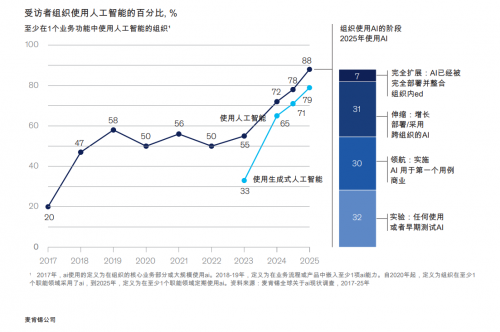
Core Insights - The focus of the AI industry is shifting from technological breakthroughs to practical applications, driven by increasing policy support and market demand [1][5][6] - The release of the recent government policy is expected to accelerate the commercialization of AI technologies and products, marking a transition in capital markets from speculative investments to tangible applications [1][6][9] Industry Development - 2023 is seen as a pivotal year for AI application deployment, with McKinsey predicting that by 2025, inference will account for over 80% of AI computing power consumption, while training will drop below 20% [2] - The AI industry is transitioning from general application layouts to deep exploration of specific scenarios, with leading companies like Lenovo making significant advancements in various sectors such as healthcare [10][16] Market Trends - The demand for AI applications is evolving, with a shift from cloud and platform investments to AI-native solutions that deliver measurable business outcomes [12] - The market for AI technology applications in China is projected to reach approximately 580 billion yuan by 2025, with a compound annual growth rate of over 25% [5] Company Innovations - Lenovo has upgraded its AI capabilities significantly, launching the Tianxi personal super intelligent agent and enhancing its functionalities to better meet user needs [3][13] - The company is adopting a "service-first" model for GPU services, which is expected to reduce deployment costs by 20-30% over three years while improving AI workload performance by up to 30% [15] Investment Opportunities - The recent policy changes are expected to create a favorable environment for companies focusing on AI application scenarios, potentially leading to improved profitability and increased capital interest [6][9] - Companies that align their strategies with the newly defined application scenarios in the policy are likely to attract more investment and achieve higher valuations [9][16]

联想官微疑似内涵华为苹果手机:Air别乱叫
Xi Niu Cai Jing· 2025-11-12 01:26
Core Viewpoint - Lenovo Moto emphasizes the importance of the "Air" designation in smartphones, suggesting that some products using this name do not meet true standards of lightness and thinness [2] Group 1: Product Standards - Lenovo Moto sets a standard for its products, defining "true Air" as having a thickness of less than 6mm and a weight under 160g [2] - The newly launched Moto X70 Air meets these criteria with a thickness of 5.99mm and a weight of 159g [4] - In comparison, Huawei's Mate70 Air has a thickness of 6.6mm and a weight of approximately 208g, while Apple's iPhone Air has a thickness of 5.64mm but weighs 165g [4] Group 2: Market Position - Lenovo has struggled to enter the top ranks of the Chinese smartphone market, remaining in a lower market position for years [4] - Despite a reported 103% year-on-year growth in domestic sales for Q3 2024, Lenovo's market presence remains weak due to a low sales base [4] Group 3: Brand Strategy - Lenovo previously operated multiple brands such as LePhone, VIBE, LeMeng, and ZUK, which led to resource dispersion and internal competition [4] - In 2016-2017, Lenovo consolidated its branding strategy, establishing Moto as the sole brand for Lenovo smartphones while phasing out other proprietary brands [4]

多元算力加速超智融合新进程
Zhong Guo Jing Ji Wang· 2025-11-11 15:16
Core Insights - Lenovo has once again secured the top position in the 2025 China High-Performance Computing (HPC) TOP100 list with 43 systems, marking its 11th consecutive year as the leader in quantity share [1] - The company has been recognized as a "Leading Enterprise in Computing Power" in China, with its "Lenovo Wanquan Large Model Training and Inference Integrated Solution" being selected as a classic case in the 2025 China Computing Power Applications [1] - The China Supercomputing Conference introduced the concept of "Computing Power Economy," focusing on the direction and pathways for the new computing power industry in the era of computing power economy [1] Market Trends - The demand for computing power is shifting from training to inference and post-training stages, with a predicted global spending on generative AI reaching $644 billion by 2025, a 76.4% increase from 2024, with approximately 80% allocated for AI hardware [2] - The "Super Intelligence Fusion" technology is becoming a mainstream trend to address the challenges posed by AI large models, enabling high-end intelligent computing centers to meet diverse computing power needs across various industries [2] Company Performance - Lenovo ranks among the top three in the Chinese AI server market based on sales revenue in the first half of 2025, attributed to its continuous innovation in server hardware and AI computing power optimization [3] - The company has launched three families of servers: data processing computing servers, AI training computing servers, and inference application computing servers, enhancing its AI infrastructure layout [3] Case Studies and Achievements - Lenovo's "Wanquan Large Model Training and Inference Integrated Solution" has achieved significant results in various sectors, including a 30% to 60% improvement in MFU in national-level high-quality AI cluster scenarios [4] - The company has established benchmark cases across multiple industries, including education, manufacturing, and finance, showcasing its successful implementation of AI solutions [4]
联想“双11”活动升级 以AI驱动场景创新
Zheng Quan Ri Bao· 2025-11-11 07:11
Core Insights - The integration of consumption upgrade and digital economy is shifting the focus of "Double 11" competition from price-driven to experience-driven strategies [1] - Lenovo has launched a series of "AI pet fan" initiatives centered around the theme of "Hot AI Upgrade 11 in Place," aiming to enhance user experience and reduce barriers to AI adoption [1][3] - The company is leveraging its Tianxi AI 3.5 system to transition AI from a "smart assistant" to a "collaborative teammate," establishing a significant advantage in the competitive landscape [1][2] Product Strategy - Lenovo has developed a comprehensive AI equipment matrix covering various scenarios, including YOGA series AI PCs for mobile office needs, Think series with integrated Tianxi personal super intelligent agent, and gaming-focused Rescue series [2] - The company is addressing the retail industry's shift from "channel king" to "experience king" by creating a fully integrated experience driven by AI, enhancing customer engagement and satisfaction [2] Market Positioning - Lenovo's initiatives reflect a shift away from traditional price wars, focusing instead on technology empowerment and scene integration to transform "Double 11" into a multi-dimensional "smart consumption ecosystem" [3] - The company aims to deepen its "one body, multiple ends" strategic layout and expand the application boundaries of AI technology in consumer scenarios, reinforcing its commitment to customer-centric innovation [3]
首期规模10亿元,浦东创投参与发起设立联想上海未来产业基金
Xin Lang Cai Jing· 2025-11-11 06:53
Core Insights - The establishment of the Lenovo Shanghai Future Industry Fund has been officially announced, with a first-phase scale of 1 billion yuan [1] - The fund will focus on investments in cutting-edge technology and future industries, particularly in high-growth areas such as edge-side chips, algorithms, computing power, and models [1] - The initiative aims to leverage globally leading technological achievements from research institutions to accelerate the integration of industry, academia, and research, supporting Shanghai's goal of becoming a new hub for the artificial intelligence industry [1]
首期规模10亿,联想上海基金成立
FOFWEEKLY· 2025-11-11 05:40
Core Insights - Lenovo announced the establishment of the Lenovo Shanghai Fund with an initial scale of 1 billion RMB, focusing on cutting-edge technology and future industries to promote innovation through industry-academia-research integration [1] - CEO Yang Yuanqing emphasized the need for personalized and diverse artificial intelligence (AI) solutions that cater to individual and enterprise users, advocating for a shift from single-model AI to a more tailored approach [1] - The vision includes creating a "super intelligent agent" that evolves autonomously and serves as a virtual presence closely related to individuals and businesses, enhancing user experience through collaboration among AI agents [1] Group 1 - The Lenovo Shanghai Fund aims to drive deep investments in frontier technologies and future industries [1] - The fund's establishment was marked by a signing ceremony with representatives from various investment and academic institutions [1] - Yang Yuanqing's keynote speech highlighted the importance of user-centric AI that transcends devices and applications [1] Group 2 - The concept of AI as an "enhanced intelligence" for users requires a shift from traditional models to a more interconnected and collaborative AI ecosystem [1] - The proposed AI framework envisions a network of intelligent agents that can work together, forming a collaborative environment for users [1] - The ultimate goal is to develop AI that acts as a digital twin or surrogate for users, evolving to meet their specific needs [1]