
SINO BIOPHARM(01177)

Search documents
招商国际:创新药出海及国内政策优化 中国医药股有望持续上涨 推荐买入三生制药(01530)等
智通财经网· 2025-09-08 06:40
Core Viewpoint - The Chinese pharmaceutical industry is expected to continue its upward trend due to positive factors such as the overseas expansion of innovative drugs and the optimization of domestic procurement policies [1] Group 1: Industry Outlook - The report from招商国际 indicates that the market has high expectations for the frequency and scale of overseas transactions, leading to a sustained increase in the valuation of innovative drugs [1] - The future growth of innovative drugs is anticipated to be driven primarily by the clinical advancement of authorized pipelines by overseas partners [1] Group 2: Company Recommendations - The report recommends buying shares in the following companies: 三生制药 (01530), 巨子生物 (02367), 药明合联 (02268), 固生堂 (02273), 中国生物制药 (01177), and 信达生物 (01801) [1]


医药行业周报:厚积薄发,继续重点推荐传统Pharma-20250907
Hua Yuan Zheng Quan· 2025-09-07 12:42
Investment Rating - The investment rating for the pharmaceutical industry is "Positive" (maintained) [4] Core Viewpoints - The pharmaceutical sector is experiencing a transformation, with traditional Big Pharma companies accelerating their innovation and research investments, leading to a potential revaluation of their market value [3][8] - The report emphasizes the importance of innovative drugs as a key growth driver, with a focus on companies that have shown significant improvements in their operational trends and clinical pipelines [5][35] Summary by Sections Industry Performance - From September 1 to September 5, the pharmaceutical index rose by 1.40%, outperforming the CSI 300 index by 2.21% [5] - Notable stock performances included Haichen Pharmaceutical (+29%), Changchun High-tech (+24%), and Baihua Pharmaceutical (+21%) [5] Traditional Pharma Revaluation - Since the implementation of drug procurement policies in 2018, traditional Big Pharma has faced revenue and profit pressures, prompting a shift towards innovation and increased R&D spending [8] - Key factors for the improvement in Big Pharma include rapid revenue/profit growth, increased R&D investment, and a decline in sales/administrative expenses [9][16] Innovation as a Growth Engine - The transition from generic to innovative drugs is becoming the core internal growth driver for Big Pharma, with significant increases in innovative revenue and its proportion of total income [22][27] - For instance, Heng Rui Medicine reported innovative drug sales of 95.61 billion RMB in the first half of 2025, accounting for 60.66% of total revenue [22] Clinical Pipeline and Global Competitiveness - The long-term R&D investments have resulted in a robust clinical pipeline for Big Pharma, with many products in advanced stages of development, enhancing their global competitiveness [29] - The report highlights the potential for business development (BD) opportunities abroad, which could serve as a second growth curve for these companies [29] Investment Recommendations - The report suggests focusing on innovative drugs, manufacturing, and companies with low valuations that are positioned to benefit from aging populations and increased healthcare consumption [35] - Specific companies to watch include Heng Rui Medicine, Xinlitai, and China National Pharmaceutical Group [35]




汇丰晋信港股通精选股票:2025年上半年利润1209.02万元 净值增长率23.73%
Sou Hu Cai Jing· 2025-09-04 17:49
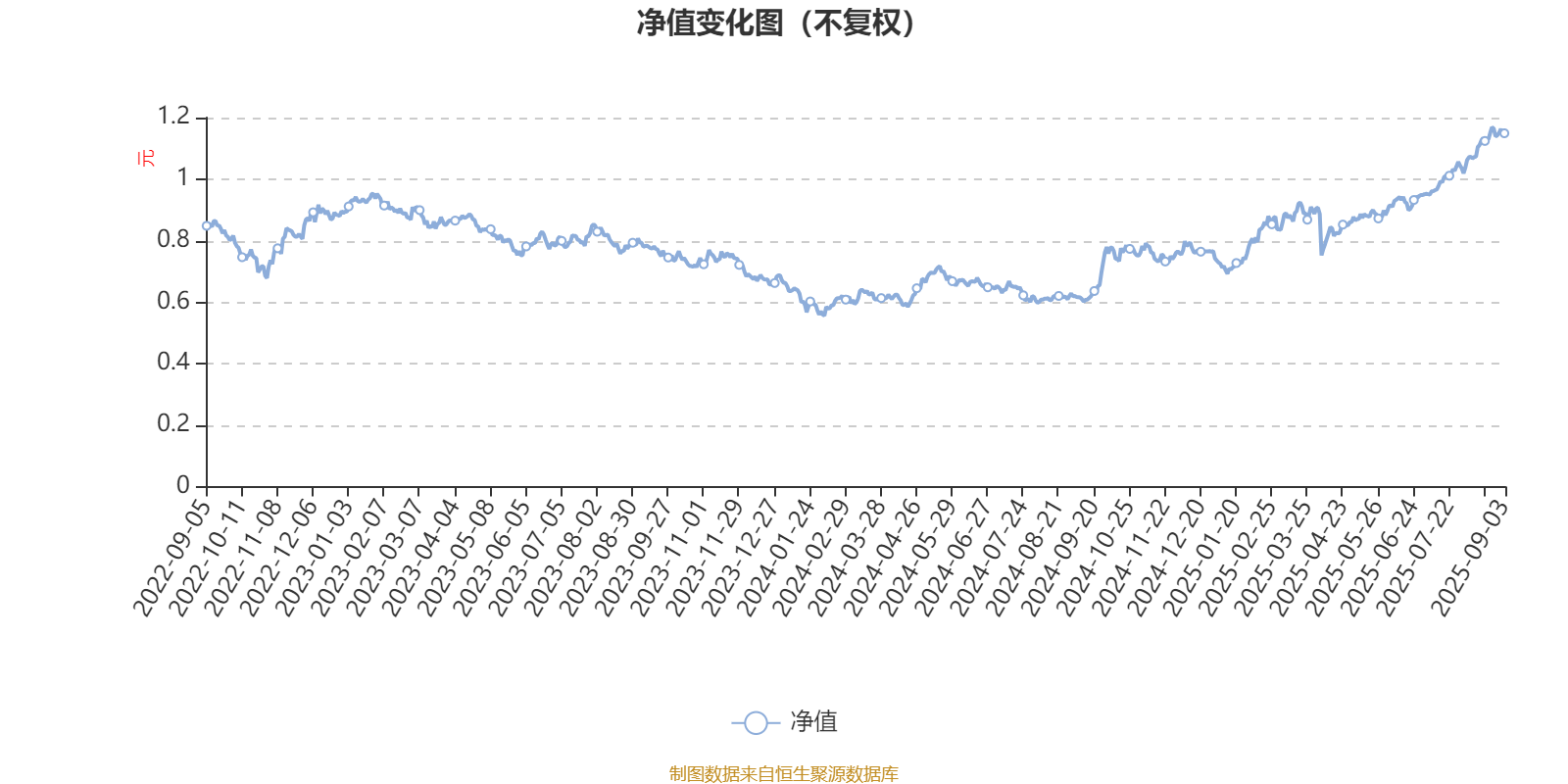
Group 1 - The core viewpoint of the article highlights the performance and outlook of the HSBC Jintrust Hong Kong Stock Connect Selected Fund (006781), which reported a profit of 12.09 million yuan for the first half of 2025, with a weighted average profit per fund share of 0.1802 yuan and a net asset value growth rate of 23.73% [2] - As of September 3, 2025, the fund's unit net value was 1.149 yuan, and the fund manager is Xu Tingquan [2] - The fund's scale reached 61.259 million yuan by the end of the first half of 2025 [31] Group 2 - The fund's recent performance shows a three-month net value growth rate of 28.34%, a six-month growth rate of 37.30%, and a one-year growth rate of 85.25%, ranking it 10th among 110 comparable funds [6] - The fund's weighted average price-to-earnings ratio (TTM) is approximately 9.81 times, significantly lower than the industry average of 28.84 times, indicating a potential undervaluation [10] - The fund's weighted average revenue growth rate (TTM) for the first half of 2025 is 0.13%, and the weighted average net profit growth rate (TTM) is 0.16% [18] Group 3 - The fund's top ten holdings include major companies such as Tencent Holdings, China Biologic Products, and Alibaba Group, reflecting a diversified investment strategy [41] - The fund has maintained a high average stock position of 90.75% over the past three years, compared to the industry average of 88.09% [29] - The fund's recent six-month turnover rate is approximately 106.27%, which is consistently lower than the industry average [38]





港股创新药ETF(159567)跌3.38%,成交额14.27亿元
Xin Lang Cai Jing· 2025-09-04 07:15
Core Viewpoint - The Hong Kong Innovative Drug ETF (159567) experienced a decline of 3.38% on September 4, with a trading volume of 1.427 billion yuan. The fund has shown significant growth in both share volume and total assets since its inception in January 2024 [1][2]. Group 1: Fund Performance - The Hong Kong Innovative Drug ETF (159567) was established on January 3, 2024, with a management fee of 0.50% and a custody fee of 0.10% [1]. - As of September 3, 2024, the fund's latest share volume was 6.668 billion shares, and its total assets reached 6.724 billion yuan. This represents an increase of 1586.48% in share volume and 1679.83% in total assets compared to December 31, 2023, when the share volume was 395 million shares and total assets were 378 million yuan [1]. Group 2: Trading Activity - Over the past 20 trading days, the cumulative trading amount for the Hong Kong Innovative Drug ETF (159567) was 33.138 billion yuan, with an average daily trading amount of 1.657 billion yuan. Since the beginning of the year, the cumulative trading amount over 165 trading days was 185.061 billion yuan, averaging 1.122 billion yuan per day [1]. Group 3: Fund Holdings - The current fund manager of the Hong Kong Innovative Drug ETF (159567) is Ma Jun, who has managed the fund since its inception, achieving a return of 99.52% during this period [2]. - Key holdings in the fund include: - Innovent Biologics (9.52% holding, 2.60 billion yuan market value) - WuXi Biologics (9.47% holding, 2.58 billion yuan market value) - BeiGene (8.73% holding, 2.38 billion yuan market value) - CanSino Biologics (7.62% holding, 2.08 billion yuan market value) - China National Pharmaceutical Group (7.17% holding, 1.96 billion yuan market value) - CSPC Pharmaceutical Group (6.34% holding, 1.73 billion yuan market value) - 3SBio (5.83% holding, 1.59 billion yuan market value) - Hansoh Pharmaceutical (4.54% holding, 1.24 billion yuan market value) - Zai Lab (2.86% holding, 781.055 million yuan market value) [2].

就在今天|2025上海先导产业大会暨第14届医药CEO论坛+第5届人工智能大会
国泰海通证券研究· 2025-09-03 22:29
Core Viewpoint - The article discusses the upcoming 2025 Shanghai Leading Industries and the 14th Pharmaceutical CEO Forum, highlighting the focus on innovation and global expansion of Chinese pharmaceutical companies [1]. Summary by Sections Event Overview - The event will take place on September 4-5, 2025, at the Mandarin Oriental Hotel in Pudong, Shanghai, featuring nearly a hundred executives from listed companies, including chairpersons, CEOs, and industry leaders [4]. Morning Sessions - The morning session on September 4 will include a keynote speech and several roundtable discussions focusing on topics such as the global expansion of Chinese pharmaceutical companies and the search for the next billion-dollar drug [4][5]. - Notable discussions will include: - "From Local Innovation to Global Leadership: The Era of Chinese Pharmaceutical Companies Going Abroad" [4]. - "The Birth of Big Drugs is the Future of Pharmaceuticals: Finding the Next Billion-Dollar Bomb" [4]. Afternoon Sessions - The afternoon will feature discussions on future disease areas and technologies worth exploring for pharmaceutical assets going abroad, as well as the new cycle of Chinese innovative drugs under global competition [5][6]. - Additional topics will cover advancements in drug development platforms and the emerging field of brain-machine interfaces [6]. TMT Forum - The TMT (Technology, Media, and Telecommunications) forum will also take place, discussing AI's impact on various industries, including gaming and healthcare [7][8]. - Key topics will include AI innovations in mobile internet ecosystems and the future of AI in healthcare [7]. Pharmaceutical Sub-Forum - The pharmaceutical sub-forum will address topics such as ADC technology exploration, probiotic delivery systems, and the future development paths of dual antibodies and XDC [8]. - Discussions will also focus on the integration of medical insurance and the innovative practices in building a multi-level medical security system in China [8].


医药生物行业周报:多家药企中期业绩亮眼,关注创新药产业链-20250903
Shanghai Securities· 2025-09-03 10:29
Investment Rating - The industry investment rating is "Overweight (Maintain)" [1] Core Viewpoints - The report highlights that several innovative pharmaceutical companies have shown impressive mid-year performance in 2025, driven by supportive policies, overseas licensing, and product commercialization [5] - The report emphasizes the increasing importance of innovation in the Chinese pharmaceutical industry, with significant opportunities expected as policies are gradually implemented [4] Summary by Sections Industry Overview - The pharmaceutical and biotechnology industry is experiencing growth, with a notable comparison of the industry index against the CSI 300 index, showing a positive trend [2] Company Performance - Heng Rui Pharmaceutical achieved revenue of 15.761 billion yuan in H1 2025, a year-on-year increase of 15.88%, with a net profit of 4.450 billion yuan, up 29.67% [3] - China Biopharmaceutical reported revenue of 17.575 billion yuan in H1 2025, a growth of approximately 11%, with a net profit of 3.389 billion yuan, a significant increase of about 140% [3] - BeiGene recorded revenue of 17.518 billion yuan in H1 2025, a year-on-year growth of 46.03%, turning a profit of 450 million yuan compared to a loss of 2.877 billion yuan in the same period last year [3] - WuXi AppTec demonstrated strong performance with a revenue increase of 20.64% year-on-year, reaching 20.4 billion yuan, and a net profit growth of 101.92% [3] Policy Support - The report notes that recent government policies are encouraging the development of innovative drugs, with measures to enhance R&D support and streamline clinical trial approval processes [4]


中国生物制药(01177):1H25业绩回顾:创新品种稳健放量,收入利润双位数增长
Haitong Securities International· 2025-09-02 08:32
Investment Rating - The report maintains an "Outperform" rating for Sino Biopharmaceutical with a target price of HKD 10.87, reflecting a positive outlook on the company's performance [2][7]. Core Insights - Sino Biopharmaceutical achieved revenue of CNY 17.6 billion in 1H25, representing an 11% year-on-year increase, with a gross profit margin of 82.5% [3][12]. - The company's innovative drug sales reached CNY 7.8 billion, growing by 27% year-on-year, while generic drug revenue was CNY 9.8 billion, showing slight growth [4][13]. - The report highlights the strong growth drivers in oncology and surgery/analgesia segments, with oncology revenue at CNY 6.7 billion (+25% YoY) and surgery/analgesia revenue at CNY 3.1 billion (+20% YoY) [19]. Financial Performance - Revenue forecasts for 2025 and 2026 have been raised to CNY 33.4 billion and CNY 37.6 billion, respectively, due to expected growth in out-licensing revenue [17]. - Net profit attributable to parent shareholders is adjusted to CNY 4.8 billion and CNY 5.1 billion for FY25E and FY26E, respectively [17]. - The report indicates a projected diluted EPS of CNY 0.27 for 2025 and CNY 0.28 for 2026, with a gross profit margin expected to remain stable at 82.5% [10][17]. Clinical Pipeline and Growth Potential - The respiratory portfolio includes multiple candidates in clinical stages, with significant progress in PDE3/4 inhibitors for COPD and TSLP monoclonal antibodies for asthma [4][14]. - Six innovative products are expected to launch in 2025, including key products like TQB3616 (CDK2/4/6 inhibitor) and HER2 inhibitors [15][16]. - The report emphasizes the potential for out-licensing several innovative products in oncology and respiratory pipelines, which could enhance revenue streams [16].
港股创新药ETF(159567)涨2.67%,成交额19.85亿元
Xin Lang Cai Jing· 2025-09-01 12:19
Group 1 - The Hong Kong Innovative Drug ETF (159567) closed with a gain of 2.67% on September 1, with a trading volume of 1.985 billion yuan [1] - The fund was established on January 3, 2024, with a management fee of 0.50% and a custody fee of 0.10% [1] - As of August 29, 2024, the fund's latest share count was 6.686 billion, with a total size of 6.403 billion yuan, reflecting a year-to-date increase of 1591.03% in shares and 1594.74% in size compared to the end of 2023 [1] Group 2 - The current fund manager is Ma Jun, who has managed the fund since its inception, achieving a return of 91.54% during the tenure [2] - The top holdings of the fund include companies such as Innovent Biologics, WuXi Biologics, BeiGene, and others, with significant weightings in the portfolio [2] - The fund's liquidity is strong, with a cumulative trading amount of 34.181 billion yuan over the last 20 trading days, averaging 1.709 billion yuan per day [1]
智通港股52周新高、新低统计|9月1日
智通财经网· 2025-09-01 08:42
Summary of Key Points Core Viewpoint - As of September 1, a total of 110 stocks reached their 52-week highs, with notable performances from Hejia Holdings (33.33%), International Commercial Settlement (30.00%), and Xinjiang Xinmin Mining (24.16%) [1]. 52-Week Highs - Hejia Holdings (00704) closed at 0.217 with a peak of 0.280, achieving a high rate of 33.33% [1]. - International Commercial Settlement (00147) reached a closing price of 0.430 and a high of 0.455, marking a 30.00% increase [1]. - Xinjiang Xinmin Mining (03833) had a closing price of 1.770 and a peak of 1.850, resulting in a 24.16% high rate [1]. - Other notable stocks include: - Shuoao International (02336) at 22.38% [1] - Sanleaf Bio-B (02197) at 16.00% [1] - Wanka Yilian (01762) at 13.08% [1] 52-Week Lows - INTL Genius (00033) recorded a low rate of -14.89% with a closing price of 0.410 [3]. - Junan Holdings (01559) saw a decline of -14.10%, closing at 0.069 [3]. - Other significant declines include: - Kuangshi Fragrance (01925) at -8.41% [3] - Baida Group Holdings (08179) at -8.33% [3] - Shimao Group (00813) at -7.58% [3]


港股异动 | 医药股再度走强 上半年药企业绩整体表现稳健 机构看好创新药长期向好逻辑
Zhi Tong Cai Jing· 2025-09-01 06:38
Group 1 - Pharmaceutical stocks in Hong Kong have shown strong performance, with notable gains in companies such as 加科思-B (up 23.18%), 三叶草生物-B (up 22.09%), and others [1] - The overall performance of Hong Kong pharmaceutical companies in the first half of the year has been robust, with 恒瑞医药 achieving record high revenue and profit, and 翰森制药 exceeding revenue expectations [1] - Upcoming major conferences, including the World Lung Cancer Conference (WCLC) and the European Society for Medical Oncology (ESMO), will showcase research results from innovative domestic drugs [1] Group 2 - 海通国际 maintains a positive outlook on Hong Kong pharmaceutical companies due to their stable cash flow, rich R&D pipelines, and normalizing external licensing revenues [2] - The recent slight pullback in the Hong Kong pharmaceutical sector is attributed to rapid fund rotation, with expectations of short-term fluctuations [2] - The long-term value reassessment logic in the pharmaceutical industry remains unchanged, supported by the engineer dividend and a rich catalyst environment in the innovative drug industry [2]