BYD(01211)

Search documents
港股收盘丨恒指涨0.31% 哔哩哔哩涨逾5%



Di Yi Cai Jing· 2026-02-11 10:16
Core Viewpoint - The Hang Seng Index rose by 0.31%, while the Hang Seng Tech Index increased by 0.9% [1] Group 1: Company Performance - Bilibili saw an increase of over 5% in its stock price [1] - Tencent Music, Xiaomi Group, and Kingdee International each rose by over 4% [1] - BYD Company, WuXi Biologics, and New Oriental Education experienced gains of over 3% [1] Group 2: Company Declines - Pop Mart International fell by over 5% [1] - China Life Insurance declined by nearly 4% [1]
中国汽车动力电池产业创新联盟:1月我国动力和储能电池合计产量为168.0GWh 环比下降16.7% 同比增长55.9%
Zhi Tong Cai Jing· 2026-02-11 09:02
Group 1: Production Data - In January 2026, the total production of power and energy storage batteries in China was 168.0 GWh, a month-on-month decrease of 16.7% but a year-on-year increase of 55.9% [1][6]. - The production of ternary batteries was 31.3 GWh, accounting for 18.6% of total production, with a month-on-month decrease of 23.1% and a year-on-year increase of 51.1% [13]. - The production of lithium iron phosphate batteries was 136.7 GWh, making up 81.3% of total production, with a month-on-month decrease of 14.8% and a year-on-year increase of 57.1% [13]. Group 2: Sales Data - In January 2026, the total sales of power and energy storage batteries in China reached 148.8 GWh, a month-on-month decrease of 25.4% but a year-on-year increase of 85.1% [2][14]. - Power battery sales were 102.7 GWh, accounting for 69.0% of total sales, with a month-on-month decrease of 28.6% and a year-on-year increase of 63.2% [2][18]. - Energy storage battery sales were 46.1 GWh, making up 31.0% of total sales, with a month-on-month decrease of 17.0% and a year-on-year increase of 164.0% [2][19]. Group 3: Export Data - In January 2026, the total export of power and energy storage batteries was 24.1 GWh, a month-on-month decrease of 26.0% but a year-on-year increase of 38.3%, accounting for 16.2% of total sales [2][22]. - Power battery exports were 17.7 GWh, representing 73.3% of total exports, with a month-on-month decrease of 7.1% and a year-on-year increase of 59.3% [2][24]. - Energy storage battery exports were 6.4 GWh, accounting for 26.7% of total exports, with a month-on-month decrease of 52.6% and a year-on-year increase of 1.4% [2][26]. Group 4: Installation Data - The domestic installation of power batteries in January 2026 was 42.0 GWh, a month-on-month decrease of 57.2% but a year-on-year increase of 8.4% [3][40]. - Ternary battery installations were 9.4 GWh, accounting for 22.3% of total installations, with a month-on-month decrease of 48.6% and a year-on-year increase of 9.6% [3][44]. - Lithium iron phosphate battery installations were 32.7 GWh, making up 77.7% of total installations, with a month-on-month decrease of 59.1% and a year-on-year increase of 8.1% [3][44]. Group 5: Key Material Demand - In January 2026, the demand for key materials for power and energy storage batteries included 63,000 tons of ternary materials and 342,000 tons of lithium iron phosphate materials [64][65]. - The demand for negative electrode materials was 235,000 tons, while the demand for separators was 3.36 billion square meters [64]. - The demand for electrolyte for ternary batteries was 28,000 tons, and for lithium iron phosphate batteries, it was 205,000 tons [64][65].





反超阿根廷!中国成为巴西最大汽车进口来源国
Guan Cha Zhe Wang· 2026-02-11 08:19
Core Insights - Chinese automotive companies have become the largest car importers in Brazil, surpassing Argentina for the first time in over 30 years, marking a significant shift in the market dynamics [2] - The growth of Chinese brands in Brazil is part of a broader global strategy rather than an over-concentration on a single market [4] Group 1: Market Performance - In January, China exported 16,800 vehicles to Brazil, while Argentina exported 13,400 vehicles, indicating a notable increase in Chinese market share [2] - The export value of Chinese automobiles to Brazil surged to $375 million in January, more than ten times the amount from a year earlier, accounting for approximately 65% of Brazil's total automotive import value [2] - Despite the rise of Chinese brands, Brazil's overall automotive production decreased by 12% year-on-year, and sales saw a slight decline [4] Group 2: Strategic Developments - Chinese companies like Great Wall Motors and BYD are rapidly expanding in Brazil by initially importing vehicles and subsequently establishing local assembly operations [2] - BYD plans to invest 5.5 billion Brazilian Reais (approximately $1.06 billion) to convert a Ford plant in Bahia into a production base, initially using a semi-knocked down (SKD) assembly model [3] - The Brazilian Automotive Manufacturers Association (Anfavea) has criticized the simplified assembly model for creating fewer jobs compared to full manufacturing and has welcomed the government's decision to not extend the tax exemption on imported automotive parts [3] Group 3: Industry Challenges - The sales of new energy vehicles in Brazil reached a record high of 16.8%, but only about 35% of these vehicles are produced locally [4] - The Brazilian automotive industry faces challenges such as rising financing costs and tightened credit, which are impacting various market segments, including heavy trucks [4] - Despite the rapid growth of Chinese brands, Brazil remains the fifth-largest destination for Chinese automotive exports, trailing behind Mexico, Russia, the UK, and the UAE [4]
智通AH统计|2月11日
智通财经网· 2026-02-11 08:19
Group 1 - The article highlights the top three companies with the highest AH premium rates: Northeast Electric (00042) at 831.03%, Beijing Jingcheng Machinery Electric (00187) at 291.45%, and Sinopec Oilfield Service (01033) at 288.17% [1] - The bottom three companies with the lowest AH premium rates are Contemporary Amperex Technology (03750) at -12.59%, WuXi AppTec (02359) at -4.58%, and China Merchants Bank (03968) at -4.48% [1] - The article provides a detailed ranking of the top ten and bottom ten AH stocks based on their premium rates and deviation values, indicating significant disparities in market valuations between H-shares and A-shares [1][2] Group 2 - The deviation values for the top three companies are Beijing Jingcheng Machinery Electric (00187) at 27.77%, Jinju Group (02009) at 19.35%, and Kai Sheng New Energy (01108) at 16.80% [1] - The bottom three companies with the most negative deviation values are Junda Co., Ltd. (02865) at -60.53%, Chenming Paper (01812) at -32.02%, and CNOOC Services (02883) at -31.42% [1][2] - The article emphasizes that the deviation value represents the difference between the current premium rate and the average premium rate over the past 30 days, providing insights into market trends [2]



首次反超福特!比亚迪全球销量跻身前五
Guan Cha Zhe Wang· 2026-02-11 08:19
Core Insights - BYD achieved a historic milestone by entering the top five global automotive groups in 2025 with a total sales volume of 4.602 million vehicles, surpassing Ford, General Motors, Honda, and Nissan [1] - Ford's wholesale sales declined by nearly 2% in the previous year, falling to just below 4.4 million vehicles, despite an increase in domestic sales in the U.S. [1] - Ford reported a net loss of $8.2 billion (approximately 59.04 billion RMB) for the year 2025, influenced by a significant asset impairment charge of $19.5 billion (approximately 140.4 billion RMB) due to its decision to abandon full electrification [1] Group 1 - BYD's sales performance marks the first time a Chinese automotive group has entered the global top five, indicating a significant breakthrough in the industry [1] - Ford's market share has notably declined in Europe and China, contributing to its overall sales drop [1] - The CFO of Ford indicated an unexpected additional tariff cost of $900 million (approximately 6.48 billion RMB) impacting the company's financials [1] Group 2 - Ford's additional tariff expenses were attributed to a change in the tariff exemption plan communicated by the Trump administration, which affected their cost projections [2] - The total tariff-related costs for Ford reached $2 billion (approximately 14.4 billion RMB) for the year, with expectations of similar costs in 2026 [2]

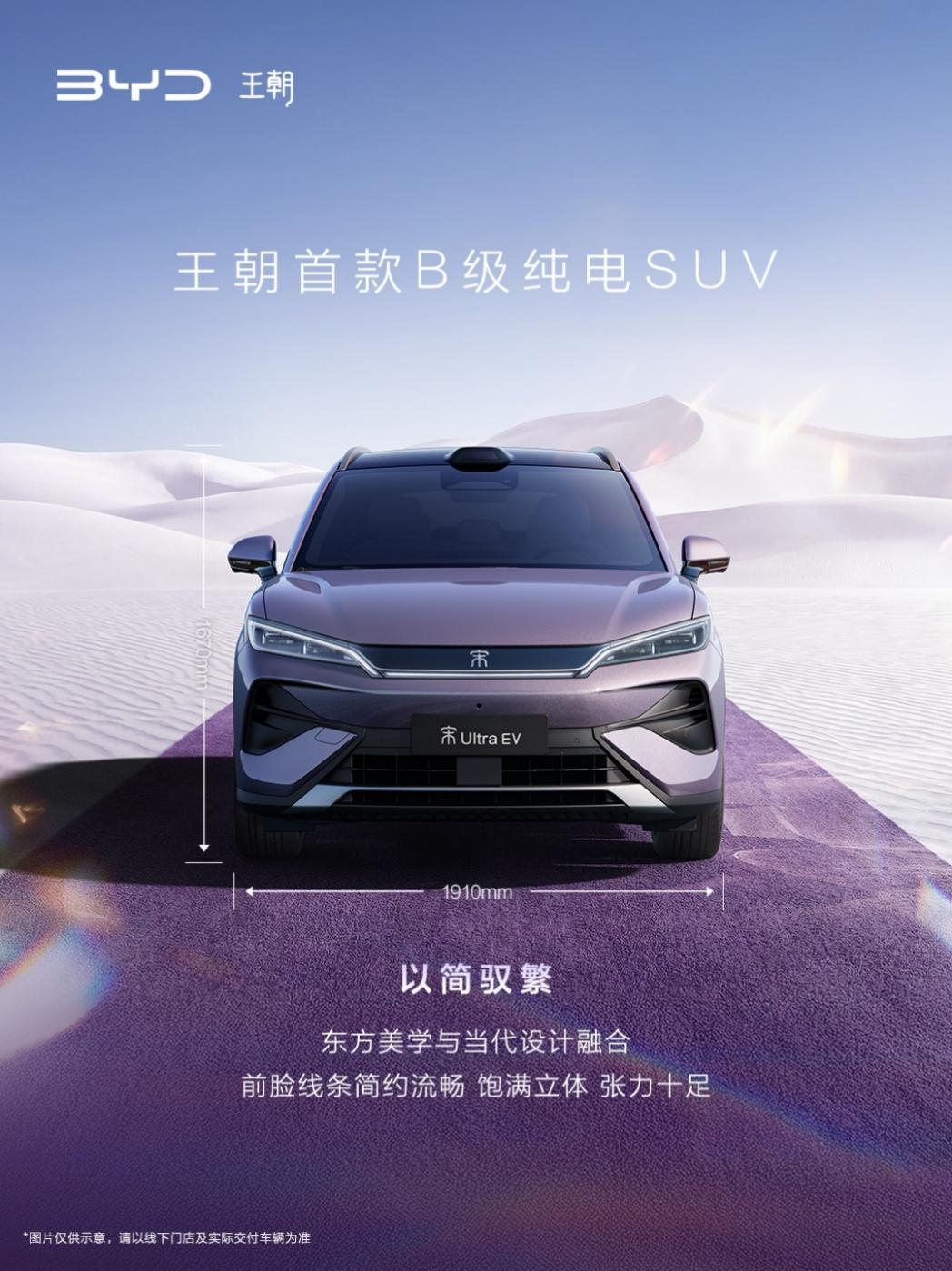
比亚迪宋Ultra EV图片发布 纯电续航达到710km
Zhong Guo Zhi Liang Xin Wen Wang· 2026-02-11 07:28
Group 1 - The Song Ultra EV continues the family design language of BYD's Dynasty series, featuring a front end similar to the Song L DM but with larger side air intakes and various front panel styles [2] - The vehicle has a larger body size compared to the Song L DM-i, measuring 4850mm in length, 1910mm in width, and 1670mm in height, with a wheelbase of 2840mm [3] - It is equipped with laser radar and is expected to support advanced driver assistance in urban and highway settings [3] Group 2 - The Song Ultra EV features a single motor layout with a maximum power output of 270kW and a top speed of 210km/h [6] - The battery pack options include 5.616kWh and 82.732kWh, with corresponding CLTC pure electric ranges of 620km and 710km [6]
首次!福特输给比亚迪
Guan Cha Zhe Wang· 2026-02-11 07:26
Group 1 - BYD's global sales are projected to surpass Ford's for the first time in 2025, with BYD's sales reaching 4.6 million units compared to Ford's approximately 4.4 million units [1] - Toyota continues to lead the global sales rankings for the sixth consecutive year, with a 4.6% increase in sales to 11.3 million units [1] - Ford's wholesale sales declined by nearly 2% last year, and its market share is decreasing in Europe and China due to competition from local manufacturers like BYD, Xiaomi, and Geely [1] Group 2 - Ford has announced a $19.5 billion investment for strategic adjustments, including a partnership with Renault to enhance its electric vehicle offerings in Europe [2] - BYD is expanding aggressively into international markets, with overseas sales expected to exceed 1.05 million units in 2025 and plans to sell 1.3 million vehicles outside China by 2026 [4] - BYD has initiated a lawsuit against the U.S. government regarding tariff policies, marking it as the first Chinese automaker to challenge these tariffs, which could open up significant opportunities for its passenger vehicle business in the U.S. if successful [5]
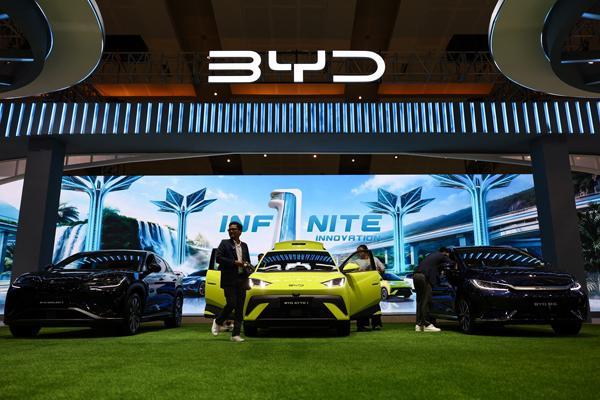
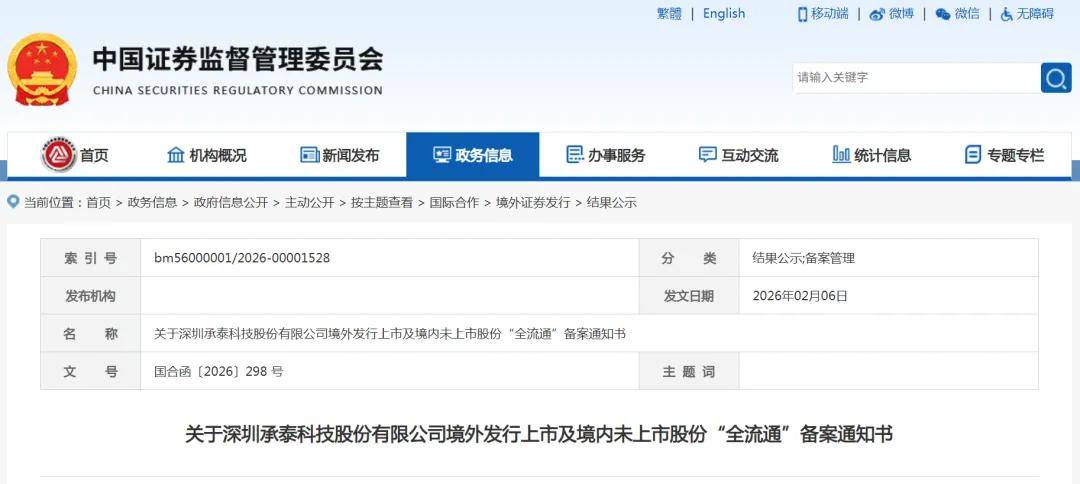
承泰科技完成港股上市备案,冲击“毫米波雷达第一股”,比亚迪撑起九成收入
Sou Hu Cai Jing· 2026-02-11 07:11
Group 1: Company Overview - Chengtai Technology is a leading supplier of millimeter-wave radar, which is a core component in the rapidly evolving intelligent driving sector of the Chinese automotive industry [2][6] - The company plans to issue up to 38,333,200 overseas listed ordinary shares and list on the Hong Kong Stock Exchange [1] - Chengtai Technology's two co-founders have backgrounds from Huawei, with the chairman and general manager having served as a technical supervisor [2][3] Group 2: Market Position and Performance - By 2024, Chengtai Technology is projected to be the largest domestic supplier in China's front millimeter-wave radar market by shipment volume, holding a market share of 9.3% [2] - The company ranks second in revenue among all suppliers of front millimeter-wave radar in China, with a market share of 4.8% [2] - The global market for automotive millimeter-wave radar is expected to grow from RMB 156 billion in 2020 to RMB 248 billion by 2024, with a compound annual growth rate (CAGR) of 12.3% [9] Group 3: Financial Performance - Chengtai Technology's revenue has shown rapid growth, with figures of RMB 57.7 million, RMB 157 million, and RMB 348 million for the years 2022, 2023, and 2024 respectively, reflecting a CAGR of 145.7% from 2022 to 2024 [10] - The company recorded net losses of RMB 79.2 million, RMB 96.6 million, and RMB 21.8 million for the same years [10] Group 4: Future Plans and Use of Proceeds - The net proceeds from the Hong Kong IPO will be used for new technology research and product development to maintain the company's leading position in the millimeter-wave radar industry [11] - Funds will also be allocated for testing equipment upgrades, marketing, strategic acquisitions, and to repay bank loans to improve financial flexibility [11]
3月19-20日 常州!2026锂电关键材料及应用市场高峰论坛
鑫椤锂电· 2026-02-11 06:41
Core Viewpoint - The lithium battery industry is poised for a significant growth cycle starting in 2026, characterized by strong demand recovery, accelerated global expansion, and disruptive technological advancements, leading to a "spiral rise" in both volume and price [3]. Group 1: Market Predictions - By 2025, global lithium battery production is expected to reach 2297 GWh, with a growth rate of 34.6% in 2026. The shipment growth rate for energy storage cells is projected to be as high as 70%, driven by both domestic and international demand [5]. - There is a notable supply gap in the production capacity of battery cells and various materials, which poses a challenge for ensuring a stable and efficient supply chain [5]. Group 2: Conference Overview - The 2026 Lithium Key Materials and Application Market Summit will be held on March 19-20, 2026, in Changzhou, Jiangsu, organized by Xinluo Information [4]. - The summit will focus on two main topics: in-depth discussions on cutting-edge technologies and market supply-demand dynamics, and B2B procurement matchmaking to connect top battery manufacturers and material suppliers [6]. Group 3: Key Topics and Participants - The conference will feature specialized sessions on lithium carbonate futures, market volatility responses from lithium battery companies, and the potential of global lithium resources [7][8]. - Notable participants include leading battery companies like CATL and BYD, as well as material suppliers covering the entire supply chain, including cathode materials, anode materials, electrolytes, and separators [6]. Group 4: Strategic Importance - The lithium battery industry is expected to play a crucial role in energy transition and carbon neutrality goals as it enters a new planning phase with the end of the 14th Five-Year Plan and the beginning of the 15th [6]. - The summit aims to provide authoritative data releases, benchmark company rankings, and deep industry connections to help businesses seize growth opportunities and achieve high-quality development [6].



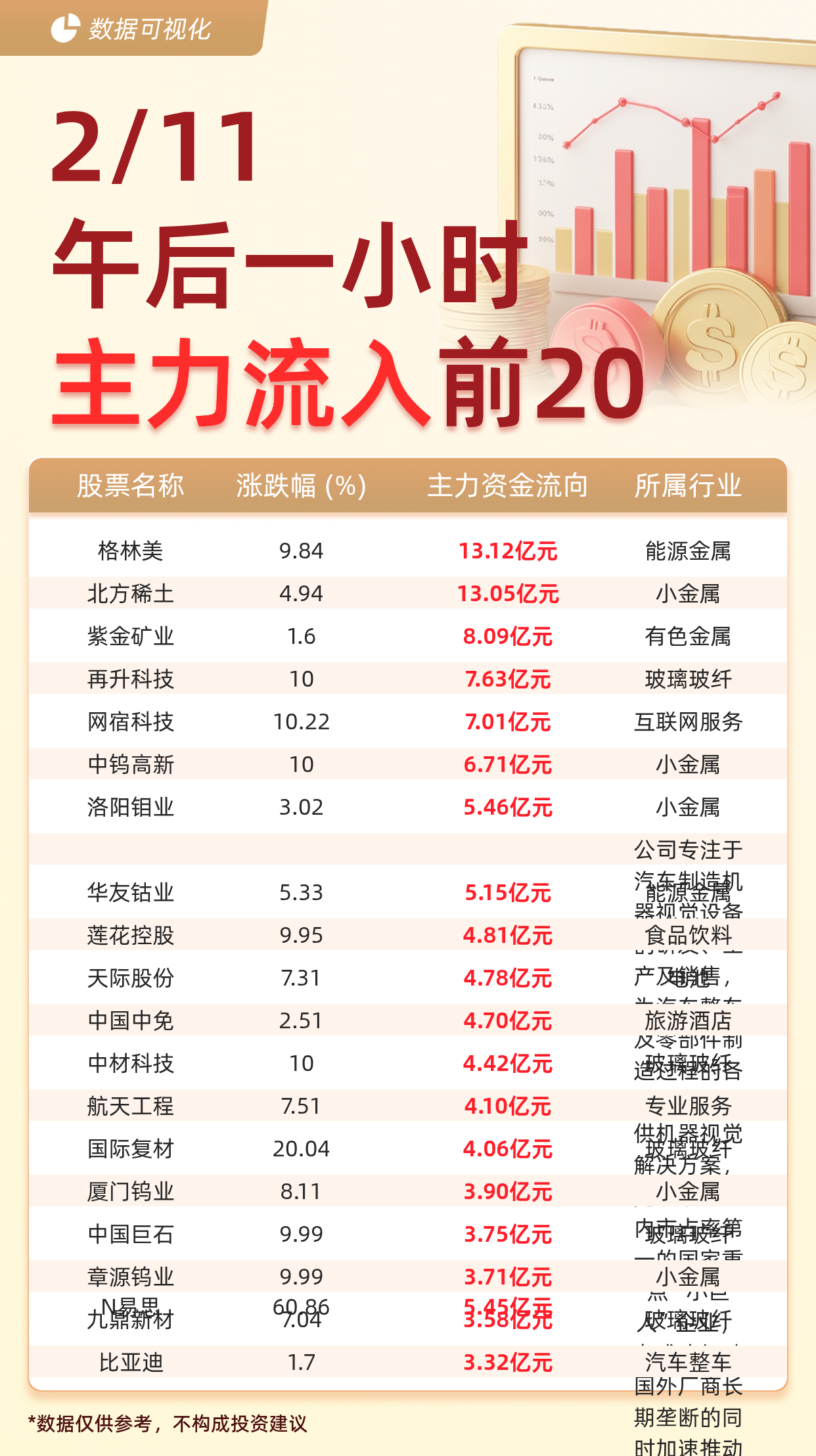
主力资金流入前20:格林美流入13.12亿元、北方稀土流入13.05亿元
Jin Rong Jie· 2026-02-11 06:20
Core Viewpoint - The data indicates significant capital inflows into various stocks, highlighting potential investment opportunities in specific sectors such as energy metals, rare metals, and technology [1][2][3] Group 1: Stock Performance and Capital Inflows - The top stock with capital inflow is Greeenmei, attracting 1.312 billion yuan with a price increase of 9.84% [2] - Northern Rare Earth follows closely with 1.305 billion yuan inflow and a 4.94% rise [2] - Zijin Mining received 0.809 billion yuan with a 1.6% increase [2] - Zaiseng Technology saw a capital inflow of 0.763 billion yuan, marking a 10% rise [2] - Wangsu Technology attracted 0.701 billion yuan with a notable increase of 10.22% [2] Group 2: Sector Analysis - The energy metals sector is represented by Greeenmei and Huayou Cobalt, both showing strong capital inflows and positive price movements [2] - The rare metals sector includes Northern Rare Earth and Zhongtung High-tech, both experiencing significant inflows and price increases [2] - The technology sector is highlighted by Wangsu Technology and Zaiseng Technology, both of which have seen substantial capital inflows and notable price gains [2][3]