
ICBC(01398)

Search documents
工商银行内蒙古分行“大抓基层”筑基赋能,以“红色引擎”驱动高质量发展
Xin Lang Cai Jing· 2026-01-21 09:10
Core Viewpoint - The Industrial and Commercial Bank of China (ICBC) Inner Mongolia Branch is focusing on grassroots development and high-quality party building to drive high-quality economic growth and enhance its service capabilities to support national strategies [1] Group 1: Political Construction and Supervision - The branch prioritizes political construction, establishing a multi-level supervision system to ensure adherence to central government directives [2] - A comprehensive learning mechanism is in place to deepen theoretical understanding and implement the "First Agenda" system for continuous learning [2] - The "工诚北疆" party building system has been optimized, enhancing brand influence and receiving recognition from higher authorities [2] Group 2: Strengthening Organizational Capacity - The branch is enhancing grassroots party organization capabilities through standardized construction and refined management practices [3] - The "three full coverage" initiative has been implemented, upgrading 353 outlets into multifunctional "red bases" for service and policy promotion [3] - Innovative activities and management systems are in place to improve the quality of organizational life and engage party members effectively [3] Group 3: Integration and Development Empowerment - The branch is integrating party work with business development, creating synergies that enhance operational advantages [4] - The "党建+" model has been advanced, with 76 teams conducting over 47,000 community service events benefiting more than 500,000 people [4] - Innovative financial products and services have been introduced, including the first public REITs in clean energy in the region and significant debt financing arrangements [4] Group 4: Talent Development and Team Building - The branch is focusing on grassroots as a training ground for talent development, establishing a comprehensive nurturing system [5] - A clear talent selection strategy emphasizes promoting individuals from high-performing teams and grassroots levels, with 70% of new promotions in 2025 coming from these sources [6] - Initiatives like the "千人储备" project are in place to build a robust talent pipeline across various age groups and professional areas [6]
工商银行:全额赎回300亿元二级资本债券
Xin Lang Cai Jing· 2026-01-21 09:10
Core Viewpoint - The company announced the issuance of 30 billion yuan in subordinated capital bonds in the interbank bond market, with a redemption option for the issuer [1] Group 1 - The bond issuance took place from January 19 to 21, 2021 [1] - The company has the right to fully redeem the bonds at face value on January 21, 2026 [1] - As of the announcement date, the company has exercised its redemption right and fully redeemed the bonds [1]
工商银行(01398.HK):预期200亿美元全球中期票据计划的上市将于1月22日开始生效
Ge Long Hui· 2026-01-21 08:57
格隆汇1月21日丨工商银行(01398.HK)公布,公司已向香港联合交易所有限公司申请200亿美元全球中期 票据计划("计划")仅以向专业投资者自2026年1月21日起计十二个月内发行债务证券的方式上市。预期计 划的上市将于2026年1月22日开始生效。 ...
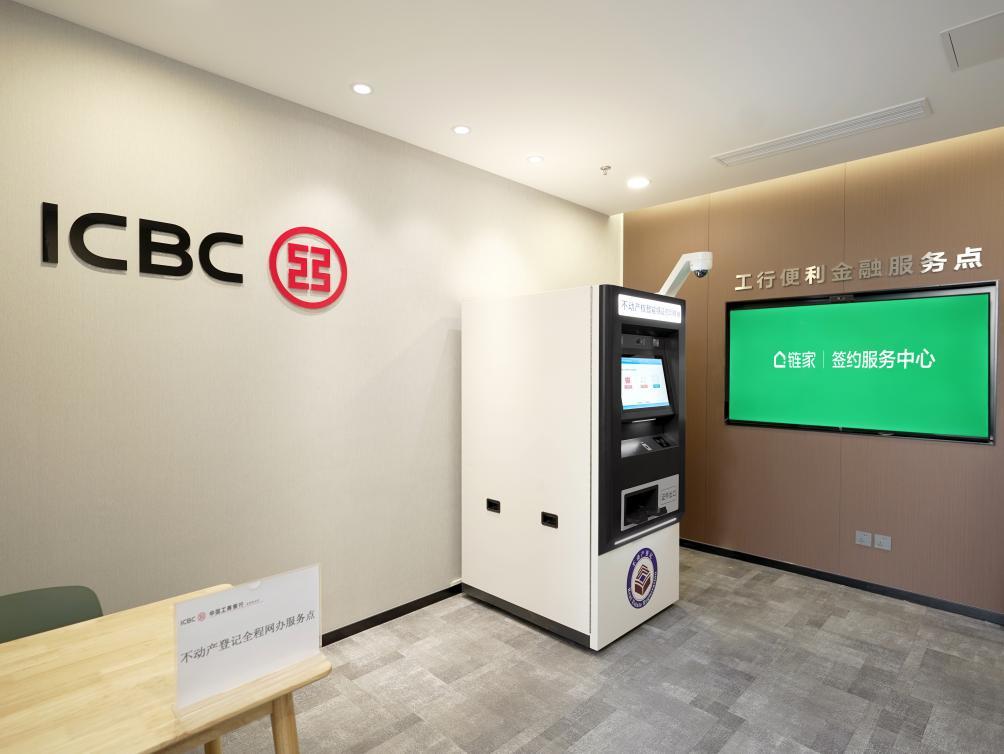
北京链家携手中国工商银行北京分行,在西城区落地房产证自助打印便民网点
Huan Qiu Wang· 2026-01-21 08:54
Core Insights - The collaboration between China Industrial and Commercial Bank (ICBC) Beijing Branch and Beijing Lianjia aims to enhance the convenience of real estate registration services in Beijing, aligning with the city's reform initiatives to optimize the business environment [1][7] - A new integrated real estate query and certificate printing machine has been launched, allowing residents to independently verify their identity and print property certificates, thereby streamlining the process of real estate transactions and registrations [3][5] Group 1 - The new service point established by ICBC at the Lianjia Tianning Temple signing service center enables residents to access real estate information queries and property certificate printing services, contributing to the city's goal of a "15-minute real estate registration circle" [1][7] - The self-service machine operates securely with the Beijing real estate registration system, providing a full process from identity verification to information query and certificate printing, facilitating immediate access to services [3][5] Group 2 - The service point is open during both weekdays and weekends, allowing residents to manage their time flexibly and access services conveniently in their local area [5] - The initiative has received positive feedback from residents, highlighting the convenience of self-service options for property certificate printing, which enhances the overall efficiency of real estate transactions [7] - Beijing Lianjia plans to continue exploring new models for convenient real estate services, aiming to enrich service offerings and improve service quality to support the capital's high-quality development [7]

工商银行(01398) - 中国工商银行股份有限公司20,000,000,000美元全球中期票据计划...
2026-01-21 08:49
香港交易及結算所有限公司及香港聯合交易所有限公司對本公告之內容概不負責,對其準確性或完整性亦不發表 任何聲明,並明確表示,概不對因本公告全部或任何部分內容而產生或因倚賴該等內容而引致之任何損失承擔任 何責任。 (於中華人民共和國註冊成立的股份有限公司) 股份代號:1398 20,000,000,000美元全球中期票據計劃 安排行和交易商 中國工商銀行* 本公告僅供參考之用,並不構成收購、購買或認購任何證券的邀請或要約。本公告不構成或形成任何要約購買在 美國銷售的證券的一部分。除非另有規定,任何根據計劃(定義見下文)將予發行的票據將不會根據經不時修訂之 1933年美國聯邦證券法(「證券法」)進行登記,而且不得在未登記或獲豁免遵守證券法的登記規定的情況下於美國 境內或向任何美國人士(定義見證券法)或出於美國人士的利益進行發售或出售。將不會在美國進行證券的公開發 售。 於香港聯合交易所有限公司 上市之通告 中國工商銀行股份有限公司 INDUSTRIAL AND COMMERCIAL BANK OF CHINA LIMITED 中國工商銀行股份有限公司已向香港聯合交易所有限公司申請20,000,000,000美元全球 ...
并购贷款新规实施20天 四大行率先落地首批项目
2 1 Shi Ji Jing Ji Bao Dao· 2026-01-21 08:23
Core Viewpoint - The implementation of the new merger and acquisition loan management regulations by the National Financial Supervision Administration has enabled major state-owned banks to quickly respond and support the real economy through targeted financing solutions, enhancing the effectiveness of financial services in the context of China's economic transformation [1][6]. Group 1: Regulatory Changes - The new regulations, effective from January 1, 2026, introduce several key features, including the inclusion of equity-based merger loans and an increase in the upper limit of controlling merger loans from 60% to 70% of the transaction price [1][6]. - The loan term for controlling merger loans has been extended from seven years to ten years, providing a compliant and efficient financing path for non-controlling strategic investments [1][6]. Group 2: Bank Responses - Major state-owned banks, including ICBC, ABC, BOC, and CCB, have quickly launched equity-based merger loans in various provinces, demonstrating their ability to adapt to regulatory changes and support local economic needs [2][5]. - ICBC's Anhui branch has focused on green industry investments, while ABC and BOC have successfully issued loans to support local enterprises in strategic sectors such as environmental protection and semiconductors [2][5]. Group 3: Market Impact - The new regulations are expected to stimulate the merger and acquisition market by facilitating industry consolidation and transformation, particularly as traditional industries undergo optimization and new industries continue to grow [6][7]. - The financial support for equity investments is seen as a crucial innovation to enhance capital flow, promote resource optimization, and improve the overall efficiency of financial services to the real economy [6][7].


马年贺岁纪念币钞开启兑换
Bei Jing Wan Bao· 2026-01-21 07:11
Core Viewpoint - The 2026 Year of the Horse commemorative coins and banknotes began centralized exchange from yesterday until the 26th, with the China Industrial and Commercial Bank and China Construction Bank in Beijing responsible for the exchange process [1] Group 1: Exchange Process - The exchange of the commemorative coins and banknotes is being conducted by the China Industrial and Commercial Bank and China Construction Bank in Beijing [1] - Customers have shown significant interest, with many arriving early to queue for the exchange [1] Group 2: Customer Sentiment - Customers expressed a desire to collect the commemorative coins and banknotes, highlighting their aesthetic appeal and craftsmanship [1] - One customer, Mr. Wang, shared his excitement after successfully exchanging for the commemorative items, indicating a positive sentiment towards the collection [1]

观察|去年深圳8家银行密集“换将”,新行长们的角色之变
Nan Fang Du Shi Bao· 2026-01-21 06:03
Core Viewpoint - Shenzhen's "15th Five-Year Plan" aims to establish itself as a global "industrial financial center," raising expectations for local financial institutions, particularly banks, in their roles and responsibilities [22][23]. Group 1: Leadership Changes in Shenzhen Banks - Over the past year, at least eight commercial banks in Shenzhen have changed their leadership, including major state-owned banks and leading joint-stock banks [2]. - The appointment of Xiong Tao as the head of the Industrial and Commercial Bank of China (ICBC) Shenzhen branch reflects a strategic move to enhance the bank's focus on technology and innovation [2][4]. - Similarly, Ma Mingjun has been appointed as the head of the Bank of China Shenzhen branch, indicating a strengthened commitment to the Guangdong-Hong Kong-Macao Greater Bay Area [4][7]. Group 2: Key Appointments and Their Implications - Wang Xinghai, a veteran of China Merchants Bank, has taken over as the head of the Shenzhen branch, showcasing the bank's internal talent development strategy [9]. - Ping An Bank has also seen significant leadership changes, with Zhang Chaohui becoming the head of the Shenzhen branch, emphasizing the importance of this branch within the bank's overall strategy [11]. - New leaders at various banks, such as Shang Wencheng of China Everbright Bank and Yuan Rui of Shanghai Pudong Development Bank, are focusing on technology finance and innovative service models to meet the needs of Shenzhen's tech-driven economy [12][15]. Group 3: Strategic Focus on Technology Finance - The new leaders are expected to align their banks' strategies with Shenzhen's identity as a technology innovation hub, emphasizing the importance of "investment-loan linkage" services [12][23]. - The financial institutions are being urged to develop comprehensive service models that support the entire lifecycle of technology enterprises, particularly in critical sectors like semiconductors and advanced manufacturing [12][15]. - The shift towards a more integrated financial service approach reflects a broader trend in which banks are expected to act as "deep partners" and "comprehensive service providers" rather than just capital providers [23]. Group 4: Challenges and Future Directions - The banks in Shenzhen face challenges in transitioning from traditional financing to more complex service models, requiring enhanced risk management and understanding of emerging technologies [23]. - There is a growing need for collaboration with venture capital, insurance, and other financial institutions to meet the comprehensive needs of enterprises [23]. - The emphasis on long-term investment strategies and the establishment of a long-term assessment mechanism are critical for supporting sustainable growth in the technology sector [23].



摩根大通银行、浙江稠州商业银行获批资格!FT账户密集扩容
2 1 Shi Ji Jing Ji Bao Dao· 2026-01-21 03:49
Group 1 - The Shanghai Free Trade Account (FT Account) has seen significant developments recently, with the approval of new financial institutions and upgrades to existing accounts, indicating a potential increase in foreign participation in China's cross-border financial activities [1][2] - Morgan Stanley Bank (China) Limited's Shanghai branch has been approved as the first new FT account financial institution in over five years, marking a notable opportunity for foreign banks in the region [1] - As of the latest update, there are 62 financial institutions with FT account qualifications in Shanghai, with 49 being banks, reflecting a growing trend in the FT system [1] Group 2 - The implementation of the "Implementation Measures for the Function Upgrade of Free Trade Accounts" by the People's Bank of China on December 5 has introduced significant policy upgrades, allowing for more flexible cross-border fund transfers [2][4] - The new regulations enable trial enterprises to conduct capital account business without the constraints of external debt quotas or prior registration with foreign exchange authorities, enhancing operational efficiency [2][4] - Major banks, including state-owned and foreign banks, have quickly responded to the new policy by facilitating the opening of upgraded FT accounts for clients, indicating strong market interest and potential for increased cross-border trade [3][4] Group 3 - The recent policy changes are expected to create a multiplier effect for cross-border trade and investment, improving the efficiency of capital allocation for enterprises [4] - The expansion of the FT account system is anticipated to continue, with more financial institutions likely to be added to the list of qualified entities in the future [5]





宁波金融监管局核准谢成杰工商银行宁波鄞州分行副行长任职资格
Jin Tou Wang· 2026-01-21 03:21
2026年1月16日,宁波金融监管局发布批复称,《关于谢成杰任职资格审查的请示》(工银甬〔2025〕 218号)收悉。经审核,现批复如下: 三、中国工商银行宁波鄞州分行应督促上述核准任职资格人员持续学习和掌握经济金融相关法律法规规 章等,牢固树立风险合规意识,熟悉任职岗位职责,忠实勤勉履职。 一、核准谢成杰中国工商银行股份有限公司宁波鄞州分行副行长的任职资格。 二、中国工商银行宁波鄞州分行应要求上述核准任职资格人员严格遵守金融监管总局有关监管规定,自 中国工商银行政许可决定作出之日起3个月内到任,并按要求及时报告到任情况。未在上述规定期限内 到任的,本批复文件失效,由宁波金融监管局办理行政许可注销手续。 ...