XIAOMI(01810)

Search documents
2月3日华宝港股通恒生中国(香港上市)30ETF(520560)遭净赎回369.86万元
Xin Lang Cai Jing· 2026-02-04 02:22
Group 1 - The core point of the article highlights the net redemptions of the Hua Bao Hong Kong Stock Connect Hang Seng China (Hong Kong Listed) 30 ETF (520560), which faced a net outflow of 3.6986 million yuan on February 3, ranking 40th out of 212 in cross-border ETF net outflows [1] - As of February 3, the latest scale of the Hua Bao Hong Kong Stock Connect Hang Seng China (Hong Kong Listed) 30 ETF is 755 million yuan, down from 766 million yuan the previous day, indicating a net outflow of 0.48% relative to the previous day's scale [1] - Over the past 5 days, the fund experienced net redemptions totaling 35.4312 million yuan, ranking 25th out of 212 in cross-border ETF net outflows [1] - The fund's scale has decreased by 7.60% and its assets by 7.01% since the beginning of the year, with the latest share count at 814 million [2] Group 2 - The fund's management fee is 0.50% annually, and the custody fee is 0.10% annually [2] - The fund is managed by Zhang Fang and Jiang Junyang, both of whom have recorded a return of -7.27% since the fund's inception on September 24, 2025 [3] - The top holdings of the fund include Tencent Holdings (14.92%), Alibaba-W (13.98%), and China Construction Bank (7.23%), among others, with significant investments in major Chinese companies [3]





潘九堂回应小米粉丝忠诚度高:小米用户不忠于品牌,忠于科学和理性
Xin Lang Cai Jing· 2026-02-04 02:12
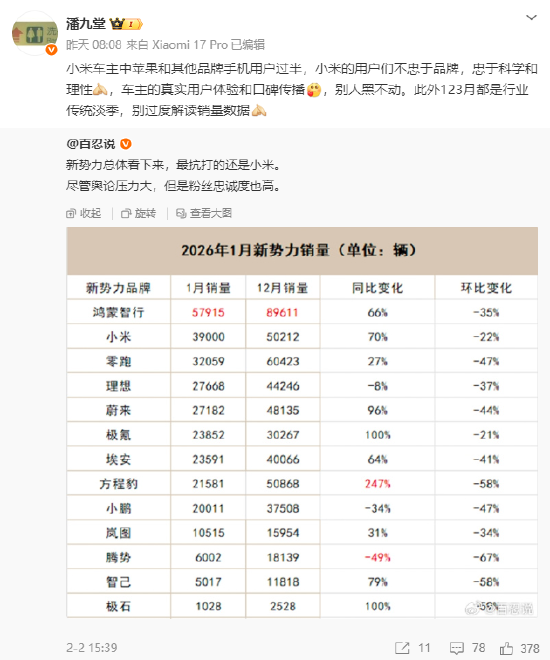
这份销量榜单显示,小米汽车1月销量为39000辆,12月销量为50212辆,环比下降22%。原博主表示, 新势力总体看下来,最抗打的还是小米,尽管舆论压力大,但是粉丝忠诚度也高。 2月3日,小米产业投资部合伙人潘九堂转发了一份2026年1月新势力销量榜单并表示:"小米车主中苹果 和其他品牌手机用户过半,小米的用户们不忠于品牌,忠于科学和理性,车主的真实用户体验和口碑传 播,别人黑不动。此外,1、2、3月都是行业传统淡季,别过度解读销量数据"。 | | | 2026年1月新势力销量(单位:辆) | | | | --- | --- | --- | --- | --- | | 新势力品牌 | 1月销量 | 12月销量 | 同比变化 | 环比变化 | | 鸿蒙智行 | 57915 | 89611 | 66% | -35% | | 小米 | 39000 | 50212 | 70% | -22% | | 零跑 | 32059 | 60423 | 27% | -47% | | 理想 | 27668 | 44246 | -8% | -37% | | 蔚来 | 27182 | 48135 | ઠેરિય | -44% | | ...

雷军详解小米车身与开闭件耐久试验室:SU7、YU7扭转刚度十分优秀
Xin Lang Cai Jing· 2026-02-04 02:07
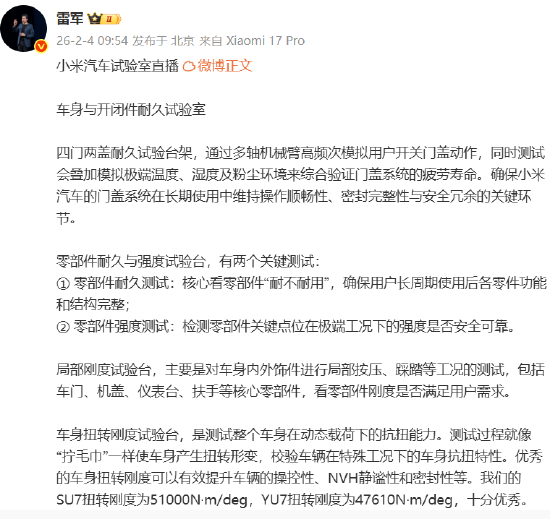
2月4日,小米公司创始人、董事长、首席执行官雷军发文介绍小米车身与开闭件耐久试验室。 雷军表示,四门两盖耐久试验台架,通过多轴机械臂高频次模拟用户开关门盖动作,同时测试会叠加模 拟极端温度、湿度及粉尘环境来综合验证门盖系统的疲劳寿命。确保小米汽车的门盖系统在长期使用中 维持操作顺畅性、密封完整性与安全冗余的关键环节。 零部件耐久与强度试验台,有两个关键测试: 零部件耐久测试:核心看零部件"耐不耐用",确保用户长周期使用后各零件功能和结构完整; 零部件强度测试:检测零部件关键点位在极端工况下的强度是否安全可靠。 局部刚度试验台,主要是对车身内外饰件进行局部按压、踩踏等工况的测试,包括车门、机盖、仪表 台、扶手等核心零部件,看零部件刚度是否满足用户需求。 他提到,身扭转刚度试验台,是测试整个车身在动态载荷下的抗扭能力。测试过程就像"拧毛巾"一样使 车身产生扭转形变,校验车辆在特殊工况下的车身抗扭特性。优秀的车身扭转刚度可以有效提升车辆的 操控性、NVH静谧性和密封性等。 "我们的SU7扭转刚度为51000N·m/deg,YU7扭转刚度为47610N·m/deg,十分优秀。" 维持操作顺畅性、密封完整性与安全冗余的 ...
销量环比下滑超20%,单车成本激增7000元:2026车市开局承压
Xin Hua Cai Jing· 2026-02-04 01:16
Core Viewpoint - The automotive market in China experienced a significant month-on-month decline in January 2026, influenced by changes in tax policies and early consumer demand, while year-on-year sales remained relatively stable [1]. Group 1: Market Performance - In January 2026, the retail sales of narrow passenger vehicles in China were approximately 1.8 million units, representing a month-on-month decrease of 20.4% and a slight year-on-year increase of 0.3% [1]. - The retail sales of new energy vehicles (NEVs) in January were around 800,000 units, showing a year-on-year decline of 40.2%, but a month-on-month growth of 7.5% [1]. - Major traditional automakers like SAIC and Geely surpassed BYD in sales, with SAIC selling 327,000 units (up 23.9% year-on-year) and Geely selling 270,200 units (up 1.3% year-on-year) [2]. Group 2: New Energy Vehicle Segment - In the new energy vehicle sector, brands like Xiaomi, Hongmeng Zhixing, and NIO saw significant year-on-year growth, with Xiaomi's sales increasing by 95% to over 39,000 units [3][4]. - NIO delivered 27,200 units in January, marking a 96% year-on-year increase, driven by the new ES8 model [4]. - Conversely, companies like XPeng and Li Auto experienced declines, with XPeng's deliveries down 47% month-on-month and 34% year-on-year [4]. Group 3: Cost Pressures - The automotive industry is facing rising costs, with single-vehicle costs increasing by 4,000 to 7,000 yuan due to surging prices of key materials like lithium, aluminum, and DRAM [5][6]. - The price of battery-grade lithium carbonate rose from 75,700 yuan per ton at the beginning of 2025 to 146,600 yuan per ton by February 3, 2026, a nearly 94% increase [5]. - UBS reported that the cost increases in metals and chips could compress profit margins significantly, with potential reductions of 33% to 93% for vehicles priced at 150,000 yuan [6]. Group 4: Strategic Directions - To counteract rising costs and stagnant market demand, automakers are focusing on international expansion, with Chery exporting 119,600 units in January, accounting for nearly 60% of its total sales [7]. - BYD's overseas sales exceeded 100,000 units, a year-on-year increase of 43.3%, while Geely's exports grew by over 120% [7]. - Companies are also targeting the high-end market, with Great Wall Motors launching the WEY brand's flagship V9X, indicating a competitive push in the premium segment [9]. Group 5: Market Outlook - The automotive consumption index for January 2026 was reported at 31.1, reflecting a cautious consumer sentiment influenced by various factors, including the upcoming Spring Festival and changes in tax policies [10]. - Industry experts suggest that the market may not see a clear recovery until March or the end of the first quarter [10].




科技龙头企业领衔,港股开年回购井喷
Xin Lang Cai Jing· 2026-02-03 23:53
Core Viewpoint - Over 30 Hong Kong-listed companies announced share buybacks on February 3, signaling a positive market outlook amid high volatility since 2026 [1] Group 1: Share Buyback Activity - More than 120 Hong Kong-listed companies have implemented share buybacks this year [1] - Notable companies such as Tencent Holdings, Xiaomi Group-W, and Sunny Optical Technology have repurchased shares exceeding 1 billion HKD [1] - The trend of share buybacks is primarily observed among companies with strong performance, ample cash flow, and a good market image [1] Group 2: Market Implications - The significant buyback activities by these companies provide support for the stability of the Hong Kong stock market [1] - The actions of these companies reflect an overall positive sentiment in the current market environment [1]


2月3日【中銀做客】:恆指、中移動、紫金礦業、紫金黃金國際、泡泡瑪特、小米集團
Ge Long Hui· 2026-02-03 18:37
Market Overview - The Hong Kong stock market has experienced significant volatility recently, with fluctuations of around 800 points impacting investor sentiment and market dynamics [1][2]. - Investors are advised to closely monitor market trends and utilize tools such as the Hang Seng Index bull and bear certificate distribution chart to gauge market sentiment [1][2]. Investment Strategies - A high percentage of investors (76%) are currently favoring bull certificates, indicating a strong interest in buying at lower levels following market declines [1][2]. - Caution is advised for investors entering the market during periods of high volatility, with recommendations to wait for signs of stabilization before attempting to capitalize on rebounds [2][3]. Individual Stock Analysis - China Mobile (00941) has seen fluctuations in its stock price, with recent adjustments attributed to an increase in the value-added tax rate from 6% to 9%, impacting market perceptions of revenue and profitability [4][5]. - Investors are showing interest in China Mobile's call options, particularly code 24413, which has a strike price of 88.88 HKD and a leverage of approximately 13 times [5]. Commodity Insights - The price of gold has surged nearly 30% in the past month, leading to increased caution among investors regarding potential corrections due to rapid price increases [6][7]. - For long-term investors, current market adjustments may present buying opportunities, while short-term trading is deemed risky due to high volatility [7][8]. Company-Specific Developments - Pop Mart (9992) is expanding its presence in the UK, planning to establish a European headquarters and open seven new stores, which has positively influenced its stock performance despite broader market declines [9][10]. - Xiaomi (01810) continues to struggle with its stock price, recently dropping to around 34.36 HKD, with investor sentiment mixed despite a planned buyback of 2.5 billion HKD in shares [11][12]. Contact Information - Investors are encouraged to utilize the hotline (00+852 3988 6909) for inquiries regarding market conditions and product offerings, especially during periods of heightened volatility [13][14].


雷军爆发了!7000mAh+6.3英寸+第五代骁龙8至尊版,从4499元跌至3598元
Sou Hu Cai Jing· 2026-02-03 17:00
Core Viewpoint - The article discusses the appeal of "small screen flagship" smartphones, highlighting the divide between users who prefer larger screens for immersive experiences and those who prioritize hand feel and portability. The Xiaomi 17 is presented as a strong contender in the small screen category, addressing common concerns such as battery life and performance while maintaining a compact design [1][10]. Group 1: Battery Life and Performance - The Xiaomi 17 features a 6.3-inch display paired with a 7000mAh battery, challenging the notion that smaller screens compromise battery life. It offers up to ten hours of screen time with moderate use and can last a full day under heavy use, supported by 100W wired and 50W wireless charging [3]. - The device is equipped with the Snapdragon 8 Gen 2 processor, LPDDR5X RAM, and UFS 4.1 storage, achieving top-tier performance in benchmarks. It effectively manages heat dissipation, ensuring that high performance is accessible during daily use rather than just for show [5]. Group 2: Camera and Imaging - The Xiaomi 17 incorporates a Leica triple-camera system, all with 50MP sensors. The main camera features a large sensor and optical image stabilization (OIS), providing good color accuracy and dynamic range in daylight, while improving night photography capabilities compared to previous models [7]. - The camera system combines a 2.6x floating telephoto lens that serves both portrait and macro photography needs, making it practical for everyday use rather than just high-end photography [7]. Group 3: Display and User Experience - The device boasts a 1.5K flat display with LTPO adaptive technology and high peak brightness, enhancing outdoor visibility. Features like DC dimming and high-frequency PWM are included for eye comfort, making it suitable for prolonged use [8]. - While the system's fluidity has improved, there are concerns about intrusive ads, which detract from the overall user experience. The article suggests that a flagship should offer a complete experience without compromising on software purity [8]. Group 4: Pricing and Market Position - The starting price of 4499 yuan is considered reasonable for a small screen flagship, especially with potential discounts bringing it down to 3598 yuan. This pricing strategy positions the Xiaomi 17 as an accessible option for a broader audience, aligning with the company's goal of making technology enjoyable for more people [10]. - The Xiaomi 17 aims to redefine the small screen flagship category, proving that it can serve as a primary device without sacrificing essential features like battery life and performance [10].
南向资金今日净买入9.52亿港元
Xin Lang Cai Jing· 2026-02-03 14:55
Group 1 - Tencent Holdings and China Mobile received net purchases of HKD 22.02 billion and HKD 4.08 billion respectively through the Hong Kong Stock Connect (Shanghai) [1] - The Tracker Fund of Hong Kong had the highest net selling amount, totaling HKD 25.58 billion [1] - Southern Hang Seng Technology and Xiaomi Group-W received net purchases of HKD 6.69 billion and HKD 3.29 billion respectively through the Hong Kong Stock Connect (Shenzhen) [1] - The Tracker Fund of Hong Kong also led in net selling on this platform, with a total of HKD 12.05 billion [1]
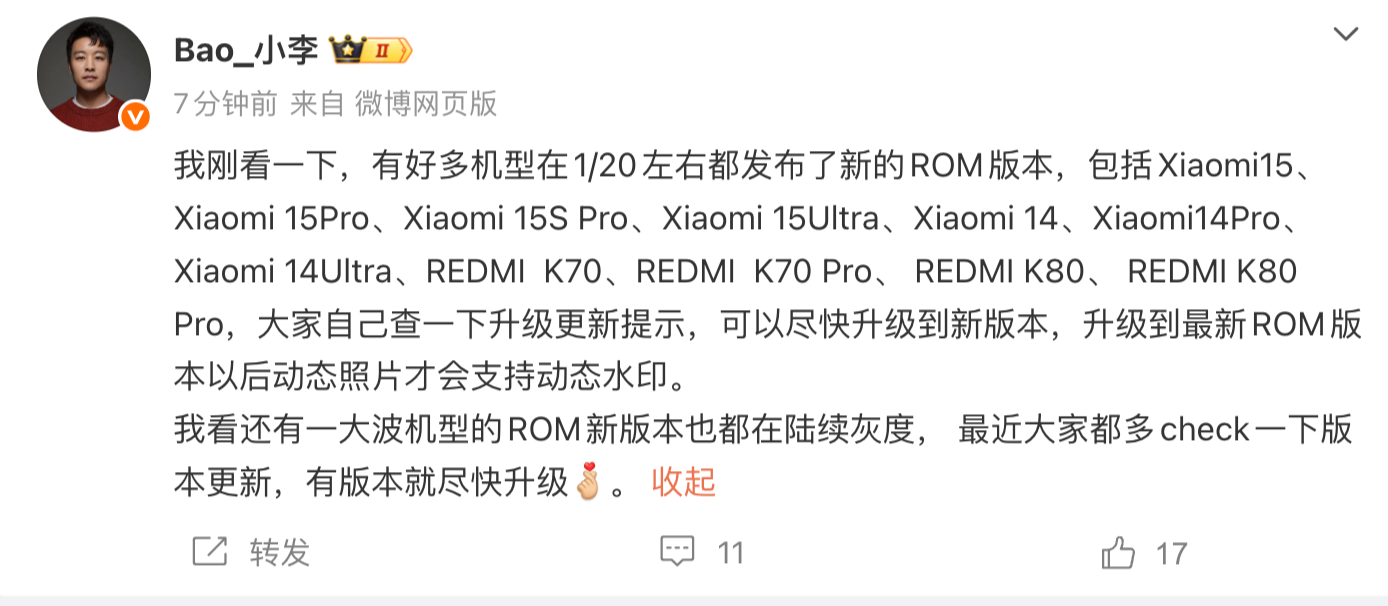
小米15/14系列等手机也支持新春动态水印:需升级最新ROM版本
Feng Huang Wang· 2026-02-03 12:54
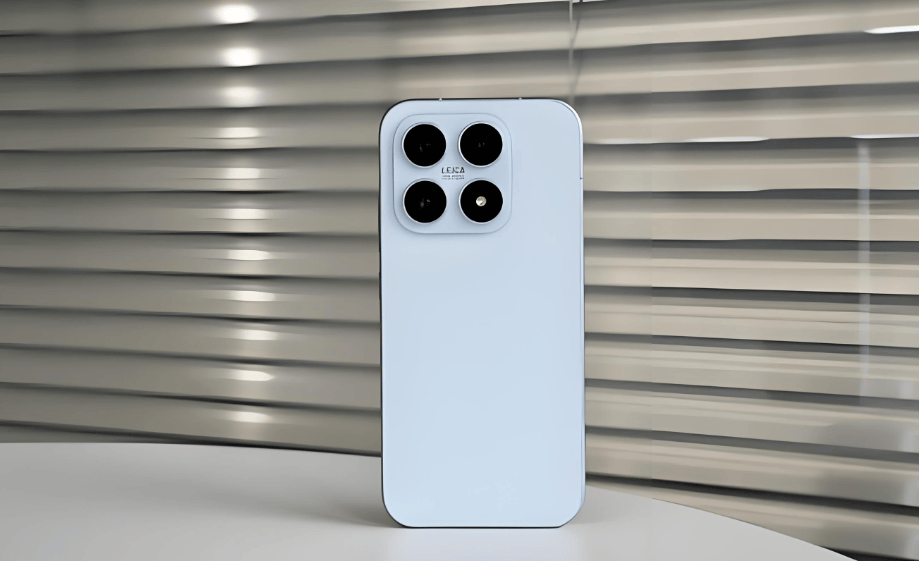
凤凰网科技讯 2月3日,小米相机部产品经理"Bao_小李"发文称,小米15/14系列、REDMI K70/80系列机型,需升级到最新ROM版本,动态照片才会支持动 态水印。此外,还有一大波机型的ROM新版本也都在陆续灰度,用户可多检查一下版本更新。 2月2日,小米17 Ultra新春水印样式公布。据介绍,配动态照片使用,水印也会动起来。这款水印的设计灵感是中国优秀的民间艺术活动舞狮。底部采用正 红色宽幅边框作为视觉基底,将传统醒狮形象,搭配绣球元素,从边框右侧跳动前进,活泼可爱。以色彩艳丽的非遗舞狮纹样还原民俗质感,保留新春民俗 的浓郁韵味。 ...
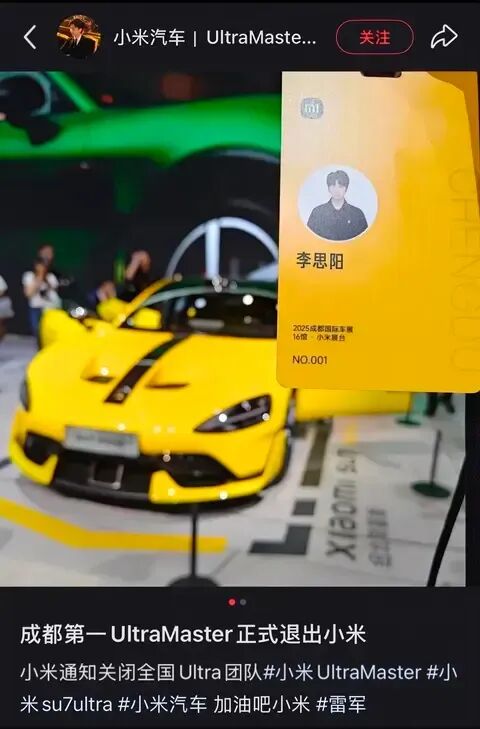
小米解散SU7 Ultra专业团队,雷军高端梦“破灭”!
Xin Lang Cai Jing· 2026-02-03 12:46
Core Viewpoint - Xiaomi's decision to dissolve the UltraMaster team indicates a strategic shift in its approach to the high-end electric vehicle market, focusing on resource optimization rather than abandoning high-end positioning [10][25][51]. Group 1: Team Dissolution - Xiaomi has officially announced the closure of its UltraMaster team, which was responsible for high-end market execution, not the R&D team for the SU7 Ultra [5][6][10]. - The dissolution is not a complete cut; many team members have been reassigned to support mainstream vehicle sales [8][35]. - The SU7 Ultra vehicle remains in production and is still being sold, with R&D efforts continuing [9][36]. Group 2: Financial Considerations - The primary reason for dissolving the Ultra team is the imbalance between investment and returns, with high operational costs not translating into expected sales [11][38]. - The SU7 Ultra's dedicated business team was a significant financial burden, requiring substantial funding for operations, services, and marketing [13][40]. Group 3: Sales Performance - The SU7 Ultra, initially priced at 529,000 yuan, experienced a dramatic decline in sales, with only 45 units sold by December 2025, a stark contrast to its initial success [14][43]. - Customer dissatisfaction has led to collective actions against the company, citing discrepancies between advertised and actual vehicle features, contributing to a damaged reputation [18][45]. - The vehicle's resale value has plummeted, with one-year-old models valued at only 350,000 yuan [21][47]. Group 4: Market Context - The high-end electric vehicle market is highly competitive, with brands like Tesla and NIO aggressively pursuing market share [22][49]. - Xiaomi's operational costs are rising while sales and reputation are declining, making the retention of the Ultra team unsustainable [24][50]. Group 5: Future Strategy - Xiaomi is not abandoning high-end technology exploration but is instead adjusting its strategy to focus on more sustainable models and products [30][55]. - The new generation of the SU7 is set to launch with upgrades and a starting price of 229,000 yuan, indicating Xiaomi's commitment to the mainstream high-end market [28][55]. - The company's ability to adapt quickly to market changes and optimize resource allocation is crucial for navigating the evolving electric vehicle landscape [30][56].