
CHINA COAL ENERGY(01898)

Search documents
中煤能源(01898) - 截至2026年1月31日止股份发行人的证券变动月报表
2026-02-03 09:05
FF301 | 1. 股份分類 | 普通股 | 股份類別 | A | | | 於香港聯交所上市 (註1) | | 否 | | | --- | --- | --- | --- | --- | --- | --- | --- | --- | --- | | 證券代號 (如上市) | 601898 | 說明 | | | | | | | | | | | 法定/註冊股份數目 | | | 面值 | | | 法定/註冊股本 | | | 上月底結存 | | | 9,152,000,400 | RMB | | 1 | RMB | | 9,152,000,400 | | 增加 / 減少 (-) | | | | | | | RMB | | | | 本月底結存 | | | 9,152,000,400 | RMB | | 1 | RMB | | 9,152,000,400 | | 2. 股份分類 | 普通股 | 股份類別 | H | | 於香港聯交所上市 (註1) | | 是 | | | --- | --- | --- | --- | --- | --- | --- | --- | --- | | 證券代號 (如上市) | 01898 ...
黑龙江双鸭山市集贤县:绿色甲醇与电解槽项目进入实施阶段
Zhong Guo Fa Zhan Wang· 2026-02-03 08:22
Core Insights - The implementation of two major projects in Jixian County, Heilongjiang, aligns with China's 14th Five-Year Plan, focusing on accelerating the construction of a new energy system and promoting green and low-carbon development [3] Group 1: Project Overview - The green methanol project, with an investment of 6.1 billion yuan, is expected to produce 140,000 tons of methanol annually and utilizes leading international technology for a complete production system [3] - The electrolyzer manufacturing project, with an investment of 1 billion yuan, aims to produce 30 electrolyzers annually, significantly reducing operational costs for the green methanol project and ensuring supply chain security [3] Group 2: Environmental Impact and Certification - The projects will provide low-cost green methanol for industries such as transportation and chemicals, aiding in their low-carbon transition [4] - The Jixian County projects are in the process of obtaining the International Sustainability and Carbon Certification (ISCC), expected to be completed by April 20, allowing access to the international green energy market [4] Group 3: Strategic Importance - These projects are crucial for Jixian County to become a key player in Heilongjiang's efforts to achieve carbon neutrality and develop new productive forces [3]



港股通央企红利ETF天弘(159281)涨1.21%,成交额7232.62万元
Xin Lang Cai Jing· 2026-02-03 07:12
Group 1 - The Tianhong CSI Hong Kong Stock Connect Central State-Owned Enterprises Dividend ETF (159281) closed up 1.21% on February 3, with a trading volume of 72.32 million yuan [1] - As of February 2, the fund's latest share count was 345 million shares, with a total size of 345 million yuan, reflecting a decrease of 2.54% in shares and 1.55% in size since December 31, 2025 [1] - The fund's management fee is 0.50% per year, and the custody fee is 0.10% per year [1] Group 2 - The top holdings of the Tianhong ETF include COSCO Shipping Holdings, China Shenhua Energy, CNOOC, Sinopec Engineering, China National Shipping, China Petroleum & Chemical Corporation, China Coal Energy, CITIC International, and China Construction Bank, with respective holding percentages [2] - The largest holding is COSCO Shipping Holdings at 4.11%, followed by China Shenhua Energy at 2.68% and CNOOC at 2.56% [2] - The fund manager, He Yuxuan, has managed the fund since August 20, 2025, achieving a return of 2.85% during the management period [1]


煤炭行业月报(2026年1月):25年供需整体宽松,26年开始有所改善-20260203
GF SECURITIES· 2026-02-03 06:31
Core Insights - The coal industry is expected to see an improvement in supply-demand dynamics starting in 2026 after a generally loose supply in 2025 [1] Group 1: Coal Sector Review - The coal sector outperformed the market in January, with a cumulative increase of 8.3% year-to-date, surpassing the CSI 300 index by 6.7 percentage points [16] - The coal sector's price-to-earnings (PE) ratio is currently at 15.7 times, ranking 5th among all sectors, indicating a relatively high valuation [20][26] - The coal sector's price-to-book (PB) ratio stands at 1.51 times, also reflecting a historical high level [24] Group 2: Coal Market Overview - In December, electricity consumption remained flat year-on-year, while coal imports increased by approximately 12% [29] - Domestic coal prices in January showed stability, with power coal prices rising slightly by 2.1% or 14 RMB/ton compared to the end of December [29] - International coal prices saw a notable increase, with Newcastle's 6000 kcal thermal coal price rising by 3.8% to 110.1 USD/ton [45] Group 3: Domestic Demand and Supply - In 2025, domestic coal production increased by 1.2% year-on-year, while coal imports decreased by 9.6% [56] - The total coal production in 2025 reached 483.2 million tons, with significant contributions from Shanxi, Inner Mongolia, and Shaanxi [56] - The demand for electricity in 2025 grew by 5.0%, with the industrial sector showing varied growth rates [46] Group 4: Key Companies and Financial Analysis - Key companies in the coal sector include China Shenhua, Yanzhou Coal, and Shaanxi Coal, all rated as "Buy" with robust dividend policies [6][7] - Financial metrics for these companies indicate a favorable outlook, with expected earnings per share (EPS) growth and attractive valuation ratios [7]



国产首台套智能压力耦合装备投用
Ke Ji Ri Bao· 2026-02-03 03:08
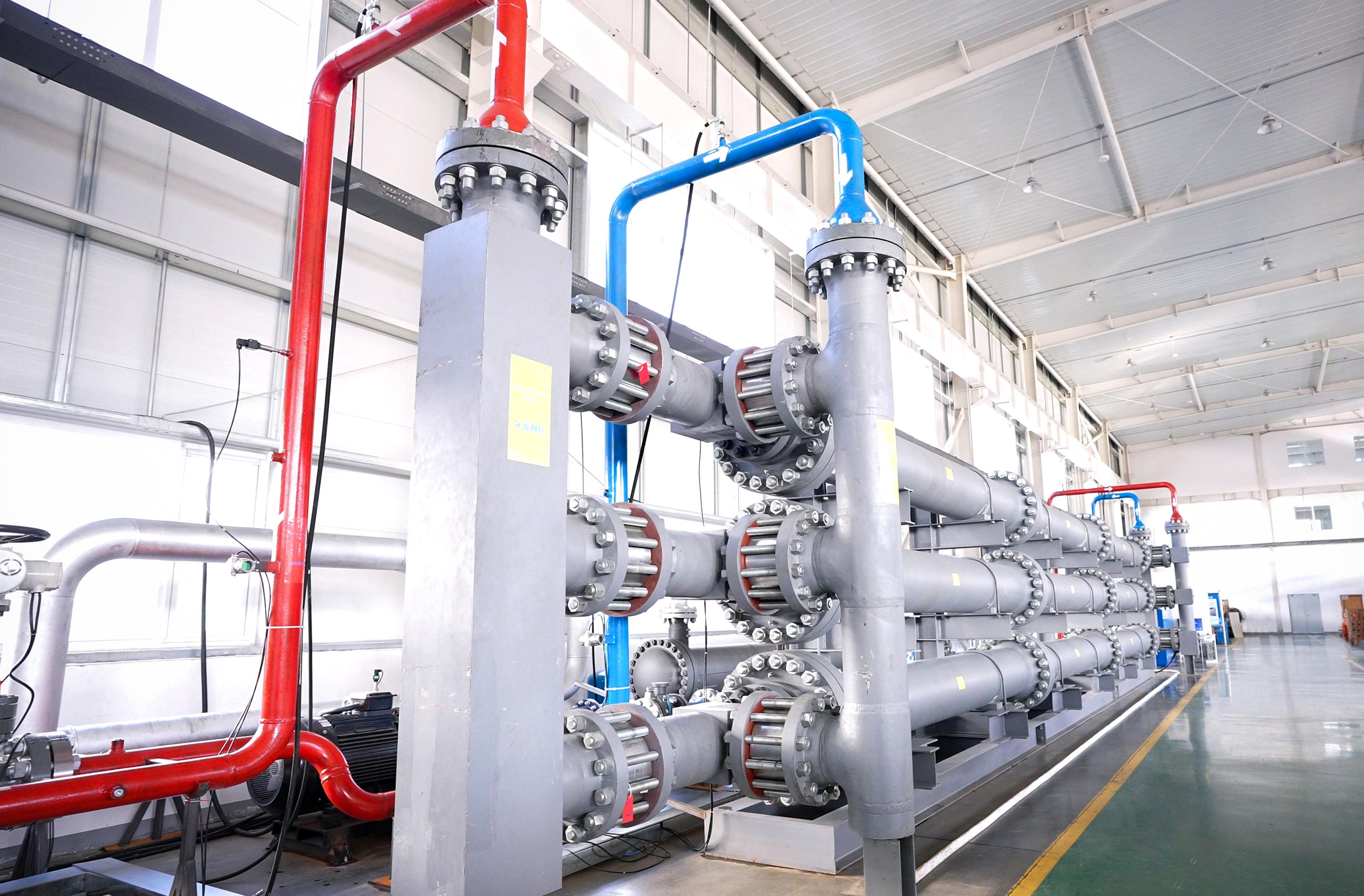
Core Viewpoint - The successful development of China's first large-scale intelligent pressure coupling equipment marks a significant breakthrough in breaking foreign technology monopolies and achieving independent control over key equipment in the field of underground coal mining [1][4]. Group 1: Technological Innovations - The equipment addresses four core technical challenges, including efficient energy conversion between high-pressure and low-pressure fluids, achieving low thermal loss during cold water transmission, ensuring high reliability of core components, and enabling intelligent sensing and control systems [7][8]. - The innovative structural design and pressure pre-balancing strategy effectively eliminate water hammer phenomena, facilitating efficient energy transfer between 16 MPa high-pressure and 4 MPa low-pressure fluids [7]. - The team has developed key components with high reliability, long lifespan, and low flow resistance, suitable for harsh conditions of high pressure and frequent temperature changes [7]. Group 2: Industry Impact - The equipment has been in stable operation for over three months, meeting international advanced performance standards, and is scheduled for deployment in the Liu Zhuang Coal Mine West District in the first half of this year [8]. - This development provides an efficient, economical, and reliable domestic solution for managing heat hazards in underground coal mines, supporting safe production in deep coal mining [8]. - The achievement underscores the importance of collaborative innovation between industry and academia in overcoming critical core technologies and enhances China's capabilities in independent energy equipment development [8].

拥抱低波实物资源 看好煤炭估值修复
2026-02-03 02:05
Summary of Conference Call on Coal Industry Industry Overview - The focus of the conference call was on the coal industry, particularly the recent trends in coal prices and inventory levels [1][2][5]. Key Points and Arguments 1. **Coal Price Trends**: - Coal prices have started to rise, with Qinhuangdao's 5500 kcal coal price increasing by 5 yuan from 691 to 696 yuan. High-calorie coal from Yulin saw a significant increase of over 20 yuan, nearly 4% [1][2]. - Despite the price increase, there remains a notable price inversion between pit and port prices, with Shanxi coal prices around 750 yuan and Inner Mongolia near 800 yuan, compared to port prices below 700 yuan [2]. 2. **Inventory Levels**: - There has been a significant decrease in coal inventory, with Qinhuangdao's inventory down by 2% and the overall inventory at nine northern ports down by 7%, reaching levels lower than in 2023 and 2025 [2][5]. - The current inventory levels indicate a strong correlation with supply and demand dynamics, suggesting a potential for continued price stability [3][5]. 3. **Market Dynamics**: - The market is currently in the latter half of the peak season, with traders expected to remain active in shipping despite the price inversion, anticipating further price increases [2][3]. - The expectation is for minor fluctuations in coal prices, potentially reaching 700-750 yuan, but significant price surges are not anticipated [3]. 4. **International Market Influences**: - International coal prices are also on the rise, with Australian and Indonesian coal prices increasing by approximately 1%. The Australian price is around 705 yuan, while Indonesian coal is priced above 720 yuan [6]. - Indonesia is expected to reduce its coal export quotas significantly, from 790 million tons last year to an anticipated 600 million tons, raising concerns about supply constraints [6][7]. 5. **Government Policies**: - The Indonesian government is implementing policies to control coal prices and maintain tax revenues, which may lead to reduced production and tighter supply [7][9]. - Domestic policies in China are also focused on stabilizing coal supply, with no significant increases in production expected during the 15th Five-Year Plan period [19][20]. 6. **Investment Opportunities**: - The coal sector is viewed as a stable investment option amidst market volatility, with companies like Yancoal and China Shenhua being highlighted for their dividend yields and resilience [22][23]. - The focus is on selecting companies that offer both safety and growth potential, particularly those with strong fundamentals and dividend policies [23][24]. 7. **Future Outlook**: - The overall sentiment is cautiously optimistic, with expectations for a gradual recovery in coal prices and continued interest from investors seeking stable assets [26]. - The coal market is expected to remain tight, with both domestic and international factors contributing to a favorable outlook for coal investments in the near term [26]. Additional Important Content - The call emphasized the importance of coal as a stable asset class in a volatile market, with a focus on the need for investors to seek out reliable investment opportunities [14][22]. - The discussion included insights into the broader energy market, noting the impact of rising oil and gas prices on coal demand and pricing dynamics [11][15]. This summary encapsulates the key insights and discussions from the conference call regarding the coal industry, highlighting price trends, inventory levels, market dynamics, and investment opportunities.


港股通央企红利ETF天弘(159281)跌2.94%,成交额8213.40万元
Xin Lang Cai Jing· 2026-02-02 17:22
Group 1 - The Tianhong CSI Hong Kong Stock Connect Central State-Owned Enterprises Dividend ETF (159281) closed down 2.94% on February 2, with a trading volume of 82.134 million yuan [1] - As of January 30, the fund had a total of 335 million shares and a total size of 343 million yuan, reflecting a decrease of 5.36% in shares and 2.16% in size since December 31, 2025 [1] - The fund's management fee is 0.50% per year, and the custody fee is 0.10% per year [1] Group 2 - The top holdings of the Tianhong CSI Hong Kong Stock Connect Central State-Owned Enterprises Dividend ETF include COSCO Shipping Holdings, China Shenhua Energy, CNOOC, Sinopec Engineering, China National Shipping, China Petroleum & Chemical Corporation, and others, with respective holding percentages [2] - The largest holding is COSCO Shipping Holdings at 4.11%, followed by China Shenhua Energy at 2.68% and CNOOC at 2.56% [2] - The fund manager, He Yuxuan, has managed the fund since August 20, 2025, achieving a return of 2.85% during the tenure [1]
中煤能源股价跌5.12%,国泰基金旗下1只基金位居十大流通股东,持有7250.71万股浮亏损失5075.5万元
Xin Lang Ji Jin· 2026-02-02 02:47
2月2日,中煤能源跌5.12%,截至发稿,报12.98元/股,成交3.61亿元,换手率0.30%,总市值1720.97亿 元。 资料显示,中国中煤能源股份有限公司位于北京市朝阳区黄寺大街1号,成立日期2006年8月22日,上市 日期2008年2月1日,公司主营业务涉及煤炭业务、煤化工业务及煤矿装备制造业务等。主营业务收入构 成为:煤炭业务81.03%,煤化工业务12.48%,煤矿装备业务6.24%,其他业务6.00%,金融业务1.57%, 其他(补充)0.63%。 从中煤能源十大流通股东角度 数据显示,国泰基金旗下1只基金位居中煤能源十大流通股东。国泰中证煤炭ETF(515220)三季度增 持4410.11万股,持有股数7250.71万股,占流通股的比例为0.55%。根据测算,今日浮亏损失约5075.5万 元。 国泰中证煤炭ETF(515220)成立日期2020年1月20日,最新规模86.4亿。今年以来收益9.98%,同类排 名1241/5579;近一年收益11.24%,同类排名3774/4285;成立以来收益164.17%。 数据显示,国泰基金旗下1只基金重仓中煤能源。国泰中证煤炭ETF(515220)四季 ...
节前市场趋稳运行,全年中枢看涨可期
Xinda Securities· 2026-02-01 11:07
Investment Rating - The investment rating for the coal mining industry is "Positive" [2] Core Viewpoints - The current phase is seen as the beginning of a new upward cycle in the coal economy, with a resonance between fundamentals and policies, making it an opportune time to invest in the coal sector [10][11] - The coal supply is expected to tighten due to domestic supply constraints and Indonesia's reduction in coal production targets, which will support a stable recovery in coal prices throughout the year [10][11] - The investment logic of coal capacity shortages remains unchanged, with a short-term supply-demand balance and a long-term gap still present [10][11] - High-quality coal companies are characterized by high profitability, cash flow, return on equity (ROE) of 10-15%, and dividend yields exceeding 5% [10][11] - The coal sector is considered undervalued, with overall valuation expected to improve, and public funds currently underweight in coal holdings [10][11] Summary by Sections 1. Coal Prices - As of January 31, the market price for Qinhuangdao port thermal coal (Q5500) is 691 CNY/ton, up 5 CNY/ton week-on-week [3][29] - The international thermal coal offshore price for Newcastle NEWC5500 is 74.5 USD/ton, up 0.7 USD/ton week-on-week [3][29] - The price for coking coal at Jing Tang port remains stable at 1780 CNY/ton [31] 2. Coal Supply and Demand - The capacity utilization rate for sample thermal coal mines is 88.3%, down 1.3 percentage points week-on-week [10][49] - Daily coal consumption in inland provinces decreased by 8.30 thousand tons/day (-1.8%) [50] - Daily coal consumption in coastal provinces decreased by 7.70 thousand tons/day (-3.3%) [50] 3. Industry Performance - The coal sector saw a 3.98% increase this week, outperforming the broader market [13][16] - The thermal coal segment rose by 4.07%, while the coking coal segment increased by 3.92% [16] 4. Future Outlook - The coal supply bottleneck is expected to persist, necessitating new high-quality capacity planning to meet medium to long-term energy demands [11] - The coal sector is characterized by high performance, cash flow, and dividends, with a favorable long-term outlook due to macroeconomic improvements and regulatory changes [11]


2025年蒙煤电子竞拍梳理-20260201
GOLDEN SUN SECURITIES· 2026-02-01 10:41
Investment Rating - The industry investment rating is maintained as "Increase" [5] Core Insights - The report highlights an increase in coal auction listings in Mongolia for 2025, with a total of 40.8832 million tons listed, up by 14.272 million tons. However, the transaction volume is slightly lower than in 2024, at 21.792 million tons, down by 0.576 million tons [2] - The report emphasizes the performance of specific companies, recommending investments in China Coal Energy (H+A), Yanzhou Coal Mining (H+A), China Shenhua Energy (H+A), and Shaanxi Coal and Chemical Industry. It also highlights companies focusing on smart mining, such as Keda Control, and those undergoing turnaround, like China Qinfa [3][7] - The report notes that the core port for coal transactions remains Ganqimaodu, contributing 83% of the total transaction volume [2] Summary by Sections Energy Prices Overview - As of January 30, 2026, Brent crude oil futures settled at $70.69 per barrel, up by $4.81 (7.3%) from the previous week. WTI crude oil futures settled at $65.21 per barrel, up by $4.14 (6.78%) [1] - Natural gas prices showed mixed trends, with Northeast Asia LNG spot prices at $11.68 per million British thermal units, down by $0.13 (-1.11%). The Dutch TTF gas futures settled at €40.65 per megawatt-hour, up by €1.28 (3.24%) [1] - Coal prices increased, with European ARA port coal prices at $101.50 per ton, up by $3.00 (3.05%), and Newcastle port coal prices at $116.75 per ton, up by $5.25 (4.71%) [1] Auction Performance - The report indicates that ETT led the auction with a transaction of 12.5696 million tons, followed by small TT and ER with 5.3632 million tons and 3.1296 million tons, respectively. The report also notes that coking coal transactions totaled 13.6192 million tons, down by 3.0656 million tons, while thermal coal transactions increased by 3.584 million tons to 8.1728 million tons [6] Key Stocks - The report provides a detailed table of recommended stocks, including: - China Coal Energy (601898.SH) with an EPS forecast of 1.21 for 2025 and a PE ratio of 11.32 - China Shenhua Energy (601088.SH) with an EPS forecast of 2.56 for 2025 and a PE ratio of 16.38 - Yanzhou Coal Mining (600188.SH) with an EPS forecast of 0.99 for 2025 and a PE ratio of 14.86 [7]

