SUNAC(01918)

Search documents
融创碧桂园旭辉相继官宣,一周内三家房企债务重组落地
Di Yi Cai Jing· 2025-12-30 03:32
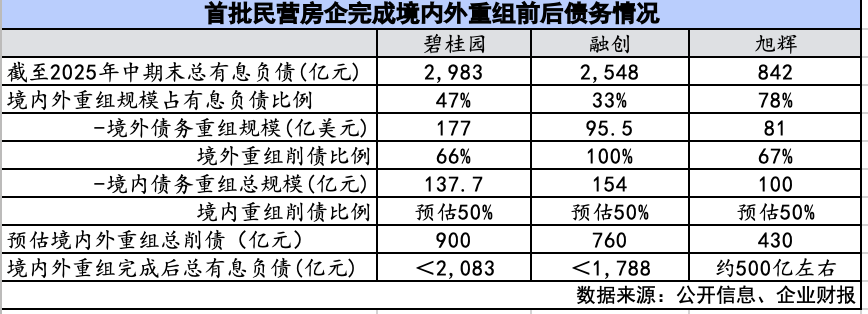
Core Viewpoint - The debt restructuring of real estate companies has entered a "2.0" phase, with significant progress in reducing debt and improving financial stability, particularly for major private firms like Country Garden, Sunac, and CIFI [2][3]. Group 1: Debt Restructuring Progress - By December 2025, major real estate companies have successfully completed their debt restructuring, significantly reducing their total debt and alleviating immediate repayment pressures [2]. - Country Garden announced a restructuring effective from December 30, 2025, while CIFI and Sunac also confirmed the completion of their overseas debt restructuring [2]. - The total debt reduction achieved by these companies is estimated to be around 1.2 trillion yuan, with approximately 21 distressed firms having completed their debt restructuring this year [4]. Group 2: Changes in Debt Restructuring Models - The debt restructuring model has shifted from "extension strategies" to "deep restructuring," focusing on substantial debt reduction rather than merely extending repayment timelines [3]. - Current typical methods for debt restructuring include debt-to-equity swaps, asset-for-debt exchanges, and long-term extensions, with debt reduction ratios ranging from 40% to 70% [3]. Group 3: Financial Metrics Post-Restructuring - After restructuring, the total interest-bearing liabilities for Country Garden, Sunac, and CIFI are projected to be below 208.3 billion yuan, 178.8 billion yuan, and approximately 50 billion yuan, respectively [4]. - The overseas debt restructuring for these companies has seen significant reductions, with Country Garden reducing its overseas debt by 66% and CIFI by 67% [4]. Group 4: Future Outlook and Challenges - The real estate industry is expected to continue facing challenges, with some companies like China Fortune Land Development encountering new issues in their restructuring processes [5]. - The focus for 2026 will be on balancing risk prevention and transformation, with expectations that the debt restructuring process will accelerate, contributing to the long-term health of the industry [5].


融创中国(01918.HK):根据集友重组契约发行2.79亿股新股
Ge Long Hui· 2025-12-29 09:41
格隆汇12月29日丨融创中国(01918.HK)发布公告,2025年12月29日,根据集友重组契约(定义见公司日 期为2025年12月17日的公告)配发及发行约2.79亿股新股。 ...
融创中国根据集友重组契约发行2.79亿股新股
Zhi Tong Cai Jing· 2025-12-29 09:39
融创中国(01918)发布公告,于2025年12月29日,根据集友重组契约配发及发行2.79亿股新股。 ...
融创中国(01918)根据集友重组契约发行2.79亿股新股
智通财经网· 2025-12-29 09:38
智通财经APP讯,融创中国(01918)发布公告,于2025年12月29日,根据集友重组契约配发及发行2.79亿 股新股。 ...
融创中国(01918) - 翌日披露报表
2025-12-29 09:32
FF305 翌日披露報表 (股份發行人 ── 已發行股份或庫存股份變動、股份購回及/或在場内出售庫存股份) 表格類別: 股票 狀態: 新提交 公司名稱: 融創中國控股有限公司(「本公司」) 呈交日期: 2025年12月29日 如上市發行人的已發行股份或庫存股份出現變動而須根據《香港聯合交易所有限公司(「香港聯交所」)證券上市規則》(「《主板上市規則》」)第13.25A條 / 《香港聯合交易所有限公司GEM證券 上市規則》(「《GEM上市規則》」)第17.27A條作出披露,必須填妥第一章節 。 | 第一章節 | | | | | | | | | | --- | --- | --- | --- | --- | --- | --- | --- | --- | | 1. 股份分類 | 普通股 | 股份類別 | 不適用 | | 於香港聯交所上市 | 是 | | | | 證券代號 (如上市) | 01918 | 說明 | | | | | | | | A. 已發行股份或庫存股份變動 | | | | | | | | | | | | | 已發行股份(不包括庫存股份)變動 | | 庫存股份變動 | | | | | 事件 | | 已 ...
1.2万亿化债背后:房企从“债务清零”到“可持续经营”的闯关之路
Xin Lang Cai Jing· 2025-12-29 03:50
Core Insights - The real estate industry is transitioning from a passive approach of "buying time" to an active strategy of "debt reduction," as evidenced by the significant debt restructuring efforts of major companies like Sunac and Kinsale [1][2][8] - The total debt resolution scale has reached 1.2 trillion yuan, involving 21 distressed real estate companies, marking a pivotal shift in the industry's approach to managing debt [2][8] Group 1: Debt Restructuring Cases - Sunac China has become the first large real estate company to achieve a near-zero balance on its $9.6 billion offshore debt through a market-oriented restructuring process [3][9] - Kinsale has completed a judicial reorganization, resolving 147 billion yuan in debt, which is the largest restructuring case in the history of the real estate industry [4][10] - The restructuring efforts of both companies highlight a fundamental change in the debt resolution strategy, moving towards substantial debt reduction rather than merely extending repayment periods [2][8] Group 2: Market Reactions and Strategies - Sunac's innovative full debt-to-equity swap plan received overwhelming support from creditors, with 98.5% voting in favor, significantly reducing its overall repayment pressure by approximately 60 billion yuan [3][9] - Kinsale's restructuring involved a comprehensive repayment plan that included cash, stock, and trust beneficiary rights, with significant collaboration from local government and investment entities [4][10][11] - Both companies are now focusing on light-asset transformation strategies, such as property management and asset management, to restore their operational capabilities [5][12] Group 3: Future Considerations - The successful debt resolution does not signify the end of challenges; sustainable operational capacity will be the key measure of whether these companies can truly "revive" [5][12] - The industry is expected to shift towards a focus on cash flow, operational efficiency, and sustainable development, moving away from previous expansion models [6][13] - The overall health of the real estate sector will depend on aligning with market demand and optimizing the financing environment, including the implementation of effective inventory reduction policies [6][13]

环球房产周报:住建部部署2026楼市工作重点,北京放宽限购,多家房企债务重组进展……
Huan Qiu Wang· 2025-12-29 03:03
Policy News - The national housing and urban-rural construction work conference emphasized the promotion of a "current housing sales system" by 2026 to fundamentally prevent delivery risks, while also enhancing the supervision of pre-sale funds to protect buyers' rights [1] - Beijing has relaxed housing purchase restrictions for non-local and multi-child families, reducing the social security or tax payment period for purchasing homes within the Fifth Ring from 3 years to 2 years, and from 2 years to 1 year for areas outside the Fifth Ring [2] - In Henan, multi-child families can increase their housing provident fund loan limit by 20%, and those with one existing home can be recognized as first-time buyers for a new purchase [4] Market News - The one-year and five-year Loan Prime Rates (LPR) remain unchanged at 3.0% and 3.5%, respectively [5] - From January to November 2025, 25,800 old urban residential communities were newly started for renovation, exceeding the annual target by 800 [6] Real Estate Transactions - Haikai won a land parcel in Haidian District, Beijing, for 8.456 billion yuan, with a floor price of approximately 69,600 yuan per square meter [7] - Beijing Construction and Urban Development consortium acquired a land parcel in Fengtai District for a base price of 2.472 billion yuan, with a floor price of about 42,000 yuan per square meter [8] - Wuhan's land market saw a significant surge, with 41 parcels sold over three days, totaling approximately 22.488 billion yuan [9] Company News - Sunac China announced the comprehensive restructuring of approximately 9.6 billion USD in existing debt, effective December 23, 2025 [11] - Oceanwide Group completed a debt restructuring involving 476 million USD in secured notes and 212 million USD in zero-coupon convertible bonds [12] - Seazen Group reported that 85.48% of its creditors supported its debt restructuring plan, with a court hearing scheduled for March 19, 2026 [14]



融创中国(01918) - 海外监管公告
2025-12-28 23:30
香港交易及結算所有限公司及香港聯合交易所有限公司對本公告的內容概不負責,對其準確性或完整 性亦不發表任何聲明,並明確表示,概不對因本公告全部或任何部份內容而產生或因倚賴該等內容而 引致的任何損失承擔任何責任。 本公告及其任何副本概不得直接或間接在美國,或在刊發或派發本公告屬違法的任何其他司法權區刊 發或派發。 本公告並不構成於美國或任何其他未有根據任何有關司法權區證券法例登記或合資格前作出有關提 呈、要約或出售則屬不合法的司法權區提呈出售或提呈購買任何證券的要約。倘無登記或獲適用豁免 登記規定,證券不得在美國提呈或出售。於美國公開發售任何證券將須以招股章程形式作出。該招股 章程將載有進行提呈發售的公司以及其管理層及財務報表的詳細資料。本公司並無計劃在美國公開發 售任何證券。 SUNAC CHINA HOLDINGS LIMITED 融創中國控股有限公司 (於開曼群島註冊成立的有限公司) (股份代號:01918) 海外監管公告 本海外監管公告乃由融創中國控股有限公司(「本公司」,連同其附屬公司,統稱「本 集團 」)根據香港聯合交易所有限公司(「 聯交所 」)證券上市規則(「 上市規則 」)第 13.10B條之規 ...
中资离岸债风控双周报(12月15日至26日):一级市场发行趋缓 二级市场涨跌不一
Xin Hua Cai Jing· 2025-12-27 13:56
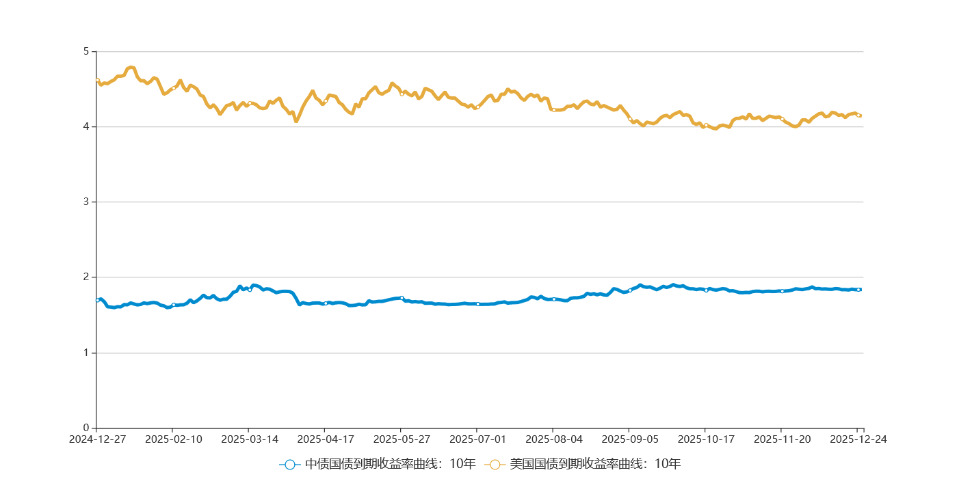
二级速览: 中资美元债二级市场涨跌不一,截至12月26日,Markit iBoxx中资美元债综合指数周度上行0.06%,报251.26;投资级美元债指数周度上涨0.08%, 报244.35;高收益美元债指数周度下跌0.14%,报 241.3。地产美元债指数周度涨0.12%,报178.37;城投美元债指数周度下跌0.01%,报153.9;金融 美元债指数周度下跌0.06%,报290.9。 基准利差: 截至12月26日,中美10年期基准国债利差缩小至229.47bp,较前一周缩小2.13bp。 评级异动: 近两周市场情况 一级市场: 据新华财经统计,近两周(12月15日至12月26日)共发行12笔中资离岸债券,其中包括6笔离岸人民币债券和6笔美元债券,发行规模分别为430.58 亿元人民币和2.96亿美元。近两周发行方式为直接发行的债券共9只,担保发行2只,"直接发行+担保"的1只。 在离岸人民币债券领域,近两周人民币债券单笔发行最大规模为10.5亿元人民币,由南安市发展投资集团有限公司发行。近两周人民币债券发行最 高票息为6.9%,由淄博高新国有资本投资有限公司发行。 在中资美元债券市场,近两周美元债券单笔最大 ...



免除675亿境外债,它还能重回牌桌了吗?
3 6 Ke· 2025-12-26 02:57
Core Viewpoint - Sunac China has successfully restructured $9.6 billion (approximately 67.5 billion RMB) of its offshore debt through a debt-to-equity swap, which means that this amount of debt has been waived, allowing the company to potentially return to the market [1] Debt Restructuring Details - The entire $9.6 billion offshore debt has been converted into equity, with no cash payment from Sunac. This indicates significant losses for overseas creditors [2] - Creditors will receive convertible bonds that will be forced to convert into Sunac's shares within six months, with a conversion price of HKD 6.8 per share, significantly higher than the current price of HKD 1.29. This results in a cash recovery rate of only 20% based on the debt's discounted value [2] Creditor Agreement Rationale - Creditors agreed to these unfavorable terms due to the nature of offshore debt, which is primarily held by financial institutions that are easier to negotiate with. They are aware of the high-risk, high-reward nature of investing in Chinese enterprises [3] - The lack of collateral for offshore debts places creditors in a weak negotiating position, as legal actions would yield no assets due to the majority of the company's assets being in China [3] Financial Position Post-Restructuring - Despite the waiver of 67.5 billion RMB in offshore debt, Sunac's total liabilities amount to 805.9 billion RMB, with 759 billion RMB due within a year. The company also faces numerous lawsuits totaling approximately 166.3 billion RMB [4] - Sunac's revenue has been declining sharply, with a 41.7% year-on-year drop to 19.9 billion RMB in the first half of 2025, and a projected 52% decline in 2024 compared to 2023 [4] Significance of the Debt Waiver - The successful restructuring serves more as a confidence booster and a reference for future domestic debt handling rather than a complete solution to Sunac's financial troubles [5] - The restructuring indicates a gradual alleviation of Sunac's debt issues and may influence domestic creditors to accept similar debt-to-equity swap proposals [5] Future Business Prospects - Sunac has three main business segments: real estate, cultural tourism, and property management. While traditional residential development may not return to its peak, there are opportunities in integrated development driven by cultural tourism [6] - The company's cultural tourism business, particularly in indoor snow tourism, is expected to drive growth. For instance, the Shenzhen Qianhai Ice World project is projected to attract over 1.25 million visitors annually, generating an estimated revenue of 650 million RMB [6][8] Conclusion - The successful restructuring of Sunac China's offshore debt, while not a complete solution to its financial challenges, is a significant positive signal. It may pave the way for resolving domestic debt issues and requires the company to leverage its cultural tourism segment to improve its financial performance and stock price [8]