FOSUNPHARMA(02196)

Search documents
复星医药:控股子公司药品获美国FDA注册批准
Ge Long Hui· 2025-11-14 09:05
Core Viewpoint - Fosun Pharma's subsidiary, Shanghai Fuhong Hanlin Biotechnology Co., Ltd., received FDA approval for its self-developed injectable drug POHERDY®1, indicating a significant advancement in the treatment of HER2-positive metastatic breast cancer and early-stage breast cancer [1] Group 1: FDA Approval Details - The FDA approved the biologics license application (BLA) for POHERDY®1, which is an injectable solution for intravenous use [1] - The approved indications include treatment for adult patients with HER2-positive metastatic breast cancer who have not previously received anti-HER2 treatment or chemotherapy [1] - The drug is also approved for use in combination with trastuzumab and chemotherapy for early-stage breast cancer patients, specifically for those with locally advanced, inflammatory, or early-stage breast cancer [1] Group 2: Treatment Combinations - POHERDY®1 is indicated for use in conjunction with trastuzumab and docetaxel for treating metastatic breast cancer [1] - It is also part of a comprehensive treatment regimen for early-stage breast cancer patients with high recurrence risk [1] - The drug serves as neoadjuvant therapy for adult patients with HER2-positive, locally advanced, inflammatory, or early-stage breast cancer [1]
复星医药(02196.HK):11月12日南向资金增持9.75万股
Sou Hu Cai Jing· 2025-11-12 19:36
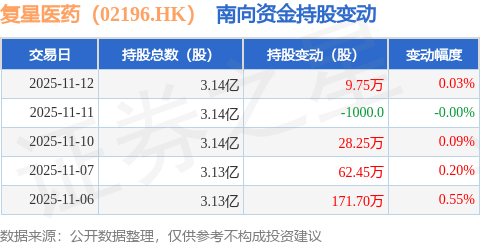
Core Viewpoint - Southbound funds have increased their holdings in Fosun Pharma (02196.HK), indicating growing investor confidence in the company [1]. Group 1: Shareholding Changes - On November 12, 2025, southbound funds increased their holdings by 97,500 shares, representing a change of 0.03% [2]. - Over the past five trading days, there have been four days of net increases, totaling 2.72 million shares [1][2]. - In the last 20 trading days, there were 13 days of net increases, amounting to 6.41 million shares [1]. Group 2: Current Shareholding Status - As of now, southbound funds hold a total of 314 million shares of Fosun Pharma, which accounts for 56.85% of the company's issued ordinary shares [1][2]. Group 3: Company Overview - Fosun Pharma is primarily engaged in the research, manufacturing, and sales of pharmaceutical products, operating through five segments [2]. - The pharmaceutical segment focuses on innovative drugs, mature pharmaceutical products, and vaccines [2]. - The medical devices and diagnostics segment is involved in the manufacturing and sales of molecular diagnostics, immunodiagnostics, and microbiological diagnostic devices [2]. - The healthcare services segment operates an integrated online and offline medical service platform [2]. - The pharmaceutical distribution and retail segment is responsible for the wholesale and retail of pharmaceutical products [2]. - The company's products are mainly used in the treatment of oncology, immunology, and central nervous system disorders [2].

调整结束,大反攻开始?
Sou Hu Cai Jing· 2025-11-12 08:33
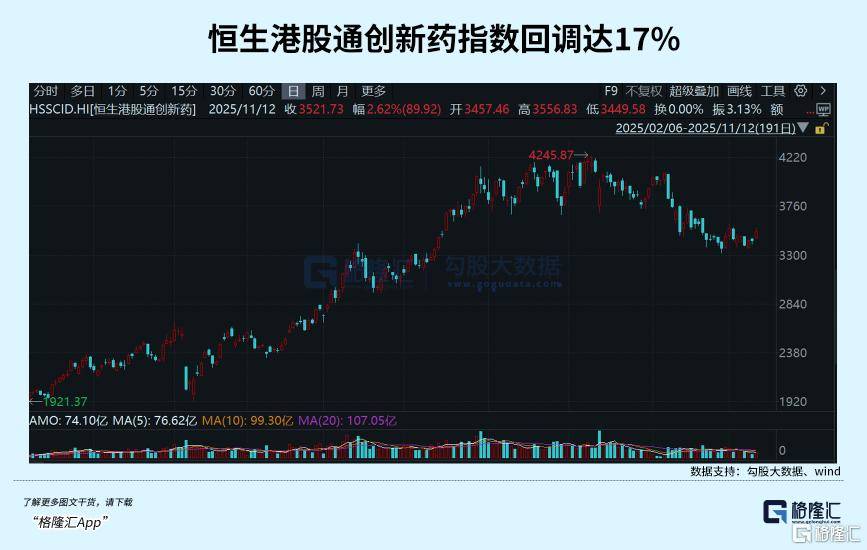
Core Viewpoint - The innovative drug sector has regained market attention after a two-month adjustment period, driven by macroeconomic liquidity easing and strong Q3 earnings reports from key companies [1][3]. Group 1: Performance and Financials - The Hang Seng Innovative Drug ETF (159316) rose by 2.52%, while the low-fee Innovative Drug ETF from E Fund (516080) increased by 31% year-to-date [2]. - BeiGene reported Q3 revenue of 27.595 billion yuan, a 44.21% year-on-year increase, with a net profit of 1.562 billion yuan, reversing previous losses [3]. - Innovent Biologics announced over 3.3 billion yuan in product revenue for Q3 2025, maintaining approximately 40% growth [3]. - Other leading companies like WuXi AppTec, Hengrui Medicine, Shanghai Pharmaceuticals, and Fosun Pharma reported revenues of 32.857 billion yuan, 23.188 billion yuan, 21.507 billion yuan, and 2.939 billion yuan respectively, with net profits of 12.076 billion yuan, 5.751 billion yuan, 5.147 billion yuan, and 2.523 billion yuan [3]. Group 2: Industry Trends - A total of 81 innovative drug companies reported a 13.84% year-on-year increase in net profit, with 9 companies turning losses into profits, indicating a shift towards commercialization in the sector [4]. - The total value of outbound licensing transactions for Chinese innovative drugs exceeded 101.24 billion USD, significantly surpassing the projected 51.9 billion USD for 2024 [5]. - Notable licensing deals include Hengrui's collaboration with GSK valued at up to 12 billion USD and a deal between 3SBio and Pfizer worth over 1 billion USD [6]. Group 3: Market Dynamics - The innovative drug sector has experienced a 17% correction since early September, suggesting it may be nearing a bottom [8]. - Historical data indicates that corrections of 15%-20% often signify deep pullbacks, but current macroeconomic conditions are not as extreme as in previous downturns [11]. - The likelihood of a significant market drop exceeding 20-30% is low, given the improving macroeconomic environment and corporate earnings recovery [12]. Group 4: Future Growth Drivers - The domestic policy environment has shifted to a more stable and supportive framework for innovative drug development, with recent healthcare negotiations enhancing commercial prospects [18]. - China's biotech sector ranks second globally in clinical pipelines, with over 20% of global clinical projects, indicating strong future product launches [20]. - Chinese companies are transitioning from "me-too" drugs to "First-in-Class" and "Best-in-Class" innovations, leveraging lower costs and faster clinical trial processes [23]. Group 5: Conclusion - The innovative drug sector is entering a favorable phase characterized by policy improvements, international expansion, and strong earnings, suggesting a potential market rebound [25]. - The increasing interest in innovative drug ETFs reflects the challenges of direct stock investment in this complex sector, with products like the Hang Seng Innovative Drug ETF providing a focused investment vehicle [25].


21专访丨复星国际陈启宇:源头创新,产品之外商业化能力亦是核心
2 1 Shi Ji Jing Ji Bao Dao· 2025-11-11 23:11
Core Insights - The Chinese pharmaceutical innovation sector has seen a significant increase in transaction amounts, surpassing $100 billion in overseas deals, indicating a robust growth in the industry [1][2] - The National Medical Products Administration (NMPA) approved 43 new drugs in the first half of 2025, with domestic drugs accounting for 40, showcasing an acceleration in the pace of innovation [1] - Shanghai has emerged as a key hub for biopharmaceuticals, with 9 innovative drugs approved for overseas markets in 2023, reflecting a shift from single breakthroughs to batch outputs [2][3] Industry Trends - The total number of global pharmaceutical transactions reached 682, with a total value of $191 billion in the first three quarters of 2025, indicating a strong upward trend [1] - Chinese pharmaceutical companies are transitioning from being participants in the global market to becoming significant contributors to global health [3][4] - The focus on "source innovation" is critical for Chinese companies to differentiate themselves and avoid homogenization in drug development [2][4] Challenges and Opportunities - Despite the growth, the Chinese pharmaceutical industry faces challenges such as weak foundational research and a predominance of "follow-up" innovation, leading to issues with target homogenization [2][6] - There is a pressing need for differentiation in innovation to create value, as highlighted by industry leaders [2][5] - The industry must address the affordability of innovations for the Chinese population, necessitating a shift in cost strategies compared to Western markets [5][6] Strategic Directions - Companies are encouraged to adopt a rational approach to innovation, focusing on unmet clinical needs and leveraging emerging technologies to address these demands [7][8] - The ability to sell drugs globally is becoming a key competitive advantage, with companies needing to build strong commercial capabilities alongside their R&D efforts [9][10] - Collaborative approaches and localized strategies are essential for navigating international markets effectively [10][11] Future Outlook - The potential for "source innovation" to drive the next wave of growth in the Chinese pharmaceutical industry is recognized, contingent on overcoming existing barriers [11]

与复星医药“分手”后,真实生物第三次冲击港股IPO
Shen Zhen Shang Bao· 2025-11-11 04:09
Core Viewpoint - Real Bio Technology Co., Ltd. has submitted its application for listing on the Hong Kong Stock Exchange for the third time, with CICC as its sole sponsor, after previous unsuccessful attempts in August 2022 and February 2025 [1] Group 1: Company Overview - Real Bio, established in 2012, focuses on the development, manufacturing, and commercialization of innovative drugs for viral infections, tumors, and cardiovascular diseases [1] - The company's core product, Azvudine, has received conditional approval in China for treating HIV and COVID-19, and is exploring indications for tumors [1] Group 2: Financial Performance - In 2023, the company generated revenue of 344 million yuan, with 99.2% coming from collaboration with Fosun Pharma; however, revenue dropped over 30% in 2024 due to decreased demand post-pandemic, with revenue further declining to 16.53 million yuan in the first half of 2025 [1][2] - Research and development expenses for 2023, 2024, and the first half of 2025 were 238 million yuan, 151 million yuan, and 54.05 million yuan, respectively [2] - The company has not yet achieved profitability, reporting pre-tax losses of 784 million yuan, 40.04 million yuan, and 165 million yuan for the years 2023, 2024, and the first half of 2025 [2] Group 3: Market Strategy and Partnerships - Real Bio's primary customer in 2023 was Fosun Pharma, accounting for 100% of sales; however, the partnership ended in September 2024, leading to new collaborations with 65 offline distributors and 9 online distributors for Azvudine sales [2] - The company has completed two rounds of financing, raising 713 million yuan, with a post-money valuation of 3.56 billion yuan after the B round in 2022 [3] - The IPO proceeds will primarily fund the development of new indications for Azvudine, particularly in tumor combination therapies, as well as clinical advancement of core pipelines and expansion of commercialization channels [3]

医学专家与企业界共同推动高磷血症诊疗转向“主动管理”
Zhong Guo Xin Wen Wang· 2025-11-11 01:13
Core Insights - The event "Caring for Dialysis Patients" aims to shift the management of hyperphosphatemia in dialysis patients from passive to proactive, focusing on standardized treatment processes to improve patient outcomes [1][3]. Group 1: Hyperphosphatemia in Dialysis Patients - Hyperphosphatemia is a common and severe complication among dialysis patients, with a prevalence rate of 76% in China, while the phosphorus control rate is only 30%-40% [3]. - The innovative product, Vantive® (Tianapano hydrochloride), is the first and only approved phosphate absorption inhibitor, which significantly improves phosphorus control rates to over 70% and has the potential to alleviate constipation [3][4]. Group 2: Integrated Management and Patient-Centric Approach - The focus is on creating a comprehensive health solution for chronic kidney disease (CKD) management, emphasizing patient-centered care and integrated management strategies [4]. - Companies are exploring digital tools to provide long-term management support for patients, aiming to bridge the gap in standardized treatment [4][5]. Group 3: Modern Medical Management Philosophy - Modern kidney disease management emphasizes individualized treatment and patient experience, allowing healthcare providers to choose strategies that enhance efficacy while minimizing patient burden [5]. - Effective communication and long-term adherence are crucial for successful phosphorus management, with a focus on improving patients' quality of life alongside achieving treatment goals [5].

打破“进口依赖”,中国医药企业创新速度提升
Zhong Guo Xin Wen Wang· 2025-11-10 16:08
Core Insights - The eighth China International Import Expo showcased unprecedented innovation in the Chinese pharmaceutical and healthcare industry, transitioning from "catching up" to "co-creating" [1] Group 1: Technological Breakthroughs - The demand for high-throughput and automated tools in personalized medicine and gene therapy is driving domestic companies to accelerate the localization of core equipment and system solutions [2] - Domestic high-speed centrifuges have surpassed the critical speed of 100,000 RPM, achieving performance metrics on par with international standards, breaking the long-standing 62% market share held by foreign companies [2] - AI applications have evolved from standalone tools to comprehensive system solutions, enhancing blood management from passive response to proactive alerts [2] Group 2: Treatment Innovations - The trend of younger patients with neurological diseases has shifted focus towards precise diagnosis and non-invasive treatments, with highlights including the magnetic resonance-guided focused ultrasound system and a 128-channel magnetoencephalography system [3] - The domestic CAR-T product, Yikaida, is now included in various health insurance plans, benefiting over a thousand patients across more than 190 medical institutions [3] Group 3: Accelerated Collaboration - The expo serves as a platform for collaboration, with emerging pharmaceutical companies introducing globally innovative drugs and signing multiple cooperation agreements [4] - Established companies are transitioning from simple procurement to integrated collaboration involving products, technology, and services [4] - The National Healthcare Security Administration's participation signals China's commitment to stable demand and expanded procurement for innovative medical products [5] Group 4: Open Innovation Pathways - The Chinese pharmaceutical industry is increasingly recognized globally for its innovations, with a focus on source innovation and open collaboration as key pathways to accelerate progress [5] - The expo reflects a deeper trend where China is not only a consumer of global innovations but is also becoming a co-builder of global innovation pathways [5]

直观医疗亚太区总裁葛岚:期待“十五五”期间进一步支持手术机器人的临床应用与推广
Mei Ri Jing Ji Xin Wen· 2025-11-10 13:21
Core Insights - The eighth China International Import Expo (CIIE) was held in Shanghai from November 5 to 10, showcasing Intuitive Surgical and Fosun Pharma's joint venture, Intuitive Fosun, which presented multiple robotic systems and digital innovations, including the Da Vinci surgical robot and Ion bronchial robot [1][2] - Intuitive Surgical has witnessed rapid growth in China's surgical robotics market but faces challenges such as approval time discrepancies, quota restrictions, and domestic competition [1][2] - The company emphasizes building a competitive moat by focusing on value assessment rather than just price considerations [1][4] Product Approval and Market Presence - The Da Vinci surgical robot and Ion bronchial robot have been showcased, with the Da Vinci Xi robot approved in China in June 2023, while the single-port Da Vinci SP system is still undergoing approval [2][3] - As of September 2025, the Da Vinci surgical robot has been installed in over 370 hospitals in China, with more than 480 units in operation, serving over 810,000 patients, making China the company's second-largest market globally [3] - There is a significant time gap in product approvals between the U.S. and China, with the Ion bronchial robot taking five years longer to gain approval in China compared to the U.S. [3] Strategic Focus and Collaboration - The company aims to optimize the product approval process in China by leveraging its experience and collaborating with the government to utilize real-world data research [4][5] - Intuitive Fosun's establishment of a headquarters in Shanghai and multiple training centers across China reflects its commitment to local production, research, and training [2][5] - The company is focused on enhancing the core competitiveness of the Da Vinci surgical robot and aims to provide comprehensive clinical training and support to hospitals [5][6] Industry Development and Future Outlook - The company expresses a desire for more partnerships with local enterprises to advance the surgical robotics and medical technology innovation sectors [6] - The Chinese government’s management of large medical equipment, including surgical robots, poses limitations on the number of approved medical institutions, which the company aims to navigate by enhancing its product offerings and support [5]

改写“进口依赖”!进博会医疗展区直击:十万转离心机破壁、伽玛刀“中国造”、CAR-T疗法可及
Hua Xia Shi Bao· 2025-11-10 11:58
Group 1: Haier Biomedical - Haier Biomedical showcased multiple technological products and digital solutions aimed at addressing practical needs in research and laboratory settings, including a super-speed centrifuge that achieves speeds of 100,000 RPM, filling a domestic gap in the field [2] - The company introduced a fully enclosed automated cell expansion system that enhances consistency and reproducibility in experiments by automating the cell culture process and ensuring data traceability [2] - Haier's biological sample management solution utilizes NAIT recognition technology for automated management in ultra-low temperature environments, significantly reducing labor costs and improving data accuracy [2] - The company presented energy-efficient products, such as ultra-low temperature storage boxes, which reportedly consume 50% less electricity than traditional models [2][3] - Haier Biomedical's products and solutions are now available in over 160 countries and regions, with a commitment to advancing technology development based on user challenges in real-world applications [3] Group 2: Medtronic - Medtronic announced the full localization of its product line in China, showcasing its "fully localized innovative solutions" at the expo, which includes core products for tumor treatment [5] - The company highlighted its Leksell Gamma Knife Elekta Esprit, which supports millimeter-level precision in radiation therapy, and the Elekta Evo platform that integrates AI imaging technology to enhance operational efficiency [5][6] - Medtronic's Elekta Unity system has treated over 10,000 patients since its introduction in China, covering more than 40 types of tumors and generating over 160 related clinical research papers [5][7] - The company aims to support China's "Healthy China 2030" initiative by promoting high-quality radiation therapy technology [7] Group 3: Fosun Pharma - Fosun Pharma presented various innovative drugs and high-end medical devices at the expo, focusing on improving treatment outcomes and quality of life for patients with diseases such as tumors and neurological disorders [8] - The company introduced the Da Vinci surgical robot and CAR-T cell therapy product Yikaida, which has been included in over 110 health insurance plans, enhancing accessibility for lymphoma patients [9] - Fosun's Marie particle therapy system, approved by the FDA, offers a compact design for rapid deployment in hospitals, improving treatment precision for lung and breast tumors [8][9] - The company is actively promoting the application of artificial intelligence in healthcare, with platforms designed for drug decision-making and clinical trial predictions [10]

专访复星国际陈启宇:源头创新,产品之外商业化能力亦是核心
2 1 Shi Ji Jing Ji Bao Dao· 2025-11-10 09:36
Core Insights - China's pharmaceutical innovation is experiencing a significant increase in transaction volume, with overseas transactions exceeding $100 billion, indicating a robust growth in the sector [1][5] - The National Medical Products Administration (NMPA) has approved 43 new drugs in the first half of 2025, with a notable acceleration in the pace of innovation drug approvals [1][4] - Despite the growth in quantity, the quality of innovation remains a concern, with a predominance of "follow-up" innovation and issues of target homogeneity [2][6] Industry Trends - The global pharmaceutical transaction volume reached $191 billion in the first three quarters of 2025, with China contributing $937 billion, showcasing its competitive position in the global market [1][5] - Shanghai has emerged as a key hub for biopharmaceuticals, with 9 innovative drugs approved for overseas markets in 2023, leading the nation in this regard [4][5] - The shift from "single product authorization" to a focus on systemic capabilities and deep collaboration reflects a changing strategy among Chinese pharmaceutical companies [13] Challenges and Opportunities - The industry faces challenges such as weak foundational research, a trust crisis in collaborations, and funding difficulties, which hinder the development of truly innovative products [8][9] - There is a pressing need for differentiation in innovation, with a focus on "source innovation" to avoid the pitfalls of homogeneous competition [2][6][12] - Companies are encouraged to adopt a cost-effective approach to innovation, particularly in the context of China's large population and healthcare affordability [7][10] Strategic Directions - Companies must recognize unmet clinical needs and maintain a rational approach to innovation, avoiding overcrowding in competitive areas [9][10] - The ability to sell innovative drugs globally is becoming a critical measure of a company's success, surpassing mere research capabilities [12][14] - Building strong global commercialization capabilities through partnerships and localized teams is essential for navigating international markets [13][14]