
PING AN OF CHINA(02318)

Search documents
5万亿ETF市场迎变局!新玩法来了
中国基金报· 2025-12-15 02:13
Core Viewpoint - The article discusses the transformation of the ETF market in China, highlighting the collaboration between Ping An Securities and 11 leading public funds to create an "investment circle" aimed at enhancing wealth management services and addressing investor pain points [2][3]. Group 1: ETF Market Development - The domestic ETF market has surpassed 5 trillion yuan, prompting a shift in wealth management from merely providing trading channels to building a comprehensive empowerment ecosystem [2]. - Ping An Securities, in partnership with major public funds, launched the "ETF Winter Peak Competition" and introduced the "ETF Investment Circle" to deepen collaboration and create a new wealth management ecosystem [2][8]. Group 2: Investment Circle Strategies - The "ETF Investment Circle" is categorized into four core strategy circles: "Value Hunters," "Drawdown Controllers," "Global Masters," and "Hotspot Catchers," allowing investors to join based on their risk preferences [3][7]. - Each circle offers tailored strategies, enabling users to learn from experienced investors and enhance their investment confidence through community interaction [7]. Group 3: Content and Educational Upgrades - To address the challenge of investors not understanding or being unable to learn, a "Peak Mentor Team" was established, featuring experienced industry professionals who will create short videos covering various investment topics [12]. - This initiative aims to lower the investment threshold for ETFs and serve as a guide for novice investors, aligning with the learning habits of younger generations [12]. Group 4: Tools for Decision-Making - Ping An Securities has integrated advanced ETF tools to enhance decision-making efficiency, addressing common investor challenges such as market sector rotation and product selection [14][18]. - Tools like "Institutional Express" track institutional fund flows, while features like "ETF Rankings" and "ETF Comparison" help users identify high-quality ETFs based on various metrics [18][19]. Group 5: Competition and Engagement - From December 15, 2025, to January 30, 2026, participants can engage in various competitions, including overall rankings and weekly contests, to stimulate interest in ETF investments and promote a more professional and ecological direction in wealth management [25].



中国平安20251212
2025-12-15 01:55
Summary of China Ping An Conference Call Company Overview - **Company**: China Ping An - **Industry**: Insurance and Financial Services Key Points Financial Performance and Market Outlook - Investors are optimistic about China Ping An's performance in Q4 2025 and 2026, particularly regarding net assets and net profits, driven by confidence in industry comparisons and internal metrics [2][4] - The company's valuation in the Hong Kong market is significantly underestimated, indicating substantial upside potential [2][4] - External factors, such as the Federal Reserve's interest rate cuts, are creating favorable conditions for capital inflow, with noticeable increases in foreign investment despite low initial allocations [2][4] - The "Pre享金悦" dividend-type whole life insurance product has received positive market feedback, with strong expectations for Q1 2026 [2][5] Product Development and Business Strategy - In 2025, the company introduced a 6-year premium payment period for its dividend insurance products, maintaining stable margins compared to previous years [2][6] - The value rate is expected to grow by approximately 70% due to regulatory factors and 30% from internal management improvements, such as reduced expense ratios [2][7] - The company is optimistic about the sales performance of its new products, although specific sales data will be available only after January 1, 2026 [5][6] Risk Management and Asset Exposure - The impairment related to Huaxia Happiness is nearing completion, with minimal remaining assets, indicating no significant future losses [2][9] - Exposure to Vanke is limited and manageable, with ongoing efforts to reduce related risks [2][10] - The company is adjusting its investment strategy in response to regulatory changes regarding equity price risk factors, aiming to optimize asset allocation and control risks [2][10] Future Projections - The company anticipates being able to eliminate most impairment issues by 2027, with 2025 and 2026 expected to be relatively smooth years [3][21] - The return on equity (ROE) is projected to rebound to around 17% or higher, which is expected to positively influence stock prices [3][22] - The non-auto insurance policy introduced in mid-October is expected to enhance underwriting profitability in the non-auto segment [2][23][24] Technology and Innovation - The technology segment has not negatively impacted overall group profits, with stable contributions expected moving forward [2][25] - Capital operations from subsidiaries like Lufax and Ping An Good Doctor are anticipated to stabilize, reducing volatility in profit contributions [2][25] Additional Insights - The company plans to maintain a balanced asset allocation strategy in 2026, with a cautious approach to increasing equity exposure despite favorable market conditions [2][17] - The impact of the real estate market on impairment levels is expected to be less severe than in previous years, contributing positively to overall performance [2][19][20] This summary encapsulates the key insights from the conference call, highlighting the company's optimistic outlook, strategic initiatives, and risk management approaches within the insurance and financial services industry.

A股保险股走强,中国太保涨近2%,中国平安涨超1%,中国人保、新华保险等跟涨。
Xin Lang Cai Jing· 2025-12-15 01:45
A股保险股走强,中国太保涨近2%,中国平安涨超1%,中国人保、新华保险等跟涨。 ...



平安证券举办2025私募生态合作伙伴大会
Zhong Zheng Wang· 2025-12-15 01:04
Group 1 - The conference focused on investment opportunities in the capital market, the outlook for the private equity industry, and how securities firms can support the growth and development of private equity funds [1] - Ping An Securities aims to enhance its institutional brokerage service platform to meet the core demands of private equity management institutions in areas such as funding, trading, and value-added services [1][4] - The company has become a strategic partner for numerous private equity funds and plans to continue supporting outstanding private equity institutions to grow and strengthen [1][4] Group 2 - The private equity sector is entering a favorable development cycle, with private equity funds becoming an important choice for investors' asset allocation due to their impressive performance [2] - Competition in the private equity space is intensifying, making it crucial for private equity institutions to collaborate with a securities firm that has comprehensive service capabilities [2] - Ping An Securities leverages its rich fund ecosystem resources and complete service capabilities to empower private equity institutions in facing challenges and achieving long-term development [2] Group 3 - Ping An Securities launched a new quantitative trading service platform to meet the growing demand for trading efficiency and system stability among professional investors [3] - The platform features a "stable, low-latency, ultra-fast trading channel" and has reduced end-to-end latency to microsecond levels through deep optimization of hardware and software [3] - A comprehensive monitoring system ensures efficient and precise execution of trading instructions, providing a smooth trading experience for professional investors [3] Group 4 - Looking ahead, Ping An Securities will continue to focus on the core needs and development pain points of private equity funds, providing comprehensive support through funding, trading, and technological empowerment [4] - The company aims to promote long-term and value investment concepts while collaborating with industry peers to foster a regulated, healthy, and sustainable development of the private equity industry [4]
智通港股沽空统计|12月15日
智通财经网· 2025-12-15 00:24
Core Insights - The article highlights the top short-selling stocks in the market, indicating significant investor sentiment and potential market movements [1][2]. Short-Selling Ratios - Anta Sports (82020) has the highest short-selling ratio at 100.00%, followed by China Mobile (80941) at 86.71% and BYD Company (81211) at 82.34% [1][2]. - Other notable companies with high short-selling ratios include China Resources Beer (80291) at 74.99% and JD.com (89618) at 71.60% [2]. Short-Selling Amounts - Xiaomi Group (01810) leads in short-selling amount with 2.798 billion, followed by Tencent Holdings (00700) at 1.686 billion and Ping An Insurance (02318) at 1.465 billion [1][2]. - Alibaba (09988) and Meituan (03690) also feature prominently with short-selling amounts of 1.424 billion and 1.253 billion respectively [2]. Deviation Values - China Sanjiang Chemical (02198) has the highest deviation value at 41.73%, indicating a significant difference from its average short-selling ratio over the past 30 days [1][2]. - Other companies with high deviation values include Television Broadcasts (00511) at 38.56% and China Mobile (80941) at 38.41% [2].




资阳监管分局同意 平安产险 乐至支公司变更营业场所
Jin Tou Wang· 2025-12-14 23:48
2025年12月9日,国家金融监督管理总局资阳监管分局发布批复称,《中国平安财产保险股份有限公司 资阳中心支公司关于乐至支公司变更营业场所的请示》(平保产川分资阳中支发〔2025〕14号)及相关 说明解释材料收悉。 一、同意中国平安财产保险股份有限公司乐至支公司将营业场所变更为:四川省资阳市乐至县二环路南 二段90号附38号202-1号。 二、中国平安财产保险股份有限公司资阳中心支公司应按照有关规定及时办理变更及许可证换领事宜。 ...
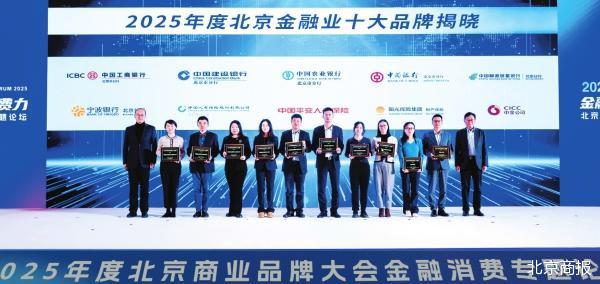
2025年度北京金融业十大品牌揭晓
Bei Jing Shang Bao· 2025-12-14 15:39
Group 1 - The top ten financial brands in Beijing for the year 2025 have been announced [1] - The list includes major banks such as ICBC, China Construction Bank, and Agricultural Bank of China [2] - Other notable companies on the list are China Life Insurance and Ping An Life Insurance [2]



开源晨会-20251214




KAIYUAN SECURITIES· 2025-12-14 14:42
Group 1 - The report highlights the recent performance of various industries, with notable gains in sectors such as non-ferrous metals, electronics, and power equipment, while retail and real estate sectors faced declines [1][1][1] - The central economic work conference emphasized the importance of technological breakthroughs and supply-demand optimization, indicating a shift towards quality improvement in economic growth [11][12][19] - The commercial aerospace sector is experiencing significant growth, with the establishment of a dedicated regulatory body and a notable increase in the commercial aerospace index, which has risen by 46.52% since April 7 [47][48] Group 2 - The report indicates a seasonal recovery in social financing, with November seeing an increase of 24,885 billion yuan, driven primarily by government bond issuance [4][7] - The credit environment is showing signs of marginal improvement, particularly in corporate loans, which increased by 6,100 billion yuan in November, reflecting a recovery in demand [5][6] - The report notes that the retail sector is undergoing a transformation, with a focus on quality, as highlighted by the Ministry of Commerce's emphasis on retail quality upgrades [1][1][1] Group 3 - The report discusses the rising interest in inquiry transfers, which have seen a significant increase in both project numbers and transfer scale, indicating a growing trend in the market [51][52] - The technology sector is expected to remain a key focus, with upcoming events such as the Volcano Engine FORCE conference anticipated to showcase advancements in AI and cloud services [56]
公募销售新规落地,政银绑定深化下银行扩表动能有望复苏
Western Securities· 2025-12-14 12:55
Investment Rating - The report indicates a positive outlook for the insurance sector, recommending specific companies such as China Pacific Insurance, China Ping An, China Life (H), and China Taiping, while also recommending New China Life Insurance [4][17]. Core Insights - The financial industry experienced a mixed performance, with the non-bank financial index rising by 0.81%, outperforming the CSI 300 index by 0.89 percentage points. The insurance sector showed a notable increase of 2.36%, while the banking sector declined by 1.77% [2][11]. - The central economic work conference emphasized a proactive fiscal policy, which is expected to benefit the insurance sector by increasing infrastructure asset supply and improving credit risk perceptions [14][15]. - The report highlights the potential for valuation recovery in the brokerage sector, driven by regulatory changes that align public fund interests with long-term investor returns [18][19]. Summary by Sections 1. Weekly Performance and Sector Insights - The non-bank financial index rose by 0.81%, with the insurance sector outperforming the CSI 300 index by 2.44 percentage points [2][11]. - The banking sector underperformed, with a decline of 1.77%, attributed to macroeconomic policy expectations [3][21]. 2. Insurance Sector Data Tracking - The insurance sector's premium income showed steady growth, with life insurance and property insurance premiums increasing by 9.6% and 4.0% year-on-year, respectively [17][26]. - The report notes that the 10-year government bond yield decreased to 1.84%, which is favorable for the insurance sector's investment strategies [31]. 3. Brokerage Sector Data Tracking - The brokerage sector's PB valuation stands at 1.37x, indicating potential for valuation recovery as earnings improve [19][42]. - Regulatory changes in public fund sales are expected to enhance the industry's focus on long-term investor interests [18][19]. 4. Banking Sector Data Tracking - The banking sector's PB valuation is at 0.54x, suggesting it remains undervalued [21][25]. - The central economic work conference's focus on domestic demand and flexible monetary policy is expected to support the banking sector's growth [22][23].


行业研究|行业周报|投资银行业与经纪业:市场交投高位延续,关注非银板块配置机遇-20251214
Changjiang Securities· 2025-12-14 11:42
Investment Rating - The report maintains a "Positive" investment rating for the non-bank financial sector [7]. Core Insights - The non-bank financial sector has shown strong overall performance this week, with brokerage firms experiencing an increase in market activity, maintaining historical highs. It is expected that the sector will continue to see high growth trends in earnings through 2025, suggesting a focus on the sector's future allocation value [2][4]. - In the insurance sector, the third-quarter reports have confirmed the logic of deposit migration, increased equity allocation, and improved new policy costs. The long-term return on equity (ROE) is expected to improve, leading to a potential acceleration in valuation recovery. The overall cost-effectiveness of allocations is gradually increasing, indicating a revaluation of the sector is underway [2][4]. - Recommendations include focusing on companies with stable earnings growth and dividend rates, such as Jiangsu Jinzu, China Ping An, and China Pacific Insurance, which have clear advantages in business models and market positions. Additionally, companies like Xinhua Insurance, China Life, Hong Kong Stock Exchange, CITIC Securities, Dongfang Wealth, Tonghuashun, and Jiufang Zhitu Holdings are also recommended based on their performance elasticity and valuation levels [4]. Market Performance - The non-bank financial index increased by 0.8% this week, with an excess return of 0.9% relative to the CSI 300, ranking high in the industry [5]. - Year-to-date, the non-bank financial index has risen by 6.7%, but with an excess return of -9.7% compared to the CSI 300, ranking lower in the industry [5]. - The average daily trading volume in the two markets reached 19,530.44 billion yuan, a week-on-week increase of 15.14%, with a daily turnover rate of 2.03%, up by 26.88 basis points [5]. Key Industry News & Company Announcements - China Life's cumulative total premium income has exceeded 700 billion yuan [6]. - Guosen Securities plans to distribute cash dividends totaling approximately 1.024 billion yuan, accounting for 11.21% of the net profit attributable to shareholders for the first three quarters [6]. - Industrial Securities announced a mid-term profit distribution plan, with a total cash dividend of 432 million yuan based on a total share capital of 8.636 billion shares [6].
