AUNTEA JENNY(02589)

Search documents
沪上阿姨(02589.HK)将于8月27日召开董事会会议以审批中期业绩
Ge Long Hui· 2025-08-15 09:54
格隆汇8月15日丨沪上阿姨(02589.HK)公布,公司将于2025年8月27日召开董事会会议,以(其中包括) 审议及通过集团截至2025年6月30日止六个月的中期业绩及其发布,以及审议派发中期股息的建议(如 有)。 ...
沪上阿姨(02589) - 董事会会议通告
2025-08-15 09:27
香港交易及結算所有限公司及香港聯合交易所有限公司對本公告的內容概不負責, 對 其 準 確 性 或 完 整 性 亦 不 發 表 任 何 聲 明,並 明 確 表 示 概 不 就 因 本 公 告 全 部 或 任 何 部 分 內 容 而 產 生 或 因 依 賴 該 等 內 容 而 引 致 的 任 何 損 失 承 擔 任 何 責 任。 滬上阿姨(上 海)實業股份有限公司 董事會主席兼執行董事 單衛鈞先生 香 港,二 零 二 五 年 八 月 十 五 日 Auntea Jenny (Shanghai) Industrial Co., Ltd. 於 本 公 告 日 期,董 事 會 成 員 包 括(i)執 行 董 事 單 衛 鈞 先 生、周 蓉 蓉 女 士、周 天 牧 先 生 及 汪 加 興 先 生,以 及(ii)獨 立 非 執 行 董 事 韓 定 國 先 生、鍾 創 新 先 生 及 郁 昉 瑾 女 士。 滬上阿姨(上海)實業股份有限公司 (股 份 代 號:02589) 董事會會議通告 滬上阿姨(上 海)實業股份有限公司(「本公司」)董 事(「董 事」)會(「董事會」)謹 此 宣 佈, 董事會會議將於二零二五年八月二十七日(星 ...
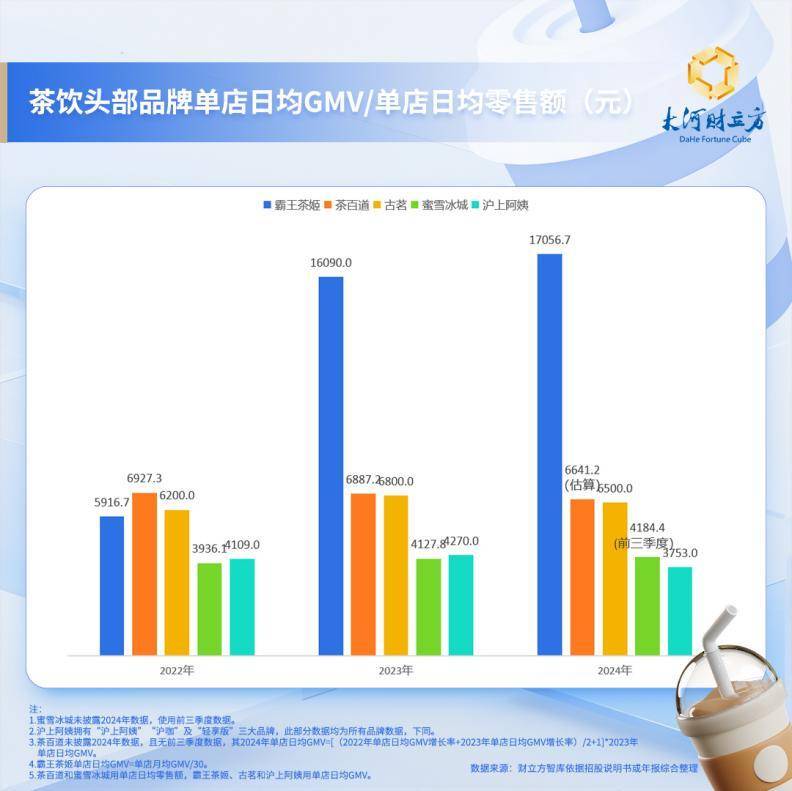
1家霸王茶姬单日营收≈4家蜜雪/沪上阿姨,谁家奶茶品牌更赚钱丨立方智库研报
Sou Hu Cai Jing· 2025-08-13 11:34
编者按 | 中国遍地都是奶茶店,谁家品牌更能赚? 近日,大河财立方智库发布了关于新茶饮品牌最新研究报告,聚焦蜜雪冰城、霸王茶姬、茶百道、古茗、沪上阿 姨五大头部品牌,多维度分析新茶饮竞争态势。即日起,大河财立方推出《立方智库研报》系列报道,从单店经 营能力、加盟商投入成本、品牌增长趋势、市场发展空间等角度,起底全国奶茶界的"霸总"。今日推出《1家霸 王茶姬单日营收≈4家蜜雪/沪上阿姨,谁家奶茶品牌更赚钱》。 【大河财立方 记者 郝楠楠】单店日均GMV(单店日均零售额)、日均销量等是门店赚钱能力PK的关键。数据 显示,头部新茶饮品牌中,2024年霸王茶姬单店日均GMV、日均销量均实现领跑;令人意外的是,"国民茶 饮"蜜雪冰城遭遇了滑铁卢。 蜜雪单店日均销量下降明显 沪上阿姨多维"失速" 新茶饮是中国消费产业的奇迹,受益于中产阶层定格支撑,从雄鸡初晓之地,长奔至喜马拉雅山脚下。 这其中,前述五大品牌的势力范围与市场纵深最有优势。具体来看,上述五大头部新茶饮品牌中,2024年霸王茶 姬以单店日均GMV超1.7万元的战绩,将其他品牌远远甩开。事实上,去年正是霸王茶姬高速发展的一年。招股 书显示,2023年—2024年 ...


泡泡玛特、上美领涨!新消费股再度起飞:昙花一现还是蓄力冲关?
Sou Hu Cai Jing· 2025-08-06 15:10
Core Viewpoint - The new consumption sector in the Hong Kong stock market has shown significant growth, with several companies reporting positive earnings forecasts, contributing to the overall bullish trend in this segment [3][4][6]. Group 1: Stock Performance - Pop Mart (09992.HK) rose by 7.87%, while Shangmei Co. (02145.HK) increased by 7.34%, and Laopu Gold (06181.HK) saw a rise of 5.93% [1][2]. - The New Consumption Concept Index has recorded a year-to-date increase of 64.97%, outperforming the Hang Seng Index, which has risen by 24.18% [3]. Group 2: Earnings Forecasts - Shangmei Co. expects revenue for the first half of 2025 to be between 4.09 billion to 4.11 billion yuan, a year-on-year growth of 16.8% to 17.3%, with net profit projected to reach 540 million to 560 million yuan, an increase of 30.9% to 35.8% [3]. - Laopu Gold anticipates revenue of 12 billion to 12.5 billion yuan for the first half of 2025, representing a year-on-year growth of 241% to 255%, with net profit expected to be between 2.23 billion to 2.28 billion yuan, a growth of 279% to 288% [4]. - Pop Mart forecasts a revenue increase of no less than 200% and a profit increase of no less than 350% for the first half of 2025 [5]. Group 3: Market Trends and Sentiment - Investment firms are optimistic about the new consumption sector, noting a shift towards personalized and service-oriented consumption among residents [6]. - The Hong Kong consumption sector is seen as more aligned with current new consumption trends compared to the A-share market, indicating significant growth potential [6]. - Despite the current high valuations in the new consumption sector, the macro trend towards personalized and rational consumption remains intact, suggesting continued growth in related areas such as trendy toys, beauty care, and pet products [7][8].


沪上阿姨(02589) - 截至二零二五年七月三十一日止之股份发行人的证券变动月报表
2025-08-05 10:30
呈交日期: 2025年8月5日 股份發行人及根據《上市規則》第十九B章上市的香港預託證券發行人的證券變動月報表 截至月份: 2025年7月31日 狀態: 新提交 致:香港交易及結算所有限公司 公司名稱: 滬上阿姨(上海)實業股份有限公司 I. 法定/註冊股本變動 | 1. 股份分類 | 普通股 | 股份類別 | H | | 於香港聯交所上市 (註1) | | 是 | | | --- | --- | --- | --- | --- | --- | --- | --- | --- | | 證券代號 (如上市) | 02589 | 說明 | | | | | | | | | | 法定/註冊股份數目 | | | 面值 | | 法定/註冊股本 | | | 上月底結存 | | | 59,426,726 | RMB | | 1 RMB | | 59,426,726 | | 增加 / 減少 (-) | | | 0 | | | RMB | | 0 | | 本月底結存 | | | 59,426,726 | RMB | | 1 RMB | | 59,426,726 | | 2. 股份分類 | 普通股 | 股份類別 | 其他類別 (請 ...
沪上阿姨调拨价值10万元救援物资,与加盟商组建运输团队支援北京防汛
Cai Jing Wang· 2025-08-04 07:16
(企业公告) 近日,针对北京市密云区遭遇强降雨灾害,沪上阿姨紧急调拨价值10万元的应急救援物资,携手北京密云地区加盟商 组建运输支援团队。通过北京市社会工作者协会和北京市密云区惠泽华龄社会工作事务所定向送达助灾物资,重点保 障儿童、青少年、低保、高龄等特殊困难群众,满足其基本生活需求,为当地防汛救灾工作提供针对性支援。 ...
沪上阿姨与数字蚂力达成合作,率先应用“AI督导员”提升门店经营效率
Zheng Quan Zhi Xing· 2025-07-27 09:40
Group 1 - The World Artificial Intelligence Conference (WAIC) featured a forum on AI applications, where the tea brand "Hushang Ayi" announced a partnership with Ant Group's subsidiary, Digital Mali, to implement the "AI Supervisor" product for store expansion [1] - The "AI Supervisor" utilizes a high-precision multimodal large model, achieving over 90% accuracy in identifying staff, behaviors, items, and environmental conditions, which will enhance operational efficiency for Hushang Ayi [1][2] - Hushang Ayi aims to expand its store count to over 10,000 by leveraging AI technology for digital transformation, improving product quality and operational efficiency [2] Group 2 - Hushang Ayi currently operates over 9,000 stores across more than 300 cities in China, focusing on enhancing consumer experience and supporting franchisees through digital upgrades [2] - The partnership with Digital Mali is expected to significantly improve management efficiency, with AI video inspections enhancing operational standards and product quality [2] - Digital Mali, a subsidiary of Ant Group, provides AI-driven solutions across various industries, aiming to improve operational efficiency and reduce costs for businesses [3]

港股收盘(07.16) | 恒指收跌0.29% 科技股走势分化 创新药概念热度延续
智通财经网· 2025-07-16 08:50
Market Overview - Hong Kong stocks experienced a pullback after an initial rise, with the Hang Seng Index closing down 0.29% at 24,517.76 points and a total trading volume of 258.95 billion HKD [1] - The Hang Seng China Enterprises Index fell 0.18% to 8,861.39 points, while the Hang Seng Tech Index decreased by 0.24% to 5,418.4 points [1] - Shenwan Hongyuan remains optimistic about investment opportunities in Hong Kong and A-share markets, predicting that Hong Kong will play a crucial role in the restructuring of the global financial order [1] Blue Chip Performance - Anta Sports (02020) led blue-chip stocks, rising 2.28% to 91.85 HKD, contributing 4.55 points to the Hang Seng Index [2] - Other notable performers included Kuaishou-W (01024) up 2.13% and Trip.com Group-S (09961) up 1.59%, while Shenzhou International (02313) and Zhongsheng Holdings (00881) saw declines of 2.75% and 2.67%, respectively [2] Sector Highlights - Large tech stocks showed mixed results, with Kuaishou rising over 2% and Baidu nearly 1%, while Tencent fell 0.19% [3] - The humanoid robot sector is gaining traction, with Shengye rising nearly 15% following positive developments [3] - The innovative drug sector remains active, with Lijun Pharmaceutical rising 13% amid ongoing interest in new drug procurement [4][5] Innovative Drug Sector - The 11th batch of national drug procurement has started, focusing on mature "old drugs" while excluding innovative drugs [5] - Analysts believe that the current innovative drug market is driven by value reassessment, with domestic investors increasing their positions through Hong Kong Stock Connect [5] Stablecoin Activity - China San San Media (08087) surged 72.73% after announcing plans to apply for a stablecoin license in Hong Kong, which will officially take effect on August 1 [6] - The global regulatory framework for stablecoins is expected to lead to significant industry growth [6] New Consumption Trends - New consumption stocks showed varied performance, with Guoquan (02517) up 7.29% and Hu Shang Ayi (02589) up 1.99%, while Gu Ming (01364) fell 4.26% [7] - Guoquan expects a net profit of approximately 180 to 210 million RMB for the first half of 2025, representing a year-on-year increase of 111% to 146% [7] Notable Stock Movements - Weiyali (00854) saw a dramatic increase of 288.34% after resuming trading, reaching a peak of 33.2 HKD [8] - Chongqing Machinery (02722) rose 14.06% following news of NVIDIA resuming sales of its H20 chip in China [9] - Jiufang Zhitu Holdings (09636) increased by 10.06% as it plans to issue shares for strategic investments [10] - Quzhi Group (00917) fell 12.06% after announcing a share placement at a discount to its market price [11]


上市即巅峰?沪上阿姨高估值泡沫藏着加盟失控与品控失守
Sou Hu Cai Jing· 2025-07-14 09:54
Core Viewpoint - The rapid expansion and subsequent decline of "沪上阿姨" (Hushang Ayi) highlights the challenges of balancing scale and profitability in the competitive tea beverage market, leading to questions about its long-term viability [1][19]. Financial Performance - After its IPO, "沪上阿姨" saw its stock price fluctuate significantly, peaking at a market value of 20 billion HKD before declining to 16.6 billion HKD within two months [3][5]. - In 2024, the company's revenue was 3.285 billion RMB, a decrease of 1.9% year-on-year, while net profit fell by 15.2% to 329 million RMB, marking the first decline in both metrics in three years [5][6]. - The company's dynamic price-to-earnings ratio was 51.95 at IPO, significantly higher than competitors, indicating a disconnect between performance and valuation [6]. Business Model and Expansion - "沪上阿姨" relies heavily on a franchise model, with 99.7% of its 9,176 stores being franchises, leading to a high closure rate of 12.7% in 2024 [6][8]. - The franchise-related revenue increased from 94.3% of total revenue in 2022 to 96.5% in 2024, indicating a growing dependency on this model [6][7]. - Despite a significant increase in store count, the average store performance has declined, with average GMV dropping from 1.5 million RMB in 2022 to 1.37 million RMB in 2024 [7][14]. Market Position and Competition - "沪上阿姨" operates in a highly competitive mid-range tea beverage market, facing pressure from both low-cost competitors like "蜜雪冰城" (Mixue Bingcheng) and premium brands like "奈雪的茶" (Naixue Tea) [11][12]. - The company’s market share was 8.9% as of the end of 2023, ranking third in terms of store count but fourth in GMV [12]. - The average GMV per order has decreased, reflecting increased price sensitivity among consumers [12][13]. Operational Challenges - The company has faced high closure rates among franchises, with significant operational inefficiencies due to a dispersed store layout, leading to increased logistics costs [8][9][15]. - Food safety issues have also plagued the brand, with multiple incidents leading to regulatory scrutiny [9][10]. - The brand's frequent changes in positioning and marketing strategies have resulted in consumer confusion and a diluted brand image [18]. Strategic Initiatives - To combat competition, "沪上阿姨" has launched multiple sub-brands, including "沪咖" (Hukafe) and "轻享版" (Light Enjoy), but these efforts have not yet yielded significant results [13][14]. - The company aims to optimize its supply chain and focus on regional markets rather than nationwide expansion to improve efficiency and profitability [19].

记者直击补贴大战:美团加码“0元购”,沪上阿姨忙到闭店
Di Yi Cai Jing· 2025-07-12 07:47
Core Viewpoint - The competition among food delivery platforms, particularly Meituan, is intensifying with new promotional strategies like "0 Yuan Purchase" coupons, leading to significant fluctuations in order volumes across various brands [5][6]. Group 1: Market Dynamics - The food delivery market is experiencing a chaotic environment, with some brands like "沪上阿姨" facing overwhelming order volumes, leading to operational challenges [3][5]. - Meituan's "0 Yuan Purchase" strategy has resulted in a surge of orders for specific brands, indicating a shift in consumer behavior towards promotional offers [5][6]. - Other platforms like Alibaba and JD are also adjusting their strategies, with Alibaba launching a new promotional event called "Super Saturday" and JD increasing subsidies for high-ticket items [6]. Group 2: Brand Performance - Brands such as "沪上阿姨," "益禾堂," and "书亦烧仙草" are benefiting from Meituan's promotional efforts, experiencing significant increases in order volumes [5][6]. - In contrast, brands like "瑞幸咖啡" and "蜜雪冰城" have seen a decline in activity, highlighting the volatility in consumer demand based on promotional strategies [5]. Group 3: Competitive Strategies - Meituan is focusing on enhancing partnerships with brands and targeting specific consumer segments through its promotional channels, which is leading to more effective order fulfillment [6]. - The competitive landscape is evolving, with platforms differentiating their approaches; for instance, JD is returning to quality-focused subsidies while Alibaba is attempting to create a recurring promotional event [6].