CAOCAO INC(02643)

Search documents
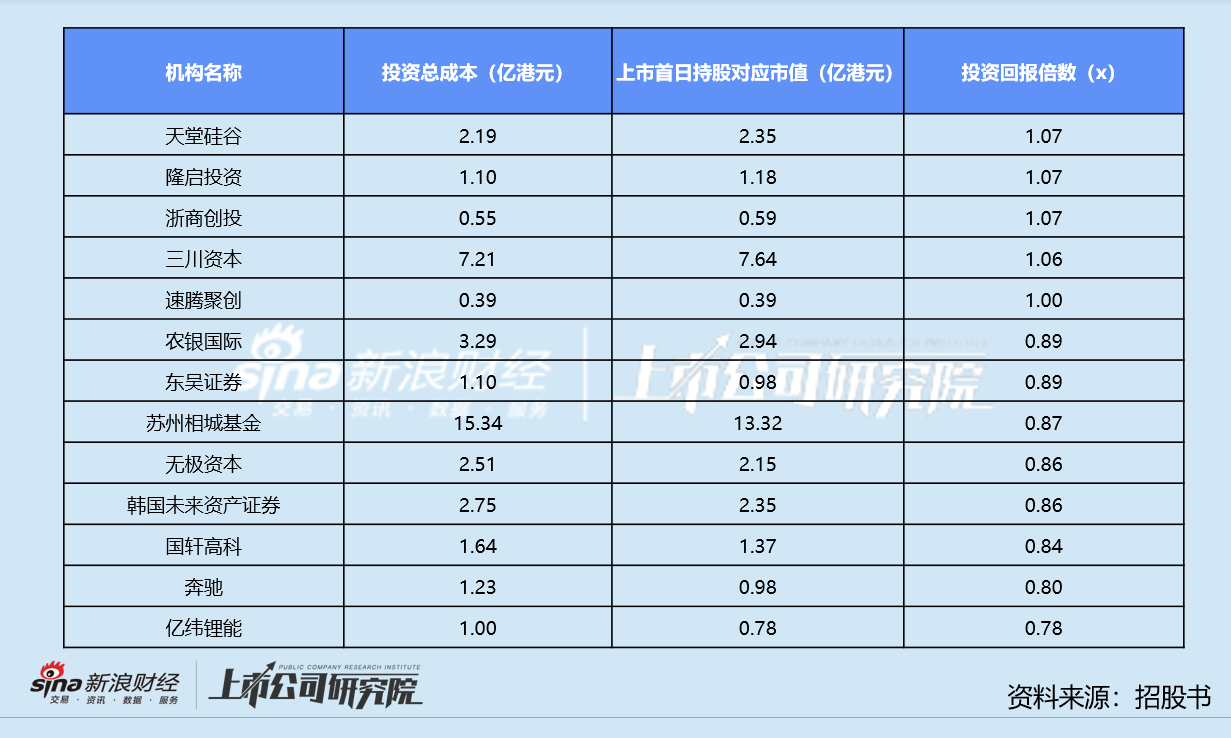
曹操出行上市首日破发:苏州相城基金浮亏2亿港元 三川资本陪跑近八年IRR低至1.2%
Xin Lang Zheng Quan· 2025-06-26 08:54
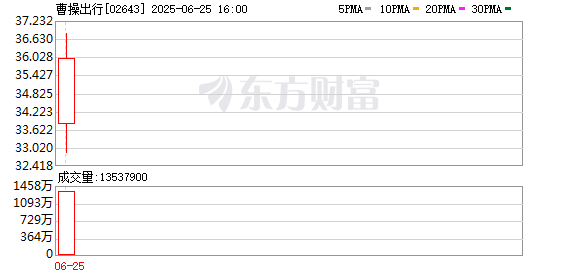
Core Viewpoint - The ride-hailing platform Cao Cao Travel successfully listed on the Hong Kong Stock Exchange but faced significant market skepticism, leading to a sharp decline in share price on its debut day. Group 1: IPO Details - Cao Cao Travel issued a total of 44.18 million shares globally, with 4.42 million shares offered in Hong Kong and 39.76 million shares internationally, at an issue price of HKD 41.94 per share, aiming to raise HKD 1.853 billion [1] - The final allocation resulted in 13.25 million shares sold in Hong Kong and 30.93 million shares internationally, with the Hong Kong offering receiving 25,000 valid applications, oversubscribed by 21.14 times [1] - Despite the high demand, the stock price fell over 30% in dark trading, closing at HKD 36.00, a 14.2% drop from the initial market valuation [1] Group 2: Investor Losses - Key cornerstone investors, including Korea's Mirae Asset Securities and Hong Kong's Infinity Capital, faced losses exceeding 14% on their investments of HKD 275 million and HKD 251 million, respectively [2] - Other investors, such as Guoxuan High-Tech, lost approximately HKD 26.69 million on an investment of HKD 164 million, reflecting a significant drop in value [2] - The overall market sentiment was negative, with several institutional investors experiencing substantial unrealized losses on their holdings [2][3] Group 3: Financial Performance - The company is projected to incur cumulative operating losses of HKD 7.043 billion from 2021 to 2024, averaging a monthly burn rate of HKD 147 million [5] - As of December 31, 2024, Cao Cao Travel's current liabilities are expected to reach HKD 9.682 billion, with over 80% being interest-bearing debt, while cash reserves are only HKD 159 million [5] - The IPO proceeds of HKD 1.853 billion will only partially address the company's debt issues, indicating a significant liquidity gap [5] Group 4: Business Model Concerns - The sustainability of the business model is questioned due to high fixed costs associated with owning a fleet of vehicles, which leads to substantial depreciation and operational expenses [5] - The company's reliance on aggregation platforms like Gaode and Baidu has resulted in a dramatic increase in commission expenses, from HKD 137 million in 2021 to HKD 1.046 billion in 2024, with a compound annual growth rate exceeding 66% [5] - The low gross margin and challenges in retaining proprietary traffic further complicate the company's financial outlook [5] Group 5: Industry Sentiment - The overall market sentiment towards ride-hailing platforms in Hong Kong is pessimistic, as evidenced by the poor performance of other recent listings like Dida Chuxing and Ruqi Mobility, which also experienced significant declines on their debut days [6] - Investors appear to have lost patience with the "burn cash for scale" model prevalent in the ride-hailing industry, leading to a cautious approach towards new entrants [6]

曹操出行港交所上市,从定制车到Robotaxi构建差异化壁垒
Di Yi Cai Jing· 2025-06-26 08:49
Core Viewpoint - The successful listing of Cao Cao Mobility on the Hong Kong Stock Exchange marks a significant milestone for the company, which has developed a unique business model centered around customized vehicles in the ride-hailing industry [1][3]. Group 1: Company Overview - Cao Cao Mobility, incubated by Geely Group, has spent ten years developing a ride-hailing ecosystem focused on customized vehicles, contrasting with other platforms that pursued rapid expansion [4]. - The company has become the largest ride-hailing platform listed on the Hong Kong Stock Exchange, demonstrating resilience in a complex regulatory environment [3]. Group 2: Financial Performance - The average hourly income for Cao Cao Mobility drivers increased from RMB 30.9 in 2022 to RMB 35.7 in 2024, significantly higher than the industry average of RMB 27 [6][10]. - The customized vehicle strategy has positively impacted the company's financials, with gross profit margin improving from -5.8% in 2023 to 8.1% in 2024 [7]. Group 3: Cost Efficiency and Service Improvement - The total cost of ownership (TCO) for drivers is projected to decrease by 36.4%, reaching approximately RMB 0.5 per kilometer, enhancing operational efficiency [8]. - Cao Cao Mobility's partnership with Geely has led to a 25% reduction in maintenance time and a 54% decrease in costs, further benefiting drivers [11]. Group 4: Future Prospects and Innovations - The company is exploring the Robotaxi market, leveraging its customized vehicle experience to create a closed-loop ecosystem that integrates vehicle manufacturing, autonomous driving technology, and ride-hailing services [12][14]. - Cao Cao Mobility plans to launch a customized Robotaxi model designed for L4 autonomous driving by the end of 2026, aiming to capitalize on the future trillion-dollar market [15].

曹操出行港股上市首日破发跌14.16%,出行平台纷纷押注Robotaxi赛道
Guang Zhou Ri Bao· 2025-06-25 23:08
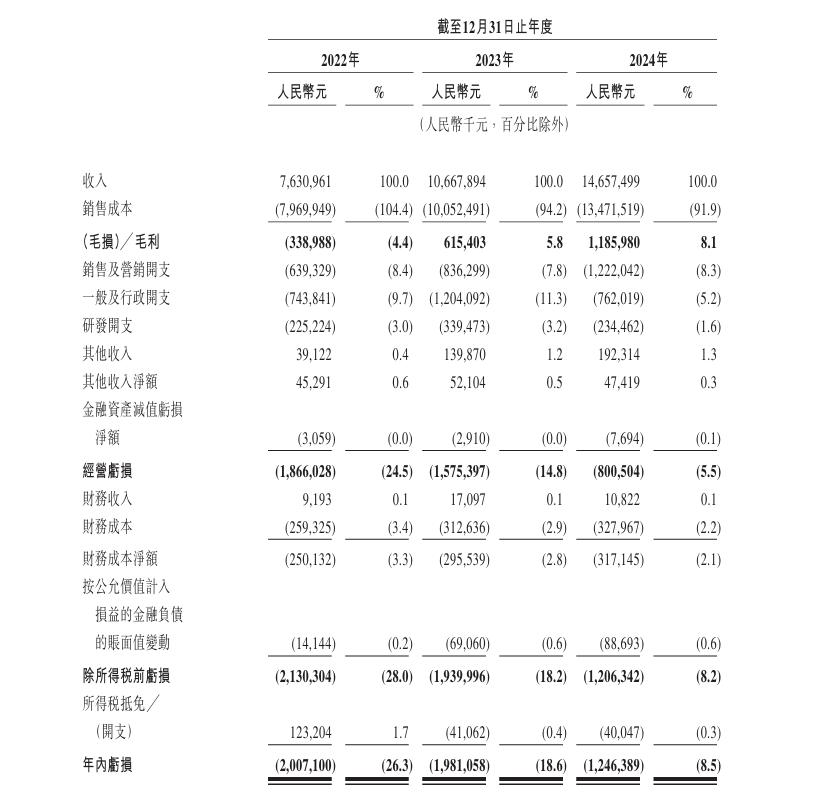
Group 1: Company Overview - Cao Cao Mobility, a ride-hailing platform incubated by Geely Group, was listed on the Hong Kong Stock Exchange on June 25, becoming the largest ride-hailing platform in Hong Kong [1][2] - The company has been experiencing continuous losses for three consecutive years, with losses of approximately 2.007 billion yuan, 1.981 billion yuan, and 1.246 billion yuan from 2022 to 2024 [2] - The primary revenue source for Cao Cao Mobility is its ride-hailing services, which are expected to account for 92.6% of total revenue in 2024 [2] Group 2: Market Position and Competition - As of 2024, Cao Cao Mobility holds a market share of 5.4% in the ride-hailing sector [2] - The company is highly dependent on aggregation platforms, with orders from these platforms constituting 49.9%, 73.2%, and 85.4% of Gross Transaction Value (GTV) from 2022 to 2024 [2] - The ride-hailing industry is facing increasing competition, with leading platforms capturing significant market shares and investing heavily in operational costs and marketing subsidies [1][5] Group 3: Future Prospects and Innovations - The shared mobility sector is expected to see an increase in market share, with projections indicating that by 2030, shared mobility could account for 6.0% of the domestic transportation market [3] - Cao Cao Mobility has launched its autonomous driving platform, with plans to introduce a custom L4-level Robotaxi model by the end of 2026 [3] - Investment in autonomous driving technology is growing, as evidenced by the strategic financing of over 3 billion yuan for the Robotaxi business by Hello Chuxing, with significant backing from Ant Group and CATL [3]
今日新闻丨赛力斯引入50亿元战略投资!曹操出行港股上市!
电动车公社· 2025-06-25 16:59
Group 1 - The core viewpoint of the article highlights significant developments in the automotive industry, particularly focusing on strategic investments and IPOs in electric vehicle and ride-hailing sectors [1][4]. Group 2 - Seres Automotive has successfully attracted strategic investments amounting to up to 5 billion RMB, increasing its registered capital from 9.96 billion RMB to approximately 10.084 billion RMB [2][3]. - In Q1 2025, Seres achieved a revenue of 19.147 billion RMB and a net profit of 748 million RMB, marking a year-on-year growth of 240.6%, positioning it as an attractive investment target in the automotive sector [3]. Group 3 - Cao Cao Mobility has made its debut on the Hong Kong Stock Exchange, planning to issue 44.1786 million shares at a price of 41.94 HKD per share [5]. - As of the end of March 2025, Cao Cao Mobility expanded its coverage to 146 cities, with a year-on-year order volume increase of 51.8% and revenue reaching 4.2 billion RMB, alongside a gross margin rise to 8.5% [6]. - The company plans to launch a custom L4-level Robotaxi model designed for autonomous driving by the end of 2026, indicating a clear timeline for advancements in autonomous ride-hailing technology [6].


曹操出行登陆港股,网约车平台打响Robotaxi抢滩战
Hua Xia Shi Bao· 2025-06-25 11:20
Core Viewpoint - Cao Cao Mobility, the second-largest ride-hailing platform in China, has officially listed on the Hong Kong Stock Exchange, becoming the largest mobility platform in the market [1] Group 1: Listing Details - Cao Cao Mobility's stock began trading on June 25, with a closing price of HKD 35.3 [1] - The company issued 44.1786 million H-shares, with 30% allocated for public offering in Hong Kong and 70% for international investors, raising approximately HKD 1.718 billion [2] - The public offering was oversubscribed by 21.14 times, while the international offering was oversubscribed by 2.78 times [2] - Six cornerstone investors, including Mercedes-Benz and other firms, committed to purchasing shares worth approximately HKD 952 million, accounting for over half of the total fundraising [2] Group 2: Market Context - The ride-hailing market is experiencing intense competition, with Didi holding a 70% market share, while Cao Cao Mobility ranks second with a 5.4% share [5] - In 2023, Cao Cao Mobility reported a revenue of nearly HKD 14.7 billion, a 37% year-on-year increase, with a gross margin of 8.1%, the highest in three years [5] - The company has expanded its operations to 146 cities, planning to enter 85 new cities in 2024, focusing on second-tier and lower-tier cities [6] Group 3: Future Prospects - The development of Robotaxi services is a key competitive focus for ride-hailing platforms, with Cao Cao Mobility planning to launch its autonomous driving platform in February 2025 [7] - The company aims to introduce a custom L4-level Robotaxi model by the end of 2026, indicating a strategic shift towards technology-driven solutions [7] - Industry experts suggest that scaling user base and operational capacity will be crucial for competitive advantage in the ride-hailing market [6]
曹操出行上市破发 吉利李书福持股超四分之三
Zhong Guo Jing Ying Bao· 2025-06-25 10:48
Core Viewpoint - Cao Cao Mobility officially listed on the Hong Kong Stock Exchange but experienced a significant drop in stock price on the first day of trading, closing at HKD 36.00, which is below the IPO price of HKD 41.94 [2][3] Group 1: IPO Details - The company planned to issue 44.18 million shares globally, with 4.42 million shares for Hong Kong and 39.76 million shares for international investors, aiming to raise HKD 18.53 billion [3] - Despite the initial drop, six cornerstone investors, including Mercedes-Benz and others, committed to purchasing 22.64 million shares, accounting for 51.4% of the total fundraising [3] - The estimated valuation of Cao Cao Mobility at the IPO was approximately HKD 228.23 billion, but the market capitalization at closing was HKD 195.90 billion, about 85.8% of the pre-IPO valuation [3][4] Group 2: Financial Performance - The company has reported losses every year since its establishment, with operating losses of HKD 1.9 billion, HKD 1.6 billion, and HKD 800 million for the years 2022 to 2024, respectively [4] - Net losses for the same period were HKD 2 billion, HKD 2 billion, and HKD 1.2 billion, with expectations of continued net losses in 2025 [4] Group 3: Market Context and Future Outlook - The drop in stock price is part of a broader trend in the Hong Kong market, where over 30% of new listings have experienced price declines [4] - The company is focusing on the Robotaxi market, which has significant growth potential, and has launched its autonomous driving platform in early 2025 [6] - Competitors in the Robotaxi space include major players like Didi and Baidu, indicating a highly competitive environment [6][7]
曹操出行“流血上市”,李书福“阳谋”受挫?
3 6 Ke· 2025-06-25 10:12
Core Viewpoint - The recent IPO of Cao Cao Mobility reflects the ongoing challenges and competitive dynamics within the ride-hailing industry, as the company faces significant operational losses despite revenue growth and a strategic push from its parent company, Geely [1][4][13]. Group 1: IPO and Market Position - Cao Cao Mobility plans to list on the Hong Kong Stock Exchange with an estimated valuation of approximately HKD 22.8 billion, marking Geely's 10th IPO [1]. - The stock price of Cao Cao Mobility fell nearly 20% on its first trading day, indicating a lack of confidence from investors in the ride-hailing sector [1][2]. - The ride-hailing industry is experiencing a wave of IPOs, but companies like Dida Chuxing and Huqee have also faced significant stock price declines post-IPO, highlighting a broader market skepticism [2][3]. Group 2: Financial Performance - Cao Cao Mobility reported revenue growth from RMB 7.63 billion in 2022 to RMB 14.66 billion in 2024, with a compound annual growth rate of nearly 40% [4][12]. - Despite revenue increases, the company has accumulated losses exceeding RMB 5.2 billion over the past three years, indicating ongoing profitability challenges [4][13]. - The company's gross profit margin improved from 5.8% in 2023 to 8.1% in 2024, but it remains significantly lower than competitors like Didi, which reported a gross margin of 18.15% [13]. Group 3: Competitive Landscape - The ride-hailing market is characterized by intense competition, with Didi holding a dominant market share of 70.4%, while Cao Cao Mobility's share is only 5.4% [7][8]. - The influx of new drivers has led to a surplus in supply, causing a decline in driver earnings and increased pressure on ride-hailing platforms to offer subsidies [3][6]. - Cao Cao Mobility has increasingly relied on aggregation platforms for order fulfillment, with the proportion of orders processed through these platforms rising from 3.5% in 2018 to 30% in 2023 [8][14]. Group 4: Strategic Initiatives - The company is pursuing a heavy asset model by purchasing vehicles and employing dedicated drivers, which allows for greater control but also incurs higher operational costs [9][11]. - Cao Cao Mobility plans to invest in technology and autonomous driving, with a pilot Robotaxi project underway, aiming to enhance its competitive edge in the smart mobility sector [15][16]. - The collaboration with Geely provides Cao Cao Mobility with access to advanced vehicle technology and infrastructure, potentially improving its market position [9][16]. Group 5: Future Outlook - The reliance on aggregation platforms poses risks to brand recognition and user retention, as the company struggles to build a loyal customer base [14]. - The future success of Cao Cao Mobility hinges on its ability to leverage Geely's resources and technology to differentiate itself in the crowded ride-hailing market [17]. - The transition to autonomous driving is seen as a potential growth area, but significant challenges remain in terms of consumer trust and regulatory frameworks [15][17].
曹操出行港股上市:定制车生态持续赋能,Robotaxi抢占风口
3 6 Ke· 2025-06-25 09:54
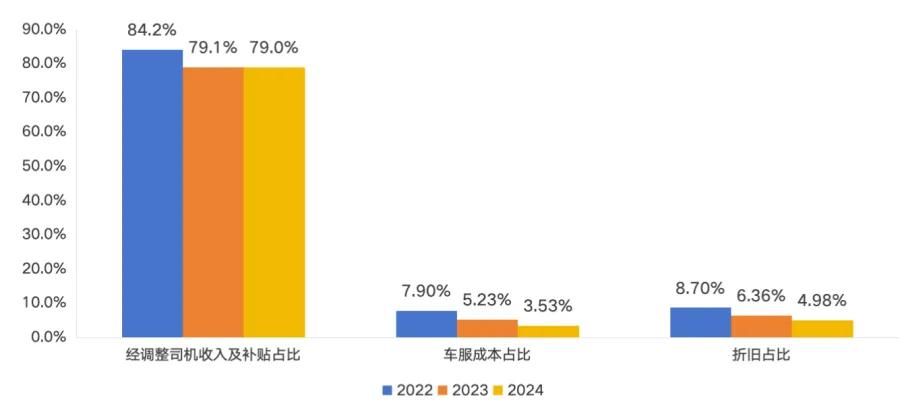
Core Viewpoint - Caocao Travel has officially listed on the Hong Kong Stock Exchange, becoming the largest technology ride-hailing platform in the market, with significant advantages in scale, business ecosystem, and innovative exploration in the industry [1][12]. Group 1: Business Performance and Financials - Caocao Travel's projected GTV for 2024 is expected to reach 17 billion yuan, holding the second-largest market share in the ride-hailing industry [1]. - The company's revenue for 2022, 2023, and 2024 is reported at 7.631 billion, 10.668 billion, and 14.657 billion yuan respectively, with a compound annual growth rate of 39% [1]. - The adjusted net loss is expected to narrow from 1.65 billion yuan in 2022 to 724 million yuan in 2024, indicating improving financial health [6]. Group 2: Custom Vehicle Advantages - By the end of 2024, Caocao Travel will operate a fleet of over 34,000 self-owned custom vehicles across 31 cities, with plans to expand to 50,000 vehicles [2]. - The proportion of custom vehicle GTV to total GTV is projected to increase from 5.3% in 2022 to 25.1% in 2024, showcasing a growing trend [2]. - The average hourly income for drivers has increased from 30.9 yuan in 2022 to 35.7 yuan in 2024, significantly higher than the industry average of approximately 27 yuan [3]. Group 3: Cost Structure and Profitability - The total cost of ownership (TCO) for Caocao's custom vehicles is significantly lower than typical electric vehicles, with reductions of 33% and 40% for its two main models [4]. - The adjusted driver income and subsidies as a percentage of ride service revenue decreased from 84.2% in 2022 to 79.0% in 2024, while vehicle service costs dropped from 7.9% to 3.53% [4]. - The gross margin improved from -4.44% in 2022 to 8.09% in 2024, reflecting the positive impact of the custom vehicle model on profitability [4]. Group 4: Competitive Advantage and Market Position - Caocao Travel has established a unique supply-side barrier through its custom vehicle ecosystem, which is difficult for competitors to replicate due to the required automotive industry background [8]. - The shift towards aggregation platforms has increased competition, making it essential for ride-hailing services to differentiate themselves beyond mere scale [7]. - The company is well-positioned to leverage its partnership with Geely to enhance its capabilities in automated driving and vehicle manufacturing, creating a closed-loop ecosystem [9]. Group 5: Future Outlook and Robotaxi Development - The emergence of Robotaxi is expected to fundamentally change the cost structure and profitability model of the ride-hailing industry, with significant market potential projected [10]. - By 2030, the domestic market for Robotaxi is anticipated to exceed 488.8 billion yuan, with a penetration rate of 36% in the shared mobility sector [10]. - Caocao Travel's existing supply-side advantages are expected to strengthen further as the Robotaxi era approaches, positioning the company favorably in future market competition [9][11].
下跌超10%,曹操出行港股上市首日破发!
Guang Zhou Ri Bao· 2025-06-25 09:08
Core Viewpoint - The ride-hailing platform Cao Cao Mobility was listed on the Hong Kong Stock Exchange on June 25, 2023, but experienced a significant drop in stock price, falling over 10% on its first day of trading [2]. Financial Performance - Cao Cao Mobility's revenue from 2022 to 2024 is projected to grow from 7.63 billion RMB to 14.66 billion RMB, maintaining a growth trend [3][4]. - Despite the revenue growth, the company is still operating at a loss, with losses of approximately 2.01 billion RMB, 1.98 billion RMB, and 1.25 billion RMB for the years 2022, 2023, and 2024 respectively [3][4]. Market Position - As of 2024, Cao Cao Mobility is expected to have a market share of 5.4% in the ride-hailing industry [2]. - The company's Gross Transaction Value (GTV) is projected to increase from 12.2 billion RMB in 2023 to 17 billion RMB in 2024, reflecting a year-on-year growth of 38.8% [2]. Dependency on Aggregation Platforms - Cao Cao Mobility has a high dependency on aggregation platforms, with orders from these platforms accounting for 49.9%, 73.2%, and 85.4% of GTV from 2022 to 2024 [2]. Future Developments - The company plans to launch a Robotaxi service in Suzhou and Hangzhou by February 28, 2025, marking a significant milestone for the commercialization of autonomous driving services [4]. - Cao Cao Mobility is collaborating with Geely Group to develop a custom vehicle specifically for Robotaxi services, including an L4 level Robotaxi expected to be launched by the end of 2026 [5].
曹操出行上市即破发,是必然还是偶然?丨商业快评
Sou Hu Cai Jing· 2025-06-25 08:28
Core Viewpoint - The initial public offering (IPO) of Cao Cao Travel on the Hong Kong Stock Exchange faced significant challenges, with the stock price dropping by 20.24% on its first day, indicating market skepticism about the company's financial health and growth prospects [2][4][6] Financial Performance - Cao Cao Travel's global offering consisted of 44.1786 million shares, priced at HKD 41.94 per share, with a pre-IPO decline of over 13% in the dark market [2] - The company reported cumulative losses exceeding CNY 5.2 billion over the past three years, with an average daily loss of CNY 4.86 million [4] - By the end of 2024, total liabilities are projected to reach CNY 11.283 billion, with net current liabilities of CNY 8.146 billion and cash equivalents of only CNY 159 million, indicating a liquidity gap of over CNY 5.5 billion [4] Revenue and Market Position - Revenue forecasts for 2022, 2023, and 2024 are CNY 7.631 billion, CNY 10.7 billion, and CNY 14.7 billion, respectively, with the majority of revenue coming from ride-hailing services [3] - In the ride-hailing market, Didi holds a dominant market share of 70.4%, while Cao Cao Travel only accounts for 5.4%, facing competition from T3 Travel and Xiangdao Travel [5] Business Model and Challenges - The company's heavy asset model leads to high operational costs, including driver subsidies and vehicle depreciation, which hinder rapid scale expansion [5] - In 2024, 85.7% of orders are expected to come from aggregation platforms like Gaode and Baidu, resulting in a loss of bargaining power and exposure to revenue fluctuations due to potential changes in platform strategies [5] Market Sentiment and Investor Behavior - The poor performance of Cao Cao Travel's stock on its debut reflects broader market concerns regarding the profitability and regulatory risks associated with ride-hailing platforms [6] - Despite attracting six cornerstone investors, the low subscription rate among retail investors and significant selling pressure contributed to the stock's decline [5][6]