
GREENTOWN CHINA(03900)

Search documents
年均超7亿平方米住房改善需求涌现 房地产行业进入“产品确定性时代”
Xin Hua Cai Jing· 2026-01-09 05:50
Core Insights - The current stock of housing that meets the "good house" standard is less than 5%, with an annual demand for housing improvement projected to reach 700 million to 1 billion square meters, indicating a shift towards a "product certainty era" in the industry [1] - The real estate sector is transitioning from quantity expansion to quality enhancement, making product strength the core competitive advantage for companies in this new development phase [1] - The current housing prices are at a low point, while product standards have reached historical highs, presenting an optimal time for buying and upgrading homes, with expectations for the next five years to be the "year of products" in Chinese real estate [1] Industry Trends - According to the latest report by CRIC, leading real estate companies are excelling in product strength by focusing on safety, comfort, sustainability, and intelligence, as reflected in the "2025 China Real Estate Enterprise Product Strength TOP 100" rankings [2] - The rankings include traditional categories such as top enterprises and products, along with new categories like "Top 10 Good House Enterprises" and "Top 20 Good House Works," showcasing the industry's focus on quality [2] - Despite challenges such as market saturation and structural declines in purchasing power, the relationship between good products and sales is not direct, necessitating a deep integration of market analysis, customer insights, and product refinement to overcome these challenges [2] Product Development - CRIC's CEO highlighted the importance of selecting unique market opportunities, with projects like Shenzhen Bay and Shanghai Gao Fu achieving strong sales due to their prime locations [3] - Emphasizing product uniqueness and differentiation is crucial, as seen in projects like Zhengzhou Jinmao and Puyang Zhuyou, which have achieved competitive advantages through differentiated offerings [3] - The industry is expected to evolve by 2026 from a focus on individual product competition to a more integrated approach involving product, customer research, and operational strategies [3]





重磅 | 2025中国房地产企业产品力TOP100榜单发布!
克而瑞地产研究· 2026-01-08 13:57
Core Viewpoint - In 2025, the real estate industry is transitioning from quantity expansion to quality enhancement, with the concept of "good housing" becoming a national strategy, marking a new development stage focused on product strength as the core competitive advantage [2]. Group 1: Rankings Release - The "Top 100 Real Estate Companies by Product Strength" list has been published, highlighting leading companies in the industry [4][5]. - The list includes prominent companies such as Greentown China, Poly Developments, and China Overseas Land & Investment, among others [5][6]. Group 2: Product Series and Works - The "Top 10 Product Series" and "Top 10 Works" lists have been introduced, showcasing the best residential product series and projects in the industry [8][12]. - The top luxury product series include offerings from companies like New Hope Real Estate and China Overseas Land & Investment [8]. - The top high-end works feature projects such as Beijing Run Garden and Chengdu China Merchants Xi [13][15]. Group 3: Good Housing Strategy Characteristics - Major real estate companies like Poly, China Resources, and Yuexiu have launched "good housing" strategies focusing on safety, comfort, green living, and smart technology [29]. - These strategies extend to refined values such as craftsmanship, service, low carbon, and health, implemented through quantifiable technical standards [29][33]. - Companies are establishing comprehensive technical standard systems that cover physical space and service ecology, reflecting a meticulous management approach [33]. Group 4: Trends in Residential Projects - There is a trend towards high aesthetic appeal and high performance in residential projects, with a focus on features like full-house water purification, noise reduction, and safety [37][50]. - The use of environmentally friendly materials is emphasized, with projects achieving near-zero pollution standards [51]. - Different project tiers exhibit unique characteristics, with high-end projects focusing on cultural integration and personalized services [52][63].


港股收评:恒指跌1.17%、科指跌1.05%,军工、煤炭及半导体板块走高,科网股、券商股表现疲软
Jin Rong Jie· 2026-01-08 08:16
Market Performance - The Hong Kong stock market opened lower and closed with a slight rebound, with the Hang Seng Index down 1.17% at 26,149.31 points, the Hang Seng Tech Index down 1.05% at 5,678.34 points, and the National Enterprises Index down 1.09% at 9,039.34 points [1] - Major tech stocks declined, with Alibaba down 2.26%, Tencent down 1.36%, JD.com down 2.02%, and Meituan down 3.35% [1] - The semiconductor sector saw gains, with Shanghai Fudan up over 5% and Huahong Semiconductor up over 2% [1] - Coal stocks led the gains, with Jinma Energy up over 11% [1] Company News - Xinyi International (00732.HK) reported a cumulative net operating revenue of approximately HKD 16.534 billion for 2025, a decrease of about 7.3% year-on-year [2] - China Overseas Development (00688.HK) reported a cumulative contract property sales amount of approximately RMB 251.231 billion for 2025, down 19.1% year-on-year [2] - Greentown China (03900.HK) reported a total contract sales amount of approximately RMB 251.9 billion for 2025, a decrease of 9% [2] - China Overseas Hongyang Group (00081.HK) achieved a contract sales amount of RMB 2.57 billion for December 2025, down 43.9% year-on-year [3] Strategic Developments - China Carbon Neutrality (01372.HK) signed a tripartite strategic cooperation agreement with China Tower and China Recycled Resources to jointly create a lithium battery circular economy ecosystem [4] - Guofu Hydrogen Energy (02582.HK) entered into a pre-purchase order agreement for hydrogen energy project equipment in Tasmania, Australia [4] - Lijun Pharmaceutical (01513.HK) had its Lecanemab injection included in the priority review and approval process [4] Stock Buybacks - Xiaomi Group (01810.HK) repurchased 3.9 million shares for HKD 149 million at prices between HKD 38.12 and HKD 38.20 [9] - Tencent Holdings (00700.HK) repurchased 1.023 million shares for HKD 636 million at prices between HKD 615.5 and HKD 628 [9] - Geely Automobile (00175.HK) repurchased 3.388 million shares for HKD 59.156 million at prices between HKD 17.38 and HKD 17.65 [10] Institutional Insights - Guolian Securities remains optimistic about the AI value reassessment trend in China, suggesting a focus on platform-based internet companies with computational resources and model capabilities [12] - Guoyuan International notes that the Hong Kong stock market is currently in a relatively flat period, awaiting further catalysts, with potential inflows of new capital following the announcement of the new Federal Reserve Chairman [13] - Qianhai Open Source's Yang Delong predicts that the Hong Kong stock market, including the Hang Seng Index and Hang Seng Tech Index, may regain upward momentum in 2026, driven by capital inflows [13]


稳健经营最重要!绿城中国董事会主席刘成云谈企业发展丨对话2026
Sou Hu Cai Jing· 2026-01-08 07:09
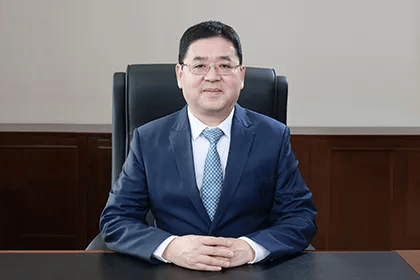
绿城中国董事会主席刘成云 " 在房地产新旧模式、新旧动力转换关键之际,行业应共同努力,重塑市场信任,聚焦产品与服务本质,以高品质供给激活真实需求,以建设"好房子"推动 房地产行业高质量发展。 中房报记者 马琳丨北京报道 "房地产行业转型期,企业的稳健经营是第一位的。"绿城中国董事会主席刘成云表示。 1月初,刘成云在接受中国房地产报记者采访时表示,在房地产新旧模式、新旧动力转换关键之际,行业应共同努力,重塑市场信任,聚焦产品与服务本 质,以高品质供给激活真实需求,并以建设"好房子"推动房地产行业高质量发展。 中国房地产报:绿城会如何通过战略执行,将中央经济工作会议与全国住建工作会议提及的房地产高质量发展的战略落地实践? 刘成云:近期召开的中央经济工作会议、全国住建工作会议为房地产行业发展指明了清晰、务实的发展路径,我们深受鼓舞。"因城施策"有利于各地根据 实际情况精准调控,促进市场平稳健康;"控增量、去库存、优供给"则推动行业从源头优化结构,避免资源错配。 新发展阶段,企业应回归到"以人为本",通过建设"好房子"推动房地产行业高质量发展。作为行业企业,绿城长期坚持的发展模式便是"因地制宜、因城 布局",并在核心 ...
绿城集团2025年总合同销售额2519亿元
Bei Ke Cai Jing· 2026-01-08 03:41
Core Viewpoint - Greentown China has reported its operational data for 2025, indicating significant sales figures from both self-invested and entrusted projects [1] Group 1: Self-Invested Projects - For the year 2025, Greentown Group achieved a contracted sales area of approximately 4.66 million square meters, with a total contracted sales amount of about 153.4 billion yuan [1] Group 2: Entrusted Projects - The cumulative contracted sales area for entrusted projects reached approximately 7.42 million square meters, generating a sales amount of around 98.5 billion yuan [1] Group 3: Overall Performance - As of December 31, 2025, Greentown Group's total contracted sales area amounted to approximately 12.08 million square meters, with a total contracted sales value of about 251.9 billion yuan [1]
绿城中国:绿城集团2025年总合同销售金额约2519亿元
Xin Lang Cai Jing· 2026-01-07 15:01
1月7日晚间,绿城中国在港交所公告,2025年12月,绿城集团自投项目取得销售3769套,销售面积约62 万平方米,当月销售金额约为人民币197亿元,销售均价约为每平方米人民币31598元。2025年1-12月, 绿城集团取得合同销售面积约466万平方米,合同销售金额约人民币1534亿元;其中归属于绿城集团的 权益金额约为人民币1043亿元。于2025年12月31日,另有累计已签认购协议未转销售合同的金额约人民 币30亿元,其中归属于绿城集团的权益金额约为人民币20亿元。2025年12月,绿城集团代建项目取得销 售面积约50万平方米,销售金额约人民币79亿元。2025年1-12月,绿城集团代建项目累计取得销售面积 约742万平方米,销售金额约为人民币985亿元。综上,截至2025年12月31日止十二个月,绿城集团累计 取得总合同销售面积约1208万平方米,总合同销售金额约人民币2519亿元。 ...
绿城中国发布2025年12月营运数据:总合同销售金额达2519亿元?
Jing Ji Guan Cha Bao· 2026-01-07 14:53
(原标题:绿城中国发布2025年12月营运数据:总合同销售金额达2519亿元?) 1月7日,绿城中国控股有限公司发布2025年12月未经审核营运数据。数据显示,2025年12月,绿城集团 自投项目销售金额197亿元,销售面积62万平方米;代建项目销售金额79亿元,销售面积50万平方米。 2025年1-12月,绿城集团累计取得总合同销售面积1208万平方米,总合同销售金额2519亿元。其中,自 投项目合同销售金额1534亿元,权益金额1043亿元;代建项目合同销售金额985亿元。截至2025年12月 31日,另有已签认购协议未转销售合同金额30亿元,权益金额20亿元。 ...
绿城中国发布2025年12月营运数据:总合同销售金额达2519亿元
Jing Ji Guan Cha Bao· 2026-01-07 14:27
1月7日,绿城中国控股有限公司发布2025年12月未经审核营运数据。数据显示,2025年12月,绿城集团 自投项目销售金额197亿元,销售面积62万平方米;代建项目销售金额79亿元,销售面积50万平方米。 2025年1-12月,绿城集团累计取得总合同销售面积1208万平方米,总合同销售金额2519亿元。其中,自 投项目合同销售金额1534亿元,权益金额1043亿元;代建项目合同销售金额985亿元。截至2025年12月 31日,另有已签认购协议未转销售合同金额30亿元,权益金额20亿元。 ...
绿城中国:1-12月合同销售金额约人民币1534亿元
Cai Jing Wang· 2026-01-07 12:04
公告显示,2025年12月,绿城集团自投项目实现销售3769套,销售面积约62万平方米,当月销售金额约 为人民币197亿元,销售均价约为每平方米人民币31598元。 2025年1-12月,绿城集团累计实现合同销售面积约466万平方米,合同销售金额约人民币1534亿元;其 中归属于绿城集团的权益金额约为人民币1043亿元;累计已签订认购协议但未转为销售合同的金额约人 民币30亿元,其中归属于绿城集团的权益金额约为人民币20亿元。 其中归属于绿城集团的权益金额约为人民币20亿元。 1月7日,绿城中国发布截至2025年12月31日未经审核营运数据。 ...
绿城中国2025年12月自投项目销售额197亿元
Bei Jing Shang Bao· 2026-01-07 11:57
北京商报讯(记者 李晗)2026年1月7日,绿城中国披露2025年12月未经审核经营简报。简报显示, 2025年12月绿城中国与其附属公司连同其合营企业及联营公司自投项目取得销售3769套,销售金额约为 197亿元;销售均价约为3.16万元/平方米。 ...