CM BANK(03968)

Search documents
五个经济大省,谁的上市公司更强
Sou Hu Cai Jing· 2025-11-15 09:23
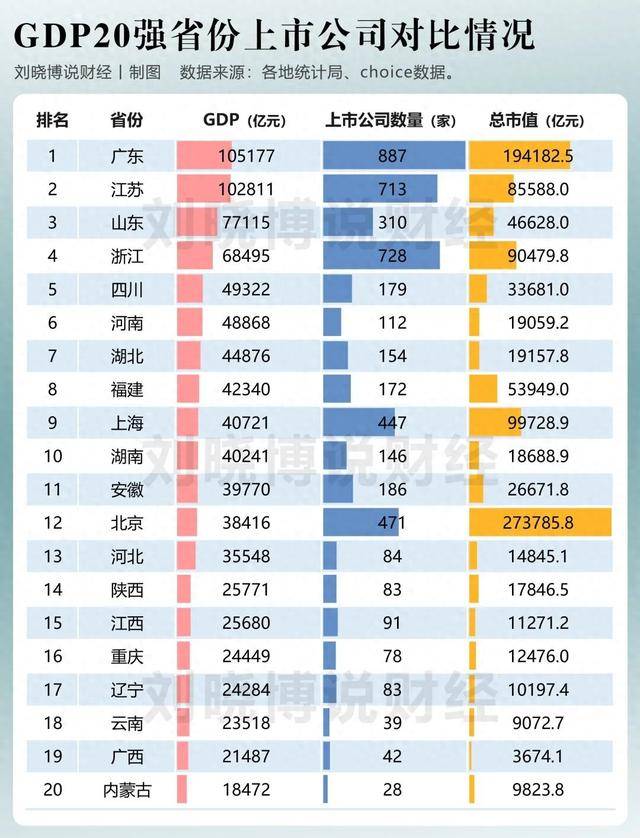
Core Viewpoint - The article highlights Guangdong's leading position in China's economy, showcasing its dominance in the A-share market through key metrics such as the number of listed companies, total market capitalization, and revenue and profit figures, which collectively underline its economic vitality and future potential [1][2]. Group 1: Key Metrics - Guangdong ranks first in the number of A-share listed companies, with 887 companies as of November 4, surpassing Zhejiang (728) and Jiangsu (713) [4][5]. - In terms of total market capitalization, Guangdong holds a significant advantage with a total of 19.42 trillion yuan, nearly double that of Zhejiang (9.05 trillion) and Jiangsu (8.56 trillion), and over four times that of Shandong (4.66 trillion) [6][7]. - For the first three quarters of 2025, Guangdong's 887 companies achieved a total revenue of 8.03 trillion yuan and a net profit of 635.82 billion yuan, exceeding the combined figures of Jiangsu and Zhejiang [8]. Group 2: Competitive Advantages - Guangdong's listed companies are primarily concentrated in high-tech sectors such as electronics, computers, and communications, representing a shift towards "new quality productivity" compared to the traditional industries prevalent in other provinces [9][11]. - The province boasts 29 companies with a market capitalization exceeding 100 billion yuan, significantly more than Jiangsu (12) and Zhejiang (8) [12][13]. - Guangdong's top five companies by market capitalization are all platform-type giants, indicating a focus on "finance + technology + advanced manufacturing," which contrasts with the industry-specific leaders in other provinces [14][15]. Group 3: Economic Environment - Guangdong's success is attributed to a market-oriented structure dominated by private enterprises and a strong emphasis on technological innovation and capital operation [17]. - The province has established a favorable business environment characterized by the principles of "responsive to needs, non-interference," which has fostered a vibrant entrepreneurial ecosystem [18][20]. - As of September 2025, Guangdong has over 20 million business entities, with Shenzhen and Guangzhou leading in the number of operating entities, reflecting a high density of entrepreneurship [20].





银行为何可以八折卖房?这绝对不是做慈善,而是在卖房贷
Sou Hu Cai Jing· 2025-11-14 11:36
Core Viewpoint - Banks are selling properties at discounted prices not due to urgency but as a strategy to improve loan recovery and efficiency in capital turnover [1][2][3] Group 1: Bank's Strategy - Banks are effectively selling loans secured by properties rather than the properties themselves, allowing them to recover more funds [1][5] - By selling properties at around 80% of their market value, banks can find new borrowers, thus securing additional profits beyond the principal amount [5][8] - This approach allows banks to bypass lengthy court auction processes, enhancing their capital turnover efficiency [2][3] Group 2: Market Impact - The influx of discounted properties may initially seem detrimental to property prices, but it could facilitate a quicker stabilization of the real estate market in the long run [8] - Accelerating the disposal of non-performing assets can improve banks' financial health and contribute to a more efficient market recovery [8]


瑞丰银行、郑州银行等多家银行撤销监事会获监管核准
2 1 Shi Ji Jing Ji Bao Dao· 2025-11-14 10:33
Core Viewpoint - The recent approval by regulatory authorities for banks to abolish their supervisory boards and transfer their functions to the audit committee of the board is a significant shift in corporate governance within the banking sector in China [1][2][3] Group 1: Regulatory Changes - Over ten banks have announced the approval to abolish their supervisory boards, including prominent banks such as Wuxi Rural Commercial Bank, Changshu Bank, Zhengzhou Bank, and Shanghai Bank [1] - The new Company Law, effective from July 1, 2024, allows joint-stock companies to establish an audit committee composed of directors to perform the functions of the supervisory board, eliminating the need for a supervisory board [2] - The National Financial Supervision Administration's notification in December 2025 further clarifies that financial institutions can set up an audit committee in accordance with their articles of association, thereby not requiring a supervisory board [2] Group 2: Historical Context and Implications - The supervisory board system was introduced in the 1990s in China's banking sector, modeled after the German system, to establish an independent supervisory layer [3] - The original intent of the supervisory board was to act as a supervisor in corporate governance, ensuring compliance and asset safety, but it has often struggled to fulfill this role effectively [3] - The transition to an audit committee, typically composed of directors with financial and risk management backgrounds, is expected to enhance governance efficiency by integrating supervisory functions into the decision-making core of the board [3]


智通AH统计|11月14日
智通财经网· 2025-11-14 08:17
Core Insights - The article highlights the top and bottom AH premium rates for various stocks as of November 14, with Northeast Electric (00042) leading at 831.03% and Ningde Times (03750) at -9.94% [1][2] AH Premium Rate Rankings - The top three stocks with the highest AH premium rates are: - Northeast Electric (00042) with a premium of 831.03% - Sinopec Oilfield Service (01033) with a premium of 279.27% - Hongye Futures (03678) with a premium of 276.70% [1][2] - The bottom three stocks with the lowest AH premium rates are: - Ningde Times (03750) with a premium of -9.94% - China Merchants Bank (03968) with a premium of -0.10% - Heng Rui Pharmaceutical (01276) with a premium of 5.22% [1][2] Deviation Values - The stocks with the highest deviation values are: - Sinopec Oilfield Service (01033) with a deviation of 36.09% - Hongye Futures (03678) with a deviation of 32.04% - Zhejiang Shibao (01057) with a deviation of 29.03% [1][2] - The stocks with the lowest deviation values are: - Andeli Juice (02218) with a deviation of -18.61% - Ganfeng Lithium (01772) with a deviation of -17.09% - China Life (02628) with a deviation of -16.43% [1][2][3]
【招银研究|宏观点评】淡化数量目标,强化利率比价——《2025年三季度货币政策执行报告》解读
招商银行研究· 2025-11-13 09:12
Core Viewpoint - The central theme of the report emphasizes the evolution of the central bank's monetary policy framework, highlighting the shift towards "diminishing quantity targets, strengthening interest rate comparisons, and optimizing structural tools" [1] Group 1: Economic Situation Assessment - The report indicates that the domestic economic recovery requires further consolidation, with a need to promote a smooth transition between old and new growth drivers and to transform the economic development model [2] - It acknowledges the complex international situation and the insufficient growth momentum in the global economy, while asserting that the long-term supportive conditions for China's economy remain unchanged [2] - The report shifts its focus on inflation from assessment to description, noting improvements in price movements and suggesting policies to positively influence reasonable price recovery [2] Group 2: Policy Stance - The monetary policy maintains a "moderately loose" tone, focusing on achieving a "fourfold balance" [3] - The report highlights the need for supportive monetary policy to stabilize growth and inflation, especially in light of the Federal Reserve's rate cuts and slowing domestic economic growth [3] - It notes that the non-performing loan ratio and net interest margin of commercial banks have not significantly improved, indicating that the loosening of monetary policy should remain moderate [3] Group 3: Policy Framework Evolution - The report details the evolution of the monetary policy framework, emphasizing the need for liquidity to remain ample and interest rates to be reasonably priced [4] - It states that the focus will shift from "financing and monetary aggregates" to "financial totals," indicating a reduced emphasis on quantity targets, particularly credit growth [5] - The report mentions that the growth rate of RMB loans has dropped to 6.6% in October, a decline of 4.1 percentage points compared to the average growth rate over the past five years [5] Group 4: Price Control Mechanisms - The report stresses the importance of price-based regulation in response to the anticipated decline in financial total growth and increased volatility [8] - It outlines five key interest rate relationships that need to be rationalized, including the relationship between central bank policy rates and market rates, and the relationship between different types of asset yields [8] - The report emphasizes the need for continuous evaluation of financial institutions' interest rate policies and self-regulatory agreements [8] Group 5: Structural Adjustments - The report calls for continued support for key financial initiatives and emphasizes the importance of enhancing data development and utilization in the fintech sector [9] - It reviews the achievements in financial support for the digital economy during the 14th Five-Year Plan period and outlines plans for the 15th Five-Year Plan, focusing on the integration of digital technology and data elements [9]
股份制银行板块11月13日涨0.04%,招商银行领涨,主力资金净流入5684.08万元
Zheng Xing Xing Ye Ri Bao· 2025-11-13 08:45
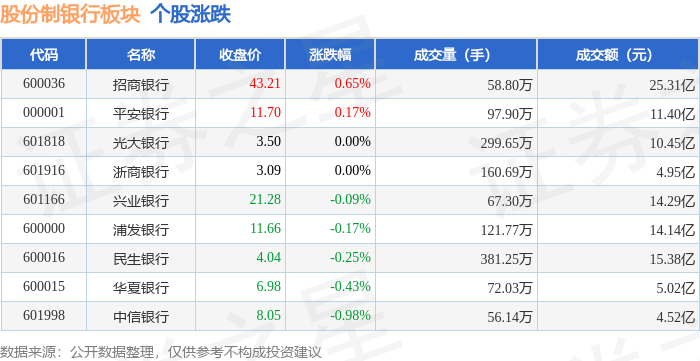
Core Insights - The banking sector saw a slight increase of 0.04% on November 13, with China Merchants Bank leading the gains [1] - The Shanghai Composite Index closed at 4029.5, up 0.73%, while the Shenzhen Component Index closed at 13476.52, up 1.78% [1] Banking Sector Performance - China Merchants Bank (600036) closed at 43.21, with a rise of 0.65% and a trading volume of 588,000 shares, amounting to a transaction value of 2.531 billion [1] - Ping An Bank (000001) closed at 11.70, up 0.17%, with a trading volume of 979,000 shares and a transaction value of 1.14 billion [1] - Other banks like Everbright Bank (601818) and Zhejiang Commercial Bank (601916) remained flat, while Industrial Bank (601166), Shanghai Pudong Development Bank (600000), and Minsheng Bank (600016) experienced slight declines [1] Capital Flow Analysis - The banking sector saw a net inflow of 56.84 million from institutional investors, while retail investors experienced a net outflow of 72.83 million [1] - Industrial Bank (601166) had a significant net outflow of 78.00 million from retail investors, despite a net inflow of 12.90 million from institutional investors [1] - China Merchants Bank had a net inflow of 24.99 million from institutional investors, with retail investors contributing a net inflow of 15.79 million [1]



长期定存不香了?
Xin Jing Bao· 2025-11-13 07:58
Core Insights - The recent announcement by Inner Mongolia's Tongyu Mengyin Village Bank to cancel its 5-year fixed deposit product marks a significant shift in the banking sector, reflecting a broader trend of declining deposit rates and the market's response to interest rate adjustments [1][3][6] Deposit Rate Trends - Many banks are suspending or lowering the rates on 5-year fixed deposit products, with some banks like China Merchants Bank offering only a 1.3% interest rate for 5-year deposits, which is lower than the 1.4% for 2-year deposits [2][4] - The phenomenon of longer-term deposit rates being lower than shorter-term rates has become common, with several banks reporting that their 5-year deposit rates are less attractive compared to 3-year options [3][5] Market Dynamics - The market for 3-year specialty fixed deposit products is highly competitive, with customers needing to "抢" (grab) limited quotas, indicating a scarcity of available products [1][2] - Banks are adjusting their deposit products in response to market conditions, with some banks increasing the entry thresholds for 3-year deposits, reflecting a shift in customer demand and risk appetite [3][4] Future Outlook - Industry experts predict that deposit rates will continue to decline, driven by banks' need to reduce funding costs and maintain profitability amid shrinking net interest margins [6][7] - The ongoing adjustments in deposit products and rates are seen as necessary for banks to manage their liabilities effectively, especially for smaller banks that may struggle with long-term deposits [8][9]


手机银行竞争格局深化 微众、网商银行淡出TOP50
Jing Ji Guan Cha Wang· 2025-11-13 04:14
Core Insights - The overall monthly active users (MAU) of mobile banking apps in China remained stable between 650 million and 720 million in Q3 2025, indicating a saturation in market growth and a shift towards intensified competition among existing players [2][16] - User engagement metrics, such as daily usage time and app launch frequency, continued to decline, highlighting a decrease in user stickiness [2][16] - The competitive landscape is undergoing significant restructuring, with state-owned banks solidifying their dominance, while private banks struggle to maintain relevance [2][15] State-Owned Banks - The six major state-owned banks captured six of the top seven spots in the mobile banking MAU rankings, with Agricultural Bank of China leading at over 250 million MAU [3][6] - All major state-owned banks reported positive MAU growth, with Industrial and Commercial Bank of China leading at a 6.1% quarter-on-quarter increase [6][10] - The robust performance of state-owned banks is attributed to their strong digital strategies and comprehensive service offerings, enhancing user engagement [6][10] Joint-Stock Banks - Joint-stock commercial banks showed overall stability, with China Merchants Bank leading this category with over 70 million MAU, ranking fifth overall [7][9] - There is a noticeable internal differentiation among joint-stock banks, with some like Everbright Bank and CITIC Bank showing significant growth, while others like Minsheng Bank faced declines [10][15] - The competitive edge of China Merchants Bank stems from its focus on digital transformation and wealth management services [10] City Commercial Banks - City commercial banks emerged as a highlight in Q3 2025, with 17 banks entering the top 50 list, led by Ningbo Bank with a remarkable 43.9% growth in MAU [11][14] - The growth of city commercial banks is linked to their targeted regional strategies and tailored services for specific customer segments [14][16] - However, some city banks experienced declines in MAU, indicating that regional advantages do not guarantee growth [14] Private Banks - Private banks are facing a collective decline, with no representatives in the top 50 MAU rankings for Q3 2025, marking a significant shift in the competitive landscape [15][16] - The challenges faced by private banks are attributed to their inability to compete with traditional banks that have strengthened their digital capabilities and customer trust [15][16] - The decline of private banks signals a transition in the industry from rapid user acquisition to deepening engagement with existing customers [15][16] Agricultural and Rural Banks - Seventeen agricultural and rural banks made it to the top 50 list, with Fujian Rural Credit leading at 781.6 million MAU [16] - Most of these banks reported positive growth, indicating a successful strategy in their respective markets [16] - The performance of agricultural banks reflects the ongoing restructuring and competitive dynamics within the banking sector [16]




多家银行上调积存金起点
2 1 Shi Ji Jing Ji Bao Dao· 2025-11-13 00:24
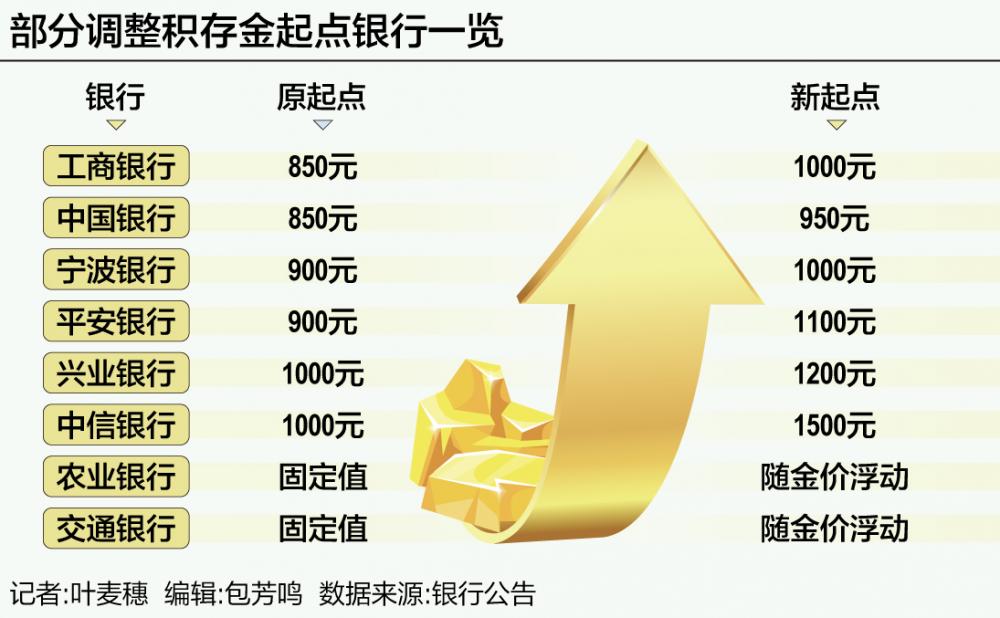
Core Viewpoint - The international gold price has returned to $4100 per ounce, prompting banks to raise the minimum investment threshold for gold accumulation, with some banks adjusting the starting point to a historical high of 1500 yuan [1][3]. Summary by Sections Bank Adjustments - Several banks have raised their gold accumulation thresholds, with notable changes including: - ICBC from 850 yuan to 1000 yuan - Bank of China from 850 yuan to 950 yuan - Ningbo Bank from 900 yuan to 1000 yuan - Ping An Bank from 900 yuan to 1100 yuan - Industrial Bank from 1000 yuan to 1200 yuan - CITIC Bank from 1000 yuan to 1500 yuan - Agricultural Bank and Bank of Communications have switched to a "floating with gold price" mechanism [2][3]. Investment Mechanism Changes - Some banks, like Agricultural Bank and Bank of Communications, have implemented a "floating with gold price" mechanism to avoid frequent adjustments, allowing the minimum investment amount to vary with market prices [4][5]. - This approach aims to provide flexibility for investors and better align with market dynamics [4]. Market Analysis - The gold price has seen significant volatility, with a rise of over 60% this year, peaking above $4300 per ounce before experiencing a sharp decline [6][7]. - Analysts have differing views on future gold prices, with predictions ranging from $3650 to $5000 per ounce by the end of 2026, influenced by various economic factors [7][8]. - The outlook remains optimistic for gold due to factors such as a weakening dollar and inflation risks, which could sustain investment demand [7][8]. Risk Awareness - In response to the volatile gold market, banks and regulatory bodies have increased risk awareness efforts, advising investors to recognize the inherent risks in precious metal investments [5].
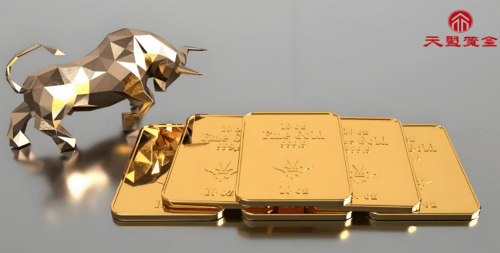
天盟黄金:全面解读多家银行上调积存金门槛背后的意义。
Sou Hu Cai Jing· 2025-11-12 18:12
Core Viewpoint - Several major banks have raised the minimum investment threshold for gold accumulation to between 1200 and 1500 yuan, reflecting a proactive risk management approach amid increasing global economic uncertainty and fluctuating international gold prices [1][3][4] Group 1: Market Dynamics - The international gold market has experienced multiple rounds of volatility this year due to inflation pressures, fluctuating Federal Reserve monetary policy expectations, and escalating global geopolitical risks, leading to heightened market sentiment towards gold [3][4] - Since the end of October, gold prices have frequently fluctuated at high levels, significantly increasing investment risks, prompting banks to raise the minimum investment threshold as a means of risk rebalancing [3][4] - The adjustment in the gold accumulation threshold indicates a shift from a "mass buying" sentiment to a more rational investment phase, with high-net-worth clients and conservative investors becoming the primary support for gold accumulation business [3][4][9] Group 2: Regulatory and Self-Discipline Signals - Regulatory guidance has played a crucial role in prompting banks to adjust their investment thresholds, as financial authorities emphasize the need for standardized operations in precious metal investment businesses [5][6] - The gold accumulation business, while flexible, falls under the category of gold derivative investments, and without timely adjustments to investment thresholds and enhanced risk control measures, it could lead to concentrated redemptions and pricing deviations during extreme market conditions [5][6] - The proactive adjustment of investment rules by banks not only aligns with regulatory requirements but also reflects industry self-discipline and prudent management practices [5][6] Group 3: Investor Perspective - For ordinary investors, the increase in the gold accumulation threshold does not signify the closing of investment opportunities but serves as a reminder to return to rational investment practices [7][9] - In the context of global economic turmoil and intertwined geopolitical risks, gold remains a strategically important asset, but investors should place greater emphasis on capital planning and risk tolerance assessments to avoid impulsive decisions and short-term trading [7][9]