STARBUCKS(04337)

Search documents
城数Lab. | 咖啡“双雄”城市版图:星巴克的未来在哪里
Sou Hu Cai Jing· 2025-11-08 19:06
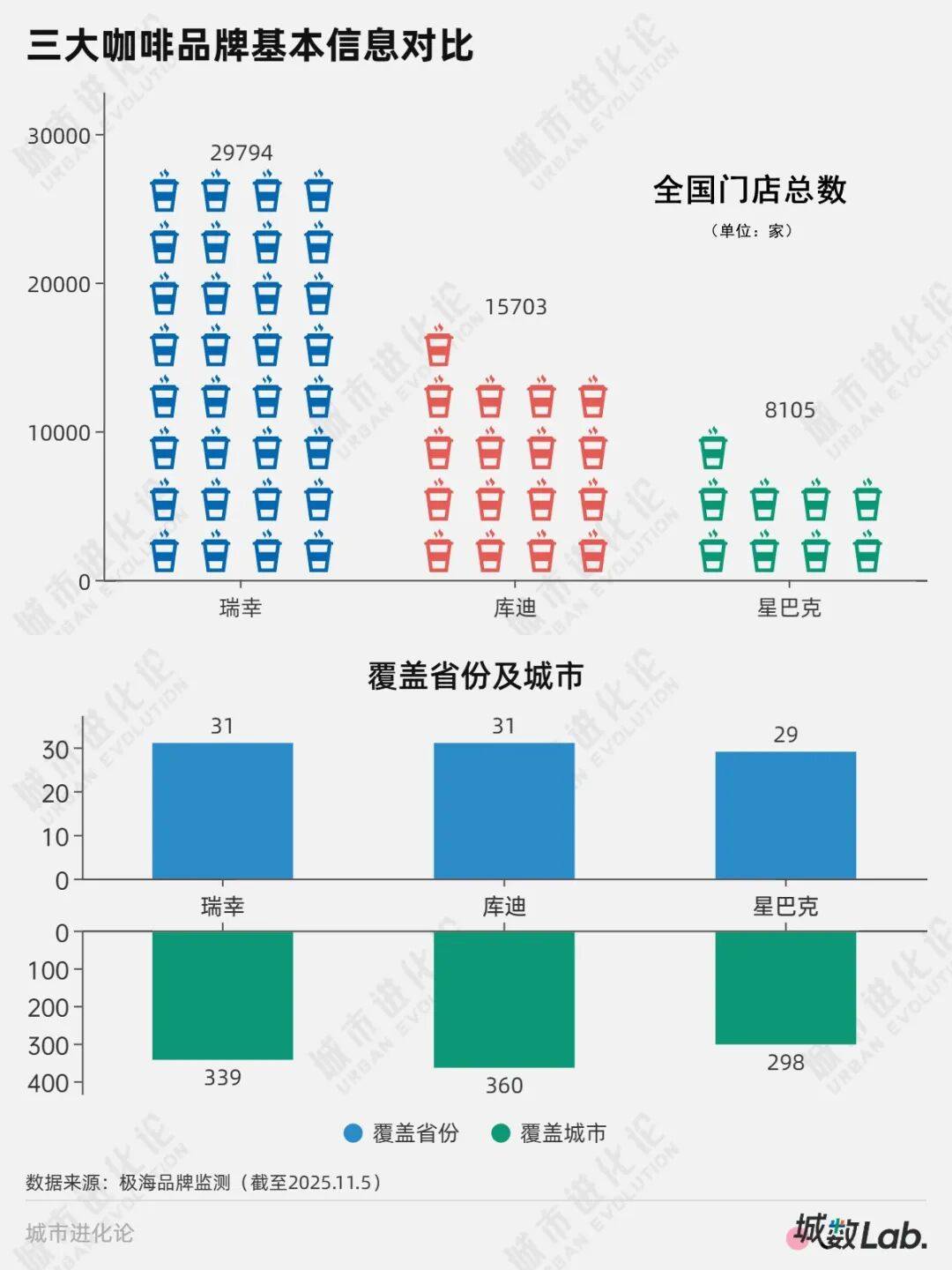
Core Insights - Starbucks has sold a 60% stake to Boyu Capital for a valuation of $13 billion, marking a significant strategic shift since its entry into the Chinese market in 1999 [1] - The competitive landscape in China's coffee market has changed, with Starbucks facing challenges from local brands like Luckin Coffee, which has surpassed Starbucks in store count and annual sales [3] Market Positioning - As of now, Starbucks operates 8,105 stores in China, while Luckin Coffee has 29,794 stores and another local brand, Koolearn, has 15,703 stores, indicating that Starbucks has less than one-third of Luckin's store count [1] - Starbucks' store distribution is heavily concentrated in first-tier and new first-tier cities, with 64% of its stores located in these areas, while Luckin has a more balanced presence across second, third, and fourth-tier cities [12] Regional Strategy - Starbucks has the highest number of stores in Zhejiang province (1,205), while Luckin leads in Guangdong with 4,320 stores [6] - The top three cities for Starbucks are Shanghai, Beijing, and Hangzhou, whereas Luckin's top cities are Shanghai, Shenzhen, and Guangzhou [9] Future Expansion Plans - The partnership with Boyu Capital aims to expand Starbucks' store count in China to 20,000, focusing on smaller cities and emerging regions [15][16] - The CEO of Starbucks emphasized that Boyu's local market expertise will accelerate Starbucks' growth in China, particularly in lower-tier markets [16]



终于扛不住了?星巴克向9.9元低头?真相是:一场更狠的围剿
Sou Hu Cai Jing· 2025-11-08 00:39
Core Insights - Starbucks is selling a 60% stake in its China retail operations to Boyu Capital for a valuation of $4 billion, retaining 40% ownership and brand rights, indicating a strategic shift rather than a retreat from the market [1][3] - The total value of Starbucks' retail business in China is over $13 billion, highlighting the significance of the transaction beyond just the cash received [3][5] Transaction Details - The deal involves three components: cash from the sale of equity, potential value from the retained stake, and future brand licensing revenue, allowing Starbucks to focus on brand and intellectual property while shedding high-risk operational responsibilities [3][5] - This move is characterized as a "light asset transformation," enabling Starbucks to stabilize profits through brand licensing while distancing itself from daily operational challenges [3][5] Market Dynamics - The decision to "delegate" operations comes amid fierce competition in the Chinese coffee market, with local brands like Luckin Coffee and Kudi rapidly expanding and employing aggressive pricing strategies [5][7] - Despite maintaining same-store traffic growth, Starbucks has seen a decline in average transaction value, indicating a shift in consumer behavior towards more pragmatic spending [5][8] Strategic Partnership - Boyu Capital's selection as a partner is attributed to its extensive experience in the Chinese market, including high-end projects and successful investments in popular brands, which can provide operational synergies for Starbucks [7][8] - The partnership aims to expand Starbucks' store count in China from over 8,000 to 20,000, reflecting a significant growth ambition rather than a withdrawal [7][8] Future Strategy - Starbucks is not expected to engage in price wars but will instead focus on a differentiated strategy, maintaining high-end flagship stores while introducing lighter community and quick-service formats in lower-tier cities [8][10] - This approach aims to balance brand integrity with market demands, leveraging a mixed model of direct and franchise operations to optimize expansion costs [8][10] Industry Trends - Starbucks' transformation aligns with a broader trend among global consumer brands in China, moving towards lighter asset models and increased collaboration with local partners to enhance operational efficiency [10][14] - The shift emphasizes the importance of adapting to local market conditions, with a focus on brand development and product innovation while outsourcing operational responsibilities [10][14] Challenges Ahead - Key challenges include maintaining brand identity during rapid expansion and ensuring profitability in new store formats, as well as managing the balance between direct and franchise operations [12][14] - The collaboration between Boyu Capital's expertise and Starbucks' established brand framework is expected to address these challenges effectively [12][14]
星巴克“联姻”博裕背后:咖啡行业竞争迈入“成本战”
Xin Lang Cai Jing· 2025-11-07 21:13
Core Insights - Starbucks has announced a strategic partnership with Boyu Capital to establish a joint venture for its retail operations in China, marking a significant capital restructuring since entering the Chinese market [1] - The partnership aims to expand Starbucks' store count in China to 20,000, with Boyu holding up to 60% equity and Starbucks retaining 40% [1][2] - The collaboration reflects Starbucks' commitment to localize its operations in response to increasing competition in the Chinese coffee market [2][3] Company Strategy - The joint venture is seen as a form of franchising, with Boyu acting as a regional franchisee, indicating Starbucks' determination to adapt to the Chinese market [2] - Starbucks has faced declining market share, dropping from 42% to 14%, due to competition from local brands and changing consumer preferences [3] - The partnership with Boyu is expected to leverage local resources and expertise to enhance Starbucks' market presence, particularly in smaller cities and emerging regions [5] Market Dynamics - The Chinese coffee market is experiencing intense competition, with local brands like Luckin Coffee rapidly gaining market share through lower pricing and innovative business models [3][6] - The market is shifting towards a "K-shaped" differentiation, where premium brands focus on unique experiences while budget brands emphasize efficiency and cost-effectiveness [6][7] - The overall coffee consumption market in China is projected to exceed 1.5 trillion yuan by 2030, indicating significant growth potential [7][8] Supply Chain and Pricing - The price of coffee beans has been volatile due to climate change, with Arabica coffee futures reaching a 47-year high, impacting brand cost structures [9] - Local coffee bean production is increasing, but high-quality beans still rely heavily on imports, leading to intensified competition for premium coffee resources [8][9]
出售60%股权、引入新伙伴博裕投资!星巴克中国“再出发”|画说热点
Sou Hu Cai Jing· 2025-11-07 12:45
Core Insights - Starbucks has announced a strategic partnership with Chinese alternative asset management firm Boyu Capital to establish a joint venture for its retail operations in China [2][3] - Boyu Capital will hold up to 60% equity in the joint venture, while Starbucks retains 40% and continues to own and license its brand and intellectual property [2] - The estimated enterprise value of the joint venture is approximately $4 billion, with Starbucks projecting its total retail business value in China to exceed $13 billion [2] Group 1 - Boyu Capital, founded in 2011, has a diversified investment management platform and extensive experience in the consumer retail sector, having invested in over 200 companies [3] - The collaboration aims to leverage Boyu's local market insights and Starbucks' global leadership in the coffee industry to enhance product offerings and customer experiences in China [3] - Starbucks has over 60% of its stores located in the U.S. and China, with China being its second-largest market globally [3] Group 2 - In the most recent quarter, Starbucks reported a 1% increase in global same-store sales, marking the first positive growth in seven years, with a 2% increase in same-store sales in China contributing significantly [3]
外资品牌集体慌了,星巴克贱卖中国业务,汉堡王会是下一个目标吗
Sou Hu Cai Jing· 2025-11-07 09:45
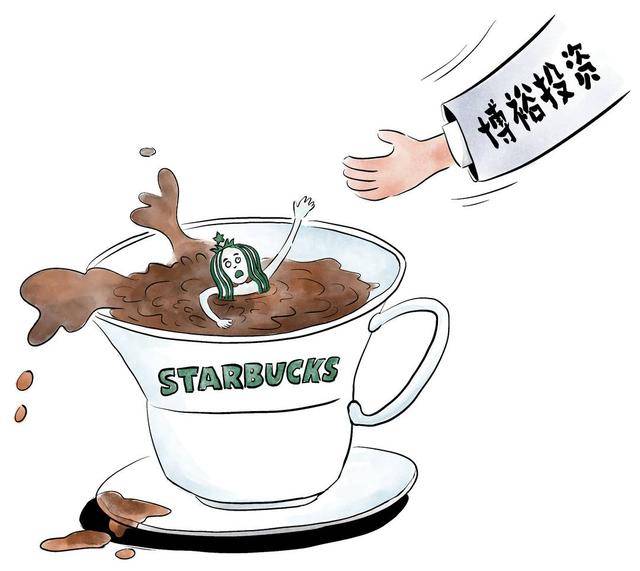
Core Insights - Starbucks is at a critical juncture in its localization transformation in China, marked by the sale of a 60% stake in its Chinese operations for $4 billion and the introduction of Boyu Capital as a strategic partner, reflecting a significant shift in the development model of foreign brands in the Chinese market [1][3] Market Position and Competition - Starbucks' market share in China has declined from 42% to 14%, while competitors like Luckin Coffee and Kudi have expanded their store counts to over 26,000 and 15,000 respectively, leaving Starbucks with only 8,000 stores [3] - The opening of new stores for Starbucks has dropped significantly, with a year-on-year decline of 41.78% in the first half of 2025, indicating weakened bargaining power and challenges in commercial real estate [3] Valuation and Potential - The transaction values Starbucks' Chinese retail business at over $13 billion, considering the $4 billion transaction price, retained equity value, and long-term brand licensing revenue [3] Strategic Partnership - The choice of Boyu Capital as a partner is driven by the need for not just financial support but also access to deep resources in the consumer sector, including supply chain and commercial real estate, essential for achieving the goal of 20,000 stores [5] - Starbucks has initiated a year-long self-rescue operation, showing positive results with consecutive growth in same-store sales and transaction volume, indicating that user loyalty can be maintained without resorting to price wars [5] Product Adaptation and Innovation - Starbucks is adapting to local consumer demands by launching sugar-free products, expanding non-coffee offerings, and adjusting prices to attract price-sensitive customers [7] - The company is enhancing its "third space" concept by creating unique store experiences, such as heritage-themed stores and partnerships with platforms like Xiaohongshu to transform over 1,800 locations into interest-based social spaces [7][8] Industry Trends and Evolution - The blending of coffee and tea products is emerging as a new trend in the industry, with Starbucks launching collaborations like the Disney-themed iced tea, reflecting a shift towards providing comprehensive solutions for consumer needs [8] - The evolution of foreign brands in China is evident as they seek local partners, moving from simple ownership transfers to value co-creation models, as seen in successful cases like Yum China and McDonald's China [10][12] Challenges and Future Outlook - The partnership with Boyu Capital presents both opportunities and challenges, as Starbucks must balance resource expansion in lower-tier cities while maintaining its premium brand image [12] - The future of foreign brands in China hinges on their ability to achieve a harmonious balance between localization and brand integrity, as demonstrated by successful adaptations from competitors like KFC and McDonald's [14][16]
星巴克卖掉经营权,留住品牌权:外资的“知产底牌”
Sou Hu Cai Jing· 2025-11-07 04:33
Core Viewpoint - Starbucks announced the sale of 60% of its Chinese business to Boyu Capital, marking a significant shift in its operational strategy while retaining control over its brand and intellectual property [2][6]. Group 1: Business Strategy - The transaction allows Starbucks to maintain ownership of its trademark, brand, recipes, store designs, and supply chain standards, ensuring that the core elements of its business remain under its control [2][6]. - This move aligns with a trend seen in the fast-food industry, where companies like Yum Brands and McDonald's have previously sold operational rights while retaining brand control [5][6]. Group 2: Industry Context - The decision reflects a broader industry pattern where foreign brands, after experiencing market saturation and increased local competition, opt to divest operational control while keeping brand rights [5][6]. - The strategy of "selling operational rights while retaining brand" is common among over 90% of global consumer brands, contrasting with the less frequent approach of fully transferring brand ownership [7]. Group 3: Intellectual Property Importance - Retaining intellectual property (IP) is crucial as it serves as a risk isolation mechanism, allowing companies to control brand direction and generate long-term revenue through licensing fees even after operational rights are transferred [6][10]. - The article emphasizes the importance of treating IP as a core asset rather than a cost-saving measure, highlighting the risks associated with inadequate IP protection in international markets [8][10]. Group 4: Future Considerations - Companies are encouraged to evaluate the financial implications of selling versus retaining their IP, with a focus on structuring agreements that protect their brand and operational interests [10]. - The article suggests that a shift in mindset is necessary for Chinese companies to transition from a model of "sales without ownership" to one where IP is secured before entering partnerships [10].
咖啡和空间,谁才是130亿美元星巴克中国的原点?
Xin Lang Cai Jing· 2025-11-07 03:36
Core Insights - Starbucks has finalized a strategic partnership with Boyu Capital to establish a joint venture in China, with a valuation of $4 billion, where Boyu will hold up to 60% equity and Starbucks will retain 40% [1] - The average store valuation for Starbucks in China is approximately $500,000, significantly lower than the global average of $2.24 million, indicating underutilization of store value [1] - Starbucks aims to expand its store count in China to 20,000, with a projected retail business value exceeding $13 billion [4] Financial Performance - Starbucks China reported a revenue of $3.105 billion for the fiscal year 2025, a 5% year-on-year increase, with same-store sales growing by 2% [4] - Despite growth in same-store transactions by 9%, the average transaction value has declined for 12 consecutive quarters, with a 7% drop in Q4 2025 [5][9] - The overall same-store sales for fiscal year 2025 saw a 1% decline, attributed to a 5% decrease in average transaction value [9][10] Market Dynamics - The competitive landscape in China's coffee market has intensified, with local brands like Luckin and Manner outperforming Starbucks in product innovation and cost control [6][7] - Coffee has transitioned into a low-margin retail business in China, challenging Starbucks' traditional high-margin model [7][11] - The shift in consumer behavior towards affordable coffee options has diminished Starbucks' competitive edge in the coffee segment [12][13] Strategic Focus - Starbucks' core business model revolves around creating a "third space" experience, emphasizing the importance of store ambiance over just coffee sales [12][14] - The company is exploring new themes for its stores, such as community spaces focused on interests like pets and outdoor activities, to enhance customer engagement [16] - Starbucks needs to redefine its value proposition in high-tier cities, where consumer perception of its space and experience has weakened [15][17]
星巴克发布2025年假日菜单及周边商品
Xin Lang Cai Jing· 2025-11-06 15:57
Core Viewpoint - Starbucks (SBUX) experienced a 0.8% decline in early trading following the announcement of its 2025 holiday menu and related merchandise, which includes the Bearista cold drink cup, in anticipation of Red Cup Day on November 13 [1] Group 1 - The company unveiled its holiday offerings, which are aimed at generating excitement for the upcoming festive season [1] - Red Cup Day is an annual event where customers purchasing handcrafted holiday beverages receive a limited edition reusable red cup for free [1]
博裕40亿美元拿下星巴克中国60%股权!跨国巨头为何纷纷“交出方向盘”?
Zhong Guo Jing Ji Wang· 2025-11-06 07:51
Core Insights - Starbucks has entered a strategic partnership with Chinese investment firm Boyu Capital to establish a joint venture for its retail operations in China, with Boyu holding up to 60% equity and Starbucks retaining 40% [1][2] - The deal is based on an enterprise value of approximately $4 billion, and Starbucks anticipates its retail business in China to exceed $13 billion in total value [1] Group 1: Boyu Capital - Boyu Capital, founded in 2011, is known for its "top-tier allocation and long-term thinking" and has a strong founding team including former executives from major firms like Ping An and Goldman Sachs [2][3] - The firm has a diversified investment portfolio covering sectors such as consumer retail, technology innovation, healthcare, and renewable energy, with notable investments in companies like Kuaishou and Haidilao [4] Group 2: Market Dynamics - Starbucks reported a 6% year-over-year revenue growth for Q4 FY2025, with total annual revenue reaching $3.105 billion, yet faces increasing competition from local brands like Luckin Coffee, which has over 27,000 stores in China [9][11] - The competitive landscape has shifted, with local brands expanding rapidly and offering lower prices, challenging Starbucks' pricing strategy and market share [10][12] Group 3: Strategic Shift - The partnership reflects a broader trend where foreign food and beverage giants are adapting to the Chinese market by collaborating with local capital and management [16][19] - Starbucks aims to expand its store count in China from 8,000 to 20,000, indicating a significant growth target that will require adjustments in local operations and supply chain management [21][22] Group 4: Operational Strategy - Starbucks retains control over its brand and intellectual property, allowing for potential future franchising while adapting to local market needs [25][27] - The company faces challenges in the lower-tier markets where consumer preferences lean towards lower-priced options, necessitating a reevaluation of its store formats and operational strategies [24][31] Group 5: Future Outlook - The coffee market in China is experiencing intense price competition, with some brands offering coffee as low as $2.9 per cup, posing a challenge for Starbucks to maintain its brand identity while innovating locally [30][31] - Achieving a balance between brand value, profitability, and expansion will be crucial for Starbucks as it navigates this evolving market landscape [31]
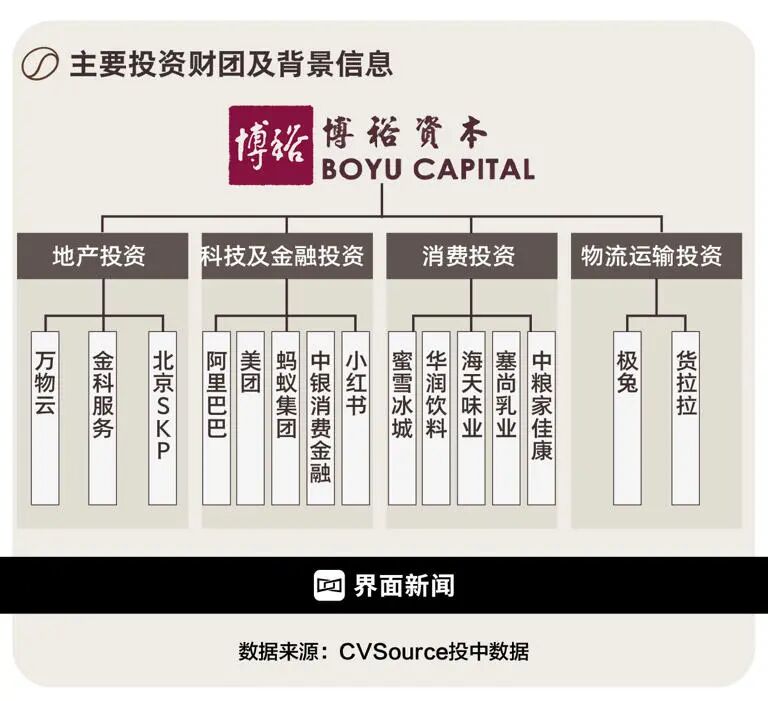
让“全球上瘾”的星巴克,在中国玩不转了
Sou Hu Cai Jing· 2025-11-06 07:21
Core Insights - Starbucks China has sold 60% of its stake to Boyu Capital after 26 years in the market, aiming to expand its store count to 20,000 to compete with local brands [1] - Despite having 20% of the global store count, Starbucks China only contributes 8.3% to global revenue, indicating a significant market share decline from 60% to 14% [1] - The shift in consumer preferences in China is moving from brand worship to value consumption, challenging Starbucks' traditional business model [24][25] Company Overview - Starbucks was established in Seattle in 1971 and expanded globally under Howard Schultz, who emphasized emotional connections and storytelling in branding [4] - The "third space" concept, which positions Starbucks as a social and leisure hub, has been a key strategy in its international expansion [9] Market Dynamics - The Chinese coffee market is evolving, with local brands like Luckin Coffee (35% market share) and Kudi (18% market share) surpassing Starbucks [1] - The functional consumption of coffee in China has reached 67%, while scene-based consumption has dropped to 33%, reflecting changing consumer behavior [25] Strategic Adjustments - Starbucks China is undergoing strategic adjustments in response to market cooling and increased competition from local brands [1] - The company must adapt its brand positioning to align with the current consumer demand for value over brand prestige [24][25]