JD(09618)

Search documents
烧钱换增长的电商模式,该出局了
虎嗅APP· 2026-03-30 13:54
Core Viewpoint - The current e-commerce landscape is characterized by a shift from a "burning money for growth" model to a more sustainable approach focused on "value co-creation" and partnership between platforms and merchants [6][26]. Group 1: Merchant Challenges - Many small and medium-sized merchants are facing severe financial pressure, with over 30% projected to be in a loss-making state by 2025, and another 30% having minimal profits of only 0-5% [2][5]. - The rising cost of traffic acquisition has become a significant burden, with nearly half (48.7%) of merchants spending 20-100% of their revenue on traffic [21]. Group 2: Platform Support Initiatives - Platforms are increasingly taking on the role of partners, helping merchants reduce costs and providing support through initiatives like JD's "Spring Dawn Plan," which offers free traffic support and promotional funds [20][30]. - The "Spring Dawn Plan" has attracted millions of new merchants, with a projected near doubling of order volume for small and medium-sized merchants by 2025 [20]. Group 3: Success Stories - The case of the "Shanling Audio" flagship store illustrates how targeted support from platforms can lead to rapid profitability, achieving a 45% month-on-month sales increase after receiving tailored advice and promotional funds [12][14]. - The innerwear brand "Beast Comes" has seen a 20% increase in ROI after shifting focus to platforms like JD, emphasizing the importance of brand building over mere traffic acquisition [25]. Group 4: Future Trends - The e-commerce competition is evolving from a focus on "traffic and low prices" to "efficiency, brand, and certainty," with platforms expected to act as service providers rather than mere traffic sellers [26][31]. - JD plans to further enhance support for merchants in 2026, with an investment of 35 billion in resources and a new advertising support policy that guarantees a 100% return on investment [22].



资本市场周报(2026年第2期):市场定价由“通胀”初步切换至“衰退”逻辑-20260330
Yin He Zheng Quan· 2026-03-30 08:55
Group 1 - The market is transitioning from an "inflation" pricing logic to a "recession" pricing logic, influenced by geopolitical tensions and economic indicators [5][10] - The U.S. stock indices have shown significant declines, with the Dow Jones Industrial Average down 0.9%, S&P 500 down 2.12%, and Nasdaq Composite down 3.23% [5][9] - Chinese assets have performed relatively better, with the CSI 300 index down 1.41% and the 10-year government bond yield slightly decreasing from 1.83% to 1.82% [5][9] Group 2 - The global capital market is currently dominated by geopolitical conflicts, with major stock indices experiencing declines, particularly in South Korea and Europe due to their reliance on energy imports [9][36] - The U.S. 10-year Treasury yield has risen to 4.44%, marking a 12-month high, while the dollar index has strengthened, putting pressure on non-U.S. currencies [9][39] - The report highlights the performance of various sectors in the A-share market, with the energy sector showing resilience while technology and consumer sectors faced declines [31][34] Group 3 - The report discusses significant policy developments, including the introduction of standards for "light asset, high R&D" companies to facilitate financing, aligning with national strategic goals [43][45] - The People's Bank of China is focusing on enhancing financial stability through technology empowerment and regulatory reforms, particularly in high-frequency trading and derivatives [43][44] - The digital RMB wallet upgrade is expected to promote the internationalization of the RMB, enhancing its acceptance in global payment systems [45][47]






京东集团:考察要点- 差异化供给驱动策略,盈利能力持续改善;季度至今表现稳健
2026-03-30 05:15
JD.com Inc. (JD) Conference Call Summary Industry Overview - **Company**: JD.com Inc. - **Industry**: E-commerce and Logistics in China Key Points 1. Revenue and Profitability Outlook - JD.com expects mid-single-digit revenue and operating profit growth in 2026, with healthy trends observed in Q1 2026. The company anticipates tougher year-on-year comparisons in Q2 2026 [1][10] - Long-term growth is expected in the core retail business, driven by improved profitability in general merchandise and sustained growth in marketplace and advertising revenue [1][10] 2. Food Delivery Unit Economics - Management is focusing on higher-quality food delivery and plans to leverage its 1 million active restaurant base to attract premium merchants and customers. Losses are narrowing through improved operational efficiency [2][10] - The company aims to maintain sufficient scale in food delivery while reducing losses via lower subsidies and monetization of services like commissions and advertising [10][12] 3. Investment in New Business - Investments in JoyBuy will increase this year, particularly in Europe, while domestic food delivery unit economics are expected to improve. Jingxi is projected to deliver double-digit growth over the next two years [3][10] - The management remains confident in optimizing category mix using customer purchase data to enhance Jingxi's unit economics [3][10] 4. AI Applications - JD.com is deploying AI across its business for cost reduction, logistics automation, and user experience enhancement. AI is expected to transition user traffic from keyword-based search to predictive, intent-based solutions [4][10] 5. Shareholder Returns - The company is committed to shareholder returns through dividends and share buybacks, achieving a total shareholder return of 10% in 2025. Future plans include balancing growth funding with consistent shareholder returns [5][7] 6. Gross Margin Insights - Gross margins vary by category: Electronics & appliances show high-single digits to teens, while general merchandise maintains margins at the teens level. The supermarket segment has reached operating profit breakeven [10][12] 7. Strategic Discipline in Food Delivery - JD.com expects higher JD Retail profits year-on-year in 2026, with potential reductions in losses from new businesses depending on food delivery volumes and JoyBuy's ramp-up [10][12] 8. Price Target and Valuation - Goldman Sachs maintains a Buy rating on JD.com with a 12-month price target of $43 (upside of 57.7%) and HK$169 for the Hong Kong listing (upside of 55.6%) [8][13] 9. Risks - Key risks include increased competition in China's e-commerce and food delivery markets, potential slowdown in online GMV, and fluctuations in JD Retail margins due to ongoing investments [12][10] Additional Insights - The company is seen as a multiple repair/re-rating story, with expectations of improved user traffic and growth recovery in its unique 1P-driven JD Retail business [8][10] - JD.com is also focusing on enhancing its logistics capabilities and expanding its global footprint, which are critical for sustaining growth [8][10]
中国人的睡眠焦虑,正在颠覆这个行业
第一财经· 2026-03-29 15:15
Core Viewpoint - The article highlights the significant transformation in the bedding market driven by contemporary sleep issues, with new brands rapidly emerging to address these challenges, while traditional brands face declining market share and user retention [3][4]. Group 1: Market Dynamics - The bedding market is experiencing a shift as new brands like Atour, Sleep Equation, and Blue Box dominate sales rankings, leaving traditional brands like Luolai and Mengjie behind [5]. - Internet companies such as NetEase and JD.com are launching their own bedding brands, creating popular products like latex pillows and summer quilts, and expanding into various categories [7]. - The rise of AI sleep technology has led to the emergence of tech-driven brands in the smart mattress sector, with companies like Qusleep and Huawei entering the market [6][8]. Group 2: Consumer Behavior and Market Growth - Approximately 48.5% of adults in China experience sleep issues, leading to increased attention on bedding products and the growth of the sleep economy, projected to reach 658.68 billion yuan by 2027 [13][14]. - New brands are redefining product categories by focusing on emotional selling rather than technical specifications, addressing consumer pain points related to sleep anxiety [14]. Group 3: New Brand Strategies - New brands are leveraging agile supply chains and data insights to quickly respond to market demands, creating products that resonate with consumer needs [15]. - The success of brands like Atour and JD.com is attributed to their ability to identify and capitalize on emerging trends, such as the rising demand for latex pillows [9][10]. Group 4: Challenges for Traditional Brands - Traditional bedding brands are facing declining revenues, with Luolai's revenue dropping from 5.76 billion yuan in 2021 to 4.559 billion yuan in 2024, a decrease of 20.8% [17]. - These brands struggle with heavy offline retail burdens and are slow to adapt to online sales channels, limiting their competitiveness against lighter, more agile new brands [18]. - Traditional brands are attempting to innovate by introducing new products and leveraging social media for marketing, but they face challenges in effectively engaging with younger consumers [19].




腾讯《洛克王国:世界》上线并登顶iOS畅销榜,OpenAI关停Sora
GF SECURITIES· 2026-03-29 10:08
Group 1: Core Insights - The report suggests a positive outlook for the internet sector, particularly in e-commerce, social entertainment media, online travel, short videos, and IP-driven markets, with expectations of marginal improvements in profitability and stock performance for companies like Meituan and Tencent [4][15][18] - The gaming sector is expected to maintain strong fundamentals, with Tencent and NetEase identified as companies with significant valuation advantages, alongside recommendations for Century Huatong and Giant Network due to their robust product pipelines [4][18] - The advertising sector shows promising growth, with a notable increase in internet advertising investments, particularly around major events like the Winter Olympics and World Cup, indicating a potential boost for companies like Focus Media [4][18] Group 2: Industry Trends - The report highlights the ongoing competition in the e-commerce space, with Meituan focusing on high-quality growth and improving its economic model, which may lead to a rebound in stock prices [4][15][16] - In the social entertainment media sector, Tencent is expected to leverage the commercialization potential of WeChat, while Bilibili is projected to lead in advertising growth [4][15][18] - The AI sector is anticipated to enter a new phase of model iteration in Q2 2026, with significant investment trends centered around computing power and model development, suggesting a potential revaluation of AI-related companies [4][20] Group 3: Company Performance - Meituan's first quarter of 2026 is expected to show improvements in its delivery service profitability, with a focus on maintaining market share in core categories [4][15][16] - Tencent's new game "King of Glory: World" has recently topped the iOS sales chart, indicating strong market competitiveness and potential for future growth [4][12][18] - Kuaishou reported a total revenue of 142.8 billion yuan for 2025, reflecting a 12.5% year-on-year growth, with adjusted net profit increasing by 16.5% [4][33]



中国人的睡眠焦虑,正在颠覆这个行业
第一财经· 2026-03-29 04:31
Core Viewpoint - The article highlights the rapid rise of new brands in the home goods market, driven by consumer demand for better sleep solutions and comfort, while traditional brands face significant challenges in retaining market share and adapting to changing consumer preferences [5][6][18]. Group 1: Market Dynamics - The home goods market is experiencing a shift as new brands that address sleep-related pain points are emerging, while traditional brands are losing ground [5][6]. - Notable new entrants include brands like Atour, which has sold over 10 million units of its deep sleep pillow, and other internet companies like NetEase and JD.com that are launching their own home goods lines [5][6][9]. - The sales of traditional brands such as Luolai and Fuanna have declined, with Luolai's revenue dropping from 5.76 billion in 2021 to 4.559 billion in 2024, a decrease of 20.8% [18]. Group 2: Consumer Behavior - Approximately 48.5% of adults in China experience sleep issues, leading to increased attention on home goods that promote better sleep [14]. - New brands are successfully marketing products by focusing on emotional benefits rather than technical specifications, appealing to consumers' desire for comfort and well-being [14][15]. Group 3: Business Strategies - New brands are leveraging agile supply chains and data insights to quickly respond to market demands, creating products that resonate with consumers [14][15]. - Atour's retail business, centered around sleep products, achieved 3.67 billion in revenue in 2025, growing 67% year-over-year, indicating a successful business model focused on sleep solutions [9]. - JD.com identified the rising demand for latex pillows and created a competitive product that became a bestseller, showcasing the effectiveness of data-driven product development [12]. Group 4: Challenges for Traditional Brands - Traditional brands are struggling with outdated business models and heavy reliance on physical retail, making it difficult to compete with the nimbleness of new entrants [18][19]. - Many traditional brands have not adapted to the rise of new media and e-commerce, leading to missed opportunities in reaching younger consumers [19]. - As new brands gain traction, they will face challenges in maintaining their competitive edge, particularly as customer acquisition costs rise and product differentiation becomes more difficult [20][21].


3月26日【港股Podcast】Part1-恆指、匯豐、中海油、友邦、快手、京東
Ge Long Hui· 2026-03-28 05:12
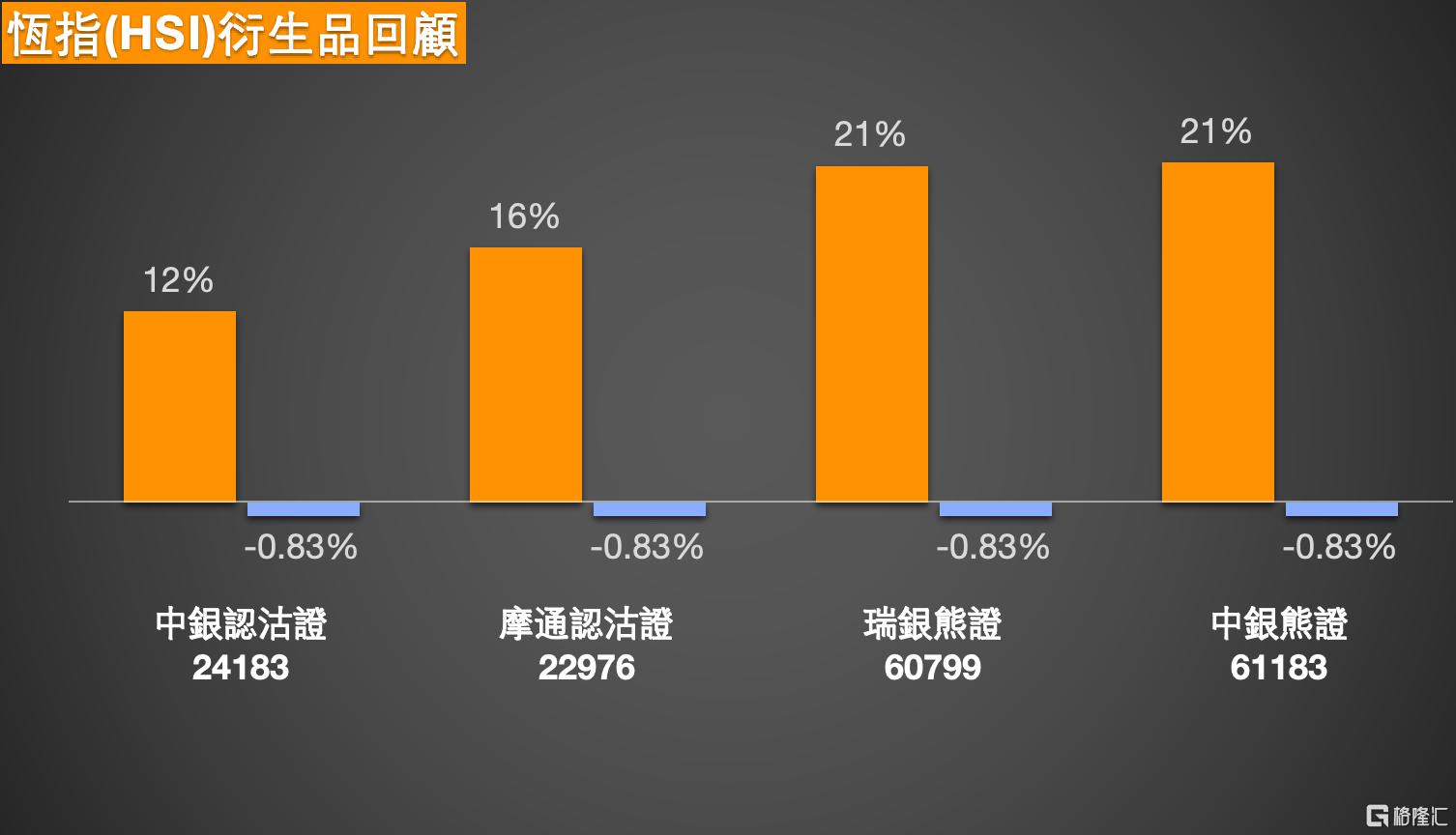
Group 1 - The Hang Seng Index (HSI) is currently trading at 24,856.43 points, within a clear range of 24,203.54 to 27,325.98 points, indicating a volatility of approximately 12.9% [1][2] - Short-term support is observed at around 24,200 points, which is close to recent lows, while resistance is seen between 25,000 and 25,200 points [1][2] - The market sentiment remains weak, with technical indicators showing downward trends, suggesting that any rebounds are merely technical recoveries within a bearish context [1][4] Group 2 - Bullish investors noted an increase of 600 million in bull certificates and a decrease of 400 million in bear certificates, indicating attempts to capitalize on a potential rebound [3][4] - Bearish investors believe the index will continue to decline, with a focus on the 24,200 support level, which is critical for determining market direction [2][4] - The distribution of certificates shows a concentration of bull certificates around the 24,000 to 24,199 range and bear certificates between 25,400 and 25,799, reflecting a market engaged in range-bound trading rather than a clear directional bias [3][4] Group 3 - The technical state of the market indicates that moving averages are still trending downwards, and the relative strength index (RSI) is weak, suggesting insufficient buying power [1][4] - The Bollinger Bands are narrowing, indicating that while the index is approaching a weak area, there is no clear signal of a trend reversal yet [1][4] - The market is characterized by a lack of consensus direction, with both bullish and bearish perspectives having valid arguments, but neither side showing a strong advantage at this time [4][4]




蓝月亮的逆流:为什么加码货架电商?
虎嗅APP· 2026-03-27 14:49
Core Viewpoint - The consumer goods industry is witnessing a shift where brands are reintegrating shelf e-commerce into their strategic core, indicating a move towards a more mature ecosystem that emphasizes multi-channel collaboration and sustainable growth rather than just rapid expansion [2][6]. Industry Trends - By 2025, China's online retail sales are projected to reach 15.97 trillion yuan, with a year-on-year growth of 8.6%. Live e-commerce transactions are expected to exceed 5 trillion yuan, accounting for nearly one-third of online retail, with a user base of 660 million [2]. - The overall trend in online consumption shows steady growth, with consumers becoming more rational in their shopping behaviors. The proportion of daily sales for essential repurchase categories is steadily increasing, leading brands to focus on stable, sustainable long-term models [2][6]. Brand Strategy - In the high-repurchase essential categories like household cleaning and personal care, brands are shifting their strategies. Blue Moon, a leading laundry detergent brand, has entered a three-year strategic partnership with JD.com, committing to a 50 billion yuan collaboration [3][14]. - The focus for brands has shifted from rapid market share expansion to achieving quality growth, with an emphasis on establishing a stable pricing system and user mindset through shelf e-commerce [9][10]. Consumer Behavior - Consumers in the household cleaning sector have matured in their purchasing decisions, moving away from impulsive buying to a more rational approach where they actively seek out products based on brand reputation, product quality, and convenience [7][8]. - Over 65% of consumers in the household cleaning category actively search for target products and place orders based on need, indicating a shift towards a more informed and deliberate purchasing process [7]. Blue Moon's Approach - Blue Moon's strategy emphasizes the importance of shelf e-commerce, which provides stability in daily sales and allows for better planning of sales cycles, production, and inventory management [11][12]. - The brand's high-end product, the Supreme "Concentrated+" bio-tech laundry detergent, features a high active ingredient content of over 47%, significantly exceeding industry standards, and is designed for efficient use [14][15]. Partnership with JD.com - The partnership with JD.com is characterized by deep collaboration in channel operations, user services, supply chain coordination, and brand building, enhancing the value beyond mere transactions [14][25]. - JD.com offers a comprehensive coverage strategy, including self-operated flagship stores and community convenience stores, ensuring that Blue Moon products are readily available to consumers [19][21]. Operational Efficiency - The collaboration allows Blue Moon to focus on product quality while JD.com manages complex e-commerce operations, resulting in higher operational efficiency compared to other channels [22][23]. - The integration of membership systems between JD.com and Blue Moon enhances customer loyalty and aligns with the target demographic of quality-sensitive consumers willing to pay for better experiences [21][25].

Why I Sold Alibaba To Buy JD.com. (NASDAQ:JD)
Seeking Alpha· 2026-03-26 14:49
Group 1 - The article discusses the investment strategy focused on undervalued companies with strong fundamentals and cash flows, highlighting Alibaba as an example of an asymmetric opportunity when its share price was around $70 in 2023 [1] - Energy Transfer is identified as another company that was initially overlooked but has shown potential for substantial returns, indicating a preference for long-term value investing [1] - The author expresses a preference for sectors like Oil & Gas and consumer goods, while avoiding high-tech and certain consumer goods that are difficult to understand [1] Group 2 - The article emphasizes the importance of connecting with like-minded investors through platforms like Seeking Alpha to share insights and build a collaborative community focused on informed decision-making [1]
JD.com (JD) Moves 8.3% Higher: Will This Strength Last?
ZACKS· 2026-03-26 12:46
Group 1 - JD.com shares increased by 8.3% to close at $29.75, supported by strong trading volume, contrasting with a 0.2% loss over the past four weeks [1] - The company is experiencing robust user growth, diversified revenue streams, and enhanced supply chain advantages, contributing to sustainable profitability [1] - The consensus EPS estimate for JD.com has been revised 225% higher in the last 30 days, indicating a positive trend that may lead to price appreciation [3] Group 2 - JD.com is expected to report quarterly earnings of $0.34 per share, reflecting a year-over-year decline of 70.7%, while revenues are projected to be $45.52 billion, up 9.7% from the previous year [2] - The stock currently holds a Zacks Rank of 3 (Hold), indicating a neutral outlook [3] - JD.com is part of the Zacks Internet - Commerce industry, which includes Commerce.com (CMRC), another stock in the same sector that has seen a 0.4% increase recently [3]