Workflow
JIUMAOJIU(09922)
icon
Search documents
7分钟上齐3道菜,太二酸菜鱼客服:鲜活店是活鱼现杀,其余店为每日鲜配鱼柳
Mei Ri Jing Ji Xin Wen· 2025-09-16 13:31
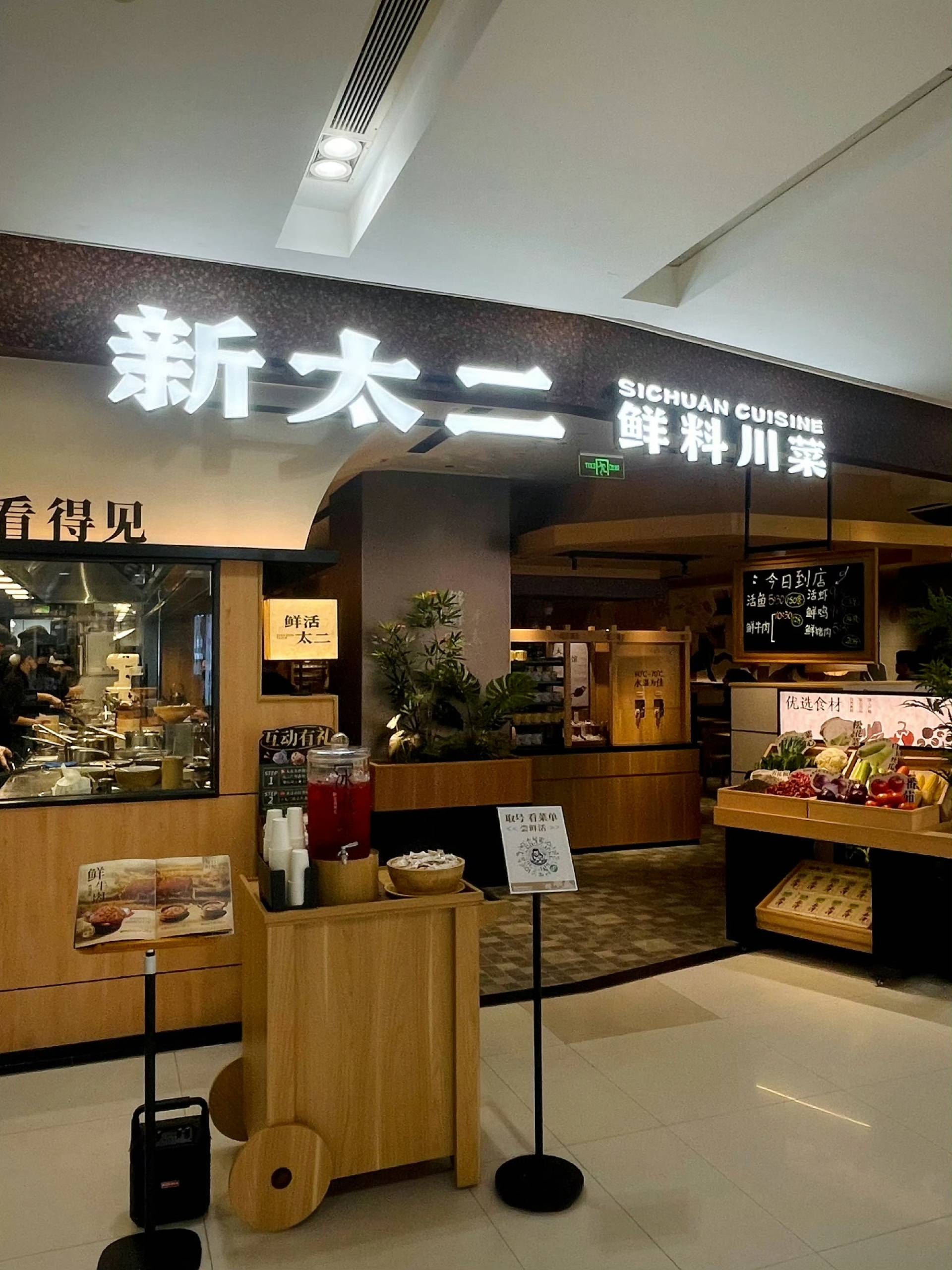
Core Insights - The well-known restaurant brand, Tai Er Suan Cai Yu, has faced challenges with its "live fish freshly made" concept, as recent reports indicate that fish used in dishes are not always freshly killed on-site, leading to customer concerns about the authenticity of their offerings [1][4][12] Company Operations - Tai Er Suan Cai Yu has 68 "fresh live" stores nationwide, with only one in Hangzhou using live fish, while others use pre-prepared fish fillets [1][12] - The company has confirmed that some stores are undergoing renovations to upgrade to the "fresh live" model, which includes using live fish [4][12] Market Performance - The company has seen a decline in its self-operated restaurants, with a reduction of 65 locations in the first half of the year, dropping from 612 to 547 [12] - Tai Er Suan Cai Yu's parent company, Jiu Mao Jiu, reported a revenue of 2.753 billion yuan in the first half of the year, a year-on-year decrease of 10.14%, with Tai Er's revenue specifically down 13.3% [12] Industry Context - The overall market for Suan Cai Yu restaurants has contracted, with a net decrease of 3,331 stores despite 7,256 new openings in the past year, indicating a challenging environment for traditional dining establishments [12]
7分钟上齐3道菜 太二酸菜鱼客服:鲜活店是活鱼现杀 其余店为每日鲜配鱼柳!
Mei Ri Jing Ji Xin Wen· 2025-09-16 13:29
知名餐饮品牌太二酸菜鱼曾经是"排队王",主打"活鱼现做"。但近日有媒体报道,在太二酸菜鱼杭州一门店实测发现,点单7分钟后,三道菜全部上齐。 店员表示,酸菜鱼所用的鱼统一配送,是在门店内现场切片并腌制。 据极目新闻报道,9月15日,关于"是否均为活鱼现杀""有无使用预制菜"等问题,太二酸菜鱼的客服对此回应称:"店内很多食材是每天新鲜到店现场制作 的,也有一部分食材会在中央厨房进行初步加工。"并强调门店都是明厨亮灶,顾客可以看到制作过程。 上述客服还透露,目前太二酸菜鱼全国营业的"鲜活门店"有68家(数据仅供参考),不同区域和门店情况不同。以杭州为例,目前仅有一家鲜活门店—— 宝龙城店,使用的是活鱼,每日到店后在后厨现杀制作。其他没有升级的门店,用的是每日鲜配到店的鱼柳(即从鱼身侧部切下,去除主骨和大刺的长条 状净鱼肉),然后在后厨切片、腌制后再现场烹饪。 太二酸菜鱼宝龙城店工作人员表示:"杭州暂时仅有我们一家鲜活门店,活鱼当天到店,现杀现片现腌,一般10到15分钟鱼能上桌。"该工作人员表示,处 理过程均在后厨完成,但如果顾客有需求,也可以带客人进去查看活鱼。 另外,据看看新闻Knews报道,太二酸菜鱼的上海某鲜 ...
7分钟上齐3道菜,太二酸菜鱼客服:鲜活店是活鱼现杀,其余店为每日鲜配鱼柳!被曝沈阳门店已全部关闭
Mei Ri Jing Ji Xin Wen· 2025-09-16 13:11
Core Viewpoint - The well-known restaurant brand Tai Er Suan Cai Yu is facing challenges with its operational model and customer traffic, leading to a significant reduction in the number of self-operated restaurants and declining revenue [11]. Group 1: Operational Changes - Tai Er Suan Cai Yu has implemented a "5.0 Fresh Model" focusing on fresh ingredients like live fish, fresh chicken, and fresh beef, along with menu upgrades and hardware renovations in stores [11]. - The company has confirmed that only one of its stores in Hangzhou, the Baolong City store, uses live fish, while other locations use pre-prepared fish fillets [1][2]. - Reports indicate that several stores in cities like Hangzhou and Shenyang have closed or are undergoing renovations, with the Shenyang region having no operational stores as of September 1 [4][10][11]. Group 2: Financial Performance - In the first half of the year, Tai Er Suan Cai Yu's parent company, Jiu Mao Jiu, reported a revenue of 2.753 billion yuan, a year-on-year decrease of 10.14%, with a net profit of 60.69 million yuan, down 16.05% [11]. - The revenue from Tai Er Suan Cai Yu specifically was 1.948 billion yuan, reflecting a 13.3% decline, and its contribution to total revenue decreased from 73.4% to 70.8% [11]. - The number of self-operated restaurants decreased from 612 to 547, a reduction of 65 locations, contributing to the decline in same-store sales [11]. Group 3: Market Context - The overall market for Suan Cai Yu restaurants has seen a net decrease of 3,331 locations despite 7,256 new openings, indicating a challenging environment for traditional dining establishments [11]. - The rise of pre-prepared dishes is squeezing the survival space for offline restaurants, impacting customer traffic and sales [11].
太二半年闭店68家,“鲜活现做”又遭质疑
凤凰网财经· 2025-09-16 12:59
Core Viewpoint - The article discusses the challenges faced by the pre-made dish brand, Tai Er Suancaiyu, under the Jiumaojiu Group, highlighting a significant reduction in store numbers and declining operational efficiency [2][3][5]. Group 1: Company Performance - Tai Er Suancaiyu claims to serve "live fish made on-site" but has faced scrutiny regarding its operational practices, with many stores currently closed for renovations [3]. - The number of Tai Er Suancaiyu stores has decreased by 68 in the past six months, indicating a significant contraction within the brand [3]. - The brand's revenue for the first half of 2025 dropped to 1.946 billion yuan, a year-on-year decline of approximately 13.25% from 2.244 billion yuan in 2024 [5]. Group 2: Operational Efficiency - The turnover rate for Tai Er Suancaiyu decreased from 2.7 in 2024 to 2.2 in 2025, indicating fewer customer visits during the same operating hours [4]. - The average customer spending increased slightly from 71 yuan in 2024 to 73 yuan in 2025, but same-store sales fell by 19%, suggesting a decline in customer traffic and changes in dining duration [4]. - The overall performance of Jiumaojiu Group also reflects a downward trend, with a 10.1% decline in revenue to 2.753 billion yuan in the first half of 2025, and a net profit drop of 31.3% to 61 million yuan [7]. Group 3: Strategic Adjustments - Jiumaojiu Group is shifting its focus towards franchise models to reduce operational costs, with 10 self-operated stores converted to franchises [3]. - Despite the challenges, there are signs of improvement, as the same-store daily sales decline has narrowed in the second quarter of 2025 compared to the first quarter, indicating that new store formats and menu optimizations may be starting to yield results [8].
7分钟上齐3道菜!太二酸菜鱼被质疑是预制菜,全国仅12%门店现杀鱼?
Bei Jing Shang Bao· 2025-09-16 07:50
Core Viewpoint - The controversy surrounding Tai Er Sauerkraut Fish's use of pre-prepared ingredients has led to a decline in customer interest, with only 12% of its stores reportedly serving freshly killed fish [1][4]. Group 1: Customer Experience and Operations - A recent test revealed that three dishes at a Tai Er Sauerkraut Fish store were served within 7 minutes, raising questions about the freshness of ingredients [1]. - Store staff confirmed that fish is delivered and sliced on-site, but not all locations use live fish, with only one store in Hangzhou reportedly serving live fish [2]. - The company emphasizes transparency in food preparation, allowing customers to view the cooking process [1]. Group 2: Business Performance - Tai Er Sauerkraut Fish's parent company, Jiumaojiu, reported a revenue of 1.948 billion yuan from Tai Er, a year-on-year decline of 13.3% [4]. - The proportion of revenue from Tai Er decreased from 73.4% to 70.8% in the first half of 2025, attributed to a reduction in the number of self-operated restaurants from 612 to 547 [4]. - The company has introduced a "5.0 Fresh Model" to combat declining sales, focusing on fresh ingredients and upgrading restaurant decor and kitchen operations [4]. Group 3: Historical Context and Brand Positioning - Tai Er Sauerkraut Fish was once considered a leader in the sauerkraut fish segment, achieving a high table turnover rate of 4.8 times per day, comparable to Haidilao [3]. - The brand's strict customer policies, such as not accommodating groups larger than four, contributed to its popularity and operational efficiency during its peak [3]. Group 4: Current Challenges - The current seating rate for Tai Er Sauerkraut Fish is reported to be below 50%, indicating a significant drop in customer engagement [4].
“酸菜鱼界天花板”太二现关店潮,九毛九业绩承压跌出港股通
Yang Zi Wan Bao Wang· 2025-09-15 11:01
Core Viewpoint - The recent closure of multiple locations of the popular restaurant chain Tai Er Suancaiyu indicates a significant decline in performance for the parent company, Jiumaojiu Group, which has seen a drop in revenue and profitability across its brands [1][8][12]. Company Performance - Jiumaojiu Group reported a revenue of 2.753 billion yuan for the first half of the year, a year-on-year decrease of 10.14% [8]. - The net profit attributable to shareholders was 60.69 million yuan, down 16.05% compared to the previous year [8]. - Revenue from Tai Er Suancaiyu specifically was 1.949 billion yuan, reflecting a decline of 13.3% year-on-year, with its contribution to total revenue decreasing from 73.4% to 70.8% [10][11]. Store Closures - A total of 88 restaurants were closed by Jiumaojiu Group in the first half of the year, primarily due to the expiration of lease agreements and underperformance of certain locations [12]. - In Nanjing, 6 out of 10 Tai Er Suancaiyu locations have closed, with the last customer reviews dating back two months [8][10]. Industry Trends - The restaurant industry is experiencing a shift in consumer preferences, which may be impacting the performance of Jiumaojiu Group and its brands [8]. - The group opened only 10 new restaurants in the first half of the year, a significant decrease from 59 openings in the same period last year, indicating a slowdown in expansion efforts [11].
知名餐饮品牌被曝大量闭店,济南也有门店歇业关闭
Sou Hu Cai Jing· 2025-09-14 12:28
Core Insights - The well-known restaurant brand Tai Er Suancaiyu is facing a wave of store closures in multiple cities, raising concerns about its expansion bottleneck or operational adjustments [1] - Despite the closure of one store in Jinan, the remaining four locations continue to see high customer traffic, indicating a mixed market response [2] Group 1: Store Performance - One store in Jinan has closed, while four others remain busy with long queues during peak hours, suggesting a divergence in performance across locations [2] - The atmosphere in the busy stores remains lively, with high seating occupancy and a bustling environment, indicating that the brand still retains a loyal customer base [2] Group 2: Consumer Sentiment - Loyal customers express continued support for the brand, emphasizing the importance of taste and unique dining experience [3] - Some consumers express concerns about potential declines in quality or brand appeal due to the recent closures, although their actual dining experiences remain satisfactory [3] Group 3: Brand Strategy - Tai Er Suancaiyu has launched a significant brand upgrade initiative called "5.0 Fresh Model," focusing on fresh ingredients like live fish, fresh chicken, and fresh beef [4] - The brand's strategy includes renovations of several stores and the introduction of open kitchen concepts to enhance transparency and freshness perception among consumers [5] - This strategic shift aims to address market criticisms regarding the use of pre-prepared dishes and to cater to the growing consumer demand for fresh and healthy dining options [5]
曾经的“排队王”被曝大量闭店,杭州多家“歇业关闭”
新浪财经· 2025-09-14 08:37
Core Viewpoint - The recent adjustment of the Hong Kong Stock Connect eligible securities list, effective from September 8, has led to the removal of 20 stocks, including Jiumaojiu (09922.HK), which may be related to changes in the restaurant industry trends and shifts in investor preferences [2]. Financial Performance - Jiumaojiu reported a revenue of 2.753 billion yuan in the first half of the year, a year-on-year decline of 10.14%, and a net profit attributable to shareholders of 60.69 million yuan, down 16.05% [2]. - The revenue from its main brands, including Taier Sauerkraut Fish, Song Hotpot, and Jiumaojiu Northwest Cuisine, all experienced declines during the reporting period [2]. Brand-Specific Performance - Taier Sauerkraut Fish generated a revenue of 1.948 billion yuan, a decrease of 13.3%, with its revenue share dropping from 73.4% to 70.8% year-on-year. The number of self-operated restaurants decreased from 612 to 547, and same-store sales also declined [5][6]. - Song Hotpot's revenue was 416 million yuan, down 3.5%, attributed to a decrease in table turnover rate and customer spending. The turnover rate fell from 2.9 times per day to 2.5 times [9]. - Jiumaojiu Northwest Cuisine reported a revenue of 226 million yuan, a decline of 22.6%, due to a decrease in restaurant numbers and turnover rates [9]. Business Adjustments - In response to declining sales, Taier has launched a "5.0 Fresh Model" focusing on fresh ingredients and has renovated some locations to enhance the dining experience [6]. - Jiumaojiu opened 10 new restaurants in the first half of the year, a significant decrease from 59 in the same period last year, while closing 88 restaurants due to lease terminations and underperformance [12]. Financial Health - The company's cash and cash equivalents decreased to 489 million yuan, a 19.4% drop from the end of last year, primarily due to increased cash deposits and loan repayments. The debt-to-asset ratio improved from 51.4% to 47.3% [12].
九毛九一年关店65家!曾是“排队王”,高峰期要排两三个小时
凤凰网财经· 2025-09-13 14:21
Core Viewpoint - The adjustment of the Hong Kong Stock Connect eligible securities list by the Shenzhen Stock Exchange reflects market judgments on corporate prospects and shifts in industry trends and investor preferences [2]. Group 1: Company Performance - In the first half of the year, the company reported a decline in both revenue and net profit, with revenue of 2.753 billion yuan, a year-on-year decrease of 10.14%, and a net profit of 60.69 million yuan, down 16.05% [2]. - The company's main revenue sources, including brands such as Taier, Song Hotpot, and Jiumaojiu Northwest Cuisine, all experienced revenue declines during the reporting period [3]. - Taier's revenue was 1.948 billion yuan, a year-on-year decrease of 13.3%, with its contribution to total revenue dropping from 73.4% to 70.8% [3]. Group 2: Brand Adjustments - In response to declining sales, Taier launched the "5.0 Fresh Model," focusing on fresh ingredients and upgrading its menu, while also renovating some locations [3]. - The company faced consumer skepticism regarding its pre-prepared dishes, prompting adjustments to address these concerns [4]. - Song Hotpot's revenue was 416 million yuan, down 3.5%, attributed to a decrease in table turnover and average customer spending [4]. Group 3: Store Expansion and Closures - The company opened 10 new restaurants in the first half of the year, a significant slowdown compared to 59 new openings in the same period last year [5]. - The company closed 88 restaurants, primarily due to the expiration of lease agreements and underperformance of certain locations [5]. - Analysts have revised the company's net profit forecasts for 2025-2027 down to 100 million yuan, 110 million yuan, and 130 million yuan, respectively, and adjusted the target price from 3.7 HKD to 3 HKD [5].
知名品牌一年关店65家!曾是“排队王”,高峰期要排两三个小时,很多人吃过
Mei Ri Jing Ji Xin Wen· 2025-09-13 07:42
Core Viewpoint - The Shenzhen Stock Exchange announced adjustments to the Hong Kong Stock Connect eligible securities list, removing a total of 20 stocks, including Jiumaojiu (09922.HK) [1][2] Group 1: Company Performance - Jiumaojiu reported a decline in both revenue and net profit for the first half of the year, with revenue of 2.753 billion yuan, down 10.14% year-on-year, and a net profit of 60.69 million yuan, down 16.05% [2][5] - The company's main revenue sources, including Taier Suancaiyu, Song Hotpot, and Jiumaojiu Northwest Cuisine, all experienced revenue declines during the reporting period [3] - Taier Suancaiyu's revenue was 1.949 billion yuan, a decrease of 13.3% year-on-year, with its contribution to total revenue dropping from 73.4% to 70.8% [3] Group 2: Operational Adjustments - Taier Suancaiyu has launched a "5.0 Fresh Model" to address declining sales, focusing on fresh ingredients and restaurant renovations [3][4] - The number of Taier restaurants decreased from 612 to 547, impacting same-store sales [3] - The company opened 10 new restaurants in the first half of the year, a significant slowdown compared to 59 new openings in the same period last year [4] Group 3: Market Sentiment and Future Outlook - The company closed 88 restaurants in the first half of the year due to lease expirations and underperformance [5] - Analysts have revised Jiumaojiu's net profit forecasts for 2025-2027 down to 100 million yuan, 110 million yuan, and 130 million yuan, respectively, and lowered the target price from 3.7 HKD to 3 HKD [5] - As of September 12, Jiumaojiu's stock closed at 2.31 HKD, down 0.43%, with a total market capitalization of 3.2 billion HKD [6]