DFAC(600006)

Search documents
同比普涨、环比普跌,1月车企销量“开门红”成色不足
经济观察报· 2026-02-03 12:15
进入2026年1月后,新能源汽车购置税开始减半征收,车企购 置税兜底政策也随之结束。另外,1月各地具体的购车补贴细 则尚未全部出台,导致消费者存在观望情绪,影响了车市终端 销售情况。 作者:王帅国 封图:图虫创意 2月1日,各家车企相继发布了1月销量。从整体上看,汽车行业实现2026年"开门红",大多数车 企1月销量同比取得正增长,但这一同比增长是由于2025年春节在1月,去年同期的新车销售基数 较低。 环比数据上,大多数车企1月销量下滑明显,主要原因在于2025年12月新能源汽车还享受购置税 全额减免政策,同时车企为年底冲量,在12月出台了许多其他优惠政策。进入2026年1月后,新 能源汽车购置税开始减半征收,车企购置税兜底政策也随之结束。另外,1月各地具体的购车补贴 细则尚未全部出台,导致消费者存在观望情绪,影响了车市终端销售情况。 广汽集团1月销量为11.66万辆,同比增长18.47%,环比下滑37.79%。其中自主品牌销量超4.9 万辆,同比增长87.58%;海外销量同比增长68.59%。分品牌来看,昊铂+埃安销量2.16万辆, 同比大增171.63%;传祺品牌销量2.77万辆,同比增长51.06%; ...





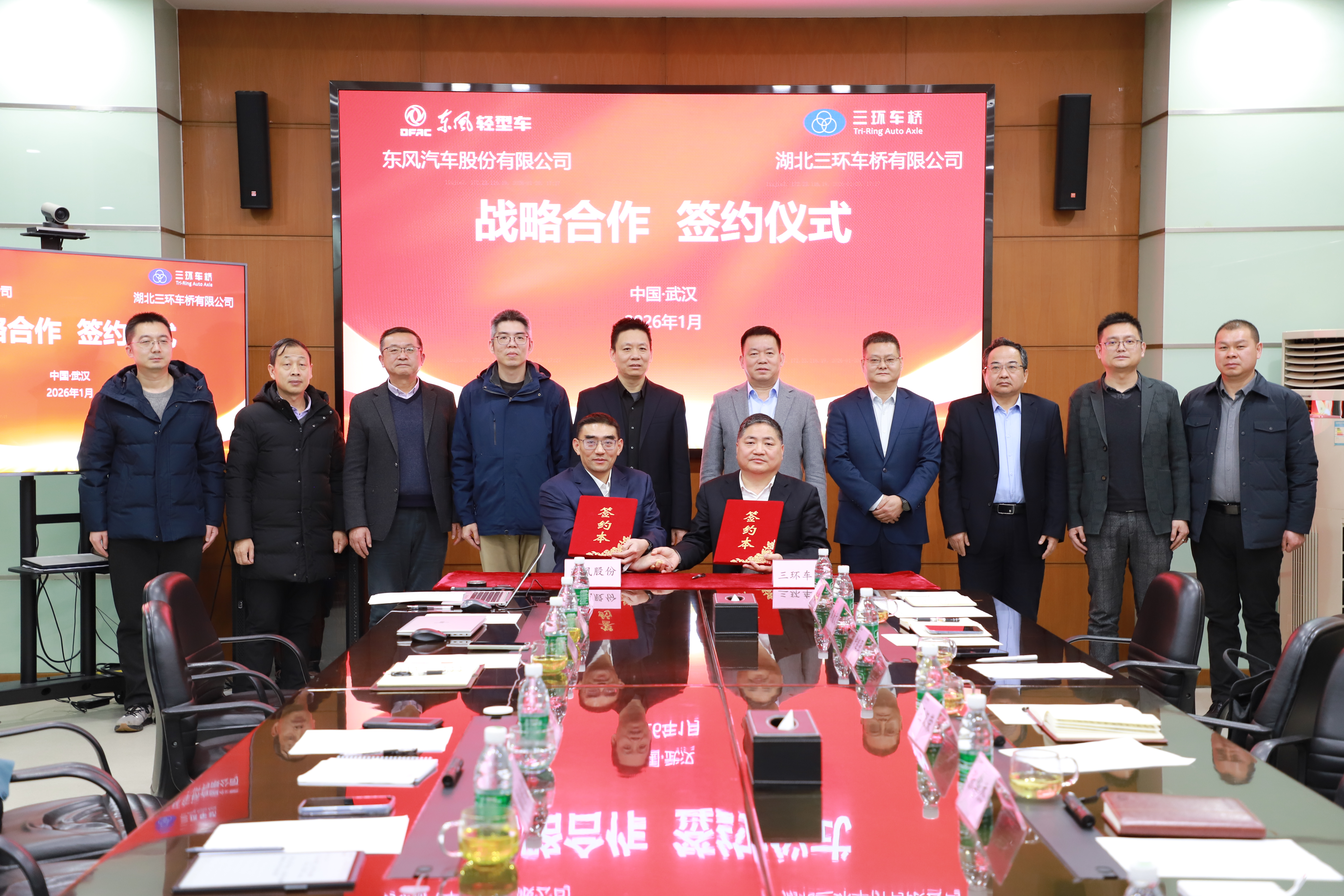
强化高端车桥领域竞争力 东风股份与三环车桥达成战略合作
Yang Shi Wang· 2026-02-03 04:41
湖北三环车桥有限公司董事长钟继强介绍了公司在产品开发、资源保障及快速响应方面的核心优势。他表示,双方在轻型商用车领域的发展理念契合, 资源禀赋互补,战略目标一致。此次合作旨在实现产业资源与品牌价值的深度融合,构建协同效应,为湖北汽车产业创造更大价值。 此次战略合作协议的签署,标志着东风股份与三环车桥正式建立起资源共享、协同发展的合作平台。未来,双方将建立长期稳定的协作机制,持续拓展 合作深度与广度,共同探索创新路径。 东风汽车股份有限公司总经理段仁民表示,公司正处在新能源与智能化转型的关键阶段。未来将优化产品矩阵,构建模块化、标准化体系,特别是在高 端车桥领域推动研发与采购一体化,以提升核心零部件配套能力与产品竞争力。他指出,希望双方发挥各自优势,加强信息共享,共同助力湖北汽车产业高 质量发展。 近日,东风汽车股份有限公司(简称"东风股份")与湖北三环车桥有限公司(简称"三环车桥")在武汉签署战略合作协议。双方将基于"资源共享、优 势互补、互惠互利、生态共建"的原则,在轻型商用车领域展开深度合作。 目F 网 中国·武汉 2026年1月 ▲ . ...

同比普涨、环比普跌,1月车企销量“开门红”成色不足
Jing Ji Guan Cha Wang· 2026-02-03 02:34
2月1日,各家车企相继发布了1月销量。从整体上看,汽车行业实现2026年"开门红",大多数车企1月销量同比取得正增长,但这一同比增长是由于2025年春 节在1月,去年同期的新车销售基数较低。 环比数据上,大多数车企1月销量下滑明显,主要原因在于2025年12月新能源汽车还享受购置税全额减免政策,同时车企为年底冲量,在12月出台了许多其 他优惠政策。进入2026年1月后,新能源汽车购置税开始减半征收,车企购置税兜底政策也随之结束。另外,1月各地具体的购车补贴细则尚未全部出台,导 致消费者存在观望情绪,影响了车市终端销售情况。 具体来看,问界汽车1月交付约4万辆,同比增长83%,环比下滑30.74%;小米汽车1月交付超3.9万辆,去年同期为超2万辆,去年12月为超5万辆;零跑汽车 1月全系交付达3.21万辆,同比增长27%,环比下滑46.94%。 比亚迪1月销售21.01万辆,其中海外销量表现亮眼,乘用车及皮卡海外销售10万辆,同比增长43.3%。分品牌来看,比亚迪品牌销售17.75万辆;方程豹品牌 销售2.16万辆;腾势品牌销售6002辆;仰望品牌销售413辆。 长城汽车1月销售新车9.03万辆,同比增长11. ...

1月车市分化加剧:自主品牌座次洗牌 新势力环比普降
Zhong Guo Zheng Quan Bao· 2026-02-02 23:03
Core Insights - The automotive market in January 2026 shows a clear distinction between traditional domestic brands, which are performing strongly, and new energy vehicle (NEV) startups, which are facing challenges [1][5] Traditional Domestic Brands Performance - Major traditional automakers like SAIC, Geely, and Chery reported over 20% year-on-year sales growth in January 2026, with SAIC leading the market [2][3] - SAIC sold 327,400 vehicles in January, a 23.9% increase year-on-year, with 214,000 units from its own brands, marking a 39.6% increase [2] - Geely's sales reached 270,200 units, a 1% year-on-year increase, with NEV sales contributing significantly [2] - Chery's sales totaled 200,300 units, with exports accounting for 119,600 units, a 48.1% increase year-on-year [3] - GAC Group saw a significant increase in sales, reaching 116,600 units, up 18.47% year-on-year, driven by its new energy and overseas sales [3] New Energy Vehicle Startups Challenges - In contrast, nine major NEV startups experienced a collective decline in sales, with month-on-month drops ranging from 21.2% to 47.0% [5][6] - Despite the downturn, some brands like NIO and Zeekr reported year-on-year growth exceeding 95% [6][7] - The decline in NEV sales is attributed to short-term factors such as policy changes and seasonal demand fluctuations [6][7] - The market is expected to stabilize post-policy transition, with a potential recovery in sales anticipated in February and March 2026 [7] Market Dynamics and Future Outlook - The automotive industry is witnessing a restructuring of brand rankings, with traditional brands solidifying their positions while new entrants face increasing competition [1][5] - The long-term growth logic of the NEV sector remains intact, with expectations for a gradual recovery as new products are launched and market conditions improve [7]


东风汽车锚定325万辆年度目标
Zhong Guo Zheng Quan Bao· 2026-02-02 20:45
Core Insights - Dongfeng Motor Corporation is focusing on technology autonomy and high-quality transformation, with 2026 designated as the "Year of Technology Realization" [1] - The company aims to achieve a total sales target of 3.25 million vehicles in 2026, including 1.7 million new energy vehicles and 600,000 exports [2][3] Technology Development - Dongfeng's R&D investment intensity is projected to reach 7.9% in 2025, significantly above the industry average, supporting technological innovation [1] - The company has made breakthroughs in core component autonomy, including the mass production of the DF30 automotive-grade MCU chip and a 67% localization rate for chips in its self-owned brand vehicles [1] - The Mahle hybrid engine has achieved a thermal efficiency of over 48%, set to be widely applied in multiple new energy models launching in 2026 [1] Intelligent Systems - The "T200" intelligent driving system will be widely adopted in key models, providing L2+ level assistance for highways and urban roads by 2026 [2] - The "T500" advanced driving system is expected to enter mass production, enhancing user experience through the "Tianyuan Smart Cabin" technology [2] Commercial Vehicle Sector - Dongfeng's commercial vehicle division aims for a sales target of 131,000 units in 2025, with a 24% year-on-year increase, and 176,000 units in 2026, representing a 34% growth [4] - The company plans to launch over 70 new energy models, including hydrogen fuel and hybrid vehicles, in 2025 [2] Product Strategy - Dongfeng is expanding its product matrix across various market segments, including high-end, mainstream, and niche markets, with a focus on collaboration between self-owned and joint venture brands [3] - The company plans to introduce 15 new and upgraded products from 2026 to 2028 under the Dongfeng Fengshen brand, targeting family travel and light off-road segments [3] International Expansion - Dongfeng aims to strengthen localized operations in 18 key overseas markets, with a goal of achieving 600,000 vehicle exports [4] - The company is enhancing its local supply chain for joint venture brands like Peugeot, Citroën, Nissan, and Honda to maximize collaborative value [4] Organizational Reform - Dongfeng will grant greater autonomy to frontline business units and enhance incentive mechanisms to improve market responsiveness and operational efficiency [4] - The company is committed to driving high-quality development in the Chinese automotive industry through technology, brand enhancement, and deep reforms [4]
自主品牌座次洗牌 新势力环比普降
Zhong Guo Zheng Quan Bao· 2026-02-02 20:45
截至2月2日,国内主流车企2026年1月产销数据陆续披露。整体市场呈现"传统自主强势领跑、新势力普 遍承压"的鲜明格局:上汽、吉利、奇瑞等头部车企销量同比多实现20%以上增长,自主品牌座次因新 能源与出口表现差异出现重构。 与此同时,9家主流造车新势力则遭遇集体环比下滑。业内分析指出,短期政策切换、淡季效应等因素 扰动终端,但自主车企核心竞争力持续提升,新势力"马太效应"加剧,行业高质量发展的长期逻辑未 变。 ● 本报记者 龚梦泽 自主品牌座次重构 奇瑞集团凭借出口优势跃居前列,1月销售汽车20.03万辆,其中出口11.96万辆,同比增长48.1%,连续 9个月出口突破10万辆。新能源板块同样稳步推进,1月销量5.21万辆,形成"出口+新能源"双轮驱动格 局。旗下主要品牌中,奇瑞品牌销量13.56万辆,捷途品牌4.27万辆,星途、iCAR、智界品牌分别销售 5276辆、3419辆、4506辆,产品矩阵覆盖从主流到高端的全细分市场。 广汽集团自主板块爆发式增长,推动整体销量达11.66万辆,同比增长18.47%。这是昊铂埃安BU和传祺 BU完成组建后首次披露月度销量,成效立竿见影:昊铂埃安BU销量超2.16万辆 ...

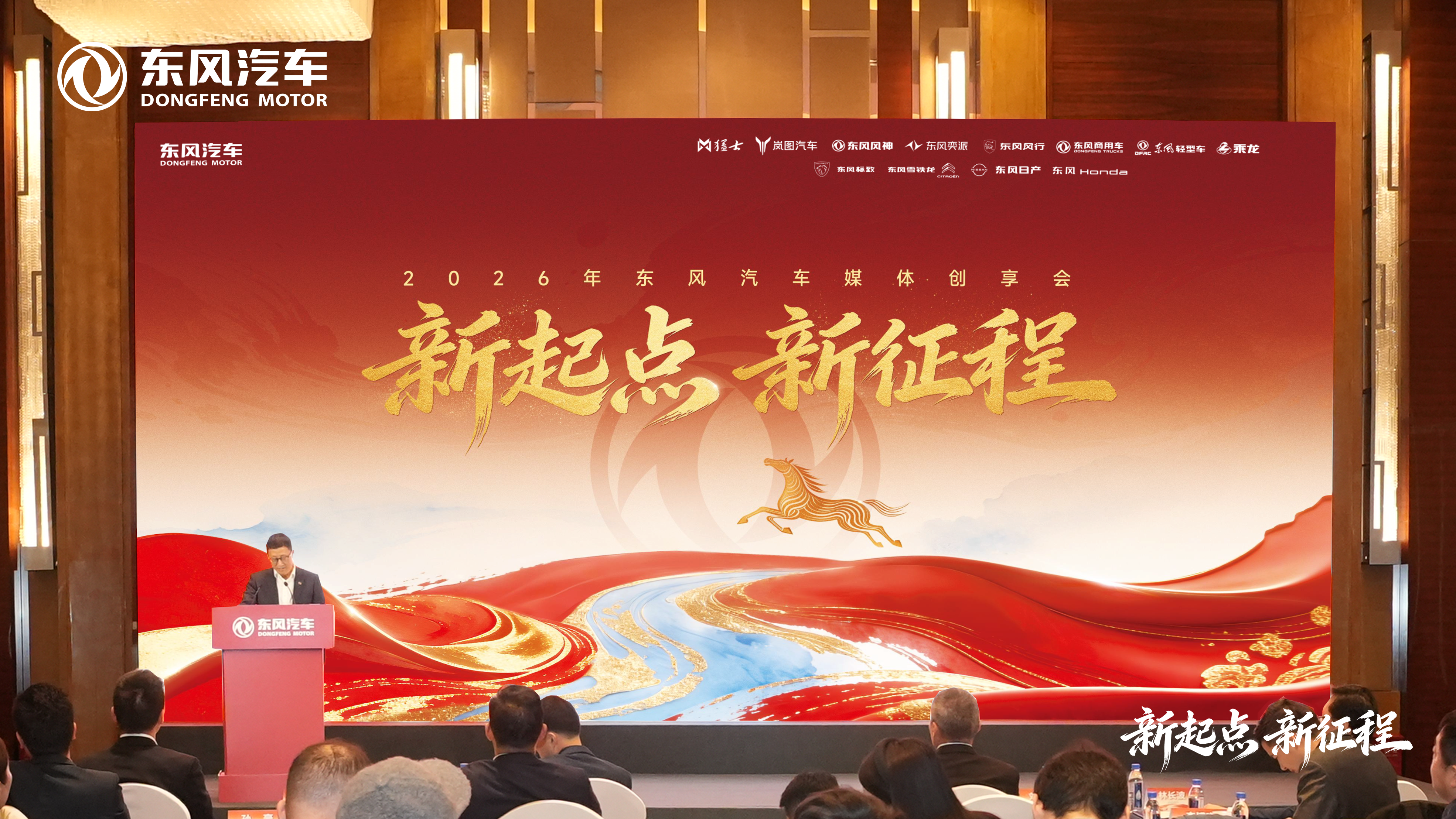
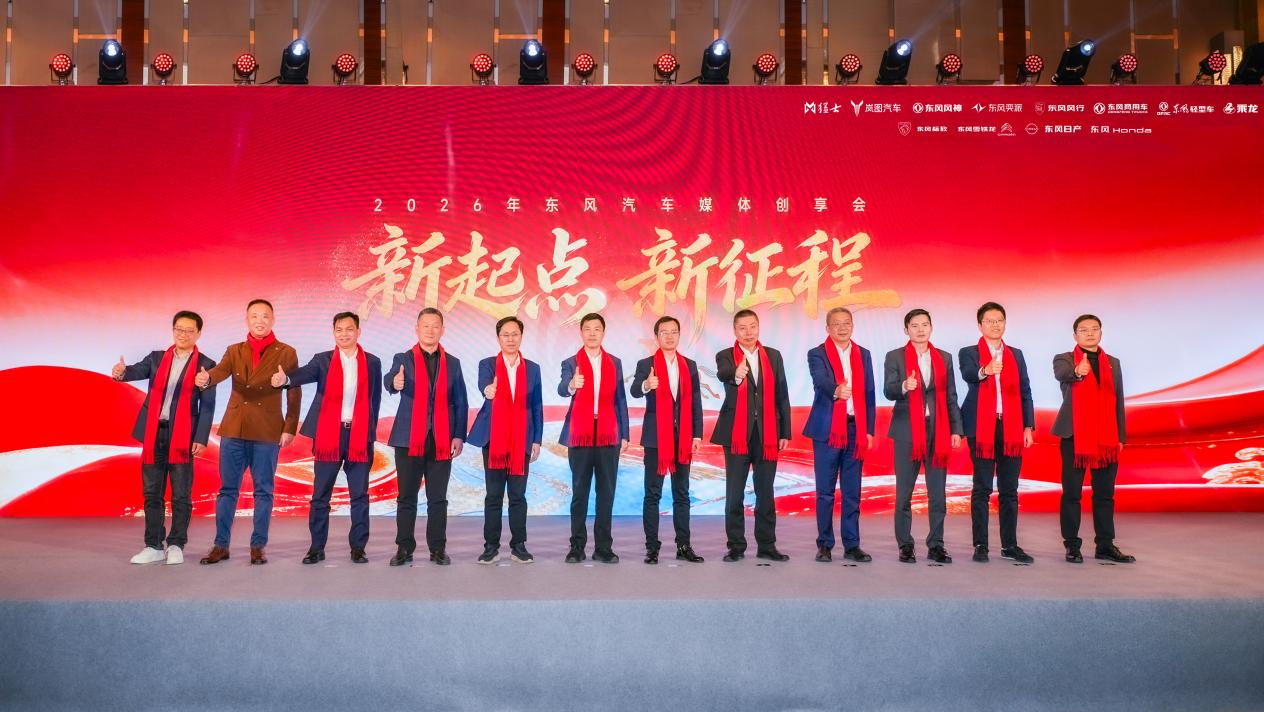
东风汽车发布2026年战略目标 计划全年销售325万辆
Yang Shi Wang· 2026-02-02 13:52
Core Insights - Dongfeng Motor Group is transitioning from an "investment phase" to a "harvest phase," with a focus on achieving a virtuous cycle of scale and efficiency, as evidenced by a 21% year-on-year increase in new energy vehicle sales to 1.05 million units in 2025 [3] - The company has set an overall sales target of 3.25 million units for 2026, including 1.7 million new energy vehicles and 600,000 exports, while emphasizing smart, green, and integrated development [4] Group 1: Strategic Development - The "One Dongfeng" strategy aims to synergize various business segments for growth [1] - Dongfeng's R&D investment intensity reached 7.9% in 2025, highlighting a commitment to core technology development [4] - The company has launched several key technologies, including the high-end MCU chip DF30 and the Mahle hybrid engine with over 48% thermal efficiency [4] Group 2: Product and Brand Planning - Dongfeng is set to unveil the co-created "Yijing" brand with Huawei in March, alongside new models from various brands, including the U series from Dongfeng Mengshi and the high-end models from Dongfeng Lantu [5] - The company plans to introduce a new generation of Mahle power systems and the T200 intelligent driving system, with large-scale applications expected [4] Group 3: Internal Reforms and Future Directions - Dongfeng will enhance internal reforms by granting more autonomy to frontline business units to improve market responsiveness [6] - The focus on technological innovation will serve as the core engine for the company's growth, aiming to elevate the Chinese automotive industry to a new level of high-quality development [6]
东风股份(600006) - 东风汽车股份有限公司2026年第一次临时股东会资料
2026-02-02 10:30
二零二六年二月十日 会 资料 东风汽车股份有限公司2026年第一次临时股东会资料 东风汽车股份有限公司 2026年第一次临时股东会资料 湖北·武汉 资料 东风汽车股份有限公司 2026年第一次临时股东会会议须知 为了维护全体股东的合法权益,确保股东会的正常秩序和议事效率,保证股东会 的顺利进行,东风汽车股份有限公司(以下称"公司")根据《公司章程》《股东会 议事规则》等相关法律法规和规定,特制定本须知。 一、董事会以维护股东的合法权益、确保股东会正常秩序和议事效率为原则,认 真履行《公司章程》中规定的职责。 二、股权登记日登记在册的所有股东或股东授权代理人,均有权出席股东会,并 依法享有《公司章程》《股东会议事规则》规定的各项权利。出席股东会的股东或者 股东授权代理人,应当遵守《公司章程》《股东会议事规则》等有关法律法规,自觉 维护会议秩序,不得侵犯其他股东的合法权益。 三、请参会人员自觉遵守会场秩序,进入会场后,请关闭手机或调至静音状态。 四、股东在会议上发言,应围绕本次会议所审议的议案,简明扼要。主持人可安 排公司董事或其他高级管理人员等回答股东问题,与本次股东会议题无关或将泄露公 司商业秘密或可能损害公 ...
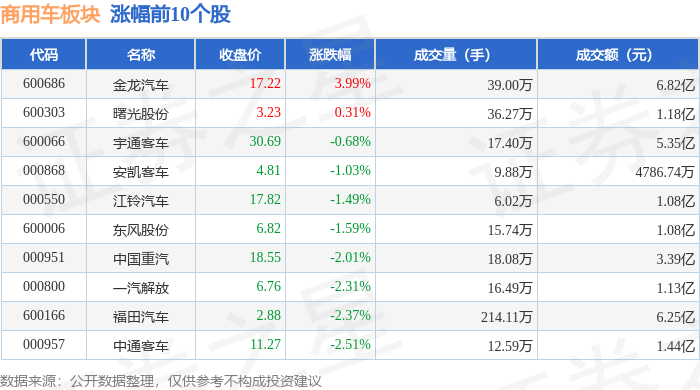
商用车板块2月2日跌2.31%,江淮汽车领跌,主力资金净流出1.82亿元
Zheng Xing Xing Ye Ri Bao· 2026-02-02 09:15
Core Viewpoint - The commercial vehicle sector experienced a decline of 2.31% on February 2, with Jianghuai Automobile leading the drop, while the Shanghai Composite Index fell by 2.48% and the Shenzhen Component Index decreased by 2.69% [1] Group 1: Market Performance - The closing price of Jianghuai Automobile was 52.51, down by 4.00%, with a trading volume of 489,500 shares and a transaction value of 2.61 billion [2] - The commercial vehicle sector saw a net outflow of 182 million in main funds, while retail investors contributed a net inflow of 40.3 million [2][3] - Key stocks in the commercial vehicle sector showed varied performance, with Jinlong Automobile increasing by 3.99% to a closing price of 17.22, while other companies like China National Heavy Duty Truck and FAW Jiefang saw declines of 2.01% and 2.31% respectively [1][2] Group 2: Fund Flow Analysis - Main funds showed a net inflow of 23.30 million into Jinlong Automobile, while there was a significant outflow from China National Heavy Duty Truck amounting to 20.77 million [3] - Retail investors had a net inflow of 211.62 million into Jinlong Automobile, contrasting with outflows from other companies like Ankai Bus and Dongfeng Motor [3] - The overall sentiment in the commercial vehicle sector indicates a mixed response from different types of investors, with main funds generally withdrawing while retail investors showed some interest [2][3]




东风汽车:2026,迈入高质量发展跃迁年!
Zhong Guo Qi Che Bao Wang· 2026-02-02 02:20
Core Insights - Dongfeng Motor is committed to a strategic transformation under the "One Dongfeng" initiative, aiming to enhance collaboration across its various business segments and achieve significant growth in the automotive market [1][29]. Group 1: Strategic Goals and Achievements - In 2025, Dongfeng's new energy vehicle sales reached 1.05 million units, marking a 21% year-on-year increase, while total sales of self-owned brands exceeded 1.5 million units, accounting for over 60% of total sales [4]. - The company aims to achieve overall sales of 3.25 million units in 2026, with specific targets of 1.7 million for new energy vehicles and 600,000 for exports [10][11]. Group 2: Technological Advancements - Dongfeng has significantly enhanced its core technology capabilities, with R&D investment intensity reaching 7.9%. The company has successfully mass-produced the DF30 automotive-grade MCU chip, achieving full-stack domestic control [7]. - The Mahle hybrid engine has achieved a thermal efficiency of over 48%, setting a new industry record, and the company has established a 16,000-ton integrated die-casting production line to improve vehicle manufacturing efficiency [7]. Group 3: Brand Development and Market Positioning - Dongfeng's brand strategy includes the launch of the "Yijing" brand in collaboration with Huawei, focusing on high-end intelligent vehicles, while the Dongfeng Warrior and Dongfeng Lantu brands aim to lead the luxury electric off-road and high-end markets, respectively [10][11]. - The company is exploring a new model characterized by "Chinese customers, Chinese standards, Chinese components, and Chinese speed," fostering a strategic community for co-creating value [10]. Group 4: Future Outlook and Reforms - In 2026, Dongfeng plans to implement deeper reforms to enhance market responsiveness by granting greater autonomy to frontline business units, enabling quicker decision-making and actions [24]. - The company emphasizes that its future growth will be driven by technological innovation, collaborative development, and internal reforms, positioning itself to lead in the evolving automotive industry [29].