
CMBC(600016)

Search documents
民生银行济南千佛山支行多措并举面向老年群体开展存款保险宣传
Qi Lu Wan Bao· 2025-08-21 09:29
Core Viewpoint - Minsheng Bank's Jinan Qianfo Mountain Branch is actively promoting deposit insurance awareness among elderly customers to protect their financial interests [1][2] Group 1: Deposit Insurance Promotion Activities - The branch has set up a dedicated deposit insurance promotion area within the bank, featuring large print brochures and engaging illustrations to attract elderly customers [1] - Staff members proactively engage with elderly clients, providing brochures and explaining deposit insurance concepts, even reading aloud for those with visual impairments [1] - The bank conducts face-to-face lectures in communities and nursing homes, simplifying complex financial terms and using real-life examples to enhance understanding of deposit insurance [1] Group 2: Community Engagement and Health Services - Minsheng Bank collaborates with community healthcare institutions to host events that provide health services while also educating elderly clients about deposit insurance [2] - The initiatives have received positive feedback from elderly customers, indicating an increased understanding of financial risk prevention [2] - The bank aims to maintain ongoing deposit insurance promotion efforts to contribute to financial stability in the future [2]

民生银行济南泺源支行开展存款保险宣传活动
Qi Lu Wan Bao· 2025-08-21 09:29
Core Points - The core objective of the deposit insurance promotion activity is to enhance public awareness and understanding of the deposit insurance system, thereby increasing confidence in the banking system [1][2] Group 1: Promotion Activities - The Jinan Luoyuan Branch of China Minsheng Bank has actively conducted deposit insurance promotion activities through various channels to reach a wider audience [1] - The branch utilized its physical locations as primary promotion sites, displaying thematic posters and promotional materials prominently in the lobby [1] - Digital media was leveraged, including the use of public education area TVs and electronic screens at the entrance to broadcast promotional videos and slogans [1] - A dedicated information desk was set up to provide explanations and answer questions about deposit insurance, ensuring close interaction with customers [1] - The branch also employed WeChat public accounts and SMS to disseminate deposit insurance knowledge, enhancing the reach and effectiveness of the promotion [1] Group 2: Community Engagement - The branch organized personnel to conduct concentrated promotional activities in surrounding communities, explaining deposit insurance knowledge to the public [1] - Various formats such as enterprise service visits, financial knowledge seminars, and lectures were used to educate the public on deposit insurance [1] - The promotion not only informed customers about deposit insurance but also offered personalized financial services and advice based on customer needs and concerns [1] Group 3: Future Commitment - Deposit insurance promotion is recognized as an important task for banks, enhancing customer understanding and confidence while improving the bank's social responsibility and credibility [2] - The Jinan Luoyuan Branch plans to continue strengthening deposit insurance promotion efforts and improving service quality to provide safer and more convenient financial services to customers [2]
民生银行潍坊昌邑支行开展“慧眼识真币 守护钱袋子”反假币宣传
Qi Lu Wan Bao· 2025-08-21 09:28
Core Viewpoint - The article highlights a public awareness campaign organized by Minsheng Bank to enhance citizens' ability to identify counterfeit currency, reflecting the bank's commitment to financial education and community engagement [1] Group 1: Event Details - The campaign titled "Wise Eyes Identify Real Currency, Protect Your Wallet" took place on August 5 at Sunshine Garden Community [1] - Bank staff demonstrated quick identification methods using professional equipment, focusing on three techniques: turning the bill to observe color-changing effects, feeling the texture of the bill, and checking watermarks and security threads under light [1] - An interactive experience area was set up with five sets of counterfeit and genuine currency samples for residents to examine differences, with participants receiving a "Counterfeit Prevention Expert" certificate upon completion [1] Group 2: Community Impact - The event received positive feedback from residents, who reported a better understanding of the anti-counterfeiting features of the Renminbi [1] - A resident expressed appreciation for the bank's service, stating that they could exchange damaged banknotes for new ones [1] - A young mother noted the educational value of the event for both herself and her child, emphasizing the importance of developing observational skills [1] Group 3: Future Plans - The bank plans to expand its efforts by launching a series of short videos titled "Counterfeit Currency Knowledge Classroom" on online platforms to reach a wider audience [1] - There are intentions to continue similar activities in surrounding communities, schools, and shopping malls to further enhance public financial literacy and contribute to a safe and healthy financial environment [1]
多家银行,紧急声明!
Jin Rong Shi Bao· 2025-08-21 08:49
Core Viewpoint - The discussion around "loan speculation" in the A-share market is intensifying as banks tighten controls on credit card fund usage to prevent risks associated with credit funds flowing into investment areas [1][4][5] Group 1: Regulatory Actions - Since August, numerous banks, including Minsheng Bank and Huaxia Bank, have issued announcements prohibiting credit funds from entering the housing and stock markets [1] - Starting September 18, 2025, Minsheng Bank will manage the usage of credit card cash advance transfers, restricting them from being used for housing purchases, investments, or debt repayments [1] - Huaxia Bank updated its credit card cash advance terms, explicitly stating that funds cannot be used for non-consumption activities, including investments and debt repayment [1] Group 2: Regional Bank Responses - Various regional banks, such as those in Zhejiang, Shaanxi, and Yunnan, have also reinforced credit card fund usage management, warning against using credit for investment purposes [4] - The Shaanxi Rural Credit Cooperative reiterated that credit card funds must not be used for investment, with potential penalties for violations [4] - Local banks in Shaanxi have followed suit, issuing similar statements regarding the management of credit card funds [4] Group 3: Historical Context and Market Implications - The flow of bank credit funds into non-consumption areas has long been a regulatory red line, as highlighted by previous notices from the China Banking and Insurance Regulatory Commission [5] - The recent recovery of the A-share market has led some cardholders to attempt to illegally transfer credit card cash advances into the stock market, raising concerns about the risk of funds moving from real to virtual assets [5] - Experts suggest that banks should enhance customer qualification checks during credit card applications and utilize technology for transaction monitoring to prevent misuse of credit card funds [5]


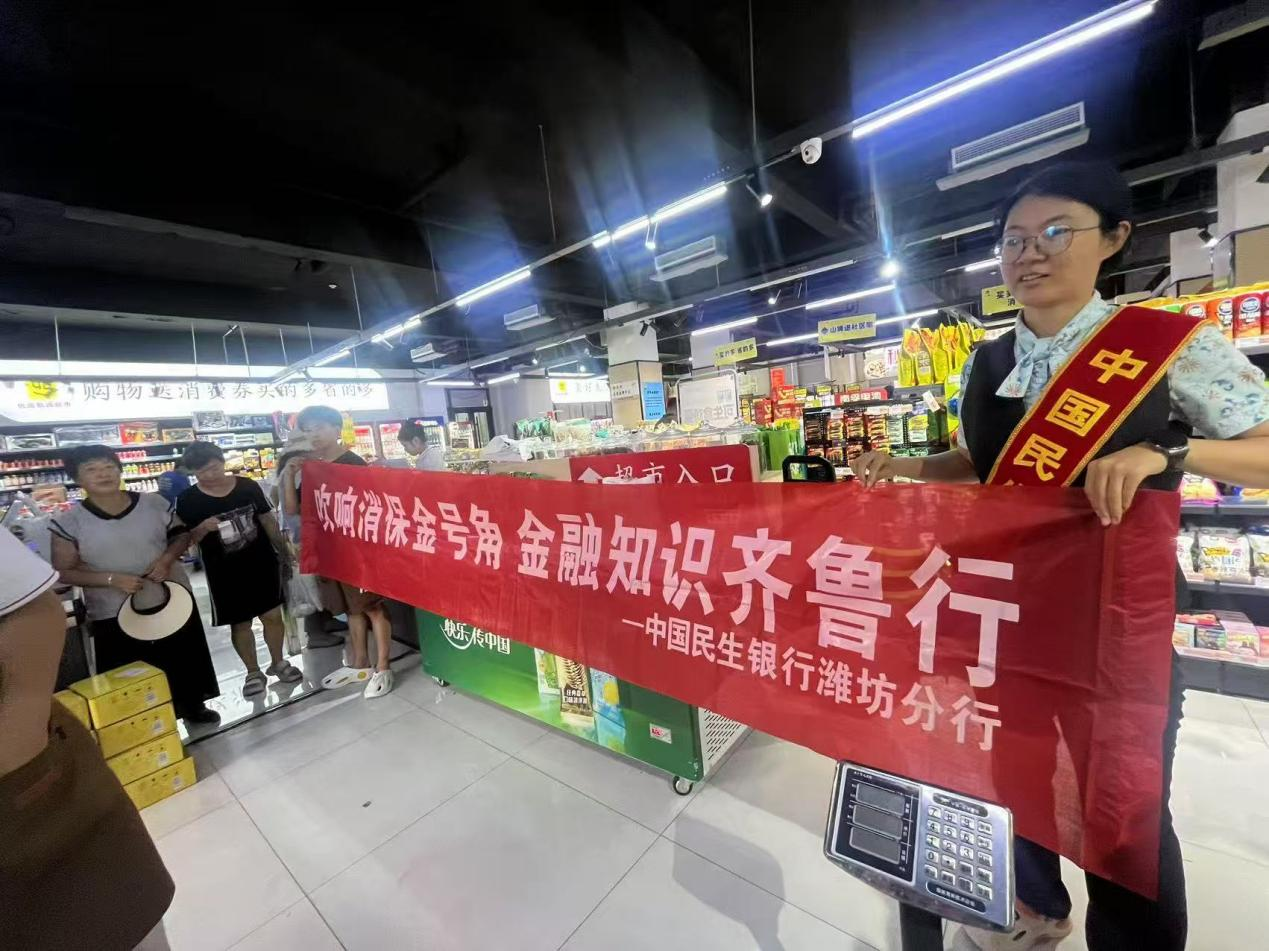
民生银行潍坊高新支行开展金融知识普及进商超活动
Qi Lu Wan Bao· 2025-08-21 05:04
Group 1 - The core theme of the event was "Blow the Horn of Consumer Protection Fund, Financial Knowledge in Qilu," aimed at enhancing public financial literacy and risk awareness [1] - The event was held in a supermarket during peak shopping hours, featuring a promotional booth with informative displays covering essential financial safety topics such as savings, investment, anti-money laundering, and fraud prevention [3] - The bank staff provided detailed explanations of various deposit types and emphasized the importance of choosing legitimate financial institutions while warning against high-interest deposit traps [3] Group 2 - The event included a focus on investment products, highlighting risk levels and the volatility of net value products, guiding citizens to allocate assets according to their risk tolerance [3] - Recent scams were analyzed, including fraudulent claims of membership fees and fake concert ticket sales, with staff advising the public to adhere to principles of skepticism and caution [3] - Over 100 promotional materials were distributed, and more than 50 consultations were conducted during the event, indicating a proactive approach to financial education [4] Group 3 - The bank plans to continue regular financial knowledge dissemination, targeting communities, businesses, and schools to strengthen financial safety measures and promote a healthy financial consumption environment [4]
民生银行济南西城支行走进商铺开展征信知识宣传活动
Qi Lu Wan Bao· 2025-08-21 05:04
Core Points - The core idea of the articles is the proactive efforts of Minsheng Bank's Jinan West City Branch to enhance merchants' awareness of credit integrity and improve the regional financial credit environment through engaging outreach activities [1][2][3] Group 1: Outreach Activities - The bank organized a credit knowledge promotion event, distributing informative brochures and providing detailed explanations about personal credit reports and the value of good credit records [1] - Staff conducted interactive micro-classes in shops, addressing common concerns of merchants regarding credit impacts and providing practical advice on maintaining good credit [2] - The combination of brochure distribution and micro-classes effectively reached merchants' knowledge gaps, with over 80 brochures distributed and participation from 50 merchants and employees [2] Group 2: Impact and Future Plans - The initiative not only disseminated financial knowledge but also fostered a culture of valuing and protecting credit among merchants [3] - The bank plans to continue its credit promotion efforts, exploring innovative methods to reach a broader audience and contribute to the healthy development of the local economy [3]
民生银行济南泺源支行走进企业开展反电信诈骗知识宣传
Qi Lu Wan Bao· 2025-08-21 04:55
Core Points - The article highlights the efforts of Minsheng Bank's Jinan Luoyuan Branch in raising awareness about telecom fraud among employees of various companies through educational activities [1][2] - The bank's staff provided detailed explanations of common fraud tactics and offered practical anti-fraud tips to enhance employees' vigilance and response capabilities [1][2] Group 1: Fraud Awareness Activities - Minsheng Bank organized anti-telecom fraud knowledge promotion activities, engaging employees from multiple enterprises [1] - The staff analyzed real cases to illustrate common fraud methods, such as impersonating law enforcement and online shopping scams [1] Group 2: Practical Anti-Fraud Tips - Employees were advised to adhere to the principle of "do not listen, do not trust, do not transfer" when encountering suspicious situations [1] - Emphasis was placed on protecting personal information and being cautious with online links and QR codes [1] Group 3: Future Initiatives - The bank plans to continue these promotional activities, innovate outreach methods, and expand coverage to disseminate financial knowledge and anti-fraud techniques [2] - The initiative aims to safeguard the public's financial assets and contribute to a secure financial environment [2]
民生银行东营知味谷社区支行深入社区开展反诈宣传活动
Qi Lu Wan Bao· 2025-08-21 04:55
Group 1 - The core objective of the anti-fraud campaign is to enhance community residents' awareness and ability to identify fraud, focusing on "preventing cash withdrawal and transfer risks" [1] - The event was conducted in a lively and interactive manner, combining professional explanations with engaging activities to facilitate learning [1] - The campaign reached over 300 community residents, demonstrating effective outreach and engagement [2] Group 2 - The bank staff prepared various anti-fraud materials, including pamphlets and videos, to create a comfortable environment for financial knowledge dissemination [1] - Practical tips were provided to residents on how to verify identities and avoid revealing sensitive information during financial transactions [1] - The community bank plans to continue focusing on residents' financial needs by organizing more diverse financial knowledge promotion activities in the future [2]
民生银行济南千佛山支行:吹响金号角,知识护航金融路
Qi Lu Wan Bao· 2025-08-21 04:55
随着金融产品多样化与科技手段的快速发展,金融风险呈现隐蔽化、复杂化的趋势,为切实增强金融消 费者风险防范能力,近期,中国民生银行济南千佛山支行开展了"吹响消保金号角,金融知识万里行"主 题宣传活动。 首先,民生银行济南千佛山支行通过在网点内外设立咨询台,为来往的客户解答各类金融疑问,包括但 不限于账户安全、信用卡使用、投资理财等,该支行专业团队耐心讲解,确保每位客户都能获得满意的 答复。同时,该支行还准备了丰富的宣传资料,包括金融诈骗的常见手段、如何识别和防范金融风险 等,这些资料以通俗易懂的语言,帮助客户更好地理解金融知识,提高自我保护能力。 其次,民生银行济南千佛山支行走进周边社区进行消费者权益保护知识宣传。活动现场,民生银行济南 千佛山支行特别设置了互动环节,通过有奖问答、游戏互动等形式,吸引社区居民积极参与,工作人员 通过案例分析,让社区居民更加直观地认识到金融安全的重要性,并学会如何在日常生活中维护自己的 权益。活动现场气氛热烈,居民们纷纷表示受益匪浅。 此次活动有效提升了社区居民的金融风险防范意识,进一步密切了银行与社区居民的联系,彰显了民生 银行济南千佛山支行积极践行社会责任、服务社区的良好风貌 ...
民生银行济南槐荫支行助力企业员工提升反诈意识
Qi Lu Wan Bao· 2025-08-21 04:55
Core Viewpoint - The article highlights a recent anti-fraud awareness campaign organized by Minsheng Bank's Jinan Huaiyin Branch, aimed at enhancing employees' ability to prevent telecom and online fraud through various engaging activities [1][2]. Group 1: Event Overview - The campaign was themed "Prevent Telecom Fraud, Build a Safe Enterprise" and included lectures, interactive games, and case demonstrations to educate employees about fraud prevention [1]. - Approximately 60 employees from a large enterprise attended the event, where bank staff presented a specialized lecture on common fraud tactics such as impersonating law enforcement, online shopping scams, and fake investment schemes [1]. Group 2: Educational Activities - Interactive Q&A and simulated scenario exercises were incorporated to help employees practice responding to fraud situations, enhancing their practical skills [2]. - Employees participated in role-playing scenarios like "impersonating customer service for fund transfer" and "online dating leading to investment," which made learning enjoyable and effective [2]. Group 3: Materials and Engagement - Each employee received an anti-fraud handbook containing information on common fraud types, prevention techniques, and emergency contact methods, further boosting their awareness [2]. - The event featured a quiz segment with prizes, resulting in over 50 handbooks distributed, more than 20 employee inquiries answered, and a 90% accuracy rate in the interactive Q&A [2]. Group 4: Feedback and Impact - The anti-fraud campaign received positive feedback from employees, who reported an increase in practical fraud knowledge and vigilance [2]. - The enterprise's management expressed gratitude for the bank's efforts, noting that the initiative not only improved employee prevention capabilities but also contributed to the overall safety of the enterprise and the protection of employee assets [2].