CMBC(600016)

Search documents
银行积存金投资门槛大摸底
Bei Jing Shang Bao· 2026-01-08 06:43
Core Viewpoint - The recent announcement by Industrial and Commercial Bank of China (ICBC) to raise the risk acceptance level for personal gold accumulation business to C3 (balanced) and above has triggered significant changes in the precious metals investment market, reflecting a broader industry trend towards stricter risk management in response to increased market volatility and rising gold prices [1][6]. Group 1: Industry Trends - Major banks have collectively raised the entry-level risk tolerance for gold accumulation products to at least a balanced level (C3), with some banks even setting it to aggressive levels, indicating a comprehensive industry-wide upgrade in risk control measures [1][3][4]. - The international gold price has surpassed $4,400 per ounce, prompting banks to filter out investors with lower risk tolerance to prevent significant losses due to market volatility [6][7]. Group 2: Bank-Specific Requirements - ICBC requires personal clients to achieve a C3 (balanced) risk assessment result to engage in gold accumulation business, a shift from the previous requirement of C1 (conservative) [3][4]. - Other banks, such as Postal Savings Bank and Shanghai Rural Commercial Bank, have also raised their risk assessment standards, with some requiring a minimum of C3 or higher for participation in gold accumulation products [4][6]. - Banks like China CITIC Bank and Ningbo Bank have announced future adjustments to their risk assessment requirements, aligning with the trend of increasing risk thresholds for gold investment [6][7]. Group 3: Investor Behavior and Risks - There is a growing concern about investors attempting to misrepresent their risk tolerance in order to qualify for gold accumulation products, which undermines the integrity of the risk assessment process [8][9]. - The industry is urged to enhance investor education and awareness regarding the risks associated with gold investments, especially in a volatile market environment [8][9].








江苏金租:关于为项目公司提供担保的公告
Zheng Quan Ri Bao· 2026-01-07 13:15
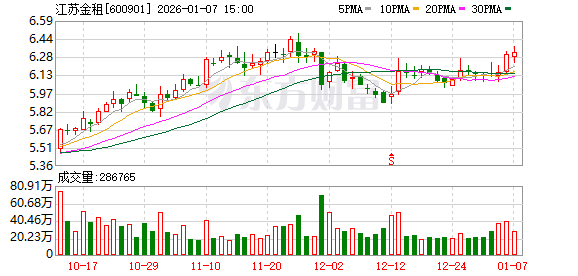
Core Viewpoint - Jiangsu Jinzhong announced the signing of guarantee contracts with China Minsheng Bank and Jiangsu Bank to provide financing guarantees for its wholly-owned subsidiaries, Huiheng Leasing and Huiyun Leasing, which are engaged in cross-border ship leasing business in bonded areas [2] Group 1 - Jiangsu Jinzhong has established wholly-owned project companies, Huiheng Leasing and Huiyun Leasing, in domestic bonded areas [2] - The guarantee contracts were signed with China Minsheng Bank Nanjing Branch and Jiangsu Bank Nanjing Branch [2] - The subsidiaries are approved by the China Banking and Insurance Regulatory Commission Jiangsu Regulatory Bureau for cross-border ship leasing operations [2]


2025年金融机构被罚没31亿元,反洗钱和数据相关罚单大增
2 1 Shi Ji Jing Ji Bao Dao· 2026-01-07 10:47
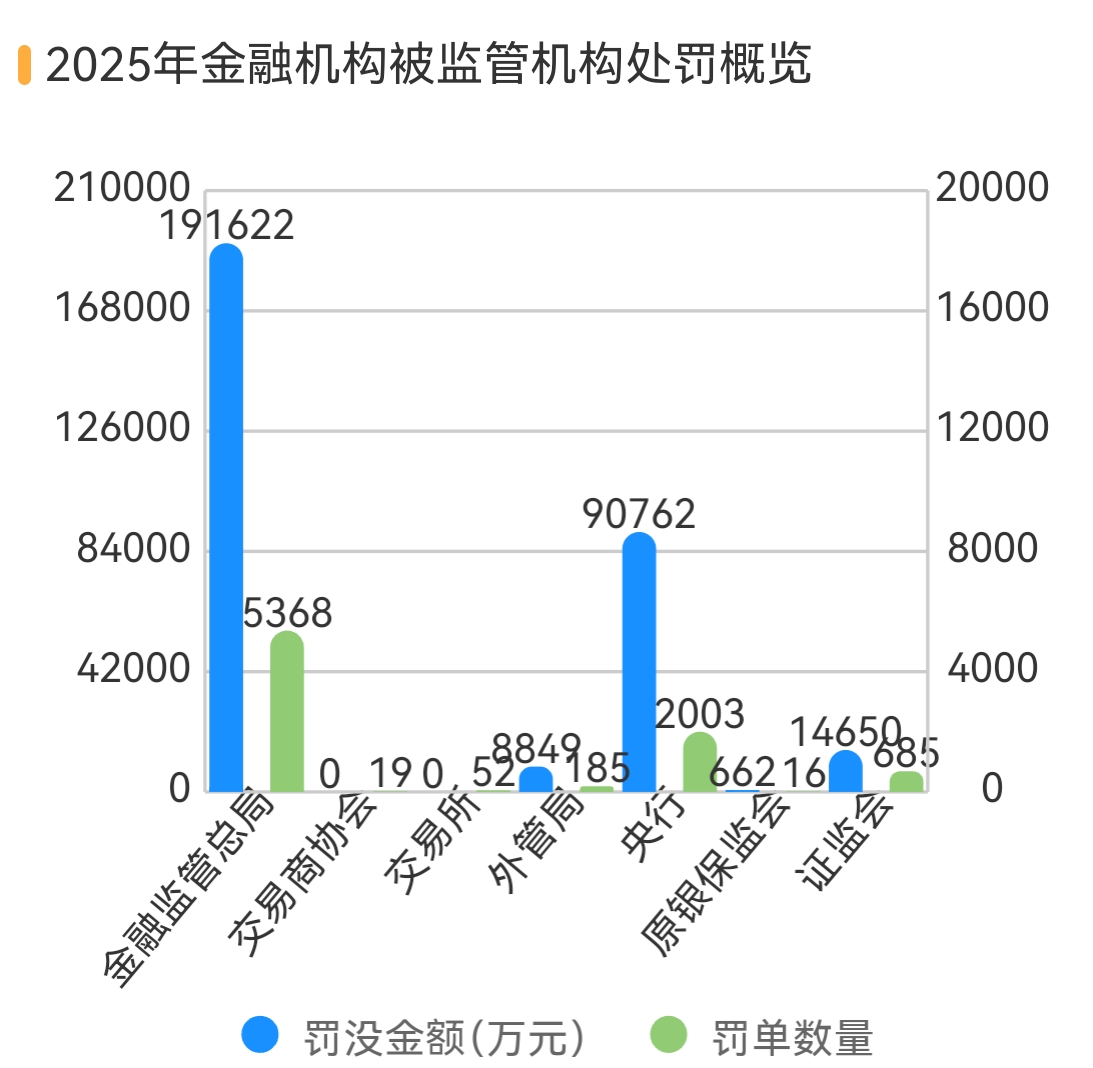
Core Insights - In 2025, financial institutions received a total of 8,328 fines, a year-on-year decrease of 8.41%, while the total amount of fines reached 3.065 billion yuan, an increase of 27.55% [1][2] Group 1: Penalty Overview - The National Financial Supervision Administration issued 5,368 fines totaling 1.916 billion yuan, the central bank issued 2,003 fines totaling 908 million yuan, the Securities Regulatory Commission issued 685 fines totaling 146 million yuan, and the State Administration of Foreign Exchange issued 185 fines totaling 88.49 million yuan [2] - Monthly distribution shows peaks in December, January, and July for the number of fines, with September and December having higher total fine amounts [4] Group 2: Institution-Specific Penalties - Banks received 5,313 fines in 2025, a decrease of 8.88% year-on-year, with total fines amounting to 2.461 billion yuan, an increase of 40.63% [7] - Insurance institutions received 2,166 fines, a decrease of 5.5%, with total fines of 325 million yuan, a decrease of 3.56% [7] - Securities firms received 195 fines, a significant decrease of 42.98%, but the total fines increased by 56.69% [7] Group 3: Major Penalty Cases - In 2025, there were 8 fines exceeding 50 million yuan, with the largest fine of 97.9 million yuan issued for issues related to company governance, loans, and asset quality management [13] - A village bank in Dalian had its financial license revoked due to multiple severe violations, marking a significant regulatory action [14] - A bank president was sentenced to death with a two-year reprieve for illegal lending and bribery, highlighting severe consequences for financial misconduct [15][16] Group 4: Compliance Characteristics - The main areas of violations for banks in 2025 were in credit business, anti-money laundering, and inadequate internal controls [22] - Insurance companies faced penalties primarily for untrue financial/business data and misleading sales practices [23] - Securities firms' violations were concentrated in personnel misconduct, investment banking, and internal control issues [24][25] Group 5: Anti-Money Laundering Violations - There was a significant increase of 188.25% in penalties related to anti-money laundering violations, with 1,349 fines issued [26] - Common violations included failure to identify customer identities and improper transaction reporting [26] Group 6: Data-Related Violations - Penalties related to data violations increased by 44.65%, with 554 fines issued, primarily affecting banks and insurance companies [27] Group 7: Penalty Rankings - Among non-banking institutions, Donghai Securities faced the highest fines at 60 million yuan, followed by China People's Property Insurance and China Pacific Property Insurance [30]


8次甩卖、屡屡被罚、利润七连跌,民生银行怎么把日子越过越惨
Tai Mei Ti A P P· 2026-01-07 10:02
Core Viewpoint - Minsheng Bank is facing significant challenges, including regulatory fines, declining net profits, and a substantial increase in credit impairment losses, which have led to a drastic drop in its stock price and asset quality issues [1][2][3]. Financial Performance - In the first three quarters of 2025, Minsheng Bank reported operating income of 108.51 billion yuan, a year-on-year increase of 6.74%, but net profit attributable to shareholders fell by 6.38% to 28.54 billion yuan, marking the seventh consecutive quarter of decline [1][2]. - Credit impairment losses surged to 40.17 billion yuan, a year-on-year increase of 28.16%, indicating that the bank's new operating income was completely offset by these losses, resulting in a shortfall of nearly 2 billion yuan [2]. Regulatory and Compliance Issues - Minsheng Bank has faced multiple regulatory fines, totaling approximately 79.76 million yuan in 2025 alone, with a cumulative penalty exceeding 600 million yuan from 2020 to 2024, highlighting ongoing compliance failures [3][4]. - The bank's internal control and compliance mechanisms have been criticized, with suggestions for reforming executive compensation to better align with compliance outcomes [3][11]. Asset Quality and Management - The bank has engaged in a significant disposal of non-performing credit card assets, with a total of 27.44 billion yuan in bad debt being offloaded, involving nearly 700,000 borrowers [4][5]. - The average discount on these asset packages has been reported to be below 10%, indicating a desperate need to clear historical burdens [5][6]. Strategic Challenges - The traditional interest income model is under pressure due to narrowing interest margins, with the overall net interest margin for Chinese commercial banks dropping to a historical low of 1.42% [8]. - Minsheng Bank's strategy of focusing on small and micro enterprises is being tested, as these borrowers exhibit higher default rates during economic downturns [8][9]. Future Outlook and Recommendations - To address its challenges, Minsheng Bank is focusing on improving governance and risk management, with a call for a comprehensive overhaul of its compliance culture and risk responsibility mechanisms [10][11]. - Investors are advised to monitor key indicators such as improvements in governance and sustained profitability metrics before considering the bank's stock as a viable investment opportunity [12].
已有十余家银行聘任首席合规官
Jin Rong Shi Bao· 2026-01-07 02:52
Core Viewpoint - The appointment of Chief Compliance Officers (CCOs) in banks is a response to increasing regulatory demands, aiming to enhance compliance management and integrate it into business processes [1][2]. Group 1: Appointment of Chief Compliance Officers - Zhangjiagang Rural Commercial Bank appointed Wu Kai as its Chief Compliance Officer, marking a trend where over ten banks have made similar appointments [1]. - In December 2025 alone, several banks, including Ping An Bank and Industrial Bank, approved the hiring of CCOs [1]. - The rapid appointment of CCOs aligns with the implementation of the "Financial Institutions Compliance Management Measures," which mandates the establishment of CCO positions at the headquarters of financial institutions [2]. Group 2: Responsibilities and Challenges - CCOs are expected to take on more responsibilities, including the formulation and supervision of compliance policies, ensuring that all business activities adhere to regulatory frameworks [5]. - There is a concern that an increase in executive positions may burden banks, particularly smaller financial institutions [2]. - Many currently appointed CCOs are existing senior executives, which helps mitigate potential operational burdens [3]. Group 3: Recruitment Trends - Some banks, such as Jiangxi Bank and Shangrao Bank, have publicly announced recruitment for CCO positions, indicating a proactive approach to compliance management [4].



民生银行(01988) - 截至二零二五年十二月三十一日止股份发行人的证券变动月报表
2026-01-06 11:00
股份發行人及根據《上市規則》第十九B章上市的香港預託證券發行人的證券變動月報表 第 1 頁 共 11 頁 v 1.1.1 FF301 呈交日期: 2026年1月6日 I. 法定/註冊股本變動 | 1. 股份分類 | 普通股 | 股份類別 | H | | 於香港聯交所上市 (註1) | | 是 | | | --- | --- | --- | --- | --- | --- | --- | --- | --- | | 證券代號 (如上市) | 01988 | 說明 | H 股 | | | | | | | | | 法定/註冊股份數目 | | | 面值 | | 法定/註冊股本 | | | 上月底結存 | | | 8,320,295,289 | RMB | | 1 RMB | | 8,320,295,289 | | 增加 / 減少 (-) | | | 0 | | | RMB | | 0 | | 本月底結存 | | | 8,320,295,289 | RMB | | 1 RMB | | 8,320,295,289 | | 2. 股份分類 | 普通股 | 股份類別 | A | | 於香港聯交所上市 (註1) | | 否 | ...
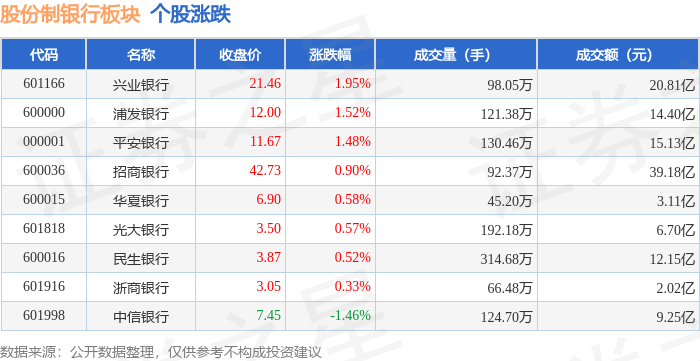
股份制银行板块1月6日涨0.88%,兴业银行领涨,主力资金净流入6.46亿元
Zheng Xing Xing Ye Ri Bao· 2026-01-06 09:00
Group 1 - The banking sector saw an increase of 0.88% on January 6, with Industrial Bank leading the gains [1] - The Shanghai Composite Index closed at 4083.67, up 1.5%, while the Shenzhen Component Index closed at 14022.55, up 1.4% [1] - Key stocks in the banking sector and their performance included Industrial Bank (up 1.95% to 21.46), Pudong Development Bank (up 1.52% to 12.00), and Ping An Bank (up 1.48% to 11.67) [1] Group 2 - The net inflow of main funds in the banking sector was 646 million yuan, while retail investors saw a net outflow of 357 million yuan [1] - The main fund inflow for Industrial Bank was 222 million yuan, accounting for 10.65% of its total, while retail investors had a net outflow of 137 million yuan [2] - Ping An Bank experienced a main fund inflow of 209 million yuan (13.79%) but a retail outflow of 65 million yuan [2]


中国民生银行荣获第十四届金融界“金智奖”杰出信用卡品牌价值奖
Jin Rong Jie Zi Xun· 2026-01-06 06:22
Group 1 - The "Qihang·2025 Financial Summit" was held in Beijing, focusing on the theme of "New Starting Point, New Momentum, New Journey," gathering hundreds of guests from various sectors to discuss development paths for the "14th Five-Year Plan" [1] - The "Golden Wisdom Award" was announced, with China Minsheng Bank receiving the "Outstanding Credit Card Brand Value Award" for its continuous efforts in brand building and value innovation [1][6] Group 2 - The "Golden Wisdom Award" aims to establish benchmarks for high-quality development, guiding enterprises to focus on their core business, promote innovation, and fulfill social responsibilities, covering over 8,000 companies in A-shares, Hong Kong stocks, and Chinese concept stocks [6] - The award for "Outstanding Credit Card Brand Value" emphasizes comprehensive brand strength, including market recognition, product service innovation, industry influence, and social responsibility [6] Group 3 - China Minsheng Bank adheres to its mission of "serving the public and caring for people's livelihoods," integrating national strategies with public service to enhance brand value through five major initiatives [7] - The bank is focusing on technological innovation to upgrade services, incorporating low-carbon concepts into products, offering customized services for public welfare finance, optimizing services for the elderly, and enhancing digital financial services [7] - Through these innovative measures, the bank's credit card services have evolved from a single payment tool to a "finance + service" ecosystem, achieving a systematic leap in brand value [7] - Looking ahead, China Minsheng Bank will continue to implement its five major initiatives, further optimizing its consumer finance service system and enhancing the effectiveness of services for the real economy [7]

银行今十条:个人信用修复变中介营销噱头;一个月内6家银行敲定首席合规官;周锋获批担任中原银行行长...
Jin Rong Jie· 2026-01-05 11:49
Group 1 - The China Interbank Market Dealers Association is increasing penalties for violations related to bond transaction record-keeping, as many institutions have failed to comply with regulations, hindering effective supervision and enforcement [1] - The Ministry of Commerce and nine other departments are encouraging financial institutions to increase support for green consumption loans, promoting collaboration between financial institutions and trade enterprises to expand the application scenarios for these loans [2] - Several small and medium-sized banks have suspended overseas debit card transactions due to rampant overseas card fraud, indicating a consensus in the industry to enhance risk control measures [3] Group 2 - The newly established financial asset investment companies, such as Xingyin Investment and Zhaoyin Investment, have quickly secured projects, with Xingyin Investment reporting over 6 billion yuan in investments within 45 days of operation, showcasing a divergence in project focus compared to state-owned banks [4] - The implementation of personal credit repair policies starting January 1, 2026, has led to the emergence of illegal intermediaries offering services to "clean" large overdue debts, charging fees ranging from 3,000 to 10,000 yuan [5] - A significant number of banks have appointed chief compliance officers in response to regulatory requirements, with multiple banks announcing such appointments within a month [6] Group 3 - Zhou Feng has been approved to serve as the president of Zhongyuan Bank, with his term starting from December 31, 2025, until the next board election [7] - The banking wealth management sector is expected to shift focus from scale expansion to stability in returns, with a projected 10% growth in market size for 2026, emphasizing a return to genuine stability [8] - The payment industry is undergoing a significant cleanup, with the recent cancellation of the payment license for Zhonggang Yintong, marking the 108th license to be revoked [9] - Wang Feng, the chairman of Bozhou Yaodu Rural Commercial Bank, is under investigation for serious violations of discipline and law, marking a notable case in the banking sector [10]
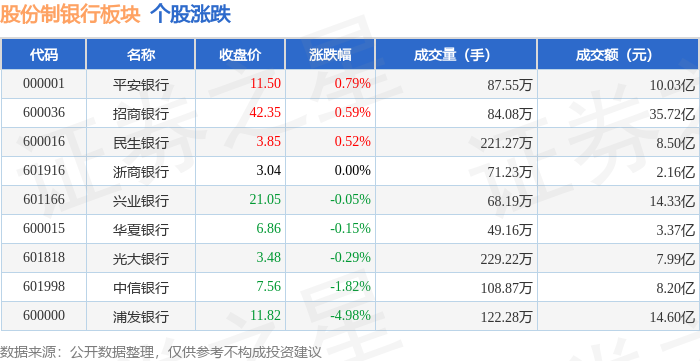
股份制银行板块1月5日跌0.72%,浦发银行领跌,主力资金净流入3.26亿元
Zheng Xing Xing Ye Ri Bao· 2026-01-05 09:09
Group 1 - The banking sector saw a decline of 0.72% on January 5, with Pudong Development Bank leading the drop [1] - The Shanghai Composite Index closed at 4023.42, up 1.38%, while the Shenzhen Component Index closed at 13828.63, up 2.24% [1] - Key stocks in the banking sector showed mixed performance, with Ping An Bank increasing by 0.79% and Pudong Development Bank decreasing by 4.98% [1] Group 2 - The banking sector experienced a net inflow of 326 million yuan from main funds, while retail and speculative funds saw outflows of 134 million yuan and 192 million yuan, respectively [1] - Among individual banks, Industrial Bank had a net inflow of 251 million yuan from main funds, while Ping An Bank and Pudong Development Bank had net outflows from retail investors [2] - The data indicates a significant outflow from Minsheng Bank and China Merchants Bank, with retail investors withdrawing 67.42 million yuan and 1.45 billion yuan, respectively [2]