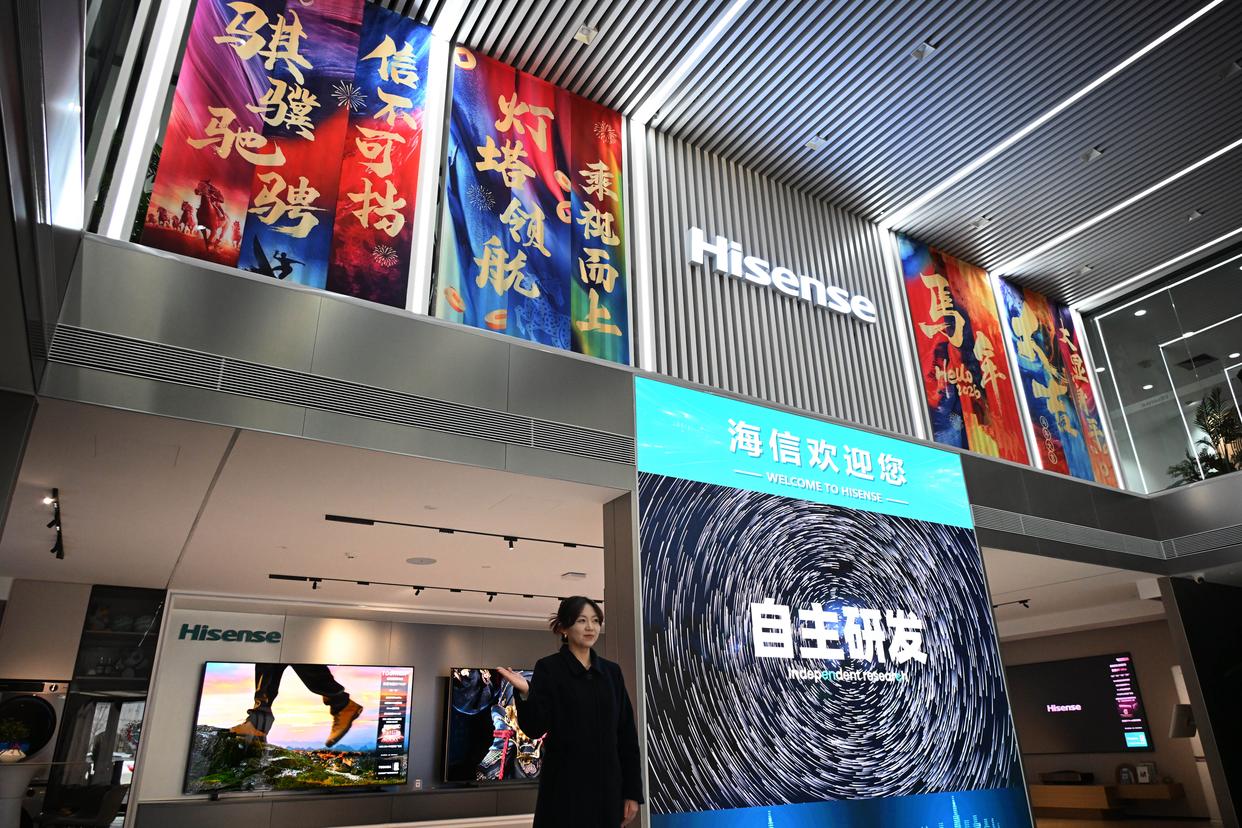
Hisense V.T.(600060)

Search documents
海信发布2026影游旗舰E8S新品 开启RGB-Mini LED换代风暴
Zheng Quan Ri Bao Wang· 2026-01-19 13:15
本报讯 (记者刘钊)1月19日,以"海信RGB-MiniLED换代风暴"为主题的2026RGB-MiniLED影游旗舰 E8S新品发布会盛大召开。作为全球RGB-MiniLED技术的开创者与领跑者,海信正式推出影游旗舰E8S 系列电视,以RGB彩色背光三原色直出技术构建代际优势,搭配顶级旗舰配置,更以与单色背光量子 点MiniLED同档的颠覆性定价,强势掀起RGB-MiniLED全民换代风暴。 用户日常使用中,采用RGB真彩背光的海信E8S更是带来双重增益:一是节能40%以上,长期使用可显 著降低电费支出,更契合绿色家居需求;二是硬件级减少42%有害蓝光,实现护眼不偏色,老人、儿童 长时间观看也更安心。稳定性方面,搭载乾照光电全自研车规级发光芯片,经85℃高温、60mA大电流 极限测试,红光芯片寿命突破16万小时,超十年不褪色,耐用性远超易老化的量子点方案。 彩色光源替代单色是大势所趋海信RGB-MiniLED成换代首选 近年来,高端电视市场陷入单纯堆砌分区数量的内卷误区,一些厂商执着于分区数比拼,却忽视了光 源、控光等显示技术的本质迭代。当前无论是QD-MiniLED还是SQD-MiniLED技术,本质都是 ...

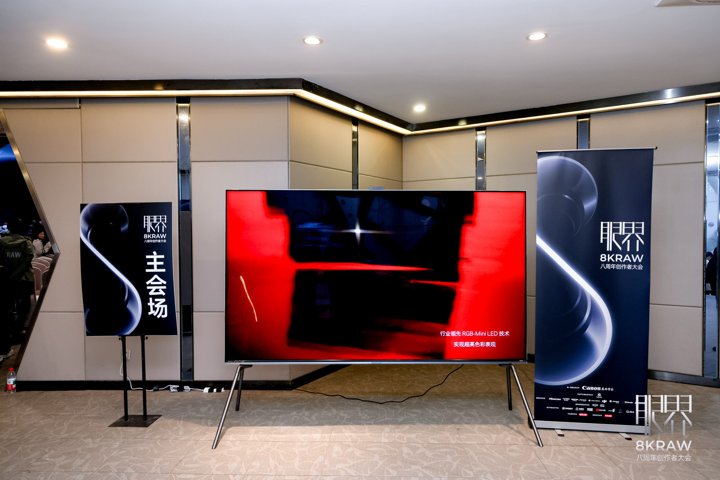
为专业影像还原真实视界,海信电视E8S亮相8KRAW年度盛典
Sou Hu Wang· 2026-01-19 09:16
Core Insights - The 8KRAW Creator Conference and Awards Ceremony, celebrating its eighth anniversary, took place in Shanghai, with Hisense TV as the chief partner, showcasing its RGB-Mini LED technology [1][3] - Hisense's E8S series TV served as a significant prize at the event, highlighting the brand's commitment to professional imaging and color accuracy [1][3] Group 1: Event Significance - The 8KRAW Creator Conference is a prominent gathering for photographers, showcasing cutting-edge visual aesthetics and trends in the industry [3] - Hisense's participation signifies a direct dialogue between advanced display technology and professional image creation, enhancing the visibility of its products among top creators [3] Group 2: Technology Advancements - Hisense's RGB-Mini LED technology has made significant strides, introducing a fourth color (cyan) to its backlight system, achieving a color coverage of 110% BT.2020, which enhances the natural spectrum representation [5][7] - The upgraded Hisense AI picture quality chip H7 offers high computational power (134 bits) for precise color and brightness management, ensuring optimal performance even in high-contrast scenes [7] - A comprehensive color management system has been developed in collaboration with top production teams to ensure color consistency and accuracy from content source to screen output, reducing harmful blue light by 75% and energy consumption by 30% compared to traditional Mini LED [7]

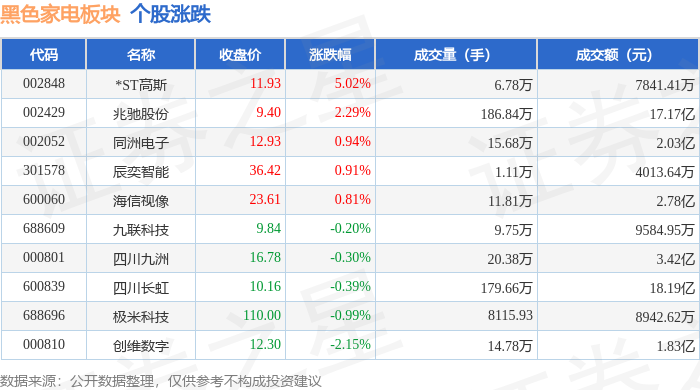
黑色家电板块1月19日涨0.44%,*ST高斯领涨,主力资金净流出1.48亿元
Zheng Xing Xing Ye Ri Bao· 2026-01-19 08:52
Market Overview - The black home appliance sector increased by 0.44% on January 19, with *ST Gauss leading the gains [1] - The Shanghai Composite Index closed at 4114.0, up 0.29%, while the Shenzhen Component Index closed at 14294.05, up 0.09% [1] Stock Performance - *ST Gauss (002848) closed at 11.93, up 5.02% with a trading volume of 67,800 shares and a turnover of 78.41 million yuan [1] - Non-Chi (002429) closed at 9.40, up 2.29% with a trading volume of 1.8684 million shares and a turnover of 1.717 billion yuan [1] - Other notable stocks include Tongzhou Electronics (002052) at 12.93, up 0.94%, and Hisense Visual (600060) at 23.61, up 0.81% [1] Capital Flow - The black home appliance sector experienced a net outflow of 148 million yuan from main funds, while retail investors saw a net inflow of 140 million yuan [1] - The detailed capital flow indicates that Non-Chi had a main fund net inflow of 14.04 million yuan, while *ST Gauss had a net inflow of 8.06 million yuan [2] - Conversely, Sichuan Changhong (600839) faced a significant main fund net outflow of 121 million yuan [2]


海信AI重构制造 定义用户价值新范式
Jing Ji Wang· 2026-01-19 07:28
在智造环节,AI带来的效率和质量提升同样震撼。海信打造了行业领先的第三代数字化高效电视 生产线,集成了25项海信自研的首台套自动化设备,其中11项为业内首创。 海信将"引领以智能化为核心的先进制造"写入企业使命,目前已打造3座灯塔工厂、4家零碳工厂、 17家国家级绿色工厂,4家国家5G工厂。海信相关负责人表示,在加速发展智能制造、绿色制造、先进 制造新征途上,将持续深化5G、人工智能等新技术与制造业融合创新,加速构建更具竞争力的先进制 造产业体系,为中国制造业转型升级贡献海信智慧和方案。 编辑:侯隽 面对这一挑战,海信电视创新性地利用大数据技术与星海大模型协同,结合多年积累的本地化产品 知识库,可实现海量数据分钟级深度洞察。同时,结合海信首创的用户需求识别智能体,自动对用户声 音观点分类,精准识别用户痛点及潜在需求。在AI赋能下,用户声音转化新品功能输入的时间缩短了 62%,并实际应用于产品的改进升级。2025年,海信结合用户需求,锚定"增强动态画面流畅度与色彩 稳定性"的关键方向,成功应用在海信RGB-Mini LED新品E8S系列电视,为用户带来了更贴近自然本色 的视觉体验,实现了产品竞争力的显著提升。 ...
家电行业2026W03周报:地产利好政策频出,Meta计划提高智能眼镜产能
GUOTAI HAITONG SECURITIES· 2026-01-19 02:55
Investment Rating - The industry investment rating is "Overweight" [4][11]. Core Insights - The report highlights favorable real estate policies and Meta's plan to increase smart glasses production to 20 million units by the end of 2026, indicating a strong market demand [2][3]. - Several home appliance companies have released their performance forecasts for 2025, showing a mix of growth and decline in net profits [2][3]. Summary by Sections Investment Recommendations - The report suggests that national subsidies are expected to transition smoothly, with leading black and white appliance companies demonstrating stable operations and high dividends, making them cost-effective investments. Recommended companies include: - Midea Group (2025 PE: 13.2X) - Haier Smart Home (2025 PE: 11.4X) - TCL Electronics (2025 PE: 10.8X) - Hisense Visual (2025 PE: 12.0X) [4][5]. - The core driver for smart home appliances is overseas expansion, with recommendations for leading robot vacuum companies: - Roborock (2025 PE: 20.8X) - Ecovacs (2025 PE: 22.7X) [4][5]. - Companies with stable performance and upward potential include: - Ninebot (2025 PE: 19.1X) - Anfu Technology (2025 PE: 53.2X) - Hailong Cold Chain (2025 PE: 15.2X) - Beiding Co. (2025 PE: 31.2X) [4][5]. - Appliance companies are diversifying into new areas, with recommendations for: - Rongtai Health (2025 PE: 21.1X) - Wanlong Magnetic Plastic (2025 PE: 21.9X) [4][5]. Performance Forecasts - Stone Technology expects a net profit of no less than 1.34 billion, a 31% decline year-on-year for 2025. - Beiding Co. anticipates a revenue of 950 million, a 26% increase year-on-year, with a net profit of 111 million, up 59.1% year-on-year. - Dechang Co. forecasts a net profit between 160 to 200 million, a decline of 51% to 61% year-on-year, with a non-recurring net profit forecasted between 145 to 185 million, down 53% to 63% year-on-year [2][4].




16个中国工厂跻身世界经济论坛灯塔工厂
Xin Lang Cai Jing· 2026-01-17 21:49
Core Insights - The World Economic Forum announced the addition of 23 new lighthouse factories to its global network, with 16 of them located in China, including Hisense Visual Technology and Hichain Energy [1] - These factories exemplify how to achieve significant industry transformation amid geopolitical turmoil, cost pressures, and rapid technological changes by adopting advanced technologies, particularly AI [1] - The new lighthouse factories have made notable progress in enhancing resilience, integrating AI into core operations, and scaling digital transformation across networks rather than individual factories [1] Industry Trends - The global lighthouse network evaluates excellence in five dimensions: production efficiency, supply chain resilience, sustainability, customer-centricity, and talent development [1] - The World Economic Forum's Executive Director emphasized that competitiveness now relies more on rapid perception, adaptation, and response capabilities rather than just efficiency [2] - The selected factories demonstrate that smart-driven operational models are achieving scalable development, with resilience and sustainability becoming core aspects of industry operations [2] Event Information - The 56th World Economic Forum Annual Meeting will take place from January 19 to 23 in Davos-Klosters, Switzerland, with the theme "The Spirit of Dialogue" [3]
中国企业获评电视行业全球首个 “灯塔工厂”
Guan Cha Zhe Wang· 2026-01-17 10:50
1月15日,世界经济论坛(WEF)公布最新一期全球"灯塔工厂"名单,海信电视工厂成功入选,成为全球电视行业首家获此认证的工厂。"灯塔工厂"被誉为全 球制造业的"奥斯卡",是智能制造领域的顶级认证,此次入选标志着该工厂在效率、质量与柔性化生产方面达到全球领先水平,也让其在与三星、索尼等国 际大厂的智能制造竞争中形成差异化优势。 该工厂的核心特色在于构建了"以用户为中心+全链AI智造"的双引擎数字化转型模式,其特殊性体现在对用户需求的精准捕捉与全流程智能化升级的深度融 合。 达0.1毫米级,替代了传统5名工人的手动操作。 质量管控方面,工厂打造了行业首创的AI智能检测平台,基于超过26万份高质量样本训练的深度学习模型,通过"拍检同步"技术构建完整质量闭环,检测效 率提升70.7%。 作为全球电视行业唯一的"灯塔工厂",该工厂通过用户导向的价值链重构,实现了从"等待需求"到"秒级响应"的转型,其在用户需求洞察、全流程AI应用、 柔性生产等方面的实践,为行业提供了可复制的数字化转型范例。 在用户需求洞察环节,工厂通过大数据技术与星海大模型协同,结合本地化产品知识库,实现了海量数据(603138)的分钟级深度分析。同时 ...

CES还是消费电子展吗?中企给出正确答案
Guan Cha Zhe Wang· 2026-01-17 01:40
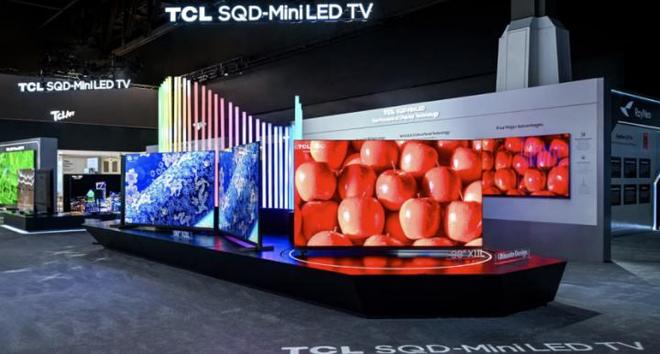
Core Insights - The CES 2026 has shifted from a consumer electronics showcase to a platform dominated by discussions on data centers and AI, primarily led by American tech giants like Nvidia and AMD, while Chinese companies focus on consumer-oriented products [1][2][13] - Nvidia's data center revenue reached $51.25 billion in Q3 2025, a 66% year-over-year increase, highlighting a structural imbalance in focus away from consumer needs [1][15] - Chinese companies like TCL and Hisense showcased tangible consumer products, emphasizing practical applications and user-friendly technology, contrasting with the abstract discussions of their American counterparts [3][4][6][15] Group 1: Industry Trends - The trend of "edge computing" is emphasized by Chinese firms, focusing on local processing power rather than cloud dependency, reflecting a deep understanding of consumer needs [13][14] - The evolution of product forms is evident, with innovations like the Honor ROBOT PHONE and the Stone G-Rover, which address real-life consumer challenges [13][14] - Chinese companies are showcasing products that are ready for mass production and purchase, unlike many Western firms that present conceptual prototypes [14][15] Group 2: Consumer Focus - Chinese enterprises are prioritizing consumer needs, as seen in TCL's and Hisense's product offerings that are accessible and understandable to the average user [3][4][6] - The consumer response to AI PCs has been lukewarm, with many users expressing confusion rather than excitement, indicating a disconnect between tech advancements and consumer expectations [2][12] - The success of products like the Stone G-Rover and the Lenovo Qira demonstrates a shift towards practical, user-friendly technology that resonates with everyday consumers [8][12][15] Group 3: Competitive Landscape - The disparity in focus between American and Chinese companies is evident, with the former leaning towards high-performance computing and the latter addressing everyday consumer problems [1][15] - The CES 2026 highlighted a potential future where American tech firms continue to dominate technical discussions while Chinese companies redefine consumer electronics with practical products [16][17] - The ongoing competition suggests that understanding consumer needs will be crucial for success in the evolving tech landscape, with Chinese firms currently leading in this regard [16][17]


探秘“灯塔工厂”
Qi Lu Wan Bao· 2026-01-16 17:32
Core Insights - Hisense Television has become the first company in the global television industry to be recognized as a "Lighthouse Factory" by the World Economic Forum (WEF) [2] Group 1: Technological Advancements - The Hisense factory in Qingdao utilizes advanced technologies such as large language models, knowledge base retrieval, and simulation to create a closed-loop management system for the entire production chain [2] - Hisense has pioneered an AI-based digital process design model, accumulating over 100,000 process data entries in its knowledge base [2] - The proprietary Xinghai large model enables rapid automatic generation of comprehensive process plans, including steps, operational requirements, and material distribution [2] Group 2: Production Efficiency - The integration of numerous intelligent industrial robots has significantly reduced the labor intensity of traditional manual work [2] - The implementation of these technologies has greatly enhanced production efficiency and product quality at the Hisense factory [2]
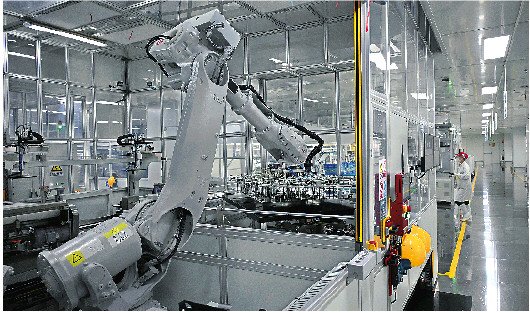
探访全球首座电视行业“灯塔工厂”
Xin Hua She· 2026-01-16 06:48
海信视像工作人员在介绍青岛工厂基于物联网技术构建的设备健康度管理模型(1月13日摄)。新华社记者 李紫恒 摄 新员工在海信视像青岛工厂VR大空间实训基地参加岗前培训(1月13日摄)。新华社记者 李紫恒 摄 一名海信视像青岛工厂员工从生产线旁经过(1月13日摄)。新华社记者 李紫恒 摄 工业机器人在海信视像青岛工厂智能装配线上忙碌(1月13日摄)。新华社记者 李紫恒 摄 1月15日,世界经济论坛(WEF)公布最新一期全球"灯塔工厂"名单,中国海信电视成为全球电视行业首家获此殊荣的企业。在位于山东青岛的海信视像工 厂,智能生产车间基于大语言模型、知识库检索、仿真赋能等技术,构建起全生产链智造闭环管理体系。海信视像首创基于AI的数字化工艺设计模式,沉 淀出超过10万条工艺数据的知识库,结合自主研发的星海大模型,可迅速自动生成涵盖工序步骤、操作要求、物料分配等全要素的工艺方案,搭配大量智能 工业机器人的应用,在减轻传统人工劳动强度同时,大大地提升了生产效率和产品质量。 海信视像青岛工厂迎宾展示大厅(1月13日摄)。新华社记者 李紫恒 摄 自动搬运机器人AGV在海信视像青岛工厂智慧仓储区运输物料(1月13日摄)。新华社 ...