
Hisense V.T.(600060)

Search documents
家电行业 2026W04 周报:家电基金持仓略有下降,欧盟对割草机进口展开登记-20260125
GUOTAI HAITONG SECURITIES· 2026-01-25 07:47
Investment Rating - The report assigns an "Accumulate" rating for the home appliance industry [4]. Core Insights - The report highlights a slight decline in fund holdings in the home appliance sector, with a 2.6% allocation in actively managed equity funds for Q4 2025, down 0.2 percentage points from Q3 [2][4]. - The report notes that the production of household air conditioners in December 2025 was 14.782 million units, a year-on-year decrease of 18.7%, with domestic sales down 26.7% and exports down 13.2% [2][4]. - The report mentions that the EU has mandated registration for imports of robotic lawn mowers from China, with potential anti-dumping duties estimated between 21.4% and 57.4% [2][4]. Summary by Sections Investment Recommendations - The report suggests that national subsidies are expected to transition smoothly, and recommends several companies for investment based on their stable operations and high dividends, including Midea Group (13.1X), Haier Smart Home (11.4X), TCL Electronics (12.7X), and Hisense Visual (12.7X) [4]. - It highlights the core drivers for smart home appliances' overseas expansion, recommending leading robotic vacuum companies Roborock (20.3X) and Ecovacs (22.5X) [4]. - The report also recommends companies with stable performance and upward potential, such as Ninebot (19.9X), Anfu Technology (56.8X), Hailong Cold Chain (15.9X), and Beiding Co. (35.3X) [4]. - Additionally, it points out companies expanding into new business lines, recommending Rongtai Health (21.3X) and Wanlong Magnetic Plastic (21.9X) [4]. Market Data - The report provides data on the top five holdings in the home appliance sector, with Midea Group valued at 19.9 billion, Haier Smart Home at 6 billion, and others showing varying changes in market value [4]. - It notes that the overall retail sales of home appliances in December 2025 were 97.1 billion, a year-on-year decrease of 18.7% [2][4]. - The report indicates that the total domestic sales volume for the air conditioning industry in 2025 was 10.521 million units, a slight increase of 0.7% year-on-year, while total exports were 9.318 million units, down 3.4% [2][4].






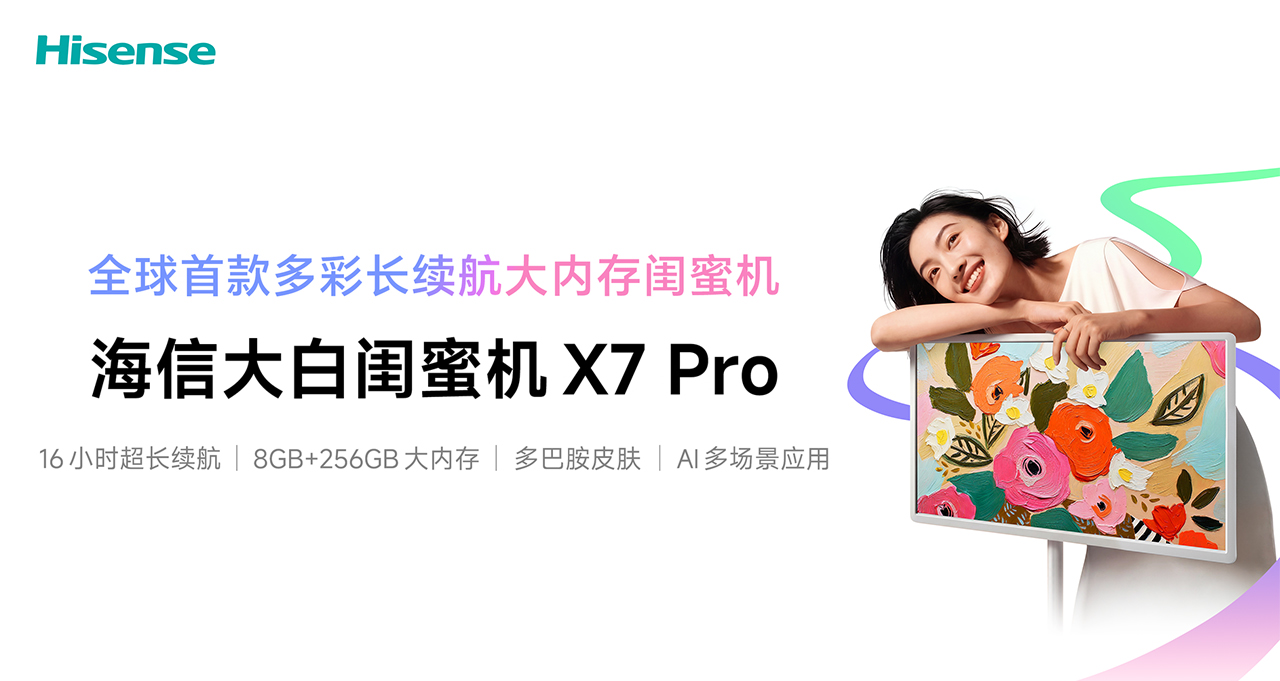
5款配色+16小时超长续航 全球首款多彩闺蜜机海信X7 Pro开启预售
Sou Hu Wang· 2026-01-24 02:17
多巴胺配色不仅是视觉创新,更精准契合了用户的情绪与审美需求。此次海信大白闺蜜机X7 Pro的配色均源自海 信此前在网络发起的"彩色闺蜜机101"活动,五款配色由用户投票选出:天空蓝以冷静质感,传递内核稳定的特质;初 芽绿承载新生寓意,自带疗愈属性;极光紫勾勒梦幻轮廓,尽显优雅悦己格调;甜桃粉迸发鲜活活力,诠释不被定义 的态度;云雾白则以温润质感,演绎秩序与和谐的流动平衡。每种色彩都是用户情感提案,让闺蜜机从一块可移动的 屏幕变成家中的"情绪搭子"。 为更好地发挥闺蜜机"一推就走"优势,让用户"随时随地想看就看"成为现实,海信大白闺蜜机X7 Pro搭载了 15000mAh大电池,实现16小时超长续航,可以一口气看完18集《甄嬛传》;同时,8GB+256GB存储组合,既可保 障多任务流畅运行,又能轻松存储125部电影或390集电视剧,解锁生活娱乐的无限可能。 为满足多场景使用需求,海信大白闺蜜机X7 Pro搭载了AI多场景辅助技术。内置的AI体感游戏,可以在趣味互动 中锻炼孩子的身体协调性,是绝佳的"带娃好搭子";AI虚拟健身教练则能科学定制健身计划,智能纠正健身动作,带 来事半功倍的运动体验。 生活因多彩而鲜活 ...

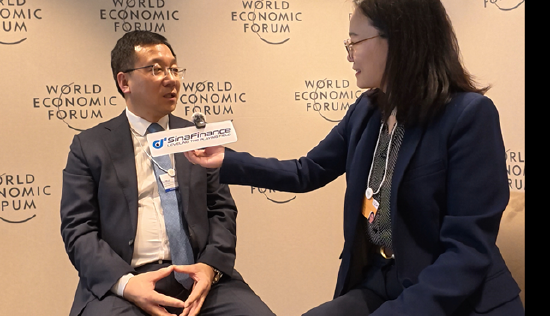
直击达沃斯|对话海信视像总裁李炜:真正的国际化,是在当地“扎下去”
Xin Lang Cai Jing· 2026-01-23 11:07
Core Insights - The discussion at the 2026 World Economic Forum highlighted the evolution of Hisense's internationalization strategy, emphasizing the importance of local integration rather than merely exporting products [1][3][14]. Group 1: Internationalization Strategy - Hisense's internationalization has transitioned from a supply chain focus to a model centered on local integration and coexistence [3][14]. - The company established its first overseas production base in South Africa in 1996 and has since maintained a long-term strategy focused on technological depth and integrated production, sales, and research [3][14]. - Hisense has set up production bases in Mexico, Slovenia, South Africa, and Vietnam, along with marketing headquarters and R&D centers in key regions, enhancing regional competitiveness and responsiveness to local market needs [3][14]. Group 2: Brand Globalization - The logic of Chinese brands going global has shifted from price competitiveness to a focus on technology and brand value over the past decade [4][15]. - Current competition is determined by understanding user needs and delivering superior technology rather than just offering lower prices [4][16]. - Challenges for Chinese brands in global markets now include ESG compliance, user data privacy, and adherence to patent and technology standards [4][16]. Group 3: AI and Industry Transformation - AI is reshaping the consumer electronics industry, particularly in the display sector, transforming devices into user-friendly partners [5][17]. - Hisense has made significant R&D investments, transitioning from a follower to a leader in display technology, exemplified by its RGB Mini LED technology, which outperforms competitors in quality and energy efficiency [7][19]. - The introduction of AI algorithms allows for real-time optimization of display quality across various content and applications, enhancing user experience [7][19]. Group 4: Technological Innovation Driven by Standards - Stringent energy efficiency and environmental standards in the European market are seen as drivers of technological innovation rather than mere cost burdens [8][20]. - Hisense's RGB Mini LED technology demonstrates a 30% improvement in energy efficiency compared to traditional Mini LED solutions, achieving higher energy efficiency ratings than QLED products in Europe [9][20]. - These advancements not only enhance market competitiveness but also contribute to environmental sustainability and reduced consumer energy costs [9][20]. Group 5: Smart Manufacturing and User-Centric Approach - Hisense's Qingdao factory has been recognized as a "lighthouse factory" by the World Economic Forum, emphasizing a user-centered approach to smart manufacturing [10][21]. - The factory employs over 40 AI technologies, significantly reducing the time from user demand recognition to product functionality conversion by 62% [10][21]. - Production efficiency for 85-inch televisions has improved to a cycle time of 20 seconds, showcasing significant advancements in manufacturing processes [10][21].
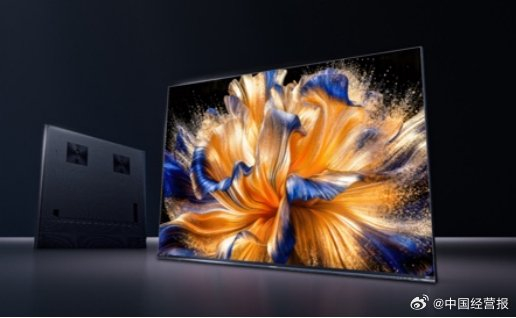
海信RGB-Mini LED电视销量占比超90%,节能40%领跑高端市场
Zhong Guo Jing Ying Bao· 2026-01-23 07:38
Group 1 - Hisense is accelerating its presence in the high-end television market with its RGB-Mini LED technology, which is gaining significant market share [1][2] - The RGB-Mini LED technology offers advantages over QD-Mini LED, including a 40% energy saving in daily use and a 42% reduction in harmful blue light, enhancing eye protection and color accuracy [1] - Hisense's overall market share in the RGB-Mini LED television sector reached 95.67% according to data from Aowei Cloud Network [2] Group 2 - The shift towards colored light sources is seen as the next generation of display technology, with laser TVs, Micro LED, and RGB-Mini LED being key developments [1] - The integration of innovation by companies like Hisense signifies that the Chinese display industry is moving beyond a follower role, leveraging its full industry chain advantages [2]
海信视像涨2.02%,成交额1.58亿元,主力资金净流入800.11万元
Xin Lang Zheng Quan· 2026-01-23 05:22
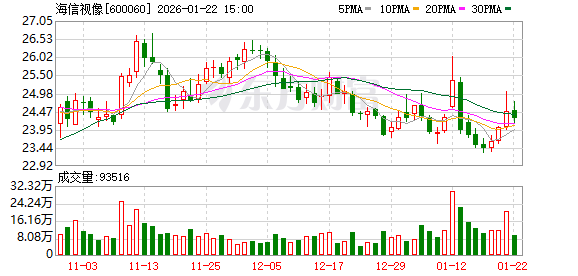
1月23日,海信视像盘中上涨2.02%,截至13:14,报24.76元/股,成交1.58亿元,换手率0.50%,总市值 323.11亿元。 资金流向方面,主力资金净流入800.11万元,特大单买入533.74万元,占比3.37%,卖出492.49万元,占 比3.11%;大单买入2616.65万元,占比16.52%,卖出1857.79万元,占比11.73%。 海信视像今年以来股价涨1.98%,近5个交易日涨5.72%,近20日涨1.23%,近60日涨0.65%。 资料显示,海信视像科技股份有限公司位于山东省青岛市经济技术开发区前湾港路218号,成立日期 1997年4月17日,上市日期1997年4月22日,公司主营业务涉及电视机、广播电视设备、电冰箱、通讯产 品制造、信息技术产品、家用、商用电器、电子产品的制造、销售和服务;自营进出口业务(按外经贸部 核准项目经营)。主营业务收入构成为:智慧显示终端79.68%,新显示新业务11.57%,其他(补 充)7.88%,其他0.88%。 海信视像所属申万行业为:家用电器-黑色家电-彩电。所属概念板块包括:消费精选、青岛、大消费、 高派息、世界杯等。 截至9月30日,海信 ...
菜鸟送装取一体服务覆盖超大件,国补半个月天猫大家电大涨超90%
Sou Hu Cai Jing· 2026-01-23 00:51
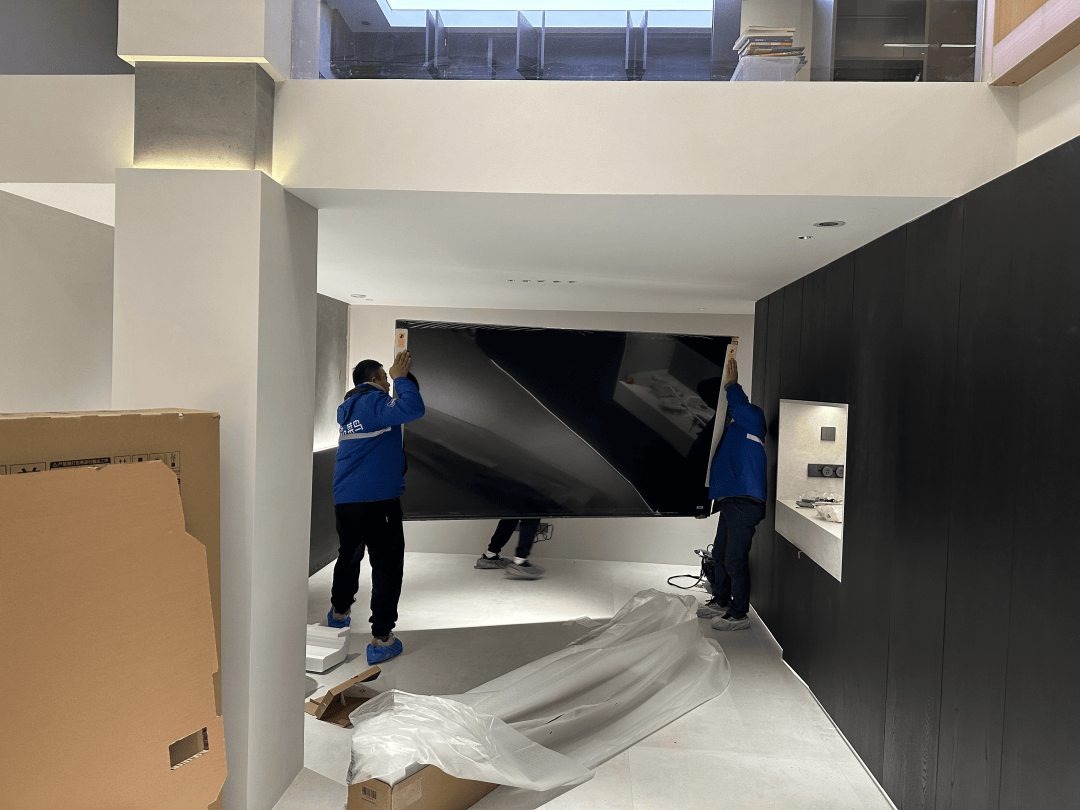
2026年新一轮国补接力发放,各平台优化消费场景、升级服务,"焕新"消费再提速。 1月21日,记者获悉,菜鸟联手天猫持续升级大家电送装取一体服务,将100吋电视等难进电梯的大型家电纳入送货上门、送装取一体服务,进一步优化体 验,推动高端电器线上增长。目前,2026年国补实施半个多月,天猫大家电环比大涨超90%,拉动效应显著。 天猫电视行业负责人蔚冬介绍,2026年国补实施半个多月以来,拉动作用强劲,尤其是中高端产品拉动作用更为明显,100吋超大屏电视、壁纸电视和新 技术Mini LED电视成为增长主力,同比翻倍增长。同时,智能、健康、节能等高端化、品质化的家电成为消费者追逐的热点。支持语音控制、可远程操 作的智能家电,无霜超薄零嵌节能冰箱,多分区洗烘套装、一级能效空调、冰箱等成为近期热销的爆款家电。 海信集团显示事业部客户体验运营部总经理逄晓睿认为,随着电视产品技术的迭代和成本的降低,叠加国补政策,百吋电视的爆火是必然。同时目前海信 所有98吋及以上的产品,和其他爆款产品,已经实现了100%入菜鸟仓和送装取一体服务,提升了体验,持续拉动了销量。 以往,在大型家电送货上门中,部分小区无电梯或楼道狭窄,尤其是10 ...
索尼退场,日本电视全军覆没
3 6 Ke· 2026-01-23 00:36
Core Viewpoint - Sony has announced a joint venture with TCL to manage its home entertainment business, with TCL holding a 51% stake, effectively transferring Sony's television operations and the BRAVIA brand to TCL, marking a significant shift in the consumer electronics market [1][5]. Group 1: Sony's Strategic Shift - Sony lacks display panel production capabilities, which are crucial for maximizing profits in the television market, relying on LG and TCL for panel supply and Mediatek for picture quality chips [1]. - Sony's television market presence is minimal, consistently ranking in the "others" category, and its television segment is less profitable compared to its other businesses like CIS chips, gaming, and music [1][5]. - The move signifies Sony's exit from the competitive global television market, following a trend where Japanese brands have been selling off their consumer electronics divisions [5][7]. Group 2: TCL's Positioning - For TCL, acquiring Sony's brand equity is a strategic asset that, combined with its own panel production capabilities, positions it to challenge Samsung's dominance in the global market [5]. - TCL is currently the only domestic television brand in China with display panel production capabilities, which is essential for maintaining competitive pricing and product quality [18][27]. Group 3: Decline of Japanese Brands - The exit of Sony marks the end of Japan's independent television brands, with other major players like Sharp, Toshiba, and Panasonic also having exited or significantly downsized their television operations [5][15]. - The decline of Japanese television brands is attributed to their loss of panel production capabilities, which has resulted in a lack of pricing power in the market [16][23]. - The financial crisis of 2008 and subsequent strategic missteps led to a shift in focus for Japanese companies from consumer electronics to higher-margin components, further diminishing their presence in the television market [7][12][13].



彩电出货量或继续走低 Mini LED技术爆发 RGB成分水岭
Nan Fang Du Shi Bao· 2026-01-22 23:11
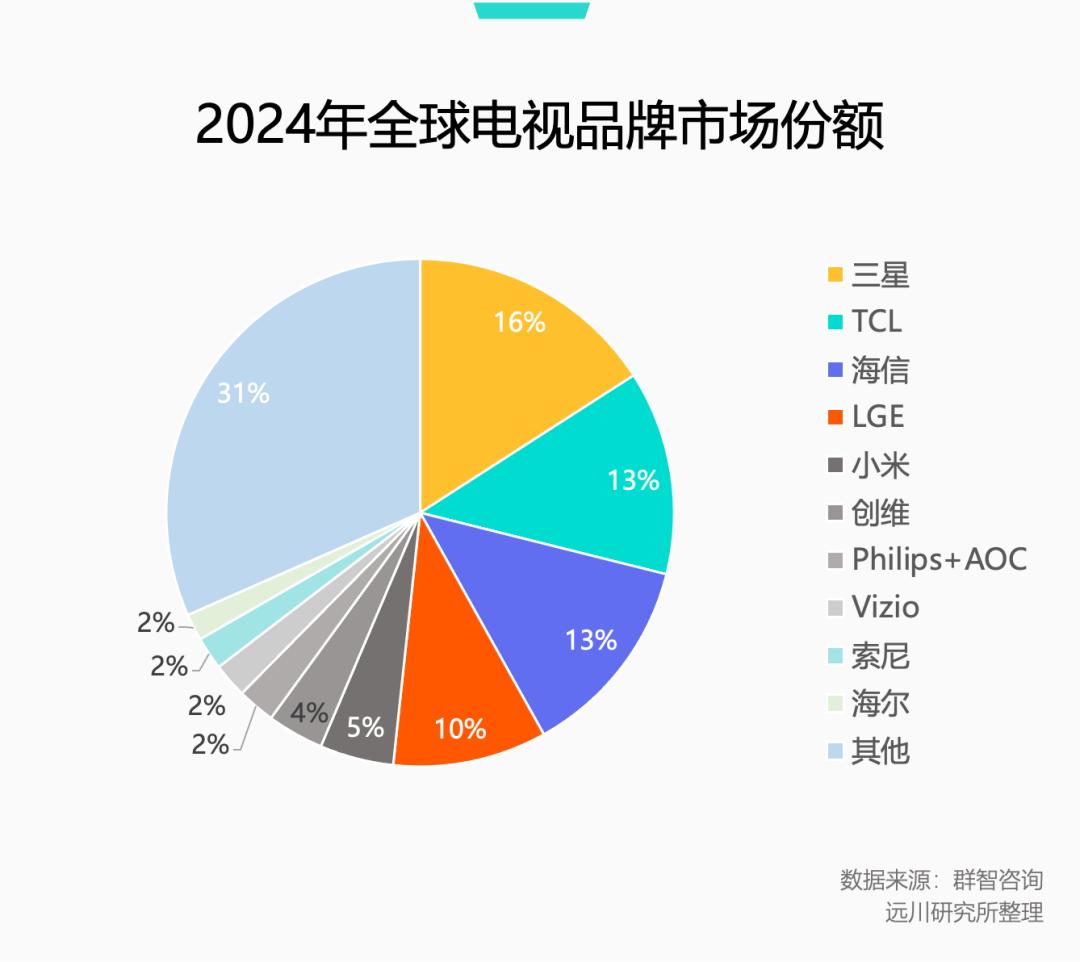
Industry Overview - The global TV industry is undergoing unprecedented adjustments, with significant market differentiation driven by large screen adoption, Mini LED technology proliferation, and AI integration [2] - Global TV shipments fell below 200 million units in 2025, marking a ten-year low, with a projected further decline of 5%-7% in 2026 [2] - China's TV market, as the largest consumer market, saw a shipment drop to 32.895 million units in 2025, a decline of 8.5%, the lowest in 16 years [2][3] Market Dynamics - The Chinese market showed a notable split in performance, with a slight increase of 1.4% in the first half of 2025 due to government subsidies, followed by a significant decline of 16.9% in the second half [2] - European markets are under pressure, with Western Europe expected to see a decline, while Eastern Europe may experience slight growth due to economic recovery [2][3] - North America remains relatively stable, supported by a solid consumer base and event marketing [2] Emerging Markets - Emerging markets in Asia-Pacific, Latin America, and the Middle East and Africa still hold growth potential, but price sensitivity may limit actual volume if prices rise due to memory cost increases [3] - The Indian market, despite strong demand, is dominated by local brands using low-price strategies, posing challenges for international brands [3] Technology Trends - Mini LED technology is expected to enter a phase of widespread adoption in 2026, with RGB-Mini LED shipments projected to exceed 300,000 units, becoming a new profit driver in the high-end market [6] - In 2025, China's Mini LED TV shipments surged by 92.8%, with a penetration rate of 28.9%, and are expected to exceed 10 million units in 2026 [6][7] Competitive Landscape - Chinese brands like Hisense and TCL are leading innovations in RGB-Mini LED and SQD-Mini LED technologies, respectively, with significant growth in global shipments [6][7] - International brands such as Samsung and Sony are entering the RGB technology space, but Chinese companies maintain advantages in technology iteration and cost control [8] - The competition is shifting from price wars to a comprehensive contest of technology, supply chain, and globalization capabilities [3][8] Consumer Trends - Large screen adoption is an irreversible trend, with 75-inch and larger TVs expected to account for 23% of the Chinese market in 2025, with further growth anticipated in 2026 [9] - AI technology is redefining the role of TVs as central to living spaces, with companies like Huawei and Skyworth investing heavily in AI capabilities for their products [9] Market Share - In 2025, the top three brands—Samsung, TCL, and Hisense—held over 43% of the global market share, with Samsung leading at 35.3 million units shipped [9] - TCL's growth of 5.4% positioned it as the most significant growing brand, while Hisense maintained a strong presence with 29.3 million units shipped [9] Strategic Partnerships - Sony and TCL have signed a memorandum of understanding for strategic cooperation in the home entertainment sector, which may impact market dynamics and competition [10]
占据90%RGB-Mini LED销量 海信加速抢占高端电视赛道
Zhong Guo Jing Ying Bao· 2026-01-22 16:23
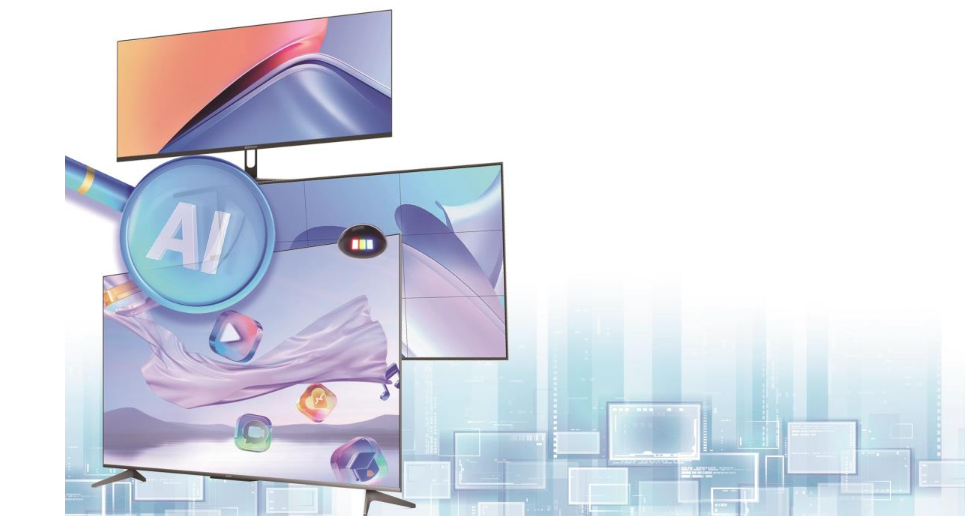
Group 1 - The core viewpoint is that Hisense is accelerating its presence in the high-end television market with its RGB-Mini LED technology, which offers significant advantages over competing technologies like QD-Mini LED [2] - Hisense's RGB-Mini LED technology features independent R/G/B light-emitting chips in each LED, achieving 100% BT.2020 ultra-wide color gamut and providing over 40% energy savings compared to QD-Mini LED televisions [2] - The company has achieved a remarkable 95.67% market share in the RGB-Mini LED television segment as of the 2025 Double Eleven sales event, indicating strong consumer acceptance and market dominance [3] Group 2 - The integration of innovation by companies like Hisense signifies that the Chinese display industry has moved beyond merely following trends, leveraging its full industry chain advantages to build a sustainable and advanced display ecosystem [3]
海信视像青岛工厂成为全球电视行业首座“灯塔工厂”
Zhong Guo Zhi Liang Xin Wen Wang· 2026-01-22 03:55
海信视像青岛工厂成为全球电视行业首座"灯塔工厂" □ 本报记者 朱文达 转自:中国质量报 20秒落地用户需求 "有了产品方案之后,如何匹配合适的精细化生产方案,也是复杂的求解过程。海信每年在全球有数百 个产品,每个产品的画质、光学、结构、包装等各不相同。线体间也存在结构布局差异,每条线体包含 上百个工位,这些多重关系组合,导致线体排布的工艺方案非常复杂。如何高效地排布资源,传统做法 高度依赖IE工程师的个人经验进行排兵布阵、再通过线上生产验证逐步调优,短时间内很难获得最优 解,整个过程既费时又耗力。"海信视像科技股份有限公司工艺工程师王永嘉举例说,在测算瓶颈工时 的时候,通常是工艺工程师拿着秒表掐时间,逐个工序调整,最终找到一个最佳的排布方案。如今AI 能给出一个效率最优的工艺排布,极大提高了产线工艺设计的效率和质量。 海信将AI工艺设计融入日常工作,再通过仿真技术打破时空界限,将原先10个小时的验证生产过程, 缩短至19分钟,并实现"零成本"试错。 在智造环节,海信打造了行业领先的第三代数字化高效电视生产线,集成了25项海信自主研发的首台套 自动化设备,其中11项为业内首创。 以海信通过机器人实现"面板自动 ...