
SAIC MOTOR(600104)

Search documents
富时中国A50指数季度调整:纳入百济神州-U(688235.SH)、药明康德(603259.SH) 剔除中国核电(601985.SH)等
智通财经网· 2025-09-03 10:17
Group 1 - FTSE Russell announced changes to the FTSE China 50 Index and FTSE China A50 Index, effective after market close on September 19, 2025 [1] - The FTSE China A50 Index will include companies such as BeiGene Ltd (688235.SH), Xinyisheng (300502.SZ), WuXi AppTec (603259.SH), and Zhongji Xuchuang (300308.SZ) [1] - Companies removed from the FTSE China A50 Index include China National Nuclear Power (601985.SH), China Unicom (600050.SH), Guodian Nanjing Automation (600406.SH), and Wanhua Chemical (600309.SH) [1] Group 2 - The FTSE China A50 Index serves as an important reference for overseas investors, and historical adjustments to the index typically attract significant passive capital from abroad [1] - The FTSE China 50 Index remains unchanged, with only the list of candidate stocks updated to include China Hongqiao Group (01378), Hansoh Pharmaceutical (03692), Huatai Securities (06886), JD Health (06618), and New China Life Insurance (01336) [1]




271股今日获机构买入评级 30股上涨空间超20%
Zheng Quan Shi Bao Wang· 2025-09-03 09:36
Summary of Key Points Core Viewpoint - A total of 271 stocks received buy ratings from institutions today, with notable upgrades for SAIC Motor and InnoCare Pharma, and 28 stocks receiving initial attention from institutions [1]. Institutional Ratings - 311 buy rating records were published today, covering 271 stocks, with XCMG and BYD being the most frequently rated, each receiving three buy ratings [1]. - Among the stocks rated, 48 records provided future target prices, with 30 stocks showing an upside potential exceeding 20%. China Communications Construction Company had the highest upside potential at 49.55%, with a target price of 13.31 yuan [1]. - Two stocks, SAIC Motor and InnoCare Pharma, had their ratings upgraded today [1]. Market Performance - Stocks with buy ratings averaged a decline of 0.82% today, outperforming the Shanghai Composite Index. 71 stocks saw price increases, with Weilon Co. hitting the daily limit [2]. - The top gainers included DaoTech, Giant Network, and Jingxin Pharmaceutical, with increases of 9.74%, 9.54%, and 6.45% respectively. Conversely, the largest declines were seen in Hangfa Technology, Youyou Foods, and Yokogawa Precision, with drops of 9.96%, 9.77%, and 8.14% respectively [2]. Industry Focus - The electronics sector was the most favored, with 28 stocks, including Crystal Optoelectronics and Micro Company, listed among the buy-rated stocks. The pharmaceutical and electric equipment sectors also attracted attention, with 24 and 23 stocks respectively [2].





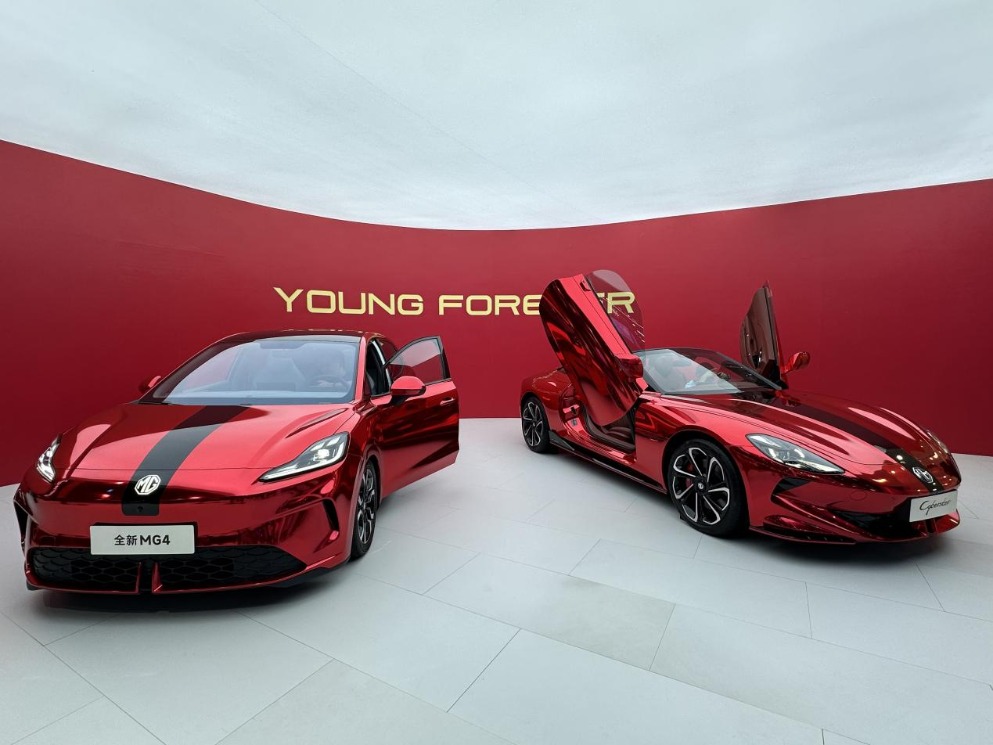
全新MG4上市39分钟大定破万辆 MG品牌以“技术平权”重回主流赛道
Zhong Guo Jing Ying Bao· 2025-09-03 07:32
Core Insights - The MG brand has launched the new MG4 model, which features a limited-time subsidy price range of 65,800 to 99,800 yuan, marking a significant step in its "All in New Energy" strategy [1][6] - The MG4 has received over 45,000 orders since its pre-sale began on August 5, with more than 10,000 orders placed within 39 minutes of the announcement of the subsidy price [1][3] - The MG4 is notable for being the first mass-produced vehicle equipped with semi-solid-state batteries, which are expected to enhance safety and performance [3][5] Product Details - The MG4 lineup includes five models, with prices as follows: 65,800 yuan for the 437 version, 73,800 yuan for the 437 version, 80,800 yuan for the 437 version, 93,800 yuan for the 530 version, and 99,800 yuan for the semi-solid-state version [3][4] - The semi-solid-state version boasts a maximum range of 530 km and an energy density of 180 Wh/kg, achieved by reducing the liquid electrolyte content to 5% [3][5] Strategic Vision - MG plans to invest 10 billion yuan over the next three years to develop 13 new energy models, covering a range of price points from 100,000 to 200,000 yuan [1][6] - The brand aims to create a diverse product matrix that includes sedans, SUVs, crossovers, wagons, and sports cars, utilizing various powertrains including hybrid, range-extended, and fully electric options [2][6] Market Positioning - The MG brand is targeting the mainstream market with its new energy strategy, emphasizing a commitment to competitive pricing and technology accessibility [5][6] - The MG4's launch is seen as a critical move to re-establish the brand's presence in the competitive automotive market, particularly in the context of increasing electric vehicle adoption [7][8] Competitive Landscape - The entry of 3C brands into the automotive market is acknowledged as a challenge, with MG recognizing the need to adapt and learn from these competitors [8] - MG is actively pursuing strategic partnerships with leading 3C companies to enhance its technological capabilities and customer engagement [8]

第二季度8成汽车整车概念股获机构加仓
Cai Jing Wang· 2025-09-03 07:19
Group 1 - The average stock price of automotive concept stocks has increased by 8.47% this year [1] - Qianli Technology has the highest stock price increase, with a cumulative rise of 53.86% this year [1] - In the second quarter, 80% of automotive concept stocks saw an increase in institutional holdings, with 13 stocks having a more than 1 percentage point increase in institutional ownership [1] Group 2 - Notable stocks with increased institutional holdings include Foton Motor, JAC Motors, China National Heavy Duty Truck Group, Yutong Bus, and SAIC Motor [1]


多家车企相继披露8月销售数据,机构看好这些股
Cai Jing Wang· 2025-09-03 06:38
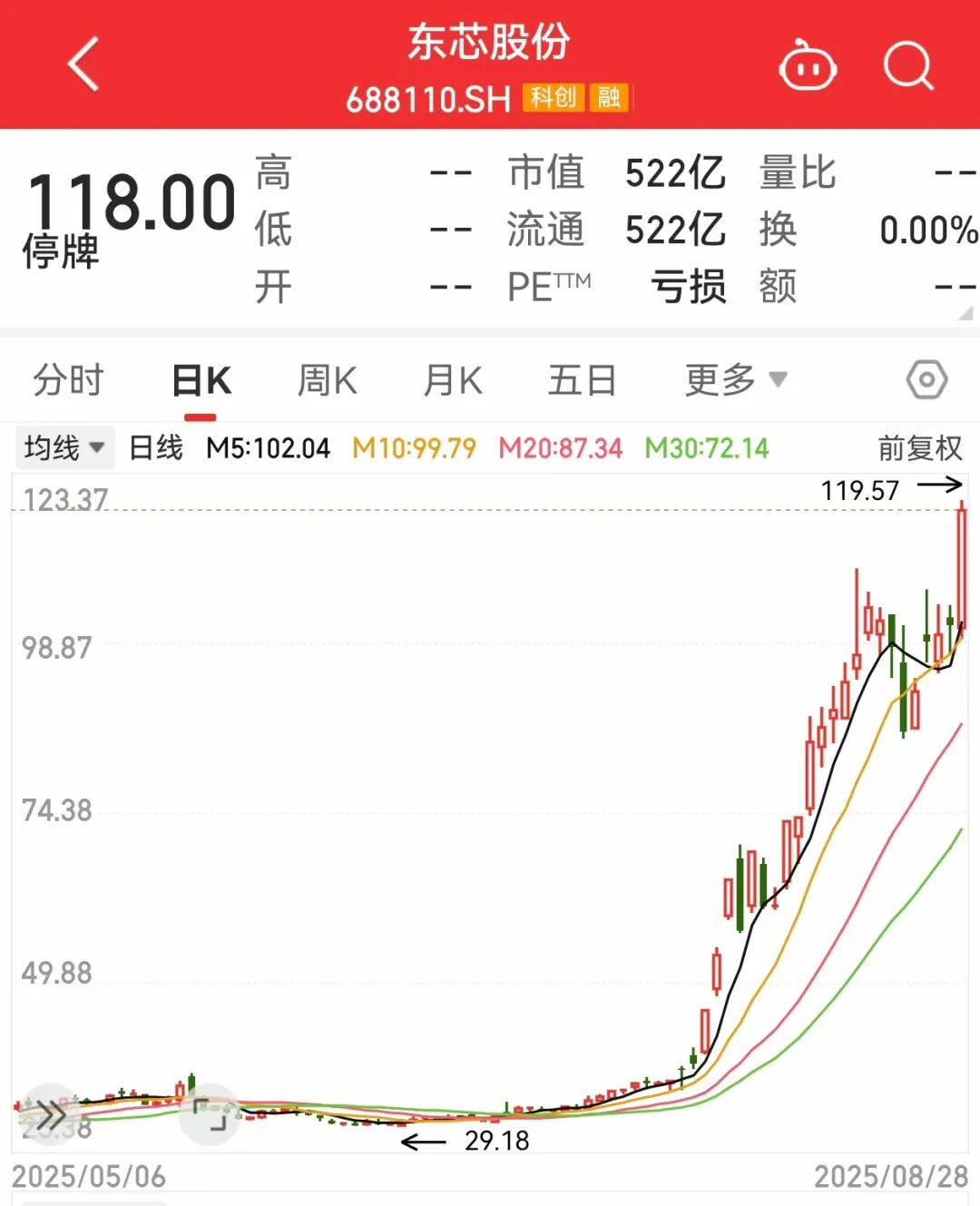
Core Viewpoint - The automotive sector is experiencing significant growth, with several companies reporting record sales and increased institutional investment in their stocks. Group 1: Company Announcements and Stock Performance - Dongxin Co., Ltd. announced a stock suspension due to abnormal trading fluctuations, with a cumulative stock increase of 207.85% since July 29 [1][4] - The company plans to invest approximately 5 billion RMB in Shanghai Lishuan, acquiring about 35.87% of its equity [4] - The average stock price of automotive companies has risen by 8.47% this year, with Qianli Technology showing the highest increase of 53.86% [7] Group 2: Sales Data and Market Trends - Several new energy vehicle companies, including Xiaopeng Motors and Li Auto, reported record monthly delivery numbers in August [5] - Leap Motor achieved a delivery volume of 57,100 units in August, a year-on-year increase of over 88% [5] - Chery Group sold 242,700 vehicles in August, with exports reaching 129,500 units, marking a 32.3% year-on-year increase [6] Group 3: Institutional Investment - In the second quarter, 80% of automotive concept stocks saw increased institutional holdings, with 13 stocks showing a rise of over 1 percentage point [10] - Notable companies with increased institutional holdings include Foton Motor, Jianghuai Automobile, and China National Heavy Duty Truck [10][11] - Foton Motor's stock price increased by 11.16%, while Jianghuai Automobile's stock rose by 41.89% this year [11]


车企账期观察:18家企业半年延长12天、蔚来和理想超200天,长城资金缺口232亿
Sou Hu Cai Jing· 2025-09-03 05:25
Core Insights - The automotive industry in China is experiencing intensified price wars and a collective commitment from 17 companies to reduce supplier payment terms to no more than 60 days to alleviate cash flow pressures on component manufacturers [2][4][8] Group 1: Industry Overview - The first half of 2025 saw a significant increase in accounts payable turnover days among major automotive companies, with an average of 187.97 days, up from 175.75 days at the end of 2024, indicating a trend of extended payment periods [4][6] - Out of 18 major passenger car manufacturers, 12 experienced an increase in payment terms, while only 6 managed to shorten them, highlighting a broader industry trend towards longer payment cycles [4][5] Group 2: Company-Specific Changes - Among the companies, Xpeng Motors had the most significant reduction in accounts payable turnover days, decreasing by 63 days to 170 days, while Seres saw the largest increase, with a rise of 101 days to 266 days [5][6] - BYD's accounts payable turnover days increased by 15 days to 142 days, while NIO's increased by 23 days to 220 days, reflecting a common trend of extended payment terms across the industry [6][12] Group 3: Cash Flow and Financial Health - The cash reserves of many companies are insufficient to cover their accounts payable, with only Jiangling Motors and Haima Automotive having cash reserves that exceed their payables [10][11] - Companies like BYD and Geely are facing significant cash shortfalls, with BYD having a deficit of 805.86 million and Geely 462.61 million, indicating a critical cash flow challenge in meeting supplier payments [11][12] - The shift to a 60-day payment term has led to increased cash flow pressures, as companies like Li Auto reported a negative free cash flow of 38 million, exacerbating their financial strain [9][10]


谁是“车企一哥”?
Zhong Guo Ji Jin Bao· 2025-09-03 00:15
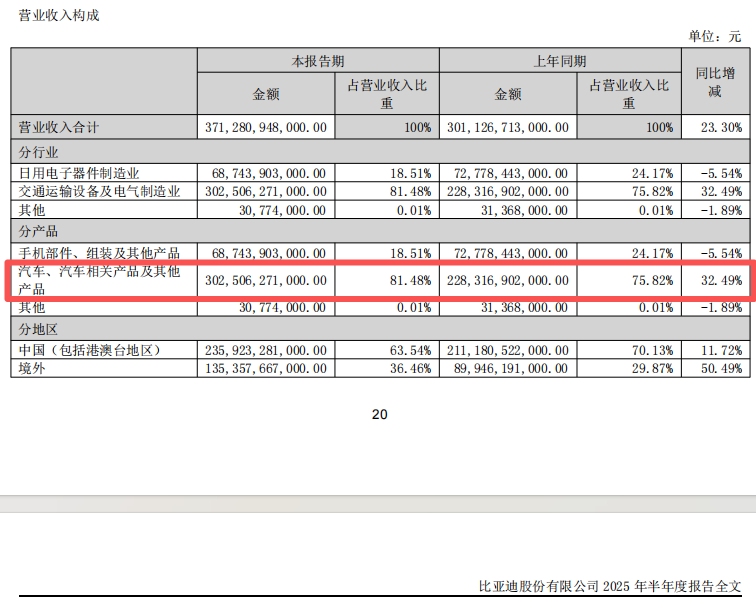
Core Viewpoint - The competition between BYD and SAIC is intensifying as both companies report their financial results for the first half of 2025, with BYD narrowly maintaining its position as the leading automaker in China, but facing significant challenges from SAIC and emerging new players in the electric vehicle market [4][5][9]. Financial Performance - In the first half of 2025, BYD's automotive business revenue reached 302.51 billion yuan, a year-on-year increase of 32.49%, while SAIC's total revenue was 299.59 billion yuan, growing by 5.23% [6][9]. - The revenue difference between BYD and SAIC is only 2.92 billion yuan, indicating a narrowing lead for BYD compared to the previous year when the gap was 46.16 billion yuan [9]. - BYD's electric vehicle sales grew by 33.04% to 2.15 million units, while SAIC's sales increased by 12.35% to 2.05 million units, with SAIC's electric vehicle sales surging by 40.19% to 646,300 units [10][11][9]. Market Dynamics - The automotive market in China is experiencing fierce competition, prompting BYD to implement promotional strategies to maintain its market position [12][17]. - SAIC is actively collaborating with Huawei to enhance its electric vehicle offerings, launching a new brand "SAIC 尚界" and planning to introduce new models [18][19]. - The new energy vehicle market is witnessing a surge in sales from new entrants like NIO, Xpeng, and Li Auto, which are achieving record delivery numbers [25][27]. Future Outlook - BYD anticipates continued growth in electric vehicle sales in the second half of 2025, despite recent monthly sales declines [24][25]. - The competitive landscape is expected to become even more challenging as traditional automakers and new entrants ramp up their efforts in the electric vehicle sector [24][25].
谁是“车企一哥”?
中国基金报· 2025-09-03 00:10
Core Viewpoint - The competition between leading Chinese automakers, BYD and SAIC, is intensifying as they vie for the title of "top car manufacturer" in the first half of 2025, with BYD's lead narrowing significantly [5][13]. Financial Performance - In the first half of 2025, BYD's automotive business revenue reached 302.51 billion yuan, a year-on-year increase of 32.49%, while SAIC's total revenue was 299.59 billion yuan, growing by 5.23% [9][14]. - The revenue difference between BYD and SAIC was only 2.92 billion yuan, indicating a close competition [5][14]. Market Dynamics - The automotive market in China is experiencing fierce competition, with traditional automakers like SAIC accelerating their entry into the new energy vehicle (NEV) sector, posing a challenge to BYD [6][7]. - BYD's NEV sales in the first half of 2025 grew by 33.04% to 2.15 million units, while SAIC's NEV sales surged by 40.19% to 646,300 units [18][16]. Strategic Moves - SAIC is collaborating with Huawei to develop new energy smart vehicles, launching the "SAIC 尚界" brand, which aims to enhance its market presence [25][27]. - GAC Group is also partnering with Huawei to create a new high-end smart NEV brand, indicating a trend among traditional automakers to embrace technology partnerships [25][27]. Future Outlook - The competition in the NEV market is expected to intensify in the second half of 2025, with BYD's ability to maintain its leading position being questioned [7][30]. - New entrants in the automotive market, such as NIO and Xpeng, are also showing strong growth, with their delivery volumes reaching new highs [31][35].

8月新能源车市火热 批发销量同比增长24% “金九银十”旺季可期(附概念股)
Zhi Tong Cai Jing· 2025-09-02 23:23
Core Insights - The wholesale sales of new energy passenger vehicles in China reached 1.3 million units in August, marking a year-on-year increase of 24% and a month-on-month increase of 10% [1] - Cumulative wholesale sales from January to August totaled 8.93 million units, reflecting a year-on-year growth of 34% [1] - Major automakers are expected to launch several new models in Q3 and Q4 of 2025, which will enhance market supply [1][4] Group 1: Market Performance - BYD maintained its leading position with sales of 373,600 units in August, nearly matching last year's performance, with pure electric vehicle sales exceeding 199,600 units [2] - Geely's new energy vehicle sales reached 147,300 units, a 38% year-on-year increase, with the Galaxy model achieving a record high of 110,600 units, up 173% [2] - SAIC Group reported new energy vehicle sales of 129,800 units, a 49.89% increase year-on-year, with its Zhiji brand also showing strong performance [2] Group 2: New Entrants and Emerging Brands - Leap Motor achieved a record high delivery of 57,100 units, becoming a standout among new entrants [3] - Xiaopeng Motors and NIO delivered 37,700 and 31,300 units respectively, both setting historical highs [3] - Xiaomi Auto delivered over 30,000 units, leveraging brand influence and supply chain capabilities to establish a market presence [3] Group 3: Market Trends and Future Outlook - The upcoming "Golden September and Silver October" sales season is expected to boost new energy vehicle sales, with various automakers introducing promotional policies [1][4] - The retail market for narrow passenger vehicles in August was approximately 1.94 million units, with new energy vehicles expected to account for 1.1 million units, achieving a penetration rate of about 56.7% [4] - The market is stabilizing with the introduction of new subsidy policies and the resumption of trade-in programs, enhancing consumer purchasing potential [4]

