Workflow
Lushang Freda Pharmaceutical (600223)
icon
Search documents
化妆品板块11月13日涨0.2%,锦盛新材领涨,主力资金净流出5656.82万元
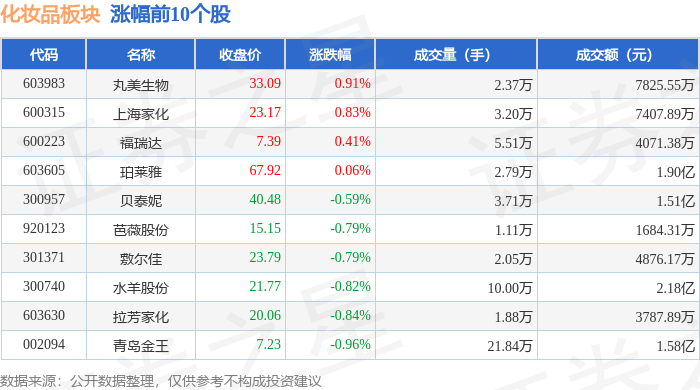
Market Overview - The cosmetics sector increased by 0.2% on November 13, with Jinsheng New Materials leading the gains [1] - The Shanghai Composite Index closed at 4029.5, up 0.73%, while the Shenzhen Component Index closed at 13476.52, up 1.78% [1] Individual Stock Performance - Jinsheng New Materials (300849) closed at 16.16, up 2.08% with a trading volume of 59,500 shares and a transaction value of 95.82 million yuan [1] - Shuiyang Co. (300740) closed at 21.51, up 2.04% with a trading volume of 147,200 shares and a transaction value of 314 million yuan [1] - Beitaini (300957) closed at 43.24, up 1.08% with a trading volume of 35,900 shares and a transaction value of 154 million yuan [1] - Other notable stocks include Furuida (600223) at 7.98 (+0.63%), Qingsong Co. (300132) at 8.12 (+0.37%), and Qingdao Kingway (002094) at 7.80 (+0.26%) [1] Capital Flow Analysis - The cosmetics sector experienced a net outflow of 56.57 million yuan from institutional investors and 32.11 million yuan from retail investors, while individual investors saw a net inflow of 88.67 million yuan [2] - The capital flow for individual stocks shows that Shuiyang Co. had a net inflow of 21.64 million yuan from institutional investors, while other stocks like Huaye Fragrance (300886) and Kesheng Co. (300856) faced net outflows [3]
上海家化的转机,福瑞达们的困局
Xin Lang Cai Jing· 2025-11-12 05:46
Core Insights - The Chinese beauty industry is at a critical juncture, transitioning from rapid growth driven by channels and traffic to a focus on brand value and operational excellence [1] - Recent financial reports from leading domestic beauty companies reveal a divide: some are struggling with transformation pains, while others are rebounding due to strong brand value [1] Group 1: Performance Challenges - Beitaini reported a revenue of 3.464 billion yuan for the first three quarters of 2025, a year-on-year decline of 13.78%, with a net profit of 272 million yuan, down 34.45% [2] - In Q3, Beitaini's revenue was 1.092 billion yuan, a decline of 9.95%, but net profit increased by 136.55% to 25.22 million yuan due to cost-cutting and a shift to high-quality growth [3] - Beitaini's operating costs decreased by 15.75% to 889 million yuan, while sales expenses were 1.838 billion yuan, down 8.55% [6] - Furuida's revenue for the first three quarters was 2.597 billion yuan, down 7.34%, with a net profit of 142 million yuan, a decrease of 17.19% [7] - The brand Yailabo's revenue fell by 28.93% in Q3, indicating a significant decline from its peak performance in 2023 [11] Group 2: Successful Turnarounds - Shanghai Jahwa achieved a revenue of 4.961 billion yuan in the first three quarters of 2025, a 10.8% increase, with net profit soaring by 149.1% to 405 million yuan [12] - The company reported a Q3 revenue of 1.482 billion yuan, up 28.3%, reversing a previous decline [12] - The turnaround is attributed to a strategic focus on core brands and effective brand activation under new CEO Lin Xiaohai, emphasizing brand value as a growth strategy [15][18] Group 3: Industry Trends - The beauty industry is shifting towards a focus on brand value and ecosystem building, moving away from reliance on external factors like channels and marketing [19][23] - New brands face challenges due to the fragmentation of channels and rising costs, leading to a need for deeper brand connections with consumers [19][21] - Established brands like Shanghai Jahwa demonstrate resilience through strong brand recognition and emotional connections with consumers, allowing for rapid recovery when strategic adjustments are made [22] - The industry must prioritize building a multi-brand ecosystem and sustainable financial practices, as seen in Beitaini's recent focus on profitability [24]
美护25年三季报综述:分化中把握成长性、确定性
ZHESHANG SECURITIES· 2025-11-10 01:07
1. Report Industry Investment Rating - The industry rating is "Bullish" [1] 2. Core Views of the Report - The cosmetics industry continues to show differentiation, with brand demand being weak in the off - season, agents seeking change in difficult situations, and producers seizing supply - chain reconstruction opportunities. The medical aesthetics industry has new entrants with better - than - expected shipments, and new product catalysts are worth attention [3][4] 3. Summaries According to Relevant Catalogs 3.1 Cosmetics: Continued Differentiation 3.1.1 Brand Merchants - In 1 - 3Q25, beauty brand merchants' revenue was 28.4 billion yuan, a year - on - year decrease of 0.6%; personal care brand merchants' revenue was 5.7 billion yuan, a year - on - year increase of 12.4%. In 3Q25, beauty and personal care brand merchants' revenues were 8.05 billion and 1.805 billion yuan, a year - on - year decrease of 1.3% and an increase of 7.6% respectively. Beauty revenue weakened quarter - on - quarter, while personal care remained flat [18] - Beauty: Affected by the earlier Double Eleven promotion, consumer enthusiasm declined in September, and brands reduced live - streaming activities. In terms of single - quarter revenue growth, Shuiyang Co., Ltd. and Shanghai Jahwa increased by over 20%, Marubi Co., Ltd. had double - digit growth, Proya had low - double - digit decline, and Betaine and Freda had high - single - digit decline [18] - Personal care: Runben Co., Ltd.'s Q3 revenue increased by 17% year - on - year, with a slight increase in growth rate quarter - on - quarter. Baiya Co., Ltd.'s 3Q25 revenue improved, and Dengkang Oral Care had steady growth [18] - In 1 - 3Q25, beauty brand merchants' net profit after non - recurring items was 2.33 billion yuan, a year - on - year decrease of 15%; personal care brand merchants' was 604 million yuan, a year - on - year decrease of 3.4%. Some companies showed initial cost - control effects [24] 3.1.2 Agents - Agents are seeking change in difficult situations by exploring three paths: incubating self - owned brands (represented by Ruoyuchen), using AI to reduce costs and increase efficiency (represented by Yiwow), and expanding high - growth categories (such as Qingmu Technology expanding into trendy toy agency operations) [30] - Ruoyuchen's self - owned brands Feicui and Zhanjia continued to gain momentum. In Q3, self - owned brand revenue was 451 million yuan, a year - on - year increase of 344.5%, accounting for 55.1%. Zhanjia's Q3 revenue was 227 million yuan, a year - on - year increase of 119%, and 1 - 3Q revenue was 680 million yuan. Feicui's Q3 revenue was 203 million yuan, a quarter - on - quarter increase of over 98.8%, and 1 - 3Q revenue was 362 million yuan [30] 3.1.3 Producers - Demand continued to recover, and the revenue of the producer sector increased by 9%, 17%, and 30% year - on - year from Q1 to Q3, with the growth rate increasing quarter by quarter [33] - QingSong Co., Ltd. focused on optimizing customers and product structure, and its profit turned positive for four consecutive quarters from 2Q24 to 1Q25. Jieya Co., Ltd. had increasing orders from overseas big customers, and its Q3 performance growth accelerated. Jiaheng Home Co., Ltd. increased revenue but not profit, mainly due to the short - term impact of the Huzhou base's capacity ramp - up [33] 3.2 Medical Aesthetics: New Entrants with Better - than - Expected Shipments 3.2.1 Upstream Consumables - The growth rate of demand expansion slowed down, and supply - side competition intensified. In terms of the cumulative number of Class III medical device approvals, hyaluronic acid > regenerative (Sculptra/Poly - L - Lactic Acid) > botulinum toxin > recombinant collagen. Old products of hyaluronic acid and regenerative types faced growth pressure, and the growth rate of recombinant collagen Class III medical device products slowed down significantly quarter - on - quarter [38] - Hyaluronic acid: Aimeike's revenue growth rate from 24Q1 to 25Q3 was + 28.2%/+2.3%/+1.1%/ - 7%/ - 18%/ - 25%/ - 21% year - on - year, showing a quarterly decline since 24Q2 [38] - Collagen: Jinbo Biotech's revenue growth rate from 24Q1 to 25Q1 was + 76%/+100%/+92%/+73%/+63% year - on - year, and in 2Q25/3Q25, it was + 30%/+13% year - on - year. On October 23, the "Recombinant Type I α1 Subtype Collagen Freeze - Dried Fiber" Class III medical device certificate of Giant Biogene was approved by NMPA [38] - Leapmed Medical's medical aesthetics shipments were better than expected, with Q3 medical service and health management business revenue of 320 million yuan, a year - on - year increase of 28%, and the revenue of Sculptra and Hydrodermabrasion reaching 86.1367 million yuan [36] 3.2.2 Downstream - The new model of Xinoxygen Medical Clinics showed high - growth potential. The Q3 revenue guidance was 150 - 170 million yuan, a year - on - year increase of 231% - 275%, and a quarter - on - quarter increase of 4% - 18%. It plans to implement the "100 - City, 1000 - Store" plan in the long term [40] - Stores are expanding from first - tier cities to new first - tier and second - tier cities. As of November 6, it covered 42 stores in 10 cities. The promotion of self - owned brands was remarkable, and it cooperated with Xihong Miracle Sculptra 3.0, priced at 2999 yuan, which was officially launched on September 25 [43] 3.3 Investment Recommendations - Brands with upward potential and both growth and certainty: Recommend Maogeping (Oriental aesthetics, dual - wheel drive of makeup and skincare, and the second - curve of perfume is worth looking forward to) and Shangmei Co., Ltd. (with one cornerstone brand, five growth brands, and N seed businesses) [8][46] - Companies with new product pipelines and expected performance elasticity: Pay attention to Giant Biogene and Leapmed Medical [8][46] - Companies in strategic adjustment and expected to reach an inflection point: Recommend Shuiyang Co., Ltd. (the effect of high - end transformation is gradually emerging), and pay attention to Shanghai Jahwa, Betaine, and Freda [8][46]
行业周报:关注零售行业年度投资策略:保值、颜值、情绪价值-20251109
KAIYUAN SECURITIES· 2025-11-09 08:15
Core Insights - The retail industry is experiencing a shift from value preservation to emotional value, with a focus on high-growth segments for investment opportunities [5][28] - The report maintains a positive outlook on the retail sector, emphasizing the importance of consumer insights and differentiated product offerings [5][28] Retail Market Overview - The retail index reported a slight increase of 0.31% during the week of November 3 to November 7, 2025, underperforming the Shanghai Composite Index, which rose by 1.08% [7][16] - Year-to-date, the retail index has increased by 4.20%, lagging behind the Shanghai Composite Index's 19.27% growth [16][20] Investment Strategy for 2026 - The investment strategy highlights four main themes: 1. **Gold and Jewelry**: Focus on high-end and fashionable gold segments, with recommendations for brands like Lao Pu Gold and Chao Hong Ji [5][48] 2. **Retail E-commerce**: Emphasize the transformation of offline retail to enhance service and experience, with key players like Yonghui Supermarket and Ai Ying Shi [5][48] 3. **Cosmetics**: Target domestic brands that capture emotional value and innovate on safety ingredients, recommending brands like Juzi Biological and Pechoin [5][49] 4. **Medical Aesthetics**: Focus on differentiated product manufacturers and expanding medical institutions, with recommendations for brands like Ai Mei Ke and Ke Di-B [5][49] Sector Performance - The jewelry sector is undergoing significant changes due to rising gold prices and a decline in traditional wedding markets, leading to the emergence of brands with strong consumer insights [5][29] - The cosmetics sector is seeing a rise in domestic brands leveraging cultural roots and emotional value to capture market share [5][41] Company-Specific Insights - **Chao Hong Ji**: Reported a revenue increase of 28.4% year-on-year for the first three quarters of 2025, with a notable performance in Q3 [54] - **Yonghui Supermarket**: Experienced a revenue decline of 22.2% year-on-year for the first three quarters of 2025, but is undergoing significant transformation [50] - **Juzi Biological**: Achieved a revenue growth of 21.7% year-on-year for the first half of 2025, focusing on collagen products [50]
化妆品板块11月6日跌1.21%,贝泰妮领跌,主力资金净流出8263.52万元
Market Overview - The cosmetics sector experienced a decline of 1.21% on November 6, with Betaini leading the drop [1] - The Shanghai Composite Index closed at 4007.76, up 0.97%, while the Shenzhen Component Index closed at 13452.42, up 1.73% [1] Individual Stock Performance - Notable gainers included: - Shuiyang Co., Ltd. (300740) with a closing price of 20.83, up 1.46% [1] - Qingsong Co., Ltd. (300132) with a closing price of 7.27, up 1.11% [1] - Significant decliners included: - Betaini (300957) with a closing price of 42.22, down 4.89% [2] - Jiahen Home Care (300955) with a closing price of 36.68, down 3.47% [2] Trading Volume and Capital Flow - The cosmetics sector saw a net outflow of 82.6352 million yuan from institutional investors, while retail investors had a net inflow of 58.2199 million yuan [2] - The trading volume for Shuiyang Co., Ltd. was 149,100 shares, with a transaction value of 311 million yuan [1] Capital Flow Analysis - Major net inflows were observed in: - Shuiyang Co., Ltd. with a net inflow of 23.1839 million yuan [3] - Qingsong Co., Ltd. with a net inflow of 7.1227 million yuan [3] - Major net outflows were noted in: - Betaini with a net outflow of 90.237 million yuan [3] - Shanghai Jahwa (600315) with a net outflow of 90.237 million yuan [3]
从盖楼到卖精华,珂谧能否捡到重组胶原蛋白的余热?
Tai Mei Ti A P P· 2025-11-06 01:46
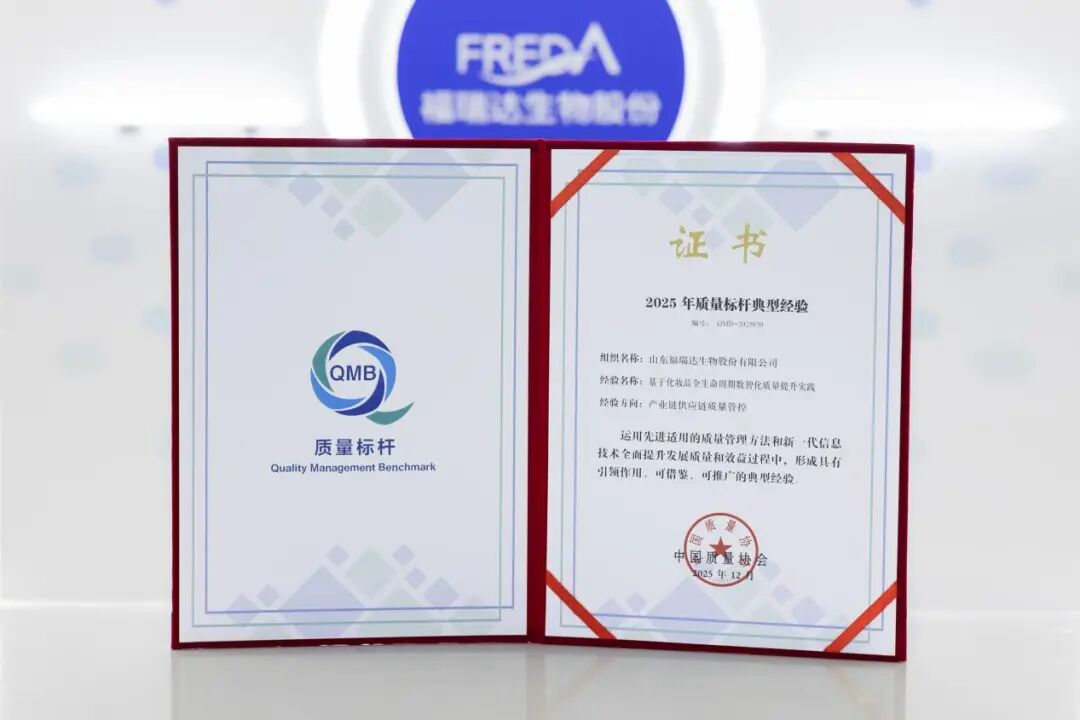
Core Viewpoint - The emergence of the new skincare brand Key C (珂谧) by the company Furuida (福瑞达) marks a strategic shift from its traditional real estate and hyaluronic acid business to the collagen protein skincare market, aiming to differentiate itself through innovative technology and competitive pricing [1][2][4]. Company Transformation - Furuida, originally focused on real estate, has transitioned to the cosmetics sector, with its two existing brands, Yilian and Aier Doctor, contributing significantly to its revenue [4][5]. - In 2023, Furuida officially established a cosmetics-led business direction as its brands became the main revenue contributors [4][5]. Market Context - The beauty industry is experiencing a slowdown, and the competition in the collagen protein segment is intensifying, making Key C's entry particularly noteworthy [2][6]. - The overall revenue for Furuida's cosmetics segment in 2024 was 2.475 billion yuan, showing only a slight increase of 2.46% year-on-year, with Yilian's revenue at 963 million yuan (up 12.36%) and Aier Doctor's at 1.301 billion yuan (down 3.48%) [4][6]. Product Differentiation - Key C focuses on affordable medical beauty, utilizing transdermal penetration technology to compete against high-end anti-aging products priced in the thousands [2][6]. - The brand has achieved seven Class II medical device certifications and is developing additional Class III medical device projects, enhancing its credibility in the medical beauty space [7][8]. Pricing Strategy - Key C's pricing strategy is aimed at capturing market share through high cost-performance products, with its best-selling transdermal collagen essence priced at 600 yuan for 56 units, which can drop to 332 yuan during promotional events [8][10]. - This pricing approach disrupts the long-standing premium pricing of collagen products while maintaining a focus on effective ingredients [10][12]. Technological Innovation - Key C's transdermal penetration technology claims to improve skin absorption rates by 27.5 times compared to standard collagen products, addressing a significant industry challenge [11][12]. - The technology involves embedding transdermal peptide segments into the collagen sequence, allowing for effective penetration without compromising the integrity of the collagen [11][12]. Industry Challenges - The collagen protein market has faced scrutiny, with previous market leaders experiencing significant declines in market value, averaging over 40% from their peak [16][17]. - Consumer skepticism regarding the efficacy of collagen products has increased, leading to a more cautious approach from investors and the market [19][20]. Strategic Opportunities - Key C's entry into the collagen protein market represents a potential opportunity for differentiated competition amid industry challenges, contingent on its ability to innovate, educate consumers, and balance online and offline operations [19][20].
格局生变,优选成长
Group 1: Industry Overview - The cosmetics retail sales in China grew by 3.9% year-on-year from January to September 2025, slightly underperforming the overall retail market by 0.6 percentage points, indicating a stable demand environment [4][14]. - Online platforms like Tmall and Douyin are experiencing a shift, with Tmall showing signs of recovery due to flash sales and member subsidies, while Douyin's growth has slightly slowed down [17][20]. - The demand for high-end and cost-effective products is increasing, while the mid-range segment is facing pressure due to a more conservative consumer environment [5][41]. Group 2: Competitive Landscape - The trend of domestic brands replacing foreign ones is slowing down, with leading foreign brands like L'Oréal and Estée Lauder showing signs of recovery in the Chinese market [23][24]. - The growth of domestic brands is becoming more differentiated, with some brands like Proya and Shiseido experiencing declines, while others like Youngor and Shanghai Jahwa continue to grow [23][24]. - The industry is witnessing an acceleration in the multi-brand matrix among leading companies, which is expected to increase market concentration [27][28]. Group 3: Key Companies - The report highlights several companies with strong growth potential, including Ruya Chen, Shumei Co., and Maogeping, which are expected to benefit from their brand strength and market positioning [3][54]. - Companies like Dekang Oral Care and Shanghai Jahwa are noted for their stable fundamentals and potential for marginal improvement, while others like Jinbo Biological and Huaxi Biological are anticipated to reach turning points [54]. - Ruya Chen's self-owned brand, Zhenjia, has shown significant growth, with a revenue increase of 345% year-on-year in Q3 2025, indicating strong brand development capabilities [60].
化妆品板块11月4日跌1.75%,丸美生物领跌,主力资金净流出2.08亿元
Core Viewpoint - The cosmetics sector experienced a decline of 1.75% on November 4, with Marubi Biotechnology leading the drop [1][2] Group 1: Market Performance - The Shanghai Composite Index closed at 3960.19, down 0.41%, while the Shenzhen Component Index closed at 13175.22, down 1.71% [1] - Major stocks in the cosmetics sector showed varied performance, with Qing Song Co. slightly up by 0.28% and Marubi Biotechnology down by 3.92% [1][2] Group 2: Trading Volume and Value - The trading volume and value for key stocks in the cosmetics sector were significant, with Qingdao Kingway recording a trading volume of 576,600 shares and a transaction value of 470 million yuan [2] - The total net outflow of main funds in the cosmetics sector was 208 million yuan, while retail investors saw a net inflow of 155 million yuan [2] Group 3: Fund Flow Analysis - The main funds showed a net outflow in several companies, including Marubi Biotechnology with a net outflow of 7.54 million yuan, while retail investors had a net inflow of 17.24 million yuan [3] - LaFang Co. had a net inflow of 8.17 million yuan from retail investors, despite a net outflow from main funds [3]
化妆品板块10月31日跌0.58%,嘉亨家化领跌,主力资金净流出1.31亿元
Market Overview - The cosmetics sector experienced a decline of 0.58% on October 31, with Jiaheng Jiahua leading the drop [1] - The Shanghai Composite Index closed at 3954.79, down 0.81%, while the Shenzhen Component Index closed at 13378.21, down 1.14% [1] Individual Stock Performance - Notable gainers included: - Qingsong Co., Ltd. (300132) with a closing price of 7.23, up 5.39% [1] - Lafang Jiahua (603630) at 22.74, up 3.04% [1] - Shuiyang Co., Ltd. (300740) at 20.43, up 2.82% [1] - Jiaheng Jiahua (300955) saw a significant decline, closing at 35.66, down 5.01% [2] - Marubi Biotechnology (603983) also fell, closing at 34.53, down 4.16% [2] Trading Volume and Capital Flow - The cosmetics sector had a net outflow of 131 million yuan from main funds, while retail investors saw a net inflow of 214 million yuan [2] - The trading volume for Qingsong Co., Ltd. was 329,200 shares, with a transaction value of 23.5 million yuan [1] - Jiaheng Jiahua had a trading volume of 50,300 shares, with a transaction value of 183 million yuan [2] Capital Flow Analysis - Shanghai Jahwa (600315) had a net inflow of 11.76 million yuan from main funds, but a net outflow of 23.52 million yuan from retail investors [3] - Other companies like Lafang Jiahua and Qingsong Co., Ltd. also experienced mixed capital flows, with retail investors showing some interest despite overall outflows from main and speculative funds [3]
福瑞达涨2.09%,成交额5019.22万元,主力资金净流入111.52万元
Xin Lang Zheng Quan· 2025-10-31 05:55
Core Viewpoint - The stock of Furuida has shown mixed performance in recent trading sessions, with a slight increase on October 31, 2023, and a year-to-date gain of 4.27% despite recent declines [1][2]. Group 1: Stock Performance - As of October 31, 2023, Furuida's stock price increased by 2.09% to 7.82 CNY per share, with a trading volume of 50.19 million CNY and a turnover rate of 0.64%, resulting in a total market capitalization of 7.95 billion CNY [1]. - Year-to-date, Furuida's stock has risen by 4.27%, but it has experienced a decline of 0.89% over the last five trading days and a decrease of 6.46% over the past 60 days [2]. Group 2: Financial Performance - For the period from January to September 2025, Furuida reported a revenue of 2.597 billion CNY, reflecting a year-on-year decrease of 7.34%, while the net profit attributable to shareholders was 142 million CNY, down 17.19% year-on-year [2]. - The company has distributed a total of 1.196 billion CNY in dividends since its A-share listing, with 213 million CNY distributed over the past three years [3]. Group 3: Shareholder and Market Information - As of September 30, 2025, Furuida had 44,500 shareholders, a decrease of 6.27% from the previous period, with an average of 22,827 circulating shares per shareholder, an increase of 6.69% [2]. - The top ten circulating shareholders include the Southern CSI 1000 ETF, which holds 4.6498 million shares, a decrease of 70,900 shares from the previous period [3].