
Shanghai Jahwa(600315)

Search documents
上海家化三季度净利增超一倍!林小海“刮骨疗伤”改革起效?
Nan Fang Du Shi Bao· 2025-10-28 09:32
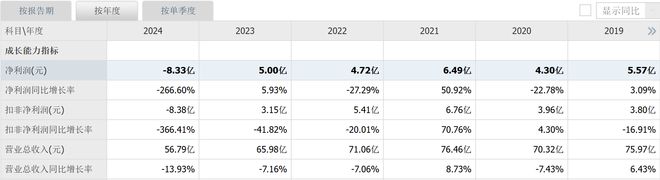
Core Insights - Shanghai Jahwa reported a significant increase in net profit for the third quarter, with a year-on-year growth of 149.1%, reaching 405 million yuan, while total revenue for the first three quarters was 4.961 billion yuan, up 10.8% year-on-year [1][2] Financial Performance - The company faced a revenue decline from 2020 to 2023, with revenues of 7.032 billion yuan, 7.646 billion yuan, 7.106 billion yuan, and 6.598 billion yuan, reflecting year-on-year changes of -7.43%, 8.73%, -7.06%, and -7.16% respectively [2] - In 2024, the company reported its first annual loss in 24 years, with total revenue of 5.679 billion yuan, down 13.93% year-on-year, and a net loss of 833 million yuan, a decline of 266.6% [3][4] Strategic Adjustments - The company attributed its performance issues to goodwill impairment, with a provision of approximately 613 million yuan for overseas business goodwill impairment due to low birth rates and increased competition [4] - Following the appointment of Lin Xiaohai as chairman in June 2024, the company initiated a "focus on efficiency" strategy, leading to a significant restructuring of its sales department and a planned 15% workforce reduction [6][9] Revenue Breakdown - In the third quarter, revenue from personal care products was 606 million yuan, beauty products 354 million yuan, innovative products 158 million yuan, and overseas sales 365 million yuan [8] - Online sales accounted for over half of the domestic business revenue, with a 1.7 times increase in online channel revenue in the third quarter of 2025 [8] Future Outlook - The company plans to increase investment in brand development and R&D, aiming for profitability in the second half of the year [9]


上海家化跌9.43% 华泰证券今刚喊买入就跌
Zhong Guo Jing Ji Wang· 2025-10-28 09:09
Group 1 - Shanghai Jahwa's stock price closed at 24.78 yuan, with a decline of 9.43% [1] - Huatai Securities researchers maintain a "buy" rating for Shanghai Jahwa, citing that major products are expected to continue driving rapid growth [1]
美容护理行业今日净流出资金2.38亿元,上海家化等7股净流出资金超千万元
Zheng Quan Shi Bao Wang· 2025-10-28 08:47
Core Insights - The beauty and personal care industry experienced a net capital outflow of 238 million yuan today, with a decline of 1.51% in the sector [1] - Among the 29 stocks in the beauty and personal care sector, 5 stocks rose while 23 stocks fell, indicating a predominantly negative market sentiment [1] Capital Flow Summary - The top three stocks with the highest net capital outflow are Shanghai Jahwa, Zhongshun Jierou, and Shuiyang Co., with outflows of 615.02 million yuan, 582.59 million yuan, and 316.92 million yuan respectively [1] - The stock with the highest net capital inflow is Baiya Co., with an inflow of 6.32 million yuan, followed by Marubi Biological and Liangmian Needle, with inflows of 5.55 million yuan and 3.15 million yuan respectively [1] Stock Performance - Shanghai Jahwa saw a significant decline of 9.43% with a turnover rate of 4.43% and a net outflow of 615.02 million yuan [1] - Zhongshun Jierou and Shuiyang Co. also experienced notable declines of 8.74% and 1.65% respectively, with substantial net outflows [1]


化妆品板块10月28日跌1.9%,上海家化领跌,主力资金净流出1.58亿元
Zheng Xing Xing Ye Ri Bao· 2025-10-28 08:40
Market Overview - On October 28, the cosmetics sector declined by 1.9%, with Shanghai Jahwa leading the drop [1] - The Shanghai Composite Index closed at 3988.22, down 0.22%, while the Shenzhen Component Index closed at 13430.1, down 0.44% [1] Individual Stock Performance - Shanghai Jahwa (600315) saw a significant decline of 9.43%, closing at 24.78 with a trading volume of 298,000 shares and a turnover of 757 million yuan [2] - Other notable declines include: - Water Sheep Co. (300740) down 1.65% to 22.12 - Furuida (600223) down 1.53% to 7.74 - Huaye Fragrance (300886) down 1.26% to 28.88 [2] Capital Flow Analysis - The cosmetics sector experienced a net outflow of 158 million yuan from institutional investors, while retail investors saw a net inflow of 134 million yuan [2] - The detailed capital flow for key stocks includes: - Marubi Biological (603983) had a net inflow of 5.16 million yuan from institutional investors but a net outflow of 19.99 million yuan from speculative funds [3] - Shanghai Jahwa (603605) had a net outflow of 5.12 million yuan from institutional investors [3] - Qingdao King (002094) experienced a net outflow of 3.77 million yuan from institutional investors [3]
上海家化(600315):25Q3盈利向好,多品牌高速增长
Tianfeng Securities· 2025-10-28 07:42
Investment Rating - The investment rating for the company is "Buy" with a target price not specified [6] Core Views - The company has shown significant improvement in profitability, with a notable increase in revenue and net profit for Q3 2025 [1][2] - The company is focusing on brand upgrades and product line expansion, leading to increased sales and average selling prices [3] - The strategy of concentrating on core products has resulted in the successful launch of several billion-yuan products [4] - Marketing innovations have been emphasized, with increased brand visibility and endorsements from celebrities [5] Financial Performance - For the first three quarters of 2025, the company reported a revenue of 4.961 billion yuan, a year-on-year increase of 10.83%, and a net profit of 405 million yuan, up 149.12% [1] - The gross margin for Q1-Q3 2025 was 62.81%, an increase of 3.39 percentage points year-on-year, while the net profit margin rose to 8.17%, up 4.54 percentage points [2] - The company expects revenues of 6.316 billion yuan, 7.010 billion yuan, and 7.753 billion yuan for 2025, 2026, and 2027 respectively, with net profits projected at 420 million yuan, 564 million yuan, and 690 million yuan [5] Brand Strategy - The company is implementing a tiered brand strategy, focusing on product innovation and youth-oriented reform [3] - The first-tier brand, Six God, is expanding its core categories, while the second-tier brand, Baicaoji, is collaborating with academic institutions for product development [3] Marketing and Innovation - The company has increased its marketing investments, resulting in a significant rise in brand exposure, with 5.8 billion impressions in Q3 2025, a 50% increase year-on-year [5] - New product launches include innovative items such as the Six God refreshing fragrance shower gel and Baicaoji's revolutionary Xian Cao oil [4]
上海家化(600315):25Q3收入同增28.3%,调改焕新盈利能力显著提升
Soochow Securities· 2025-10-28 06:52
Investment Rating - The investment rating for the company is "Buy" (maintained) [1] Core Insights - The company reported a revenue increase of 28.3% year-on-year for Q3 2025, with significant improvements in profitability due to strategic adjustments [1] - The beauty and personal care segments showed high growth, with online sales increasing by 173.3% year-on-year in Q3 2025 [1] - The gross profit margin improved significantly, with a year-on-year increase of 7.0 percentage points in Q3 2025 [1] - The company has successfully launched new products that have performed well in the market, contributing to its revenue growth [1] - The earnings forecast has been revised upwards for 2025-2027, reflecting the company's strong performance and effective reforms [1] Financial Summary - Total revenue for 2023 is projected at 6,598 million yuan, with a forecasted increase to 7,688 million yuan by 2027 [1][8] - The net profit attributable to shareholders is expected to recover from a loss of 833.09 million yuan in 2024 to a profit of 603.20 million yuan by 2027 [1][8] - The latest diluted EPS is projected to improve from -1.24 yuan in 2024 to 0.90 yuan in 2027 [1][8] - The company’s P/E ratio is expected to decrease from 44.62 in 2025 to 30.49 in 2027, indicating a potential increase in valuation [1][8]
上海家化前三季度净利润同比增长149.1%,加速跑出亿元单品
Xin Jing Bao· 2025-10-28 06:25
Core Insights - Shanghai Jahwa reported a strong performance in Q3 2025, with revenue of 4.96 billion yuan, a year-on-year increase of 10.8%, and net profit of 405 million yuan, up 149.1% [1] - The company achieved a remarkable Q3 revenue growth of 28.3%, driven by a 2.7 times increase in beauty product sales across all channels [1][2] - The strategic focus on core brands, brand building, online presence, and operational efficiency has led to a positive cycle of brand-driven performance growth [1][6] Financial Performance - For the first three quarters, the company reported a revenue of 4.96 billion yuan, a 10.8% increase year-on-year, and a net profit of 405 million yuan, reflecting a 149.1% growth [1] - The operating cash flow saw a significant increase of 172.8% year-on-year, indicating improved operational quality [1] Product and Brand Strategy - The company has successfully launched three major billion-yuan products: Six God Mosquito Repellent Egg, Yuze Second Generation Barrier Repair Cream, and Baicaoji New Seven White Mud, which have driven overall brand growth [2] - The Six God brand has redefined its product with a portable mosquito repellent egg, leading to a breakthrough in traditional categories and significant online sales [2] - The introduction of innovative products like "Xian Cao Oil" and "Propolis Fragrance Hand Cream" has established new benchmarks in their respective categories, contributing to strong market performance [4][5] Marketing and Brand Development - The company has enhanced its brand image by appointing multiple brand ambassadors, including national table tennis player Fan Zhendong and actress Liu Tao, to strengthen brand credibility and market presence [5] - The marketing strategy has resulted in significant online engagement, with brand-related content achieving over 1 billion views [5] Strategic Transition - Shanghai Jahwa is transitioning from a channel-driven model to a brand-driven growth model, which is expected to unlock longer-term growth potential [6]
研报掘金丨华西证券:上海家化Q3业绩增长亮眼,维持“买入”评级
Ge Long Hui A P P· 2025-10-28 06:25
Core Viewpoint - Shanghai Jahwa's net profit attributable to shareholders reached 405 million yuan for the first three quarters of 2025, representing a year-on-year increase of 149.12% [1] - In Q3 2025, the company achieved a net profit of 140 million yuan, marking a significant year-on-year growth of 285.35% [1] Financial Performance - The company has shown strong online growth and core brand performance as a result of ongoing strategic adjustments and reforms [1] - The earnings forecast has been revised upward based on the Q3 report, with a price-to-earnings (PE) ratio projected at 35/28/23 times for 2025 [1] Investment Rating - The company maintains a "Buy" rating following the positive financial results and anticipated performance improvements from channel and organizational adjustments [1]
上海家化(600315):大单品有望持续带动快增
HTSC· 2025-10-28 05:44
Investment Rating - The report maintains a "Buy" rating for the company with a target price of 33.34 RMB [7]. Core Insights - The company achieved a revenue of 1.483 billion RMB in Q3 2025, representing a year-on-year increase of 28.3%, and a net profit of 140 million RMB, marking a return to profitability with a net profit margin of 9.4% [1][7]. - For the first three quarters of 2025, the company reported a revenue of 4.961 billion RMB, up 10.8% year-on-year, and a net profit of 405 million RMB, reflecting a significant increase of 149.1% year-on-year [1]. - The beauty segment saw a remarkable growth of 272.3% year-on-year in Q3, with online sales in China increasing by 170% year-on-year [2][3]. - The company has successfully launched three major products that have each generated over 100 million RMB in sales, demonstrating the effectiveness of its strategy combining niche category breakthroughs, strategic product development, and marketing innovation [3]. Revenue and Profit Forecast - The revenue forecasts for 2025, 2026, and 2027 have been adjusted to 6.342 billion RMB, 7.044 billion RMB, and 7.745 billion RMB respectively, reflecting increases of 2.0%, 5.7%, and 9.6% compared to previous estimates [5]. - The net profit forecasts for the same years have been slightly increased to 344 million RMB, 489 million RMB, and 561 million RMB, with corresponding EPS of 0.51, 0.73, and 0.83 RMB [5][11].
上海家化(600315):改革效果持续体现,核心品牌驱动较快增长
CMS· 2025-10-28 05:13
Investment Rating - The report maintains a "Strong Buy" rating for the company [2][7]. Core Insights - The company continues to demonstrate the effects of its reforms, with rapid growth driven by core brands. The beauty segment is experiencing high growth, while personal care maintains steady growth. The improvement in product channel structure and cost reduction efforts have enhanced profitability [1][7]. - The company reported a revenue of 1.483 billion yuan in Q3 2025, a year-on-year increase of 28.29%. The net profit attributable to shareholders was 140 million yuan, with a non-recurring net profit of 10 million yuan, both turning profitable compared to the same period last year [7]. - The online channel and core brand growth momentum remain strong, with the beauty segment showing a 272.3% year-on-year increase in Q3 2025. The personal care segment also saw a 13.8% increase, with the online channel accounting for 50% of total sales [7]. - The gross margin improved by 7.0 percentage points to 61.5% in Q3 2025, attributed to a higher proportion of high-margin new products and a decrease in raw material costs [7]. - Operating cash flow significantly improved, reaching a net amount of 734 million yuan in the first three quarters, a year-on-year increase of 172.77% [7]. - The company expects net profits attributable to shareholders to be 428 million yuan, 482 million yuan, and 544 million yuan for 2025, 2026, and 2027, respectively, with year-on-year growth rates of 13% for both years [7]. Financial Data Summary - Total revenue for 2025 is estimated at 6.5 billion yuan, with a projected growth of 14% in 2026 and 15% in 2027 [12]. - The company’s total assets are projected to be 9.953 billion yuan in 2025, with a total liability of 2.853 billion yuan [11]. - The return on equity (ROE) is expected to improve to 6.2% in 2025, with a gradual increase to 7.1% by 2027 [12].