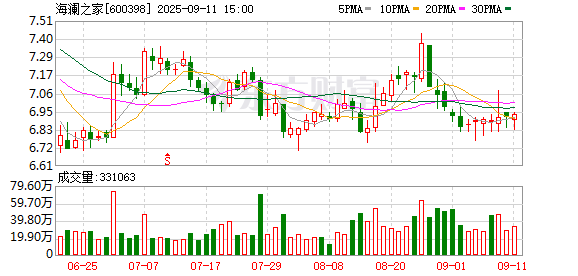
HEILAN HOME(600398)

Search documents
海澜之家拟赴港上市,借力港股平台能否开启国际化新征程?
Sou Hu Cai Jing· 2025-09-14 02:29
Group 1 - The company, HLA, has initiated preparations for issuing H-shares and listing on the Hong Kong Stock Exchange, aiming to enhance its global strategic layout through international capital operations [1][3] - HLA has established a comprehensive brand matrix covering all consumer scenarios, with core brands targeting various segments including men's wear, women's wear, youth fashion, and children's clothing [3][5] - The choice of a secondary listing in Hong Kong is driven by the unique value of the Hong Kong capital market for consumer brands, which offers more flexible listing regulations compared to the A-share market [3][5] Group 2 - The intense competition in the domestic men's wear market is a key factor accelerating HLA's internationalization process, as traditional brands face challenges such as market share decline and profit margin compression [5] - The capital raised from the Hong Kong listing will provide HLA with the necessary support to strengthen its competitive advantage in the domestic market and fund overseas acquisitions and channel development [5] - HLA's global journey is just beginning with the Hong Kong listing, and the company must integrate global aesthetic elements into product design and brand narrative while establishing localized operations in key markets [5]



千里科技(600398),宣布赴香港IPO,冲刺A+H上市 | A股公司香港上市
Sou Hu Cai Jing· 2025-09-13 08:11
Group 1 - The company, formerly known as Lifan Technology, was established in 1992 and became the first private passenger car enterprise listed on the Shanghai Stock Exchange in 2010 [1] - In February 2025, the company officially changed its name to "Qianli Technology," marking a new phase of development focused on intelligence and internationalization [1] - The core strategy of the company is centered around "AI + Vehicle," aiming to innovate its industrial development model and create a global smart mobility technology brand [1] Group 2 - The company's core business is divided into two main segments: terminal business and technology business, covering motorcycles and automobiles [1] - The terminal business includes motorcycle brands "Lifan" and "Paifang," as well as the new energy vehicle brand "Ruilan," forming a diversified product matrix [1] - The technology business focuses on developing industry-leading smart driving and smart cockpit solutions, establishing an AI intelligent travel open platform [1] Group 3 - The company is actively discussing the issuance and listing process with relevant intermediaries, considering shareholder interests and market conditions [1] - The company plans to complete the issuance and listing at an appropriate time within the validity period of the shareholders' meeting resolution [1]


产业观察|部分服装企业半年报现反差:主营承压,投资 “逆袭”
Mei Ri Jing Ji Xin Wen· 2025-09-13 06:51
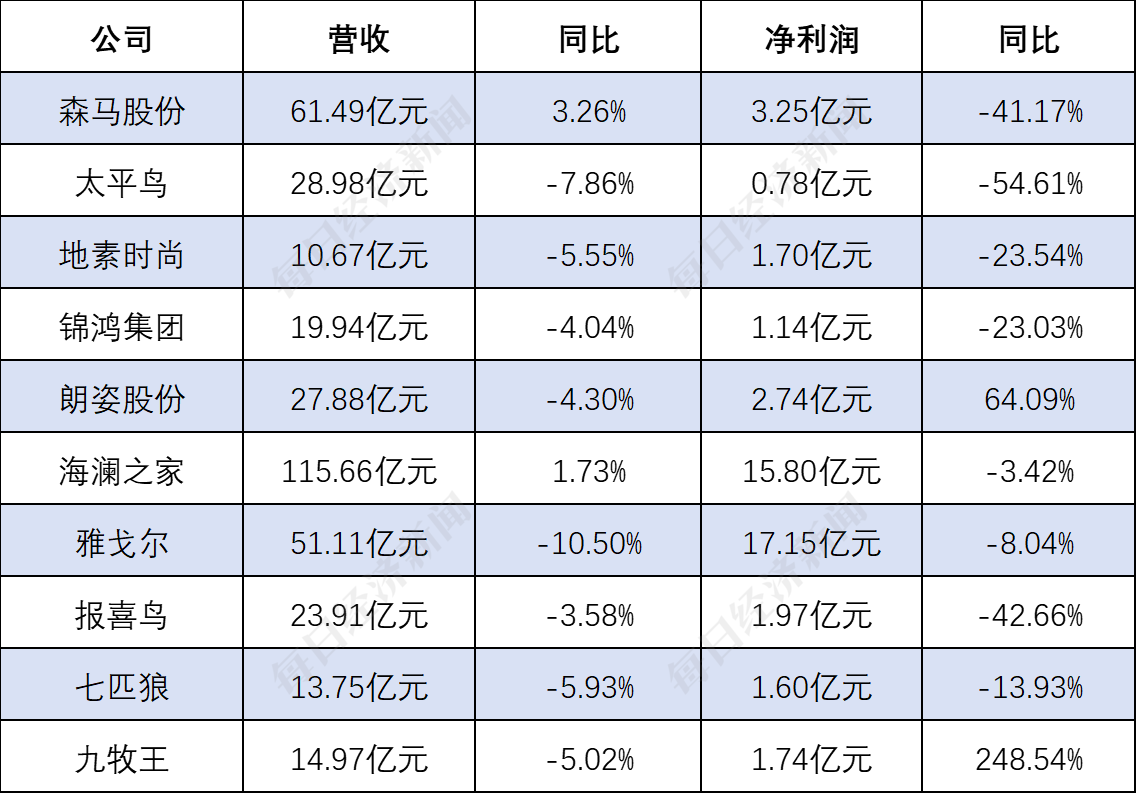
Core Insights - The traditional apparel industry in A-shares continues to face pressure, with many companies reporting declines in revenue and net profit, indicating a deep adjustment period [1][2][3] Industry Overview - The overall performance of the traditional apparel sector remains under pressure, with many companies experiencing a continuation of the revenue and net profit declines seen in 2024 [1] - The children's clothing segment shows relative stability, with leading company Semir achieving revenue growth, while the women's and men's clothing markets are relatively flat, with significant declines in fashion women's wear [1][4] - The industry is transitioning from "channel scale competition" to "user value competition," as companies increase direct-to-consumer (DTC) store openings while reducing franchise stores [1][6] Company Performance - Semir's revenue reached 6.149 billion yuan, a 3.26% increase, but net profit fell by 41.17% [2] - Taiping Bird's revenue decreased by 7.86% to 2.898 billion yuan, with net profit down 54.61% [2] - Other companies like YOUNGOR, Baoxini, and Qipilang also reported revenue declines, while Haizhu's revenue increased by 1.73% but net profit decreased by 3.42% [2][4] - The children's clothing market is performing better, with 45.9% of consumers indicating increased spending on children's clothing [4] Strategic Shifts - Many companies are focusing on opening flagship stores in key urban areas, moving away from the franchise model to enhance brand experience [5][6] - Taiping Bird is implementing a "super store" strategy, opening large flagship stores to integrate multiple brands [5] - YOUNGOR has strengthened its direct sales channels, with over 95% of sales coming from direct stores [6] Investment Trends - Several apparel companies are showing a preference for investment to boost profits, with Langzi Co. reporting a 64% increase in net profit due to stock sales [7] - Jiuzhou Wang's net profit surged by 248.54%, attributed to gains from financial asset valuations [7] - Baoxini's financial assets increased dramatically by 2072.73%, indicating a shift towards financial investments to offset core business pressures [8]


A股服装巨头拟赴港上市
Zheng Quan Shi Bao· 2025-09-12 13:21
Group 1 - The core viewpoint of the article is that the domestic clothing company HLA (海澜之家) plans to issue H-shares and list on the Hong Kong Stock Exchange, marking a potential increase in A-share companies going public in Hong Kong [1][5] - HLA aims to deepen its global strategy, accelerate overseas business development, and enhance its international brand image through this listing [3][4] - The company has already established a presence in international markets, with plans to expand into Central Asia, the Middle East, and Africa, and is set to open its first store in Australia [3][4] Group 2 - The trend of A-share companies listing in Hong Kong has been increasing this year, with 11 companies having done so by September 11, and over 50 more in the queue [2][5] - The Chinese Securities Regulatory Commission has released measures to support leading domestic companies in going public in Hong Kong, which has contributed to this trend [5][6] - Hong Kong is recognized as a favorable platform for companies aiming for international expansion due to its legal system, tax benefits, and access to a diverse range of investors [6][7]
A股服装巨头拟赴港上市
证券时报· 2025-09-12 13:19
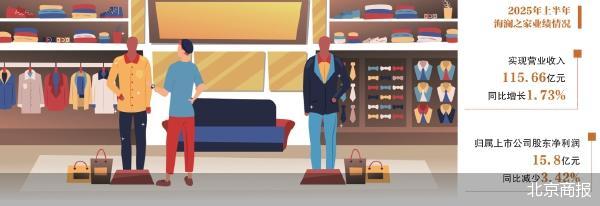
Core Viewpoint - The article discusses the recent announcement by the domestic clothing company HLA (海澜之家) to issue H-shares and list on the Hong Kong Stock Exchange, highlighting the trend of A-share companies seeking listings in Hong Kong due to policy support and international expansion strategies [2][6]. Company Overview - HLA, established in 1997, is a large retail group in China, covering self-owned brand operations, international brand licensing, and custom group purchases. The company has a diverse brand portfolio including men's, women's, children's, and professional clothing [4]. - The company went public in 2014 through a reverse merger with Kainuo Technology [4]. Strategic Intent of Hong Kong Listing - The primary goal of HLA's planned Hong Kong listing is to deepen its global strategic layout, accelerate overseas business development, and enhance its international brand image. The company aims to strengthen its capital base to support high-quality growth [4]. - HLA has been actively expanding internationally, with its first overseas store opened in Kuala Lumpur, Malaysia, in 2017. The company plans to further explore markets in Central Asia, the Middle East, and Africa, with a new store opening in Sydney, Australia, expected [4]. Financial Performance - In the first half of 2025, HLA reported revenue of 11.566 billion yuan, a year-on-year increase of 1.73%. However, the net profit attributable to shareholders decreased by 3.42% to 1.580 billion yuan. The company experienced a net reduction of 110 stores, bringing the total to 5,723, which is similar to levels from three years ago [5]. - The overseas market has shown promising growth, with 111 overseas stores generating 206 million yuan in revenue, a 27.42% increase compared to the same period last year [5]. Market Trends - The trend of A-share companies listing in Hong Kong has been gaining momentum, with 11 companies having done so by September 11, 2023. There are over 50 A-share companies currently in the queue for H-share listings [7]. - The Chinese regulatory environment has become more favorable for such listings, with the China Securities Regulatory Commission (CSRC) introducing measures to support leading enterprises in going public in Hong Kong [7]. Advantages of Hong Kong Listing - Hong Kong is viewed as a natural platform for companies aiming for global market development due to its international financial center status, legal framework, and tax advantages, such as a corporate tax rate of 16.5% [8]. - The Hong Kong Stock Exchange has implemented reforms to facilitate listings, including allowing dual-class shares and providing flexible financing options for innovative companies [8].

国内头部男装上半年以产品场景化 + 渠道全域化构建行业增长韧性
Cai Jing Wang· 2025-09-12 08:34
Core Insights - The domestic men's clothing market is undergoing structural adjustments due to dual influences of consumption upgrading and rational consumption, with retail sales of clothing, shoes, and textiles reaching 742.6 billion yuan, a year-on-year increase of 3.1% in the first half of 2025 [1] - There is a clear divergence in industry performance, with leading brands adjusting strategies to meet the differentiated demands of younger consumers who prefer functional and personalized products, while mature consumers focus on quality and versatility [1][4] Financial Performance - HLA achieved revenue of 11.566 billion yuan, a slight increase of 1.73% year-on-year, with a net profit of 1.58 billion yuan [1] - Jiumuwang and Qipilang experienced revenue declines of 5.02% and 5.93% respectively, but Jiumuwang's net profit surged by 248.54%, indicating improved profitability [1] - Youngor's revenue and net profit decreased by 10.50% and 8.04% respectively due to challenges in its real estate and fashion segments [1] Product Innovation - Leading brands are increasing R&D investments to meet consumer demands for functionality and fashion, focusing on "technology fabrics + scenario-based design + cultural empowerment" [1][2] - Jiumuwang's "air conditioning pants" became a bestseller, selling over 90,000 units since its launch in April 2025, appealing to younger consumers [1] - Seven Wolves integrated cultural elements into product innovation, launching a multi-colored business travel series that incorporates local heritage designs and innovative materials [2] Channel Transformation - Brands are accelerating the integration of online and offline channels, enhancing retail efficiency and customer loyalty through structural optimization and experiential innovations [5][6] - HLA's online revenue reached 2.308 billion yuan, accounting for 20.54% of total revenue, with a year-on-year growth of 4.36% [6] - Seven Wolves' online business revenue reached 489 million yuan, making up over 30% of total revenue, supported by data-driven strategies and content innovation [6] Supply Chain Management - Brands are focusing on refining supply chain management to enhance efficiency, with Seven Wolves reducing product delivery cycles to 18 days, 25% faster than the industry average [9] - HLA established an "order sharing platform" with over 200 suppliers, improving inventory turnover and reducing stockout risks [9] Industry Challenges - Analysts suggest that Chinese men's clothing brands still have room for improvement in precise positioning and long-term development paths, with a need for enhanced brand management and differentiation strategies [10]


业绩下滑、激进分红,海澜之家“海外圈地”能否破局?
阿尔法工场研究院· 2025-09-12 00:06
Core Viewpoint - HLA (海澜之家) is planning to list in Hong Kong to accelerate overseas expansion and brand upgrade, but faces challenges such as performance volatility, high dividend controversies, and transformation pressures, leading to significant market divergence on its potential for a second breakthrough in the Hong Kong market [2] Summary by Sections High Dividends - HLA's dividend payout ratio exceeds 90% of net profit, raising concerns about funding for expansion [3] - The inventory turnover days have increased to 322.6 days, indicating challenges in the aging brand transformation [3] Low Overseas Revenue - HLA's overseas revenue is only 210 million yuan, accounting for 1.8% of total revenue, indicating room for growth [4] New Market Opportunities - With 111 overseas stores, HLA plans to enter new markets in Central Asia and the Middle East, and the Hong Kong listing is expected to broaden financing channels to support global expansion [4] Growth Strategy - HLA's listing in Hong Kong is part of its global strategy to enhance international brand image and diversify capital operations [5] - As of mid-2025, HLA has 111 overseas stores, primarily in Southeast Asia, with plans to expand into Central Asia, the Middle East, and Africa [5] Historical Development - HLA's growth trajectory began in 1988, transitioning from a rough spinning business to a leading men's clothing brand in China, with significant milestones including its A-share listing in 2000 and the establishment of the "HLA" brand in 2002 [7][8] Performance Fluctuations - After reaching a peak in 2019 with revenue of 21.97 billion yuan and a net profit of 3.2 billion yuan, HLA has experienced declining growth, with a 3.42% drop in net profit in the first half of 2025 [9][11] - The company has maintained a high dividend strategy, with cumulative dividends reaching 21.404 billion yuan since listing, raising concerns about its long-term growth potential [9][10] Market Expansion and Brand Diversification - HLA views overseas markets as a second growth curve, with plans to continue its "localization + high cost-performance" expansion model [14] - The company is diversifying its brand matrix through internal incubation and external partnerships, with non-menswear categories accounting for 28% of revenue in the first half of 2025 [14] Brand Transformation - The brand's transformation is led by the younger chairman, who has initiated marketing changes to attract younger consumers, although the effectiveness of these changes is still uncertain [15]

332亿市值“中国男装之王”海澜之家启动港股IPO,能否借势再登高峰?
Sou Hu Cai Jing· 2025-09-11 23:08
Group 1 - The core viewpoint of the article highlights the strategic move of the Chinese men's clothing leader, HLA, to initiate its IPO in Hong Kong, marking a significant step towards internationalization and capital enhancement [2][4] - HLA's total market capitalization in A-shares is currently 33.2 billion yuan, and if the IPO proceeds successfully, it will become the first Chinese men's clothing company listed in Hong Kong [2] - The company's revenue for 2023 reached 21.528 billion yuan, with a notable contribution from its multi-brand strategy [2] Group 2 - HLA's revenue for 2024 showed a year-on-year decline of 2.65% to 20.957 billion yuan, with net profit decreasing by 26.86% [4] - The company's over-reliance on technological research and digital transformation has led to increased costs, resulting in a cash flow reduction of 5.1 billion yuan during the adjustment period of offline stores [4] - The upcoming IPO in Hong Kong is seen as a potential opportunity for HLA to alleviate financial pressures and diversify its business, aiming to transition from a "king of Chinese men's clothing" to a "global apparel giant" [4]

筹划赴港上市 海澜之家找解药
Bei Jing Shang Bao· 2025-09-11 16:32
Core Viewpoint - HLA, known as "the wardrobe for men," is struggling with declining sales and a need for brand transformation to appeal to younger consumers and expand its market presence, particularly overseas [1][4][7] Group 1: Financial Performance - In the first half of 2025, HLA's revenue was 11.566 billion yuan, a year-on-year increase of 1.73%, while net profit attributable to shareholders decreased by 3.42% to 1.58 billion yuan [3] - HLA's single-brand store count decreased by 110 to 5,723 in the first half of 2025, indicating a trend of store closures [3][7] - The company's series revenue fell by 5.86% to 8.395 billion yuan, marking the lowest level in three years, while the retail sales of clothing and related products in society grew by 3.1% during the same period [7] Group 2: Brand Positioning and Market Challenges - HLA's branding as "the wardrobe for men" has become outdated, with younger consumers associating it more with "the wardrobe for dads," leading to a disconnect with current fashion trends [6][7] - The rise of new brands and e-commerce platforms has posed significant challenges to traditional clothing brands like HLA, which has struggled to adapt its product positioning and design to meet changing consumer preferences [4][6] - HLA's reliance on the ODM (Original Design Manufacturer) model has limited its control over product design and innovation, contributing to a lack of competitiveness in the market [8] Group 3: International Expansion and Future Strategy - HLA plans to accelerate its overseas business development and has announced intentions to list in Hong Kong to broaden its financing channels and enhance its international brand image [3][4] - The company reported a 27.42% year-on-year increase in revenue from overseas operations, with 111 overseas stores contributing 206 million yuan in revenue [4][5] - HLA is actively pursuing a "going global" strategy, focusing on expanding into Southeast Asia and exploring new markets in Central Asia, the Middle East, and Africa, with plans to open its first store in Australia by the second half of 2025 [4][5]
筹划港股上市 海澜之家找到解药了?
Bei Jing Shang Bao· 2025-09-11 13:32
Core Viewpoint - HLA (海澜之家) is struggling with declining sales and a stagnant business model, prompting a shift towards international markets and a potential listing in Hong Kong to enhance capital and brand presence [2][3][4]. Group 1: Financial Performance - In the first half of 2025, HLA reported a revenue of 11.566 billion yuan, a year-on-year increase of 1.73%, while net profit decreased by 3.42% to 1.58 billion yuan [4]. - The company experienced a revenue decline of 2.65% and a net profit drop of 26.88% in 2024 [4]. - HLA's single-brand store count decreased by 110 to 5,723 in the first half of 2025 [4]. Group 2: Market Challenges - HLA's brand image is perceived as outdated, with younger consumers associating it more with "dad's wardrobe" rather than a trendy choice [6][7]. - The rise of new brands and e-commerce platforms poses significant challenges to traditional clothing brands like HLA, which has struggled to adapt to changing consumer preferences [4][6]. - HLA's reliance on a high-cost offline retail model and slow online channel development has further impacted its performance [4]. Group 3: International Expansion - HLA's overseas business has shown promising growth, with a 27.42% increase in revenue from international markets, reaching 206 million yuan [5]. - The company plans to expand its international presence, targeting markets in Central Asia, the Middle East, and Africa, with plans to open its first store in Australia by the second half of 2025 [5]. Group 4: Business Model and Strategy - HLA has historically relied on an ODM (Original Design Manufacturer) model, outsourcing most production, which has limited its control over design and innovation [8]. - The company is attempting to diversify its brand portfolio to appeal to a broader consumer base, including younger demographics through brands like HLA Jeans and OVV [7][8]. - Analysts suggest that for HLA to remain competitive and relevant, it must undergo significant transformation in its branding, product offerings, and operational strategies [8].